Everyday Carry
Victorinox SwissCard Compared: Classic, Quattro, Lite and NailCare
All four Victorinox SwissCard models compared side by side, with the tools, trade-offs and quirks that separate them.
Introduction
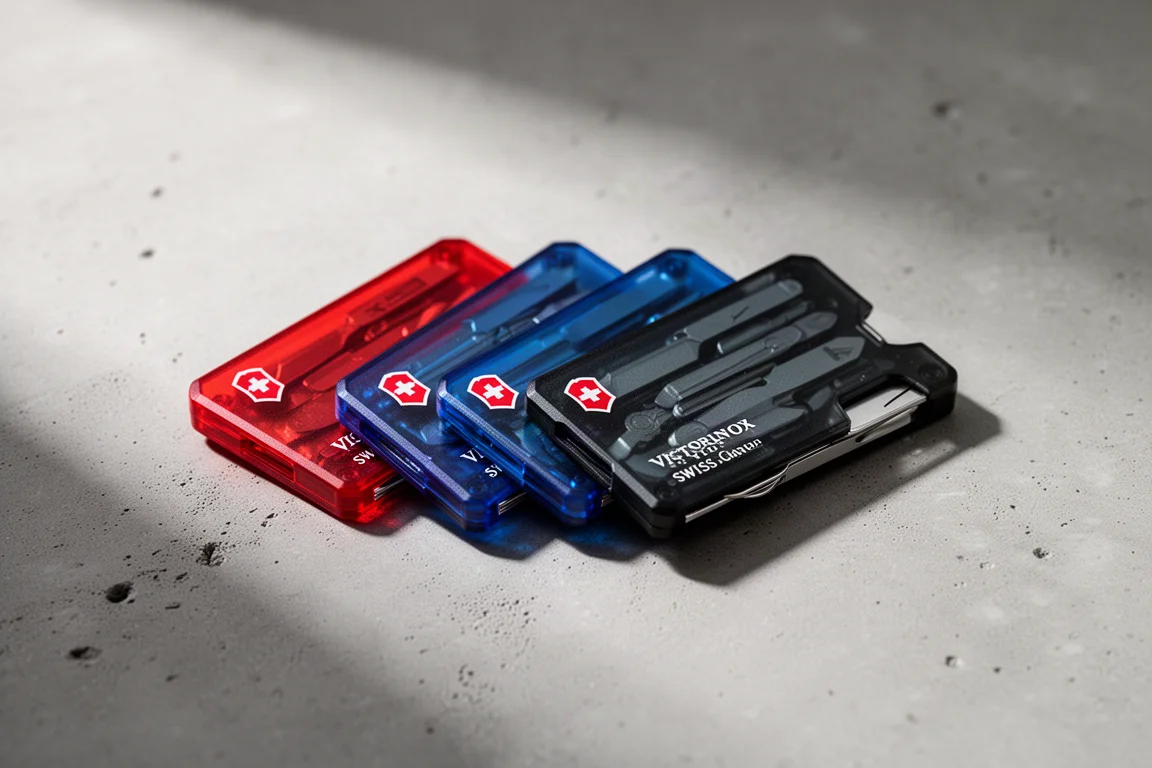
When it comes to credit card-sized gadgets, this is the kind of thing you would expect a fictional spy to carry in his wallet. The Victorinox SwissCard is exactly that: a flat, credit card-sized multi-tool that slides into your wallet or purse, ready to leap into action whenever you need it. There are four models in the range, and while they share the same format, they are not interchangeable. Choosing between them comes down to which tools you will actually use.
Why a Credit Card-Sized Multi-Tool Makes Sense
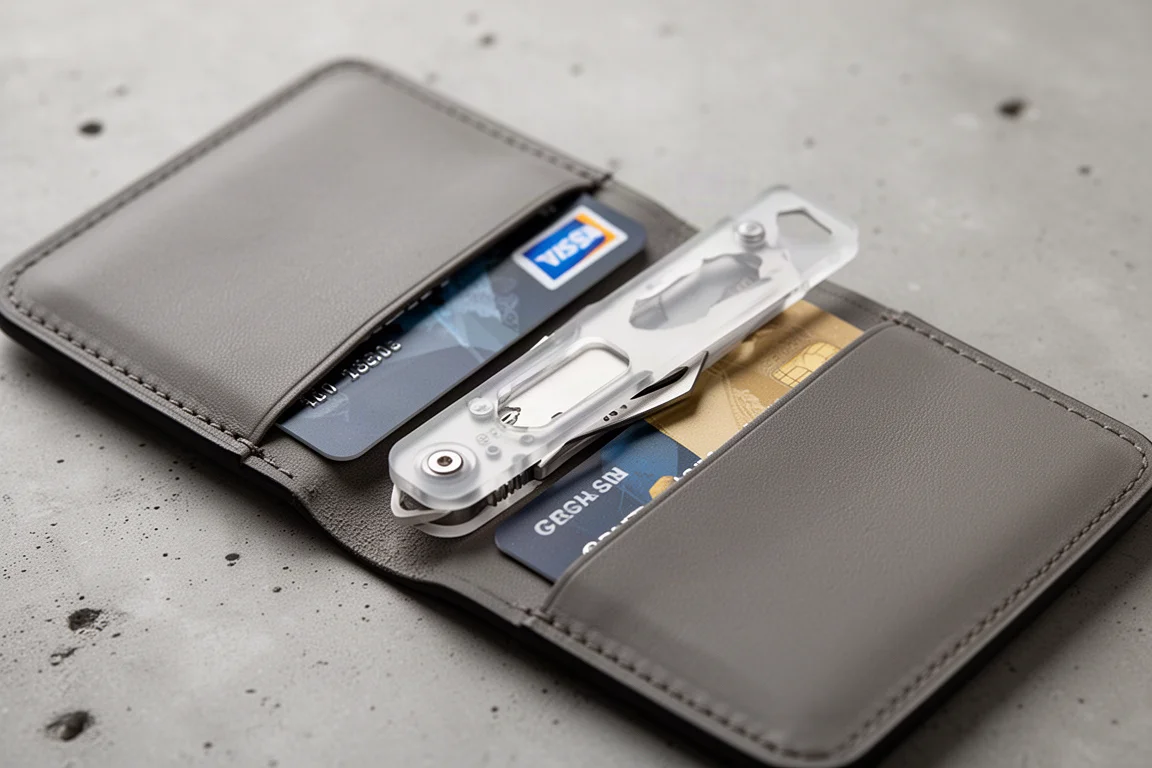
Most people do not carry a folding pocket knife as part of their everyday carry. For them, the SwissCard is effectively a super-convenient, flat credit card-sized Victorinox tool, which is more than just a knife. It is the same height as a credit card, only three to four millimetres shorter, and about four millimetres thick, roughly the thickness of five flat credit cards. It slides into a minimalist wallet without much fuss, thanks to a beveled edge on one side, though it does add noticeable thickness. If your wallet gets too bulky, a bag or purse works just as well.
Construction is ABS plastic and every model feels solid and well made. The translucent finishes in red, blue and black let you see the tools inside the card, which is a genuinely nice touch. The packaging is also excellent, which matters because these make particularly good gifts.
Victorinox SwissCard Classic
The SwissCard Classic was the original, launched in 1997, with early examples in grey and red and a sliding door over the scissors. The current model, sold since a 2008 update, dropped that sliding door and has been translucent since 2001. At £27 on Amazon in the UK, it is the full-fat version of the concept.
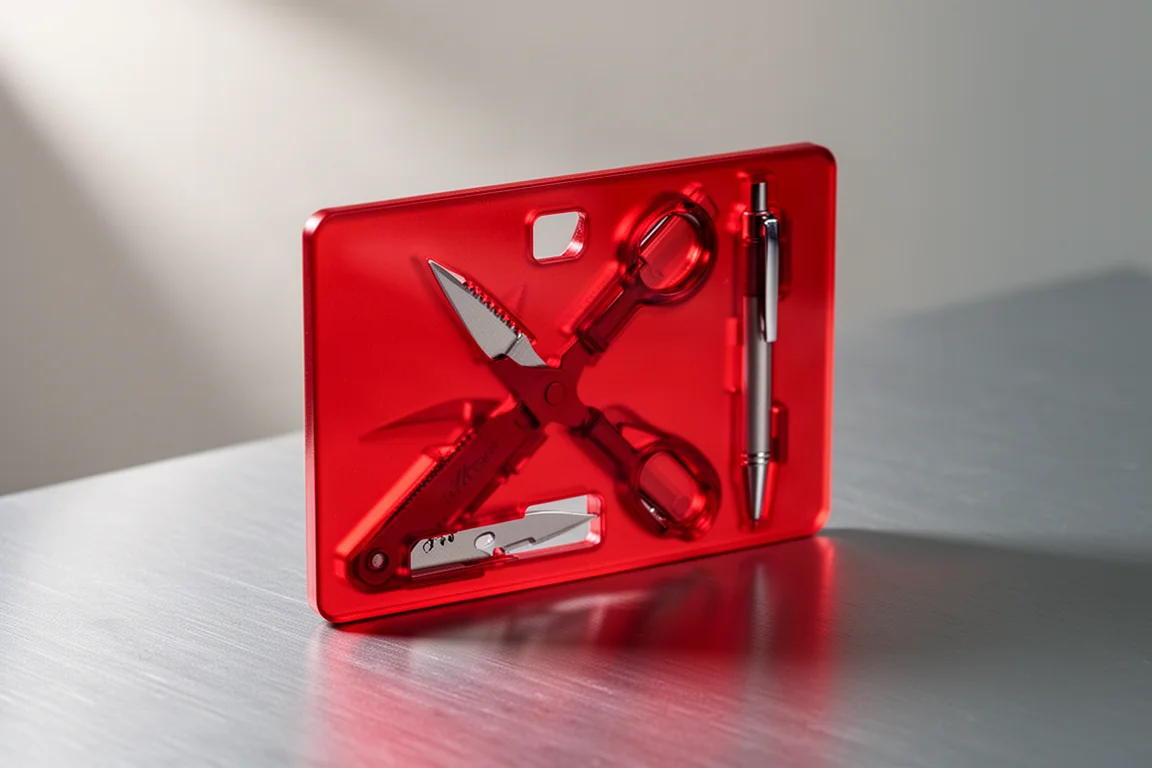
The tool set starts with a blade that Victorinox modestly calls a letter opener, but it is super sharp and genuinely useful for opening boxes and getting into packaging. Next to it, almost concealed, is a pin, which sounds basic until you need to remove a splinter, eject a SIM card, push out a watch strap pin or reset an annoying little digital clock. The pin is one of the few tools that appears on all four SwissCards. You also get a small flathead screwdriver combined with a nail file, tweezers for splinters and stray hairs, and a toothpick that divides opinion, though it works well for clearing wax out of earphones.
The remaining tools are the standout ones. There is a pressurised refill pen, the only other tool on all four models, ideal for unexpectedly signing something or jotting down a number in a hurry. Then there are the scissors, a reasonable size, larger than the smallest Swiss Army knives and nearly as big as the compact version. Victorinox scissors are sharp and work really well, and there are jobs you simply cannot do with a knife, such as trimming an unruly eyebrow. Finally, the back of the card carries a ruler with centimetres and millimetres on one side and inches and sixteenths on the other, with that beveled edge helping take measurements.
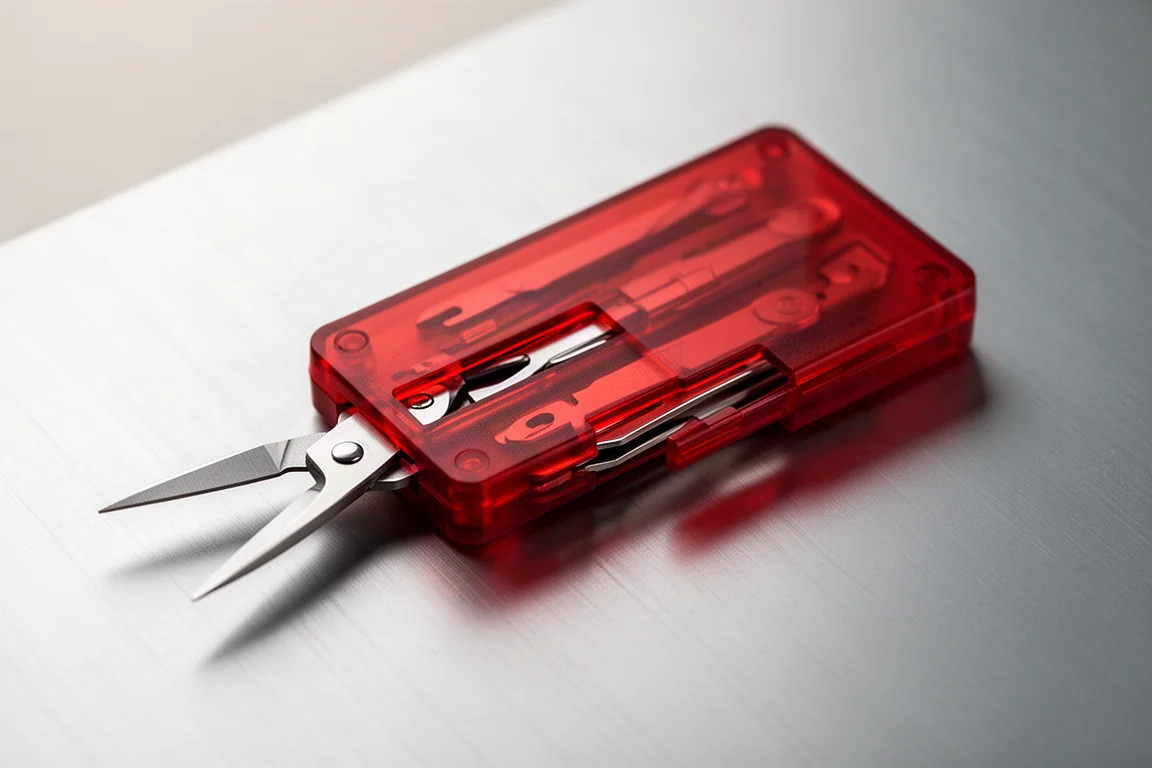
If you want the most complete, balanced tool set in the range, this is the model that delivers it.
Victorinox SwissCard Quattro
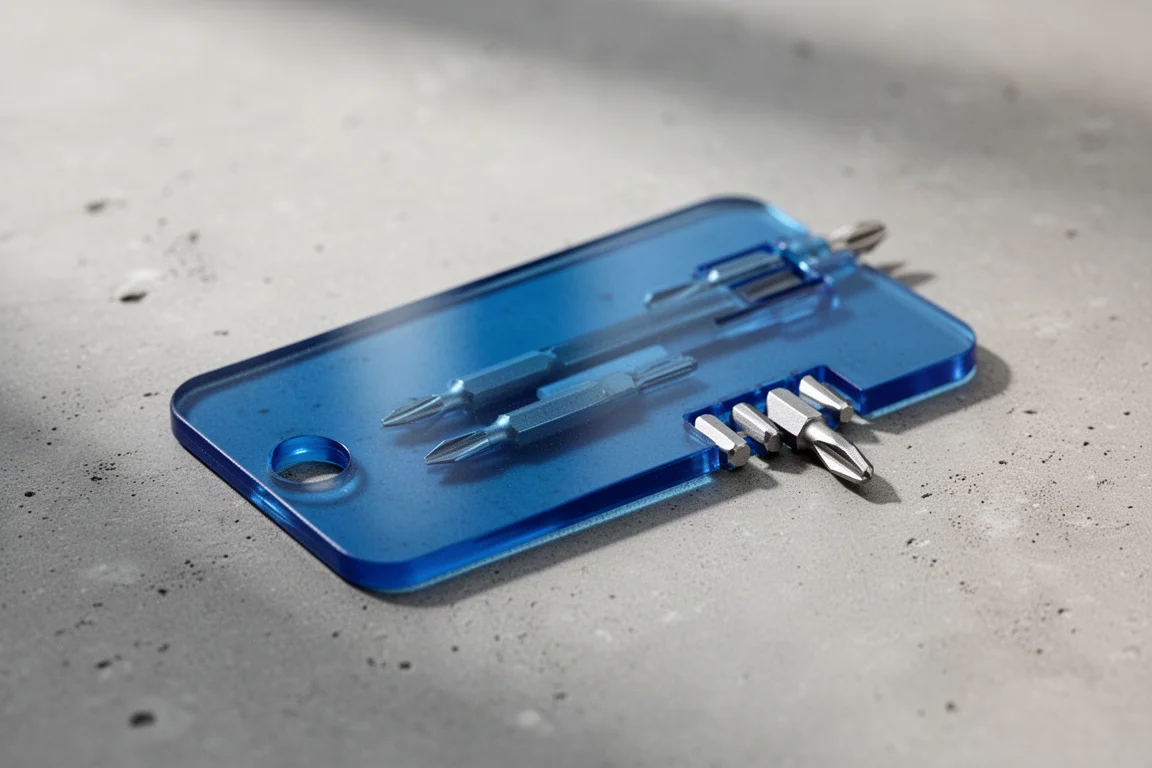
The Quattro, launched in 2000, is identical to the Classic with two exceptions. First, it has a hole in the body, the only SwissCard with one, though its practical value is debatable. Second, and much more interesting, is a four-way screwdriver: two Phillips heads covering small and larger screw sizes plus flathead tips in three and five millimetre sizes. It is strictly light duty, but for tightening a loose screw that is causing a problem or getting into a battery compartment, it is a really useful addition.
The catch is what it costs you: the four-way screwdriver replaces the scissors, and if you value the scissors as much as many owners do, that trade-off rules the Quattro out. It is also the cheapest of the four at £18 on Amazon in the UK, with a rumor that it may be discontinued soon. Comparing it with the others, you can see why.
Victorinox SwissCard Lite
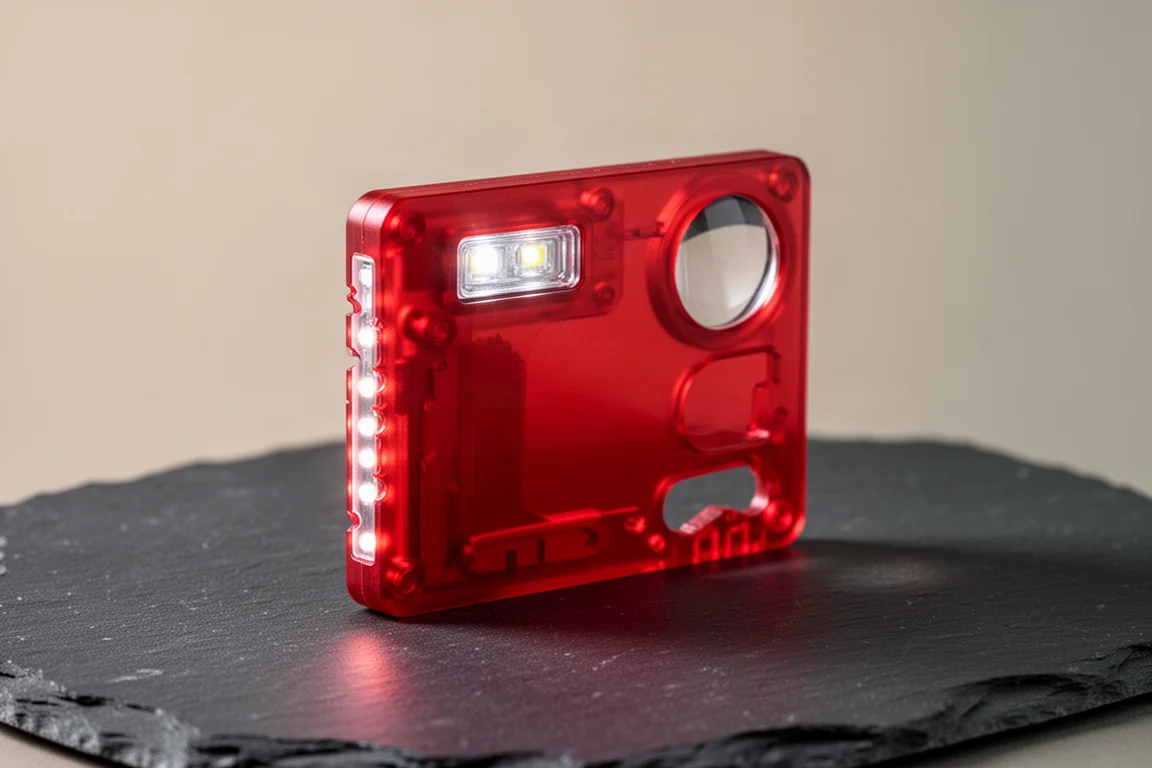
The SwissCard Lite, launched in 2003, takes its name from a built-in flashlight rather than its weight. The original red LED was swapped for a far more practical white LED in 2009, and the battery is replaceable rather than disposable, which is a genuine advantage over many small torches. That said, now that everyone carries a phone, the flashlight is less appealing than it was at launch, and a phone light will likely beat it anyway. If you carry a dedicated flashlight, this one becomes even less useful, though it could still get you out of a problem.
The rest of the tool set is strong: the knife, the scissors, the pressurised pen, the pin, the tweezers and the four-way screwdriver. The additions are the flashlight and a magnifying glass. The magnifier is surprisingly practical for reading very small print, and if your glasses let you down, it can even make phone text readable in a pinch, albeit heavily magnified.
What is missing compared with the Classic is the nail file and screwdriver combo, which is covered by the four-way screwdriver, and the toothpick, which is easy to live without. On balance, this is a great selection and the best all-rounder for urban everyday carry, unless you already carry a proper Victorinox knife.
Victorinox SwissCard NailCare
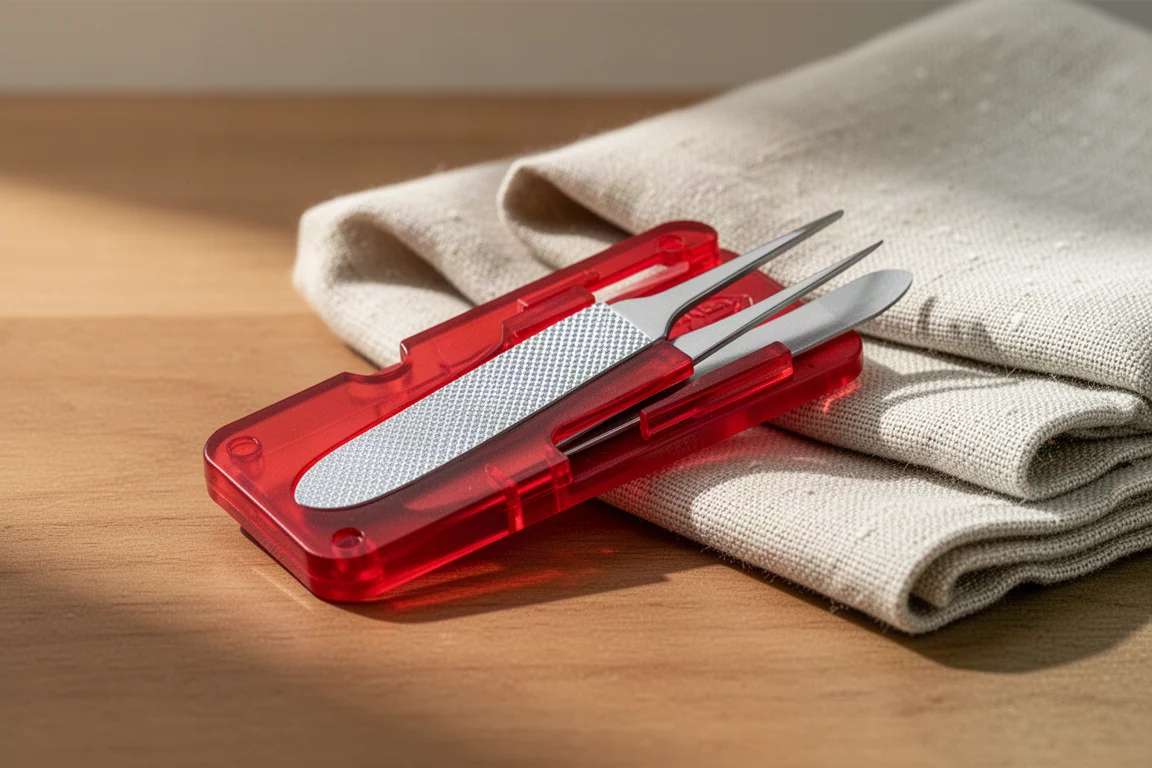
The NailCare, introduced in 2015, is the sleeper of the range, and a pleasant surprise. It keeps the scissors, tweezers, pen, pin, toothpick, magnifying glass, four-way screwdriver and the ruler on the back that every SwissCard carries. The tweezers are shorter than those on the other models but still do the job.
The knife is gone, replaced by a glass nail file with a really coarse surface that works exceptionally well. Losing the blade might seem like a serious problem for such a versatile tool, but there is a situation where it becomes a benefit: flying with hand luggage only. No knife means no confiscation at security, making this one of the very few multi-tools you can actually carry on a flight. Better still, the scissors open very wide, and one blade section is usable as a small knife for light cutting, so in reality you can carry a tiny knife as well as scissors on a plane and nobody will take it off you.
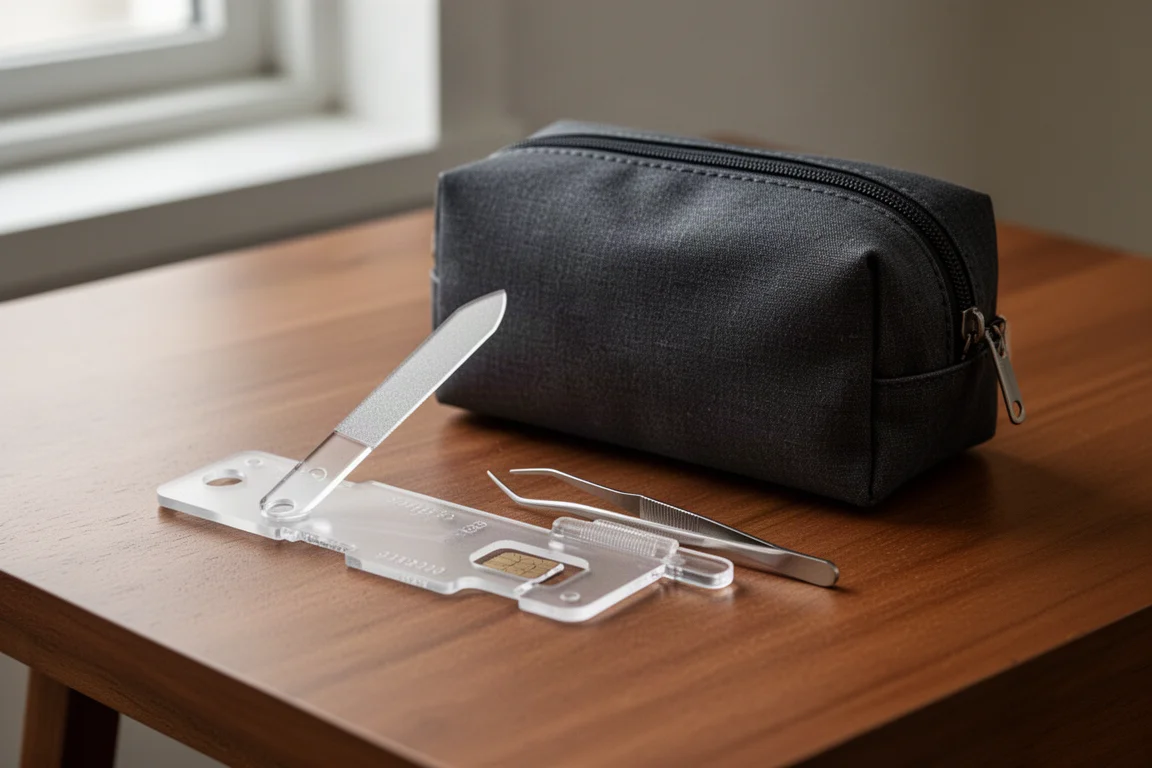
That travel-friendly trick makes the NailCare genuinely unique in the range, and a natural fit for a toiletry bag or dopp kit so it never gets left behind when travelling.
Which SwissCard Should You Buy?
Prices on Amazon in the UK give a rough guide: the Quattro is £18, the Classic is £27, the Lite is £32 and the NailCare is £36. For general urban everyday carry, the Lite is arguably the best option thanks to its strong tool set and the magnifying glass. The Classic is the safer pick if scissors and the full tool line-up matter more than the extras. The Quattro suits someone who wants a screwdriver more than scissors, at the lowest price.
For travel, the NailCare is hard to beat. It is the only one of the four that can be guaranteed through hand luggage security, which alone makes it worth considering if you fly. All four are nicely made, genuinely useful, and make excellent gifts thanks to the quality packaging.
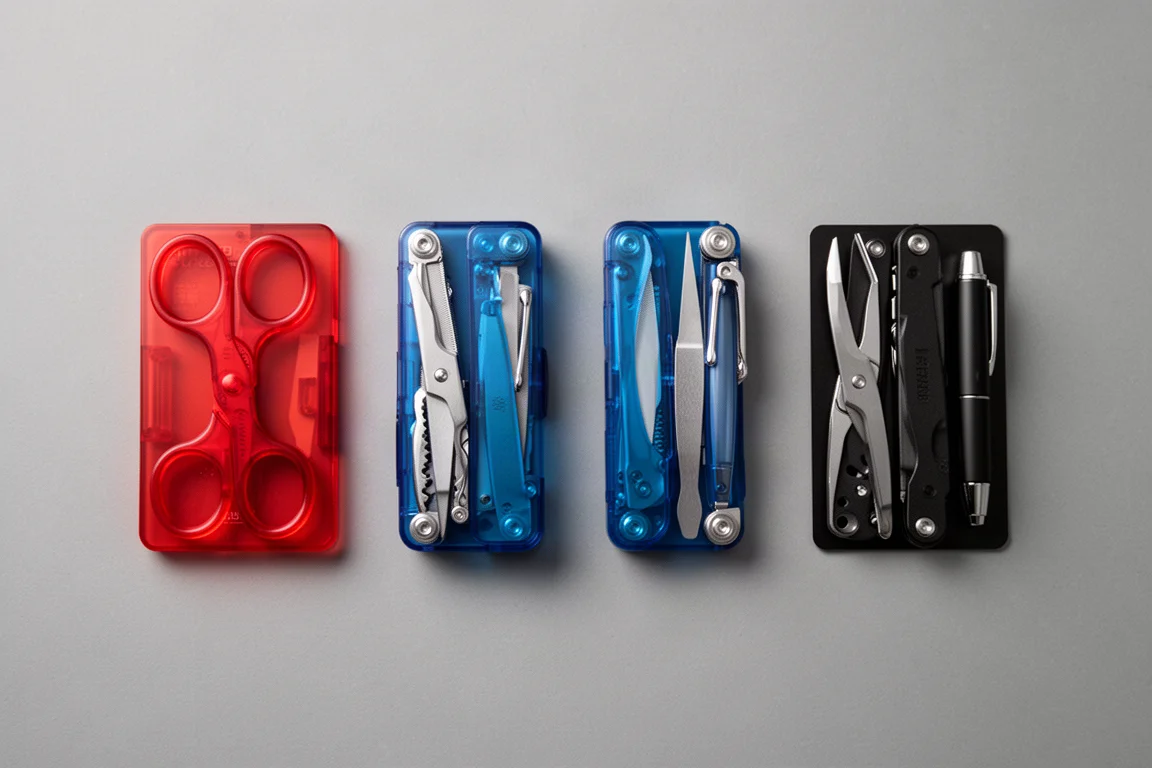
Whichever you choose, the core format is the same: a slim, flat tool card that is always where your wallet is, and that is exactly what makes it work.
Conclusion
The SwissCard range proves that a credit card-sized multi-tool can be more than a novelty. The Classic offers the most balanced tool set, the Quattro adds screwdriver capability at the lowest price, the Lite is the best all-rounder for daily carry, and the NailCare stands apart as the only one you can fly with. Match the tool set to your routine, and any of them will earn their slot in your wallet.
Further reading
Related Reviews

Everyday Carry
Everyday Gear That Deserved a Second Look
A roundup of solid everyday carry items: watches, pens, a pencil, a knife, and a smart ring that each earned a place on the table.

Everyday Carry
KORE Tactical Bifold Wallet Review: A Durable Everyday Carry Option
A close look at the KORE Tactical Bifold Wallet, a reinforced nylon wallet with magnetic closure and room for cards, cash, and IDs.

Everyday Carry
Krabby Wallet Review: A Slim, Simple Carry That Has Stood the Test of Time
A closer look at the Krabby Wallet, a slim canvas and elastic design with a loyal following and a simple, functional approach to everyday carry.