Everyday Carry
Victorinox Compact vs The James Brand Ellis: Why I Went Back to the Compact
After three months of carrying The James Brand Ellis as an everyday carry knife, the Victorinox Compact earned its way back into the pocket. Here is how the two compare in real use.
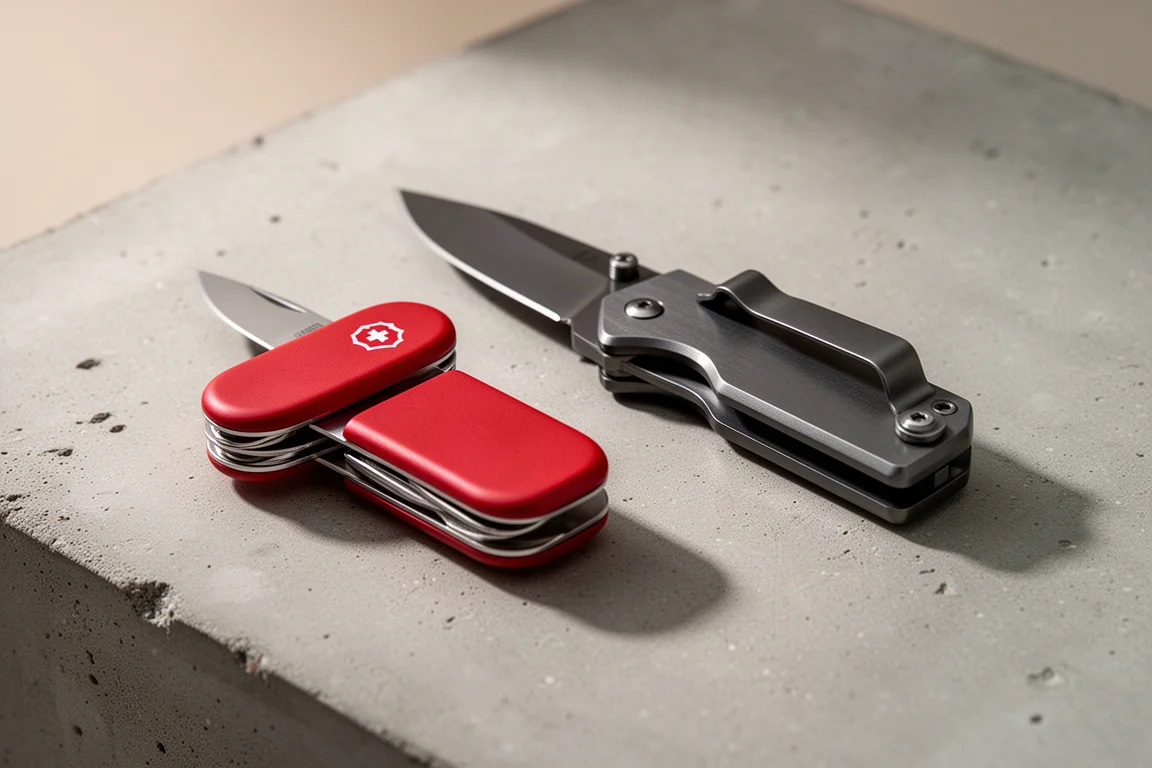
Introduction
For the past three months, the Victorinox Compact has been out of my pocket and The James Brand Ellis has been in it. The Ellis is a genuinely well-made knife, and there is nothing wrong with it after three months of daily carry: it still looks good, shows very little wear, and works well. And yet I have gone back to the Compact.
The reason is simple. I slowly realised how many of the Compact’s features I had taken for granted, started to regret losing them, and felt noticeably less prepared without them. This comparison is about what that experience revealed about both knives.
Pocket Carry and Everyday Handling
The Compact is slightly lighter, only by about 10 grams, but that difference is noticeable in the pocket. More importantly, it is easier to grab. The Compact’s smooth scales let it slip in and out effortlessly, while the Ellis has a rougher surface texture that adds friction against the pocket and makes it a little harder to pull free.
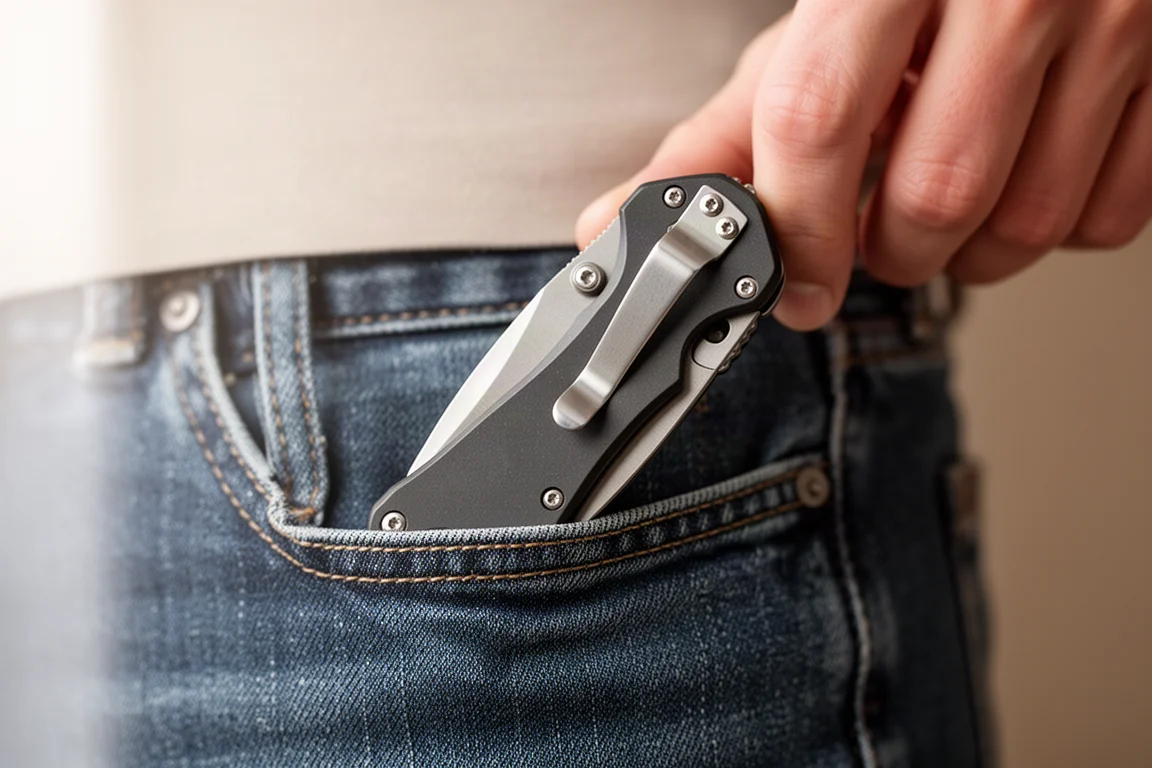
The Compact also uses the Key Smart clip, which works brilliantly as a pocket clip. It sits a little lower and a little less obviously than the Ellis clip, and it carries more discreetly. None of this sounds like a big deal until you are doing it several times a day, at which point the small friction adds up.
Everyday Use: Blades, Scissors and Public Friendly
In actual cutting use, both knives perform well. The Ellis scissors have a nicer spring action, while the Victorinox blades open wider, so each has its own advantage. The Ellis blade is also far more substantial than the Compact’s.
But the Ellis looks considerably more serious in public. The Swiss Army knife branding acts almost as a signal that says don’t worry, this is fine. The Ellis, particularly with its serrated edge, can look intimidating, and there have been moments where someone catching sight of the open blade visibly stepped back. That is not what most people want from an everyday carry knife.
Tools You Miss When They Are Gone
This is where the Compact pulled me back. I missed the bottle opener a lot. I missed the screwdriver even more. The Ellis’s single tool is a screwdriver, pry tool and scraper, but as a screwdriver it is simply too big and too short to work as well as the Compact’s.
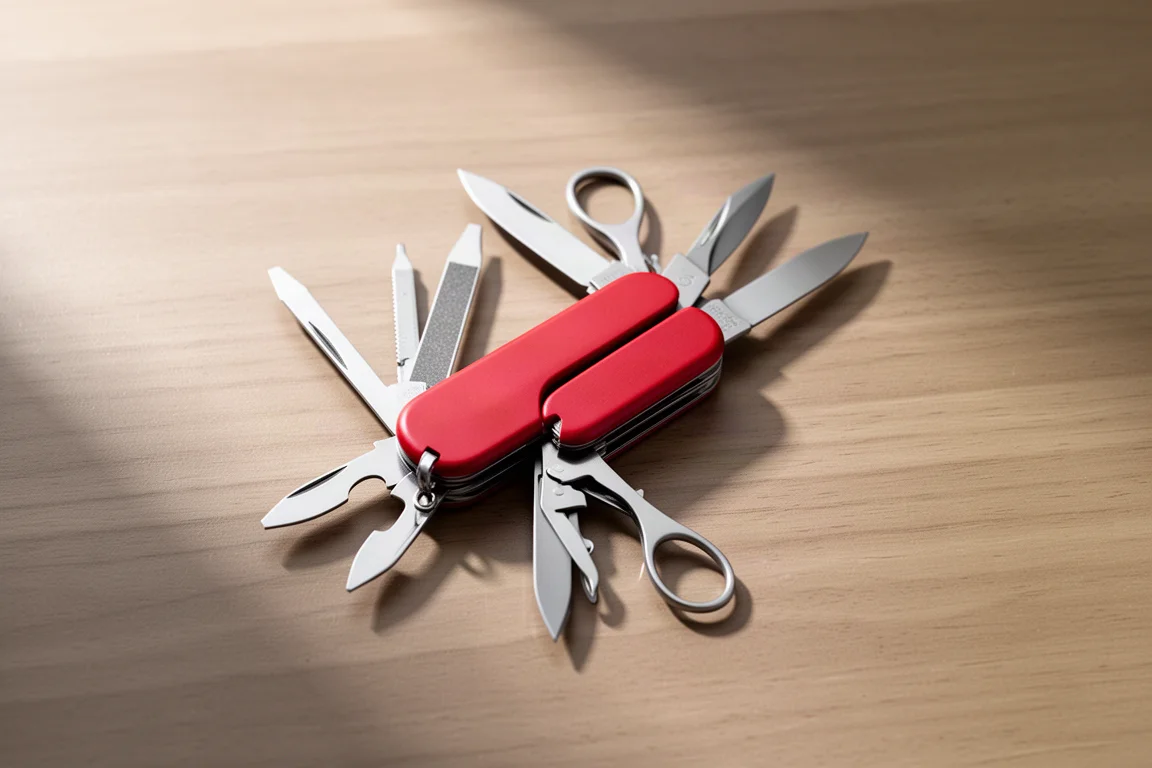
The Compact also carries a Phillips screwdriver for emergency use, a wire stripper, and a pry tool that is easier to use than the Ellis equivalent, which sits too short and too close to the body to reach tight spaces. Then there are the features the Ellis does not have at all: the hook, the diamond file, the tweezers, the pen, the pin hidden under the corkscrew, and the corkscrew itself. Even the tweezers earned their keep, having once retrieved a stray ear hair and previously removed splinters.
Small Features That Earn Their Keep
Some of these secondary tools turned out to be more useful than expected. The hook has seen little use beyond pulling tight shoelaces, which it does well, and the diamond file behind it is surprisingly pleasant for tidying up fingernails after cutting.
The hook also solves a design problem: it clamps the short pen between the scales, turning an awkward miniature pen into something you can actually write with. That pen, used for jotting things down before cutting or drilling, turned out to be something I use constantly.
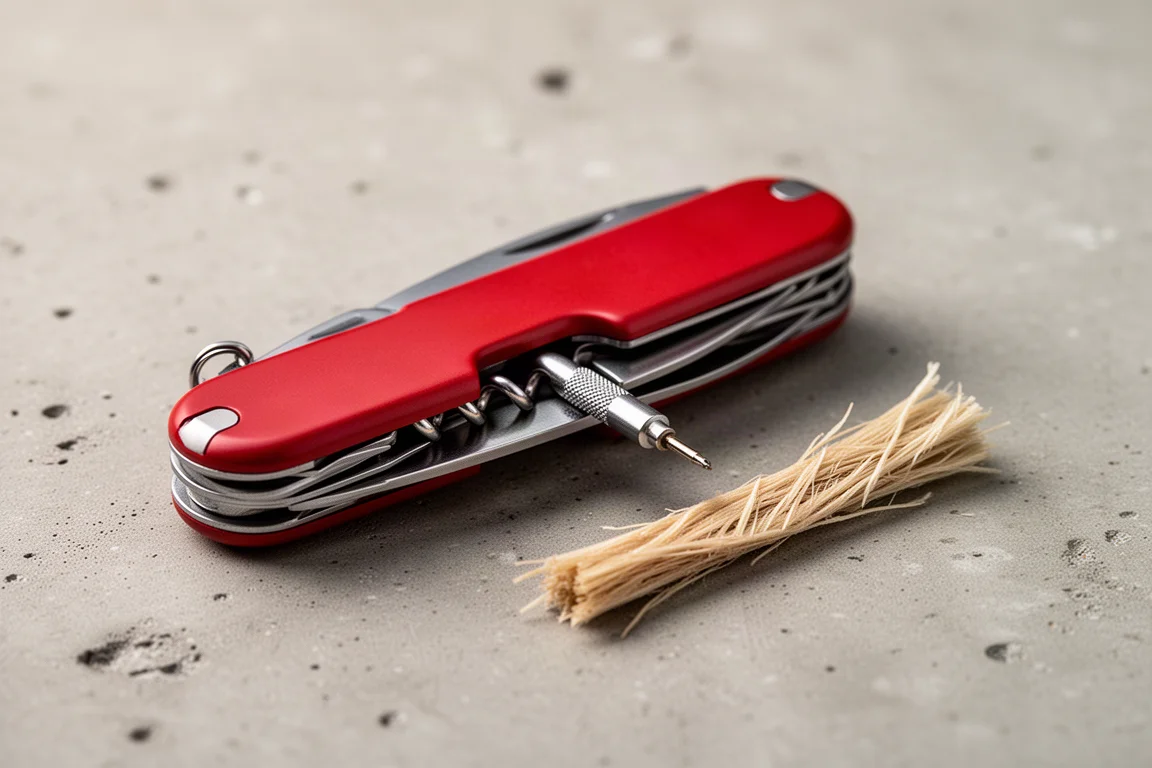
The corkscrew deserves special mention. It was the feature I assumed was least useful, but it opens tight knots, attaches to paracord, holds hot corn on the cob, and in my case holds the tiny eyeglass screwdriver between the scales, which matters for anyone who wears glasses. If the Phillips screwdriver on the three-layer Super Tinker appeals to you more, note that it is a three-layer knife, and the Compact’s two-layer form factor is the reason it carries so well.
Fire Lighting and Clever Mods
With a Firefly ferro rod from Tortoise Gear in the toothpick slot, which I never used anyway, plus corkscrew tinder stored under the hook, the Compact becomes a genuine fire-starting tool. Scrape the tinder to make it fibrous, cut off a small piece, then run the ferro rod through the wire stripper notch on the screwdriver while holding the knife still, and the tinder catches easily.
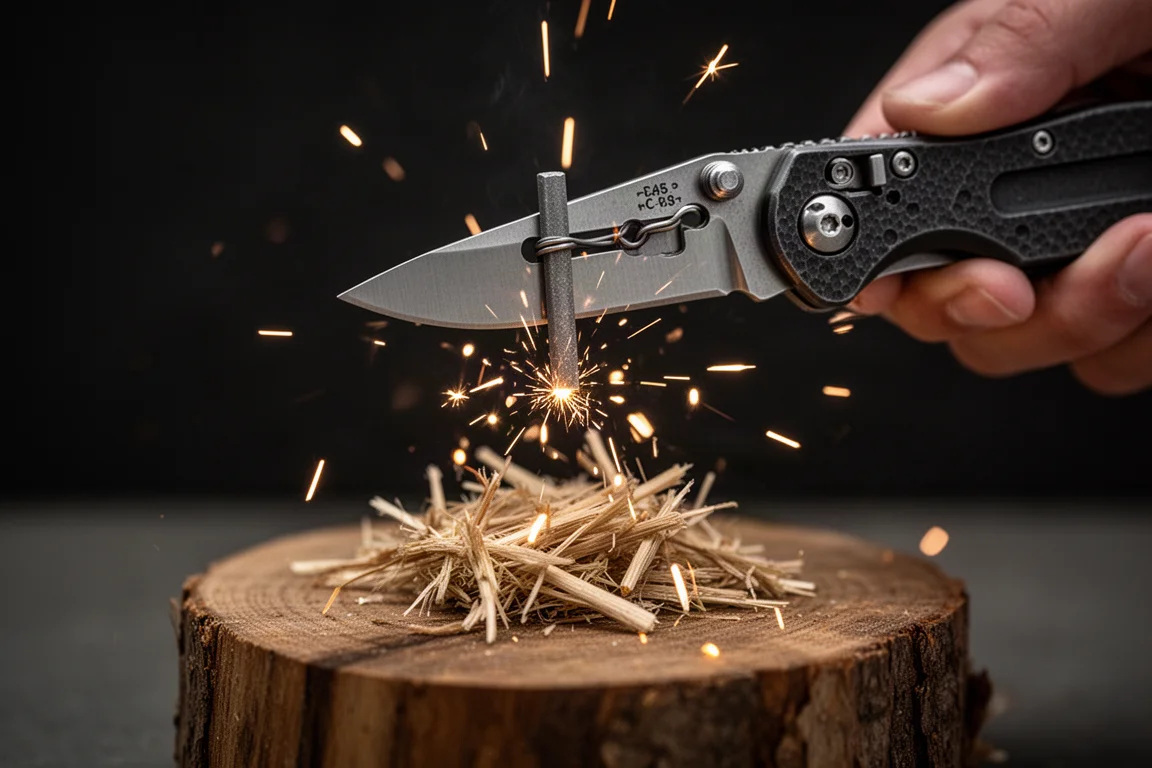
I have not needed to start a fire since carrying the Ellis, but there is something reassuring about knowing you can. For me, no other Victorinox beats the Compact for everyday carry. The Super Tinker comes close, but the Compact’s two-layer, lightweight form is what makes it unbeatable in this role.
Overall Buying Advice
Price seals the argument. The Compact sits at around £35 plus tax, roughly a third of the price of the Ellis, and that says more about what Victorinox offers at this price than anything bad about the Ellis. If you want a serious-looking single-blade knife with a premium feel and a more capable blade, the Ellis is excellent. If you want maximum everyday utility in a slim, light, discreet package, the Compact is extremely hard to beat.
Conclusion
Both knives are well made, but everyday carry is decided by how often a tool earns its keep. The Victorinox Compact’s screwdrivers, bottle opener, pen, tweezers, corkscrew and modding potential made me feel more prepared every single day, and for a third of the price. It is back in my pocket, and I do not see anything else beating it as an all-rounder.
Product link
View more details for Victorinox Compact
This product is mentioned in the review. Check the specifications, options, and compatibility before buying.
View more details for Victorinox CompactFurther reading
Related Reviews

Everyday Carry
Everyday Gear That Deserved a Second Look
A roundup of solid everyday carry items: watches, pens, a pencil, a knife, and a smart ring that each earned a place on the table.

Everyday Carry
KORE Tactical Bifold Wallet Review: A Durable Everyday Carry Option
A close look at the KORE Tactical Bifold Wallet, a reinforced nylon wallet with magnetic closure and room for cards, cash, and IDs.

Everyday Carry
Krabby Wallet Review: A Slim, Simple Carry That Has Stood the Test of Time
A closer look at the Krabby Wallet, a slim canvas and elastic design with a loyal following and a simple, functional approach to everyday carry.