Dash Cams
Vantrue Nexus Lineup and Pilot 2 Thermal Dash Cam: What's New
A look at Vantrue's updated Nexus dash cams with LTE connectivity and the upcoming Pilot 2 with a thermal camera channel.
Introduction
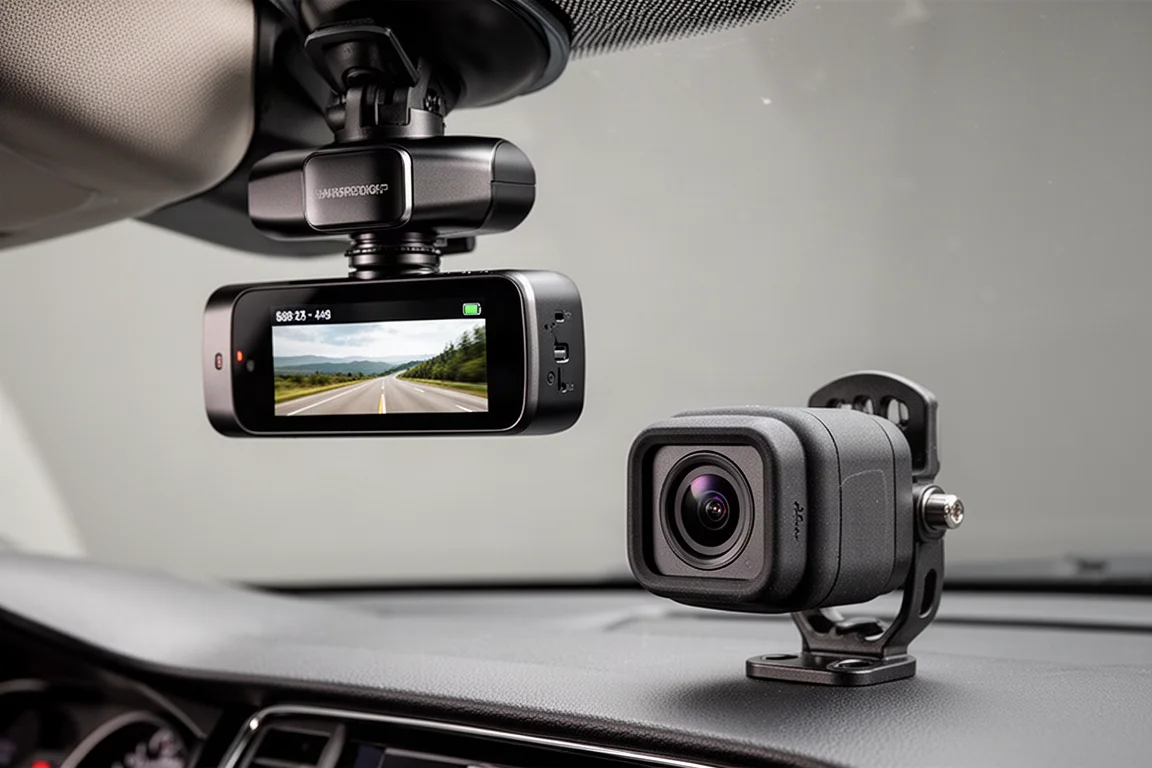
Vantrue has been making steady progress with its dash cam lineup, and the latest updates focus on connectivity, heat management, and a genuinely new approach to road awareness. The most interesting addition is the Pilot 2, a four-channel system that includes a thermal camera channel designed to detect people and animals ahead of the vehicle. Alongside that, the updated Nexus series now supports LTE for cloud connectivity, and the company is working on improvements to parking mode and menu design.
The Updated Nexus Line
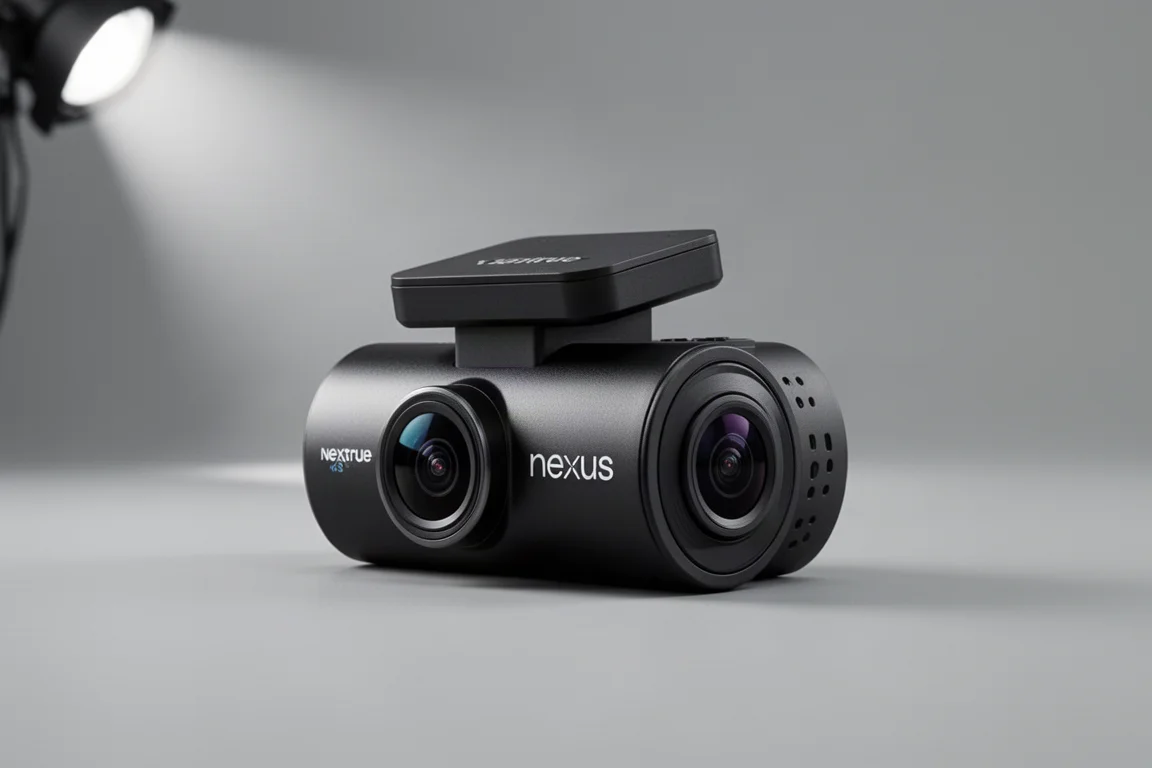
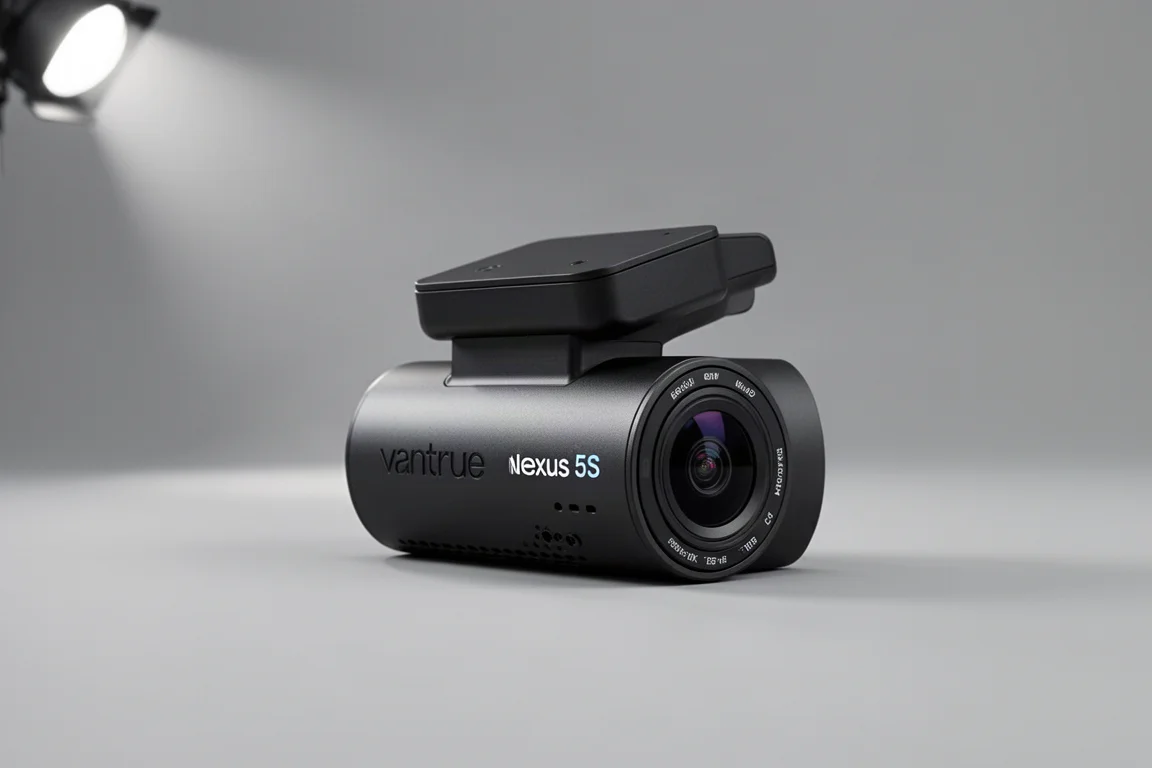
The most recently released models in the Nexus series include the Nexus 4S, Nexus 4 Pro, and Nexus 5S. The biggest update across these new models is support for LTE cloud connectivity. This means the dash cams can stay connected when parked or away from home, which is particularly useful for drivers who want remote access to their recordings.
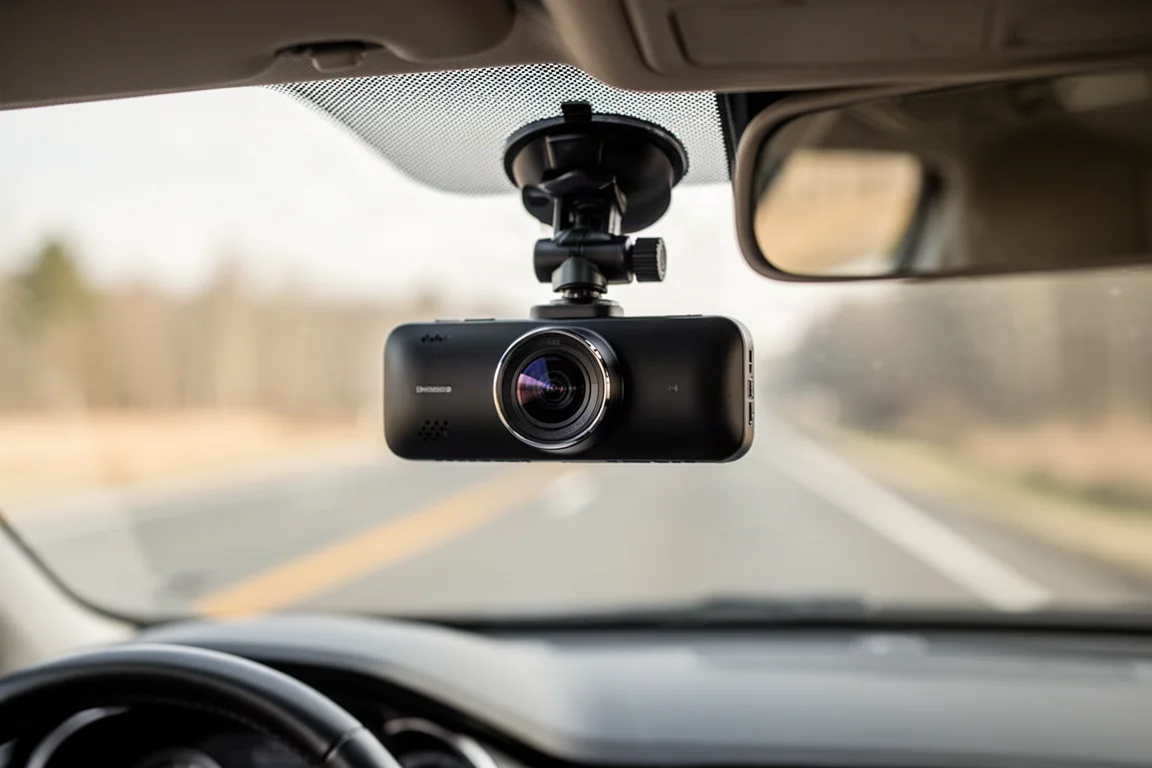
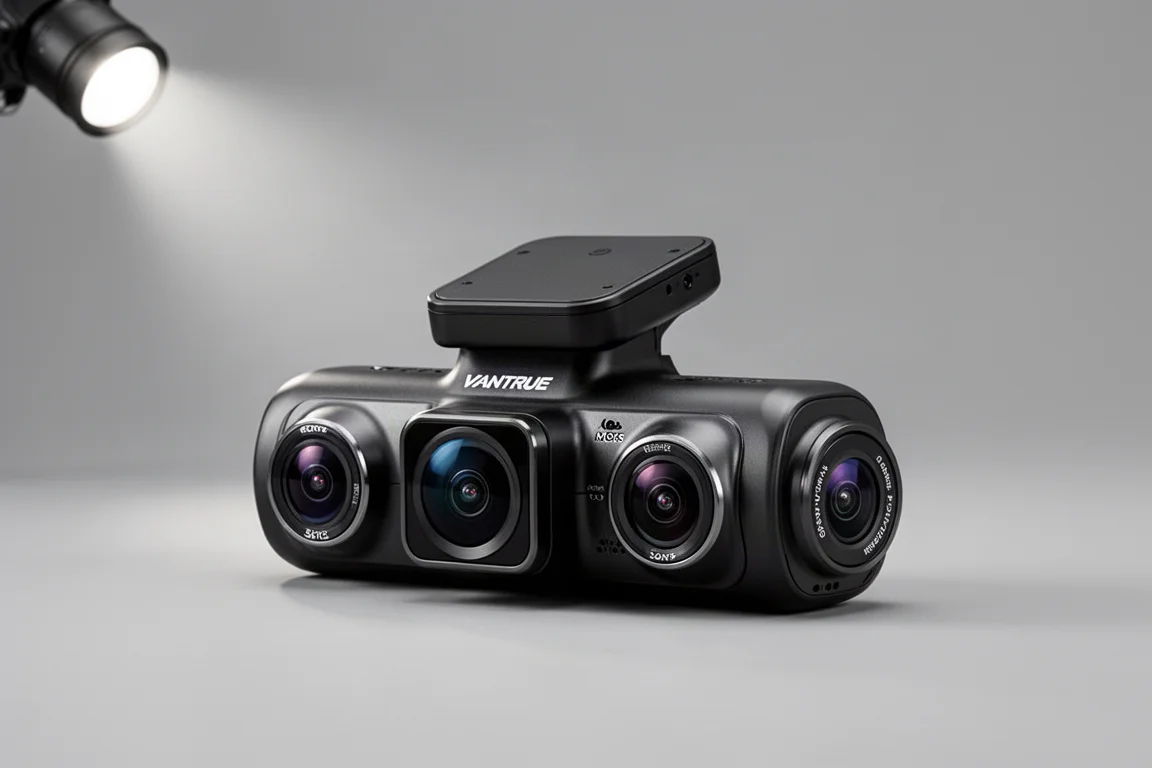
The Nexus 4 Pro stands out as a personal favorite. One of the key changes for this model is the use of Sony Starvis 2 sensors across all three cameras. This upgrade improves low-light performance, which matters for nighttime driving and parking recording. The Nexus 4 Pro is positioned as a strong option for ride-share drivers, including Uber, Lyft, and taxi operators, thanks to its three-channel coverage and cloud connectivity.
LTE Connectivity Across the Lineup
The LTE module is designed to plug directly into the dash cam to provide cloud connectivity. Vantrue recently released an updated version of this module with the goal of improving connection reliability and stability. The company plans to add LTE connectivity across its entire line of dash cams, and fleet connectivity is expected to arrive next year. Improving the connection and stability of LTE functionality is a clear priority for the company.
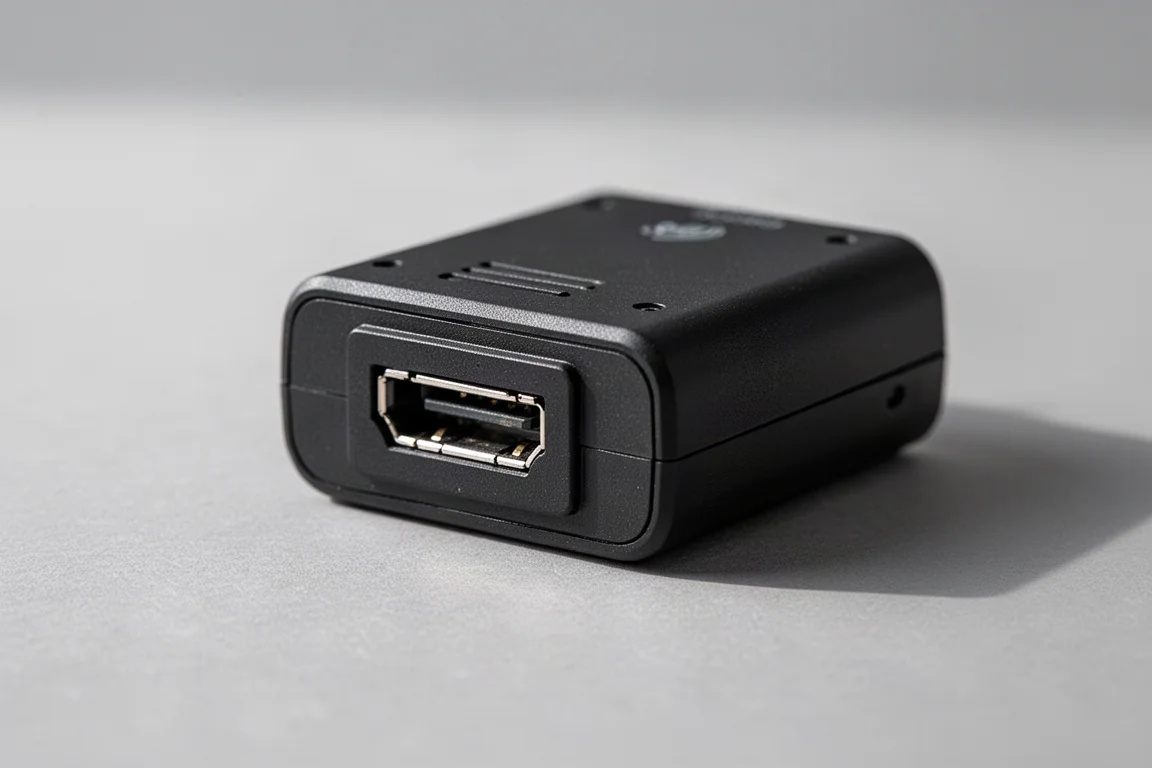
For drivers who rely on remote monitoring, a stable LTE connection is essential. The updated module is a response to earlier reliability concerns, and the focus on stability suggests the company is listening to feedback. This is especially relevant for commercial drivers and fleet operators who need dependable cloud access.
Heat Management Improvements
Another priority for Vantrue is addressing heat issues, particularly with models like the E1 Pro. The E1 Pro is a compact 4K Starvis 2 dash cam, but it gets very hot to the touch. The company wants to make improvements to keep the dash cam cooler, both for user comfort and to avoid overheating issues that could cause the device to shut off. Similar improvements are planned for the Nexus line as well.
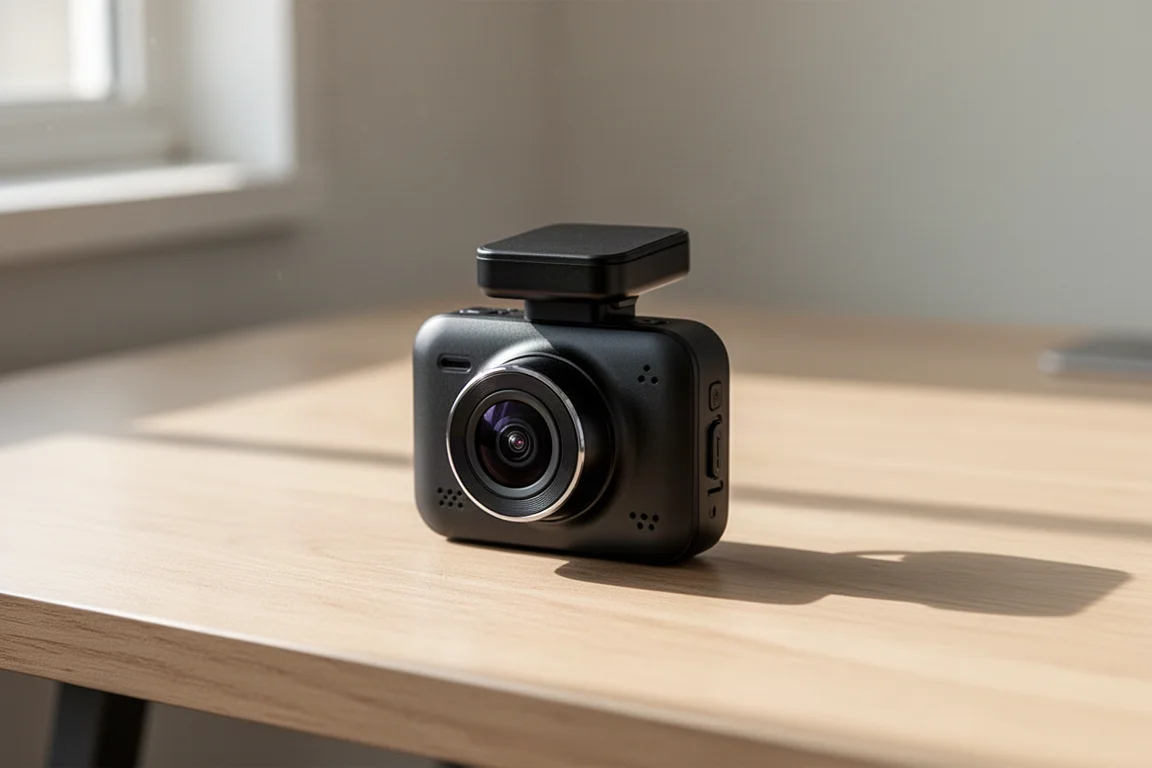
Heat management is a common challenge for compact 4K dash cams, especially in warmer climates or when the camera is exposed to direct sunlight. The planned improvements should make the E1 Pro more comfortable to handle and more reliable in demanding conditions.
Parking Mode and Menu Improvements
Vantrue is also working on improving parking recording capabilities, specifically the time it takes for the dash cam to wake up when it detects an impact. In testing, the Nexus 4 Pro performed poorly in both its power-saving mode and its quick-start mode when it came to startup times. The company is looking to improve these startup times so the dash cam begins recording faster after an impact is detected.
The menu system is also getting an overhaul. Vantrue plans to introduce a set of basic settings and expert settings, both in the dash cam itself and in the companion app. This gives users the option to control just the most important settings or dive into the details, depending on their preference.
The New Pilot 2 with Thermal Camera
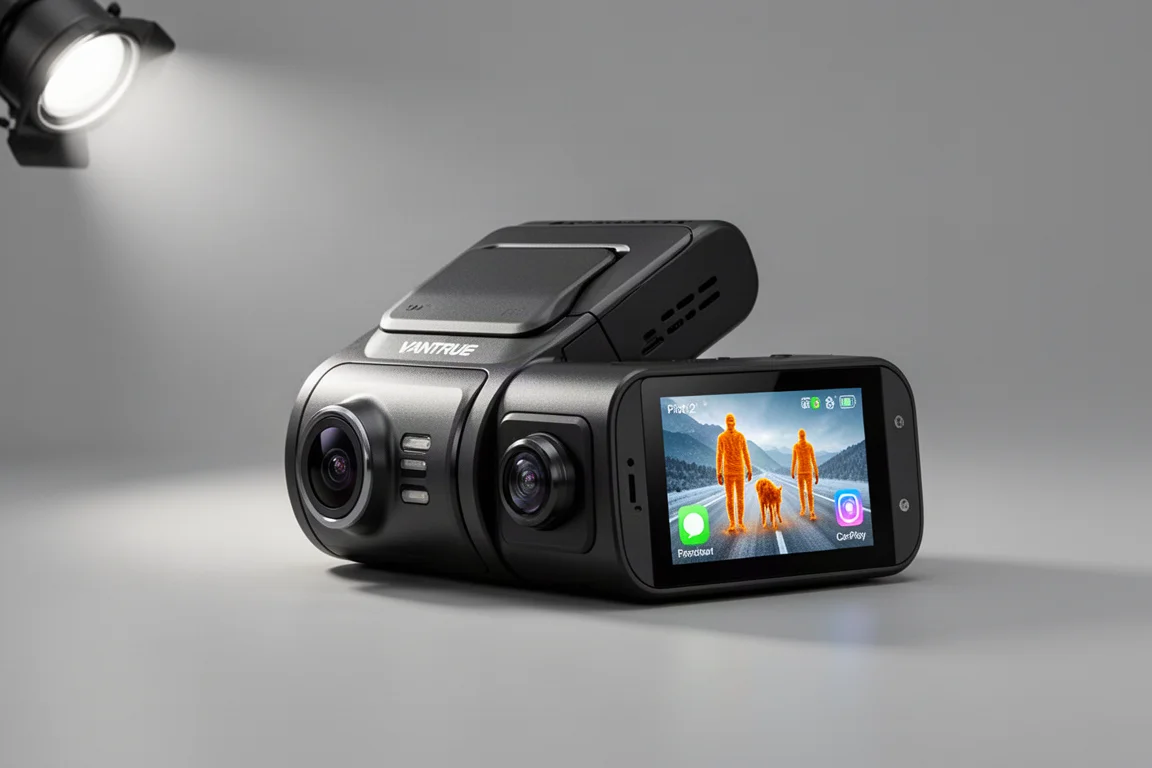
The most exciting introduction is the Pilot 2, a four-channel dash cam where one of the channels is a thermal camera. The system includes front, rear, and interior recording like a traditional three-channel setup, with 2K, 2K, and 1080p resolution respectively. The new thermal camera looks up the road ahead to detect the heat of people or animals and alerts the driver inside the car, even if the standard cameras cannot see them.
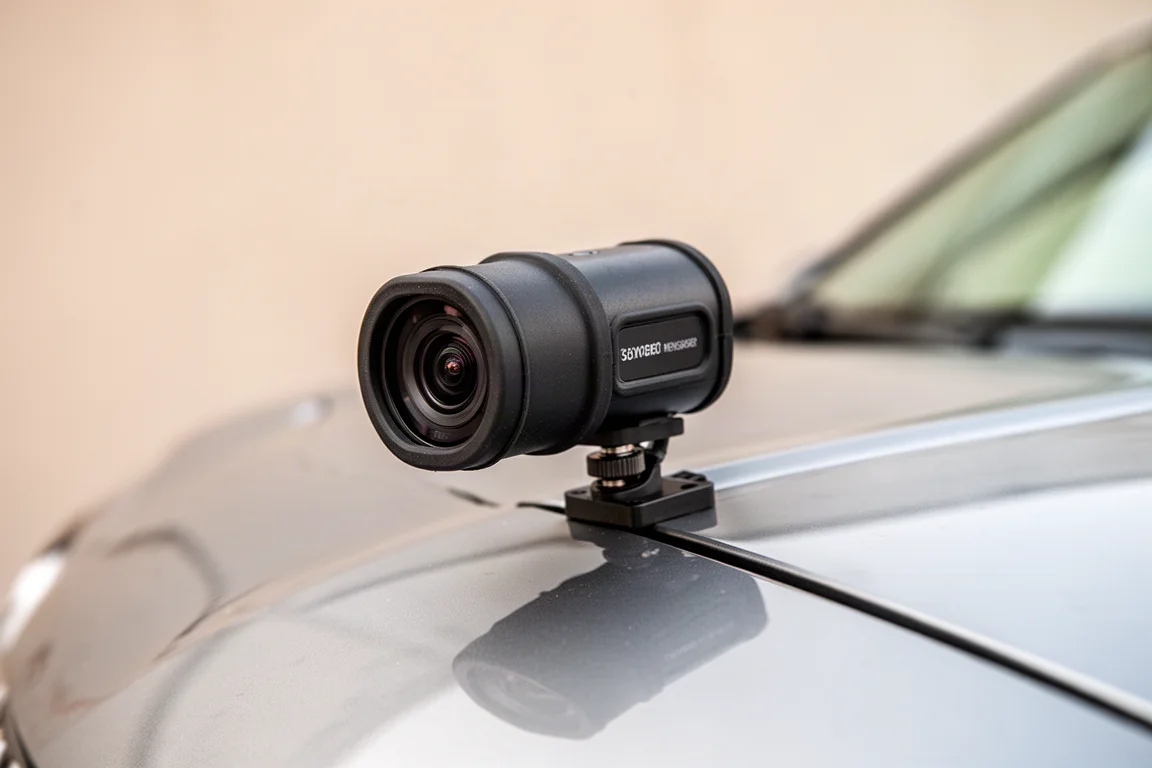
The thermal camera is installed on the hood, clamped to the back of the hood, which the company says is the optimal location. It can also be installed in the grill area, but visibility is reduced because it sits lower to the ground. The thermal camera comes with a protective rubber housing that can be slid off, and an adapter is available for attaching it to the front license plate.
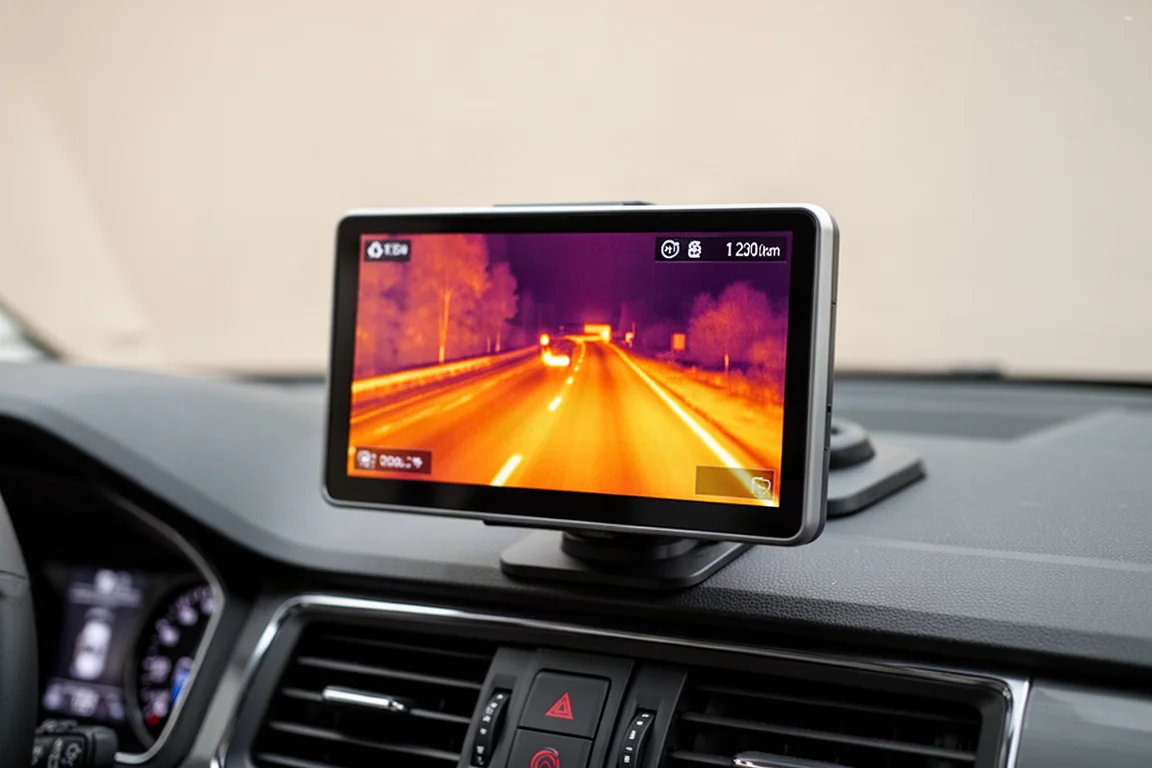
The thermal camera can detect objects at a distance of about 60 meters. As the vehicle gets closer, the system improves its ability to identify and classify objects as a person or an animal. The camera can also beep to alert the driver, for example, if someone is crossing in front of the car.
Pilot 2 Display and CarPlay Support
To view and hear what the thermal camera captures, the Pilot 2 comes with a dedicated display. This display shows the three traditional dash cam feeds as well as the thermal camera feed. As a bonus, the display also supports Apple CarPlay, so it can double as a dedicated display for navigation, Spotify, and other phone-based apps.
The Pilot 2 is expected to launch in March of next year on Kickstarter. The MSRP is set at $599, though it will typically be available for around $500. During the Kickstarter campaign, it will be available at an even lower price.
The thermal camera concept is something not many other dash cam manufacturers offer. It remains to be seen how well it works in practice once finalized, but it is a creative approach to improving road safety by detecting potential hazards that standard cameras might miss.
Overall Buying Advice
For ride-share drivers and commercial users, the Nexus 4 Pro with its Sony Starvis 2 sensors and LTE connectivity is a compelling choice. The updated LTE module should provide more reliable cloud access, which is important for remote monitoring.
For those who want a compact 4K dash cam, the E1 Pro remains a solid option, though the heat issues are worth keeping in mind. The planned improvements should address this in future revisions.
The Pilot 2 is the most intriguing product in the lineup, but it is still in development. If the thermal camera works as intended, it could be a valuable safety tool for detecting pedestrians and animals on the road. The Kickstarter launch will be the moment to watch for early adopters.
Conclusion
Vantrue is clearly investing in connectivity and safety features that go beyond the standard dash cam formula. The updated Nexus line with LTE support addresses the needs of modern drivers who want remote access, while the Pilot 2 with its thermal camera channel represents a genuinely new approach to hazard detection. The company’s focus on heat management, parking mode startup times, and menu usability shows a commitment to refining the details that matter in daily use. The Pilot 2 is the one to watch when it launches, but the entire updated lineup offers something for different types of drivers.
Further reading
Related Reviews

Dash Cams
70mai 4K T800 Dash Cam Review: Three-Channel Coverage With 4K Front and Rear
A three-channel dash cam with 4K front and rear recording, dual Sony Starvis 2 sensors, and optional 4G connectivity for remote vehicle tracking.
Dash Cams
70mai M310 Review: A $33 Dash Cam That Covers the Basics
The 70mai M310 is an ultra-budget dash cam that records at 1296p, offers basic parking modes, and works with a Wi-Fi app. Here is how it performs and who it suits.
Dash Cams
Best Dash Cam Black Friday Deals 2026: Top Picks Across Every Price Point
A practical guide to the best dash cam deals this Black Friday, covering front-only, multi-channel, cloud-connected, and budget-friendly options.