Gravel Bikes
Van Rysel EDR-G Review: A Versatile Carbon Gravel Bike Built for Adventure
A practical look at the Van Rysel EDR-G, a carbon gravel bike designed for adventure, touring and everyday riding rather than racing.
Introduction
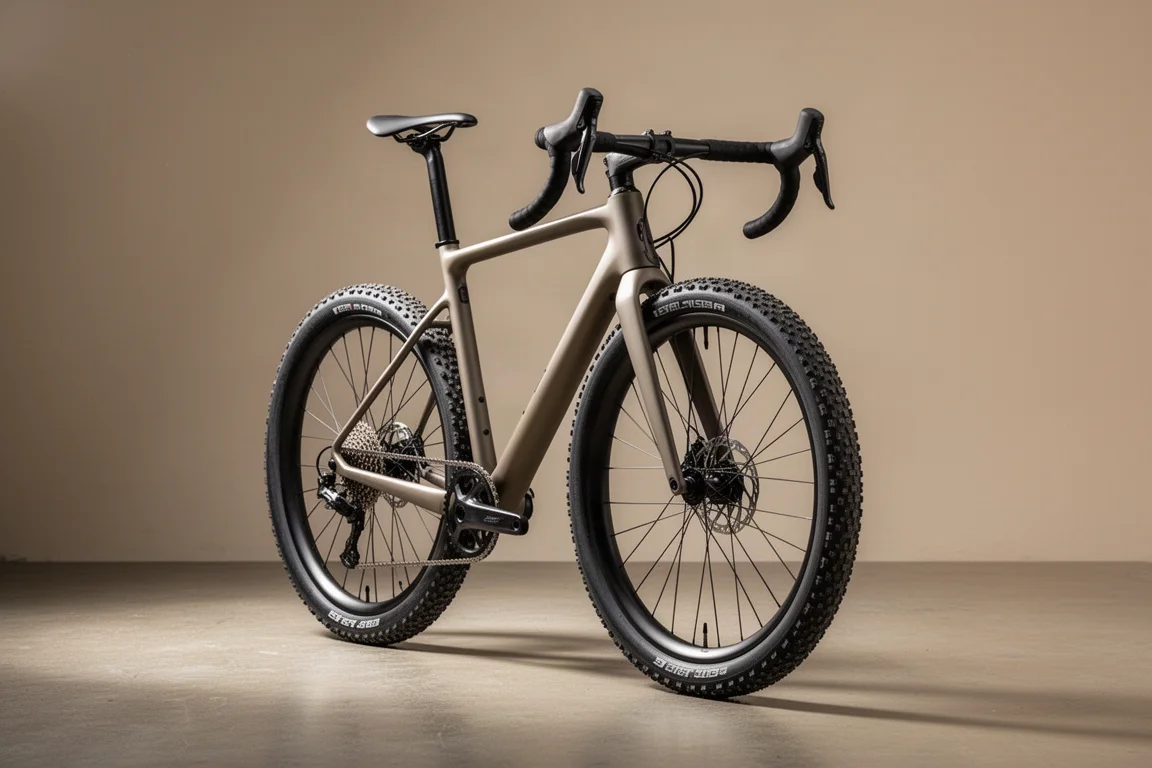
The Van Rysel EDR-G is a new carbon gravel bike built for riders who want a single drop-bar machine that handles almost everything. It is not a gravel race bike, and it does not pretend to be. The brief is accessibility: a bike that works for gravel riding done for fun, adventure and discovery, and that adapts just as readily to road riding, touring, commuting and bikepacking.
For riders who do want to race, Van Rysel has also introduced the RCR G, a separate model aimed at competition. The EDR-G sits on the other side of that divide, which is exactly what makes it interesting.
The range starts at just over £2,000 with Shimano GRX groupsets, rises to £2,700 with SRAM Rival, and includes a model with a RockShox Rudy suspension fork at £3,500. The top model covered here runs a SRAM Force Explore groupset and retails at €3,200, although it is initially available only in France and China. US pricing was not confirmed at launch.
Who This Bike Is For
This is a bike for riders who want one bicycle to cover a wide range of surfaces and purposes. That includes newer gravel riders looking for a stable, friendly platform, commuters and towpath cruisers, and tourers or bikepackers who need mounts, storage and a fit that stays comfortable over long days.
The design and the price are both pitched at accessibility. The fit works for a broad range of experience and ability levels, and the bike is easy to enjoy straight away on the road, on canal towpaths or on gravel. Riders who already own a race-focused gravel bike are unlikely to be the target here. Riders who want a single bike that covers road, gravel, touring, commuting and bikepacking are.
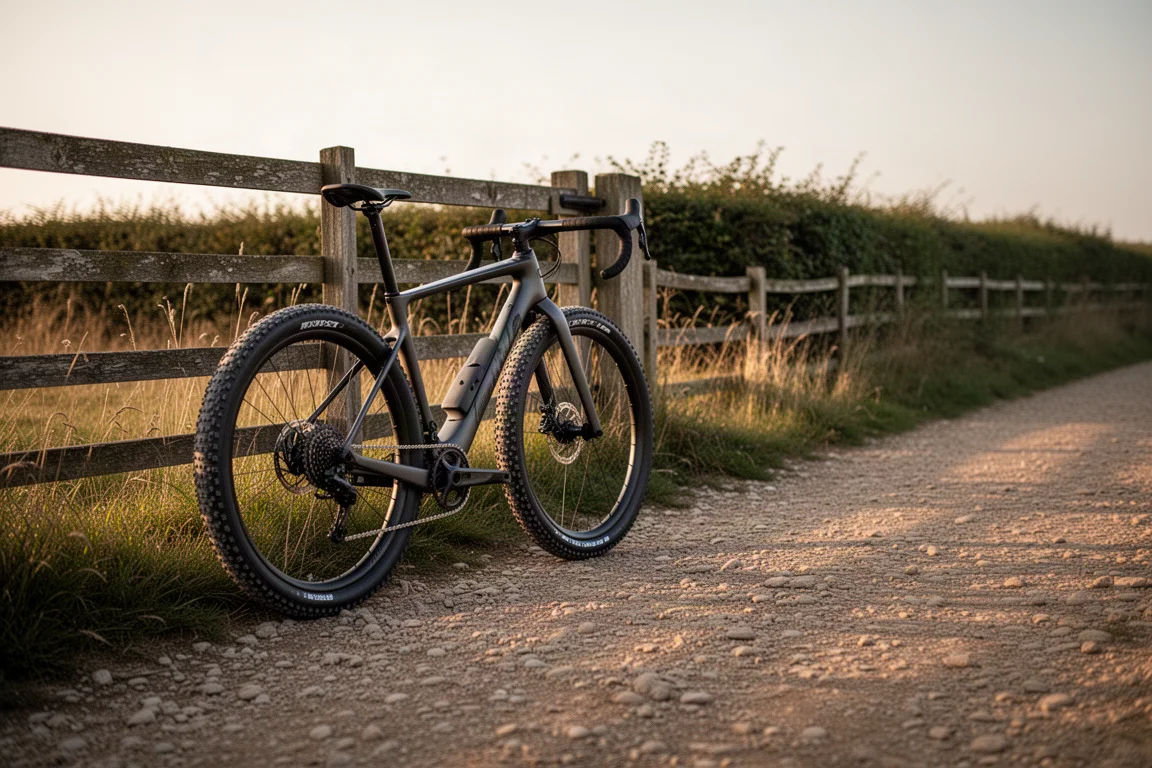
That breadth is the real argument for the EDR-G. Rather than specialising hard in one discipline and asking the rider to work around its limitations, it spreads its capability evenly and stays pleasant in each of those roles.
Frame, Geometry, and Ride Position
The geometry is relaxed, with a high stack and a short reach. The Giant Revolt is a useful reference point, and the two are surprisingly similar in how they are proportioned. That translates into a fairly upright position on the bike and a short, approachable reach to the bars.
In some ways the EDR-G feels like an endurance road bike fitted with fat tyres. With a 35 or 40 mm slick fitted, it would make a decent road bike as well, which reinforces the two-bikes-in-one idea. Splitting the difference with a tyre that has a slick centre section, such as a Pathfinder or a G-One RS, is another sensible option for riders who spend most of their time on tarmac with occasional gravel detours.
The saddle is comfortable and the overall fit is good from the first ride. Nothing about the position asks the rider to adapt to it, which is consistent with the accessible brief.
Main Strengths
The frame is carbon fibre, and the complete bike weighed 8.5 kg without pedals. That is not exceptionally light, but it is a reasonable figure for a bike with this level of componentry at this price.
Versatility is where the EDR-G earns its place. There are 15 mounts across the frame and fork for bags, bottles and bikepacking kit. Tyre clearance is 50 mm, with a 45 mm tyre fitted as standard, which covers the needs of most riders even if some may wish for more.
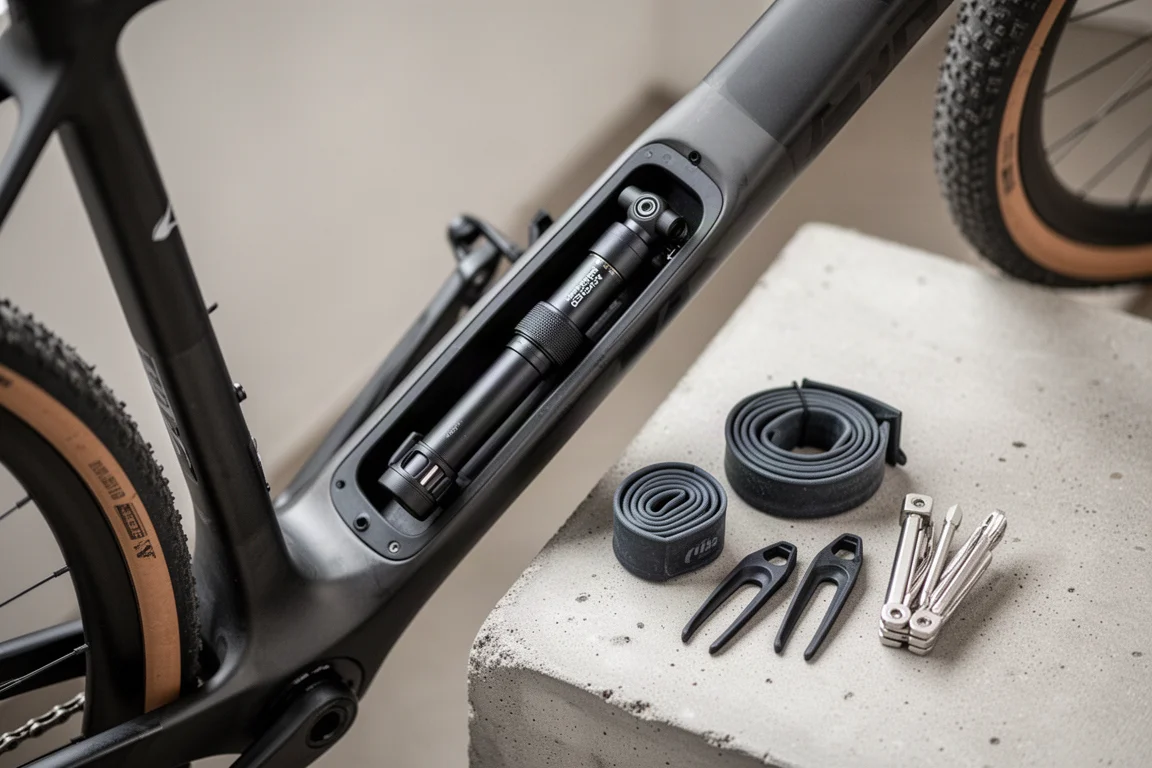
Internal frame storage is a particularly strong feature for adventure riding. The cover sits on the top section of the down tube, separate from the bottle cage position, and it comes pre-loaded with a mini pump attached to a bag, a lightweight TPU inner tube, two tyre levers and a multi-tool. Everything needed to get out of a mechanical problem on a trail is included with the bike. The cover is a large plastic panel, and it does not rattle or shake in use.
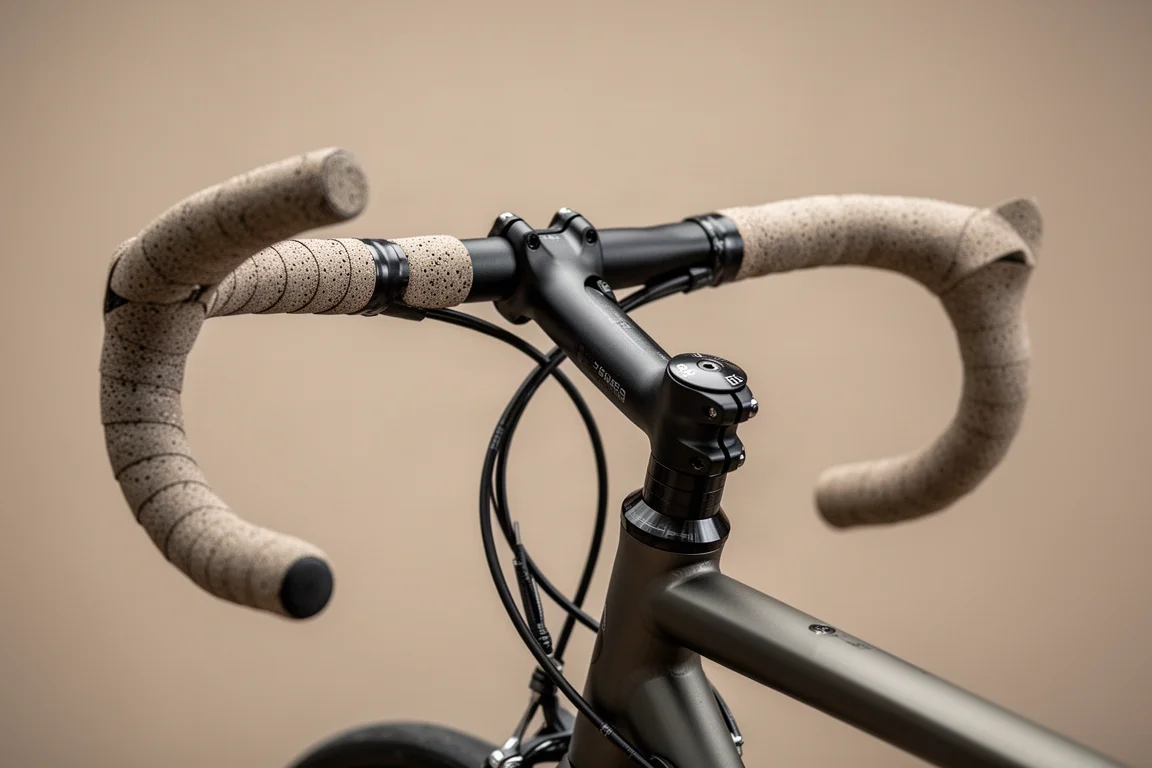
The flared gravel handlebar is another highlight. It has a generous 24 degrees of flare, which is extreme in the drops and gives extra control on steep descents, plus a slight rise at the top for a little more height at the front end.
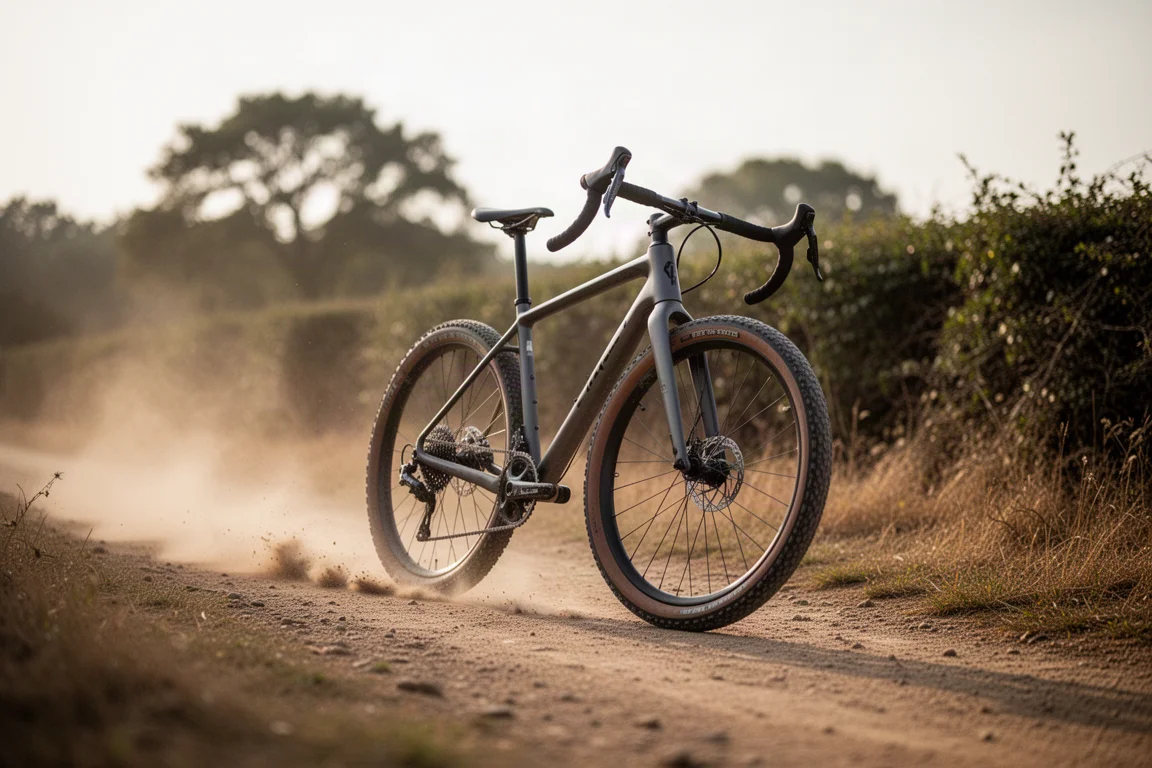
Cable routing is semi-internal. The brake hoses run externally off the handlebar and stem, wrapped neatly around the bar before dropping below the stem into the frame. That keeps the cockpit clean and modern, reduces clutter when a handlebar bag is fitted, and still allows the handlebar or stem to be swapped for a different length or shape. A suspension stem should also be possible, since the steerer tube underneath the cover is round.
Component Choices and Practical Details
The top model uses a SRAM Force Explore groupset in a 1x13 configuration, with a 13-speed cassette ranging from 10 to 46 teeth and a single 42-tooth chainring at the front. In practice that provides plenty of range for steep climbs and enough speed for fast flat roads on a bike of this type.
The wheels are Van Rysel’s own new carbon design, with shallow rims rather than deep aero profiles. The thinking is durability and low weight rather than aerodynamic gain, and they are laced to DT Swiss hubs. These are not the highest-level hubs in the range, but they work well, and spares are easy to source online or from a local bike shop. Claimed wheel weight is 1,600 g, which is not especially light for such a shallow rim, so the hubs and spokes are carrying a little extra mass.
Tyres are 45 mm Schwalbe gravel tyres, run at around 25 PSI front and rear. They are not the fastest-rolling option on tarmac, but they offer plenty of grip and cornering and braking traction on gravel, and they will not hold a rider back unless the goal is club-run or chain-gang pace.
The seat post is a round 27.2 mm standard, which opens up options. A setback post, a flex-friendly post, a suspension post or a dropper post can all be fitted. There is a tidy internal bolt for adjustment and a rubber flap to keep rain out of the frame.
Ride Quality on Gravel and Road
The immediate impression is of a very pleasant bike. The position is upright and short, the handlebar shape works well, the saddle is comfortable and the tyres roll quickly. On dry, dusty, fast gravel in prime condition, the bike feels composed and easy to place.
The EDR-G is not aero optimised, nor is it super stiff and super lightweight in the way a dedicated race machine is. Even so, it does not feel slow. A large part of outright speed comes down to the rider, and the component choices here are smart ones for the intended use.
The ride is on the firm side. On very hard-packed dry gravel, dropping tyre pressures a little helps smooth things out. There is not much give in the seat post, and a flexier or layback post would encourage more compliance. The front end is stout and stiff as well. It never beats the rider up, but it could be a touch more supple when the trail gets rough and speed increases.
Overall the ride character sits close to the Canyon Grizl and the Giant Revolt, two well-regarded all-round, do-everything gravel bikes. The wheels feel stiff, and while they are neither the lightest nor the most aerodynamic option available, they are perfectly serviceable at this price point.
None of this changes the core conclusion. As a drop-bar bike for road, gravel, touring, commuting and bikepacking, the EDR-G performs the job it was designed for, and it does so without any obvious weak point in how it rides.
Things to Consider Before Buying
Compliance is the first thing to weigh up. The frame and front end are firm, and riders who spend most of their time on rough, fast gravel may want to plan for a more forgiving seat post or slightly lower tyre pressures.
Wheel weight is the second consideration. A claimed 1,600 g for a shallow carbon rim is not remarkable, and the hubs and spokes account for some of that. Riders chasing the lightest possible build should factor that in.
Tyre clearance of 50 mm is generous enough for most riders, but it is worth noting that some may have expected closer to 55 mm on a bike positioned this squarely at adventure riding. A 45 mm tyre remains a good, capable choice for the vast majority of riding.
Availability is a practical limitation. The top model is initially sold only in France and China, and US pricing had not been confirmed at launch, so buyers outside those markets will need to check what is actually offered locally.
Finally, this is not a race bike. Riders who want to compete should look at the RCR G instead. The EDR-G is at its best when the goal is enjoyment, distance and variety rather than a start line.
Buying Advice
Pricing is a clear strength of the EDR-G range. It starts at just over £2,000 with Shimano GRX groupsets, moves to £2,700 with SRAM Rival, and reaches £3,500 for the model with a RockShox Rudy suspension fork. The SRAM Force Explore model covered here sits at €3,200. Across that spread, the bike compares very well with other options on the market.
The sensible way to choose is to match the model to the terrain. Riders who mostly stay on smoother gravel, towpaths and tarmac will be well served by the GRX or Rival builds. Riders who regularly tackle rougher, looser surfaces have a clear reason to consider the suspension fork model.
The pre-loaded internal storage kit adds real value, since the pump, TPU inner tube, tyre levers and multi-tool are included rather than bought separately. That is the kind of detail that makes the bike easier to live with from day one, particularly for bikepacking and longer adventure rides.
Buyers should also confirm local availability before committing, given the limited initial launch markets for the top model, and consider tyre choice as part of the purchase. A 45 mm gravel tyre covers most riding well, while a slick-centred option will suit riders who spend more time on the road.
Riders who want one bike that does everything, rather than two or three specialist machines, will find the EDR-G a straightforward and well-considered answer to that requirement.
Conclusion
The Van Rysel EDR-G meets its brief convincingly. It is an accessible, versatile carbon drop-bar bike that handles road riding, gravel, touring, commuting and bikepacking without needing to be defended or explained. It is not designed for racing, but it does not feel slow, and the equipment choices are sensible for the way most riders actually use a bike like this.
There is very little to fault. The firm ride and the modest wheel weight are the main points to note, and both are minor in the context of the price and the breadth of capability on offer. The relaxed geometry, the flared handlebar, the generous mounts and the pre-loaded internal storage all add up to a bike that is easy to recommend for riders who want a single, adaptable machine.
If the EDR-G matches the kind of riding you actually do, it is a well-priced and genuinely capable option worth moving on quickly.
Product link
View more details for Van Rysel EDR-G
This product is mentioned in the review. Check the specifications, options, and compatibility before buying.
View more details for Van Rysel EDR-GFurther reading
Related Reviews
Gravel Bikes
3T Exploro Ultra Review: A Fast Gravel Bike Built for Big Tyres
A close look at the 3T Exploro Ultra, an aero carbon gravel bike designed around wide tyres, with road-like handling, a 980 g frame and genuine rough-terrain capability.
Gravel Bikes
3T Extrema Italia Review: Aero Gravel Speed With Room for 57 mm Tires
The 3T Extrema Italia pairs an aero frame with huge tire clearance, Italian-made carbon and a more comfortable ride than the RaceMax. Here is what to know before buying.
Gravel Bikes
3T Race Max 2 Italia Review: An Aero Gravel Race Bike Made in Italy
A closer look at the second-generation 3T Race Max 2 Italia, covering its aero updates, ride character, tire clearance, internal storage and who it suits.