Tool Storage
US General Rolling Tool Cabinet Buyer's Guide: 27, 42, 56, and 72-Inch Compared
Four US General rolling tool cabinets compared on storage volume, drawer layout, pricing, and which one makes sense for your space.
Introduction
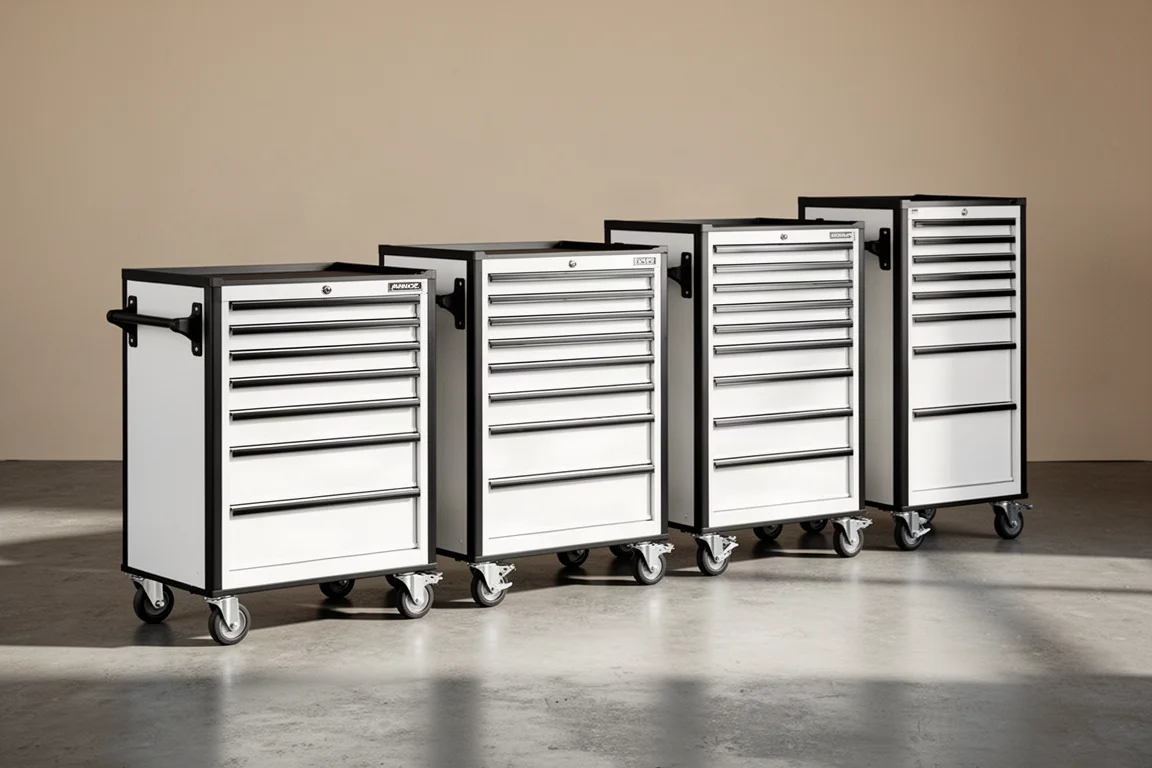
If you have been shopping for a US General rolling tool cabinet, the lineup can be genuinely confusing. There is the 27, the 42, the 56x22, and the 72, plus an old 26-inch Series 2 listing that still lingers online even though the product itself no longer exists. This guide breaks down how all four differ in size, drawer layout, storage volume, and price, and helps you pick the right one for your space.
One important thing to know up front: the cabinets come in two height groups. The 27 and 42 share the same height and wheel style, and the 56 and 72 share another. Cabinets from different groups do not line up on the top or bottom. If you want a flush work surface across two units, you can either swap replacement wheels (56 wheels onto a 42 or 27) or use spacer blocks with longer bolts to raise the smaller cabinet’s wheels. Both approaches work, and the blocks are the cheaper route.
US General 27-Inch Rolling Tool Cabinet
The 27-inch is the smallest of the current lineup and lands at a list price of $400. Measured from the inside, it genuinely comes in at 27 inches, with the handle adding about three more. It carries a really firm, rigid rubber mat on top, closer to what you would find on professional-grade boxes than typical consumer units. Underneath is standard painted metal with mounting holes, so you can bolt down a wood surface or even a vise. It uses a single lock that secures all drawers at once.
Drawer specs: one top drawer at about 5 inches deep, four drawers at 2.5 inches, and two bottom drawers at 5 inches, with drawer depth around 19.5 inches and a total width around 22.5 inches. You get more than full drawer extension, and the slides are rock solid with no wiggle. Most drawers run on single rails; the bottom drawer is double-railed.
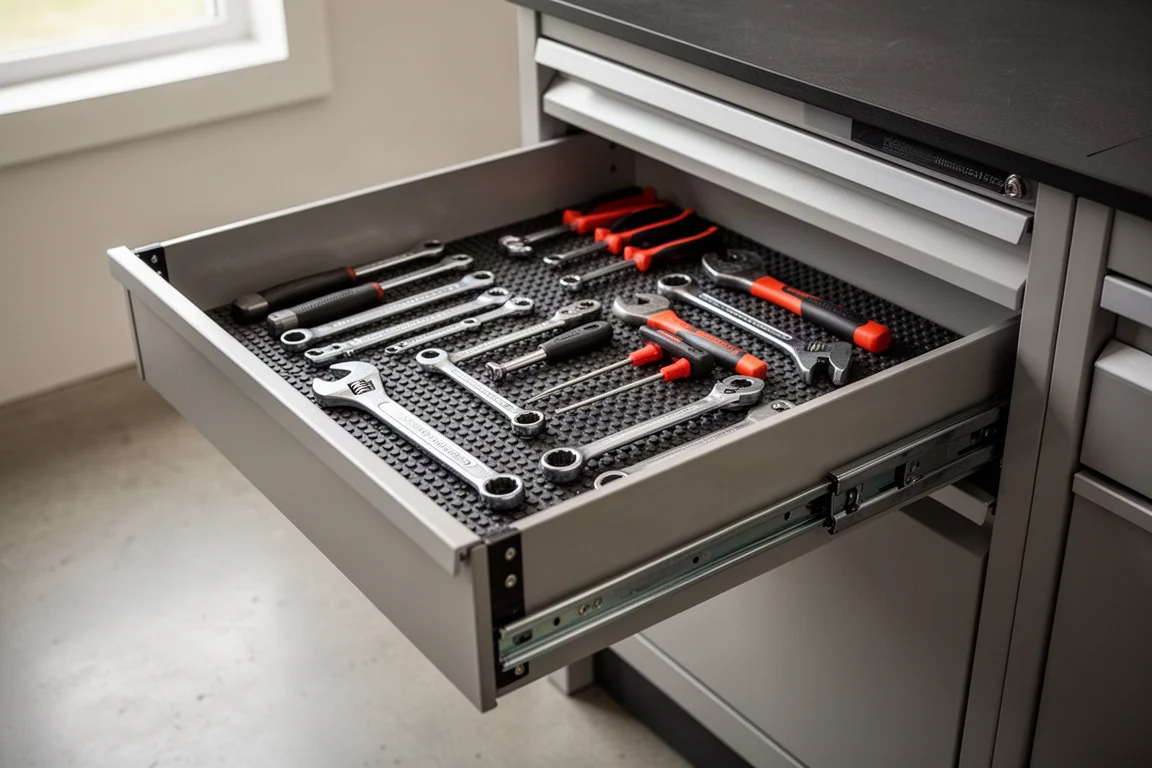
One quirk of these cabinets is the drawer latches. Many people dislike them, and the good news is they remove easily: just lift up with your thumb on the inside and they strip right out in about ten seconds. The drawers already have built-in detent resistance of roughly four to five pounds, so latches are not really needed for home use. If you do move the cabinet around a lot, the lock secures the drawers instead. The 27 is clearly the least efficient of the four in terms of usable layout, with narrow segmented trays in the top box area and limited hutch space, but for a small area or as a dedicated station (one owner runs a large 3D printer on top of theirs), it works very well. For home use, it is often a better pick than the five-drawer tool cart.
US General 42-Inch Rolling Tool Cabinet
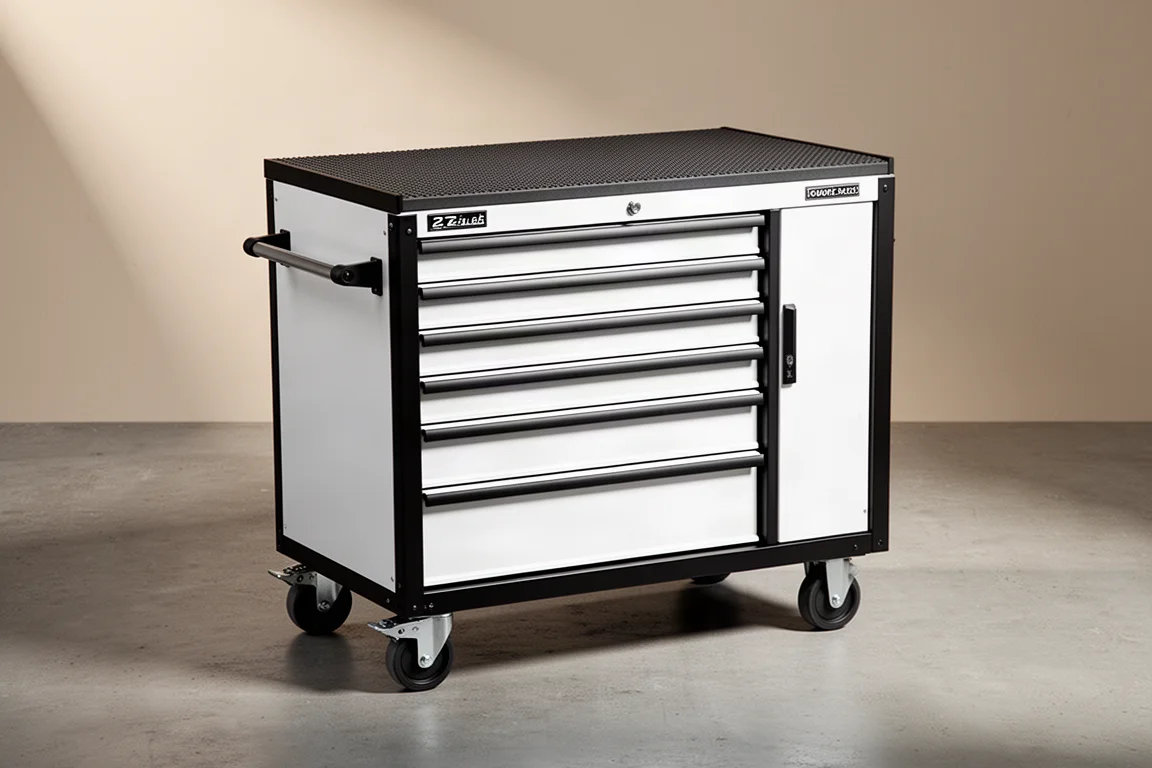
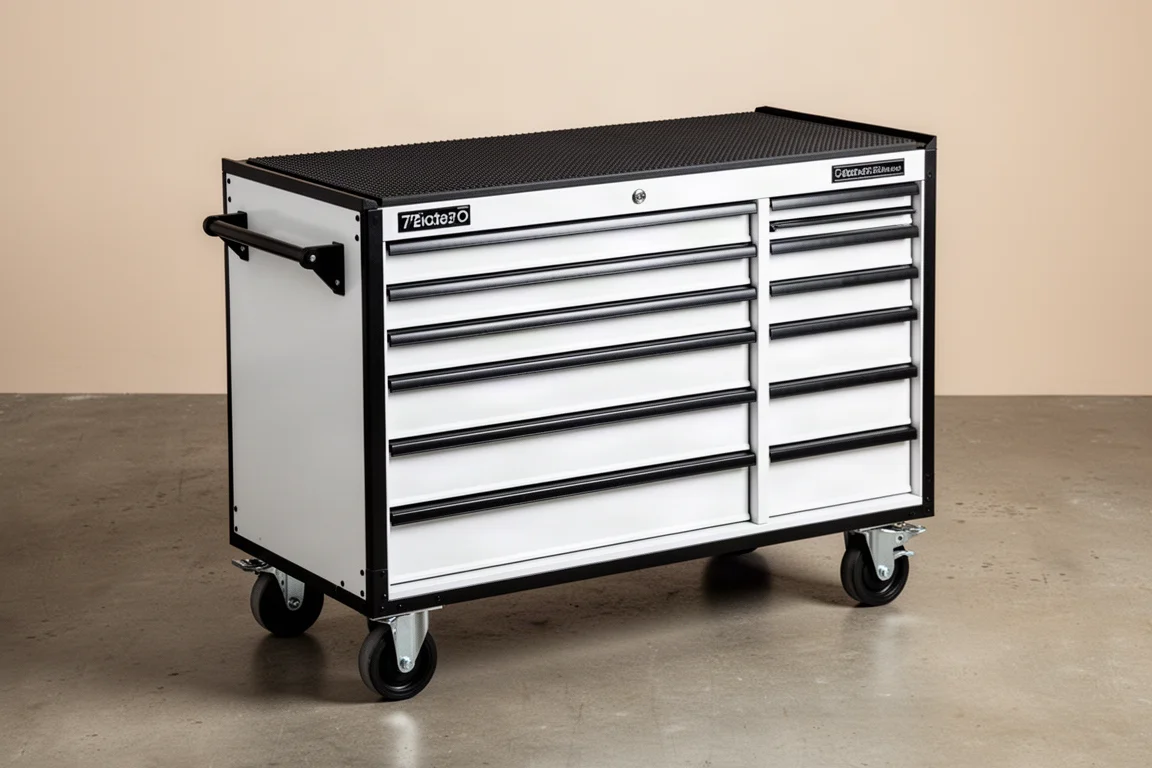
The 42-inch is a great home-gamer cart at a $600 list price. It uses the same wheels and height as the 27, so the two pair up perfectly side by side. The drawer layout runs the full width: two full-length top drawers, which is a real highlight for fitting larger items, followed by two 2.5-inch drawers and two 5-inch drawers, with double rails on the deeper drawers and single rails on the shallower ones. Full extension across the board, and the single lock secures everything.
With roughly 16,790 cubic inches of storage, it is a huge step up from the 27. The two full-length top drawers suit standup socket storage, with wrenches and larger power tools below. It is compact enough that a pro shop owner nearby uses one as a second cart. Note there is no hutch option for the 42; that request has essentially been declined, so do not plan around one.
US General 56x22-Inch Rolling Tool Cabinet
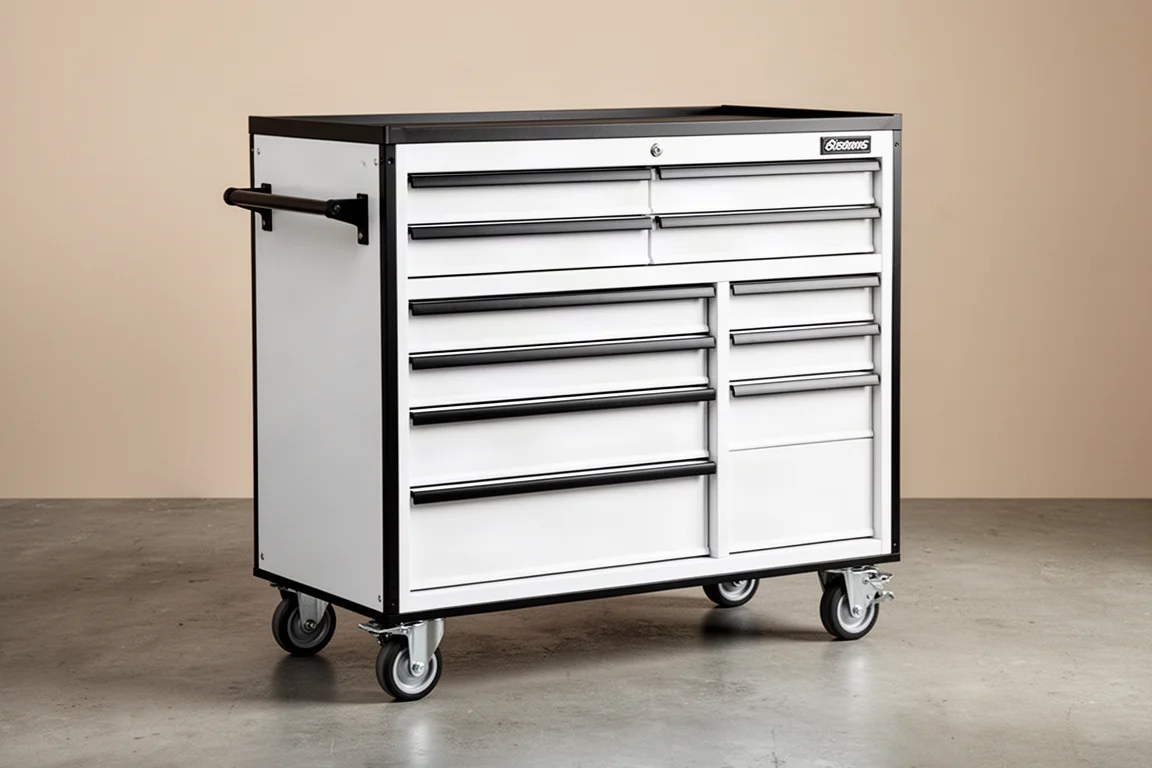
The 56x22 steps up to a $900 list price and marks where the lineup gets serious. All US General cabinets share a 22-inch depth except for the full-bank cart, and here you gain access to a hutch, something the 27 and 42 do not offer. Storage volume jumps to about 23,500 cubic inches, a big gain over the 42’s 16,790. Many people consider the 56 the best bang for the buck in the lineup, and that view is hard to argue with at this price point.
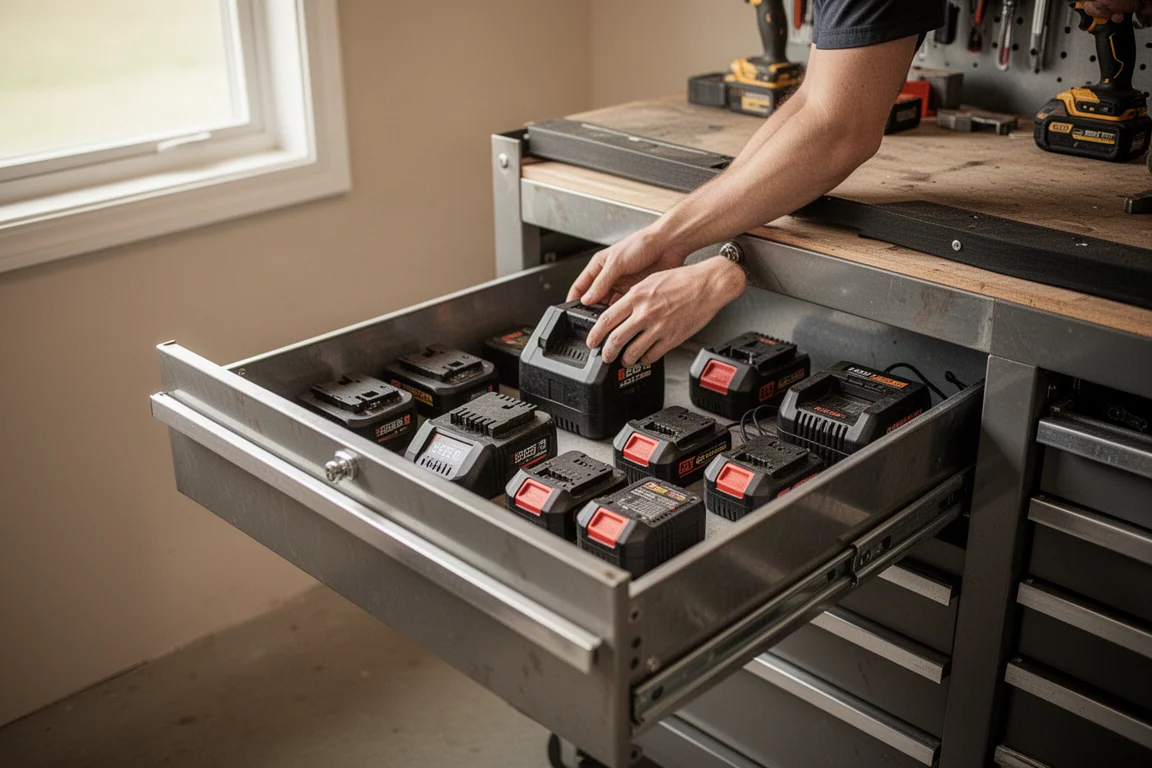
The standout feature is the power drawer, available only on the 56 and 72. It measures 19.5 inches wide with a usable 10.5 inches and a 5.5-inch depth, and includes a power strip with five 120V outlets, one USB-A port, one USB-C port, and a breaker switch. The catch is clearance: a dual-port charger with a 5Ah battery will not fit, the 4Ah battery clears just barely, and an 8Ah battery has no chance, even with the rubber mat removed. A workable setup is the 12V charger, an 8A rapid charger, and standard chargers with smaller batteries, leaving room for a phone or other small devices below.
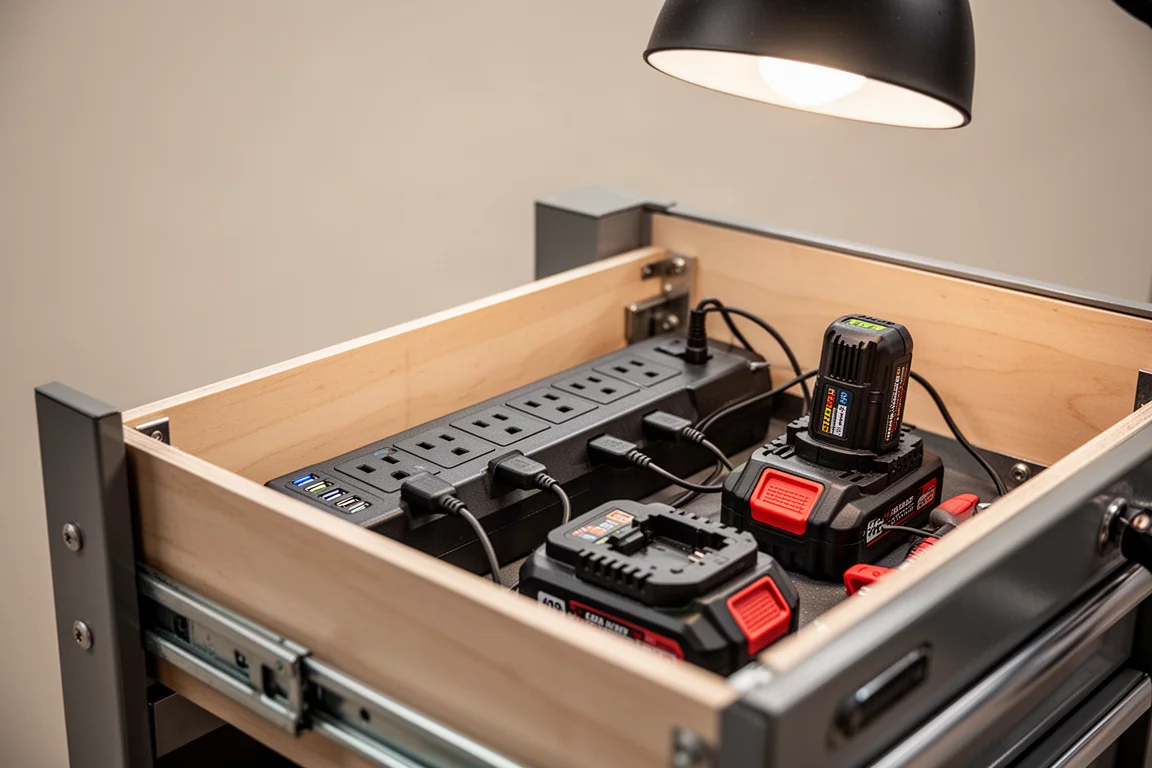
Honestly, the power drawer makes most sense for pros in shared shops who need to lock chargers away. In a private shop, charging on the worktop is simpler and more practical. The bottom drawer on this unit is generous too, at nearly 13 inches deep, deep enough to satisfy anyone storing large chargers or bulky gear.
72-Inch Cabinet vs Two 56s: The Real Question
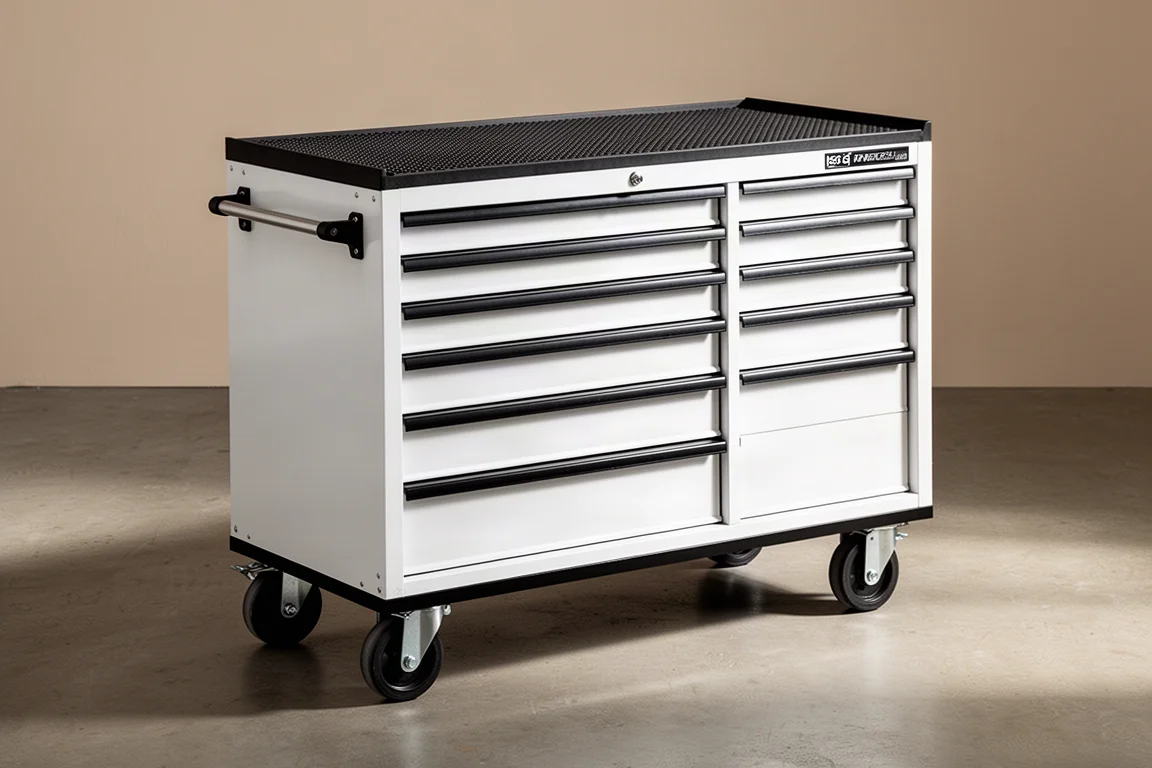
The 72-inch sits at the top of the lineup. It is not on sale at $1,800 for the configuration with the power drawer, and sales do happen, which is worth waiting for if you are not in a hurry. For the money, you could instead buy two 56s for $1,800 and bolt them together, since the 56 and 72 share the same height. Both approaches are legitimate, but wall space matters: in some shops, two 56s simply will not fit where one 72 slots in perfectly.
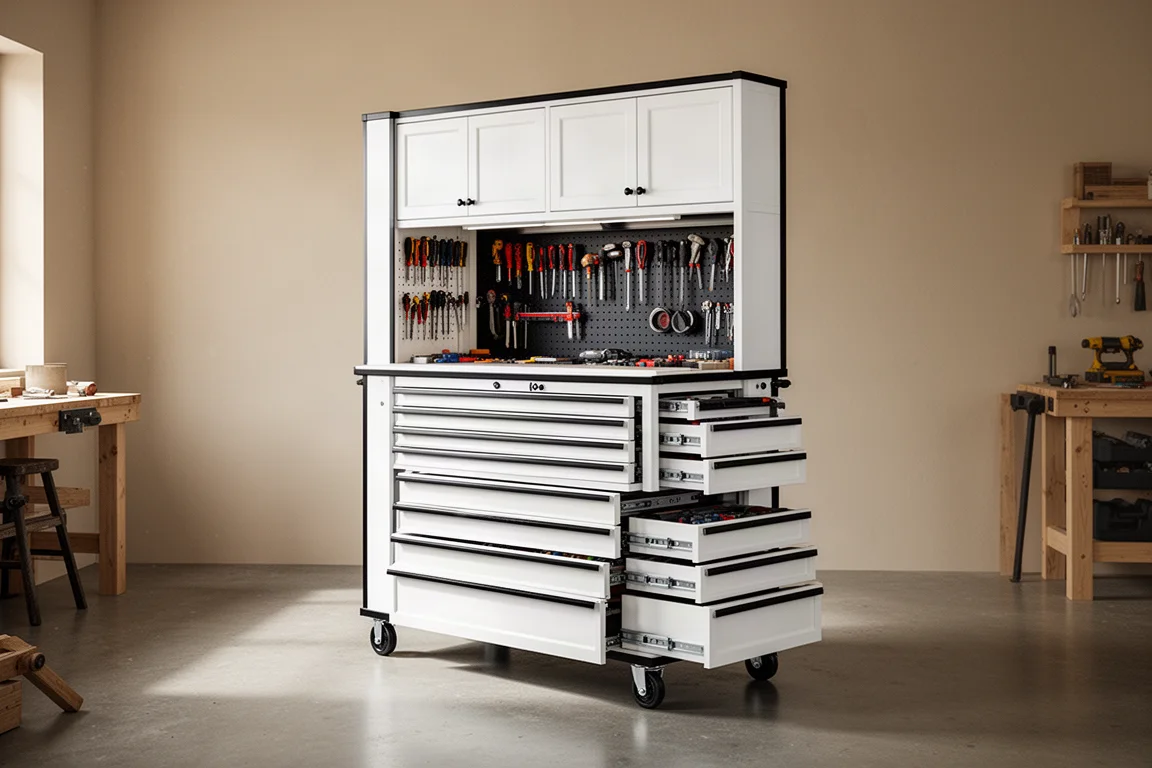
You also gain a triple-bank drawer layout with the 72, plus a hutch option, and access to the full ecosystem of side lockers, end cabinets, replacement slides, swappable wheels, and spare parts. The series 3 trim, multiple color options including the very practical white (which reflects light in a dark shop rather than absorbing it), and customization potential like wrapped panels or custom-painted handles round out the package. If you have the wall space and want maximum storage in one footprint, the 72 is the flagship pick.
Overall Buying Advice
Match the cabinet to your space and use case. The 27 is the right call for small areas, dedicated stations, or home use where the five-drawer cart layout does not appeal. The 42 is arguably the best home-gamer cart with its two full-length top drawers and solid $600 value. The 56x22 is the sweet spot for serious storage, adding the power drawer and hutch compatibility at $900. The 72 earns its place when wall space allows and maximum capacity matters, especially if a coupon drops.
Whichever you choose, the platform is well made across the board, with replacement parts, interchangeable wheels, hutches for the 56 and 72, side lockers, and a wide range of colors. That modularity is a genuine reason to pick this lineup over comparably priced alternatives.
Conclusion
There is no single best US General cabinet, only the best one for your garage. Start with your available wall space, decide whether the power drawer and hutch matter to you, and let the height-matching rule (27/42 together, 56/72 together) guide any multi-cabinet setup. With prices from $400 to $1,800 and strong build quality throughout, every option in the range is a defensible buy.
Further reading
Related Reviews

Tool Storage
Hilti ProKit Modular Storage System Review: A Sturdy, Stackable Tool Storage Solution
The Hilti ProKit modular storage system offers durable cases, a heavy-duty trolley, and a simple nesting latch design for professionals who need reliable tool organization.
Tool Storage
Atlas 46 Tool Rolls: Yorktown Mini and the Leather Classic Compared
Two tool rolls from Atlas 46 for different mindsets: a compact mini roll built for vehicle-based kits, and a heavy leather version for those who appreciate old-world craftsmanship.
Tool Storage
Atlas 46 vs Bucket Boss Tool Roll: Two Ways to Roll Your Tools
A first-impressions comparison of a premium American-made tool roll and a budget-friendly alternative, covering fabric quality, stitching, zipper layout, and storage design.