Tool Storage
US General Plier Racks Compared: Plastic 15-Plier vs Metal 16-Plier
Two inexpensive US General plier racks from Harbor Freight, with very different grip capacities and a surprising amount to say about packaging waste.
Introduction
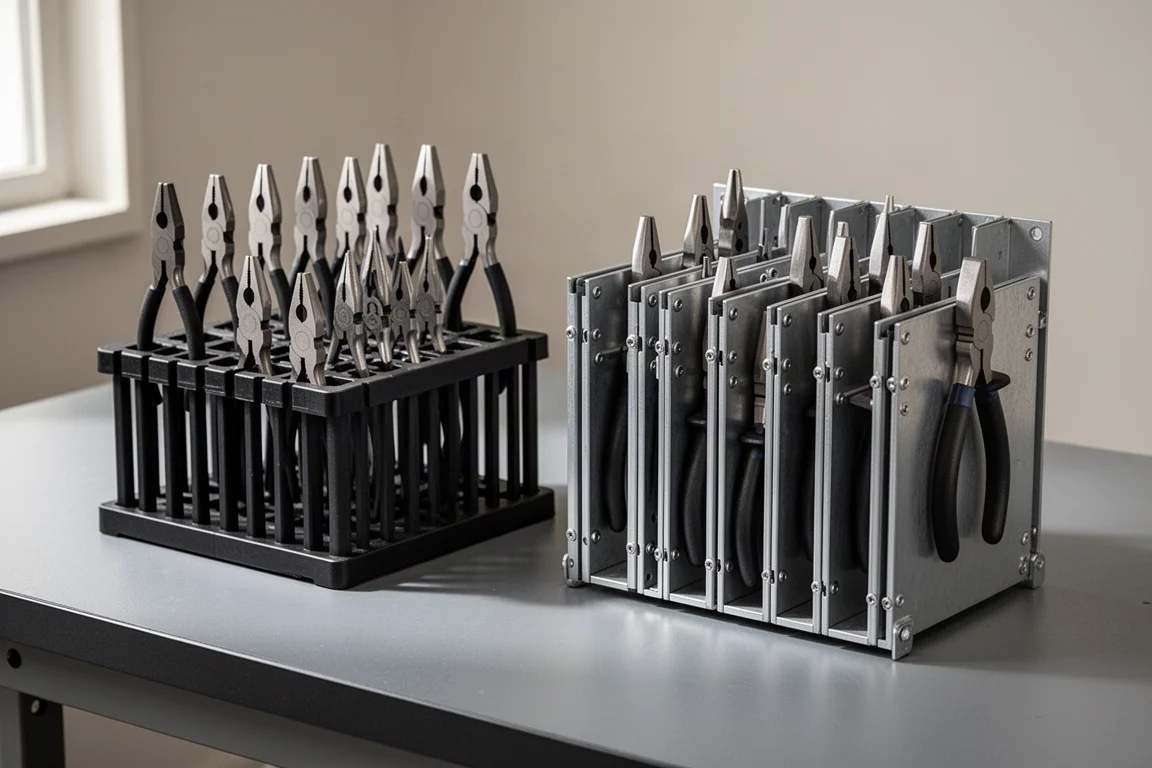
Plier organization is one of those workshop chores that seems trivial until you actually try it. Two US General plier racks sold at Harbor Freight, a plastic 15-plier version and a metal 16-plier version, take very different approaches to the same problem, and the differences matter more than the small price gap suggests.
Both are cheap by any standard. The metal rack typically lands somewhere around $9 to $12, while the plastic one has been seen at a range of prices, roughly $12.99 to $17.99, depending on where you are in Harbor Freight’s pricing ecosystem. That variability itself says something about how these are positioned: disposable-price accessories you can experiment with before committing to a full storage system.
Two Racks, One Clear Difference: Grip Clearance
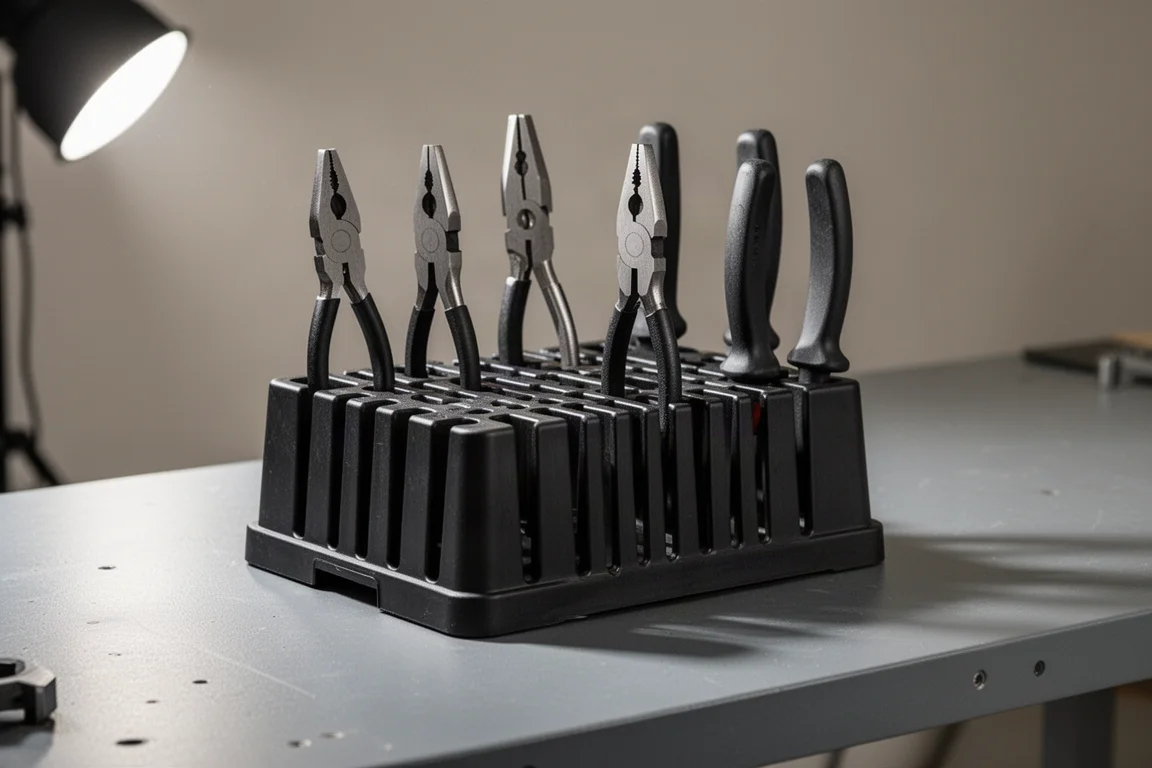
The first limitation that shows up with the plastic 15-plier rack is size, not quantity. Anything with a larger comfort grip simply does not fit. Pliers wedge in awkwardly rather than sitting properly, and even fairly compact cutters with modest grips get stuck if you force them. A slightly smaller set of multi-pliers will just barely fit, but that is the absolute limit. Thicker European-style pliers do not fit at all.
Plastic-handled pliers are an even worse case: they do not fit, not even close. You can try balancing them upright on top, but that defeats the purpose once they start flopping around.
The Metal Rack’s Adjustable Panels
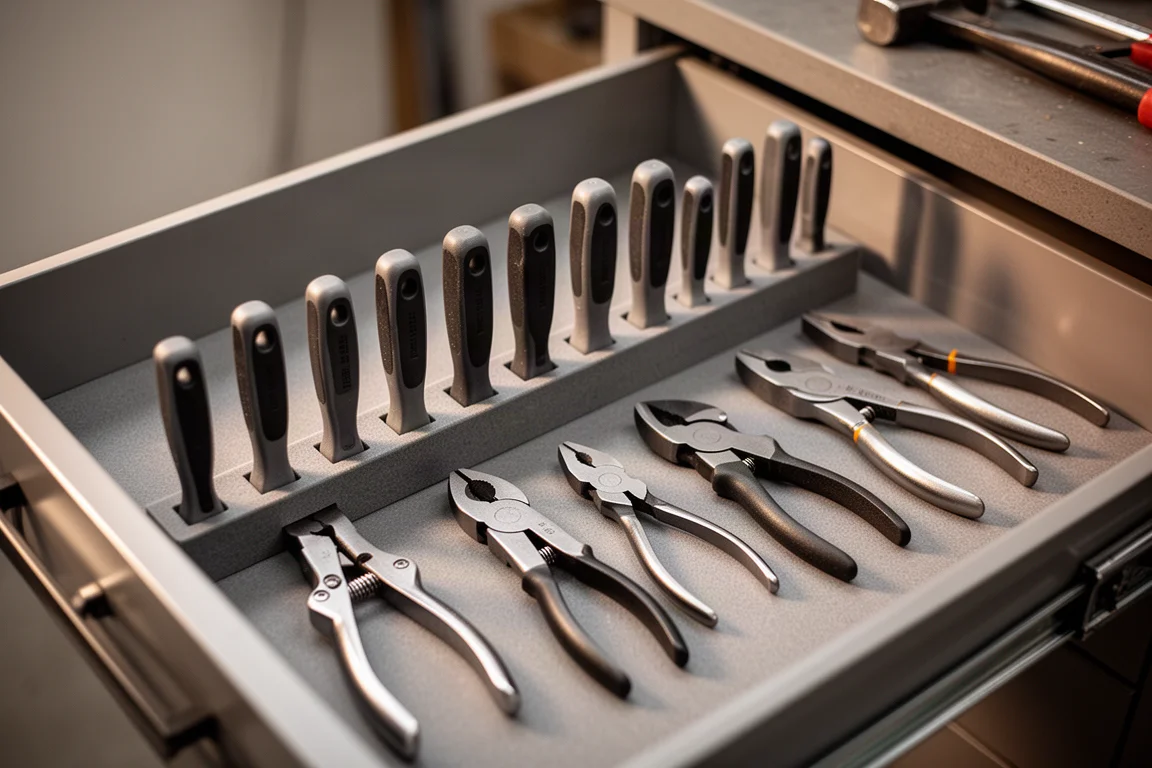
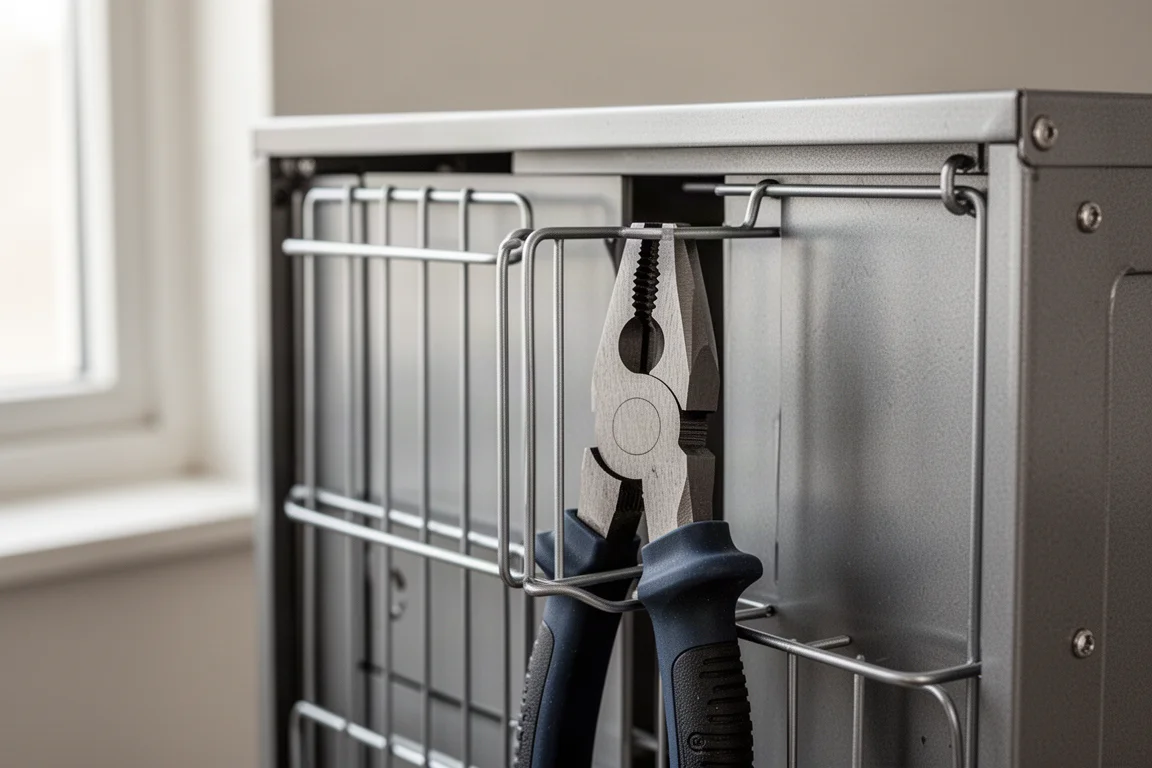
The metal 16-plier rack solves this with sliding panels. Because the dividers can move back and forth, slots can open up wide enough for big comfort-grip pliers and even larger tools that would be almost comical in a plier rack. For anyone sorting flush cutters away from general-purpose pliers, or trying to keep delicate cutting edges from contacting each other, that adjustability is genuinely useful.
It also hints at what an ideal version of this product could be: a more modular system with color-coded panels you could slide on and off for quick identification. That option does not exist today, but the sliding design shows the mechanism is there.
The Plastic Rack in Practice
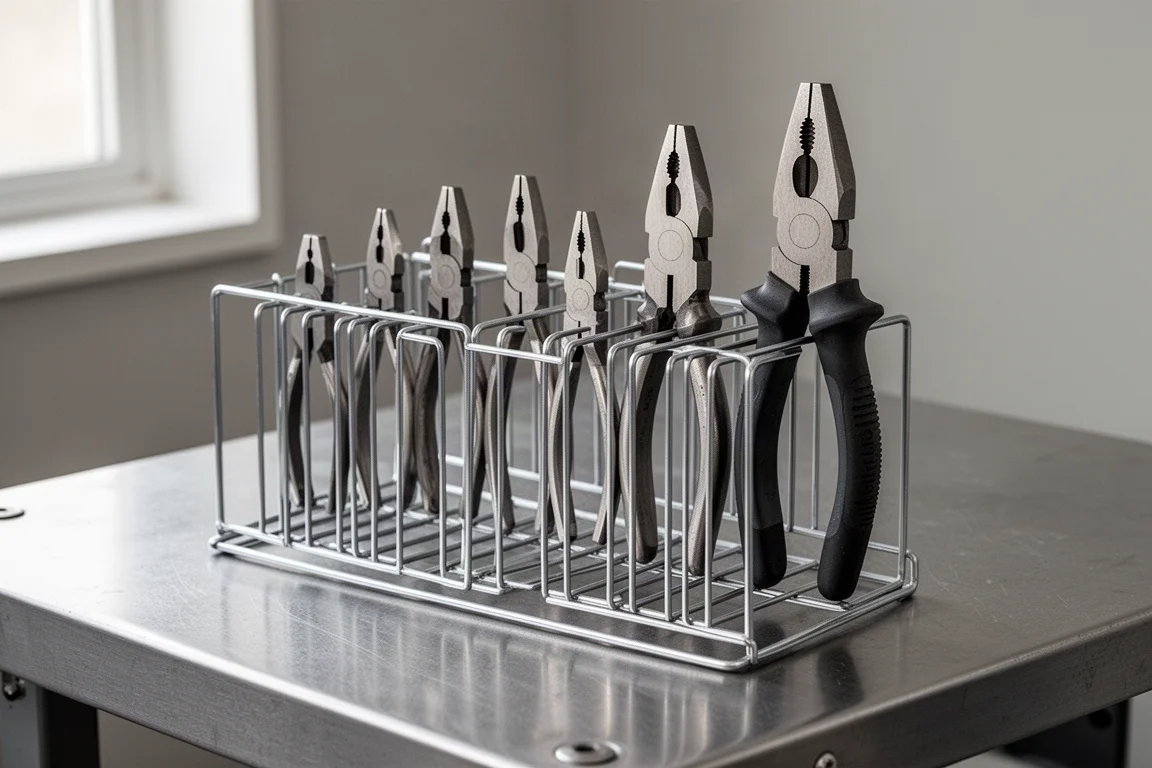
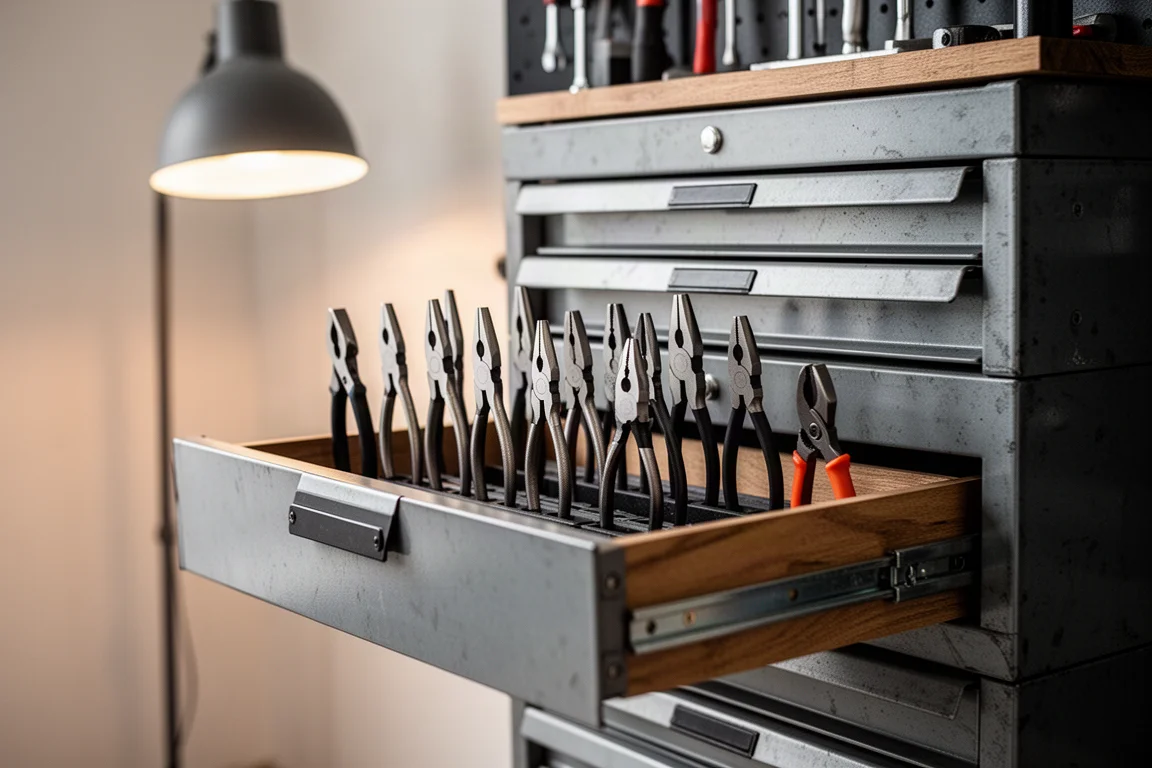
The plastic rack still has a place. If your pliers lean toward standard, smaller profiles and you want the cheapest possible way to line them up in a drawer, it works. It is also useful as a low-cost trial: with so many companies making magnetic plier organizers now, an inexpensive rack is a reasonable way to test whether this style of upright storage actually suits how you work before investing in something pricier.
The Packaging Story
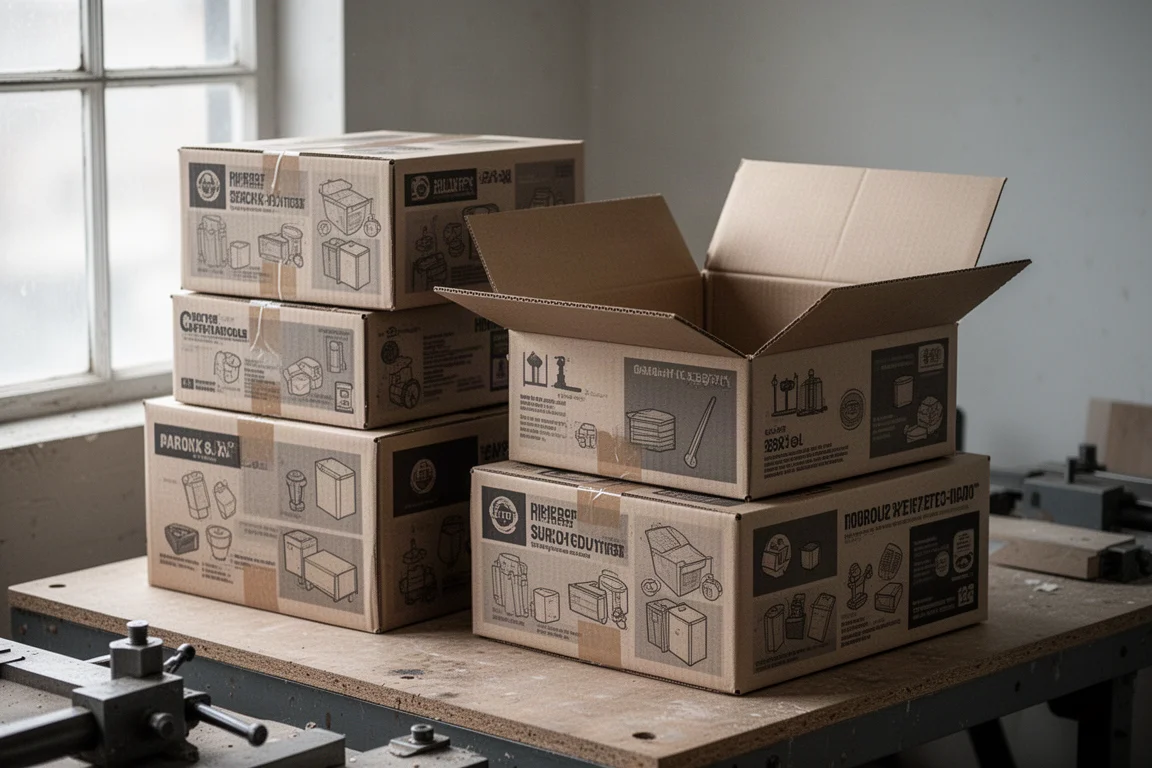
One thing worth mentioning about these racks is the boxes they arrive in. Harbor Freight ships almost everything boxed, and these are not cheap boxes. The plastic rack comes in a solid box with a wrap-around photograph printed directly onto the cardboard, plus images on the top and bottom. The metal rack’s box is similarly heavy-duty, with photographs on four sides and full multi-color printing on the other two. That is expensive printing for a product that costs around ten dollars, and the box will never be used again.
It is fair to credit the engineering and expense that goes into packaging designed to stack efficiently inside larger shipping cartons for overseas transport, and it probably speeds up store display for items that move in volume. But compared with premium tool brands that often ship small items with no box at all, sometimes just a plastic bag, there is a real question of waste and cost here. One reviewer’s musing was even whether to cut slots into the sturdy box and use it as a custom plier holder, since then the slot sizes could be whatever you want.
There is a broader market note tucked into all of this. Harbor Freight’s prices have been drifting upward, especially on its higher-quality lines such as Icon pliers and ratchets, making the brand increasingly competitive rather than purely the bargain option. When prices rise on the good stuff, savings elsewhere, like simpler packaging, would be welcome, perhaps more welcome than giveaway wrench sets included with purchases.
Who Each Rack Is For
The metal rack is the safer default for most people. Adjustable slots mean you will not discover, after filling the rack, that half your pliers with comfort grips do not fit. It suits anyone building out serious drawer organization, including arranging pliers by type and size rather than just tossing them in layers.
The plastic rack makes sense for smaller-grip collections and for experimenters. If you are curious whether upright plier storage genuinely improves your workflow or just streamlines it, cheap is the right price for that experiment. Think of it the way a knife drawer organizer works: protecting edges from each other while maximizing space.
Buying Advice
If your collection includes any comfort-grip pliers, thicker European pliers, or plastic-handled tools, skip the plastic rack entirely. The metal rack’s sliding panels handle all of those cases and cost only a few dollars more in most cases.
If you are planning a dedicated tool storage setup, the metal rack fits naturally into a strategy of lining tools up by type, separating cutters from grip pliers, and testing layouts before committing to pricier magnetic systems. Neither rack comes in multiple colors, so color coding is not an option as sold.
Conclusion
Between the two, the US General metal 16-plier rack is the more versatile pick thanks to its adjustable panels, while the plastic 15-plier rack only makes sense for smaller-grip pliers or as a cheap way to test whether this storage style works for you. Both are inexpensive enough that the real decision is about fit and future-proofing, not price.
Further reading
Related Reviews

Tool Storage
Hilti ProKit Modular Storage System Review: A Sturdy, Stackable Tool Storage Solution
The Hilti ProKit modular storage system offers durable cases, a heavy-duty trolley, and a simple nesting latch design for professionals who need reliable tool organization.
Tool Storage
Atlas 46 Tool Rolls: Yorktown Mini and the Leather Classic Compared
Two tool rolls from Atlas 46 for different mindsets: a compact mini roll built for vehicle-based kits, and a heavy leather version for those who appreciate old-world craftsmanship.
Tool Storage
Atlas 46 vs Bucket Boss Tool Roll: Two Ways to Roll Your Tools
A first-impressions comparison of a premium American-made tool roll and a budget-friendly alternative, covering fabric quality, stitching, zipper layout, and storage design.