Power Tools
Aircraft Dynamics Robo Impact: Inside the US Army Impact Wrench Kit
We put the standard-issue US Army Robo impact wrench through torque testing, voltage experiments, and a teardown to see how Cold War-era simplicity holds up against modern corded and cordless tools.
Introduction
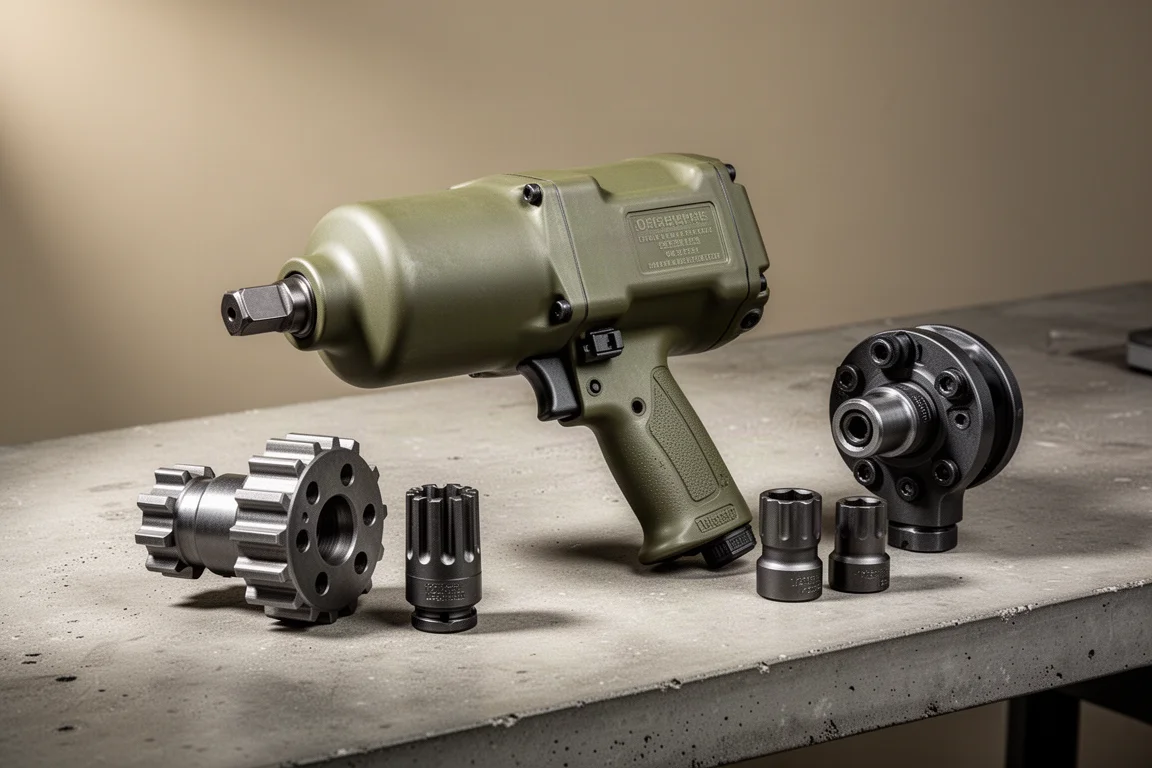
Some tools are built to win spec sheets. Others are built to survive decades of hard use by people of every skill level, in places where a repair has to happen no matter what. The US Army Robo impact wrench, made by Aircraft Dynamics, a specialty tool maker out of Ohio for more than 50 years, belongs firmly in the second camp. It is the impact wrench service members use to perform repairs and maintenance on Army equipment and vehicles, including M1 Abrams tanks.
This might just be the most interesting all-around kit ever put through a full testing routine, and the results say a lot about what “military grade” actually means.
What This Tool Is
This is the standard-issue US Army Robo impact, purchased as a complete kit. The tool has reportedly been used by the 2nd Armored Brigade Combat Team while servicing an M1 A2 Abrams, including track work where it acts almost like a spring compressor to line up tank tracks. Tank suspensions use long torsion arm bars that flex up and down rather than springs, a principle F1 cars also use in shrunken form, and servicing hardware of that size calls for serious backup power.
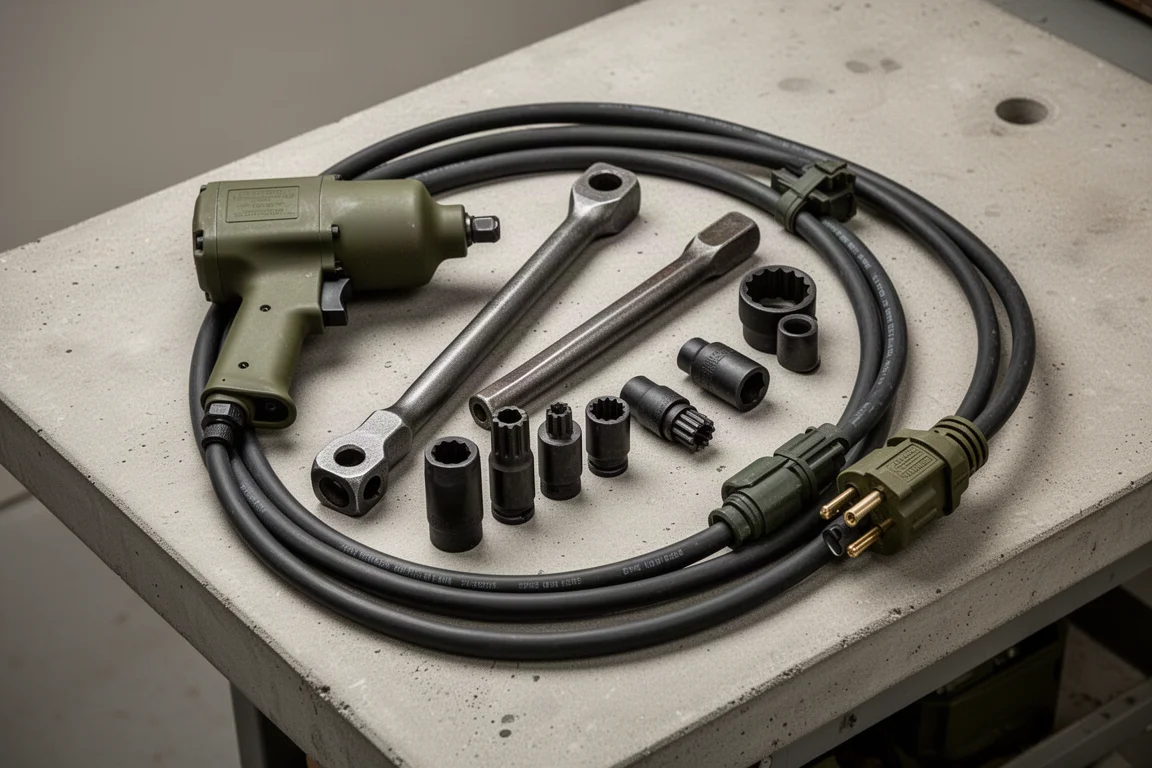
The kit includes some genuinely curious attachments, including square-drive into male-female spline adapters that are hard to identify at first glance. Everything about the package is bulky, heavy, and official-looking, down to connector hardware that feels like mini barbells.
Powering It Up
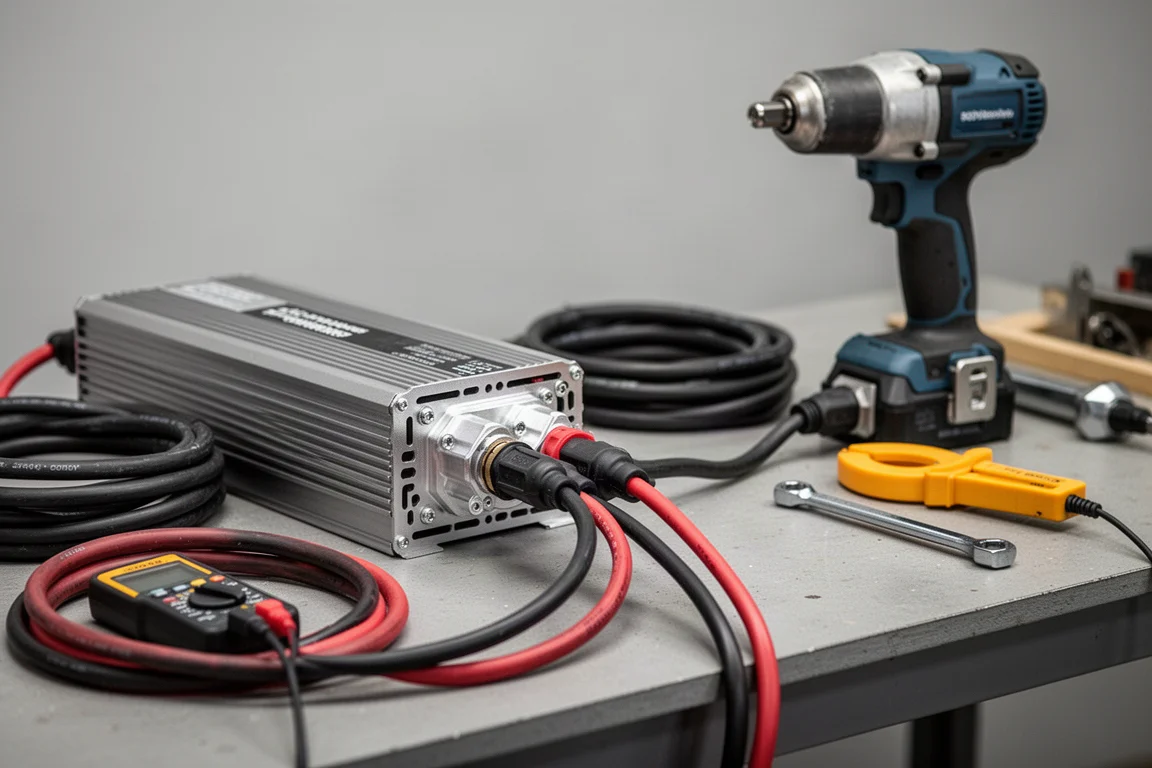
Powering this tool outside its natural habitat is the first challenge. It expects a standard-issue NATO plug receptacle supplying 24V DC at up to 500 amps, made for a 1-1/4 inch male NATO port on a Humvee. Reproducing that from wall power required an adjustable voltage and current AC-DC inverter, a NATO-spec generator plug, and an adapter converting the big center-pin ring style over to a two-pin generator plug. All of it wired with three 10-gauge leads per terminal to minimize resistance.
Dialing in around 24.1 to 24.2 volts, the tool happily spun to its advertised 1,800 RPM. In a 10-second max torque test in reverse, it delivered 252 ft-lbs: smooth, but not record-setting.
Cordless Conversion and the Voltage Surprise
Since the tool already runs on DC, converting it to a large 24V battery pack took little more than an adapter and some crimped leads. The result? 319 ft-lbs in the longer reverse test, essentially the same performance, because a 24V battery supplies the same voltage as the inverter and produces similar RPM. This is not a current-limited tool.
The interesting discovery came from raising the voltage. A Humvee’s 24V NATO receptacle is really two 12V batteries in series, and a running vehicle’s charging system pushes closer to 14 volts per battery. Doubling that to 28 volts, mimicking a running vehicle, produced 2,500 RPM and a striking 601 ft-lbs against the same test bolt. Pushing to 30 volts brought no gains and often lower numbers, so 28 to 28.5 volts is clearly the sweet spot. The practical takeaway for anyone using one of these: if the bolt is stuck, make sure the vehicle is running.
How It Stacks Up
Against a Japanese-made corded impact from the early 1990s, the Army unit wins in reverse at stock voltage and dominates at 28 volts. But modern top-spec corded impact wrenches and today’s high-torque cordless models can still top this Army unit, even if it was much closer than expected.
That fits the pattern. Military grade does not always mean cutting-edge tech. Contracts from decades ago get made in bulk, stored for years, and updated only when durability demands it. What the design prioritizes instead is customization for one application and forgiveness for every skill level.
The Torque Multiplier
The included torque multiplier is unique. Mostly CNC machined in the head, which is rare on typical multipliers, it uses a measured 4:1 input-to-output rotation ratio, a male-female spline design on the casing, and a reaction arm with quick-release locks that flips in either direction and accepts pole extensions.
Testing revealed its real trick. At light input torque the tool clicks like a breakaway torque wrench and stops progressing, a built-in slip clutch. Tightening a test fastener to about 165 ft-lb input is as far as it goes in the tightening direction, making it behave like a durable torque wrench that cannot drift out of calibration. In the loosening direction, where overtightening is impossible, it allows full power: a measured 2.85:1 torque ratio yielding around 700 ft-lbs of breakaway force at the fastener.
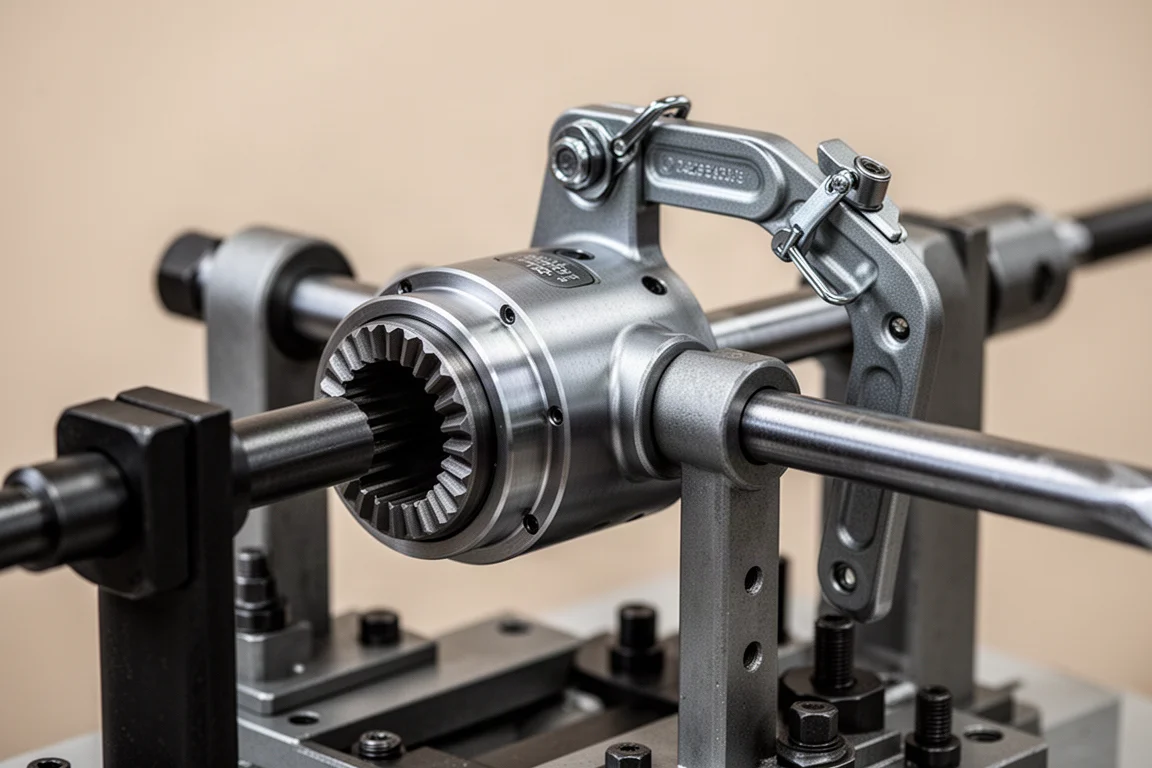
That slip clutch philosophy explains the whole kit. The goal is not maximum numbers, it is preventing a new recruit from stripping out bolts and immobilizing expensive equipment.
Attachments Designed to Be Foolproof
The kit’s sockets and extensions share the same male-female spline cup design, each with a preload that slips forward at a specified limit but locks in place in reverse, almost like a ratchet pawl. Each attachment is essentially the same part: a cup with a male square drive adapter splined in, with the socket or extension pinned on, making them easy to replace.
A universal extension with a super loose head omits the usual pin retaining collar and internal tension spring, reducing complexity and the number of parts that can fail. The included breaker bar, made by Blackhawk from the era when the line was US-made (now mainly under their Proto name), is meant to be used with these same slip-clutch attachments. The entire toolkit could be issued to, as the testing experience suggests, a gorilla in a hurry, and it still would not cause much harm while having enough grunt to finish the job.
Teardown: Old-School Simplicity
Opening the impact reveals a design of remarkable simplicity. The planetary ring gear lives in the nose hammer cover rather than inside the tool body, an unusual placement. A massive old-school needle bearing, roughly an inch wide, sits up front for smooth, less bouncy, slower-wearing operation. The hammer mechanism is completely contained with a reset spring inside a hollow hammer, a design also seen on gas-engine-powered railway impacts of a similar era.
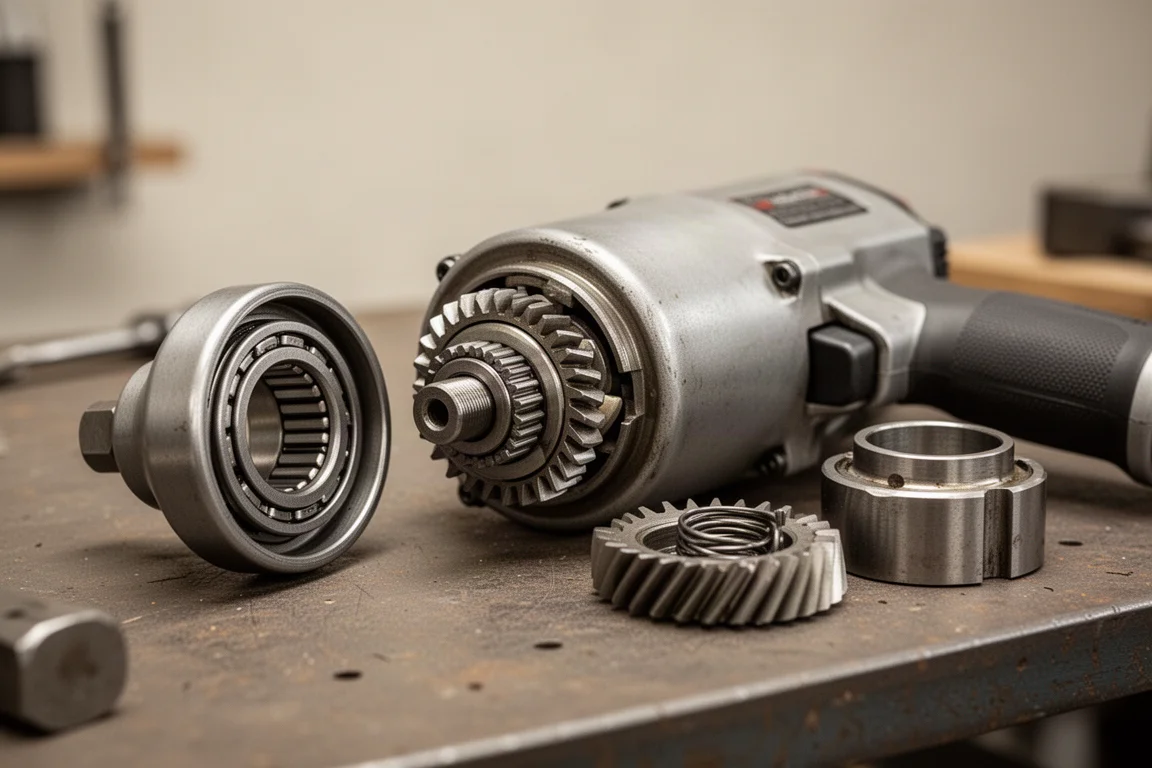
The hammer appears to be pressed into its shielded bearing and is not coming off without some trick, so this is about as far apart as the tool goes. Two large planetary gears up top round out the internals. It is stupid simple, and it works.
Conclusion
This kit is unlikely to set torque records against modern corded or cordless flagships, but that was never the mission. The Robo impact is designed to make enough grunt to complete the task, work anywhere in the world with universal connections, resist abuse and bad decision-making, and ultimately result in more vehicles repaired than damaged. Simplicity, reliability, fewer parts: if it ain’t broke, don’t fix it. For anyone fascinated by purpose-built tooling, this is one of the most rewarding kits to dive into.
Product link
View more details for Aircraft Dynamics Robo Impact
This product is mentioned in the review. Check the specifications, options, and compatibility before buying.
View more details for Aircraft Dynamics Robo ImpactFurther reading
Related Reviews
Power Tools
Best 1-Inch Pistol Impact Wrenches: Three Heavy-Duty Options Compared
We compare three 1-inch pistol impact wrenches, from a budget-friendly Harbor Freight model to a premium Caterpillar unit, to help you choose the right one.
Power Tools
Best 3/4-Inch Impact Wrenches 2026: Five Contenders Compared
We compare five 3/4-inch impact wrenches across price and performance, from a budget Amazon option to Snap-on's most powerful model yet.
Power Tools
Best Budget Cordless Tools 2026: Walmart Finds That Punch Above Their Price
We tested five cordless tools from Walmart, including a high-torque impact wrench that trades blows with Milwaukee and a $35 duster that outperforms its price class.