Kitchen Knives
Tucasa Hinura River Jump Santoku Review: A Collector's Knife, Not a Performance One
A handmade Damascus santoku from a third-generation Sanjo bladesmith that costs more than most high-end kitchen knives, yet wins hearts for reasons beyond cutting performance.
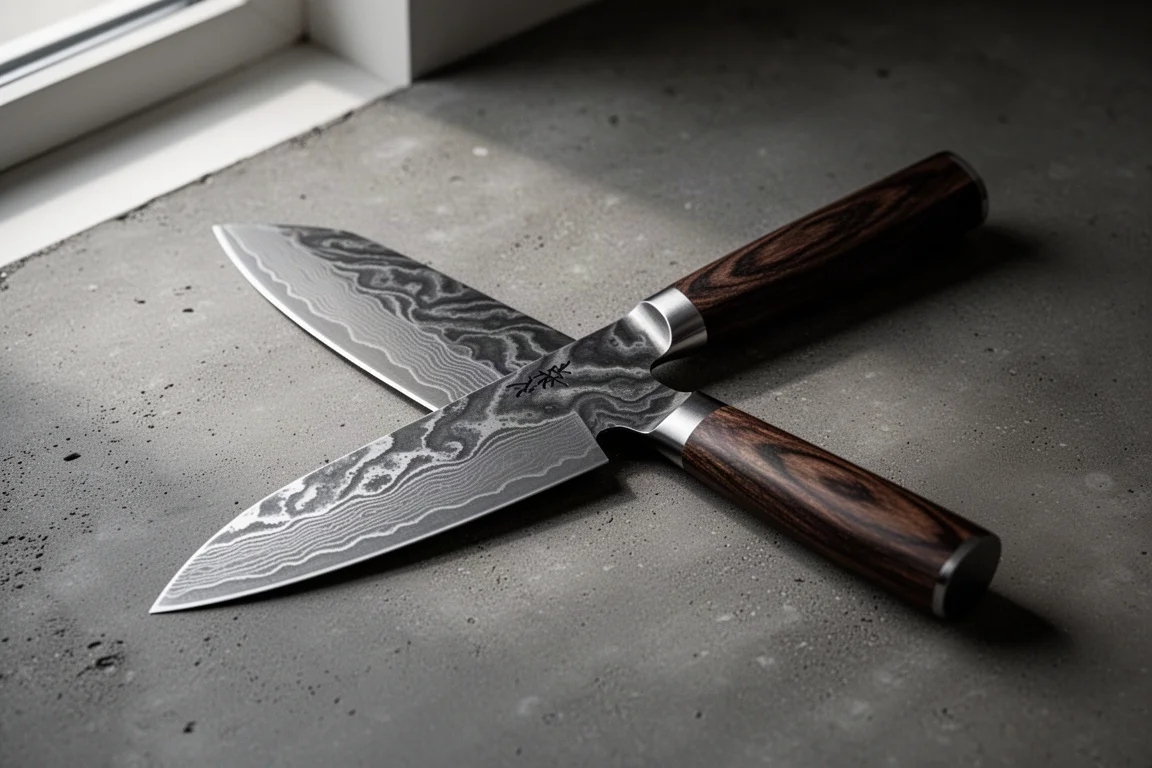
Introduction
Some knives earn their price through cutting performance. Others earn it through story, scarcity, and sheer presence. The Tucasa Hinura River Jump Santoku sits firmly in the second camp, and that distinction matters more than any spec sheet.
This is a knife that proves an uncomfortable truth: more money does not buy you more performance. And yet, for the right owner, it can still be one of the most valuable knives in a collection. After years of ownership, that paradox is exactly what this review sets out to explain.
Who This Knife Is For
The River Jump is not aimed at cooks chasing the sharpest or thinnest grind per dollar. It is aimed at collectors, enthusiasts, and anyone who wants a functional object that also qualifies as a work of art. If your priority list starts with beauty, rarity, and craftsmanship rather than pure edge geometry, this knife speaks your language.
If you simply want a great daily cutter, there are far cheaper handmade Japanese knives that will outperform it. Knowing which buyer you are is the single most important step before spending serious money here.
What Makes the River Jump a Unicorn
Tucasa Hinura is a third-generation bladesmith from Sanjo, Japan. His knives are not mass-produced; they are made one by one, entirely by hand, and the River Jump line starts from raw steel. That alone puts it in a different category from most production knives.
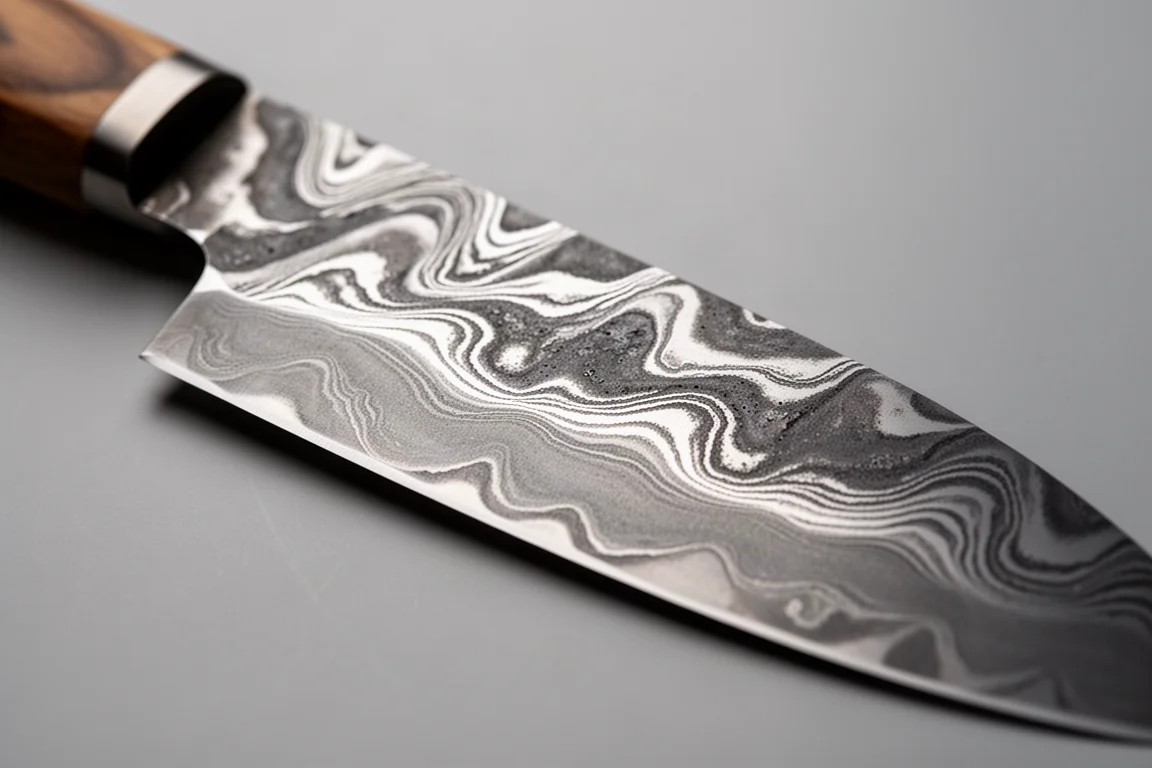
The signature of the line is an in-house Damascus technique widely believed to be unique to Hinura. Steel and iron are twisted and torsioned over the spine of a Shirogami number two blade, producing an organic, flowing pattern that looks completely different from knife to knife. The process is slow, time-intensive, and extremely difficult to replicate.
Generations of experience, a fully handmade process, a rare and labor-heavy technique, and extremely limited production: that combination is what makes collectors chase this knife while almost everyone else has never heard of it.
How I Ended Up Owning One
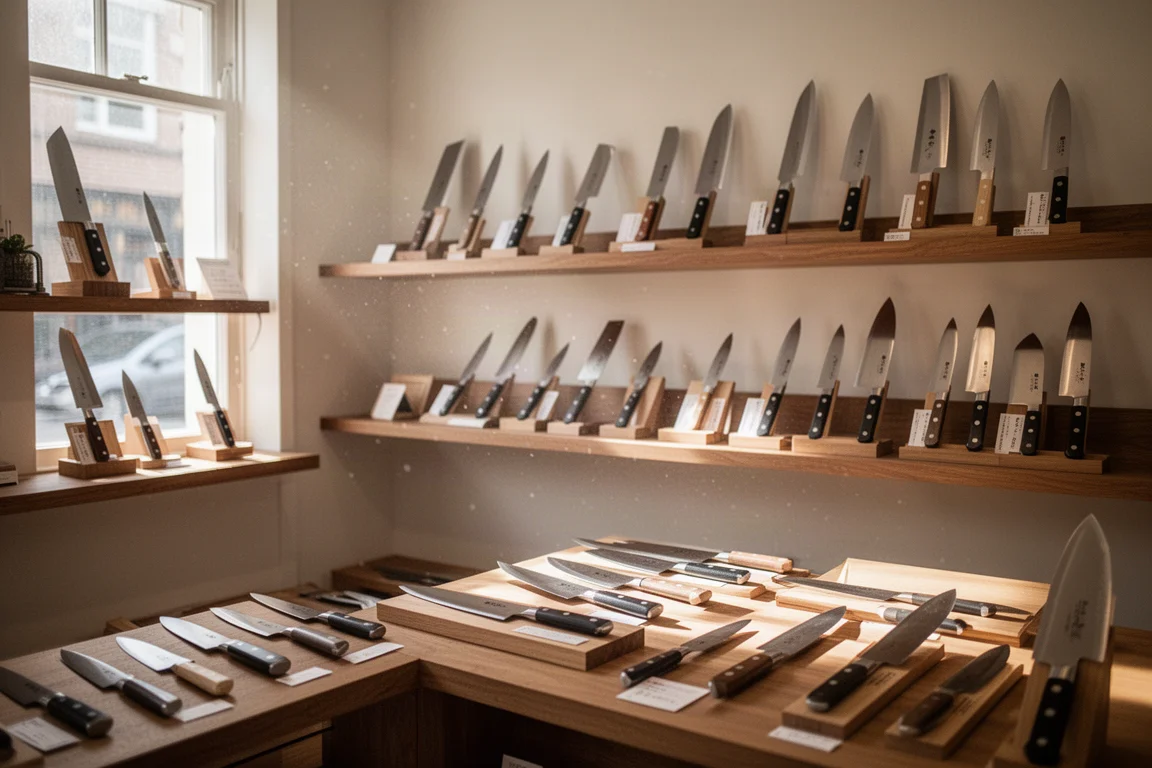
Like most unicorn knives, this one was not hunted down. It was waited for. After moving to Edmonton, Alberta, regular visits to a local knife shop turned into a long relationship with the store. That eventually led to an invitation to a pre-show event before a garage sale went live, where a staff member produced a River Jump with a different handle, before any custom work had been done.
The reaction was instant: it was simply beautiful. Then came the price tag of $1,400 Canadian, which prompted a very human pause. The purchase happened anyway, roughly $700 to $800 above the comfortable budget at the time, and it became knife number 19 in what was then a modest collection.
Fast forward to today. The most expensive knife previously purchased was a 210 mm Fujiwara Denka Gyuto, bought immediately before this one. The River Jump Santoku, with its custom handle, thinning work, and custom saya, remains the most expensive knife owned. What was once an impulsive stretch now reads as a good price: it would easily cost hundreds more at retail today, and well over a thousand more on the secondary market.
Is It Worth $1,400?
Here is the honest math. Performance-wise, the River Jump is not bad, but it is not great either. It is good. For a good-performing knife, a reasonable spend sits somewhere in the $200 to $300 range, perhaps a bit more for exceptional looks or a custom handle.
That leaves a gap of more than $1,000 between what the performance justifies and what the knife costs. Would that gap be paid again, knowing everything known now? Absolutely. This knife lands in a personal top three of collector knives every single time, and that list is not about performance. It is about function, beauty, story, rarity, and uniqueness that add real value beyond the cut.
That is also why there are zero plans to sell it. This knife is not kept for how it performs. It is kept for what it is worth to its owner, and those two things are not the same.
The Honest Performance Critique
Now the part most reviews gloss over. Food release is average to poor. The edge can feel sticky. The spine actually gets thicker near the tip because of the torsion Damascus, and the blade stays thick behind the edge even after thinning work.
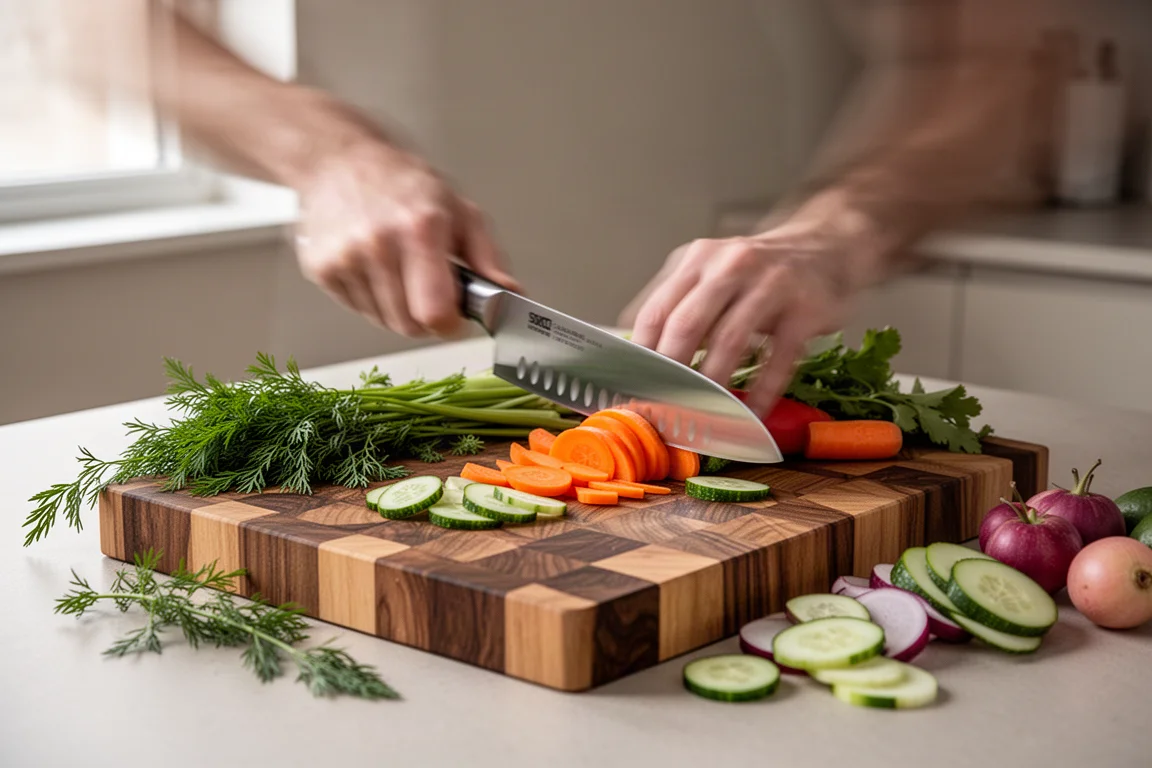
There is also a detail almost nobody mentions: the raised River Jump pattern can rub fairly aggressively against the hand in a pinch grip. It is not something you think about until you actually use the knife for an extended session. A thinner, more acute grind would help this design shine, but it is unclear whether that geometry is even possible with the twist technique, and the smith certainly does not take requests from reviewers.
Here is the important counterpoint. If you look at this knife and see no problem, that is exactly the point. To a non-collector, it performs incredibly well, especially compared to what most people use at home. The critique only exists at the standards of a heavy user and collector, and at this price. What you are actually paying for is the beauty, the pattern, the unique technique, the rarity, and the difficulty of acquisition, not high-performance steel.
Buying Advice
Treat the River Jump as a collector piece that happens to cut, not as a performance tool that happens to look good. If cutting performance per dollar is the goal, choose a high-end workhorse knife instead and feel no regret.
If, however, a knife’s story, handmade provenance, and one-of-a-kind pattern genuinely matter to you, this line delivers those things in a way few others can. One practical note: availability is extremely limited, and secondary market prices have climbed well past original retail, so patience and timing matter as much as budget.
Would another River Jump be bought? Without hesitation. A 240 mm Gyuto from the same line, if the money were there, would be an instant purchase, not because elite performance is expected, but because the buyer knows exactly what they are paying for.
Final Thoughts: Worth Is Personal
Years and well over a hundred additional knives of experience later, the perspective on price and worth has changed significantly. The lesson this knife teaches is simple: do not let anyone else choose your worth for you.
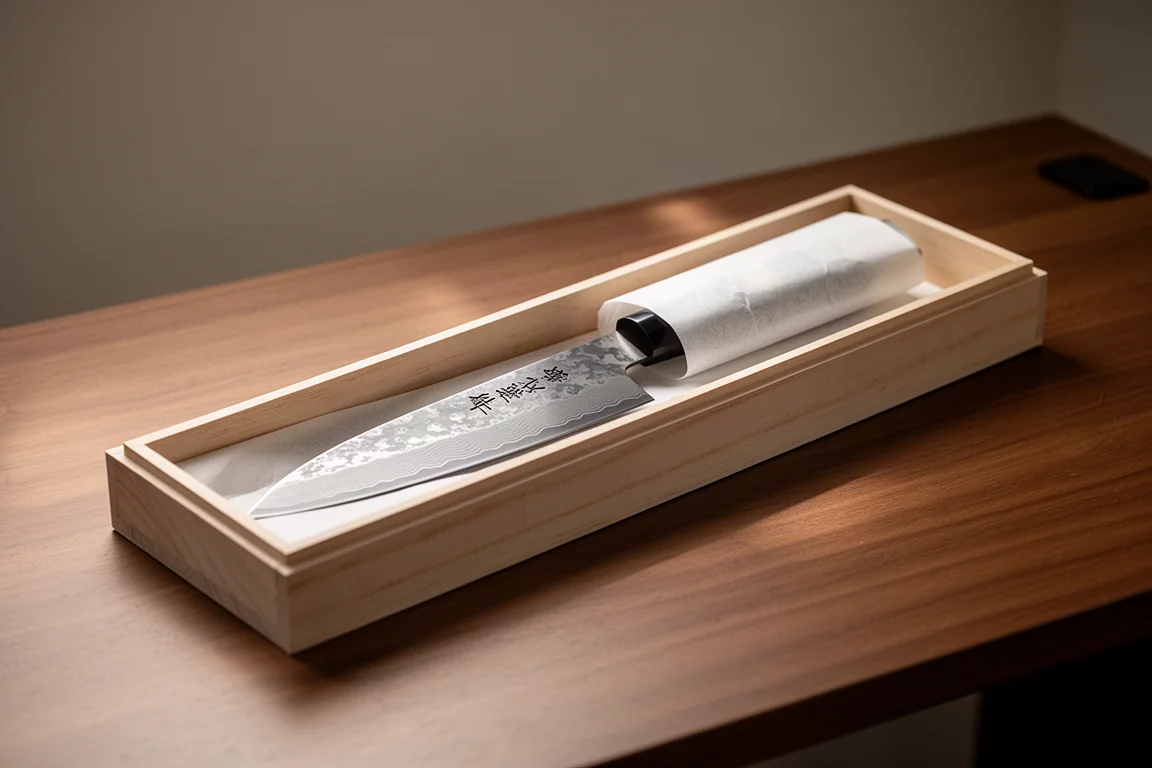
Some will say buying this instead of a higher-performing workhorse is crazy. Maybe they are right. But nobody buys a River Jump for performance, and as an object of craft and character, it is genuinely hard to match. For the right collector, that is more than enough.
Conclusion
The Tucasa Hinura River Jump Santoku is a mediocre performer wrapped in an extraordinary object. Its hand-twisted Damascus, fully handmade construction, and near-impossible availability make it a true unicorn, while its average cutting characteristics make it a questionable purchase for pure performance seekers. Buy it with your collector’s head, not your cook’s, and it will reward you for years.
Product link
View more details for Tucasa Hinura River Jump Santoku
This product is mentioned in the review. Check the specifications, options, and compatibility before buying.
View more details for Tucasa Hinura River Jump SantokuFurther reading
Related Reviews

Kitchen Knives
Best Chef's Knives 2026: 27 Popular Options Tested and Ranked
A comprehensive review of 27 chef's knives ranging from $18 to $380, with honest assessments of handle comfort, blade balance, and real-world performance.

Kitchen Knives
Best Chef's Knives Under $75: Two Tested Recommendations
Two practical 8-inch chef's knives that balance sharpness, comfort, and durability without premium pricing.

Kitchen Knives
Best Chef's Knives 2026: 27 Options Tested and Ranked
A comprehensive review of 27 chef's knives ranging from $18 to $380, with honest assessments of handle design, balance, blade profile, and real-world performance.