Everyday Carry
True Utility Multitool and Pocket Knife: Clever Ideas Held Back by Materials
Two budget-friendly tools from True Utility get the locking bit driver right, but 3Cr steel and a few design misses keep them from easy recommendations.
Introduction
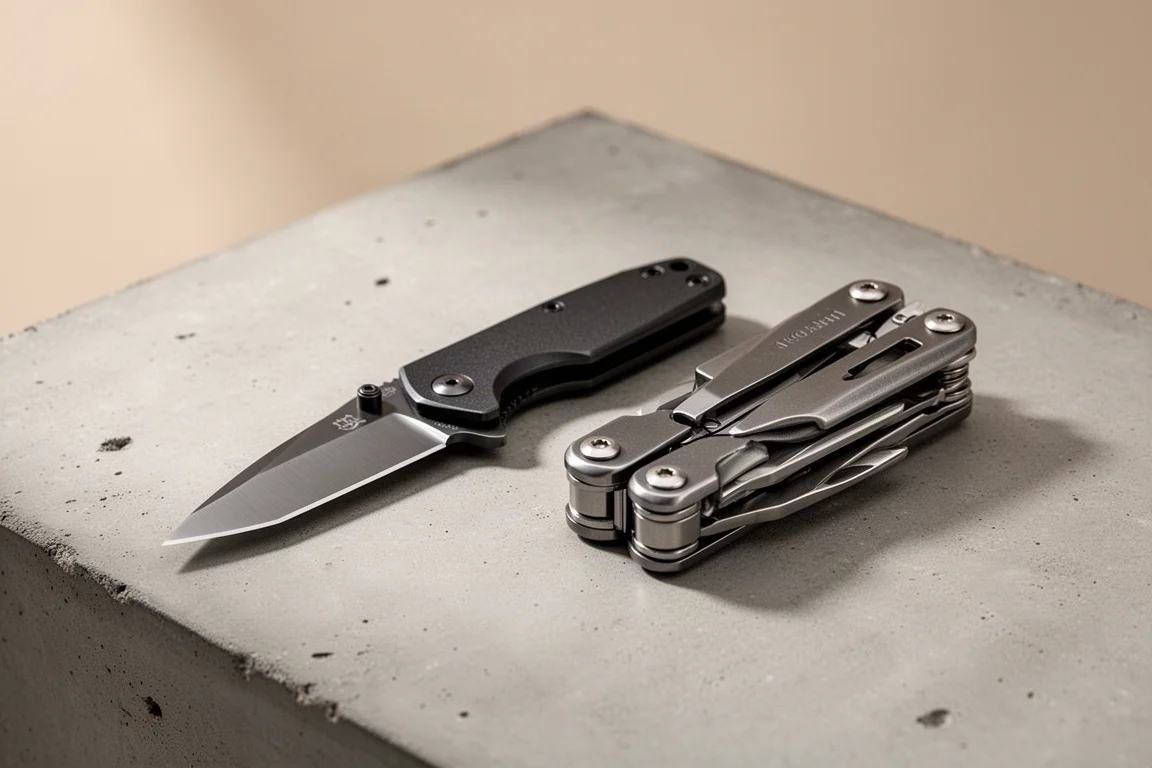
True Utility has been making an interesting play in the everyday carry space with two tools that share a common idea: a locking quarter-inch bit driver built into a compact folding frame. On paper, the concept works. In some ways, the execution is better than what the major multitool brands offer. In other ways, questionable material choices and a few design decisions undercut what could have been genuinely competitive tools.
This piece looks at both the plier-based multitool and the pocket knife, covering what True Utility got right, where the tools fall down, and whether either one earns a spot in your pocket at their current prices.
True Utility Pocket Knife: Great Bit Driver, Weak Steel
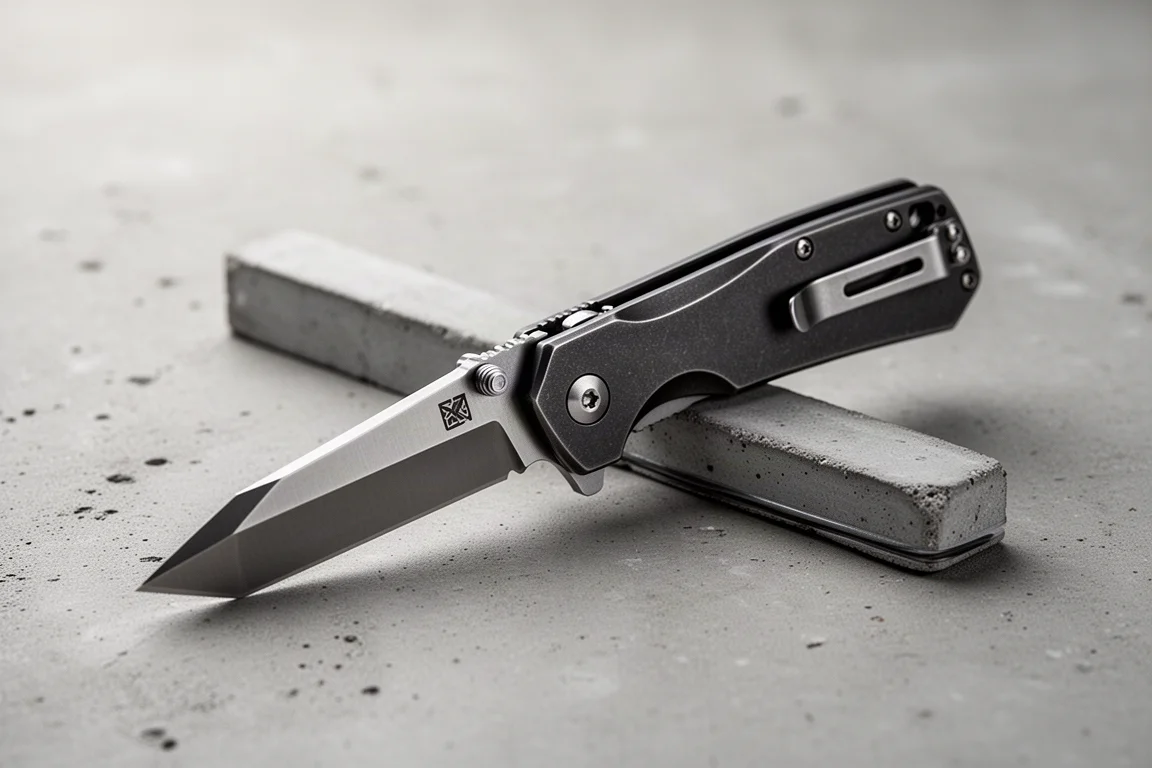
The pocket knife leads with a Tanto blade running a liner lock, and the lockup is solid with very little blade play, which is a good starting point. The blade itself measures 2.75 inches, but the steel is 3Cr, which is about as basic as blade steel gets. It is a cutting surface more than a performance blade, and anyone who cares about edge retention will notice the difference immediately.
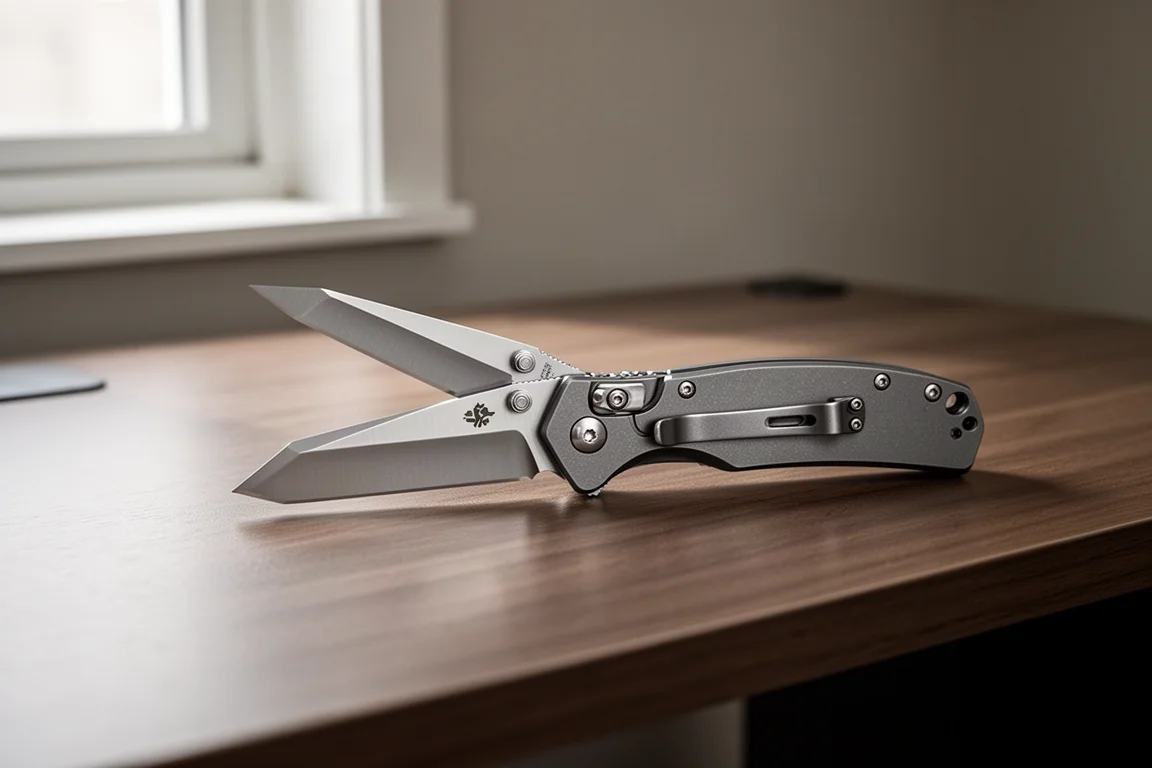
Where the knife earns its keep is the bit driver. It accepts standard quarter-inch bits, stores a second bit inside the handle, and locks in both the 90-degree and 180-degree positions. A small bar presses down on a spring to disengage the lock. This style of locking mechanism is worth appreciating: it simplifies construction and allows more pressure to be applied to the locking implements, making the lockup more secure.
The rest of the tool is more of a mixed bag. There is a very large, very heavy bottle opener that does not lock, and it feels like filler. The tool could clearly have been lighter without it. The pocket clip works, but it is not particularly good.
The Bit Driver Is the Best Idea Here
If you want a locking bit driver, a one-hand-openable blade, and a pocket clip in one affordable package, this knife has a real argument. The fundamental design of the driver is strong enough that it could inspire custom builds, and it is the single biggest reason to consider the tool at all.
The frustrating part is that the strengths and weaknesses sit right next to each other. The blade steel, the oversized bottle opener, and the mediocre clip all drag down a tool whose headline feature genuinely impresses. Better materials and a little more restraint in the tool selection would make this an easy recommendation.
True Utility Multitool: Strong Concept, Frustrating Details
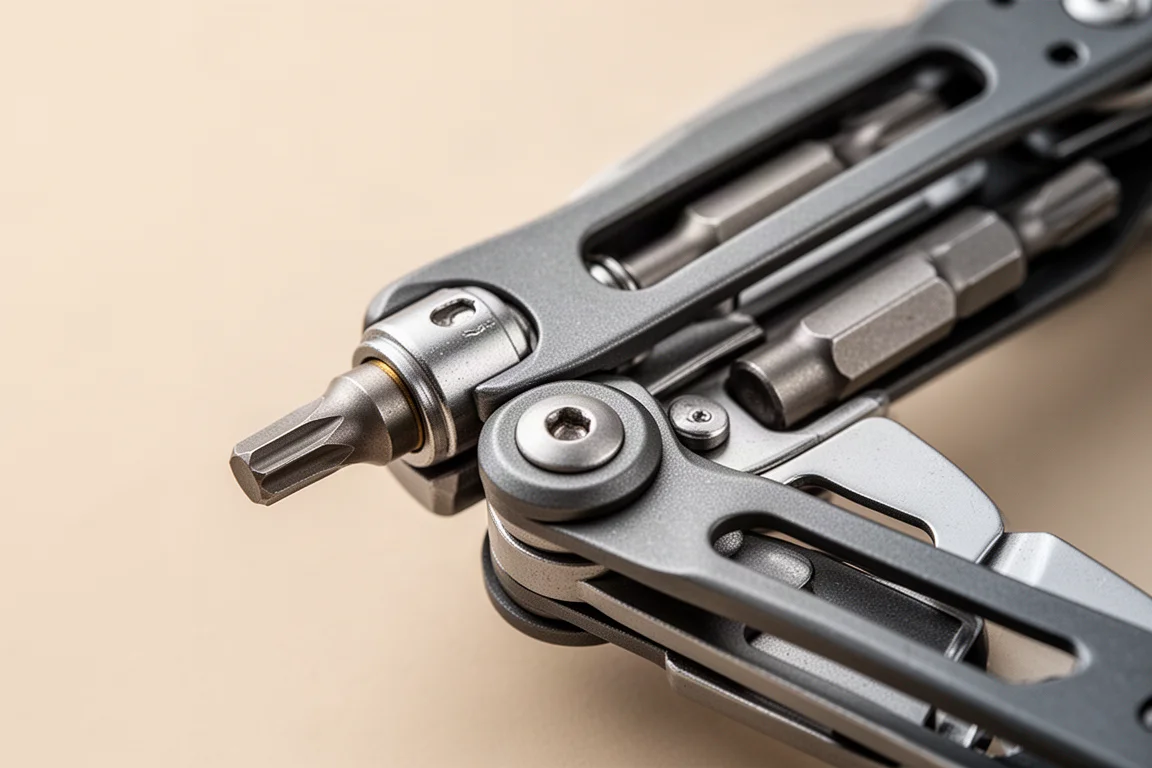
The plier-based multitool is the bigger surprise of the two. It is similar in weight to the Leatherman Sidekick, with a comparable tool set that improves on the formula in a number of ways. It carries the same locking bit driver found on the pocket knife, and unusually, the multitool body is actually narrower than the knife.
But the bit driver here has a quirk: instead of a true 180-degree inline position, it stops at around 170 degrees, leaving the driver awkwardly off-center. When you are twisting a screw, you have to work around that misalignment, and it turns an otherwise excellent feature into an annoying one.
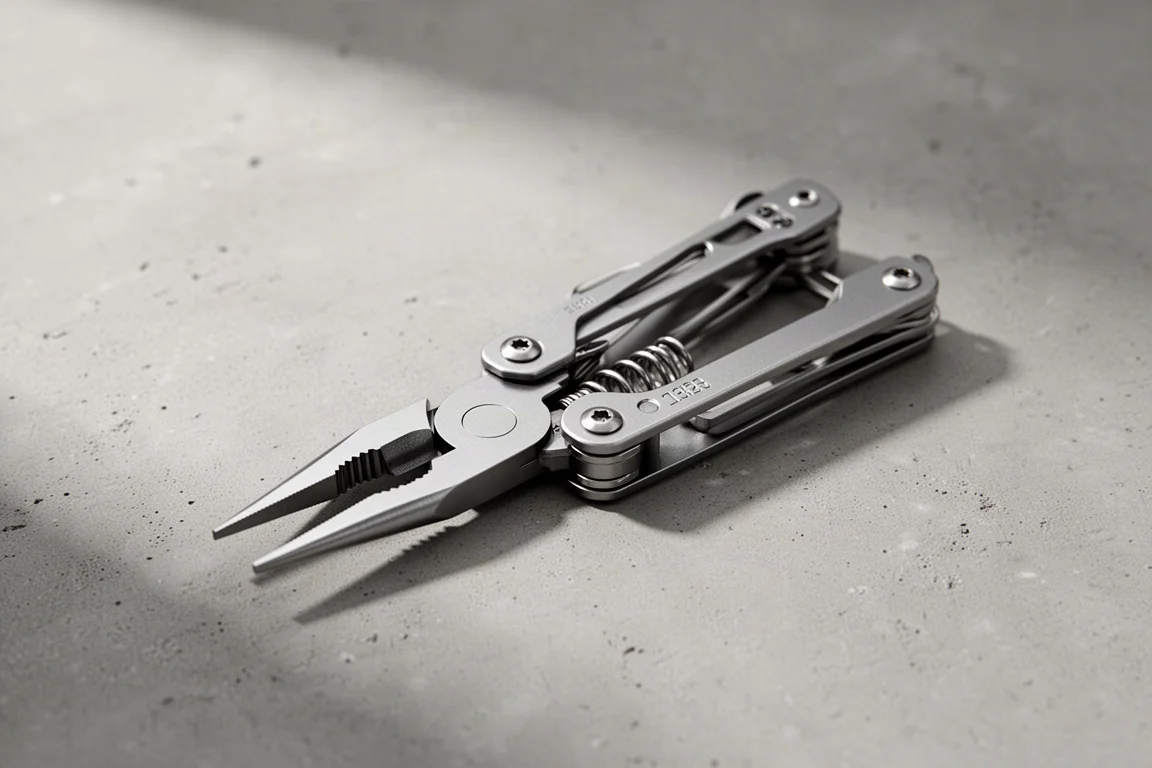
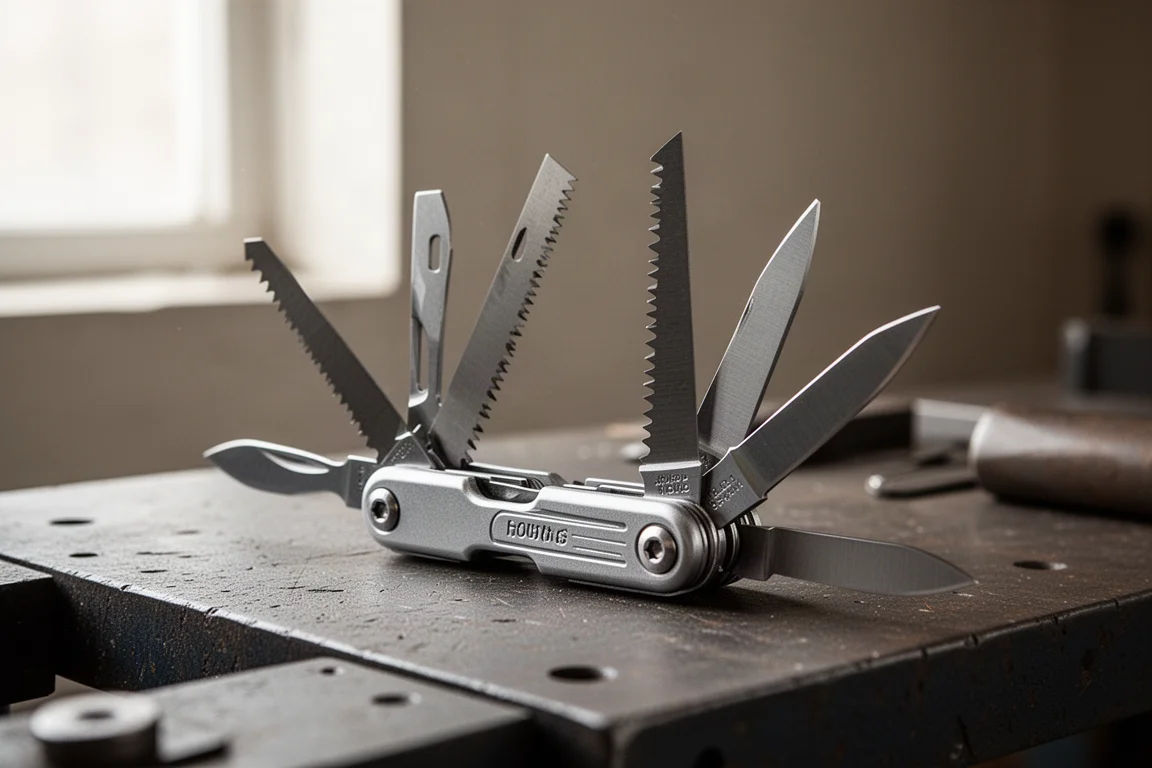
The tool set continues with a blade that is fairly hard to deploy despite having thumb studs, and a strange middle implement that appears to be a reamer and bottle opener hybrid. It tapers too far, lacks a sharp edge along its length, and ends up mediocre at everything. Starting holes is about the only thing it does well. As for the bottle opener: a multitool offers dozens of usable edges for popping a cap, so a dedicated opener that weakens the surrounding tool adds little value.
On the positive side, all the outer implements release with a lock bar similar to the knife’s mechanism. This leverage-style locking system allows a very strong lockup. The locking saw is tapered, reasonably comfortable, and arrives sharp. There is also a small lanyard loop, a minor inclusion but a nice one.
Inside the Pliers: Style Over Function
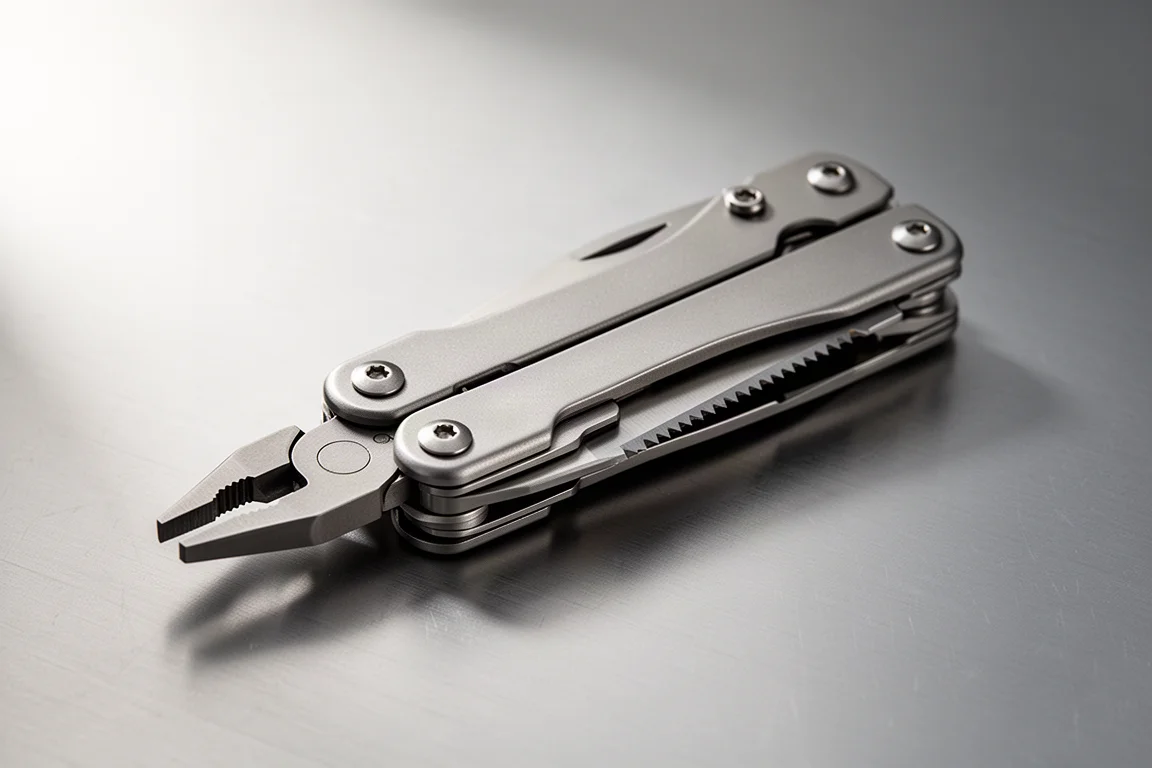
The spring-loaded pliers hide a couple of design decisions that prioritize looks over function. A perforation runs through the plier head, and cutouts go all the way through the metal, both of which weaken the pliers for no practical benefit. The tiny weight savings are not worth the loss of strength in the part of the tool that takes the most stress.
The plier joint design raises a durability question as well. The connection points slot and pinch between the frame, and because the plier head metal is likely softer than the frame, that interface could wear down over time and stop locking the pliers securely. It is an area True Utility should revisit.
Where the Materials Fall Short
3Cr steel is the recurring theme holding both tools back. For a frame, it is acceptable, since toughness matters more than edge retention there. But for blades, whether the knife blade or the multitool’s saw, it is simply a low-grade choice, and no amount of clever design fully compensates for it.
That matters because the multitool sits around the $50 mark, and the budget segment is unforgiving. Comparable Leatherman-pattern clones with full accessory sets sell for under $40, and Sidekick-style clones with better steel and better tool selection sell for under $30. If a new entrant is not dramatically better than those established options, the price has to come down or the materials have to improve. Had the bit driver been properly inline, the multitool would be recommendable at around $35.
Buying Advice
The pocket knife makes sense if a locking quarter-inch bit driver is exactly what you need and you accept basic blade steel as the trade-off. The multitool is harder to recommend at its current price, given how strong the budget clone market is, though its locking mechanism, tool selection, and compact width show genuine promise.
Both tools represent a good starting point rather than a finished product. If True Utility iterates with better steel, a true inline bit driver, and fewer style-driven cutouts, either one could become a serious contender. As it stands, buy them for the locking driver concept, not for the blades.
Conclusion
True Utility clearly understands the concept side of tool design: the locking bit driver is the standout feature across both products, and the multitool’s overall tool combination is thoughtfully assembled. The materials and a handful of odd choices, from the off-center driver to the weakened plier head, keep both tools from being outright winners at their current prices. For buyers watching the budget multitool space, these are worth keeping an eye on, but patience may be the better move until the next revision.
Further reading
Related Reviews

Everyday Carry
Everyday Gear That Deserved a Second Look
A roundup of solid everyday carry items: watches, pens, a pencil, a knife, and a smart ring that each earned a place on the table.

Everyday Carry
KORE Tactical Bifold Wallet Review: A Durable Everyday Carry Option
A close look at the KORE Tactical Bifold Wallet, a reinforced nylon wallet with magnetic closure and room for cards, cash, and IDs.

Everyday Carry
Krabby Wallet Review: A Slim, Simple Carry That Has Stood the Test of Time
A closer look at the Krabby Wallet, a slim canvas and elastic design with a loyal following and a simple, functional approach to everyday carry.