Gravel Bikes
Trek CheckOUT Review: A Full Suspension Gravel Bike Built for Bikepacking
A close look at the Trek CheckOUT, a full suspension drop bar gravel bike with 55 mm of rear travel, a RockShox Rudy XL fork and 18 mounting points for bikepacking.
Introduction
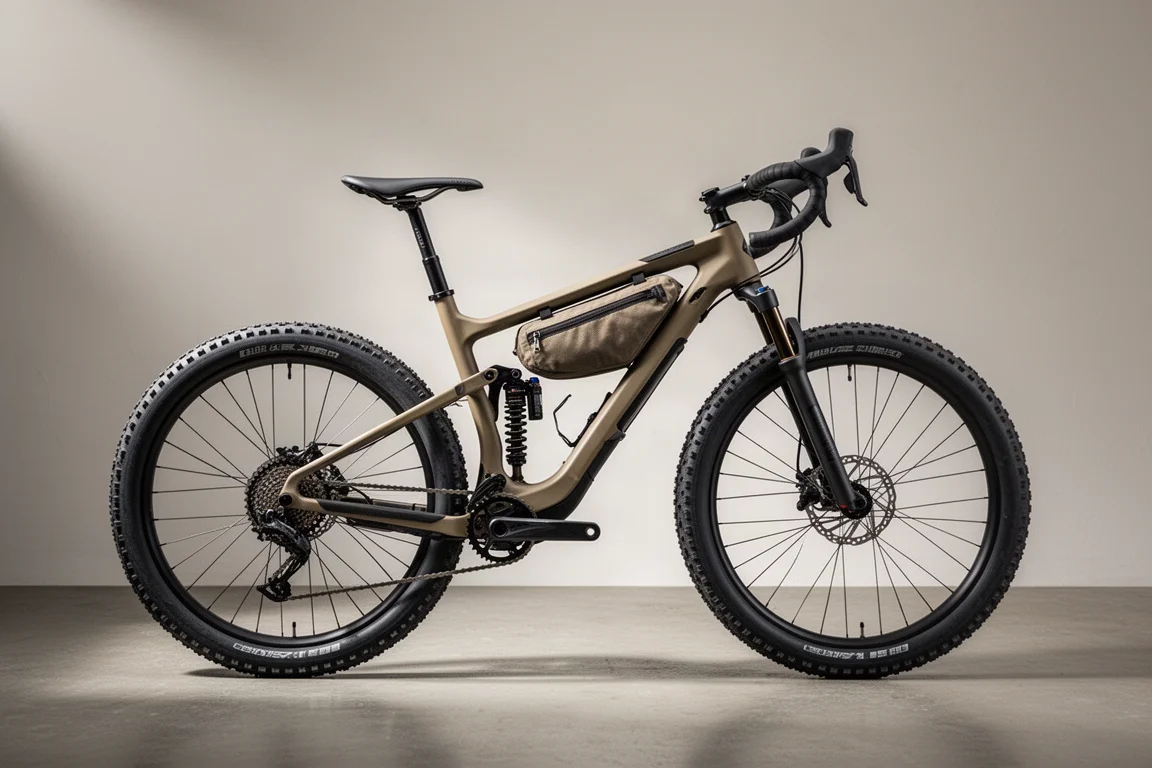
Trek has expanded its drop bar range with the CheckOUT, a new model that sits alongside the Checkmate and the Checkpoint. Where those bikes follow a more familiar gravel formula, the CheckOUT takes a different route: it is a full suspension drop bar bike built for off the beaten path adventures.
That makes it a genuinely interesting proposition rather than a predictable one. Full suspension gravel bikes have been attempted before and never really caught on, and even a front suspension fork on a gravel bike is still a niche choice. Yet over the past year, more drop bar full suspension mountain bikes have turned up at certain races in the US, which suggests the configuration works well in specific settings.
It is worth being clear about what this bike is not. It is not a claim that every gravel bike should have suspension, and it is not aimed at the demands of a fast, flat-out gravel race. Gravel riding now spans everything from a local weekend race to a four-week tour to a self-supported bikepacking trip, and the right bike depends entirely on which of those you are doing. The CheckOUT is another option in a category that keeps growing, and more choice is a good thing.
Who This Bike Is For
Trek has positioned the CheckOUT for riders who cannot quite decide between a gravel bike and a mountain bike, and the geometry backs that up. The frame uses a longer reach paired with a short stem and a noticeably higher stack than either Trek’s gravel or mountain bikes, which puts the rider in a more upright, comfort-focused position.
That is a deliberate choice. This is not a head-down, aggressive aero gravel race machine. It is a bike designed for long days in the saddle that turn into many days, many weeks and potentially many months. For ultra distance bikepacking and multi-day adventure riding, the upright position and the suspension both point in the same direction: keeping the rider fresher for longer.
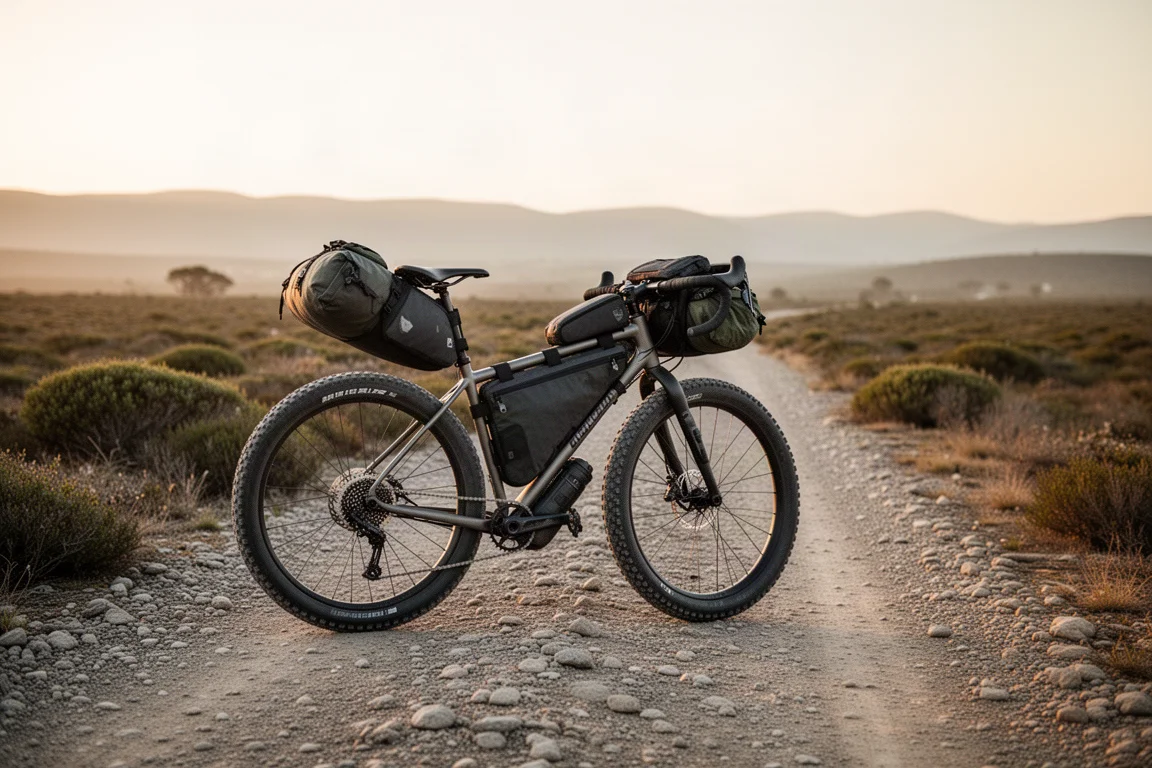
If your riding is mostly fast, smooth gravel with an eye on the clock, the CheckOUT’s priorities will feel like extra weight and extra complexity rather than an advantage. If your riding is long, rough and loaded, those same priorities start to make considerably more sense.
Main Strengths
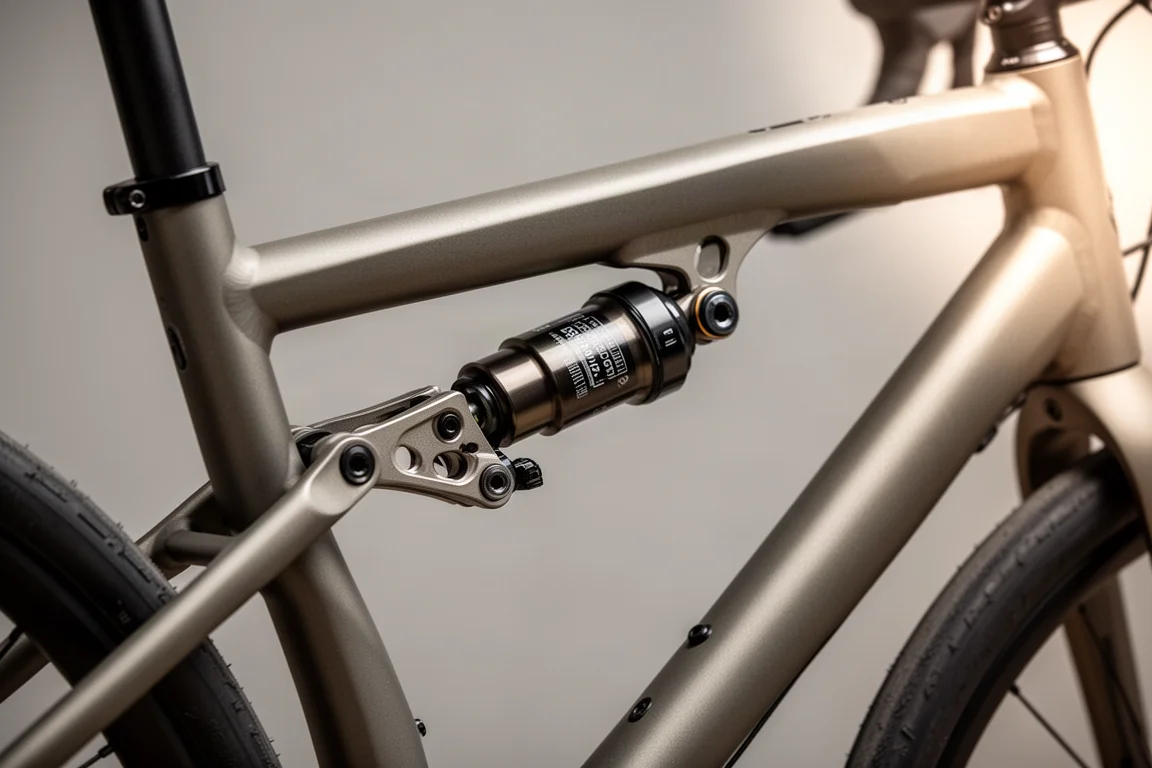
The suspension setup is the headline. A link-driven rear shock delivers 55 mm of rear wheel travel, and it sits clearly on display below the top tube rather than hidden inside it. Up front, the bike uses a RockShox Rudy XL fork, a longer version of a fork first introduced around five years ago. Where that earlier fork offered 40 mm and 50 mm of travel, the new version moves up to 50 mm and 60 mm. Both the fork and the rear shock can be locked out for pavement and smoother surfaces.
Tire clearance is generous at up to 56 mm, or 2.2 inches depending on how you measure. The drop handlebar is new as well, with extreme flare that effectively widens the bar in the drops and gives more control, closer to the feel of a mountain bike flat bar.
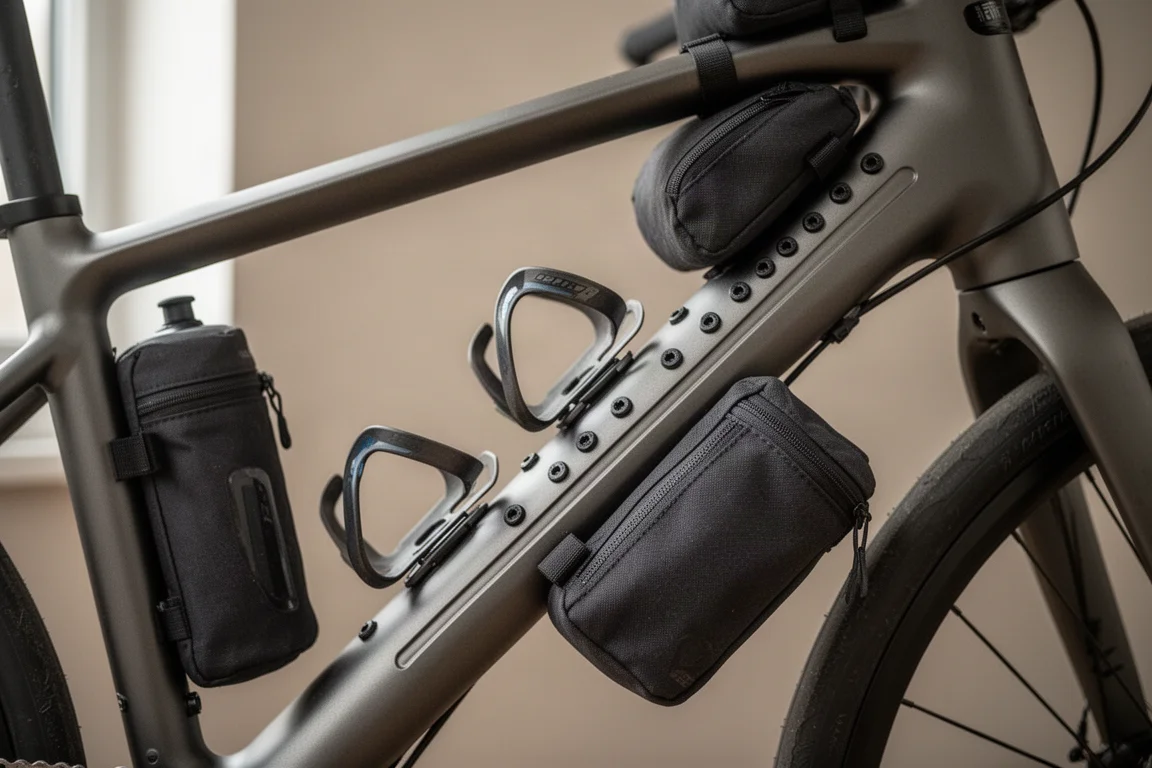
Versatility is the other big theme. Trek lists 18 mounts across the frame, covering the top tube, down tube and seat tube, so bottles, cargo and bags all have dedicated homes. There are custom bags designed to fill the entire front triangle for food, water and clothing, with a fit and colour match specific to the bike. Trek has also developed a rear rack that works with the suspension linkage so it moves with the rear wheel, and that avoids interfering with the dropper post fitted as standard. The down tube adds multi-point adjustability for different bottle and cage positions, and includes a groove that can take external routing, which is a real benefit when you need to carry out maintenance far from home.
Things to Consider Before Buying
Suspension brings weight and complexity, and that is the honest trade-off here. Trek’s launch information did not detail how much the CheckOUT weighs compared to a standard Checkpoint, nor did it set out service intervals for the fork or the rear shock. On the second point, real world service intervals on shocks and forks are generally lengthy, so this is unlikely to be a day-to-day concern. The weight question is harder to answer without time on the bike.
There is also the early adopter consideration. Lab testing is valuable, but it does not replicate the range of conditions and long-term use that riders put bikes through in the field. Buyers who move early will be part of building that real world picture.
Then there is the mountain bike comparison, which is a fair question to ask. A dedicated full suspension mountain bike offers more travel, typically 100 mm to 120 mm, along with modern damping, pedal platforms and lockouts that let it pedal efficiently on smooth tracks and roads. Converting a mountain bike to drop bars is not a straightforward job either, since the geometry is designed around a short stem and a flat bar, and you often need to adjust stem length, rise or even frame size to get the reach right. Few companies build a full suspension mountain bike with a drop bar as standard, which is part of why a purpose-built bike like this exists.
Buying Advice
The decision comes down to the riding you actually do. If you race gravel, chase fast times on smooth courses or mostly ride hardpack surfaces, a conventional gravel bike will almost certainly serve you better, and the suspension will feel like unnecessary mass. If your riding is long distance, loaded and often rough, the comfort and control benefits start to outweigh the extra complexity.
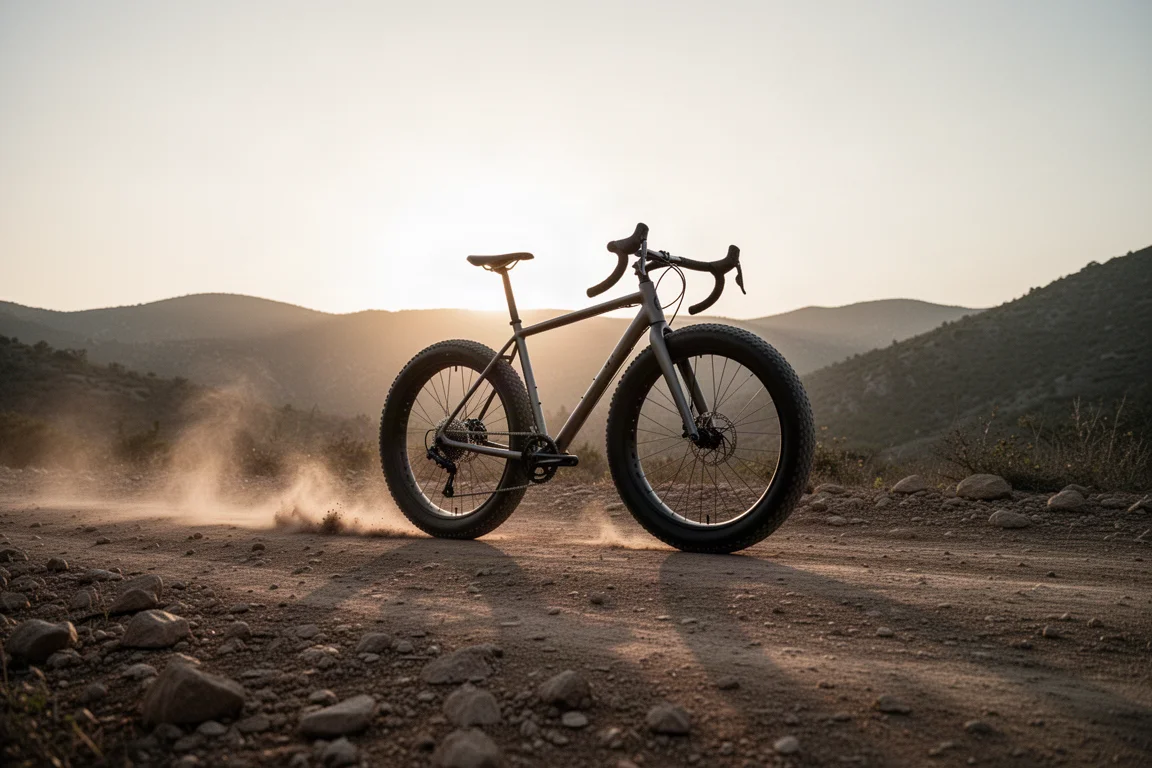
It also helps to think about how much suspension you genuinely need. For many gravel riders, a modest amount of front travel is enough to smooth out rough terrain, reduce fatigue and make long days more pleasant, and a suspension fork tends to work better in that role than a suspension stem. The CheckOUT goes considerably further than that, and that is precisely the point: it is aimed at riders whose terrain and distance justify it.
Conclusion
The Trek CheckOUT is not the future of gravel bikes, and it does not need to be. It is a well-considered answer to a specific question: what does a drop bar bike look like when comfort, control and cargo capacity matter more than outright speed? With 55 mm of rear travel, up to 60 mm up front, clearance for 56 mm tires and 18 mounting points, it makes a coherent case for itself as an ultra distance bikepacking machine.
If you are curious about mixing gravel and mountain bike strengths, and your rides are measured in weeks rather than hours, this is a compelling option to look at closely. If you race, it probably is not the right fit. That is not a flaw. It is simply a different answer to a different question.
Product link
View more details for Trek CheckOUT
This product is mentioned in the review. Check the specifications, options, and compatibility before buying.
View more details for Trek CheckOUTFurther reading
Related Reviews
Gravel Bikes
3T Exploro Ultra Review: A Fast Gravel Bike Built for Big Tyres
A close look at the 3T Exploro Ultra, an aero carbon gravel bike designed around wide tyres, with road-like handling, a 980 g frame and genuine rough-terrain capability.
Gravel Bikes
3T Extrema Italia Review: Aero Gravel Speed With Room for 57 mm Tires
The 3T Extrema Italia pairs an aero frame with huge tire clearance, Italian-made carbon and a more comfortable ride than the RaceMax. Here is what to know before buying.
Gravel Bikes
3T Race Max 2 Italia Review: An Aero Gravel Race Bike Made in Italy
A closer look at the second-generation 3T Race Max 2 Italia, covering its aero updates, ride character, tire clearance, internal storage and who it suits.