Camping Cookware
Trangia 27 Burner, Trangia Triangle and Pathfinder Canteen Cup Set: A Long-Term Camping Cook Kit
Three pieces of camp cookware that have stayed in service for over a decade, with the strengths and the compromises of each part explained before you buy.
Introduction
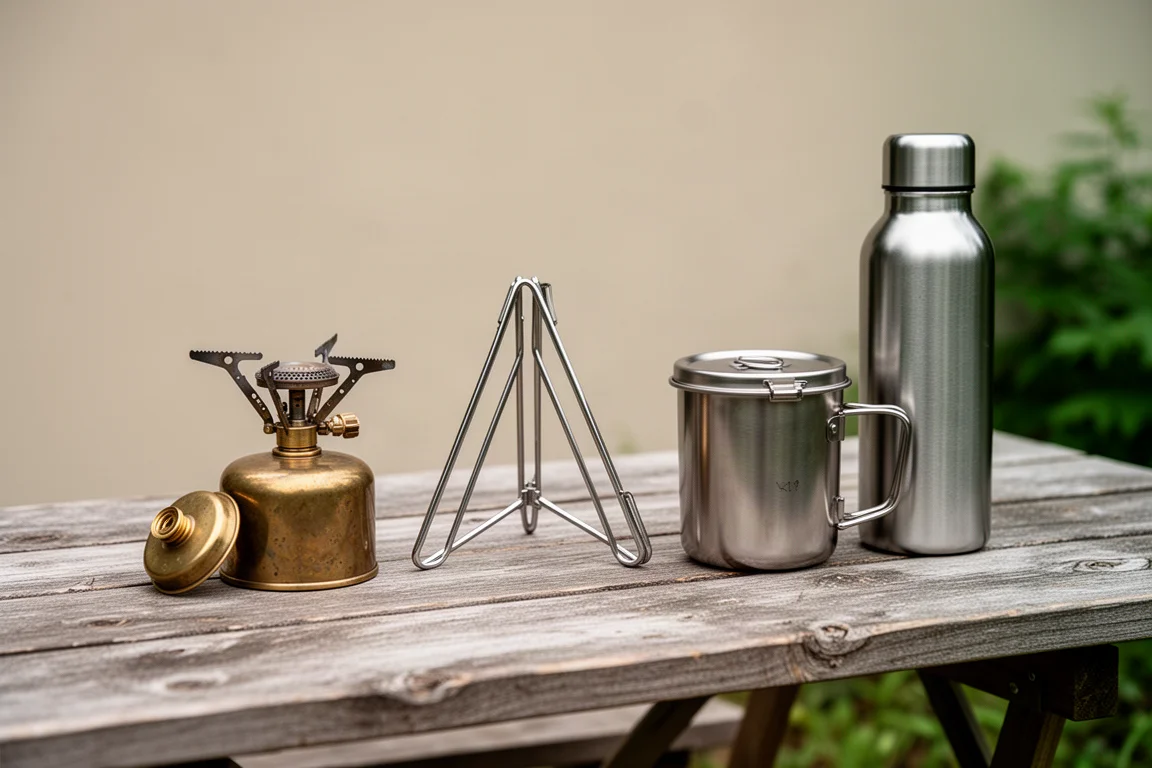
Some outdoor kit gets replaced every few seasons, and some of it quietly stays in a pack for a decade. The three pieces in this set belong to the second group: a Trangia 27 burner, a Trangia Triangle pot support, and a Pathfinder canteen cup set, all still in use after more than ten years. That length of service is a useful filter, because small annoyances that seem tolerable in year one become obvious by year ten.
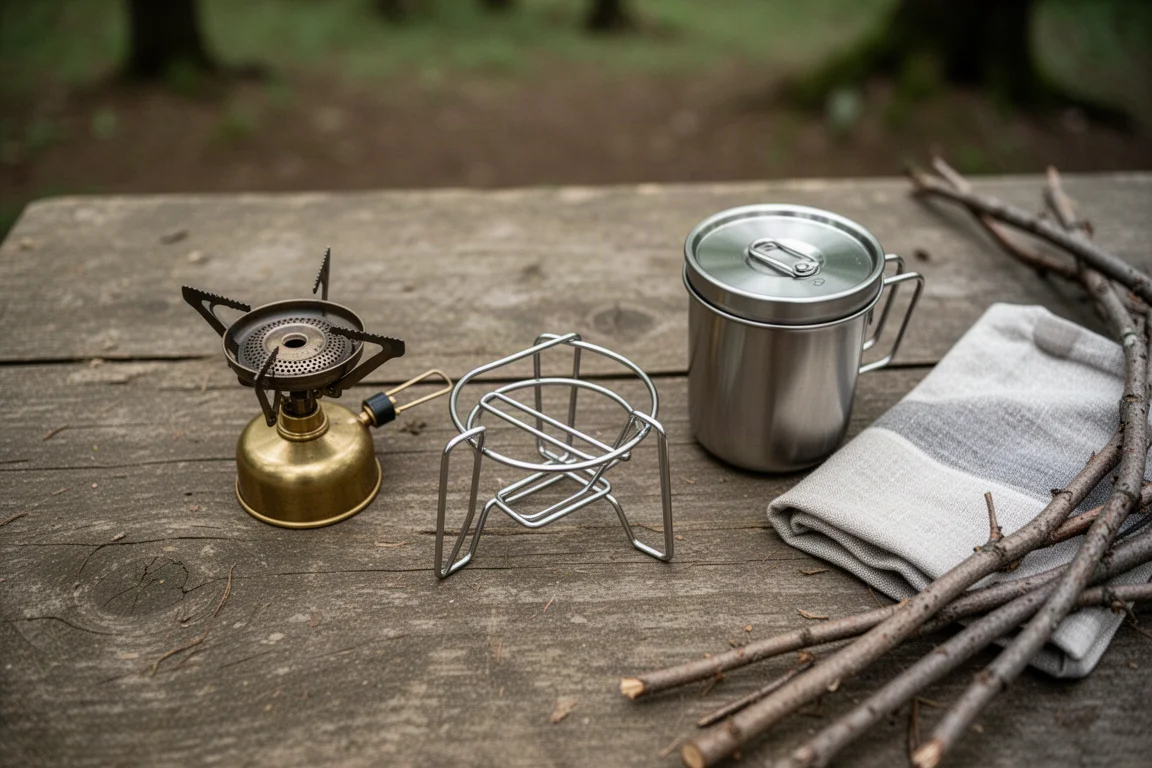
Together they cover the basics of camp cooking: a heat source, a way to hold a pot above it, and cookware that can take rough handling. Each piece also has a clear compromise, and knowing those in advance is what makes this kit straightforward to buy with confidence.
How the Three Pieces Work Together
The Trangia 27 is a burner, not a complete stove. It supplies the flame, and something else has to hold the pot at the right height above it. The Trangia Triangle is that something: a stainless steel support that folds flat and interlocks around the burner. If the triangle is not to hand, a couple of rocks, bricks or sticks pushed into the ground do the same job.
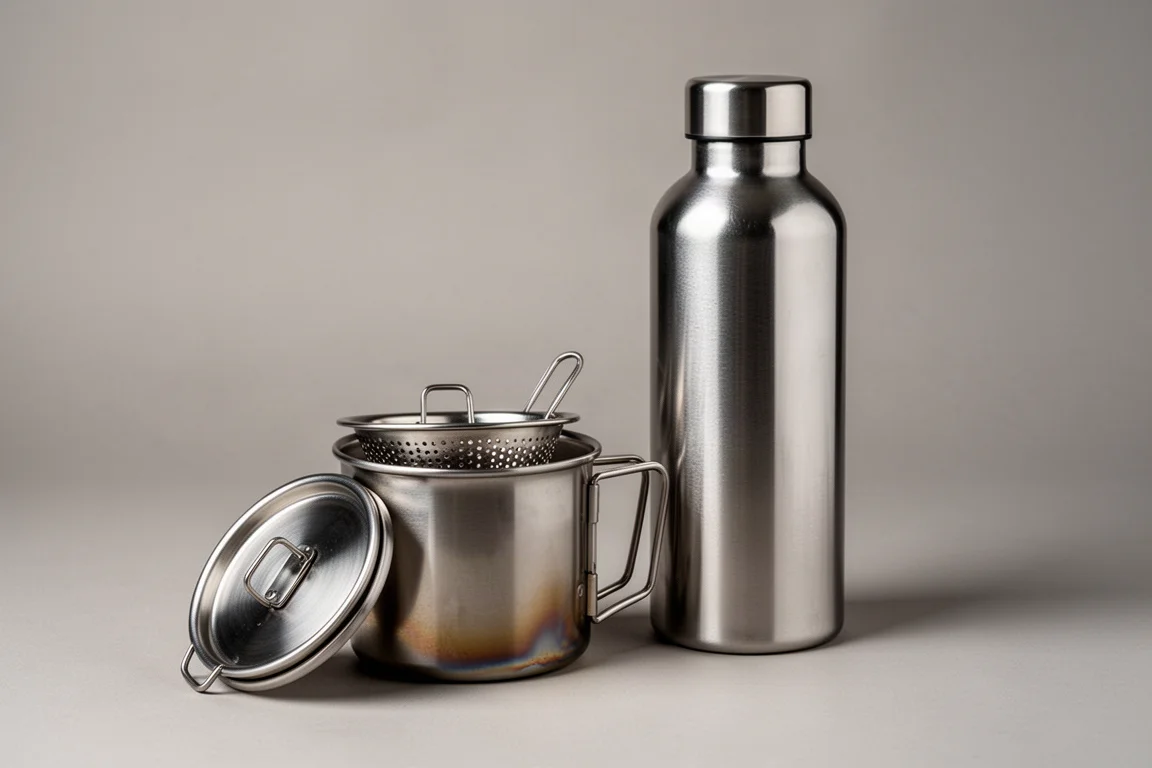
The Pathfinder canteen cup set covers the cookware side. A stainless steel cup with a lid and a strainer nests with a stainless steel bottle of the same capacity, so the whole set packs into a small space. Stainless steel is heavier than titanium, but it is also more forgiving: the cup can go straight into a fire, and the bottle can be placed on a gas stove without any problems.
Trangia 27 Burner: The Reliable Alcohol Burner
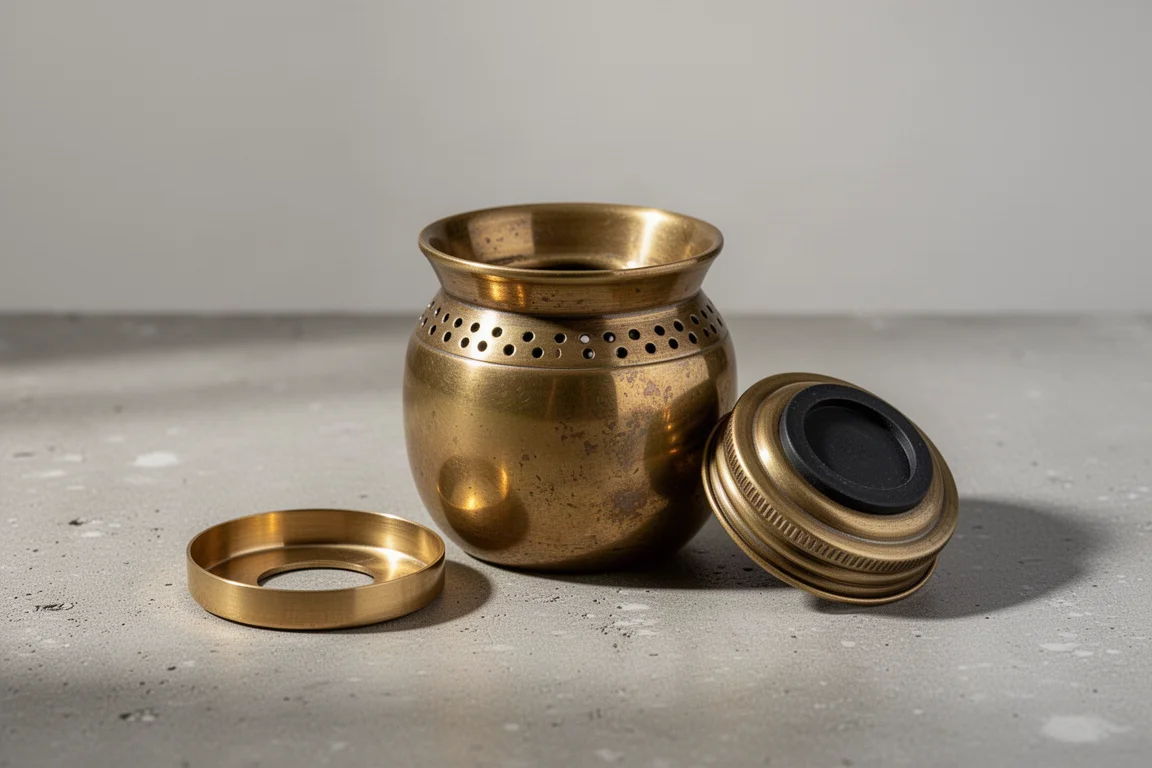
The burner is a small brass unit with three parts: a body, a top cover that doubles as a simmer ring, and a screw-on lid with a rubber seal. Fuel, either bioethanol or methylated spirits, is poured in through the top and stored inside the burner once the lid is closed, so leftover fuel is never wasted. After more than twelve years of use, the seal has needed replacing once, and a little lubricant or petroleum jelly around it keeps it in condition.
Inside, the fuel sits in an outer chamber ringed by small holes. Once the burner is up to temperature and pressure, those holes act as jets and produce a strong flame, which usually takes somewhere between thirty seconds and a minute to develop.
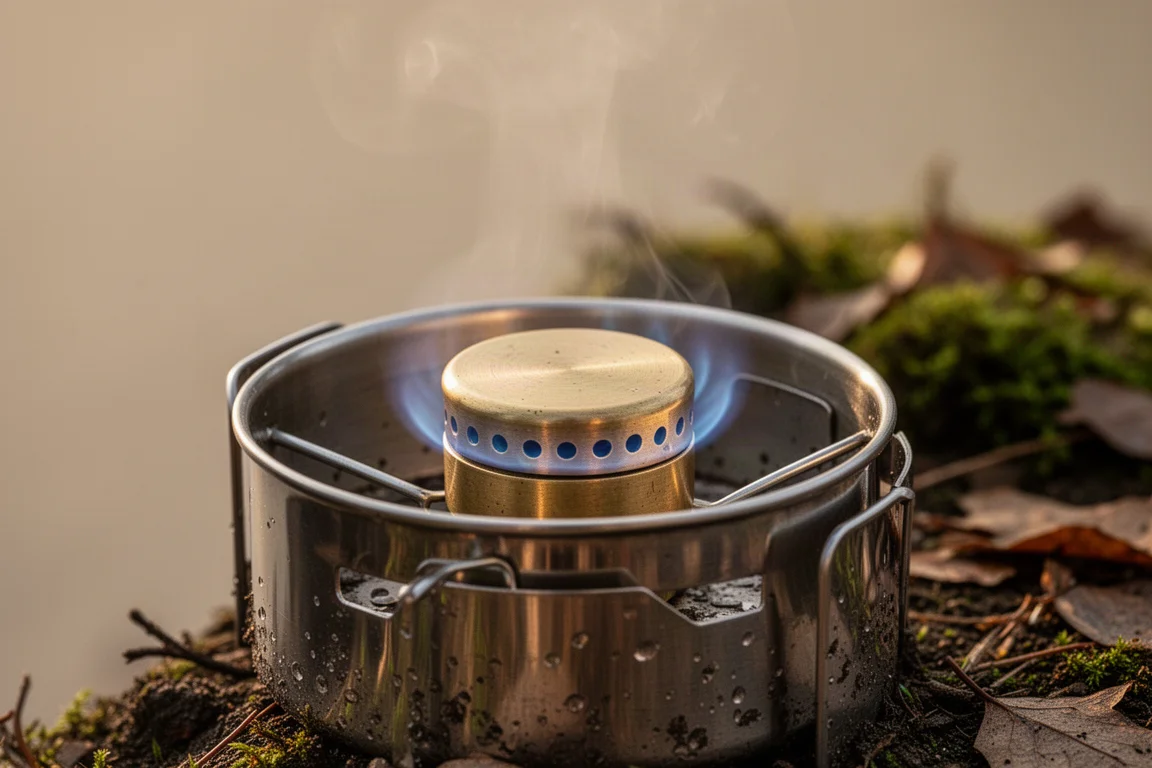
Two things are worth knowing before buying. First, it is not always obvious whether the burner has lit, and lighting it with a lighter alone can be difficult in cold weather. A tightly rolled strip of tissue paper or kitchen roll used as a wick solves that reliably, and it burns away along with the fuel. Second, the flame is influenced by the slightest breeze and works far better with some kind of windshield around it.
The simmer ring covers the jets and reduces the flame, which helps for gentler tasks such as pancakes or an omelette. The ring itself gets very hot, so it needs pot grippers, pliers, a knife or a stick to lift on and off, and it is not something to handle inside a tent. Control is the main limitation overall: the flame can be large and erratic, pressure builds quickly when a windshield is in place, and fine cooking, including baking, is difficult. The burner also gets through a fair amount of fuel, and much of the flame escapes around the sides of a pot rather than heating the base. The simmer ring can also stiffen with age, and a few users have reported cracking around the base of this type of burner, which can be repaired by soldering.
Trangia Triangle: A Compact Pot Support With Caveats
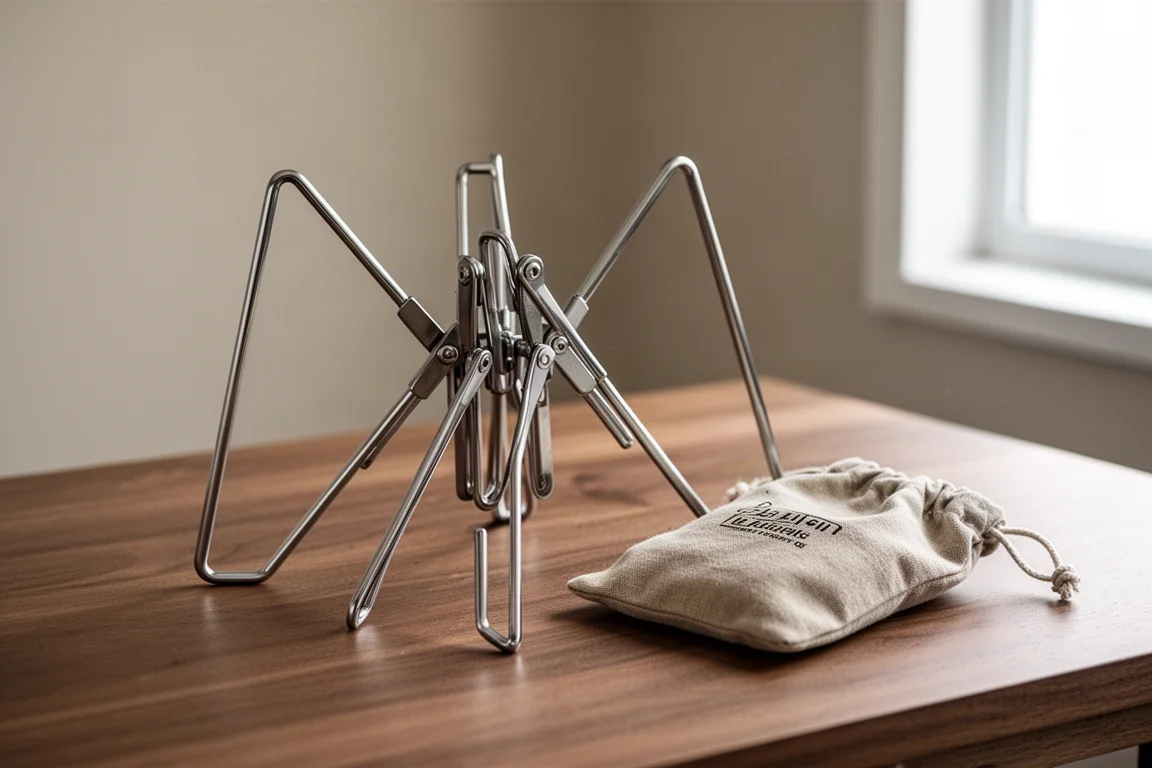
The Trangia Triangle is an older design of pot support, and newer versions exist. The three stainless steel sides interlock, a small ring pushes them outward for stability, and the burner sits inside the frame. The purpose of the design is height: it places the base of a pot at the distance the maker considers ideal above the burner, which helps boil times.
It folds flat, takes up almost no pack space, and comes with a small bag. Assembly and disassembly take seconds, there are no parts to break, and a wide pan such as a frying pan sits very stably on top. Like the burner, it is stainless steel, so it is heavier than titanium equivalents, cheaper than titanium, and arguably expensive for what it is.
The caveat is pot size. A pot around 95 millimetres in diameter drops straight through the support. Small pots and bottles need to be raised above the burner, which can be done with a couple of stainless steel tent pegs or a simple wire frame bent to shape. Wooden pegs are not a solution, since they burn and the pot collapses. The triangle also does not work especially well as a windbreak.
There is a second, more fiddly issue. The simmer ring does not fit cleanly inside the frame, so it can only be dropped in partway open, and adjusting it means working around hot metal with pliers or a similar tool. Stability with wide cookware is genuinely good, but small-pot users should budget for a workaround from the start.
Pathfinder Canteen Cup Set: Stainless Steel That Earns Its Place
The Pathfinder set is made up of a stainless steel cup with a lid and a strainer, plus a stainless steel bottle of the same capacity. The cup has been used over fires and shows blackening from cooking, but it performs exactly as it did when new. The bottle has been dropped and used on a gas stove without any issues, and the lids and seals have stayed perfect throughout.
The bottle weighs 45 grams more than a plastic bottle of the same size, which is a small penalty for the extra capability. With the lid removed, the bottle can be used to boil water directly, and because it is stainless steel it can also be placed in the edge of a fire to sterilise water collected from a stream. That makes it far more versatile than a plastic bottle, and it means there is always a backup way to boil water if the main pot is unavailable.
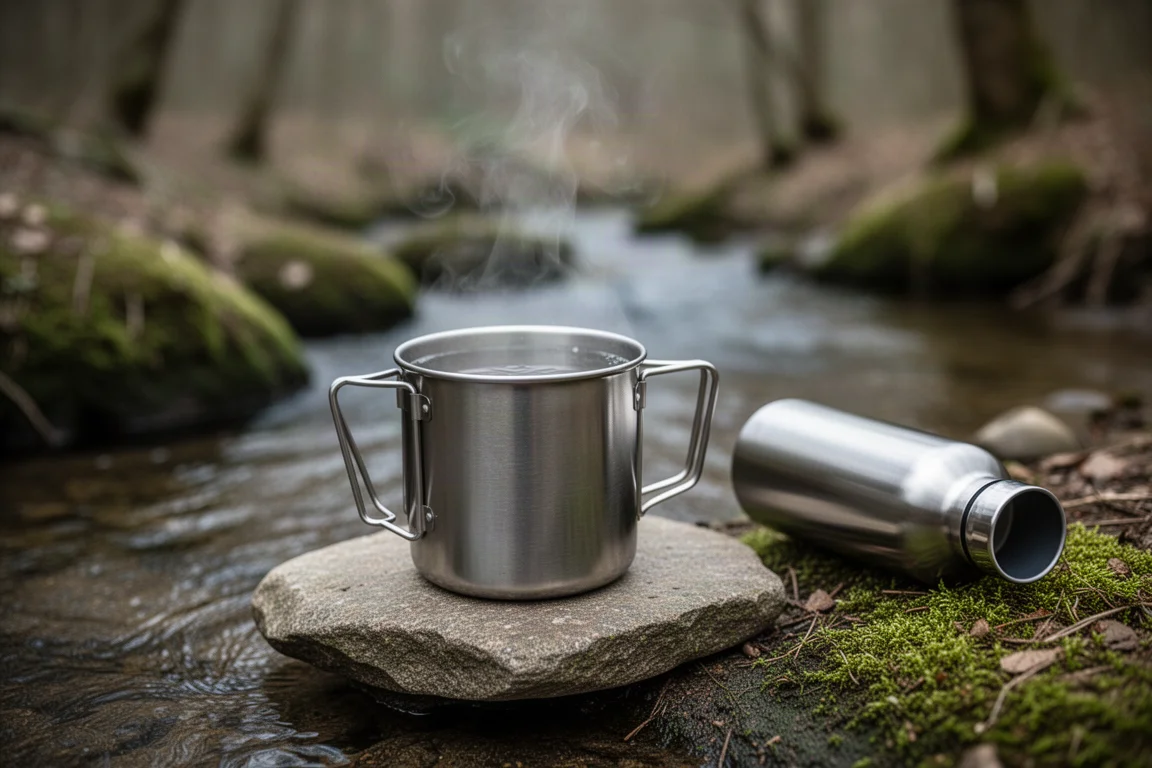
Small details matter over time. The strainer works well, and the cut-outs in the cup line up with holes for a hook, so the cup can be hung over a fire. The volume markings are handy but start at 500 millilitres or 16 ounces, so measuring 250 millilitres means estimating half a cup. The handles and lid grip have no silicone covering, which makes the cup harder to pick up when hot.
Stainless steel also has a practical advantage in the kitchen: food sticks less than it does in titanium, which matters for soups and rehydrated meals. The set nests neatly, with the bottle inside the cup and the lid stored underneath in a bag. The cup, lid and bottle set cost £35 in 2015, and a comparable set is now around £45 to £48.
What More Than Ten Years of Use Has Shown
Durability is the shared story here. The burner still lights and still boils water the way it did when it was new, the triangle has nothing to break, and the cup and bottle have survived drops, knocking about and direct fire. The one known failure mode for alcohol burners of this type is cracking around the base, which has not developed here and can be repaired by soldering if it does. Letting a burner run completely dry is one theory for why cracks appear, which is another reason to extinguish the flame and save the fuel rather than burning it off.
Fuel handling deserves care. Alcohol fuel is fluid and lively, so knocking an overfilled burner over could spread burning fuel to a tent or to surrounding ground. Do not overfill, do not refill while the burner is still hot, and give the unit time to cool before packing it away. Carrying the burner in a small bag is a sensible precaution in case of leaks, and it means the fuel inside is ready for the next trip.
Efficiency is the trade-off. This is not the most economical alcohol burner, and a simple pop can stove can use less fuel for the same job. It is chosen for reliability instead: it lights, it boils, and it carries its own fuel, which makes a hot drink or a rehydrated meal dependable in almost any conditions.
Buying Advice
For anyone who mainly wants hot water and rehydrated meals, the burner is the core purchase. It is the piece that has proved most dependable, and it can be paired with almost anything that lifts a pot above it, including rocks or sticks. A windshield is worth adding at the same time, since the flame is easily disturbed.
The Trangia Triangle makes sense if you want a compact stainless support that folds flat and stays stable under a frying pan. Check the diameter of your pots first: anything close to 95 millimetres will fall through, and you will need tent pegs or a wire frame to bridge the gap.
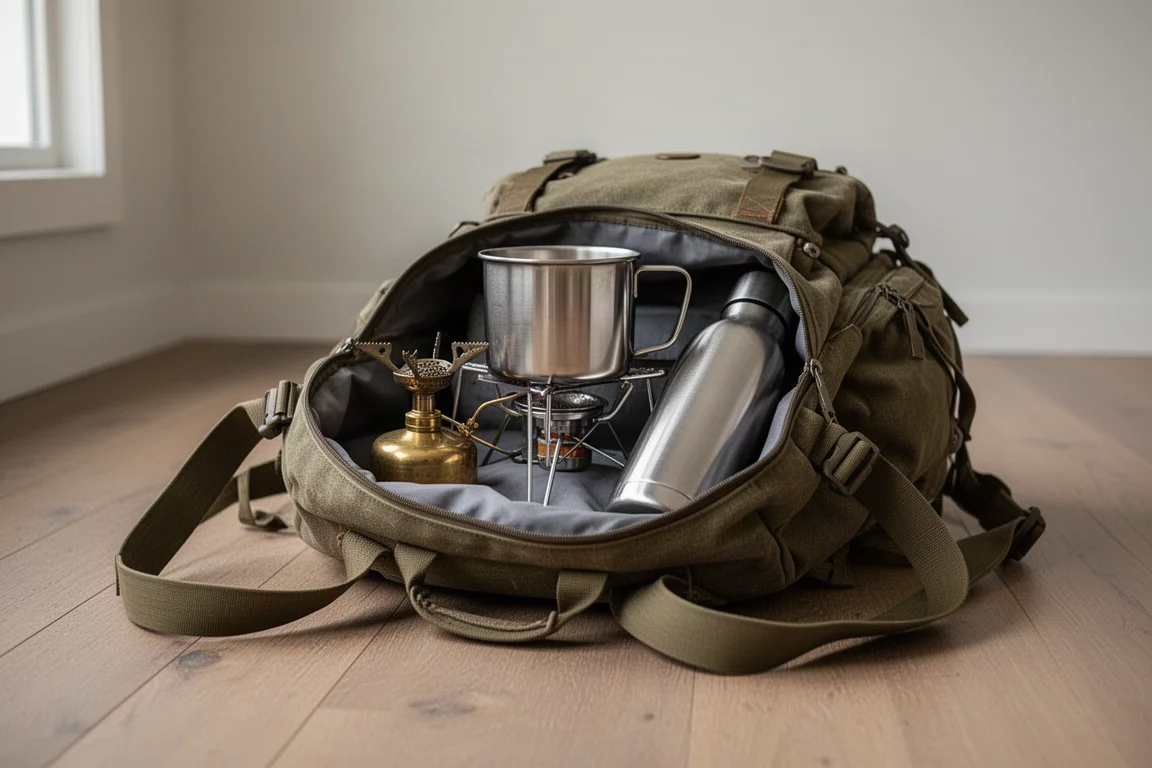
The Pathfinder canteen cup set is the most straightforward of the three to justify. It is heavier than titanium, but it is robust, it nests, it can go into a fire, and it has already proved itself over a decade of use. Buyers who cook soups and rehydrated meals will also appreciate how much less food sticks to stainless steel. Choose the burner for reliability, the triangle for wide-pan stability, and the cup set for cookware that doubles as a water container.
Conclusion
None of these three pieces is perfect. The burner is erratic once a windshield traps heat and it is hard to cook with precisely, the triangle needs a workaround for small pots, and the cup set is heavier than titanium alternatives. What they share is a long service life and a simple, repairable design: the burner still lights, the triangle has nothing to break, and the stainless steel cookware has survived a decade of fires, drops and cooking.
For readers who want kit that keeps working rather than kit that keeps being replaced, this set is a sensible place to start. Pair the burner with a windshield, check pot diameters before adding the triangle, and the canteen cup set will cover the cookware side for years.
Further reading
Related Reviews
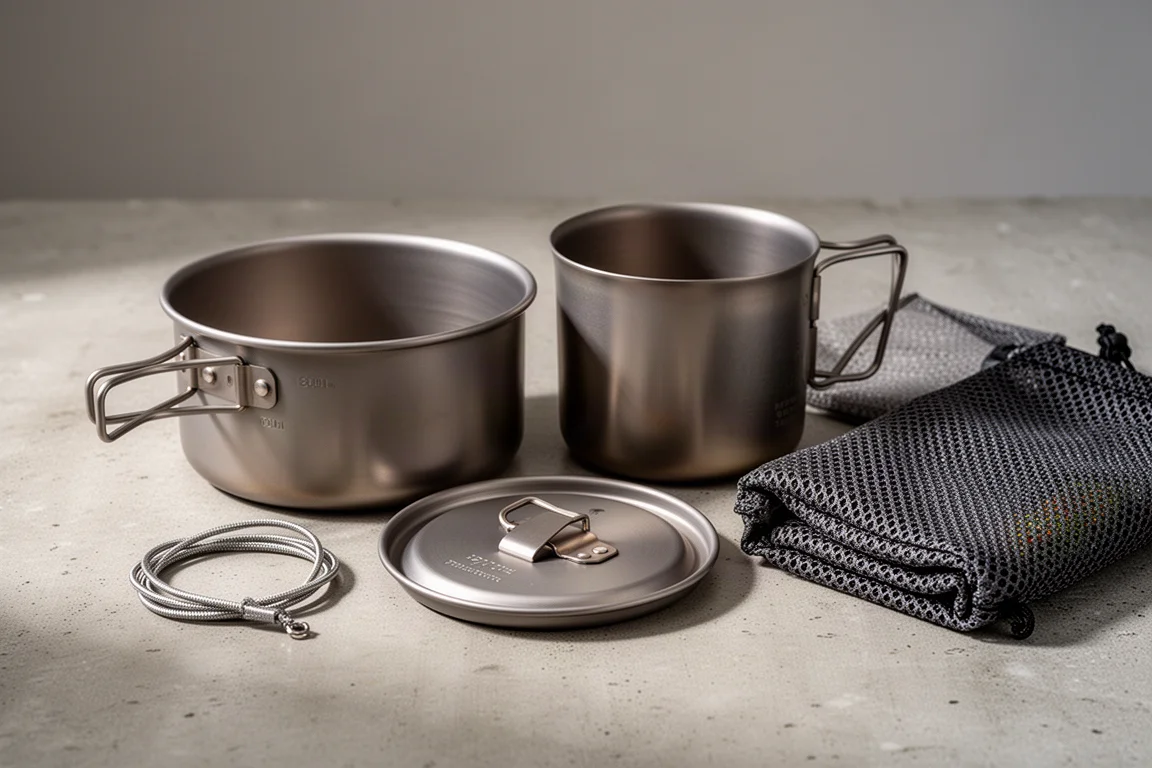
Camping Cookware
Boundless Voyage Titanium Mess Kit Review: An Ultralight Pot and Cup Set for the Trail
A titanium 600 ml pot and 300 ml cup set that weighs 8.2 ounces complete, with a fire hanging cable, a roomy stuff sack, and one small modification worth making.
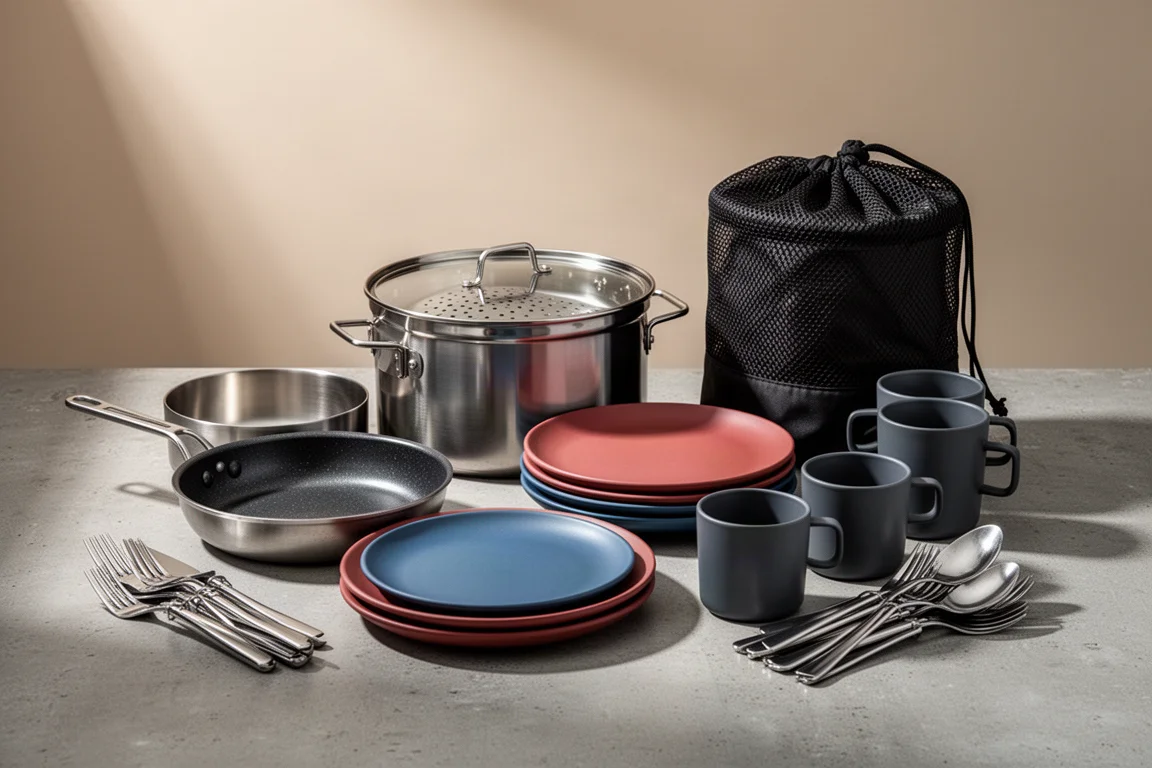
Camping Cookware
Decathlon Quechua 24-Piece Camp Cook Set Review: A Four-Person Kit for Car Campers
A close look at the Decathlon Quechua non-stick stainless steel four-person 24-piece camp cook set, covering what is inside, how it cooks, and the small quirks to know before buying.
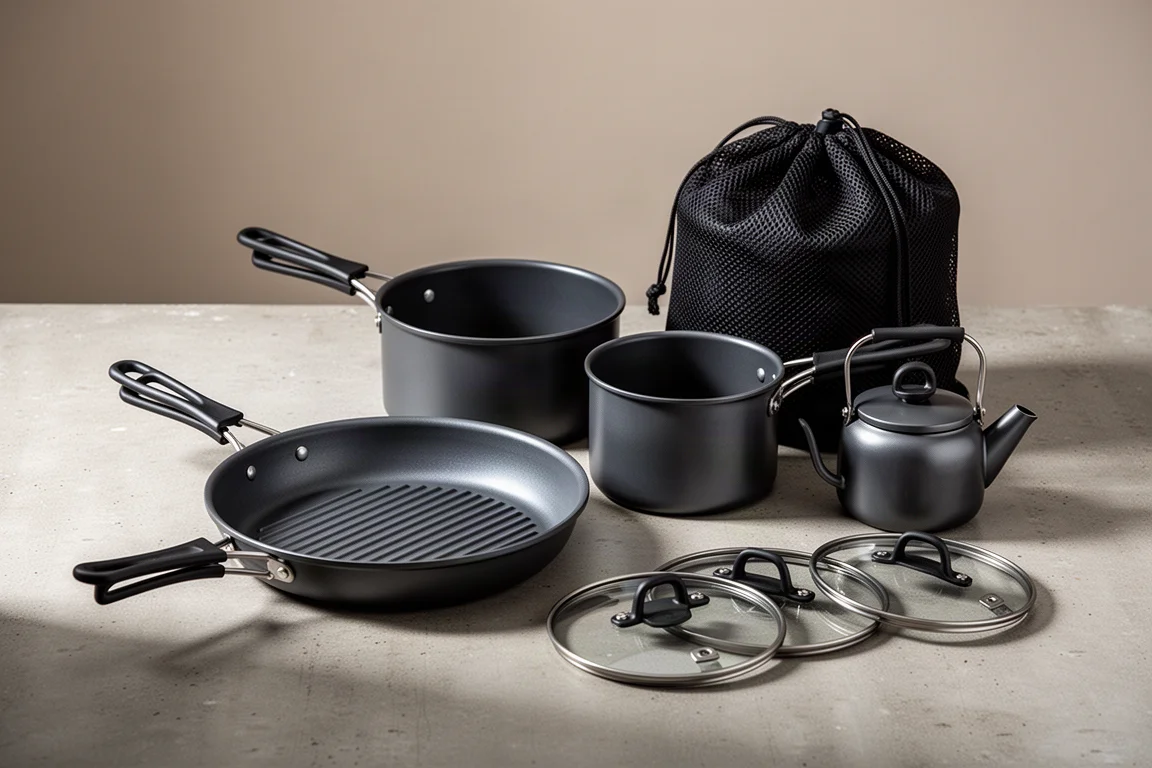
Camping Cookware
Fire Maple Feast 4 Cook Set Review: Strong Build, One Sticky Problem
A practical look at the Fire Maple Feast 4 Cook Set: excellent build quality and locking handles, generous pot capacity, and the sticking issue that will decide whether it suits your trips.