Hand Tools
ToughBuilt Extending Levels: Three Levels That Change How You Carry and Measure
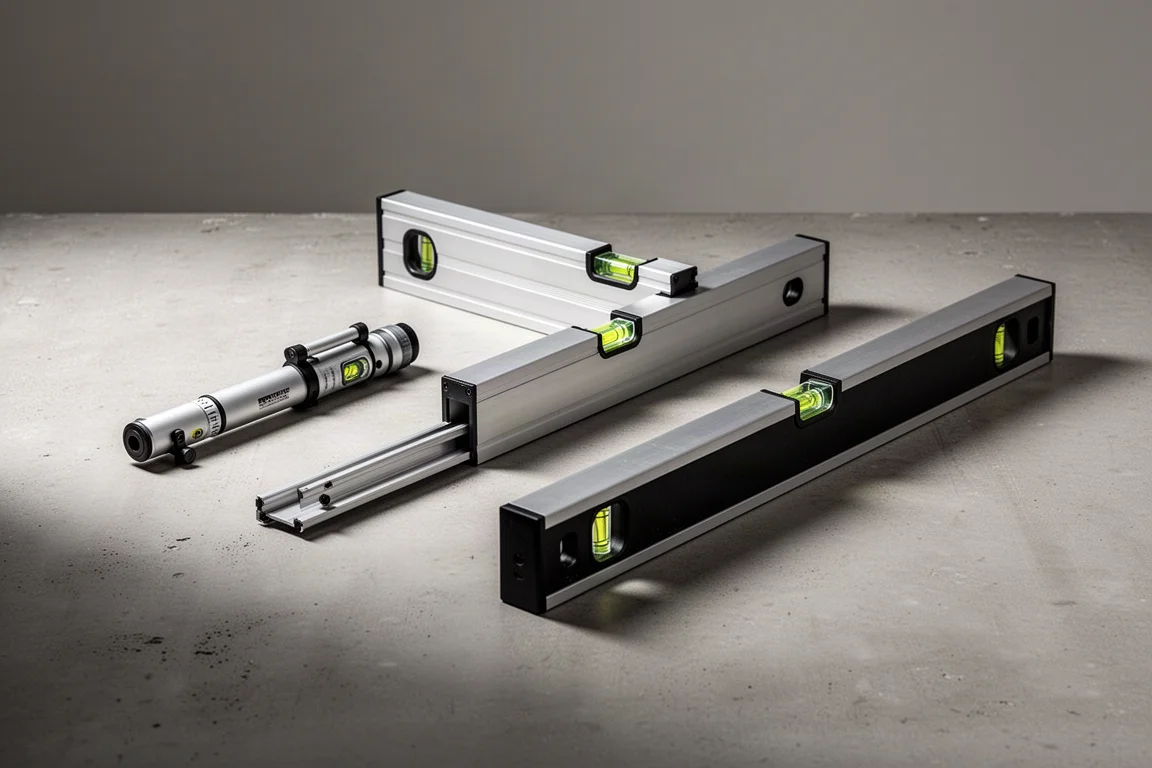
ToughBuilt's extending torpedo, extending box level, and heavy-duty masonry level bring a genuinely new idea to a tool category that has barely changed in decades.
Introduction
Spirit levels are one of those tools that have stayed essentially the same for as long as most of us have been buying them. ToughBuilt has taken a swing at that with a small family of levels built around one unusual idea: a level whose body slides out to span longer distances, then collapses back down to something you can actually carry. After extended use, the concept holds up better than the initial skepticism suggests.
There are three products in this lineup worth knowing about: an extending torpedo level, a 24-to-40-inch extending box level, and a 48-inch heavy-duty masonry level. None of them are light, and none of them pretend to be. What they offer instead is a way to carry a compact tool that behaves like a much longer one when you need it.
Evaluation Criteria
For levels, the questions that matter are straightforward. Is the vial accurate enough for real work? Does the body stay rigid and true? Is it practical to carry, store, and grab on the job? The extending design adds one more question: does a moving part introduce meaningful error?
To answer that, the torpedo level was calibrated against a known reference: the bubble was zeroed on a wedge, then ramped up until it hit each of the three graduation lines. The readings came out at roughly 0.3, 0.6, and 1 full degree across the three lines. Repeating the same test with the rod extended produced essentially identical results, which suggests the sliding mechanism does not materially affect accuracy.
The Extending Torpedo Level: Small Tool, Longer Reach
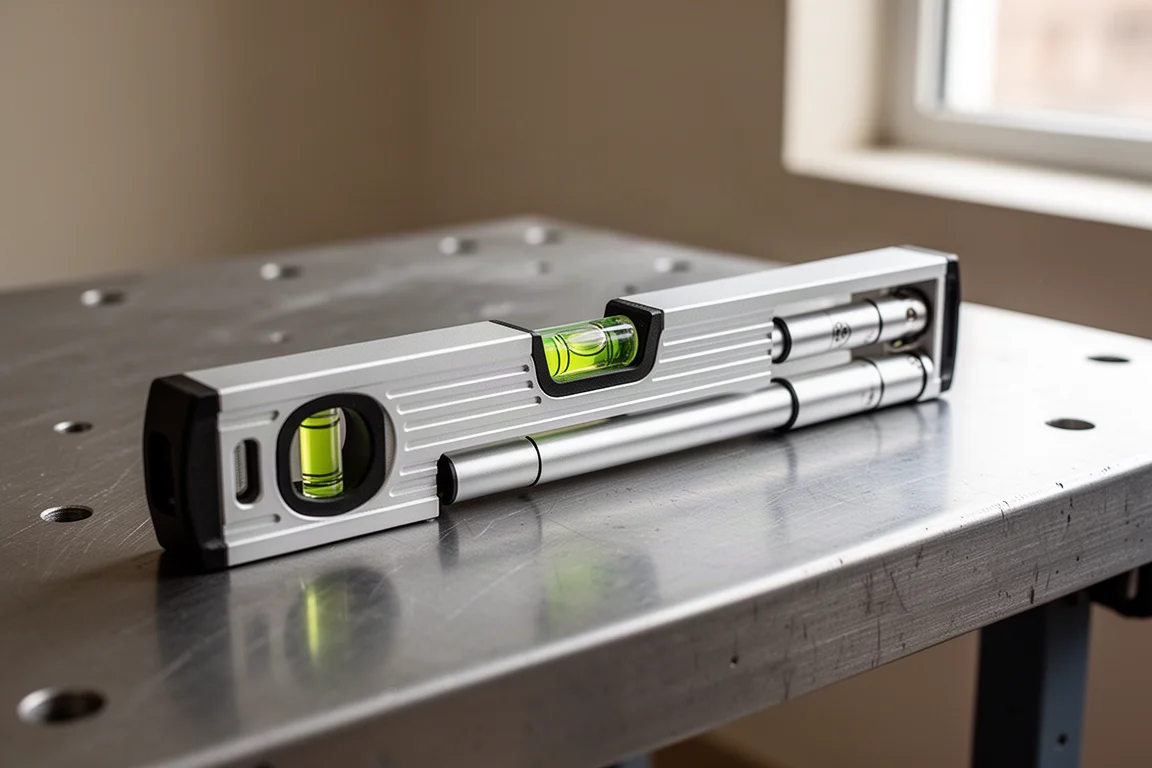
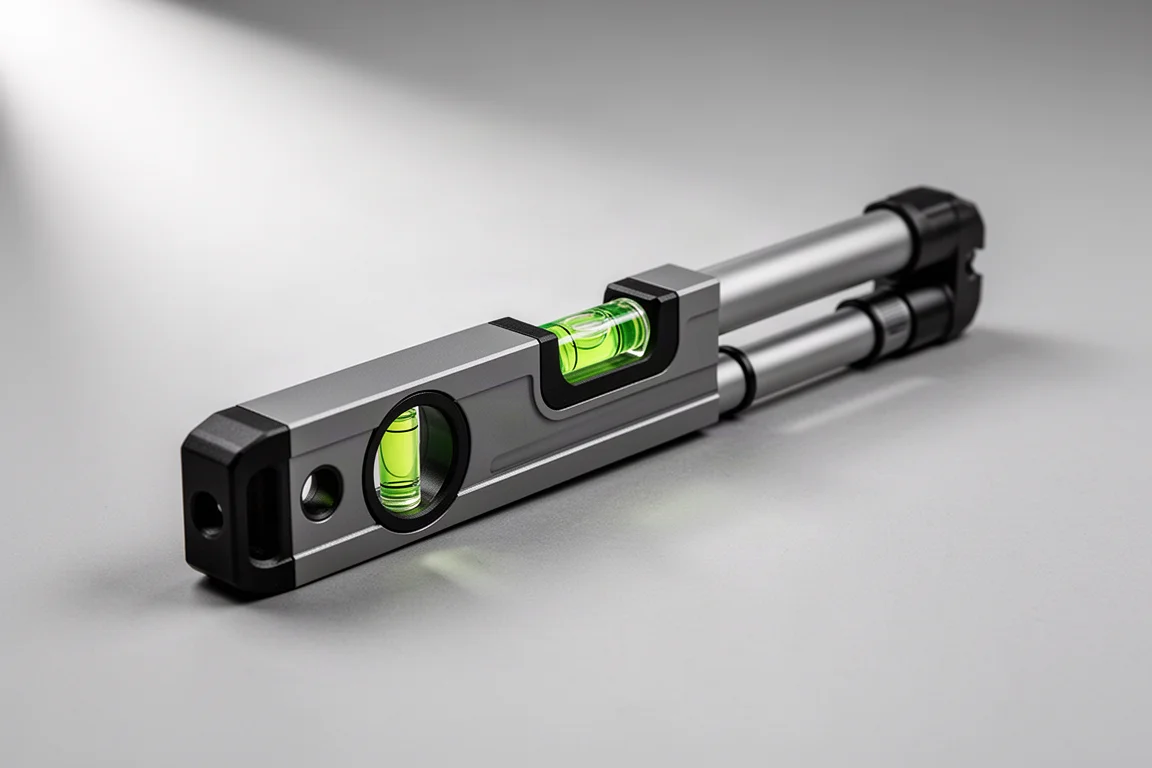
This is the most surprising product of the group. The body measures about 9 inches end to end, which is compact even by torpedo standards, and the sliding rod takes it past 15 inches. The obvious objection is that moving parts on a precision tool sound like asking for trouble. In practice, that concern mostly dissolves for two reasons.
First, a bubble vial is read against lines, not measured in exact degrees, and the calibration test showed readings stayed consistent whether compact or extended. Second, extending the body actually increases the leverage effect on the bubble, making small angle changes more visible. The main quirk is mechanical: the rod slides out more easily than it retracts, so it takes a bit of practice to seat it back.
If you already carry a small level every day and keep wishing you had something longer on hand, this solves that problem without adding a second tool to the bag.
The Extending Box Level: Reach Without the Usual Bulk
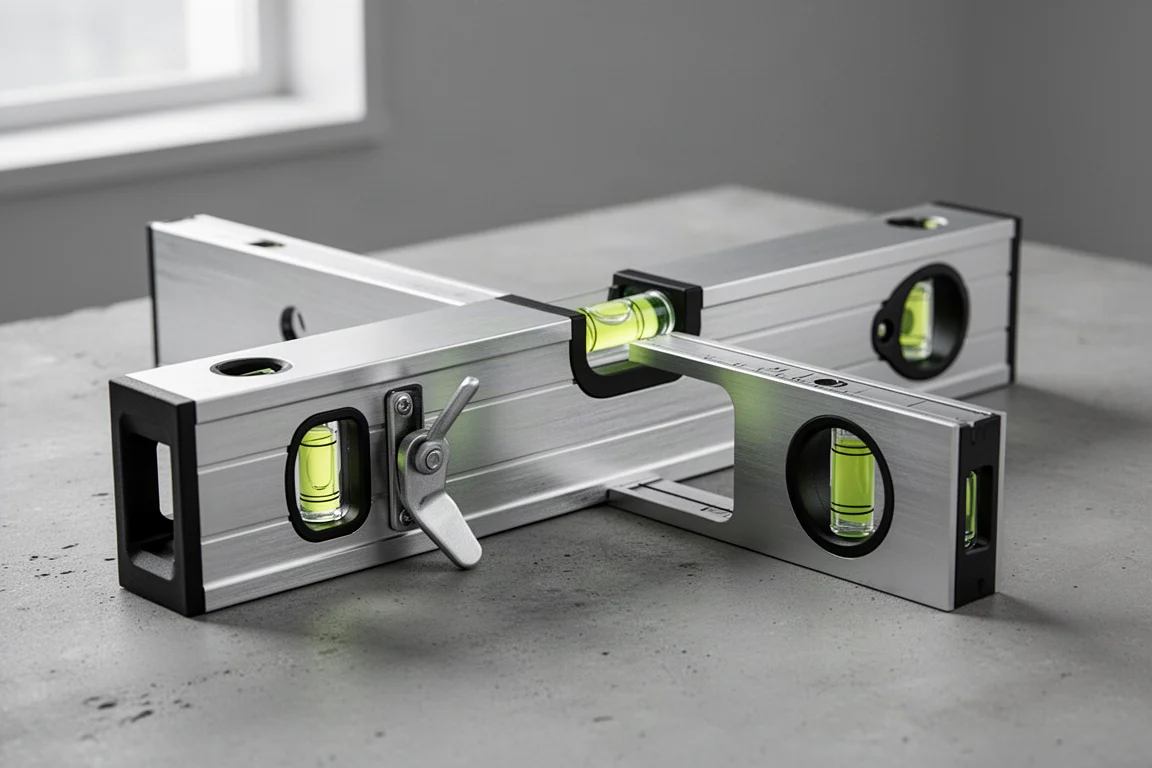
The larger sibling extends from 24 inches out to 40 inches, and this one adds a locking mechanism, which matters. When you grab a level by the end, you do not want the extension sliding away or flying off. The lock lets you secure it in the compact position or hold it solid at any extended length.
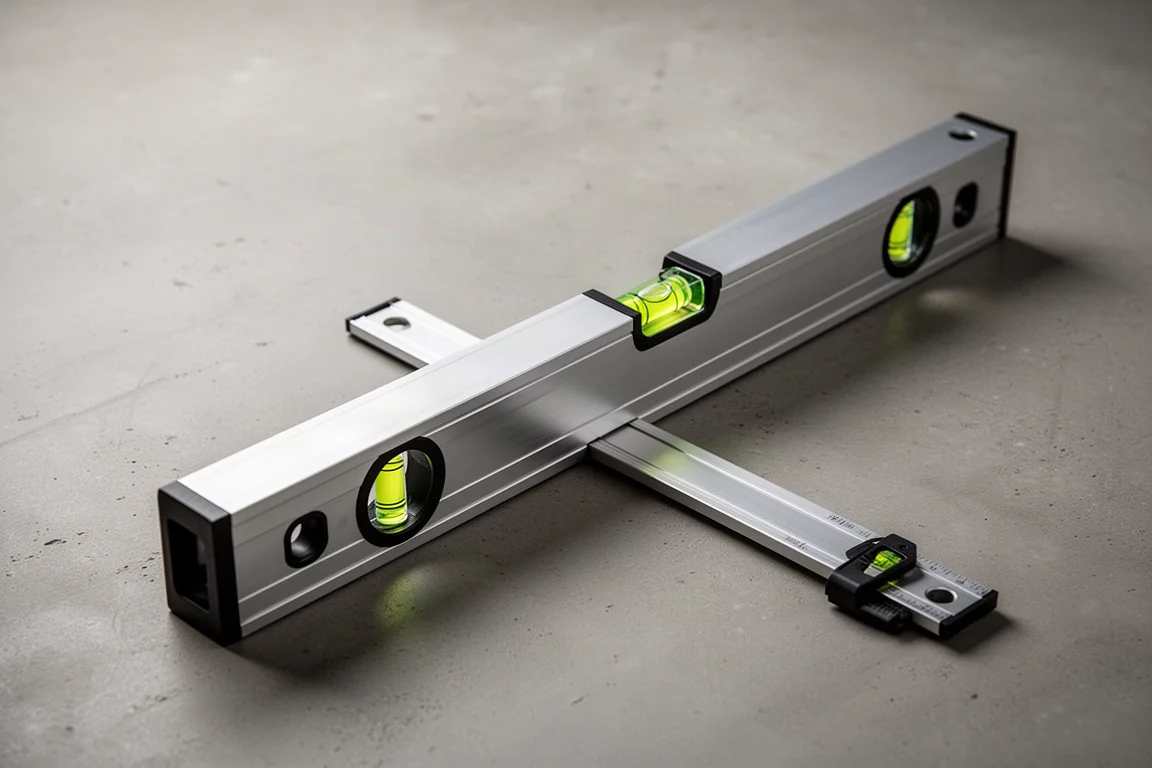
There are printed length indications along the body, so you can read the actual edge position as it slides, for example knowing you are holding a 30-inch level at a given setting. The body is wide, around 1 and 3/8 inches, with the fraction printed right on the level for reference. It carries real mass: in weight it feels roughly like two of a lighter torpedo-style level, so this is not a featherweight.
The standout detail is the curved main vial. On a straight vial, the bubble tends to race back and forth; the curve slows it down and makes it easier to settle on a line, which also improves fine calibration. The second vial for plumb is straight.
What the Sliding Design Actually Delivers
The practical benefit is easy to state: most people carry a short level daily and only occasionally need a long one. A conventional 48-inch level is handy but genuinely long, awkward in a toolbox, and often gets left behind or carried separately. The extending design means you can pull a compact level from the bag and still span a wider gap when the job calls for it.
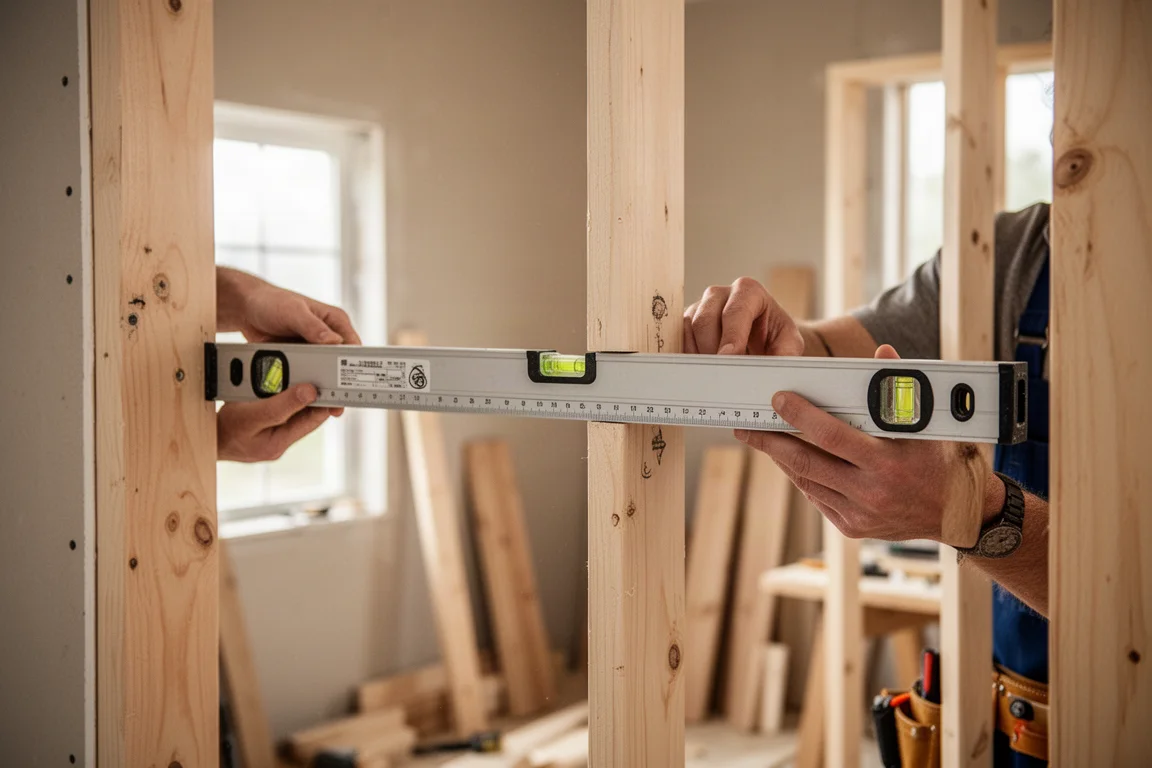
The honest trade-off is weight and bulk. These are stout, heavy levels, and if your priority is a featherweight tool that slides into a toolbox without stressing it, a light fiberglass-style level remains the better choice. But if you want one tool that covers both ends of that range, the sliding design earns its place. The more it is used, the more the advantage outweighs the theoretical weakness of a sliding rod inside a level.
The 48-Inch Masonry Level: Built for Heavy Work
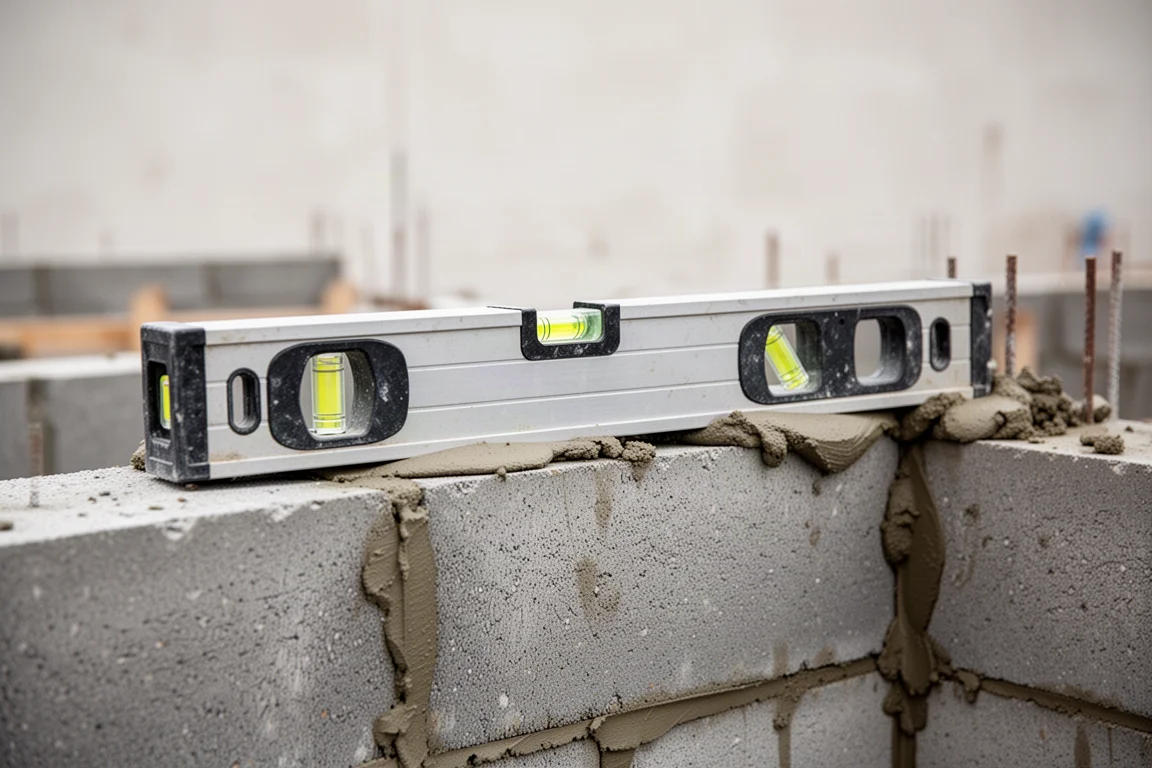
Rounding out the lineup is a 48-inch heavy-duty masonry level with a similar form factor to the box level. This one does not extend, but it is unmistakably beefy. The body measures roughly 1 and 5/8 inches wide, a thick, solid slab of a level that suits masonry work where you want mass and stability along a long course.
A deeper hands-on evaluation is planned once there are actual masonry projects to run it through, but on first handling it reads as the no-compromise, full-length option in the family: heavy, wide, and unapologetically substantial.
Buying Advice
Choose based on how you actually carry and use levels. If your daily carry is a small torpedo and you occasionally regret not having more reach, the extending torpedo is the most compelling of the three and the clearest example of what makes this lineup different. If you regularly span framing gaps but hate hauling a full-length level everywhere, the extending box level with its lock and curved vial is the workhorse pick. If masonry is your trade, the 48-inch masonry level is the straightforward, heavy-duty answer.
One note on availability: pricing is not confirmed yet, but the lineup is expected to launch soon both online and through retail outlets, so it is worth watching for release rather than settling for whatever is on the shelf today.
Conclusion
ToughBuilt is clearly going after the level category with ideas that go beyond the usual also-rans. The extending design sounds gimmicky on paper and proves itself in use: accuracy holds up in both positions, the lock on the box level addresses the obvious worry, and the curved vial is a genuinely thoughtful touch. These levels are heavy, and that is the main trade-off to accept. But for anyone tired of choosing between portability and reach, this lineup offers a real solution to a problem the category has ignored for a very long time.
Further reading
Related Reviews
Hand Tools
Best Diagonal Cutters 2026: 16 Pliers Tested for Cutting Power and Durability
We put 16 diagonal cutters through nail, screw, drill bit, and hex key tests to find the best value picks for your toolbox.
Hand Tools
Best Hex L Key Sets 2026: Nine Sets Tested for Real-World Torque
Nine hex L key sets from budget to premium, tested for torque, fit, and durability. See which sets deliver real performance and which ones to skip.
Hand Tools
Best Locking Pliers 2026: Top Picks Tested for Grip and Durability
We tested 18 brands of 10-inch locking pliers for grip strength, jaw bite, build quality, and ease of release to find the best options for tough jobs.