Workshop Tools
Three Budget Workshop Tools That Make Joinery Work Easier
An angle finding jig, a radius jig, and a pair of convertible quick clamps: three affordable tools that improve accuracy without complicating your workflow.
Introduction
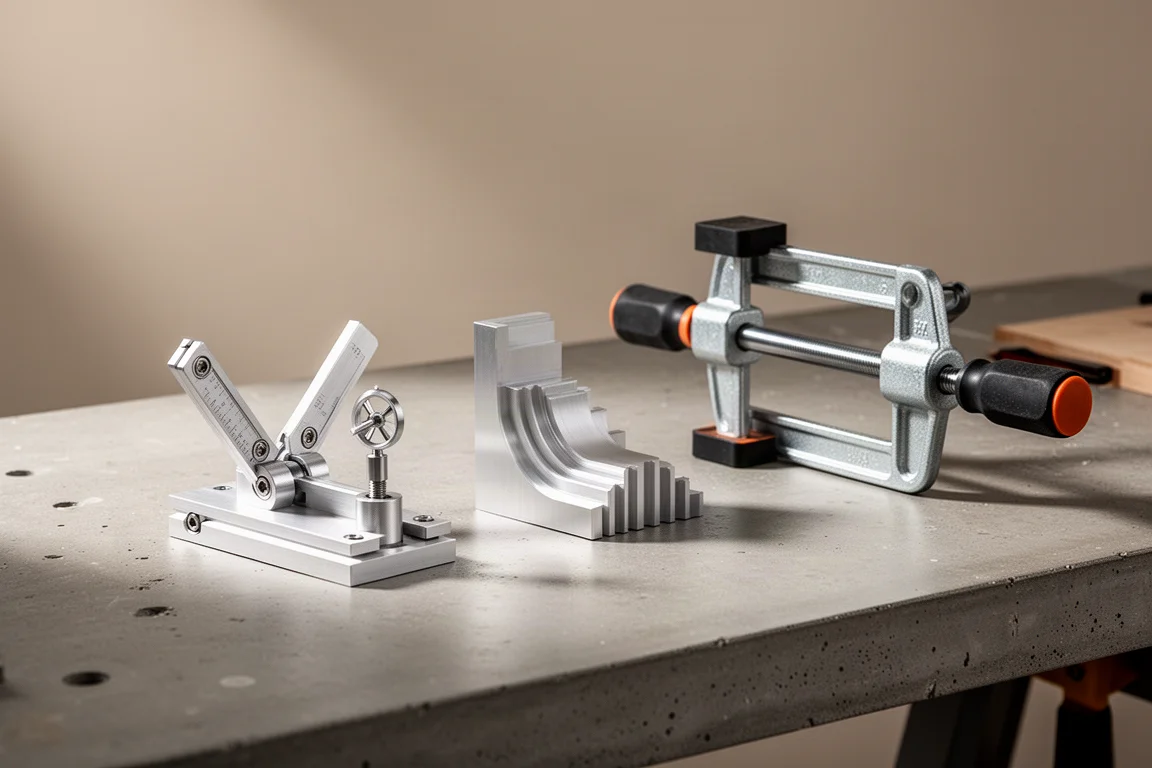
Some of the best workshop upgrades are not big-ticket power tools. They are small, affordable accessories that quietly remove friction from everyday jobs. Here are three tools that are easy to find online, cost relatively little, and each solve a problem that comes up constantly in joinery and trim work: odd angles, rounded corners, and workpieces that are longer than your clamps.
Trend Angle Finding Jig: Getting Odd Corners Right
None of the corners in most houses are actually square, which makes cutting skirting, architrave, and similar trim genuinely awkward. The Trend angle finding jig, priced at just over six pounds, addresses that directly. You place it into the corner, open its arms to match the angle, and you have captured the exact angle you need without any measuring or calculation.
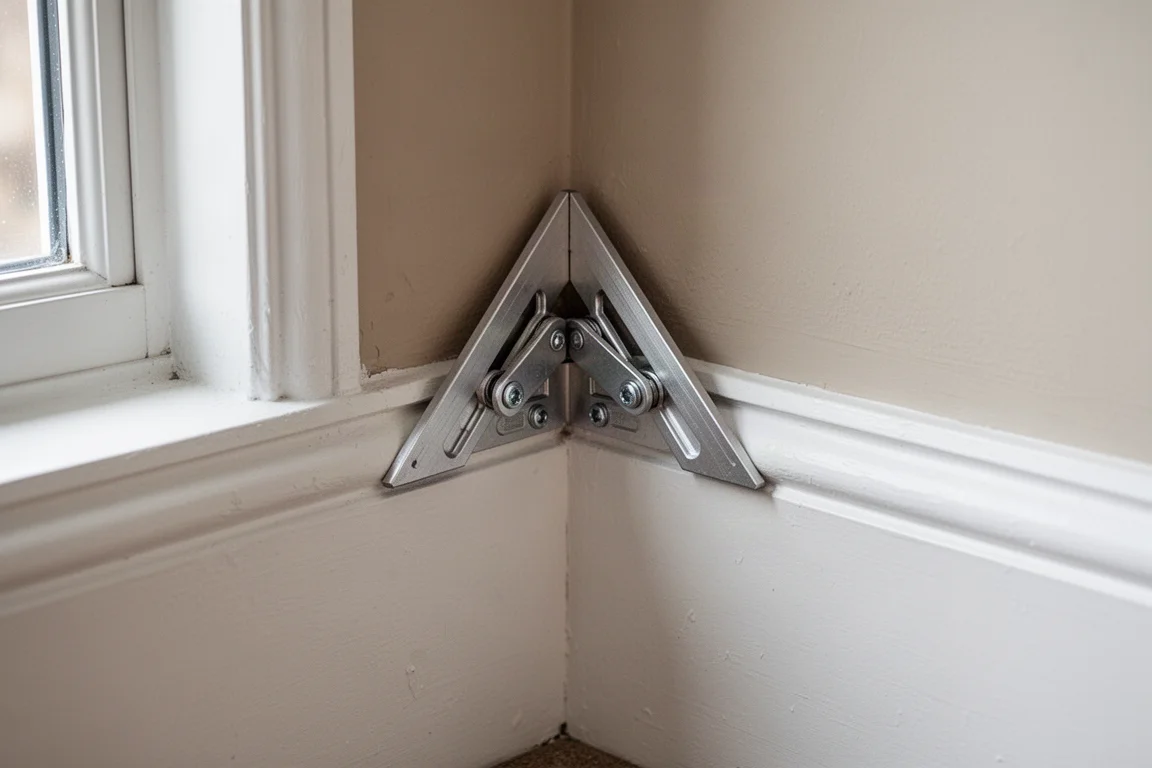
The clever part is a small rotating metal pointer. It turns at half the speed of the jig itself, so if you open the jig to 90 degrees, the pointer sits at 45. There is no scale or numbering on the tool at all, and it does not need one. Hold the gauge against your miter saw fence, adjust the saw until the pointer runs parallel to the blade, and the blade is now set at exactly half of the corner angle. Make the cut, and the trim should fit the corner with no batteries, no digital gauge, and no maths involved.
Trend Radius Jig: Clean Corner Round-Overs
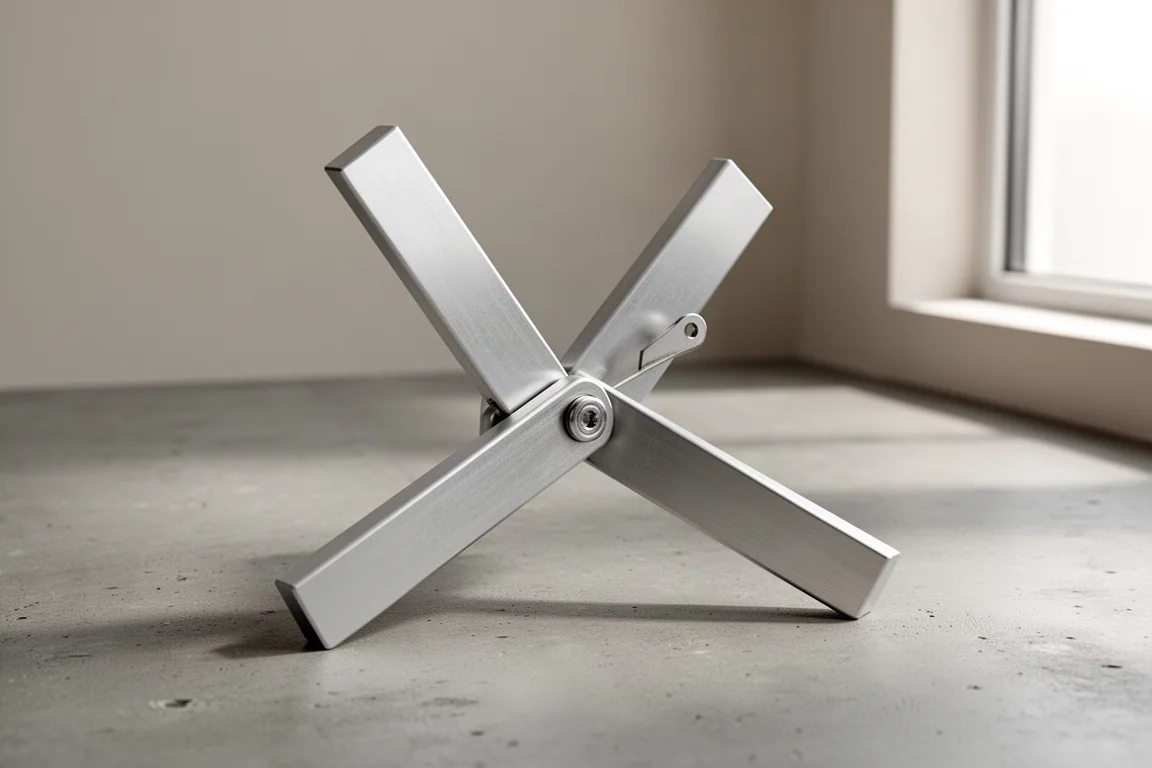
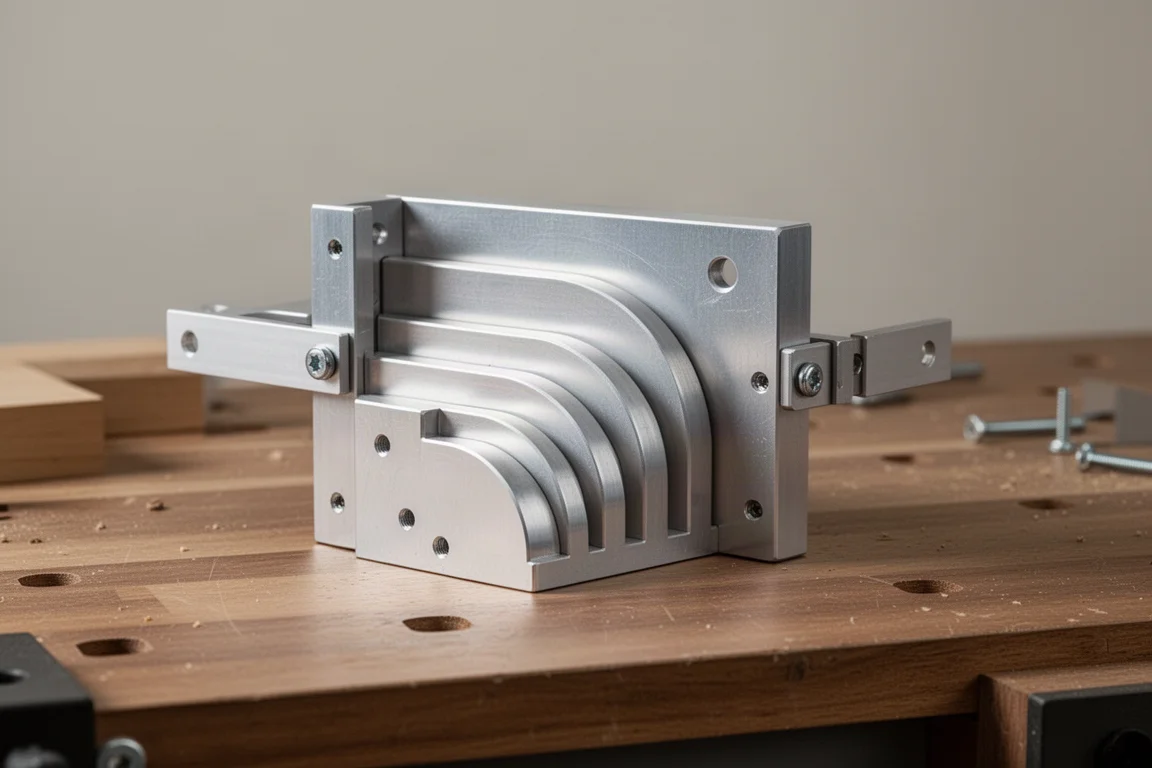
If you have ever scavenged the workshop for a coin or a bottle cap to mark a radius on a timber corner, this one is for you. The Trend radius jig is designed precisely for that job. Each edge carries a different radius, with 10, 15, 20, and 25mm options across the pair, so the correct curve is already in your hand instead of approximately right.
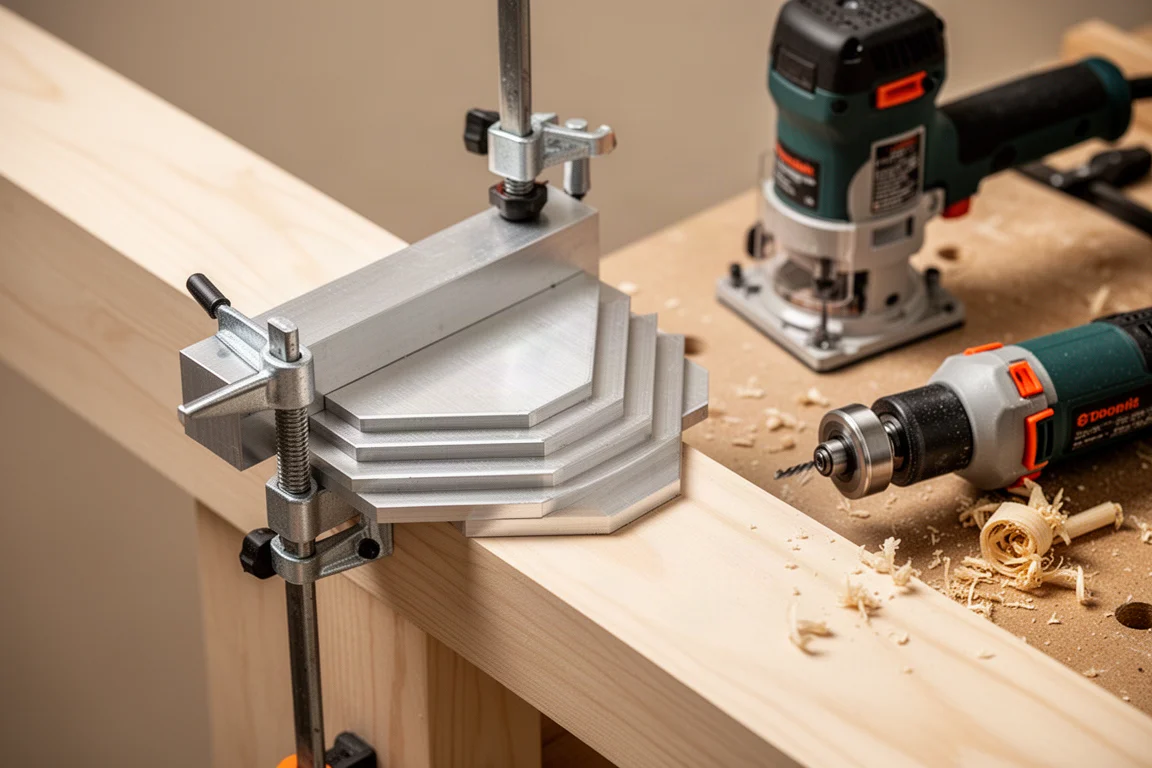
There are two ways to use it. The simple approach is to pull back the adjustable wings, tighten the jig on the corner, and draw around it with a pencil exactly as you would with a coin, then remove the waste and sand to the line. The better approach is to clamp or screw the jig firmly in place and run a palm router with a bearing trim bit along the aluminium edge. The result is a clean, smooth, perfectly consistent radius that needs only a light sanding to remove the burn mark. At around fifteen to sixteen pounds for the pair, it makes corner round-overs faster and noticeably more professional.
Pony Jorgensen Quick Clamps: Two Clever Tricks
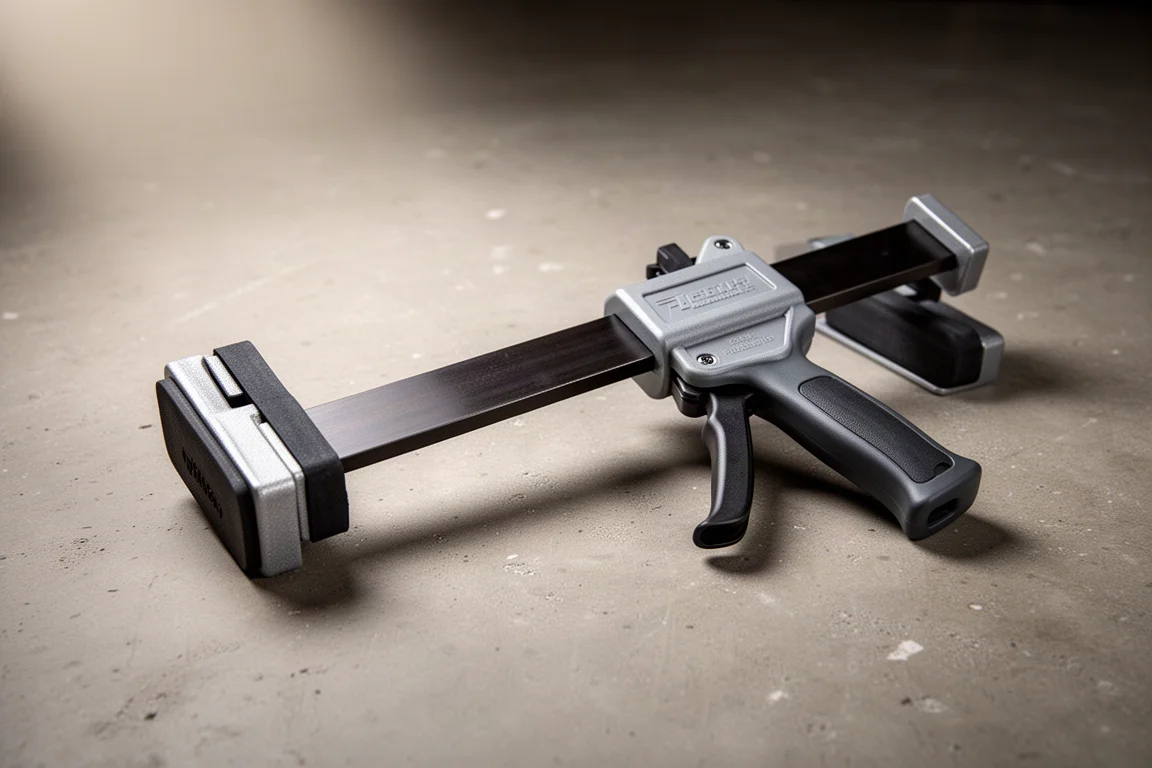
These heavyweight quick clamps from Pony Jorgensen behave like most decent clamps in the usual ways: rubberized feet, smooth sliding action, and a solid gripping force. What sets them apart are two features that cheaper clamps tend to handle badly.
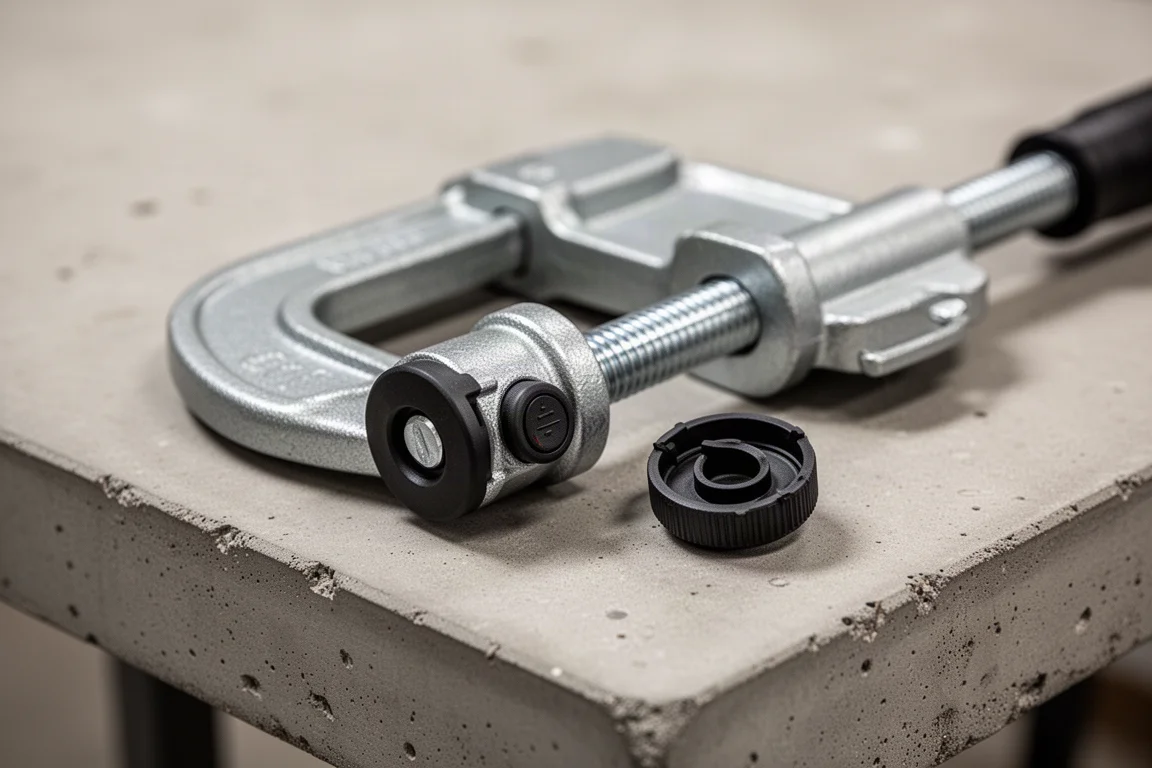
The first is the removable end cap. On most clamps, converting from clamping to pushing means undoing nuts and fiddling about. Here you simply press a button, the end comes off, you reverse it, and it pops back on. Seconds later you have a spreader instead of a clamp.
When Doubled-Up Clamps Fall Short
The second trick solves a problem every woodworker knows: a clamp is never quite as long as you need. The usual workaround is bodging two clamps together so one pushes off the other. These clamps do it properly. Take the end cap off each clamp, turn them upside down, and join the two clamps together through a small quick link. It does not matter which way round they are; one fits into the other.
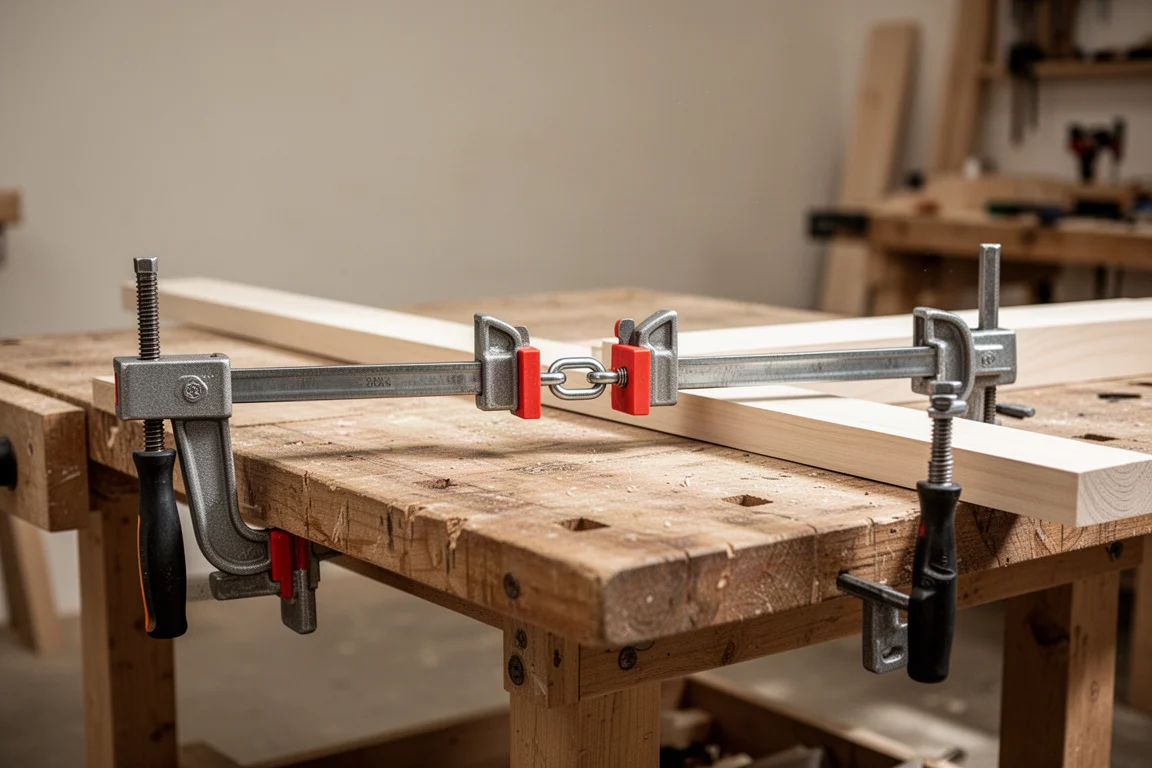
The result is a single setup with double the clamping length, around four feet with two 12-inch clamps, enough to clamp a workbench top or a door properly rather than improvising. The 12-inch version costs around £27, and because the quick-release system makes reversal so fast, this is a feature you will actually use rather than admire once and forget.
Buying Advice
All three tools earn their place by being cheap, simple, and immediately useful. The angle jig is the easiest impulse buy and pays for itself the first time it saves you from botching a skirting cut. The radius jig suits anyone who does trim, furniture, or routing work and wants consistent round-overs. The Pony Jorgensen clamps are the biggest outlay of the three but also the most versatile, particularly if your clamps are regularly too short for the job.
Conclusion
None of these tools will transform your workshop on their own, but each one removes a recurring irritation for the price of a takeaway. For accuracy on awkward corners, clean rounded edges, and clamping that adapts to longer work, this trio is an easy recommendation.
Further reading
Related Reviews

Workshop Tools
Best Drill Tap Sets 2026: Top Picks Tested for Speed and Strength
We tested 17 drill tap sets to find the fastest drilling, strongest threading, and most durable options for your workshop.

Workshop Tools
Cool Shop Tools 2026: Five Clever Upgrades Worth a Closer Look
A practical look at five workshop tools that solve real problems, from smarter drill bits to a safer table saw guard.

Workshop Tools
Cool Tools for the Workshop: Five Smart Upgrades Worth Trying
A practical look at five workshop tools that make measuring, drilling, marking, and sawing easier, from a clever square to a top-tier bandsaw fence.