Snowboard Reviews
Telos Caldera Review: A Powder-Focused Freeride Snowboard Built for Float
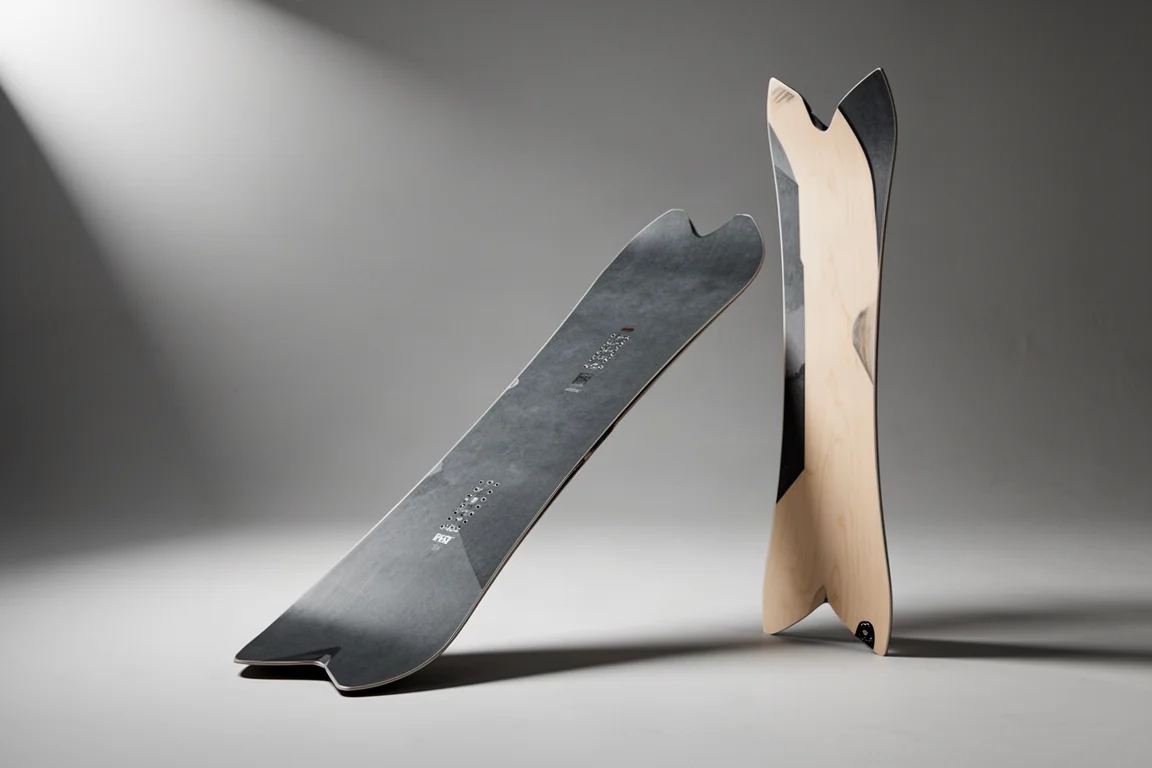
The Telos Caldera pairs setback camber with a long nose rocker and a mini swallowtail. Here is how the shape, flex, and ride character actually behave on snow.
Introduction
The Telos Caldera is a directional freeride snowboard built around a setback camber profile with a long rocker in the nose. The rocker section up front is longer than you would find on a setback traditional camber board, which changes both how the board enters a turn and how it behaves in deep snow. Underfoot, the camber still does the work of loading and driving, just positioned further back so more of the power goes into the rear foot.
It is offered in five lengths: 148, 152, 156, 160 and 164. That range covers smaller riders looking for a maneuverable powder shape as well as larger riders who want a longer, faster platform without stepping into full big-mountain territory.
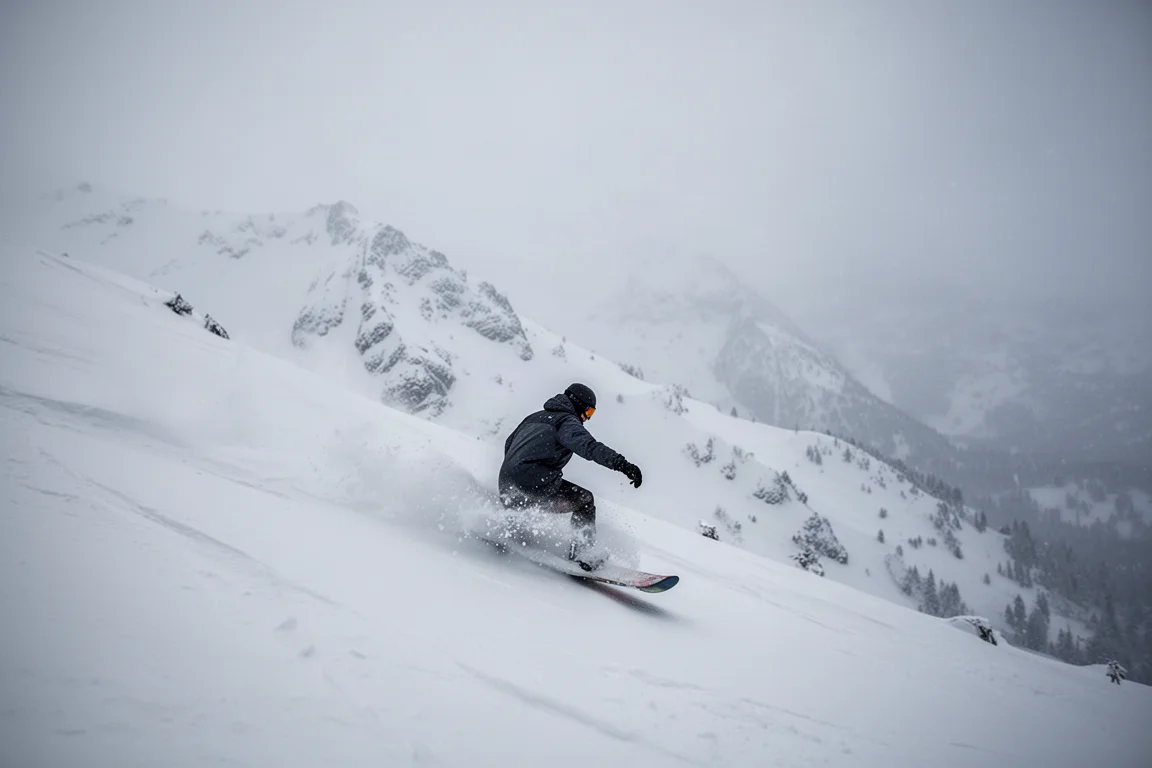
Ride impressions were formed on an overcast, windy day at Arapahoe Basin, with six or more inches of fresh snow sitting on top of chopped chunder, ice and generally rough base conditions, plus soft to hard groomers where the resort had actually groomed. That mix is a useful test bed for a board like this, because powder float is only half the story. The rest is how the shape copes when the snow underneath is not friendly.
Who the Telos Caldera Is For
This is a board for the powder-loving rider who already knows they like a directional shape with a swallowtail. The tapered tail sinks, the nose stays up, and the whole design points toward soft snow rather than park laps or switch riding.
It also suits riders who value predictability over excitement. The Caldera rides consistently from turn to turn, it smashes powder, and it does not get bucked around badly in heavily rutted terrain. If you want a board that behaves the same way every time you point it down a pow line, that consistency is the appeal here.
Shape, Camber, and Flex
The overall flex sits just above a middle-of-the-road powder freeride flex. It is slightly directional in nature: the nose is softer, particularly through the rocker section, then the board stiffens up and stays consistent through the inserts before the tail firms up a little more. Torsional flex is noticeable but not overly abundant, which keeps the board feeling stable without making it feel locked up.
The mini swallowtail and the taper are the two shaping choices that define the ride. The taper is what makes the tail sink, and the swallowtail notch gives that sinking tail somewhere to go without washing out. Combined with the setback camber, the result is a shape that keeps the nose planing while the back half of the board does the heavy lifting.
Main Strengths on Snow
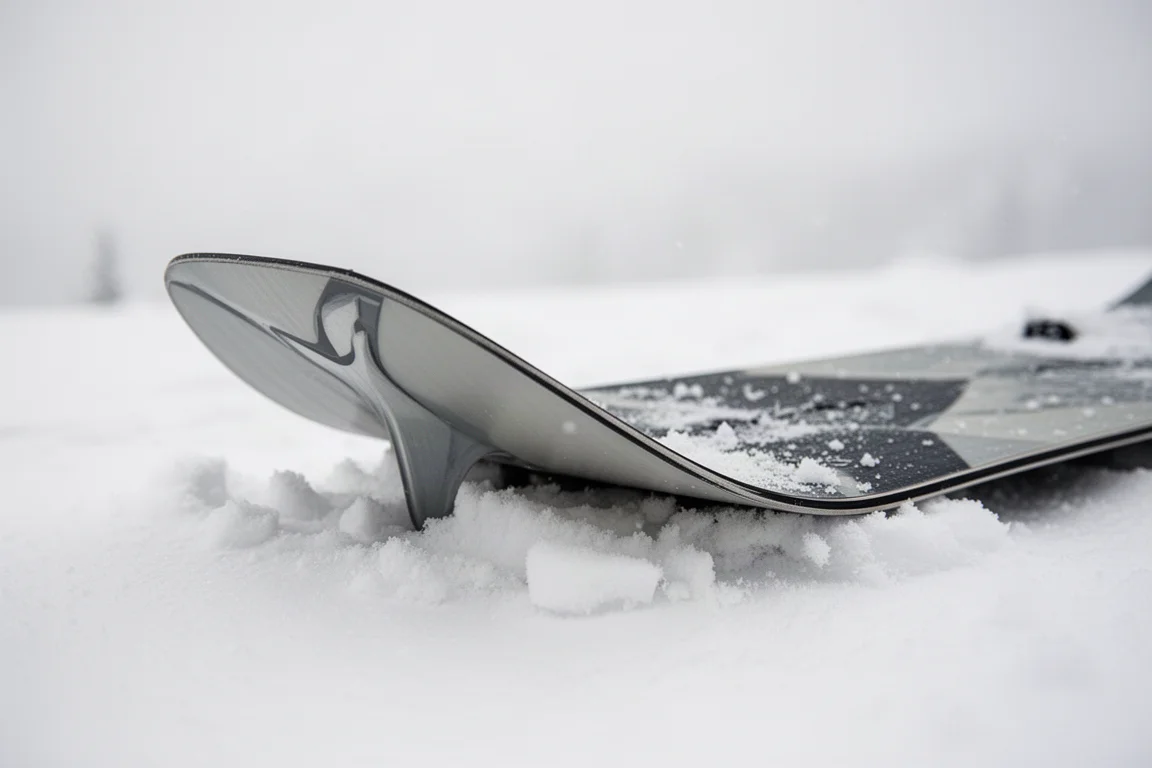
Stability is the headline. The Caldera is super stable in most conditions, and the one place it shows its hand is the nose at high speed, where the rocker can produce some chatter and a bit of flap. In practice that movement gets killed off before it reaches the front insert, so it rarely translates into anything you feel through your feet.
The more interesting behavior shows up when you charge hard into lumpy terrain. Rather than transmitting every hit straight through the board, the rocker section flexes and bends upward, letting the center of the board take the hammering. That does a genuinely good job of dissipating impacts and keeping you riding up on top of the snow instead of getting pitched around.
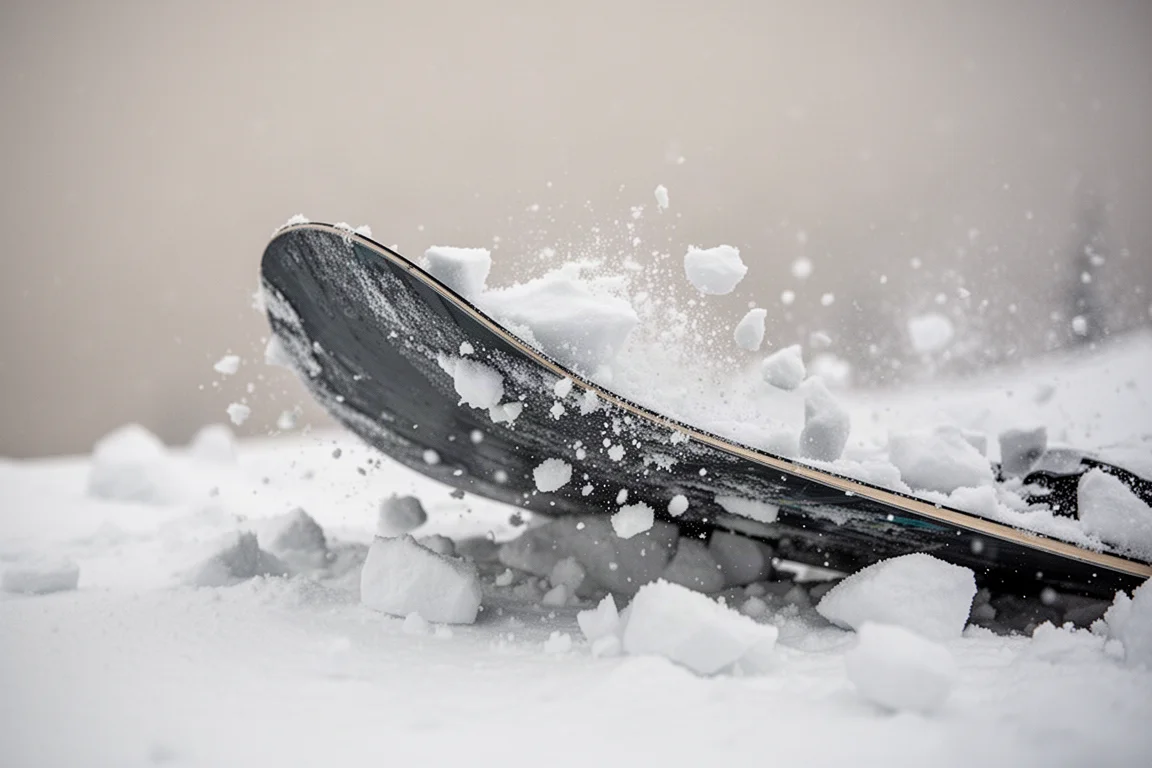
Snap and pop are more modest. There is a little bit of snap in the board, but it is nothing special, and you have to load the camber section properly and roll back onto the tail to get anything out of it. That is enough for porpoising through deep snow or launching off a roller, but it is not going to surprise anyone looking for an explosively poppy freeride deck. For the category the Caldera sits in, that is a fair trade for the float and the composure.
Carving and Edge Hold
Turn initiation comes with a slight delay off the front foot. That is largely a product of the taper, the width, and the camber profile, and it is the kind of thing you adjust to quickly. Once the board is on edge, it locks in and holds, and that is where the shape starts to feel much more capable than its powder-first brief suggests.
Drive the board from inside the rear foot, load the camber, and push power into the tail, and you can snap out of a carve almost immediately. In practice that means the Caldera handles short tight quick carves, medium mellow carves, and deep hard carves without complaint. You can lay it over and not worry about what happens next, which is a valuable trait in a board that is primarily built to float.
Things to Consider Before Buying
The trade-offs are all tied to the same design decisions that make the board good in powder. The softer rockered nose is the source of the high-speed chatter, and it is also the reason the ride is not as immediately crisp off the front foot as a fully cambered freeride board. Neither issue is severe, but both are worth knowing about before you commit.
Pop is the other consideration. This is not a board that generates energy effortlessly. It rewards deliberate input, so riders who like to load a camber section and time their ollies will get more out of it than riders who expect the board to do the work. It is also a powder and freeride shape rather than a park or buttering board, so if jibbing and flat-ground play are a big part of your riding, this is probably not the deck you are shopping for.
Sizing and Comparable Boards
The Caldera comes in 148, 152, 156, 160 and 164. Sizing here should follow your weight, boot size and how much float you want, since the directional shape and the tapered tail mean the effective riding surface differs from a twin of the same length.
If you are cross-shopping, the closest alternatives in this space include the Camel 2, the Jones Stormwolf and the K2 Excavator. For bindings, the Rome Dod, the Now Select Pro and the Ride C8 are all reasonable matches for a board with this flex profile and this much taper.
Buying Advice
Buy the Telos Caldera if you want a predictable, consistent powder board that floats well, absorbs rough terrain through a forgiving rockered nose, and still holds an edge hard enough to lay over a groomer on the way back to the lift. It suits the rider who spends most of the day hunting soft snow and wants a shape that behaves the same way every run.
Think twice if your priority is explosive pop, immediate turn initiation or freestyle versatility. Those are not what this shape was designed for. If you want a quiver of one for mixed resort days, a more balanced all-mountain board will serve you better. If you want a dedicated float machine, the Caldera is a straightforward consideration, and the decision mostly comes down to picking the right length for your weight and stance.
Conclusion
The Telos Caldera is a purpose-built powder freeride snowboard that does exactly what its shape promises. Setback camber with a long nose rocker gives it easy turn entry and strong float, the tapered mini swallowtail sinks the tail, and the ride stays stable and predictable even in rutted, chopped-up snow. The compromises are honest ones: a bit of nose chatter at speed, a slightly delayed front-foot initiation, and modest pop.
For the powder-loving rider who wants a consistent, dependable board that keeps them on top of the snow, those trade-offs are easy to accept. For everyone else, there are better-balanced options. Decide which rider you are, and the Caldera becomes an easy call.
Product link
View more details for Telos Caldera
This product is mentioned in the review. Check the specifications, options, and compatibility before buying.
View more details for Telos CalderaFurther reading
Related Reviews
Snowboard Reviews
Arbor Element Rocker vs Camber: One Shape, Two Ride Personalities
A practical look at the Arbor Element all-mountain twin in both System Rocker and Camber profiles, covering Grip Tech edge hold, sustainability, sizing, and who each version suits.
Snowboard Reviews
Battalion Whatever 157 Review: A Forgiving Directional Twin With Real Freestyle Potential
A soft-flexing directional twin aimed at riders who want a playful, forgiving all-mountain board that refuses to catch an edge.
Snowboard Reviews
Capita Ultrafear Camber Review: A Consistent Park Board for Freestyle Riders
A practical look at the Capita Ultrafear Camber, its Resort V1 profile, flex character, jib and jump behaviour, and who it genuinely suits.