Kitchen Knives
Takeshi Saji Kitchen Knives: Rainbow Damascus VG10 vs Tsuchime R2
Two kitchen knife lines from a certified traditional master craftsman in Echizen, each with distinctive finishes, excellent fit and finish, and very different characters.
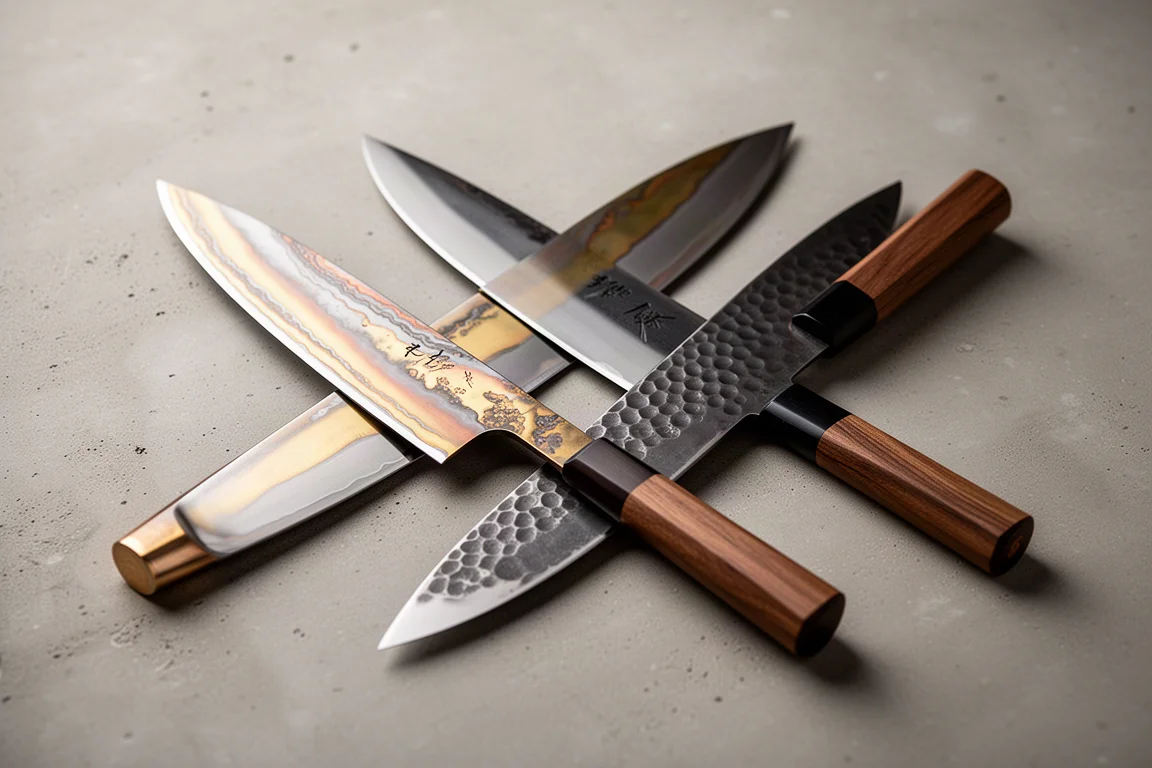
Introduction
Few names in Japanese knifemaking carry the same weight as Takeshi Saji. Born in 1948 in Echizen City, Saji trained at a blacksmith school before beginning a 12-year apprenticeship with his father and master, Harukichi Saji. At age 30 he was recognized as the third generation smith in the Saji line, and in 1992 he was officially certified as a traditional master craftsman by the Japanese Ministry of Trade and Industry, a distinction that requires decades of experience and is considered highly prestigious.
With over 50 years of experience, Saji has built one of the broadest selections of knives available, spanning a wide range of finishes, blade styles, and handle options, along with hunting and outdoors knives. He was also a founding member of the Takefu Knife Village, a collective of blacksmiths working in a shared space to exchange knowledge and produce some of the finest knives coming out of Japan today.
Here we look at two kitchen knife lines from his catalog: the Rainbow Damascus line made from VG10, and the Tsuchime line made from R2 steel.
Rainbow Damascus VG10 Line
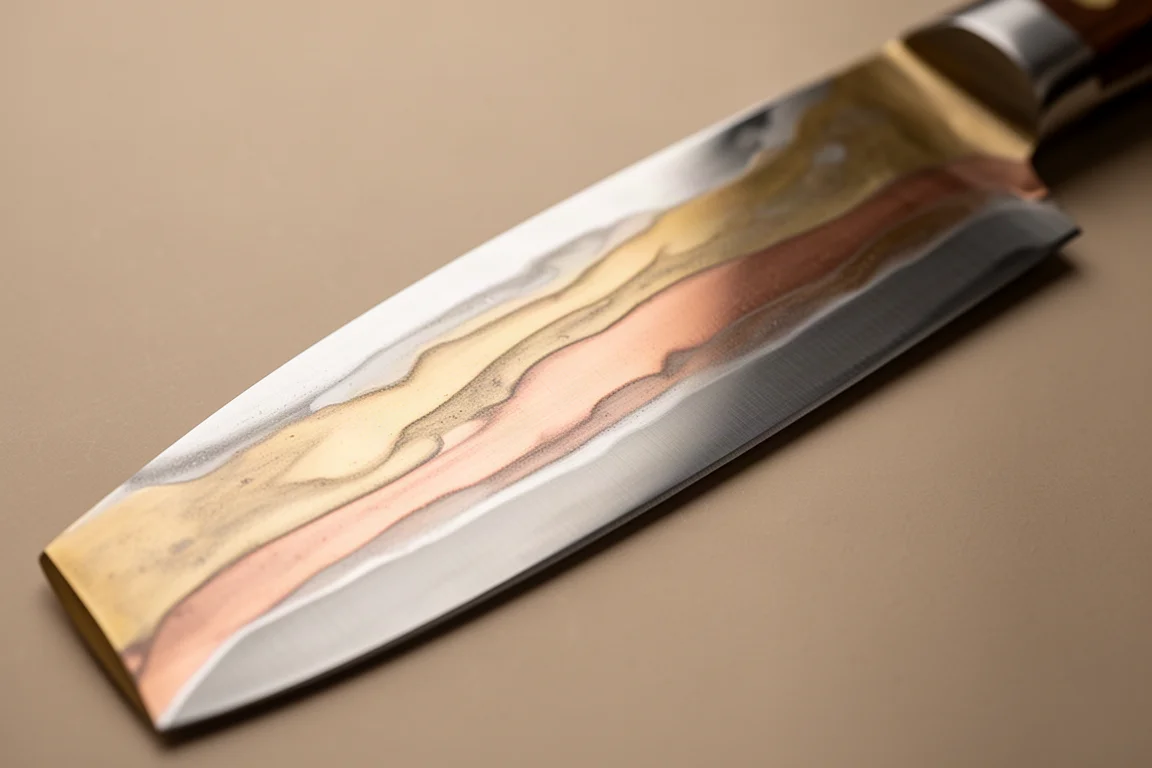
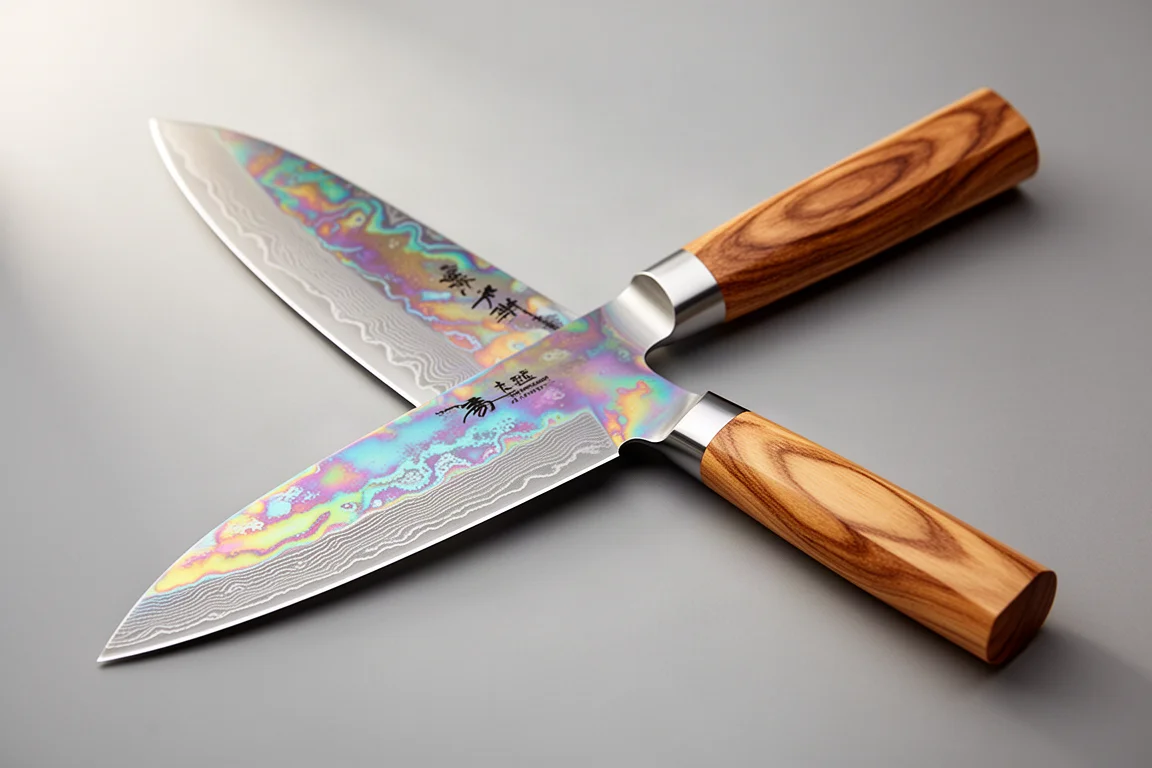
The Rainbow Damascus line is achieved by layering brass, copper, and nickel together, creating a striking contrast of colors across the blade. These are among the most visually memorable knives you will find, made even more distinctive by their quince wood handles.
The handle is a more traditional Western style, with a small notch toward the end that fits the pinky nicely for a comfortable, secure grip. Fit and finish are excellent throughout: no gaps, bumps, or spaces anywhere on the handle, and the blades are polished to a near-mirror finish. The bevels are cleanly done, and while the high polish may make you hesitant to thin the blade, these knives look genuinely impressive once thinned out and the bevels polished.
Tsuchime R2 Line
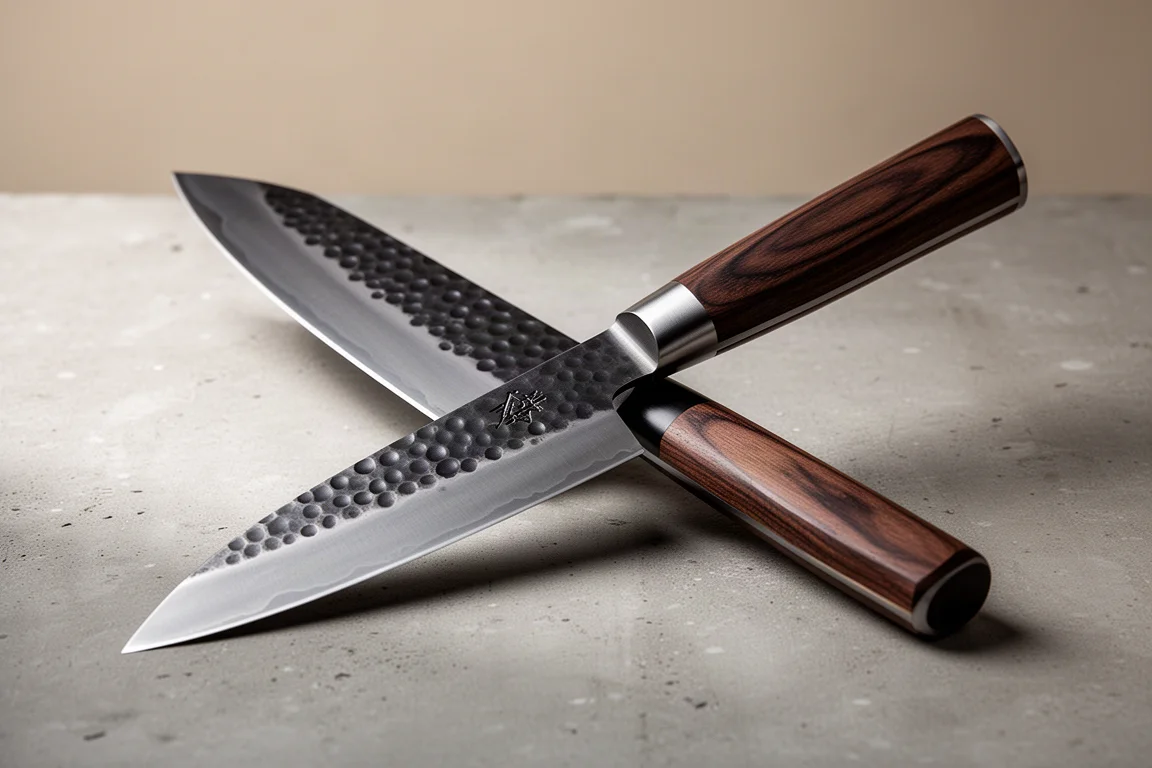
Knives made in the Echizen region are characterized by being very thin both at the spine and behind the edge, and Saji’s work is no exception. The Tsuchime line features a hand-hammered pattern on R2 steel, with thin spines and thin geometry behind the edge that deliver an excellent cutting feel.
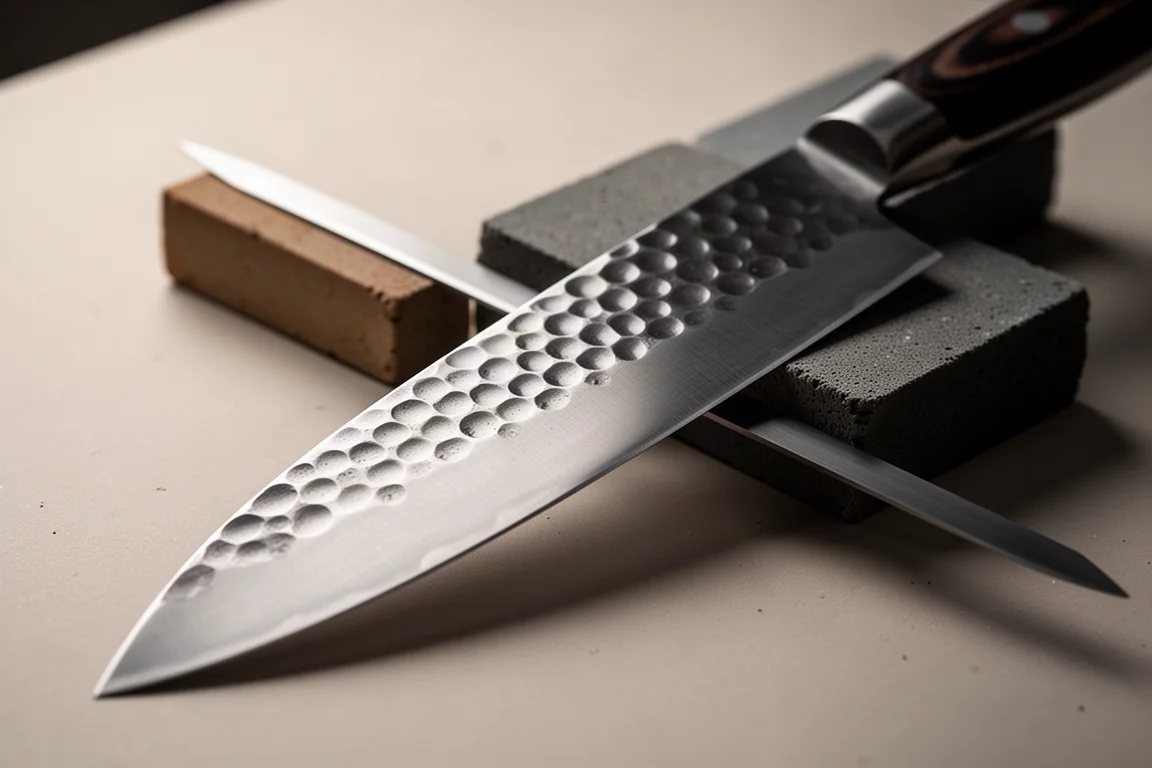
The handle is a Western-Japanese hybrid style, similar in spirit to what you find on Shun knives, though these knives are in another league entirely. The handles are beautifully sanded with no gaps, bumps, or spaces between the liners and the handle itself, and the balance point sits right where your index finger rests in a pinch grip.
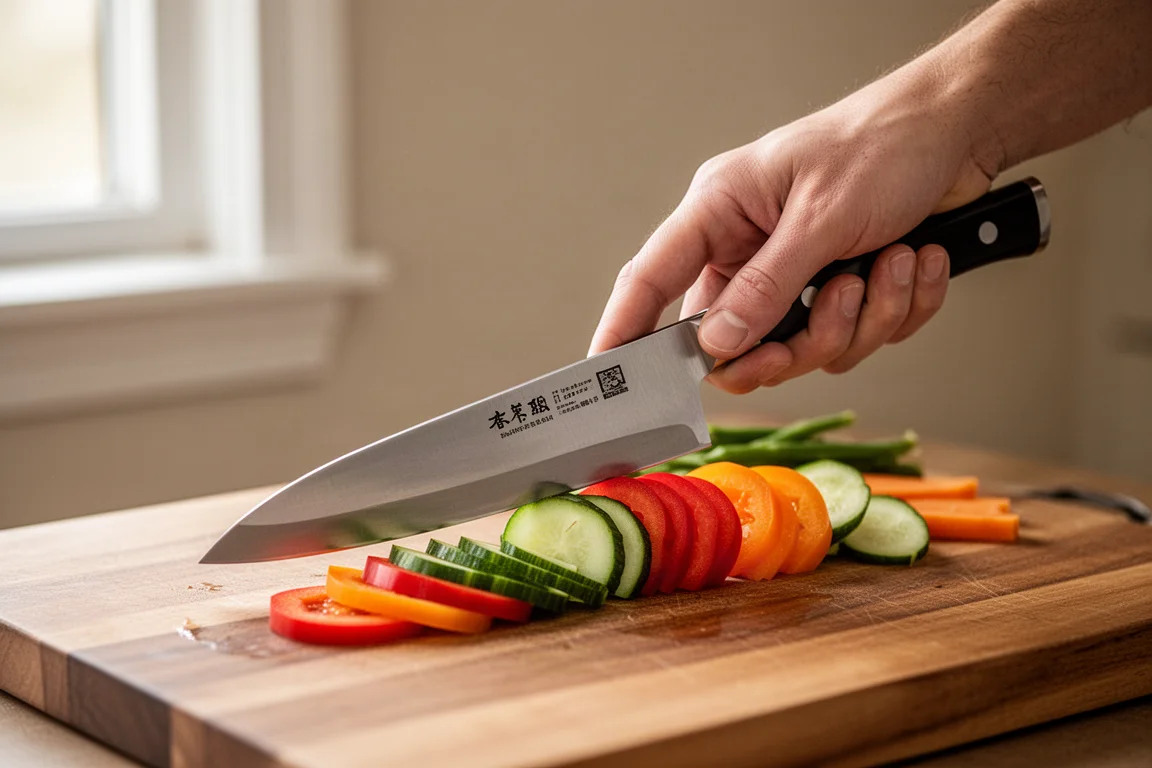
If you have larger hands and prefer a chunkier handle, this line is a perfect option. The handles are on the larger side and fill the hand very comfortably.
Which Line Should You Choose
Both lines share the same hallmark Echizen thinness and meticulous fit and finish, so the choice comes down to character. If you want a knife that doubles as a showpiece, the Rainbow Damascus with its layered colors and polished Western handle is the more expressive pick. If you prioritize cutting performance and a substantial, comfortable grip for everyday work, the Tsuchime R2 is the more practical daily driver.
Saji is often described as one of the originals of the new Japanese knife world, geared toward the Western market. While he may not have invented every finish he works with, he has refined many of them, and his experimentation has inspired a generation of younger blacksmiths who have trained at the Takefu Knife Village. Both lines are consistently recommended, and both have been available at attractive sale pricing recently.
Conclusion
Takeshi Saji’s knives combine decades of certified craftsmanship with finishes that few smiths can match. The Rainbow Damascus VG10 line rewards anyone who wants color, polish, and a traditional Western handle, while the Tsuchime R2 line delivers outstanding thin Echizen geometry and a generous hybrid handle for daily use. Either way, you are buying into a lineage of knifemaking that has shaped the modern Japanese knife scene.
Further reading
Related Reviews

Kitchen Knives
Best Chef's Knives 2026: 27 Popular Options Tested and Ranked
A comprehensive review of 27 chef's knives ranging from $18 to $380, with honest assessments of handle comfort, blade balance, and real-world performance.

Kitchen Knives
Best Chef's Knives Under $75: Two Tested Recommendations
Two practical 8-inch chef's knives that balance sharpness, comfort, and durability without premium pricing.

Kitchen Knives
Best Chef's Knives 2026: 27 Options Tested and Ranked
A comprehensive review of 27 chef's knives ranging from $18 to $380, with honest assessments of handle design, balance, blade profile, and real-world performance.