Kitchen Knives
Takeda NAS 240mm Gyuto: A One-of-a-Kind Japanese Kitchen Knife Worth the Hype
Takeda Shosui's NAS 240mm Gyuto is remarkably thin, unusually light, and unlike any other Japanese knife. Here is what makes it special and who it suits.
Introduction
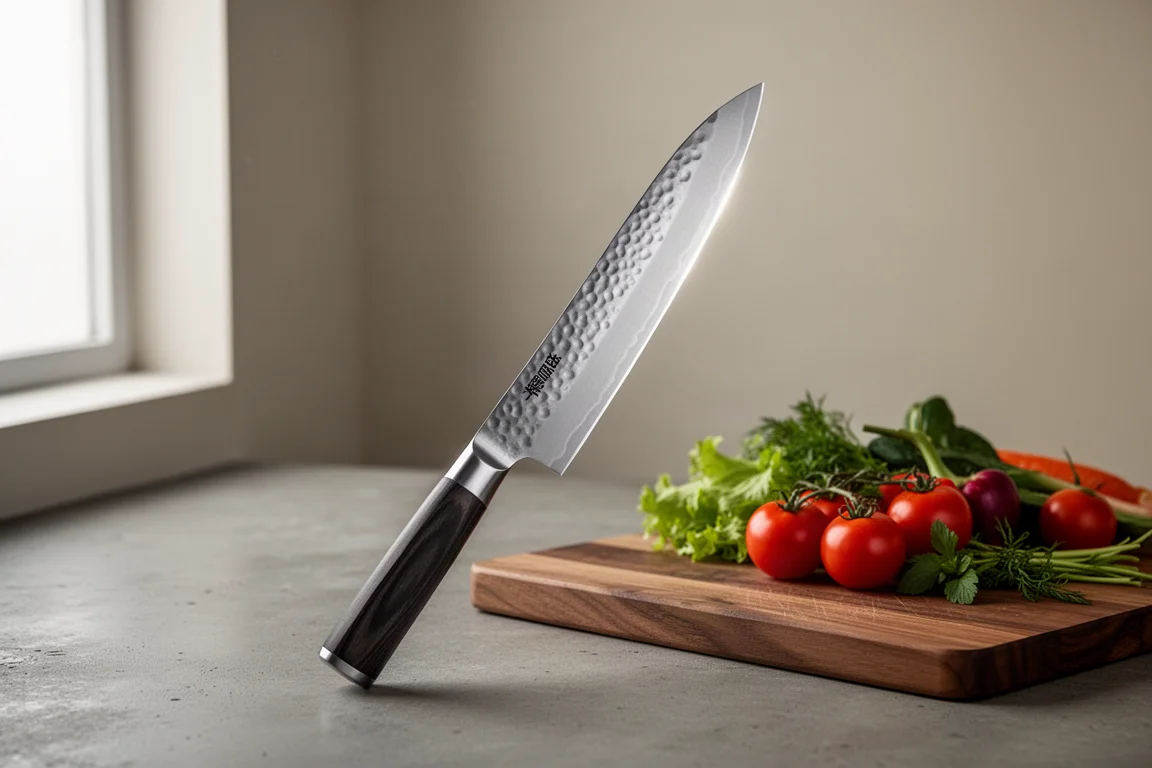
Some kitchen knives aim to be everything for everyone. The Takeda NAS 240mm Gyuto does not. Forged by Takeda Shosui in Niimi, Japan, it stands out immediately for being very thin, very light, and genuinely unlike anything else in the Japanese knife world. For serious knife lovers, the argument goes that a collection is not complete until it includes at least one Takeda blade, and after spending time with the 240mm Gyuto, it is easy to see why.
This is the knife from the Takeda lineup that gets used the most, and that everyday usefulness is exactly what makes it worth a closer look.
Who This Product Is For
The Takeda NAS 240mm Gyuto suits cooks and knife enthusiasts who appreciate craftsmanship and character over convention. If you want a laser-flat, machine-perfect blade, this is not it. Takeda forges freehand, shapes each knife by eye with heavy grinding rather than pressing or guillotine-cutting, and the result is that every knife is a little bit unique.
It is also for cooks who value food release and effortless cutting. The extreme thinness means the blade simply passes through food, and it always feels sharp in use.
What Makes Takeda Knives Different
Takeda’s forging style is unusual in several ways. He makes the blade exceptionally tall and exceptionally thin, hammering far more than most smiths to achieve that thinness. Look at the blade from the spine and you will notice a tapering profile with a slightly thinner portion toward the middle, almost a subtle concavity, achieved mostly by hammering rather than grinding.
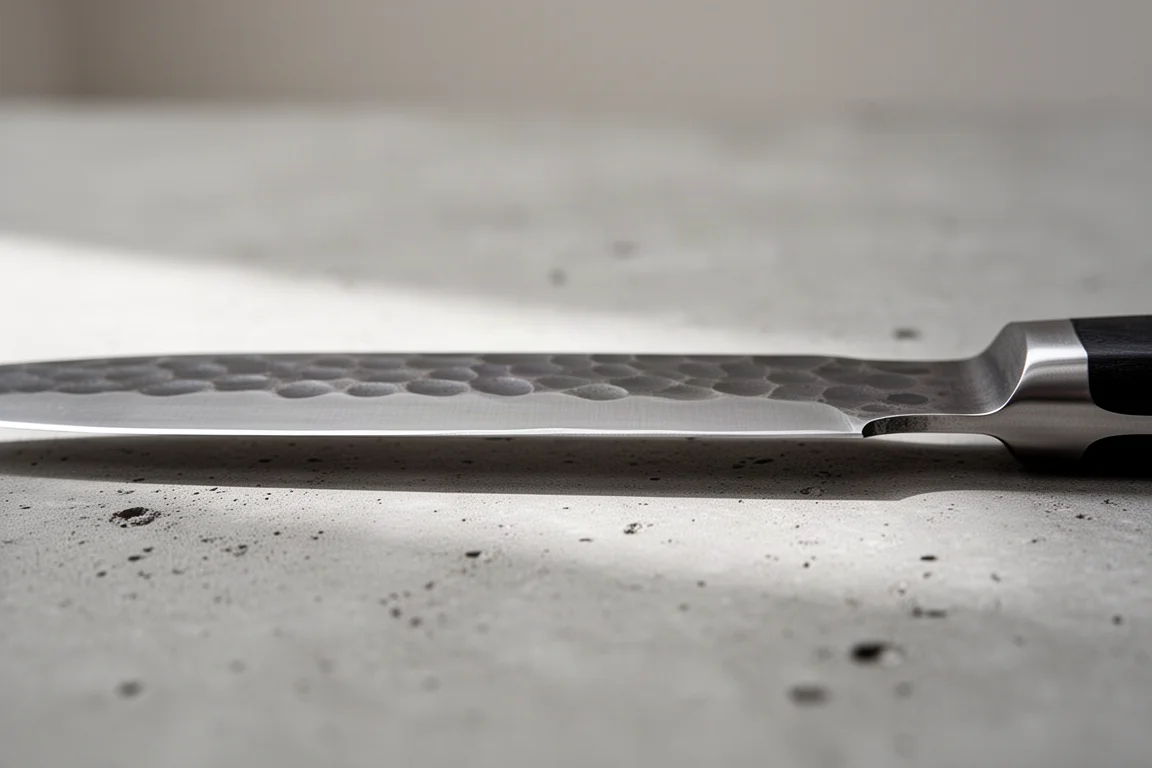
Because the middle of the blade is so thin, he sharpens only about a centimeter or less at the edge, without adding a secondary bevel. The main bevel essentially acts as the whole edge, and this approach gives his knives very good food release.
The Craft Behind the Blade
The NAS series represents a meaningful evolution. Takeda originally worked with Aogami 1 and Aogami Super steels clad in carbon, but now uses Aogami Super surrounded by stainless steel. That change removes most of the rusting issues of the old knives, since only the exposed edge can rust rather than the whole blade, and the rigid stainless cladding lets him push the blade even thinner without it bending.
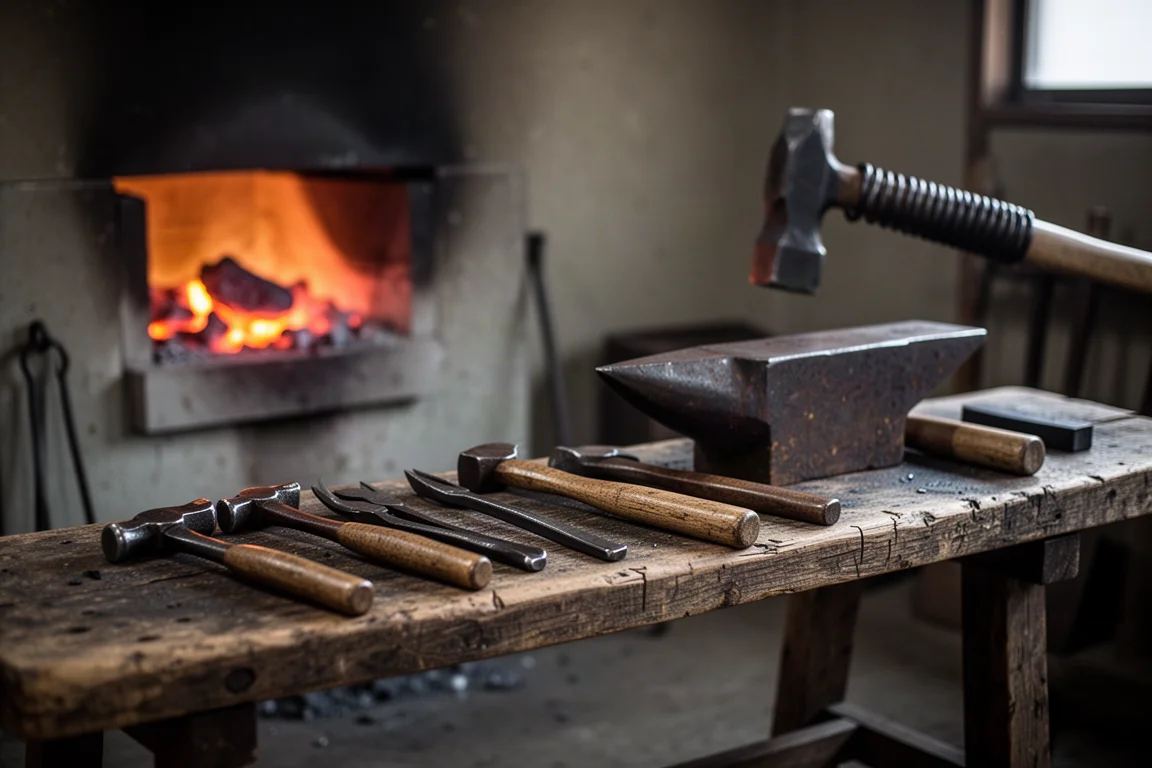
Working with stainless cladding also forced a change in technique. Forged the same way as the carbon-clad knives, the core steel would effectively disappear at the edge during sharpening, so he now forges the blade larger and grinds away more steel to guarantee the core remains visible. His tangs have also evolved, with a slightly thicker tang tapering toward the tip on recent batches.
The backstory is just as memorable. Takeda did not set out to be a blacksmith. He moved to Tokyo for what he thought was a dream job selling karaoke laser discs, then returned home during Golden Week around age 27 and realized he wanted to make things with his hands. A chef’s early advice, that a really thin knife cuts food better, became the guiding principle he still chases. And yes, the hill in his backyard grew over his first two years of mistakes, and digging into it reveals nothing but rusty steel.
Everyday Cutting Performance
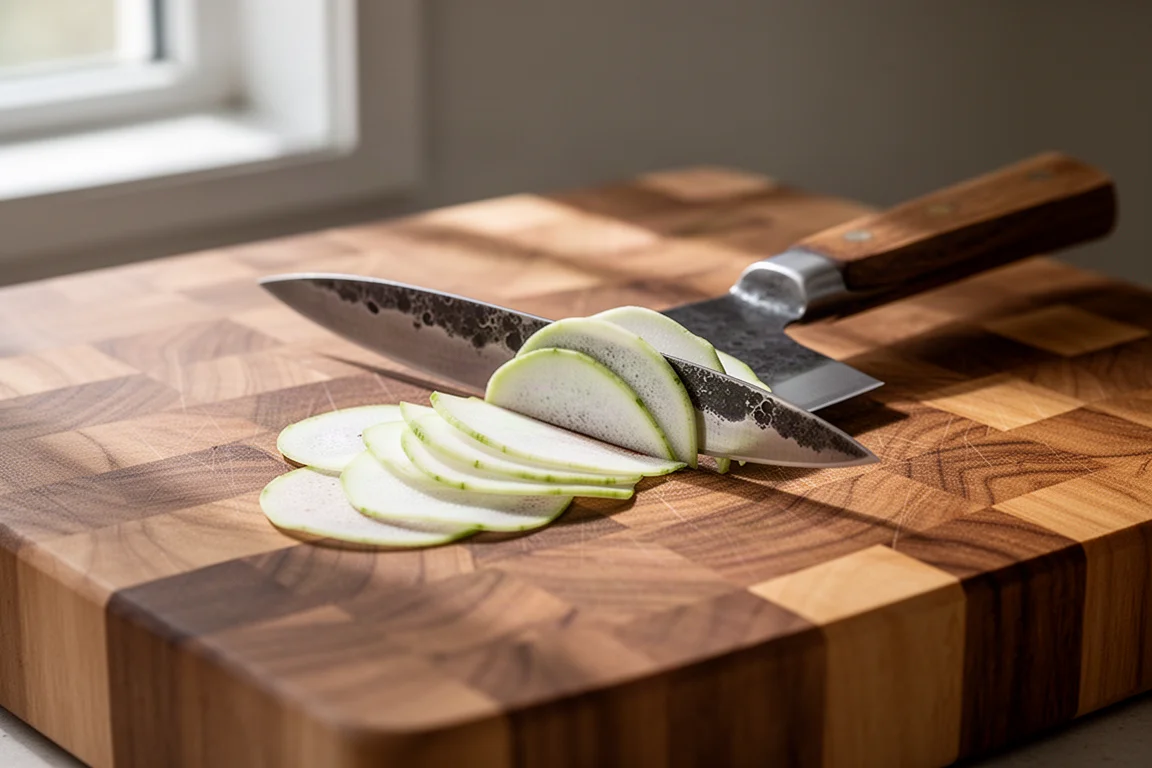
In daily use, the 240mm Gyuto behaves the way a champion of thinness should. It glides through food with minimal resistance, and the tall blade gives plenty of knuckle clearance despite the light overall feel.
The unusual profile takes some adjustment. Early examples had a rounder front that some owners reshaped over years of sharpening to suit their own preference, and the shape of his knives has gradually changed over the years as Takeda keeps refining his work. That willingness to keep improving, enabled by his small team, is part of what makes each new batch interesting.
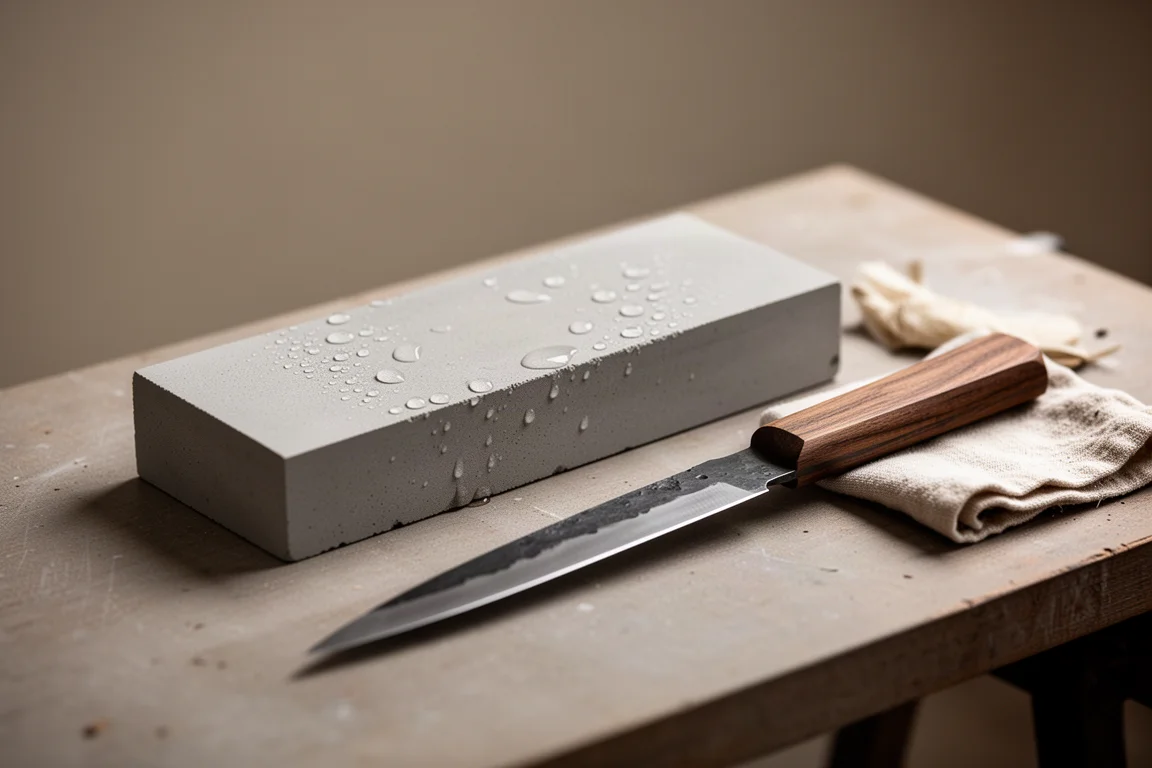
Even his sharpening is unorthodox. He holds the knife off the edge of a surface and rubs the stone against the blade, reasoning that you should look at what you are sharpening rather than sharpening blindly. It may look strange, but his knives arrive crazy sharp, so he is clearly onto something.
Things to Consider Before Buying
- The blade requires care. Stainless cladding solves most rust concerns, but the exposed Aogami Super edge can still rust and needs to be dried after use.
- The handcrafted character means variation. Freehand forging and grinding make each knife slightly different, which is a feature for collectors and a compromise for perfectionists.
- The shape has evolved. Recent knives differ from batches made even a few years ago, so photos from older stock may not match what ships today.
Buying Advice
Buy the Takeda NAS 240mm Gyuto if you already own solid knives and want something with genuine soul, or if you are a knife lover building a collection that deserves at least one Takeda blade. It rewards people who appreciate thinness, food release, and handcrafted character.
If you want one, act quickly. New shipments of Takeda knives have historically sold out extremely fast, sometimes on the day they are released, so availability is the main obstacle rather than the price. Waiting rarely works with these.
Conclusion
The Takeda NAS 240mm Gyuto is not a conventional knife, and that is the point. A tall, thin, hammer-forged blade with a stainless-clad Aogami Super core, excellent food release, and a maker who has spent decades refining exactly one idea: thinner cuts better. For knife enthusiasts, it remains one of the most distinctive gyutos available, and one worth owning at least once.
Product link
View more details for Takeda NAS 240mm Gyuto
This product is mentioned in the review. Check the specifications, options, and compatibility before buying.
View more details for Takeda NAS 240mm GyutoFurther reading
Related Reviews

Kitchen Knives
Best Chef's Knives 2026: 27 Popular Options Tested and Ranked
A comprehensive review of 27 chef's knives ranging from $18 to $380, with honest assessments of handle comfort, blade balance, and real-world performance.

Kitchen Knives
Best Chef's Knives Under $75: Two Tested Recommendations
Two practical 8-inch chef's knives that balance sharpness, comfort, and durability without premium pricing.

Kitchen Knives
Best Chef's Knives 2026: 27 Options Tested and Ranked
A comprehensive review of 27 chef's knives ranging from $18 to $380, with honest assessments of handle design, balance, blade profile, and real-world performance.