Kitchen Knives
Syl've M Honyaki Nikiri 210mm Review: A Laser of a Nikiri from a French Maker
A 210mm honyaki nikiri in 125sc steel from French knife maker Syl've M, with outstanding cutting performance and a few comfort caveats worth knowing.
Introduction
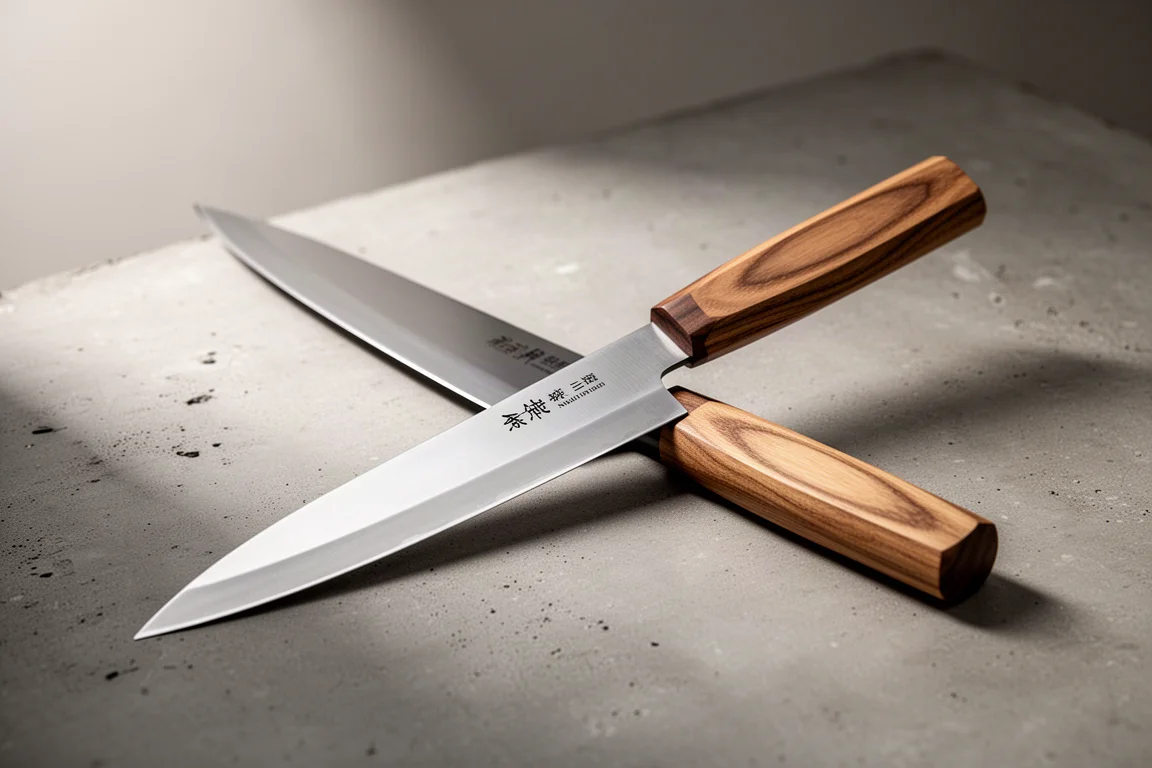
The nikiri is a niche blade, and it has rarely earned a permanent spot in most knife collections. That changed with this 210mm honyaki nikiri from Syl’ve M, a French knife maker and blacksmith based just outside Paris who works mainly on custom kitchen knives. Built from 125sc steel with a honyaki finish and a wooden handle, this is the first honyaki and first mono-steel blade of this kind to land in the test kitchen, and it turned out to be far more than a collector’s curiosity.
Who This Product Is For
This knife suits cooks who take their knife collection seriously and want a specialist slicer rather than a general-purpose workhorse. Syl’ve M works almost exclusively on custom orders, discussing materials, design, and the customer’s needs directly, so this is very much a knife for someone who appreciates the maker relationship and is comfortable buying directly from a small workshop.
It is also a good fit for anyone who has written off the nikiri category. The usual 165mm length often feels too short even for something as simple as an onion, and this knife proves the category works much better with extra blade length.
First Impressions
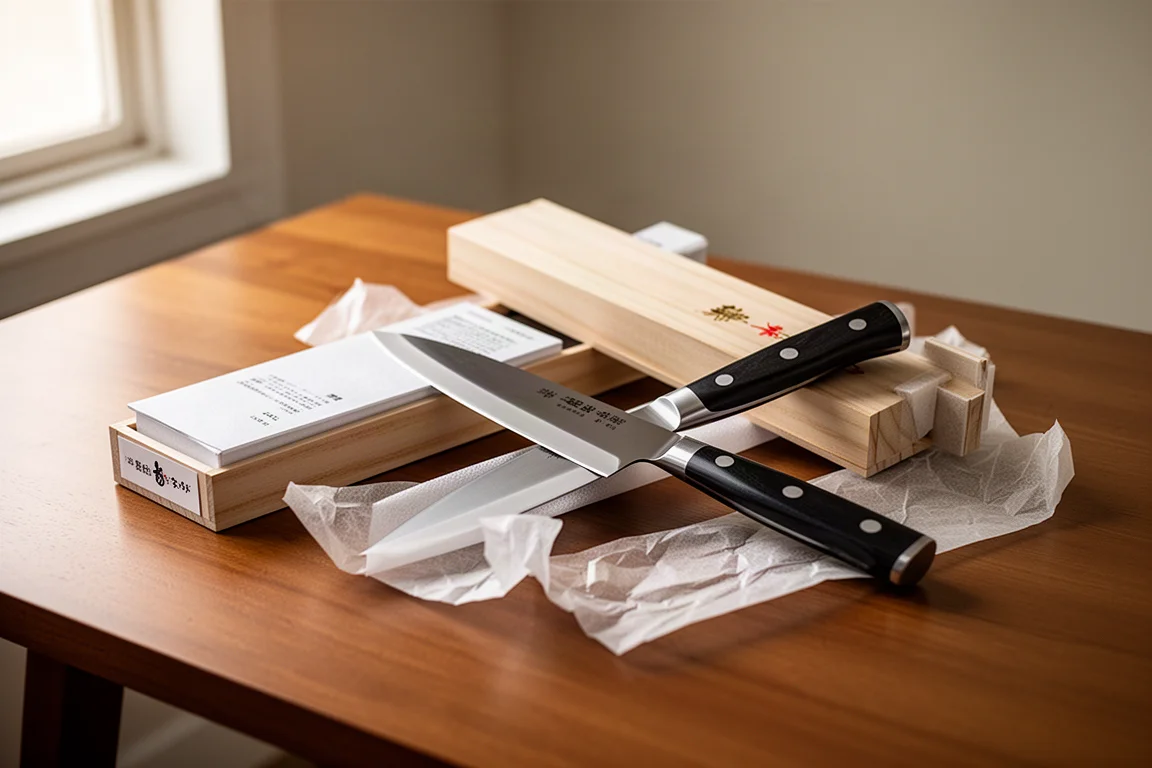
The knife arrives in a simple wooden presentation box with an engraved detail and a clean makers mark. The handle is a hybrid shape, half octagonal on top and half oval below, with a fluted butt and a beautifully contoured finger choil. The wood smelled raw and freshly sculpted out of the box, which points to an unstabilized finish.
That rawness mattered. Shipped from France to a dry climate like Edmonton with no handle protection in the packaging, the handle arrived noticeably dry. Two coats of mineral oil and beeswax, a coat of true oil, and a light sanding with 0000 steel wool brought it back to life and sealed it properly.
The blade itself is super thin behind the edge with a nice spine taper from thin to thin, generous belly height, and a beautifully polished choil and spine. The honyaki polish is deliberately low contrast. The maker prioritizes performance over spending dozens of hours on the polish alone, and he openly sells the knife that way, so the subtle finish is a conscious choice rather than a compromise.
Cutting Performance
Out of the box, this knife is a laser. The blade is extremely light, very thin, with minimal spine taper, and the extra length really shows. The measured cutting edge comes in at 195mm, close to a 200mm blade in practice, which makes draw cuts and long slices far easier than any standard short nikiri.
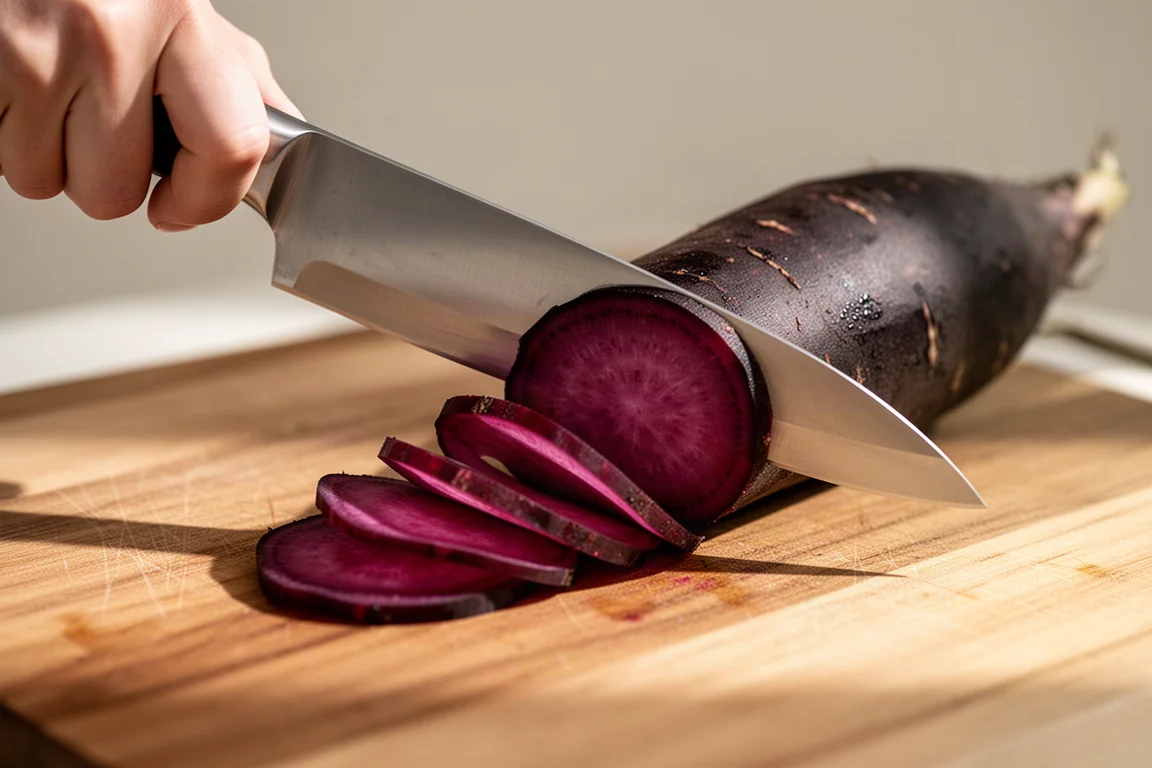
On a very dense black carrot, it produced paper-thin slices with ease, though the first cut wedged and cracked in the board, a reminder of how super-thin blades interact with hard surfaces. On sweet potato, despite its thinness, the edge pushed through without fear of chipping, showing a genuinely resilient edge. Russet potatoes diced easily as well.
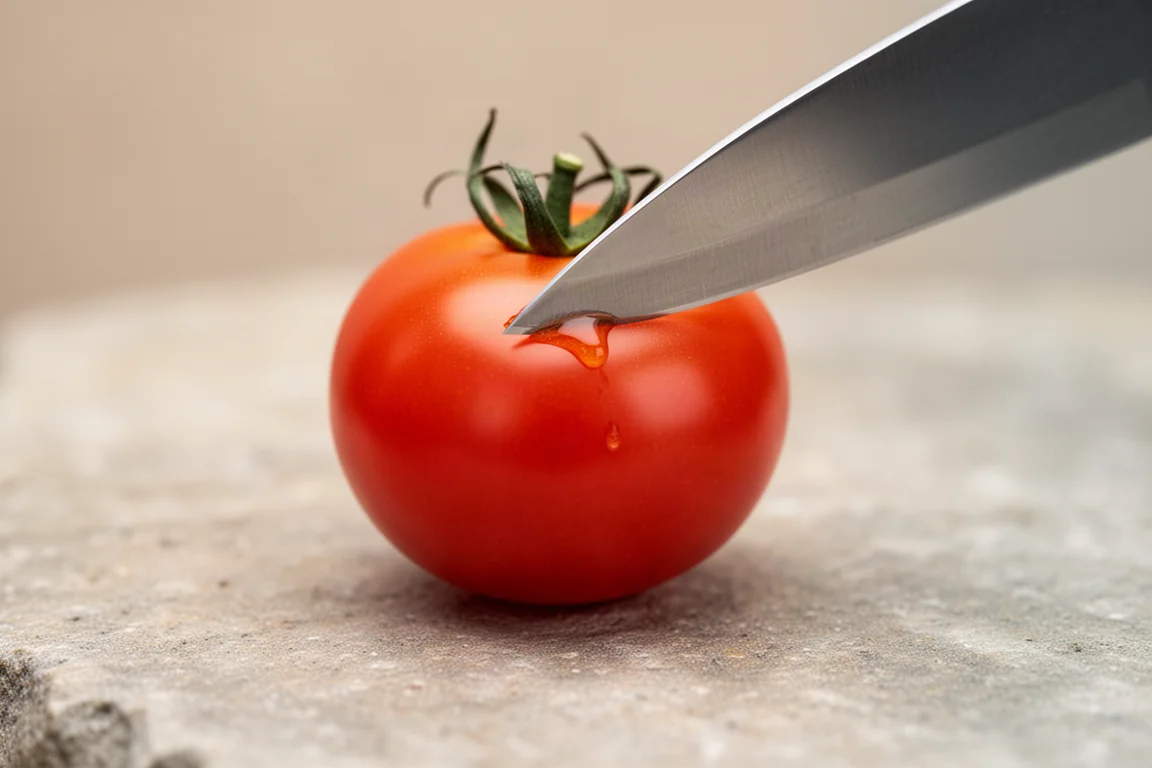
The bite edge is excellent. Drawn lightly across a cherry tomato, the skin yielded immediately, which suggests the edge was not finished above roughly 3,000 grit. The draw slice here is notably better than the push cut, and this is one of the rare knives where pulling genuinely feels better than pushing, even for someone who normally prefers push cuts.
The tip is a highlight. The geometry is precise and useful, ideal for draw cutting, and it handled sweet potato slices from the tip without strain. The only real performance critique is the belly profile: it is not perfectly flat, and for a nikiri whose purpose is clean, push-cut vegetable work without accordioning, a flatter edge profile with fewer light gaps would be more useful. The slight belly adds some rockability, but flatness would suit the blade’s job better.
Things to Consider Before Buying
Two build points deserve attention before ordering. First, the balance point sits about a finger and a half forward of the finger choil rather than directly over it. Because the blade is so light, that forward weight does not translate into helpful cutting pressure; it just makes the knife feel slightly front-heavy and awkward in hand. A thicker handle, a larger bolster, or pushing the tang deeper into the handle would shift the balance back.
Second, and more importantly, the bolster is narrow. When pinch gripping over the finger choil, two sharp edges on the bolster create a pressure point in the inner palm that becomes uncomfortable over extended cutting sessions. It is not the handle size itself that is the problem; it is the curvature of the bolster and how close those pinch points sit together.
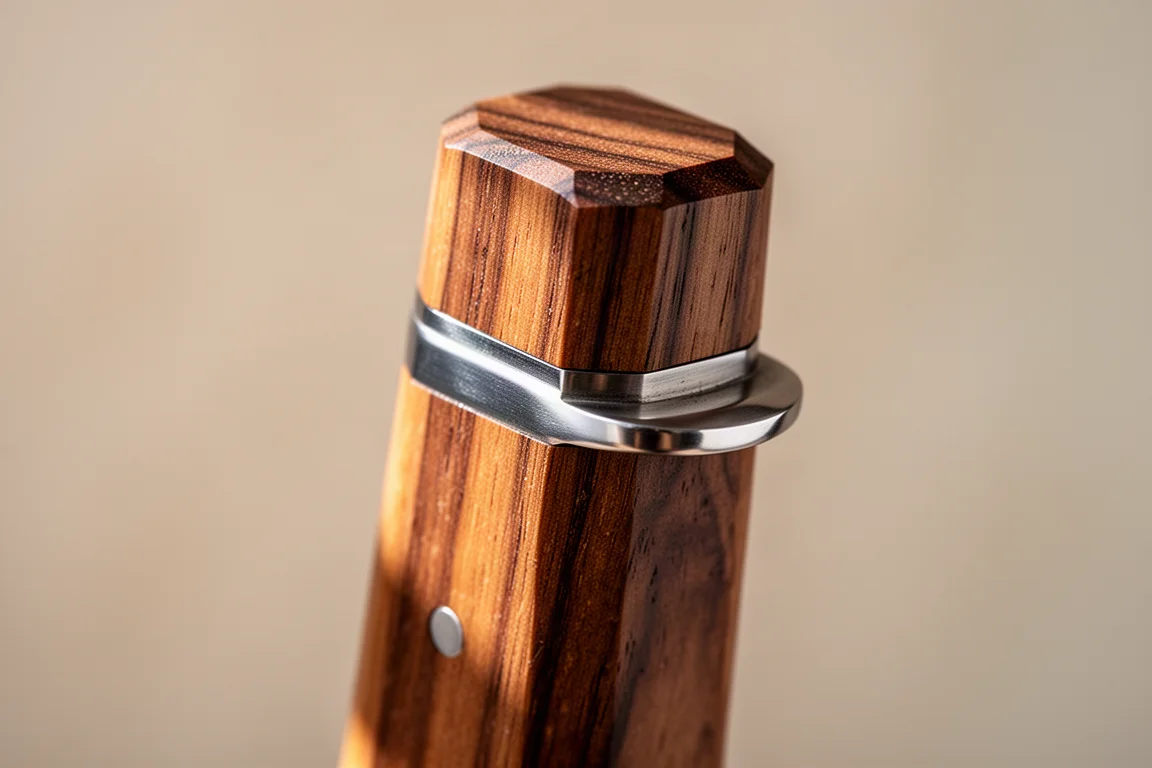
Neither issue affects the cutting itself, which is phenomenal across everything tested. But buyers who cut for long stretches should discuss handle comfort and balance explicitly with the maker when ordering.
Buying Advice
Order this knife for the performance: the steel choice, heat treatment, out-of-box sharpness, edge resilience, and tip geometry are all excellent, and the low-contrast honyaki finish is sold that way by design, so it should not be counted against it. Plan to condition and seal the wooden handle on arrival, especially in a dry climate, since the handle ships untreated. And when ordering, it is worth requesting a slightly beefier handle, a reworked bolster with softer pinch points, and a balance point sitting directly over the finger choil. Those three adjustments would turn an exceptional cutter into an exceptionally comfortable one.
Conclusion
This is easily the favorite nikiri in the collection and, by the reviewer’s own account, the best nikiri they have ever used. The blade is an insane performer, sharp out of the box, resilient through dense produce, and a genuine joy for draw cuts, with tip geometry that stands out as a defining strength. The critiques are limited to the handle and balance: a flatter belly profile would be a preference-driven improvement, but the balance point and the narrow bolster pinch points are the two changes that genuinely matter. Fix those, and this French-made honyaki nikiri would have very little left to prove.
Product link
View more details for Syl've M Honyaki Nikiri 210mm
This product is mentioned in the review. Check the specifications, options, and compatibility before buying.
View more details for Syl've M Honyaki Nikiri 210mmFurther reading
Related Reviews

Kitchen Knives
Best Chef's Knives 2026: 27 Popular Options Tested and Ranked
A comprehensive review of 27 chef's knives ranging from $18 to $380, with honest assessments of handle comfort, blade balance, and real-world performance.

Kitchen Knives
Best Chef's Knives Under $75: Two Tested Recommendations
Two practical 8-inch chef's knives that balance sharpness, comfort, and durability without premium pricing.

Kitchen Knives
Best Chef's Knives 2026: 27 Options Tested and Ranked
A comprehensive review of 27 chef's knives ranging from $18 to $380, with honest assessments of handle design, balance, blade profile, and real-world performance.