Flashlights
Streamlight Wedge vs Olight Arkfeld: Flat EDC Flashlights Compared
Two of the most popular flat flashlights go head to head on size, output, battery life, charging, and everyday carry practicality.
Introduction
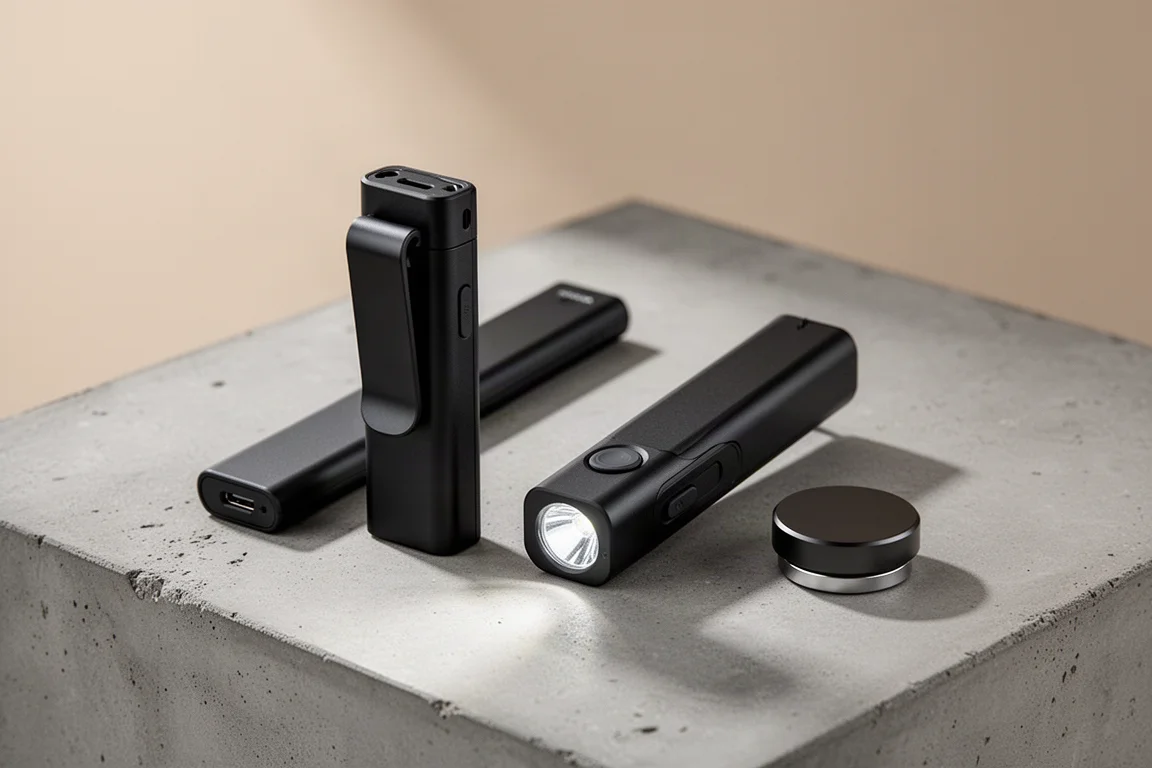
Flat flashlights have quietly become one of the more interesting shifts in everyday carry design. For decades, lights were shaped like the cylindrical batteries inside them, which meant they rolled off desks, took up more pocket space than necessary, and forced designers into a round form factor. Once onboard lithium batteries became the norm, that constraint disappeared, and lights like the Streamlight Wedge and the Olight Arkfeld show what is possible when the shape is designed first and the battery is built to fit.
Both lights sit around the $90 retail mark, so price is not really the deciding factor here. They are different tools with different philosophies, and the right choice depends on how you actually use a light day to day.
Size, Weight, and Pocket Carry
The Wedge measures about five and a half inches, while the Arkfeld comes in around four and a half inches, roughly an inch shorter. Some people find the Wedge simply too long, though in practice the difference is subtle. Weight is nearly identical too, with the Wedge at about 3.3 ounces and the Arkfeld just over three ounces.
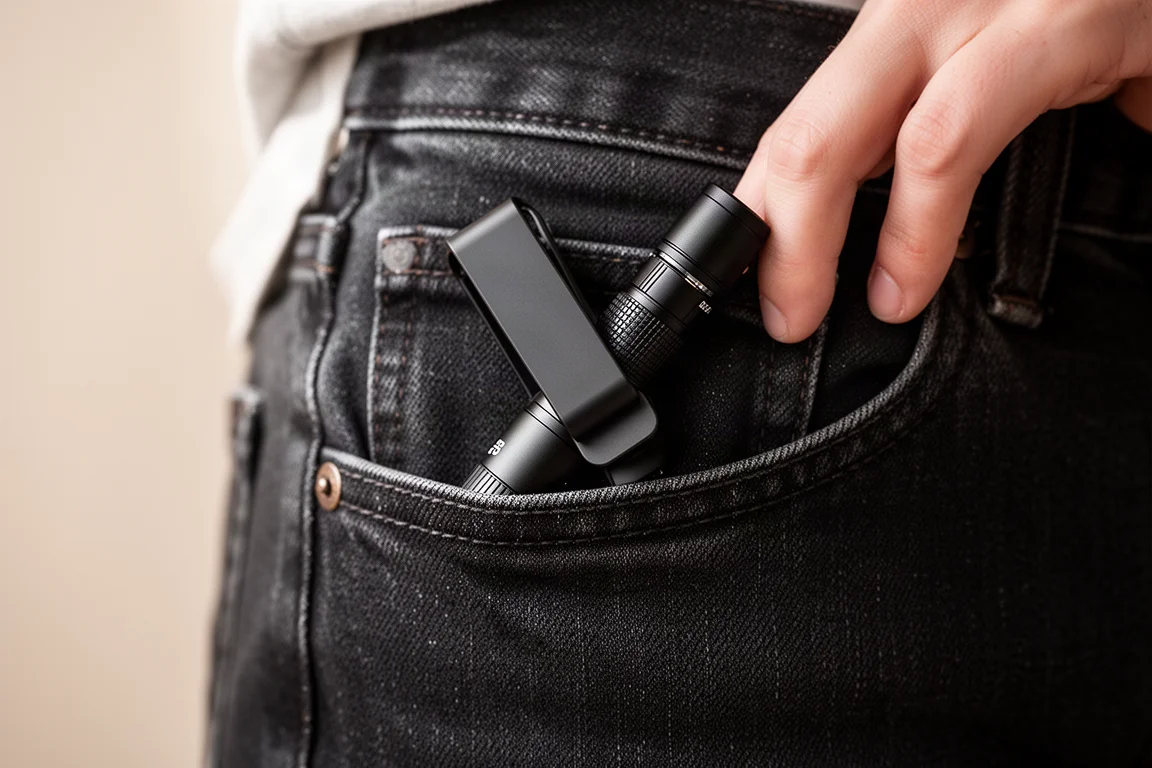
Both include pocket clips, but they approach carry differently. The Streamlight has a deep-carry clip that lets the light ride almost all the way down into the pocket, while the Olight stops about half an inch short because of its charging mechanism at the top. Neither light is particularly grippy; both have very smooth bodies that slide easily in and out of a pocket. That is convenient for carry, though anyone who prefers texture for a secure hold may find it a little slippery.
Modes and Output
This is where the two lights diverge most clearly. The Arkfeld uses a push button at the top that toggles between a green laser and the light itself. It offers roughly five lighting modes: a double click brings up a 1,000 lumen turbo, a long press drops to a 1 lumen mode, and standard clicks cycle through 300, 60, and 15 lumens. It also has mode memory, which makes it easy to keep the light on your preferred setting.
The Wedge is far simpler. A single click gives you 300 lumens, and pressing again engages a 1,000 lumen boost. That boost is regulated and automatically shuts off after about 35 seconds, so while there are technically two outputs, the high mode is a temporary burst rather than a setting you can hold.
For many people, the Arkfeld’s low modes are the bigger deal. The Wedge’s minimum is 300 lumens, which is a lot of light to crack open in a dark room, possibly too much for close-up tasks. The Arkfeld lets you start at 1 lumen and scale up only when needed.
Battery Indicators and Runtime
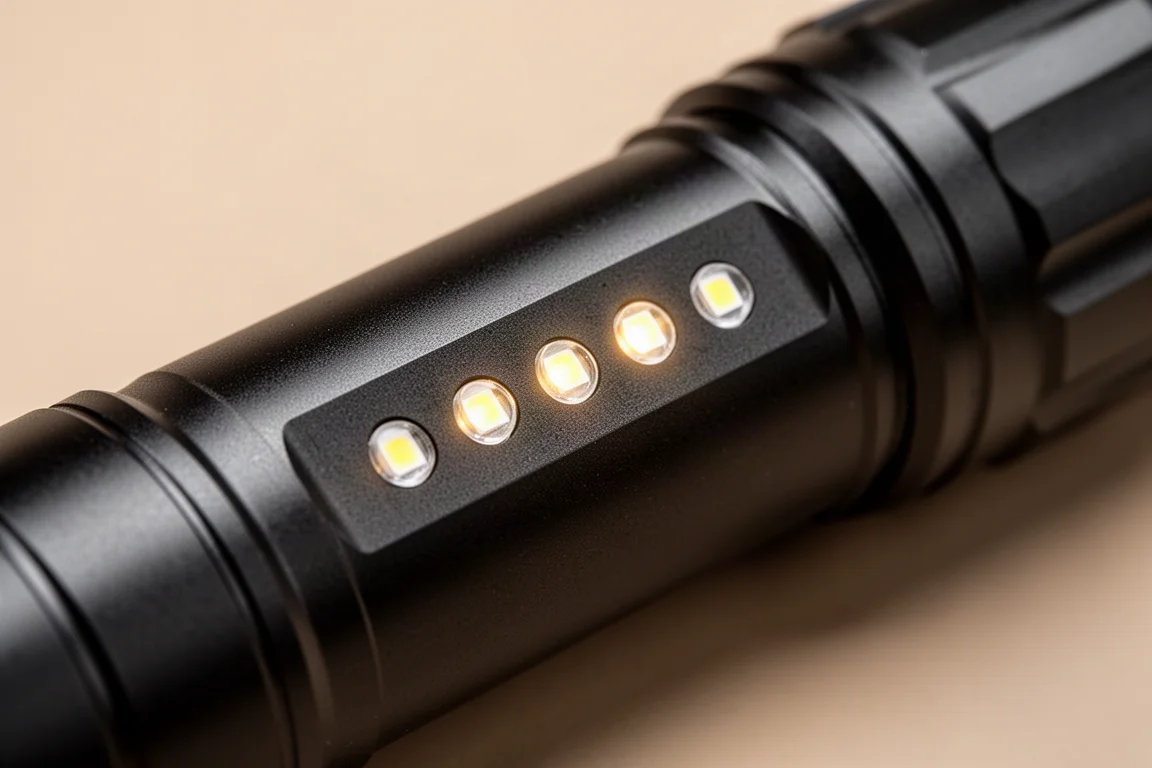
Both lights include a battery indicator, but they differ in polish. The Wedge has a small green light on the body that signals remaining charge, though it can be easy to miss. The Arkfeld uses a four-LED indicator that shows battery level each time the light turns on or off, then fades away. It is more precise and noticeably easier to read.
On runtime, the Wedge claims approximately three hours of light when the 1,000 lumen burst throttles back to 300 and steps down from there, backed by a fairly large battery. In practice that figure feels optimistic. The Arkfeld manages around two and a half hours at 300 lumens, with a long tail on lower settings after the main runtime winds down.
Charging and Tail Standing
The Wedge charges over USB-C at the back of the body, with no cover over the port. The Arkfeld uses Olight’s proprietary magnetic charger instead. That magnetic approach has a side benefit: the light has a magnetic base, so it can stick to metal surfaces and stay put. It also means the light can grab onto things you did not intend, which is a fair trade-off to consider.
Tail standing is another split. The Wedge does not tail stand because its shape makes it unstable, while the Arkfeld does, adding one more way to use it as a hands-free work light.
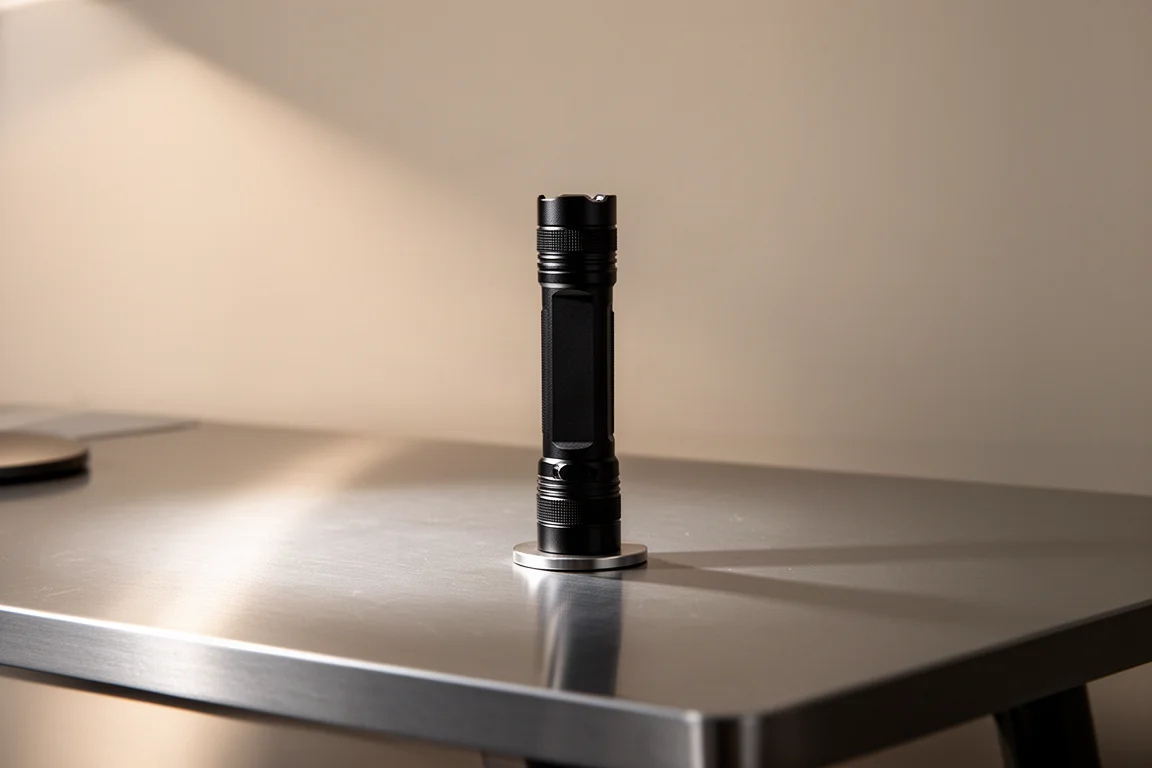
Which One Should You Buy?
If you want maximum simplicity and a deep-carry clip, the Wedge is the straightforward pick: one switch, two outputs, USB-C, done. If you want flexibility, lower output options for close work, a battery indicator you can actually read, a laser, and a magnetic tail, the Arkfeld justifies its slightly shorter body in a different way.
Conclusion
Neither light is simply better than the other; they are different. Both are powerful, well-built examples of where flat flashlight design is heading, and both make sense at their price point. The choice comes down to whether you prefer the Wedge’s simplicity or the Arkfeld’s range of modes and extra features.
Product link
View more details for Streamlight Wedge
This product is mentioned in the review. Check the specifications, options, and compatibility before buying.
View more details for Streamlight WedgeFurther reading
Related Reviews
Flashlights
Best Flashlights 2026: Brightness, Battery, and Value Compared
We tested 18 flashlights across a wide price range to find the best performers in brightness, battery life, and durability.
Flashlights
Nitecore LA10 Review: A Tiny 2-in-1 Lantern That Nails the Basics
The Nitecore LA10 pairs a pocket-sized lantern with a single AA battery, a magnetic tail cap and a five-year warranty. Here is where it shines and where it struggles.
Flashlights
Wuben G5 Review: A Compact Everyday Carry Flashlight
The Wuben G5 is a small, rechargeable flashlight with a pivoting head, magnetic base, and color modes. Here is how it performs as an everyday carry light.