Skis
Stokely Storm Rider 88 Review: Signature Dampness Made More Accessible
An 88 mm all-mountain ski that trades some top-end precision for smoothness, forgiveness, and easier turn timing on groomed terrain.
Introduction
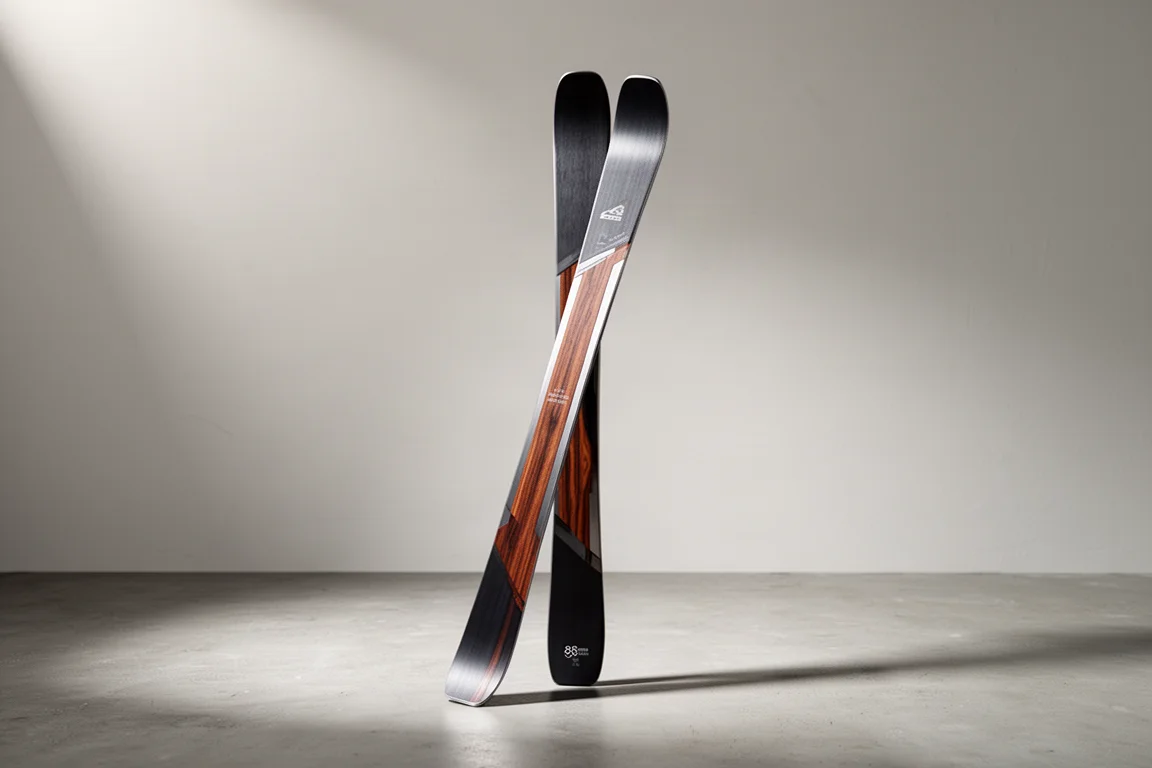
The Stokely Storm Rider 88 has quietly become one of the most recommended all-mountain skis in the 88 mm class, and after spending time on a 184 cm pair it is easy to see why. That length carries a 20.6 m turn radius and the 88 mm waist sits right in the versatile middle ground between a dedicated carver and a wider travel ski.
Like other skis in the Stokely range, it uses a layered build with rubber dust and sheets of titanal. That construction is the source of the brand’s reputation for dampness, and it is the single biggest reason the Storm Rider 88 feels the way it does underfoot.
Pricing is the other thing worth knowing up front. The ski retails for $1,249, but at this point in the season it is commonly available south of $1,000, which changes the value conversation considerably.
Who the Storm Rider 88 Suits
This is a ski for people who want the smooth, damp Stokely feel without having to be perfectly on their timing every single turn. It rewards patience and a clean build of pressure more than it rewards aggression, and it gives you real freedom in where you apply that pressure.
That makes it a natural fit for strong intermediate and advanced skiers who spend most of their day on groomed runs, prefer open-radius turns, and want a ski that stays composed when they get lazy or late. If you are chasing the sharpest possible edge-to-edge precision, this is not the model built for that job.
Main Strengths
Signature Dampness on Edge and Base
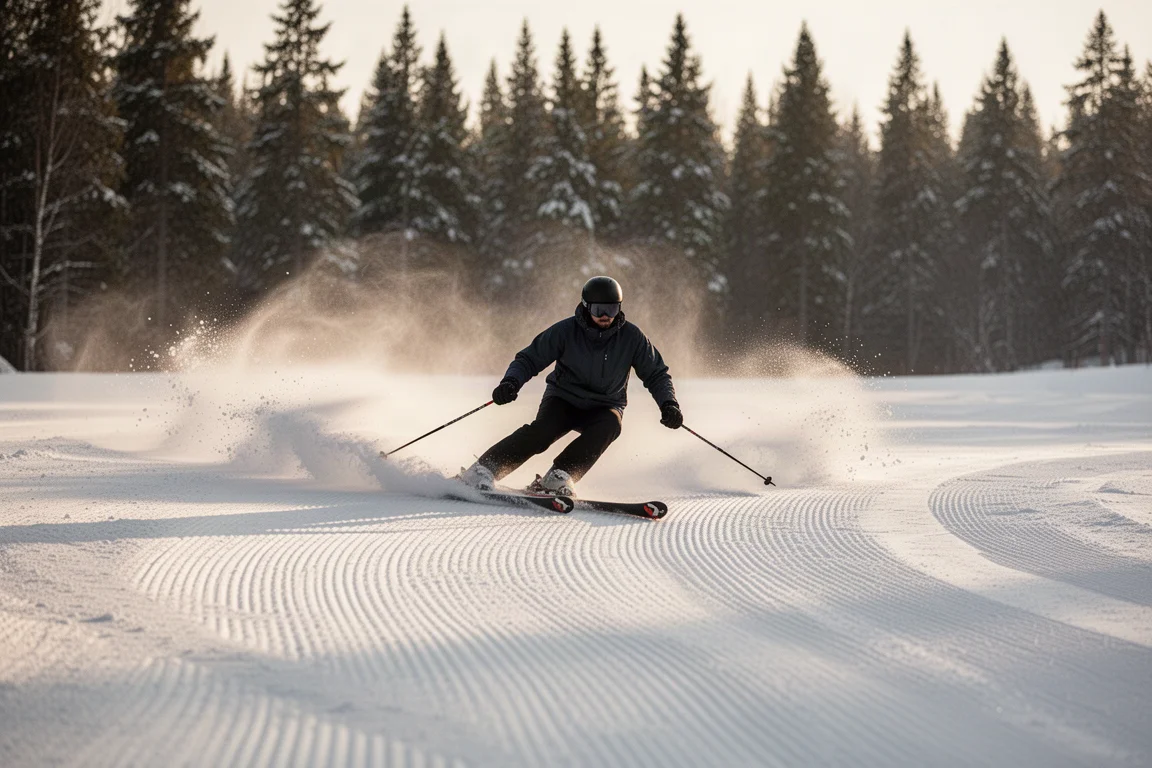
The first thing that stands out is how clean the ski feels on edge. There is no rattling through the turn, no harsh feedback travelling back up through the boots, and no awkward pressure build followed by a sudden release off the tail. The ski enters the turn, holds the apex, and exits in one continuous, even arc.
That smoothness is not limited to the base. The dampness carries through the edges, and that combination is genuinely distinctive. For riders who log long days and are sensitive to chatter, this is the quality that justifies the price of admission.
Forgiving Turn Timing
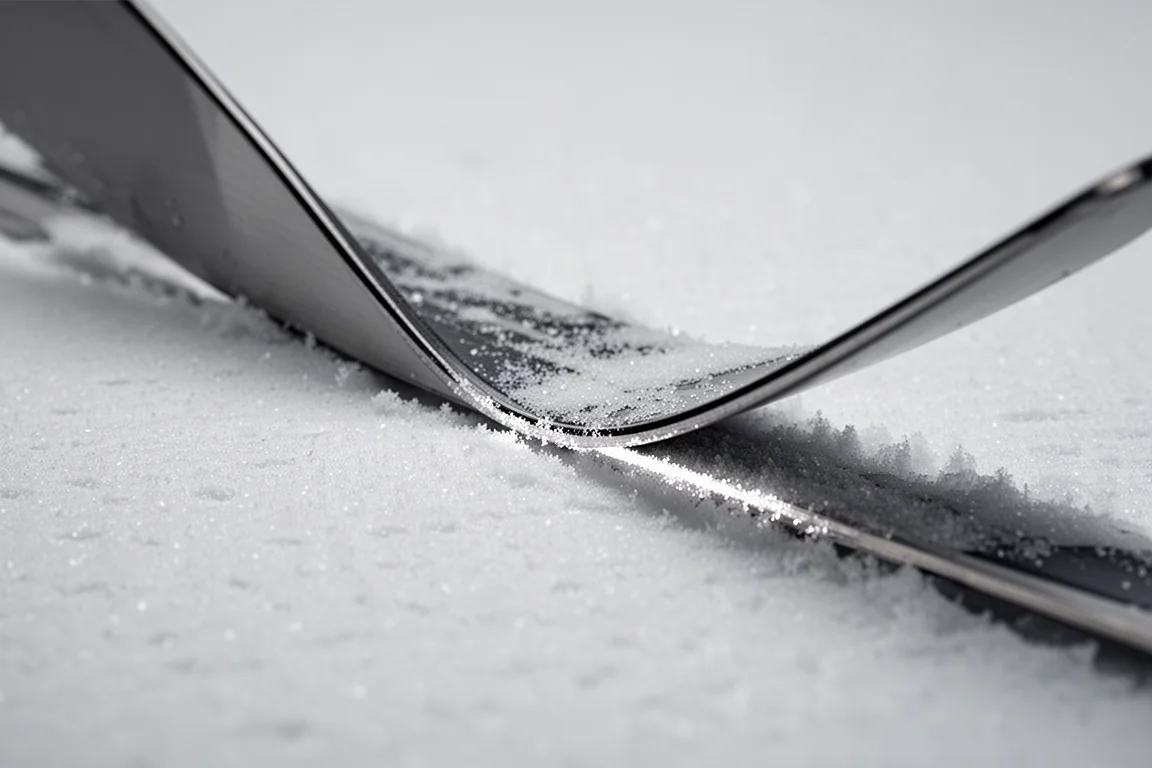
Compared with the more precise carving models in the Stokely line, the Storm Rider 88 is noticeably more forgiving. You can initiate from the hips, you can sit on the tails a little longer, and you can add bite just below the tips if you want a sharper entry. Different skiers load a ski in different places, and this one accommodates most of those habits rather than demanding one.
The practical effect is that you do not have to be switched on for every single turn. You can place your timing and your turn initiation wherever it feels natural and still get a clean result.
Soft Snow and Washed Out Turns
Washed out turns in soft snow are more fun here than expected. When a run gets crowded or the shape of the terrain forces you to abandon a complete carve, the ski handles that partial, smeared turn smoothly rather than fighting you.
Short hop turns through granular or corny snow are also more enjoyable than the category would suggest. This is a meaningful improvement over older versions of the same ski, which did not offer the same turn flexibility in those conditions.
How It Compares With the Mono AR
The most useful comparison sits inside the same family. The Mono AR is the sharper, more dialed-in carving ski, and it asks you to be ready for the turn to arrive. The Storm Rider 88 delivers a large share of that performance with far more ease of use, which is exactly why both models exist.
The trade-off is precision. The tips here do not initiate aggressively and can feel a little aloof entering and leaving the turn. The ski wants pressure built progressively through the front of the boot and rewards patient, open-radius turns. If your goal is maximum turn-to-turn aggression, the Mono line is the better answer.
Things to Consider Before Buying
The Storm Rider 88 will not round off a turn as quickly as an aggressive carver might want. That is a design choice rather than a flaw, but it is worth knowing before you spend the money.
There is also a mild top-speed observation. Compared with older generations of the same ski, this version feels slightly less locked in at low super-G and high GS speeds. Most skiers will never notice it, but it is a real difference for anyone who likes to point a ski straight and let it run.
The platform itself has not changed dramatically over the years. What has changed is the wood, which is a little more pliable and springy. The result is more energy coming out of a turn than you put in, which is a genuine benefit on moderate terrain. If the Storm Rider did not suit you in an earlier generation, most of that character is still present here.
Terrain Range and Off-Piste Reality
On trail, the carving is the headline. The ski is smooth, even, and forgiving in a way that makes long groomed runs feel effortless.
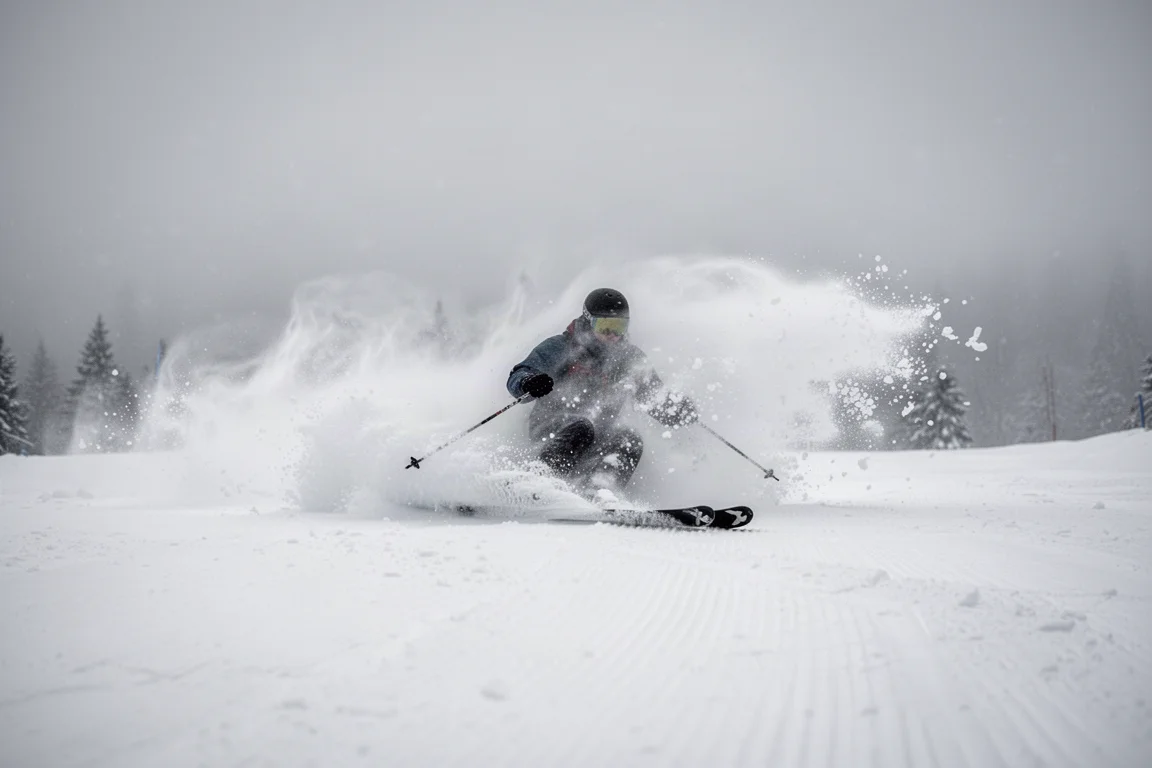
Off trail is a different story. It will get you through soft snow and variable conditions, but it does not have the range of other all-mountain skis at a similar width. Compared with options such as the Volkl M7 Mantra, or an Atomic Maverick or Salomon QST in good conditions, the Storm Rider 88 gives up meaningful off-piste versatility. It carves better and rides smoother than those skis, but if off-piste performance is the priority, this is not the ski to buy for it.
Buying Advice
Go into the Storm Rider 88 expecting a smooth, approachable all-mountain ski with strong groomed-run performance and an unusually refined feel, rather than a do-everything powder-day tool.
If you want to experience what Stokely’s damp construction does without having to perfect your timing first, this is the most accessible entry point in the range. If you already carve at a high level and want the sharpest experience the brand offers, the Mono line is the more targeted purchase.
At full retail the price is significant, and at the current discounted pricing it looks considerably stronger, landing in similar territory to other premium skis at full price. Durability also works in its favour: used examples hold up notably well compared with many skis from the same seasons, which supports the case for buying once and keeping it for years.
Conclusion
The Stokely Storm Rider 88 is a fun, forgiving, and genuinely smooth ski that makes the brand’s signature dampness available to a much wider group of skiers. It is not the pinnacle of what Stokely can do on edge, and it is not an off-piste specialist, but judged on what it is actually built for, it is an easy ski to recommend.
Product link
View more details for Stokely Storm Rider 88
This product is mentioned in the review. Check the specifications, options, and compatibility before buying.
View more details for Stokely Storm Rider 88Further reading
Related Reviews

Skis
Armada Anti Matter 82 W Review: A Light, Approachable All-Mountain Carver
Armada's Anti Matter 82 W pairs a lightweight Karuba and carbon build with an easygoing all-mountain shape, aimed at intermediates through lighter-footed advanced skiers.

Skis
Armada Anti Matter 88W Review: A Light, Playful 88mm All-Mountain Ski Plus Two Alternatives
The Armada Anti Matter 88W returns unchanged in spirit from its Reliance 88C days, and it remains one of the most versatile 88mm skis around. We also look at the Nordica Santa Ana 87 and Anti Matter 92 W as alternatives.

Skis
Armada ARV 100 vs Atomic Bent 100: Which 100mm Freestyle Ski Should You Buy?
Two of the best all-mountain freestyle skis of the season compared: one leans playful and park-ready, the other holds up better everywhere else.