Skis
Stöckli Laser WRT Review: A Precise Frontside Carving Ski
A close look at the Stöckli Laser WRT, a narrow top-end frontside carving ski with a 66 mm waist, metal and carbon construction, and a 14.8 m turn radius.
Introduction
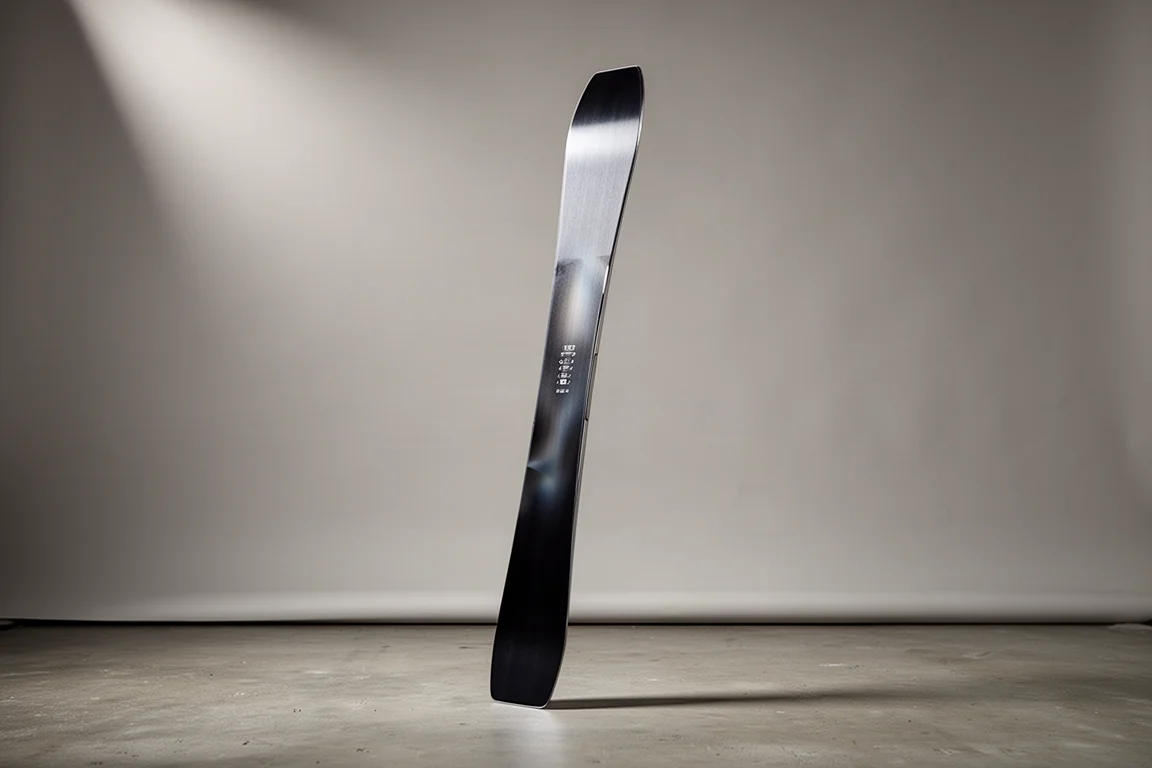
The Stöckli Laser WRT sits at the top end of the frontside carving category. It is a narrow, stiff, metal-and-carbon ski built to hold an edge on hard snow and finish turns with authority, and it makes no attempt to hide what it is for.
With a 66 mm waist it is one of the narrowest shapes you will find outside a race course, and every part of its construction points toward precision rather than playfulness. This review covers what the ski is made of, how it behaves underfoot, and who will get the most out of it.
Who This Ski Is For
The Laser WRT is aimed at strong, technically confident skiers who spend their time on groomed terrain. If your idea of a good morning is fresh corduroy and repeated laps of a firm, well-shaped run, this ski was designed around exactly that routine.
It also suits recreational racing, and anyone who wants a frontside ski that feels closer to a race ski than to an all-mountain model. The reward is a very direct connection to the snow and a level of edge hold that wider skis generally cannot match.
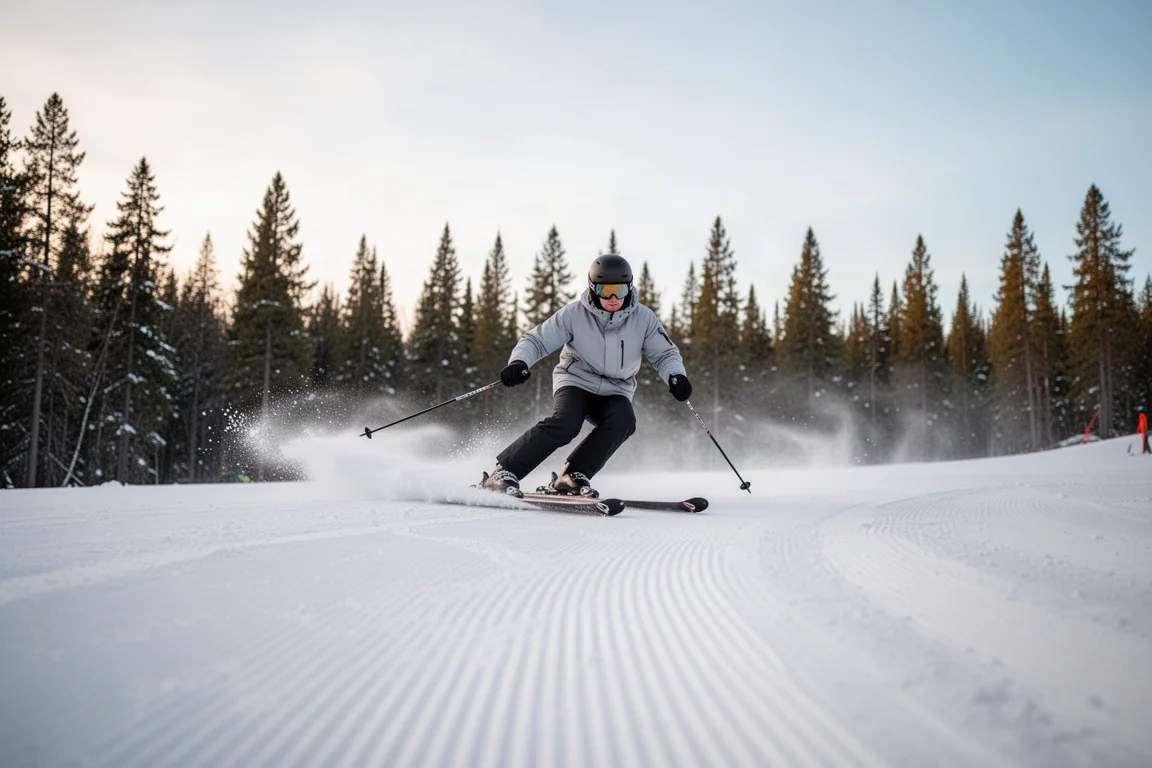
It is not a ski for someone who splits the day between groomers and soft snow. The narrow waist and stiff flex are specialised, and the trade-off becomes obvious the moment you leave hardpack behind.
Construction and Materials
Underfoot the ski measures 66 mm, which places it squarely in the narrow range associated with FIS World Cup race skis. A wood core is paired with two sheets of metal, and that pairing is responsible for much of the ski’s weight and its damp, planted feel.
Two separate carbon applications shape the ride. A carbon strip in the front of the ski, described as carbon steering, engages as the ski is flexed and rolled onto its edge, helping the front of the ski hold its own line. A second strip underfoot, carbon power, stiffens the ski’s longitudinal flex so the mid-body stays quiet and stays connected to the snow.
Metal and carbon together produce the power. The narrow waist produces the grip. Neither works quite the same way without the other.
Edge Grip and Torsional Stiffness
Torsional stiffness is the defining characteristic here. Once the ski is up on edge, there is no wavering along its length. On hard, icy, or heavily skied snow the narrow waist hooks up and holds, provided the edges are reasonably tuned.
That behaviour is what separates a dedicated carving ski from a wider all-mountain design. Grip arrives early in the turn and stays consistent through the arc, so the ski feels predictable even when you commit hard to the fall line.
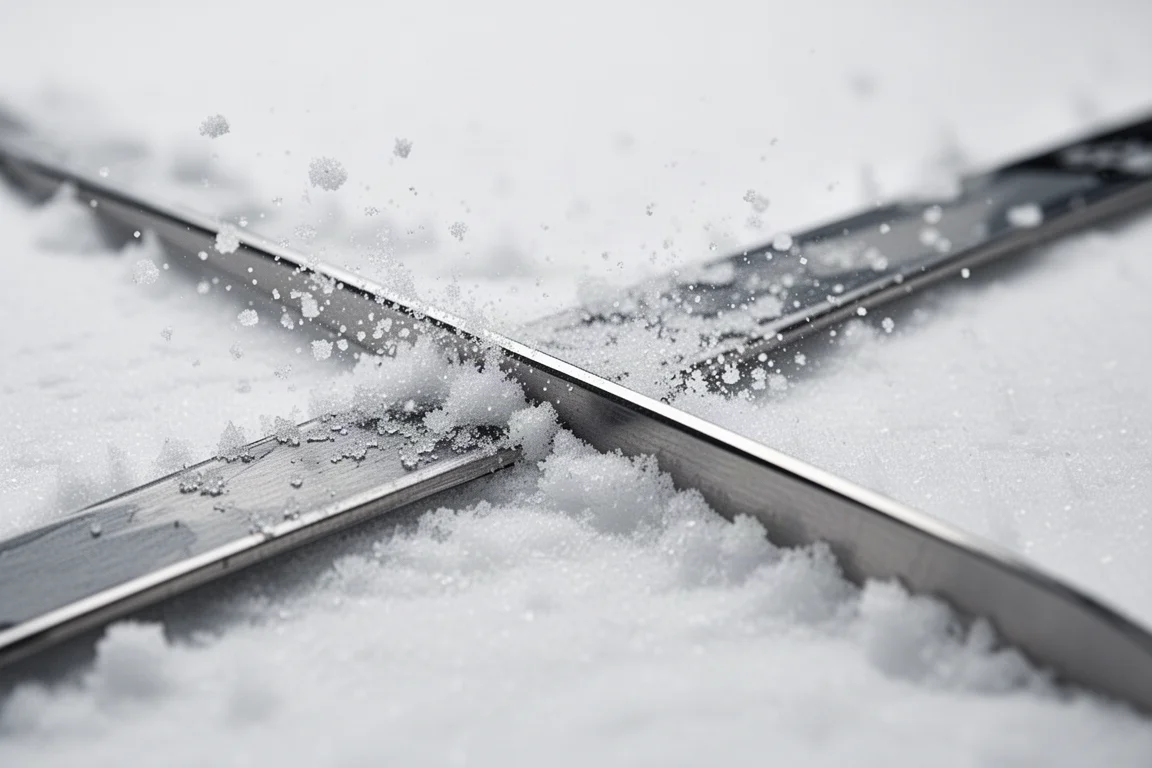
For anyone who has felt a wider ski skid or drift on firm snow, the difference is immediate and easy to feel from the first turn.
On-Snow Character
At 1891 grams the ski carries real heft, and on the snow it feels like a race ski: solid, smooth, and stable. Positive camber underfoot keeps pressure running along the edge, while the absence of rocker in the tip and tail means a long effective edge stays in contact with the snow through the whole turn.
That long effective edge contributes to the ski’s smoothness, and combined with the metal and carbon layup it also delivers a lot of power. The result is a ski that feels planted at speed and calm when you push it rather than skittish.
Turn Radius and Versatility
In the 172 length the turn radius is 14.8 metres, a short-to-mid figure that makes deep, round carved turns easy to shape and repeat. That radius is well matched to groomed runs, recreational racing, and early morning corduroy.
Versatility is the clear trade-off. This is a frontside specialist, closer to a one-trick pony than an all-rounder. Anyone who ventures off the groomed runs, even occasionally, will want a wider ski for those days.
Things to Consider Before Buying
The Laser WRT asks for a specific kind of skiing. It rewards a strong, precise technique, and it gives very little back when it is taken somewhere it does not belong.
A few points are worth weighing before you commit:
- Terrain: the ski is built for on-trail, hard-snow performance. Soft snow and off-piste terrain sit outside its design brief.
- Weight: at 1891 grams it is not light. That heft is part of the solid, race-like feel rather than a flaw, but it is worth knowing about.
- Edge maintenance: the grip depends on edges that are reasonably tuned, so plan on keeping them that way.
- Quiver fit: for most skiers this works as a dedicated frontside ski alongside a wider option, rather than as a single-ski solution.
Buying Advice
If your skiing is groomer-focused and you value edge hold, smoothness, and power above float and forgiveness, the Laser WRT is a straightforward choice. It is a top-end frontside ski, and the wood core, two metal sheets, and two carbon strips justify that positioning in the way it performs on hard snow.
If you split your time between hardpack and softer terrain, or you are still building technique, a wider and more forgiving ski will serve you better. The Laser WRT is best understood as a specialist tool: exceptional inside its lane, limited outside it.
Conclusion
The Stöckli Laser WRT is a precise, powerful carving ski with a 66 mm waist, a wood core reinforced by two sheets of metal and two carbon strips, a 14.8 metre turn radius in the 172 length, and a 1891 gram weight. It delivers exceptional edge grip, strong torsional stiffness, and a smooth, race-like feel on hard snow.
Its narrow focus is the point rather than a shortcoming. For on-trail, hard-snow performance it is about as capable as a frontside ski gets, and skiers who match it to the right terrain will find very little to fault.
Product link
View more details for Stöckli Laser WRT
This product is mentioned in the review. Check the specifications, options, and compatibility before buying.
View more details for Stöckli Laser WRTFurther reading
Related Reviews

Skis
Armada Anti Matter 82 W Review: A Light, Approachable All-Mountain Carver
Armada's Anti Matter 82 W pairs a lightweight Karuba and carbon build with an easygoing all-mountain shape, aimed at intermediates through lighter-footed advanced skiers.

Skis
Armada Anti Matter 88W Review: A Light, Playful 88mm All-Mountain Ski Plus Two Alternatives
The Armada Anti Matter 88W returns unchanged in spirit from its Reliance 88C days, and it remains one of the most versatile 88mm skis around. We also look at the Nordica Santa Ana 87 and Anti Matter 92 W as alternatives.

Skis
Armada ARV 100 vs Atomic Bent 100: Which 100mm Freestyle Ski Should You Buy?
Two of the best all-mountain freestyle skis of the season compared: one leans playful and park-ready, the other holds up better everywhere else.