Skis
Stockli Monoro AR Review: A Damp, Race-Inspired Carving Ski for Firm Snow
The Stockli Monoro AR pairs race-ski DNA with a smoother, quieter ride. Here is where it shines, where it struggles, and who should buy it.
Introduction
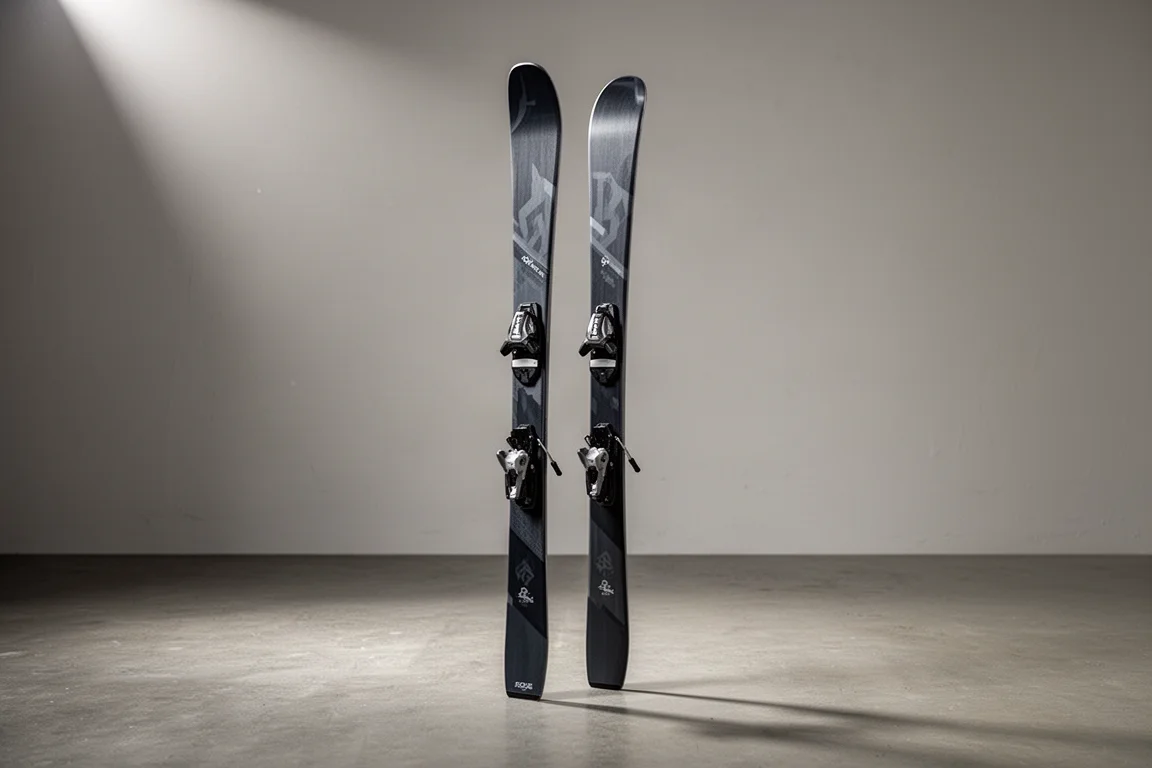
The Stockli Monoro AR is a premium carving ski that borrows heavily from race-ski design and then quietly smooths off the roughest edges. On paper it looks like a narrow, serious hardpack tool: an 84 mm waist, a GS-style tip, and a tail that widens toward the back. On snow, it behaves like something friendlier, with a damp, composed feel that is closer to a refined sports car than a full-bore race plate.
For 2024, the Monoro AR carries over unchanged from 2023. Same shape, same construction, same ride. That is genuinely useful news if you are shopping, because a discounted previous-year pair is the identical ski.
The numbers worth knowing: in the 180 cm length the ski runs a turn radius in the 17 m range, with 84 mm underfoot. It is built with two layers of titanal over a wood core, and the layup includes rubber shreds distributed through the layers to damp vibration. Unlike the brand’s Storm Rider, there is no metal top sheet here. There is a small amount of camber, a decent amount of tail rocker, and a tip that uses a hard, race-style plastic insert rather than the softer material it resembles. Published weight is hard to find, but roughly 1,800 g per ski in this length is a reasonable estimate. Our overall score came in at 8.8 out of 10.
The character that emerges is consistent across a full day of groomed runs. This is a ski that wants an edge set, a firm surface, and a rider willing to work the arc. Get those three things right and it delivers one of the smoothest carving experiences in its class.
Who the Stockli Monoro AR Is For
This ski makes the most sense for advanced and expert skiers who miss the directness of an old race ski but do not miss the chatter, the noise, and the punishing feedback that come with one. It is a strong match for anyone who spends the majority of their days on groomed terrain and wants a damp, stable platform underfoot rather than a light, playful all-mountain shape.
It also suits skiers on the East Coast, or in parts of the Alps, where snow conditions stay consistent and grooming is dependable. In those settings the ski’s narrow waist and firm flex are an advantage rather than a limitation.
It is a weaker match for anyone who wants a single ski to cover powder, soft chop, and groomers. It is also not the natural choice for a West Coast quiver, where conditions shift week to week and a more versatile all-mountain width usually pays off.
Main Strengths
The build is the foundation of everything the Monoro AR does well. Two titanal layers over a wood core give it a strong, stable platform, while the rubber shreds running through the layup quiet the ski down in a way that pure race construction rarely manages. The result is a ski that stays calm at speed without feeling dead.
Smooth, Predictable Turn Shape
The standout quality is the texture of the turn. Pressure builds gradually as the ski comes onto edge, the tip bites early at initiation, and the ski stays settled through the whole arc rather than jolting or stretching out awkwardly. The widened tail adds a useful platform to push off from and step into the next turn.
That combination rewards a rider who finds the right radius and the right speed. Once the ski is loaded correctly, the turn finishes with a buttery, finely tuned feel that is genuinely satisfying to repeat. It is a ski that improves as you learn its timing, and the payoff is a carving turn that feels effortless at the end even though the energy going in was substantial.
Energy Return and Damping
The second strength is how much energy comes back out of the tail. Not every ski manages to be damp and still return what you put into it, and the Monoro AR does both. Release the energy and it gives it back, which makes the ski feel responsive rather than merely solid.
The platform underfoot is also notably stable, holding a firm, consistent line through the turn. Perhaps the most interesting trait is how flexible the timing of pressure can be. A rider can load the tip, work from the middle, or release from the back, and the ski responds across all three. That kind of range is unusual, and it is why the Monoro AR can appeal to very different carving styles without diluting its performance.
Things to Consider Before Buying
The Monoro AR leans toward GS proportions while still pushing into a shorter, slalom-like radius if you drive it hard or accept a little washout. Within those limits it is excellent. Outside them, it is a specialist, and that has real consequences for how you should think about the purchase.
Off the groomed surface, the ski can survive heavy, warm snow, but it does not perform there. It is not a versatile all-mountain shape in the way a wider, more freeride-leaning ski is. It wants hardpack groomers, and it is honest about that.
Limited Turn Radius Flexibility
This is the most consistent complaint. The ski is effectively locked into its roughly 17 m radius. It does not shorten up the way a Volkl Kendo 88, an Atomic Maverick 88 Ti, or a Black Crows Octo can, and those skis also open up into longer arcs when asked. The Monoro AR does its one radius extremely well, but it does not hand you a range of options.
Narrow Snow Condition Range
With 84 mm underfoot, the ski struggles to build a reliable platform when the snow breaks away underneath. In soft or variable conditions, the downhill foot cannot always stay consistently engaged. On perfectly maintained grooming, or on injected and icy surfaces, this is a non-issue. Anywhere the surface is inconsistent, it becomes one.
Price and Value
Retail sits at about $1,350, and current pricing has been closer to $1,079, with sale listings dipping to roughly $944 at times. That is a serious outlay. You are paying for a well-made, specialized ski, and it is worth being clear that the money buys precision on firm snow rather than range across the mountain. At a similar price, the Black Crows Octo offers a 14 m radius that can be opened up, along with better performance off-trail, in powder, and in soft snow. If the 17 m radius and the damp feel are exactly what you want, the Monoro AR still delivers that better than most. If you want one ski to do more, the value argument gets harder.
Buying Advice
Buy the Monoro AR if you know what you want: a smooth, damp, race-flavored carving ski that excels on firm groomed terrain and rewards good timing. Skiers on the East Coast or in consistently groomed alpine terrain will get the most out of it and are unlikely to feel shortchanged.
If you want more variety in turn shape and snow conditions, it is worth weighing alternatives such as the Volkl Kendo 88, the Atomic Maverick 88 Ti, or the Black Crows Octo before committing. A carving-focused quiver with a second, wider ski for soft days remains the most sensible way to own this model. Bought with that expectation, it is an excellent addition rather than a compromise.
Conclusion
The Stockli Monoro AR is a finely tuned carving ski. The turn shape is smooth, the flex is well judged, and the ability to stay damp while still returning energy is genuinely impressive. It scored 8.8 out of 10 for exactly those reasons.
Its limits are just as clear. The turn radius is fixed, the snow condition range is narrow, and the price is high. For riders on consistent firm groomers who want something close to a race ski without the chatter, it is one of the best options available. For everyone else, it is a specialized tool that deserves a specialized place in the quiver.
Product link
View more details for Stockli Monoro AR
This product is mentioned in the review. Check the specifications, options, and compatibility before buying.
View more details for Stockli Monoro ARFurther reading
Related Reviews

Skis
Armada Anti Matter 82 W Review: A Light, Approachable All-Mountain Carver
Armada's Anti Matter 82 W pairs a lightweight Karuba and carbon build with an easygoing all-mountain shape, aimed at intermediates through lighter-footed advanced skiers.

Skis
Armada Anti Matter 88W Review: A Light, Playful 88mm All-Mountain Ski Plus Two Alternatives
The Armada Anti Matter 88W returns unchanged in spirit from its Reliance 88C days, and it remains one of the most versatile 88mm skis around. We also look at the Nordica Santa Ana 87 and Anti Matter 92 W as alternatives.

Skis
Armada ARV 100 vs Atomic Bent 100: Which 100mm Freestyle Ski Should You Buy?
Two of the best all-mountain freestyle skis of the season compared: one leans playful and park-ready, the other holds up better everywhere else.