Camping Cookware
Stanley Adventure vs Wildfare Go: Two 2-Cup Camp Cook Sets Compared
Two nearly identical Stanley camp cook sets, one older and one newer, with a short list of differences that decide which one suits your camp kitchen better.
Introduction
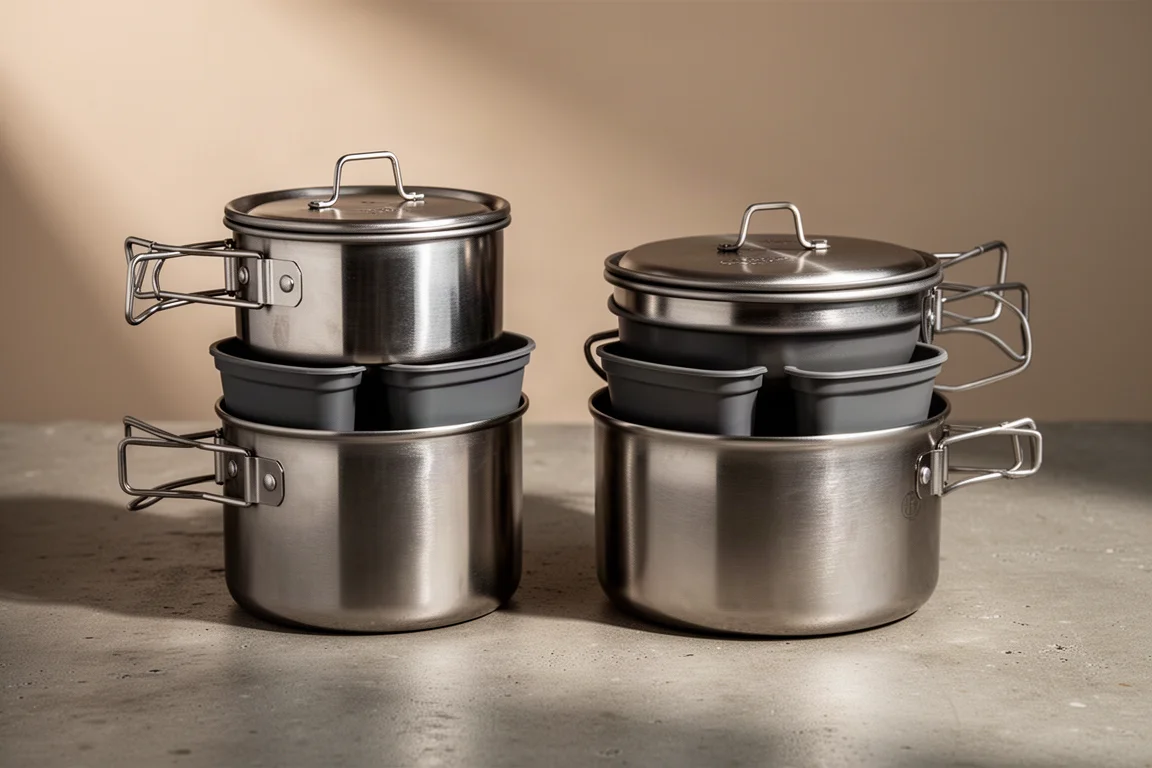
Stanley’s 2-cup camp cook sets occupy a useful corner of the outdoor market: a stainless steel pot, two cups, a locking lid, and a price that rarely climbs far above twenty dollars. Two versions now share that space. The Adventure 4-Piece 2-Cup Set has been the familiar option for years, and the Wildfare Go 2-Cup 4-Piece Kit is the newer arrival that appears to be taking its place in the lineup.
On a shelf the two kits look almost interchangeable, and that is not an illusion. They share the same materials, the same vents and pour spouts, the same footprint, and the same price. What separates them is a short list of design decisions, and a couple of those decisions matter more than the rest. This comparison covers what the kits share, where they diverge, and which one makes more sense depending on how you actually use a camp pot.
What Both Kits Have in Common
Both sets are built around the same core recipe. Each pairs a food-grade stainless steel pot with a vented lid, a pour spout, and two BPA-free plastic cups that nest inside the pot for storage. Measurement markings appear on both the outside and the inside of the pot, which is a small convenience that becomes genuinely useful when you are boiling water for two people in low light or in a hurry.
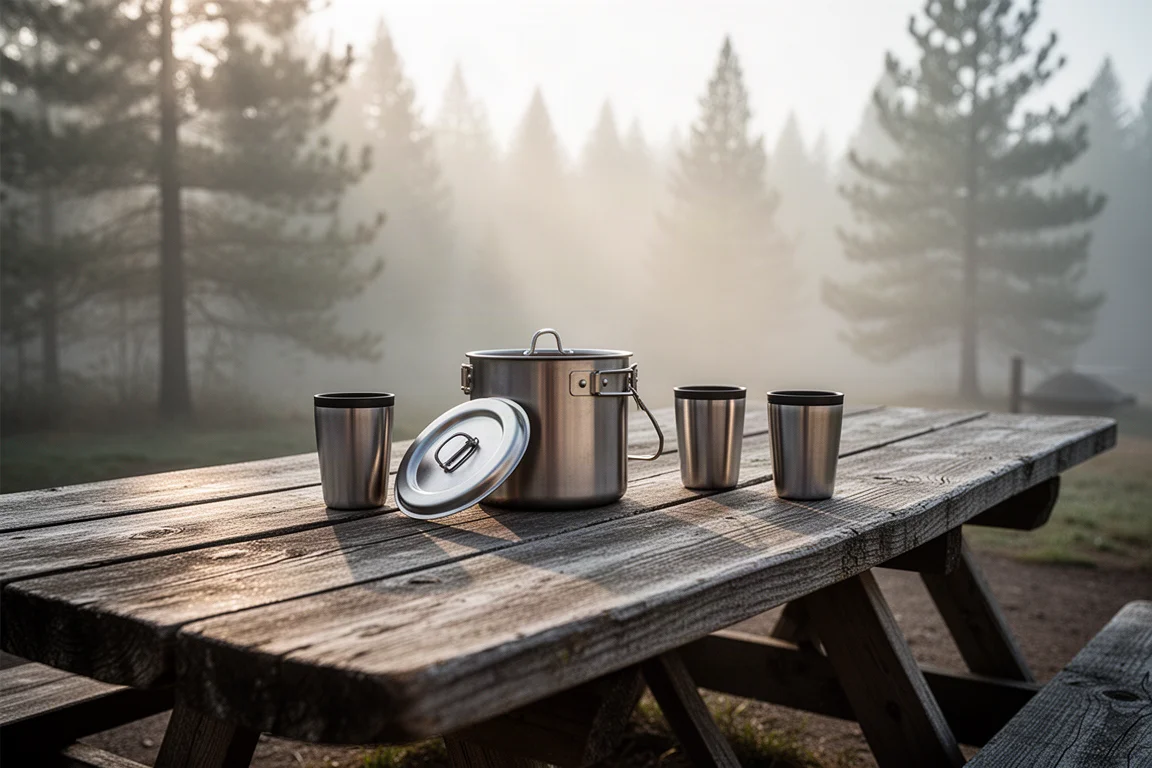
The weights sit within a fraction of each other, 13.6 oz for the older kit and 13.9 oz for the newer one, and both measure 4 inches across. Both also use a locking handle that folds down and clicks into position, and both are sold at roughly the same price of about $20. Because the shared foundation is so close, the choice between them almost never comes down to build quality or materials. It comes down to capacity, lid behavior, and one redesigned grab tab.
Stanley Adventure 4-Piece 2-Cup Set
The Adventure set is the older of the two and the one with the longer track record. Its pot holds 709 ml, measures 5 and 3/4 inches tall, and uses solid BPA-free plastic cups rather than double-walled ones. The Stanley logo on this version is raised from the surface, and the whole kit nests into a compact package that stays together when packed.
Its standout strength is the locking handle, which holds the lid firmly in place once it is folded down. The lid does not shift, does not slide, and does not fall out when the kit is carried or tipped. The known weak point is the grab tab, which has a reputation for melting off over time and often gets replaced with a keychain ring or similar workaround.
Stanley Wildfare Go 2-Cup 4-Piece Kit
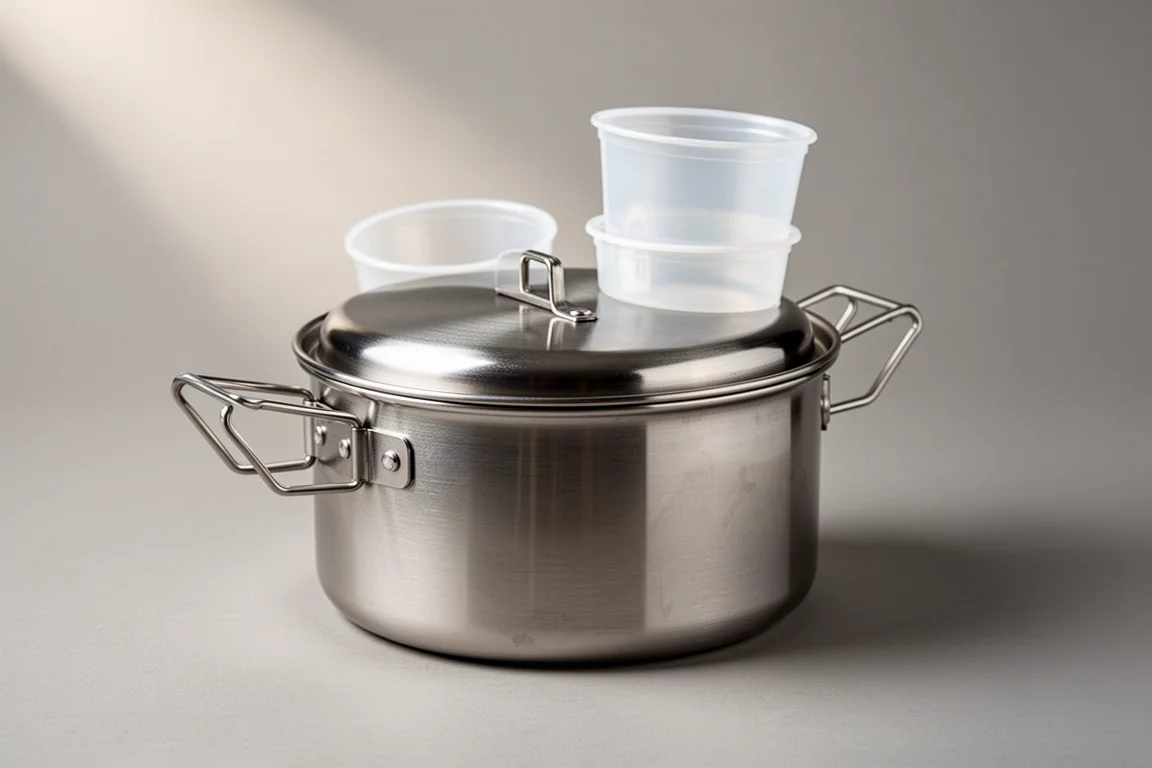
The Wildfare Go kit is the newer design and the larger of the two. Its pot holds 946 ml, measures 5 and 1/2 inches tall, and weighs 13.9 oz with all components in place. The logo here is etched into the metal rather than raised, and the two BPA-free cups are double-walled, a change that may hold temperature slightly better than the solid cups of the older kit.
Two changes stand out in daily use. The first is the grab tab, which now lifts up instead of sitting flush. Because it no longer sits against a hot surface the same way, it cannot melt off, and that is a clear improvement over the older design. The second change goes the other way. When the locking handle is folded down on this version, it does not hold the lid in place. The lid can slide out and drop, which is a real step back from the security of the older kit.
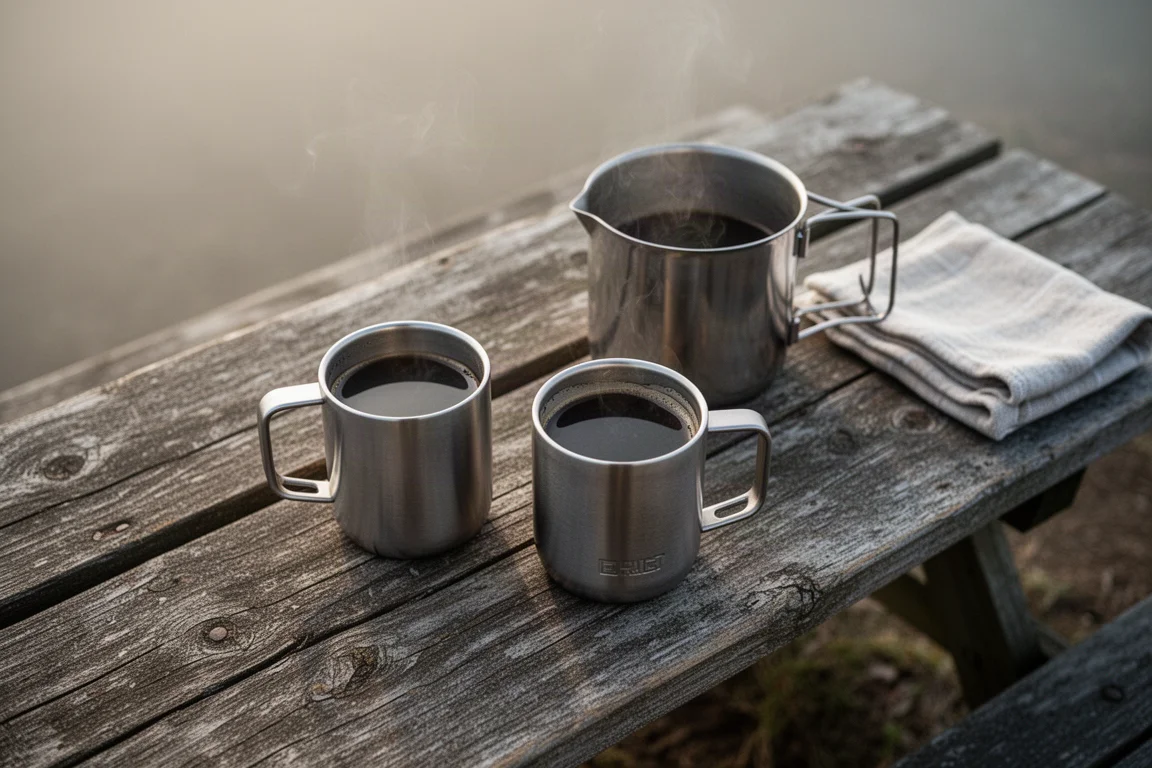
The larger pot is the headline feature, and 946 ml against 709 ml is a meaningful difference for two people who want a bigger boil for coffee, rehydrated meals, or washing up. One number worth flagging: capacity listings for this kit have circulated with the older 24 oz figure even though the pot itself measures closer to 34 oz, so it pays to check the actual volume rather than the copied specification.

How the Two Kits Differ
Laid out plainly, the differences are compact. Capacity goes to the newer kit at 946 ml against 709 ml. Height is nearly identical, 5 and 1/2 inches versus 5 and 3/4 inches, and width is the same 4 inches on both. Weight is a wash at 13.9 oz versus 13.6 oz.
The cups are where the two kits feel different in the hand. The newer set uses double-walled cups that may insulate slightly better, while the older set uses solid plastic cups. The logo treatment changed from raised to etched. The grab tab changed from a flush design that can melt off to a lift-up design that cannot. And the locking handle changed from a mechanism that pins the lid in place to one that leaves the lid free to move. Materials and price stayed the same across both versions.
Living With Each Kit Day to Day
Small design choices tend to announce themselves in camp rather than on a spec sheet. The older kit is the quieter and more predictable of the two, with a handle that rattles slightly when the pot is moved but a lid that stays exactly where it was put. The newer kit trades that certainty for a lid that can shift or drop when the handle is locked down, which is the kind of thing you notice every time you pick the pot up.
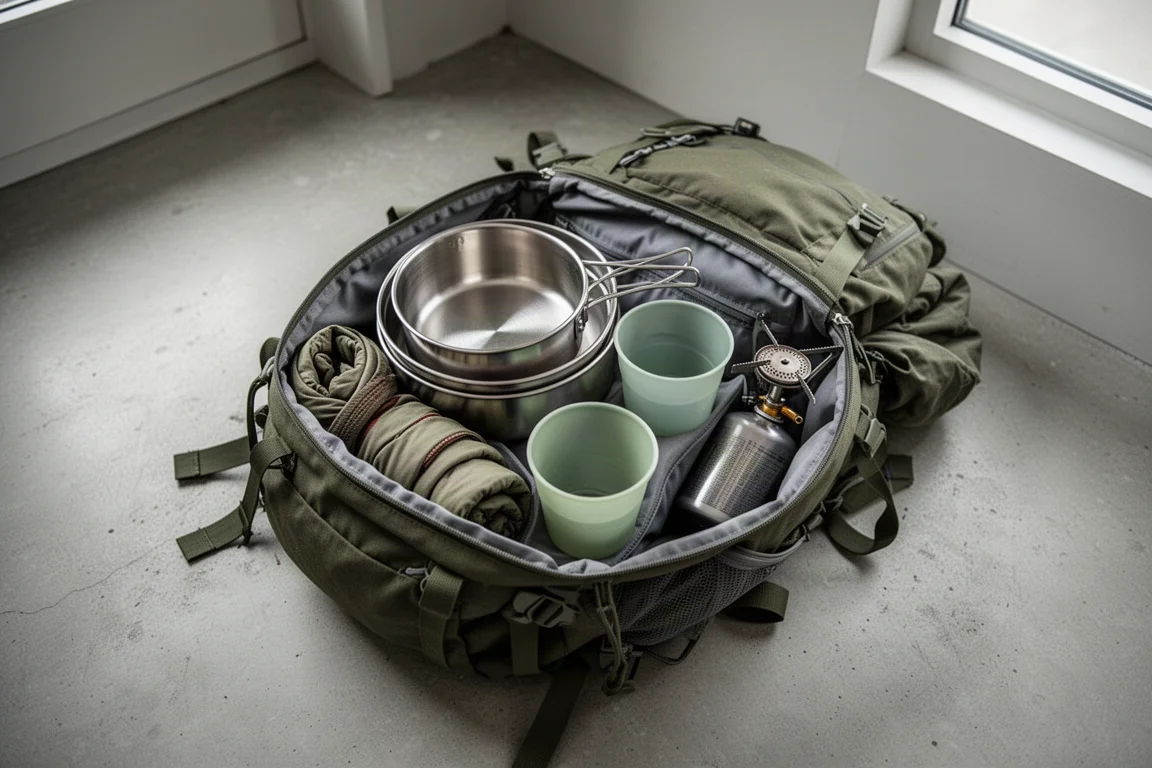
Nesting is another point of separation. The older kit holds itself together as a single package, which makes it easy to pull from a pack and set down without chasing loose parts. The newer kit does not stay together quite as reliably. On insulation, the double-walled cups of the newer version may hold temperature a little better, but most people will not be able to tell the difference in normal use. If you already own the older kit, there is no reason to buy the newer one unless the larger pot capacity is specifically what you want.
Availability and What It Means for Buyers
The Adventure kit is no longer listed on the Stanley website, which suggests the older set is being phased out in favor of the Wildfare Go. It can still be found through discount retailers, and stock is likely to thin out over time rather than come back. The newer kit is the one positioned as the ongoing product.
For buyers, that changes the calculation slightly. If you want the secure lid and the compact nesting behavior of the Adventure set, buying sooner is the safer move while it is still on shelves. If you want the larger pot and the redesigned grab tab, the Wildfare Go is the version with a long future ahead of it. Both remain available for now, so there is no urgency either way, but the older kit is the one with a clock on it.
Buying Advice
Start with the trade-off rather than the price, because both kits cost about $20 and both use the same stainless steel and BPA-free plastic construction. If a lid that stays locked in place matters most to you, the Adventure set is the stronger choice, and it also nests more tightly as a single package. If you regularly cook or boil for two people and want the extra room, the Wildfare Go kit’s 946 ml pot is the more useful capacity, and its lift-up grab tab is a genuine improvement over a part that was known to melt off.
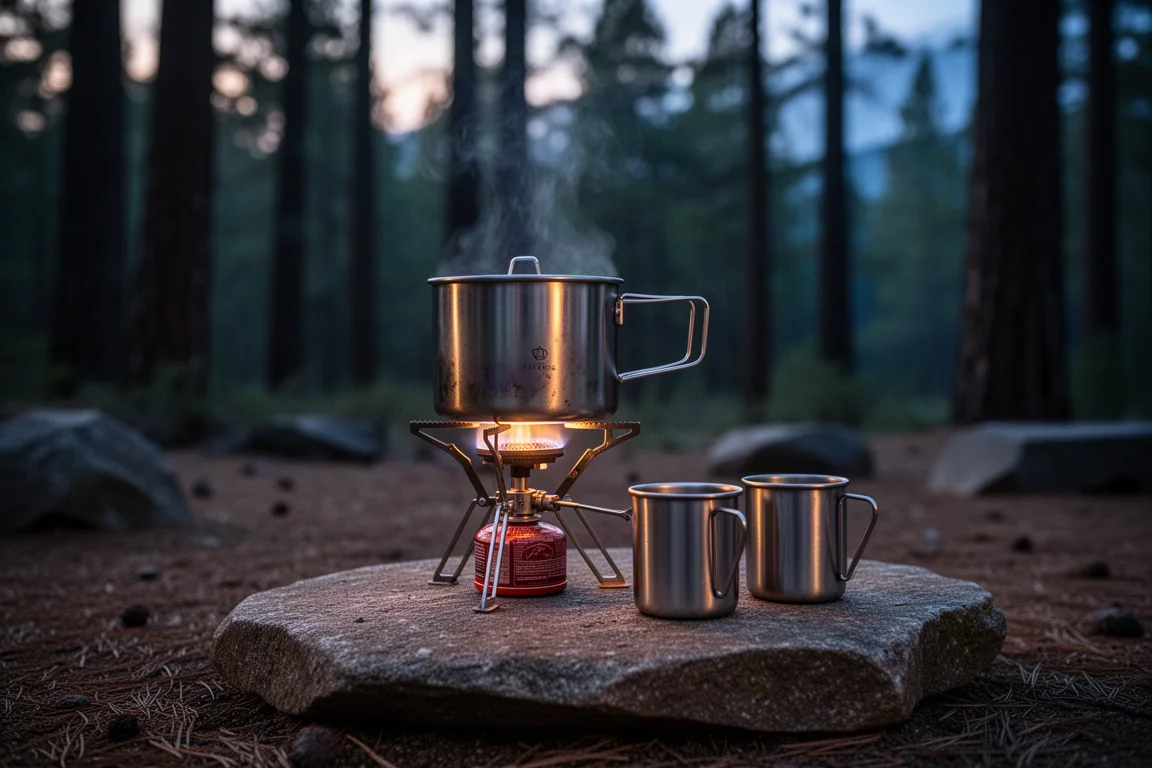
Existing owners of the Adventure kit can sit this one out. The newer kit is not a broad enough upgrade to justify replacing a set that still works, unless the larger pot is something you have actively wanted. New buyers get a straightforward decision: secure lid and tighter packing on one side, larger capacity and a better grab tab on the other. Either way, the outlay is small enough that the choice comes down to how you cook, not how much you spend.
Conclusion
These two Stanley kits are close enough that the decision rests on two details. The Wildfare Go offers a larger 946 ml pot, double-walled cups, and a grab tab that will not melt off, but its locking handle no longer holds the lid down. The Adventure set keeps a smaller 709 ml pot, solid cups, and a lid that stays firmly in place, and it is the version being phased out of the main lineup. Buyers who want capacity should look at the newer kit; buyers who want a lid that never moves should pick up the older one while it is still easy to find.
Further reading
Related Reviews
Camping Cookware
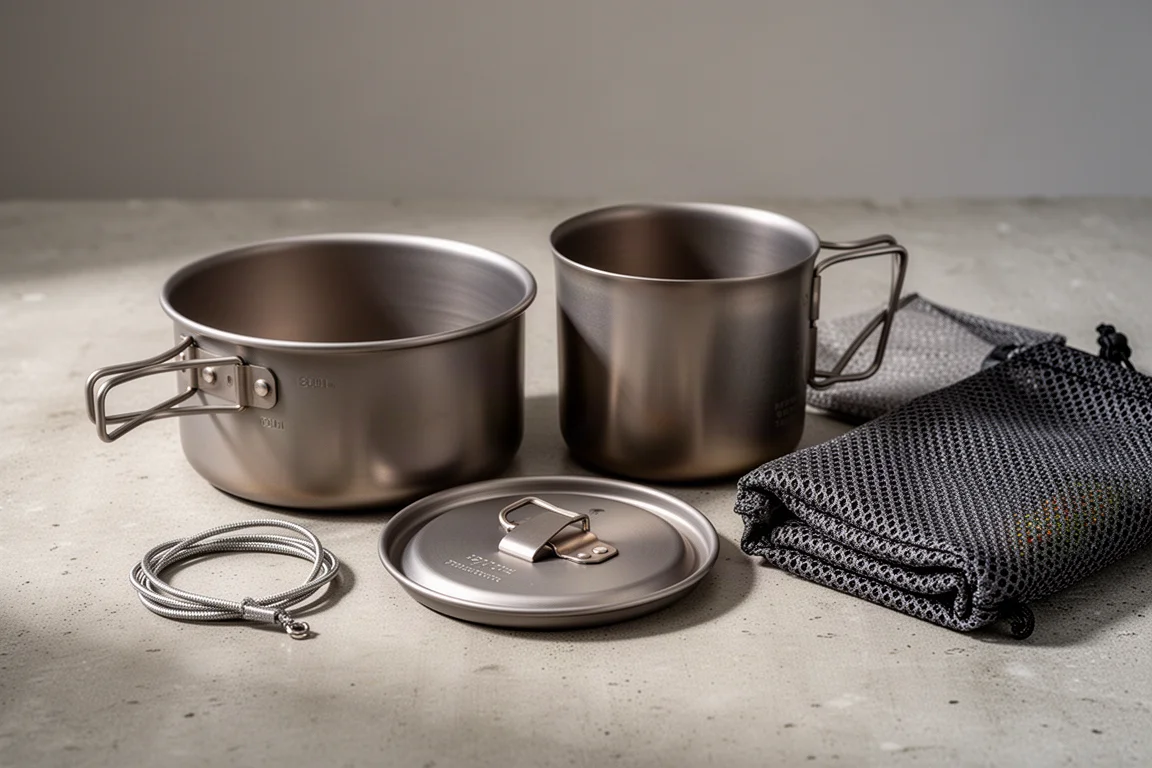
Boundless Voyage Titanium Mess Kit Review: An Ultralight Pot and Cup Set for the Trail
A titanium 600 ml pot and 300 ml cup set that weighs 8.2 ounces complete, with a fire hanging cable, a roomy stuff sack, and one small modification worth making.
Camping Cookware
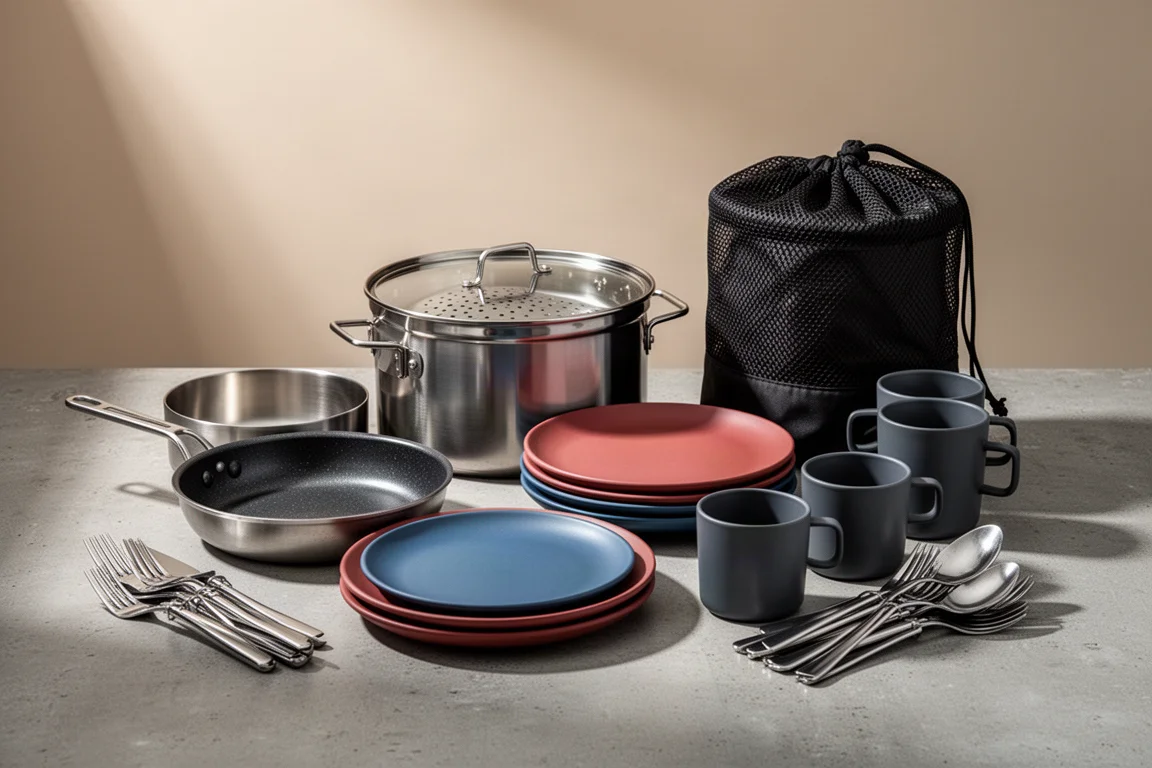
Decathlon Quechua 24-Piece Camp Cook Set Review: A Four-Person Kit for Car Campers
A close look at the Decathlon Quechua non-stick stainless steel four-person 24-piece camp cook set, covering what is inside, how it cooks, and the small quirks to know before buying.
Camping Cookware
Fire Maple Feast 4 Cook Set Review: Strong Build, One Sticky Problem
A practical look at the Fire Maple Feast 4 Cook Set: excellent build quality and locking handles, generous pot capacity, and the sticking issue that will decide whether it suits your trips.