Everyday Carry
Stack Wallet Review: A Modular Wallet That Grows With Your Cards
The Stack Wallet uses a sliding track system with removable inner layers, keeps cards separated to avoid scratches, and starts at a very reasonable price.
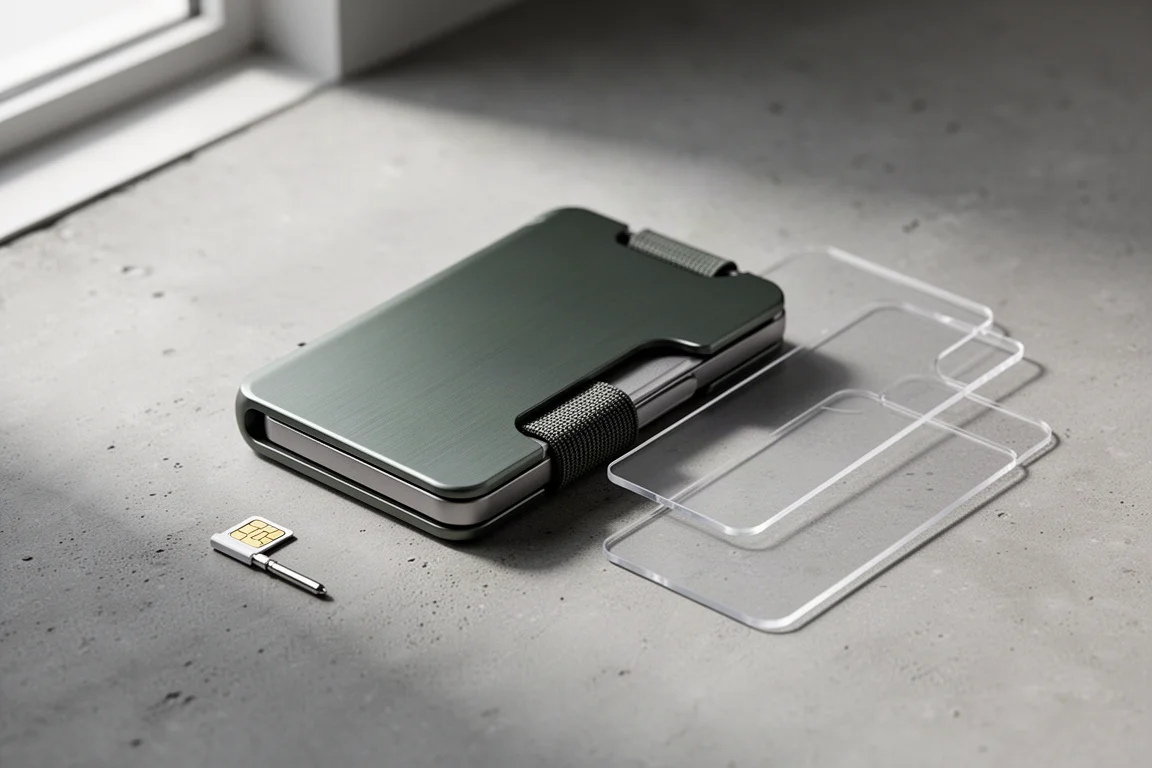
Introduction
Most minimalist wallets make you choose: carry two cards in something truly slim, or accept a thicker design to fit more. The Stack Wallet tries to have it both ways with a modular, expandable design built around a sliding track system. It holds two cards as a base wallet, and you can add inner layers to expand capacity up to six cards. It blocks RFID, comes with a lifetime warranty and a 100-day money back guarantee, and is offered in aluminum, titanium, and carbon fiber. After spending time with it, here is how it all comes together.
What’s in the Box
The packaging includes the Stack Wallet itself, two dual card inner layers for expanding capacity, a cash strap removal tool that looks a lot like a SIM card tool, and a set of printed instructions explaining how the sliding system works. The box itself shows the logo on the front and feature information on the back.
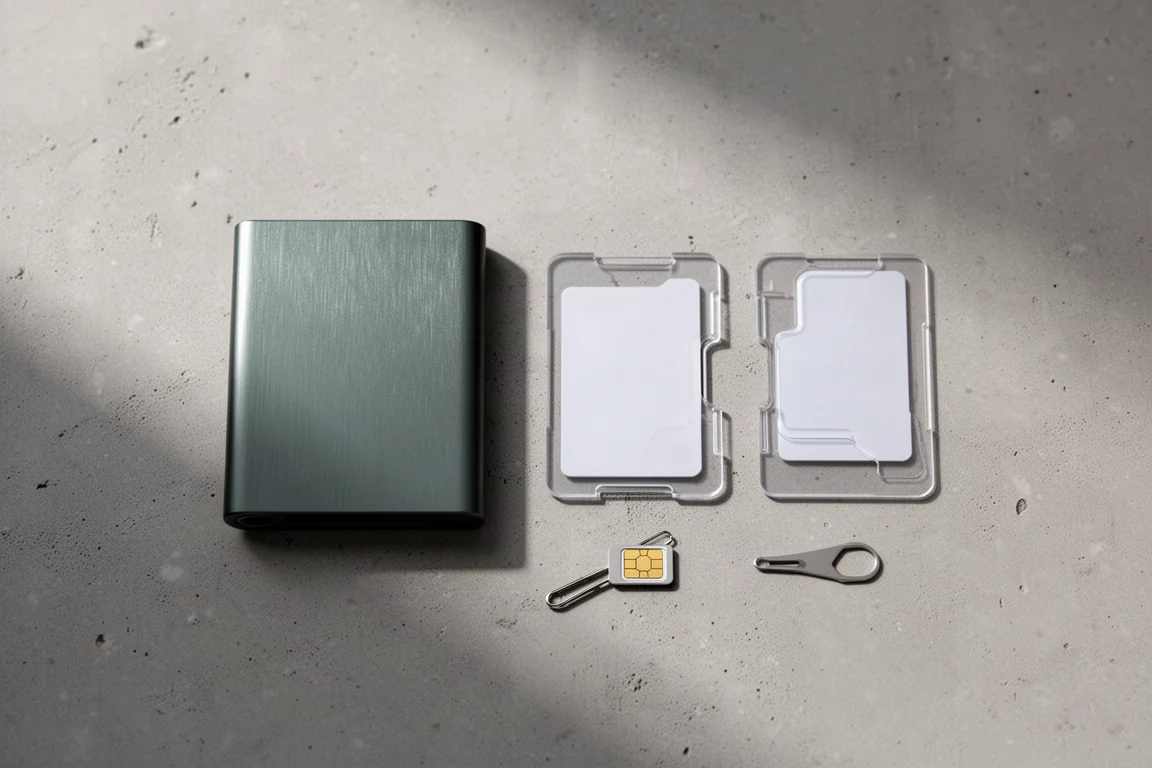
Having the extra inner layers included in the box is a nice touch, since the expansion system is the core idea here. The removal tool also signals that the cash strap is genuinely optional, not a fixed part of the design.
Design and Materials
The Stack Wallet is available in three materials: 6061T6 aluminum, titanium, and carbon fiber. The aluminum version comes in four colors: blue, pink, black, and forest gray, which is the version tested here. No matter which exterior material you pick, the interior core is always polycarbonate.
The construction splits into a front cover and a back cover, with the back cover carrying the elastic cash strap. The design uses no magnets at all, which is unusual for a modern metal wallet and part of what makes the mechanism feel distinct.
The Sliding Track System
The signature feature is the sliding track system. You slide the wallet up and down to access your cards, and the motion is smooth without any magnetic assistance. To add an inner layer, you line the front plate up with a small arrow on the track, pinch the pieces together, and slide forward until it snaps into place.
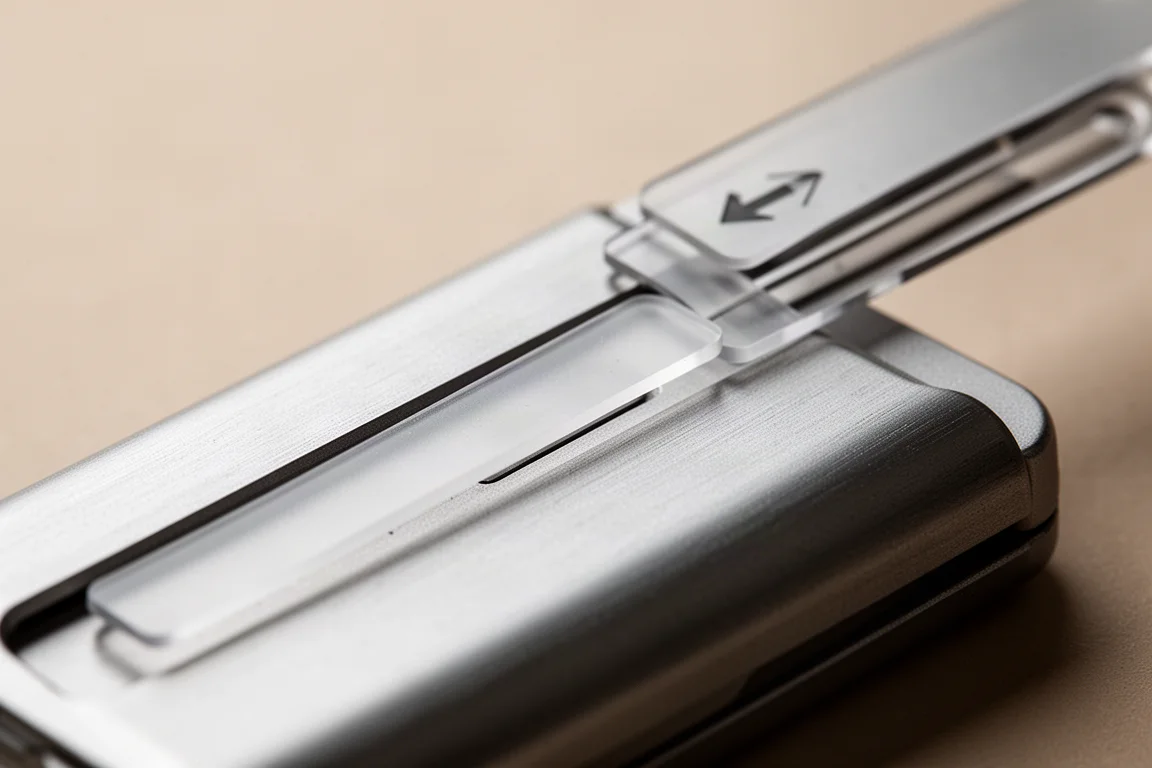
Adding and removing layers takes seconds, which matters more than it sounds. If you carry six cards during the week but only two on weekends, you can peel the wallet open, take layers out, and slide it back together into a slimmer configuration. That flexibility is the whole point of the design.
Card Access and Protection
Here is the part that genuinely stands out. Because cards sit in separate compartments within each layer, they never touch each other. In a typical sandwich-style wallet with two plates and elastic, cards rub against each other when you pull one out, and over time they scratch. The Stack Wallet avoids that entirely.
Access to the middle cards is also excellent. You can slip your most-used card into the middle of the stack and still retrieve it quickly, so placement matters less than in most wallets. For the rear cards, you do have to flip the wallet around, but they are just as easy to remove.
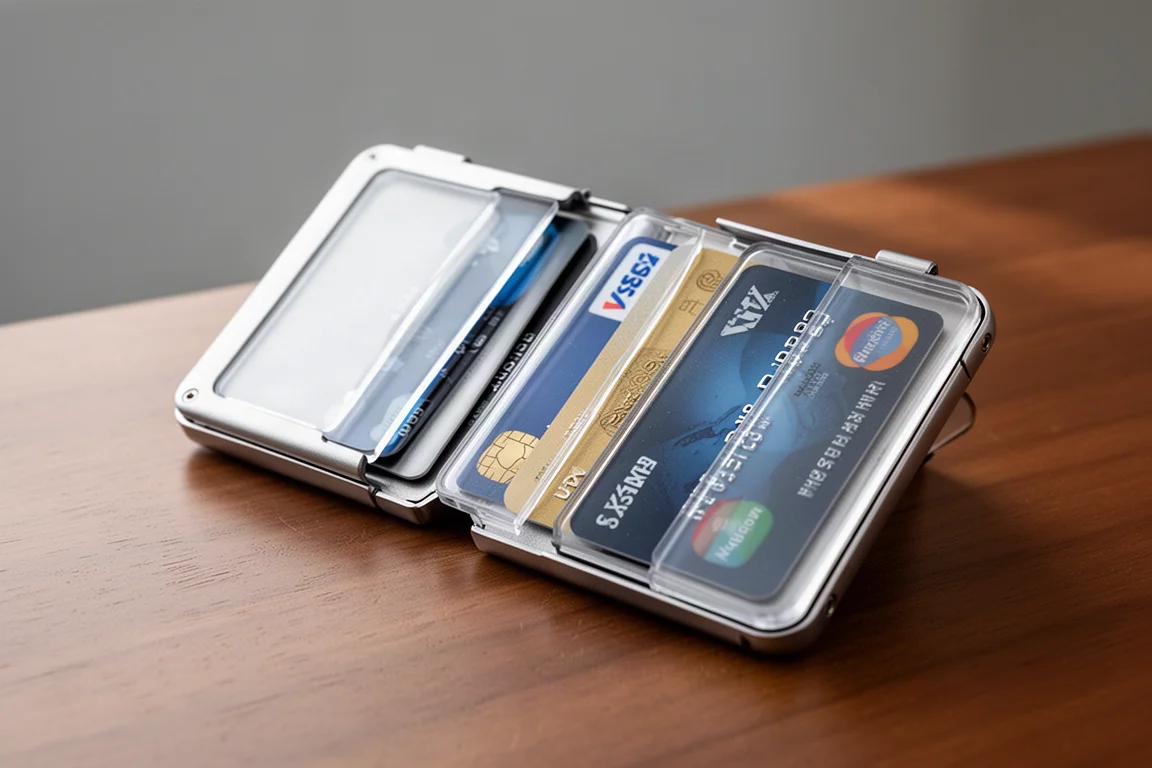
Loading six cards is straightforward: two per layer, with a spot on each side of the front and back covers. If you carry more than six cards, you would need to buy additional inner layers, and that is where a trade-off appears: each layer adds about 3 millimeters, or 0.12 inches, of thickness.
Size and Thickness
Measured with the two included inner layers installed, the wallet comes in at 0.61 inches, or 15.6 millimeters, thick with room for six cards. Without the inner layers, it measures just 0.24 inches, or 6 millimeters, thick, with overall dimensions of 3.82 x 2.48 x 0.24 inches. That two-card configuration is about as minimal as wallets get.
The trade is simple: slimness scales with capacity. If you only carry two cards, you get an extremely minimal wallet. If you need six, you carry a bit more bulk but keep the separated-card design that makes it easy to use.
Cash Carrying and the Removal Tool
The elastic cash strap on the back holds folded bills, and you can stack as many bills as you want under it. If you like carrying cash this way, it works well. If you dislike folding bills into quarters or having cash exposed on the outside of your wallet, this may not suit you.

The included removal tool lets you take the strap off entirely, which turns the Stack Wallet into a pure card holder. It is a small detail, but it shows the design is meant to be configured rather than accepted as-is.
Pricing and Warranty
The aluminum version with the two additional inner layers is priced at $55. The carbon fiber version is $75 and the titanium version is $85 at the time of writing. Every version includes RFID blocking, a lifetime warranty, and a 100-day money back guarantee, which is a strong backing for a wallet in this price range.
Who Should Buy It
The Stack Wallet makes the most sense if you carry up to six cards and want them protected from scratching, or if you carry only a couple of cards and want something genuinely slim that can expand later. Cash carriers who like elastic straps will feel at home; those who prefer a concealed bill compartment should look elsewhere.
Things to Consider Before Buying
The main limitation is thickness growth: every extra inner layer adds roughly 3 millimeters, so carrying well beyond six cards would quickly defeat the minimal form factor. The exposed elastic cash strap is a matter of taste, and bills need to be folded into quarters. If you want more than six card slots, plan on buying extra layers separately.
Buying Advice
If the modular concept appeals to you, the aluminum version at $55 is the natural starting point since it includes the two expansion layers. Titanium and carbon fiber are material upgrades for those who want them, but the mechanism and capacity are identical. With a lifetime warranty and a 100-day money back guarantee behind it, the risk of trying it is low.
Conclusion
The Stack Wallet is an original take on the everyday wallet: a magnet-free sliding track, removable inner layers, cards that never touch, and a two-card base that can grow to six. It is not perfect, but for the price it delivers a genuinely clever and customizable design that stands out in a crowded category.
Product link
View more details for Stack Wallet
This product is mentioned in the review. Check the specifications, options, and compatibility before buying.
View more details for Stack WalletFurther reading
Related Reviews

Everyday Carry
Everyday Gear That Deserved a Second Look
A roundup of solid everyday carry items: watches, pens, a pencil, a knife, and a smart ring that each earned a place on the table.

Everyday Carry
KORE Tactical Bifold Wallet Review: A Durable Everyday Carry Option
A close look at the KORE Tactical Bifold Wallet, a reinforced nylon wallet with magnetic closure and room for cards, cash, and IDs.

Everyday Carry
Krabby Wallet Review: A Slim, Simple Carry That Has Stood the Test of Time
A closer look at the Krabby Wallet, a slim canvas and elastic design with a loyal following and a simple, functional approach to everyday carry.