Groupsets
SRAM Red XPLR 13-Speed Review: Real-World Notes After Six Months
SRAM's direct mount gravel groupset delivers sharper shifting, better hoods and a crash-resistant derailleur, but it asks for a compatible frame and a premium budget.
Introduction
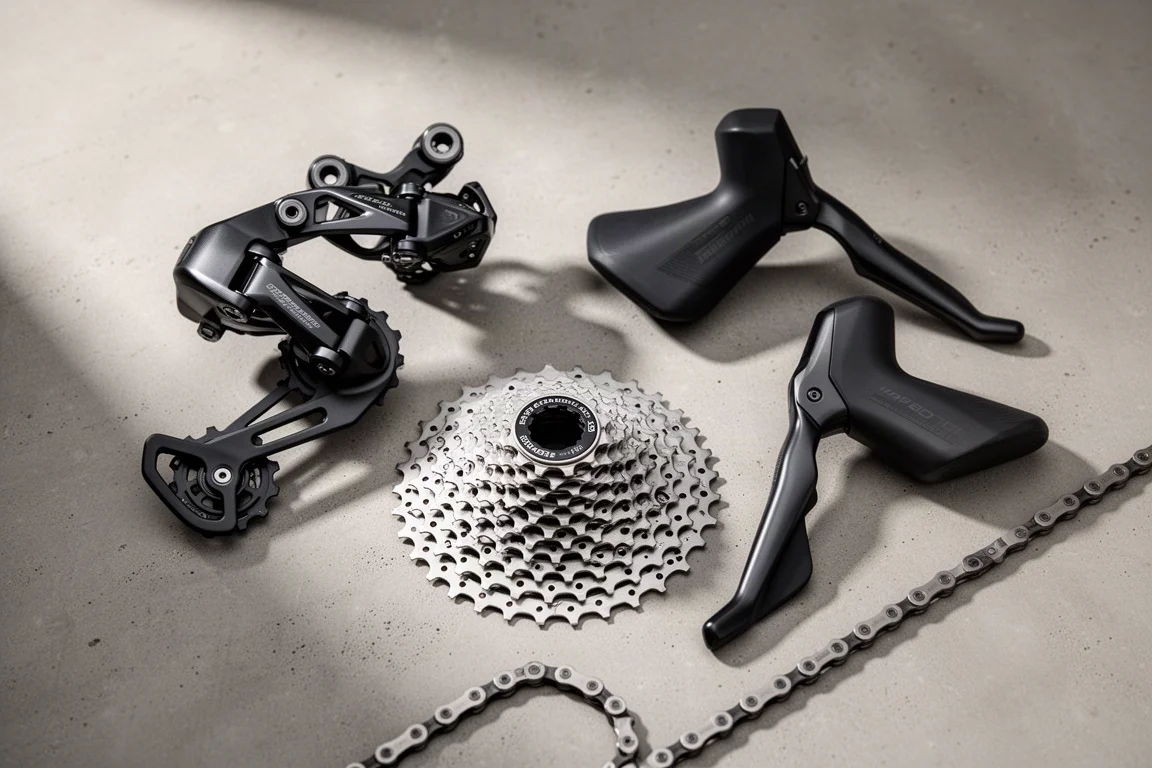
SRAM Red XPLR 13-speed is the flagship gravel drivetrain from SRAM, and the headline change is not the extra sprocket. It is the way the rear derailleur attaches to the bike. Instead of hanging from a traditional derailleur hanger, the derailleur mounts directly to a frame built around the Universal Derailleur Hanger standard, an approach SRAM describes as a direct mount system.
That change targets one of the most common failure points on a modern bicycle. Traditional hangers are thin, easy to bend in a crash, and often the first component to suffer when a bike is dropped, packed into a car, or loaded onto a plane. A bent hanger is also one of the most frequent reasons gears stop shifting cleanly, and it is the reason many mechanics keep a hanger alignment tool within easy reach.
Six months of riding across mud, gravel and road surfaces gives a clear picture of what the groupset does well and where it asks a great deal from the buyer.
Who This Groupset Is For
This is a drivetrain for riders who already own, or are about to buy, a frame with a UDH dropout. It suits gravel riders who want the sharpest shifting available, a wider gear range, and a rear derailleur designed to survive impacts rather than be written off by them. It also appeals to riders who split their time between gravel and road, because the groupset performs well in both settings.

It is not a straightforward upgrade for an existing bike. Frames without a UDH dropout cannot take this derailleur at all, and that describes most bikes currently in circulation. Anyone hoping to move the groupset onto an older frame should confirm that single detail before going any further, because it decides the entire purchase.
Main Strengths
Shifting Precision and Setup
Shifting is quick and positive, with no delay when a button is pressed. Compared with the previous 12-speed XPLR groupset, the 13-speed version feels sharper and more precise, largely because the connection between derailleur and frame is tighter. In a conventional setup, some flex in the system is taken up before the chain moves. The direct mount design removes most of that.
Under load the difference is more obvious. Shifting into a climb, moving two sprockets at once, or changing gear with the cassette covered in mud all happen without crunching or hesitation. Shift speed is also improved over SRAM’s earlier mountain transmission, and it matches or betters the older 12-speed XPLR.
Setup is simpler as well. There is no indexing to fine-tune, no B-screw to set, and very little adjustment overall. Because SRAM controls the interface between derailleur and frame, the variability that comes with hundreds of different hanger designs disappears, and the derailleur lands in the right place relative to the cassette every time.
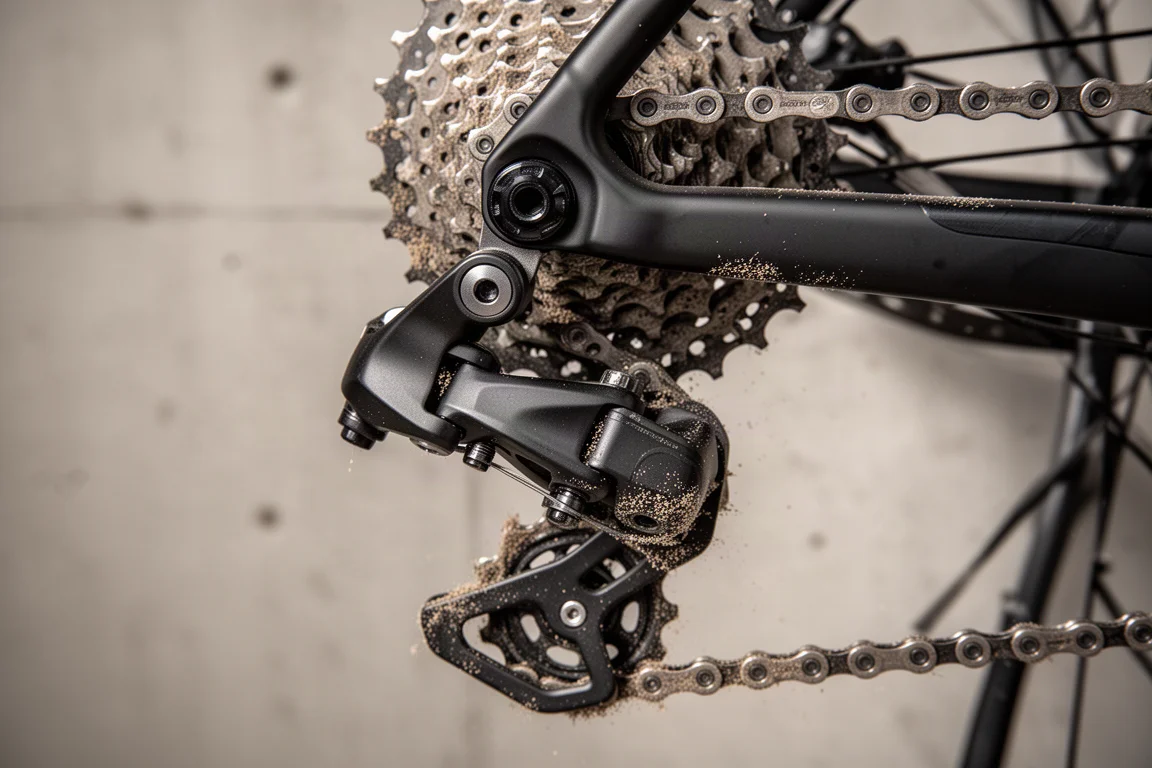
Durability is the other half of the story. The derailleur is chunky and built from parts that can be replaced individually, where a conventional derailleur is often a write-off after a hard impact. Extreme stress testing that pushed a derailleur far beyond normal loads ended with a replaceable parallelogram section failing rather than the frame, and the derailleur returned to normal operation once that part was swapped. No reports of destroyed rear derailleurs or written-off frames have surfaced in the year the platform has been on the market.
Gear Ratios and the 13-Speed Cassette
The cassette in use here is a 10-46, a step up from the 10-44 of the previous generation. The change is small but useful on steeper climbs, and it closes some of the gap to the 10-52 Eagle cassettes used on mountain bikes. It is not a match for a 10-52 on long, steep mountain terrain, but it handles the climbs most riders meet day to day.
The move from 12 to 13 speeds is about smoothness as much as range. The extra sprocket allows smaller steps between gears, which makes it easier to select a ratio that matches a comfortable cadence rather than spinning too hard or pushing too hard. The chain keeps the same spacing and thickness as the 12-speed version, so it is no narrower and no more delicate than before, and that design has already proven reliable.
Ergonomics and Braking
The hoods are the standout feature. They are narrow, slim and slightly longer, with a smooth tactile rubber surface that fits the hands well. They compare favourably with Shimano’s hoods, including GRX and road Di2, and they are a clear improvement on earlier SRAM Force and Red designs. This is the part of the groupset that most changes how the bike feels to ride.
The brake levers are very light to operate, with no stickiness or excess force required, which makes one or two finger braking easy. The brakes are not necessarily more powerful in absolute terms, but the power is easier to reach, which makes them feel stronger.
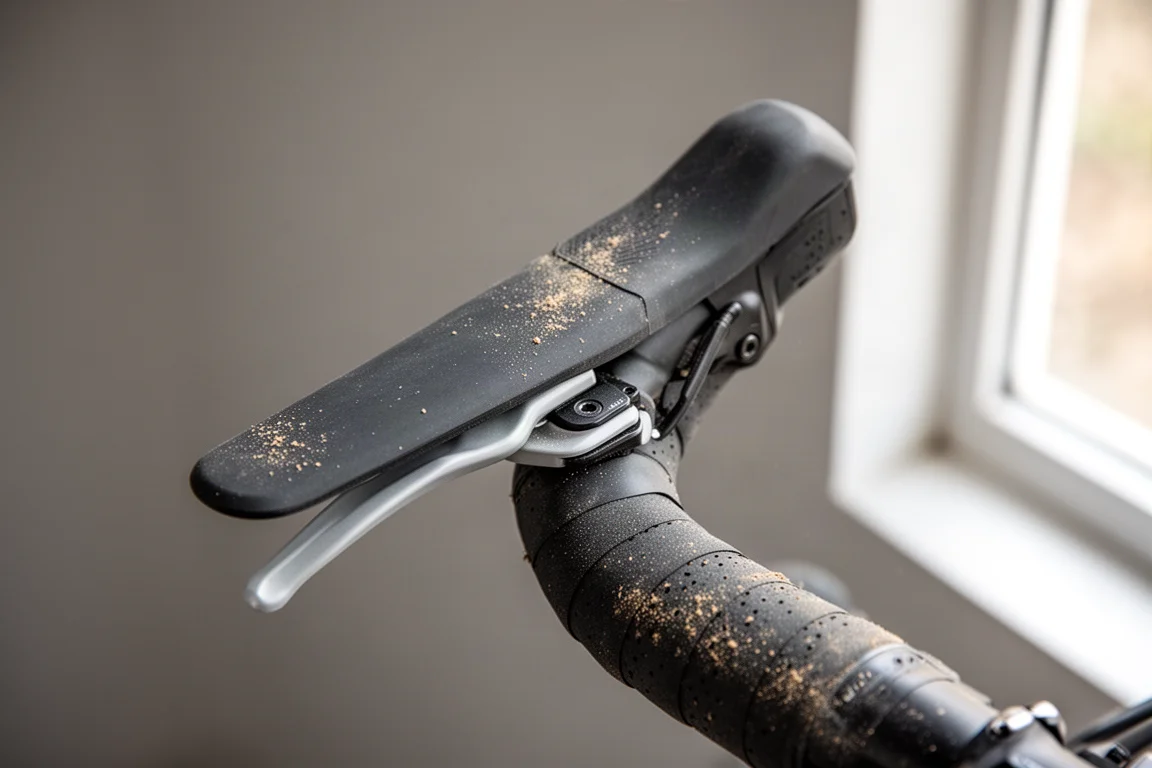
Off-road, on loose descents where rocks move under the wheels and grip is uncertain, that easier control on the hoods and levers adds confidence and a genuine sense of safety.
Things to Consider Before Buying
Compatibility is the biggest obstacle. The derailleur needs a frame with a UDH dropout, and it is not backwards compatible with frames that lack one. Many newly launched bikes now include that standard, but a large proportion of existing bikes do not. For anyone attached to a current frame, that can mean the groupset cannot be fitted without buying a new bike.
Price is the second consideration. This sits at the top of SRAM’s range, at a level where a complete bike is a realistic alternative, and complete bikes built around SRAM’s more affordable Apex AXS drivetrain cost a fraction of it. The value argument is difficult to make, even allowing that flagship technology always arrives expensive and tends to trickle down over time, exactly as Apex AXS has demonstrated.
Riders who want the widest possible climbing gear should also note that a 10-46 cassette does not match the range of a 10-52. And while the groupset works well on the road, including as an all-road setup with slick tyres, a dedicated road version of the platform is not part of the current lineup.
Buying Advice
This groupset makes the most sense for riders buying a new bike or frame that already uses the UDH standard, and who want the best shifting SRAM currently offers along with a derailleur far less likely to end a ride. For that buyer, the direct mount design, the improved hoods and the easier setup justify the attention they have received.

For everyone else, patience is reasonable. Riders with an existing frame should confirm the dropout standard before considering the upgrade at all, since that detail alone determines whether the purchase is even possible. Riders who are price-sensitive can expect the same design ideas to reach lower tiers over time, following the pattern set by Apex AXS.
A sensible way to judge it is to separate the two questions. Does the drivetrain work well? Clearly yes, and it works well across gravel and road use. Is it the right purchase today? Only if the frame is compatible and the budget is already committed to flagship components.
Conclusion
SRAM Red XPLR 13-speed is a genuine step forward in drivetrain design: sharper shifting, easier setup, more usable gear steps, excellent hoods, and a rear derailleur that survives impacts which would destroy a conventional one. The catch is that it demands a compatible frame and a premium budget, which places it firmly in early adopter territory rather than within reach of most riders today. For those with a suitable new frame and the budget to match, it delivers on its promises. For everyone else, it is a clear sign of where gravel drivetrains are heading rather than a purchase to make right now.
Product link
View more details for SRAM Red XPLR 13-Speed Groupset
This product is mentioned in the review. Check the specifications, options, and compatibility before buying.
View more details for SRAM Red XPLR 13-Speed GroupsetFurther reading
Related Reviews
Groupsets
Campagnolo Super Record 13-Speed Groupset Review: Iconic Shifting, Real Trade-Offs
An early look at Campagnolo's 13-speed wireless groupset, covering shift layout, ergonomics, braking performance, and what to weigh before buying.
Groupsets
L2 RX 2x12 Groupset Review: A £200 Cable-Operated 12-Speed Build Kit
A first look at the L2 RX 2x12 groupset bundle, covering shifter feel, derailleur quality, real component weights, and what to budget for.
Groupsets
L2 RX Hydraulic Group Set Review: Strong Brakes, Fragile First Impressions
A 12-speed hydraulic groupset with excellent braking and easy multi-gear shifting, held back by a snapped left lever and a fiddly reach adjustment.