Golf Launch Monitors
Square Golf Omni vs Uneekor EXR: A Head-to-Head Accuracy Test
We compare the budget-friendly Square Golf Omni against the premium Uneekor EXR to see if the Omni can deliver accurate launch monitor data.
Introduction
The launch monitor market has changed dramatically in recent years. Once dominated by devices costing thousands of dollars, the category now includes budget-friendly options that promise surprisingly accurate data. The Square Golf Omni is one of the newest entries in this space, priced at $1,599. But can it really compete with the accuracy of a premium unit like the Uneekor EXR, which carries an MSRP of $5,999?
To answer that question, we set up both launch monitors side by side in an indoor simulator bay and hit shots with an 8 iron, a 5 iron, and a driver. The goal was simple: compare the readings from both units in real time and see how close the Omni could get to the EXR, a device widely regarded as highly accurate.
The Contenders
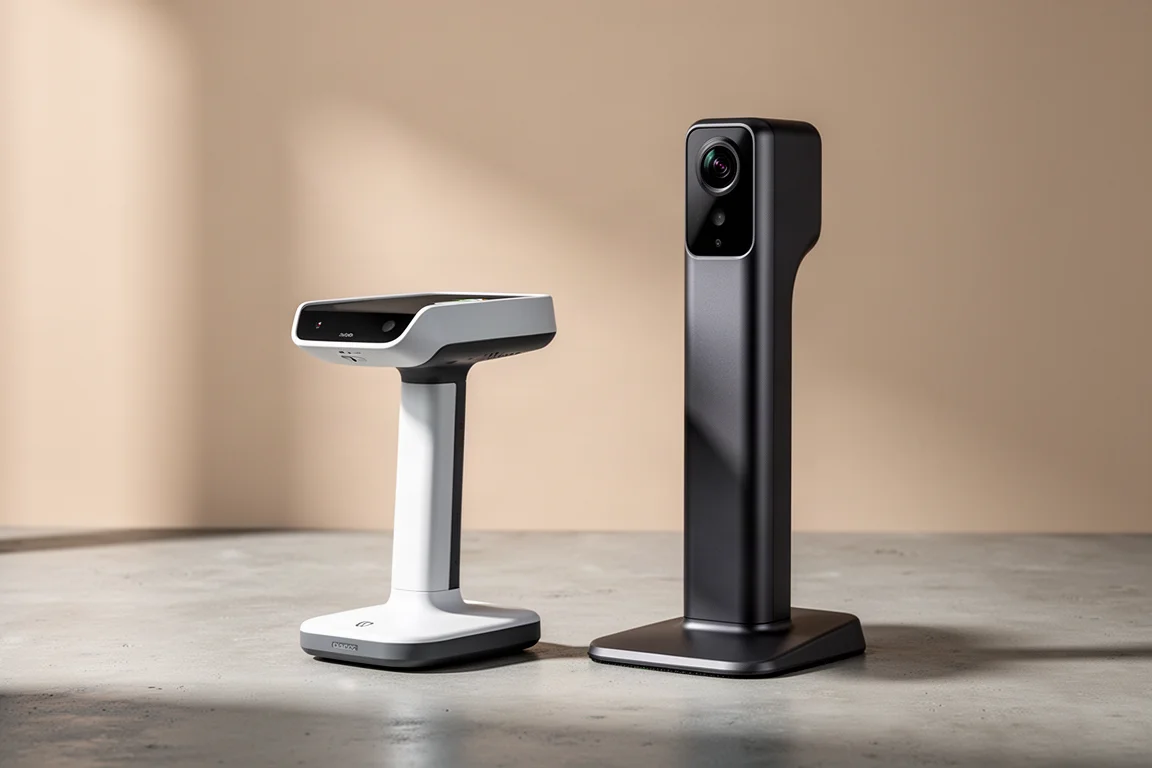
The Square Golf Omni is an overhead launch monitor that uses camera-based technology to track your shots. It requires small sensor stickers on the club face to capture club data, including club path and face angle. At $1,599, it sits at a very accessible price point for golfers who want detailed feedback without spending thousands.

The Uneekor EXR, by contrast, is a floor-standing launch monitor that reads shots without any club stickers. It captures club data directly from the club head, which is a significant convenience advantage. At $5,999 MSRP, it represents the premium end of the market and is the kind of unit you would expect to find in a high-end fitting studio or a serious home simulator setup.
Both units were set up simultaneously in the same hitting bay, allowing us to capture readings from each on every shot.
How the Test Was Set Up
For the test, we used an 8 iron, a 5 iron, and a driver. The Omni required sensor stickers on the club face: one circular sticker at the top middle of the face and a longer sticker wrapped around the hosel just above the ferrule. These stickers enable the Omni to read club path, face angle, and club speed.
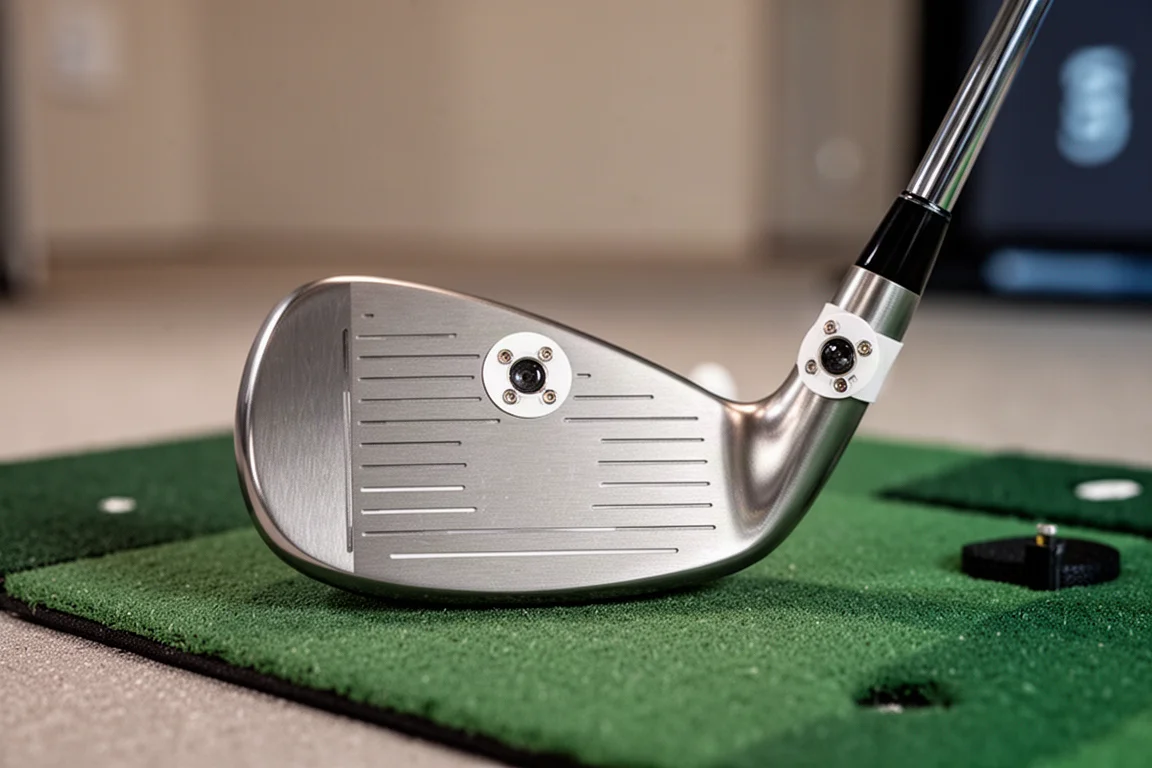
The EXR needed no stickers at all. It reads the club directly, which is one of its biggest selling points. With both units ready and displaying their respective screens, we began hitting shots and comparing the data in real time.
Eight Iron Results
The 8 iron testing produced remarkably consistent results between the two units. On the first shot, the EXR read 156.7 yards of carry while the Omni read 158.4 yards, a difference of under 2 yards. Spin numbers were nearly identical at 4,623 RPM on the EXR versus 4,613 RPM on the Omni. Club path readings were also close at 7.3 degrees versus 7.6 degrees.
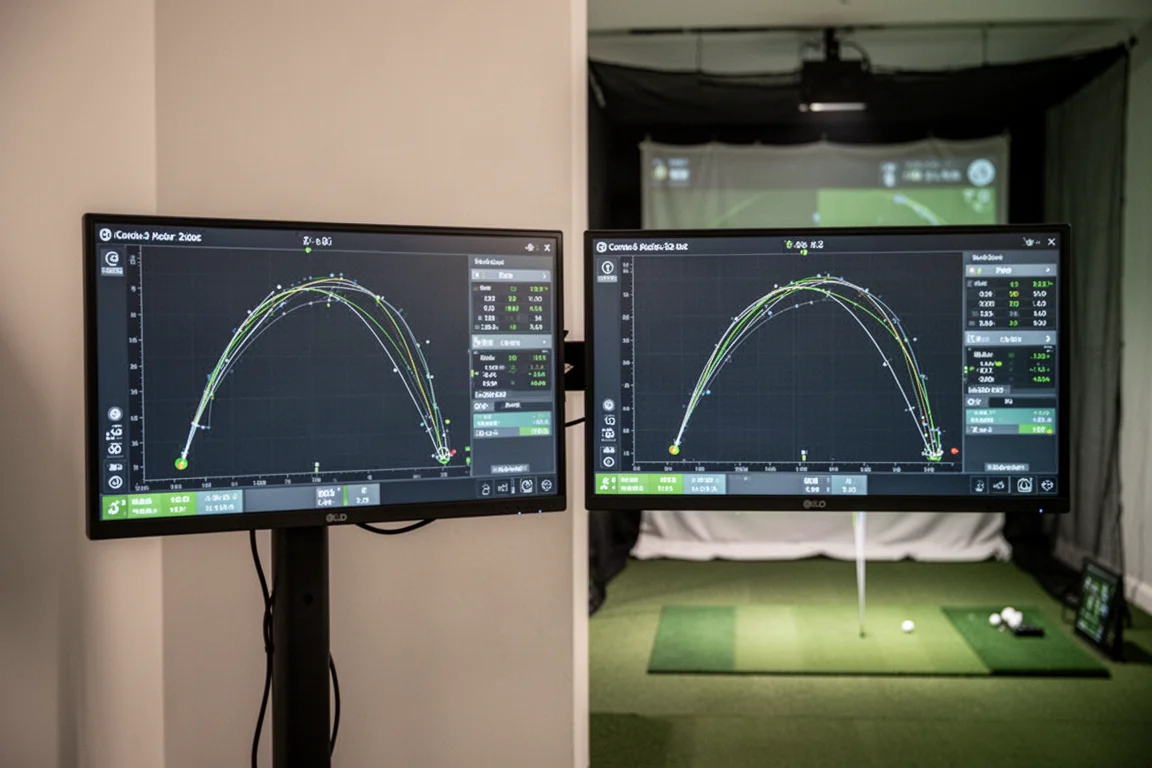
The second shot showed similar parity. Carry was 155 yards on the EXR and 157.5 yards on the Omni. Total distance aligned at 164 yards on both units. Backspin came in at 4,831 RPM on the EXR and 4,640 RPM on the Omni. Ball speed was within 1 mph at 109.4 mph versus 108.6 mph.
The third shot, a fade attempt, produced a carry of 144.9 yards on the EXR and 147.6 yards on the Omni. Spin read 5,702 RPM versus 5,937 RPM, a difference of just over 200 RPM. The fourth shot showed the largest spin disparity of the session at 4,473 RPM versus 4,714 RPM, but that is still under 250 RPM of difference.
Across all four 8 iron shots, the two units tracked each other closely on carry, spin, ball speed, and apex height. The Omni consistently read club speed slightly lower than the EXR, which in turn made its smash factor read slightly higher. But the ball flight metrics that matter most were impressively close.
Five Iron Results
Moving up to the 5 iron, the pattern continued. On the first shot, carry was 186.2 yards on the EXR and 184.5 yards on the Omni, a difference of under 2 yards. Total distance was 199.4 yards versus 197.8 yards. Spin read 3,116 RPM on the EXR and 3,206 RPM on the Omni, within 100 RPM of each other.
The second 5 iron shot showed a carry of 180.6 yards on the EXR and 180.3 yards on the Omni, nearly identical. Total distance was 193.7 yards versus 195.5 yards. Spin was 2,927 RPM versus 3,028 RPM. Club speed showed a larger gap at 81.3 mph on the EXR versus 85.9 mph on the Omni, but ball speed stayed close at 120.8 mph versus 119.5 mph.
The third 5 iron shot produced a carry of 178.7 yards on the EXR and 176.8 yards on the Omni. Spin aligned at 2,446 RPM versus 2,458 RPM. Side spin showed a bigger difference at 386 RPM versus 629 RPM, which explained a slightly stronger draw on the EXR’s trace.
The 5 iron results confirmed that the Omni maintains its accuracy even as club speed increases. The club speed readings remained consistently a little lower than the EXR, but the ball data stayed very close throughout.
Driver Results
The driver testing was the most demanding part of the session. On the first driver shot, club head speed read 95.4 mph on the Omni and 96.7 mph on the EXR. Ball speed was 137.9 mph versus 139.4 mph, within 2 mph. Spin read 1,730 RPM versus 1,512 RPM. Carry was 226.2 yards versus 229.2 yards, a 3-yard difference.
The second driver shot produced a notable event: the EXR misread the shot entirely, possibly due to the tee interfering with its camera view. The Omni, by contrast, captured a clean reading. This was the first misread we observed on either unit during the session.
The third driver shot showed a peak height difference, with the Omni reading 21.7 meters (about 63 feet) versus 58.8 feet on the EXR. Spin was close at 1,715 RPM versus 1,770 RPM, and smash factor matched at 147 on both units.

The fourth driver shot was a well-struck ball that the Omni misread, likely for the same tee-related reason. The fifth shot produced the largest carry gap of the session at 234 yards on the Omni versus 244 yards on the EXR. A final verification shot showed 237 yards of carry on the Omni versus 245 yards on the EXR.
The driver results showed slightly larger gaps at the top of the bag, particularly on carry distance. However, the ball speed readings stayed within 2 mph on nearly every shot, and spin numbers were consistently close.
Overall Buying Advice
The Square Golf Omni delivered impressively accurate data throughout this test. Across all three clubs, the ball speed, spin, and carry readings tracked the Uneekor EXR closely. The Omni’s club speed readings ran consistently a little lower than the EXR, which pushed its smash factor slightly higher, but the difference was not dramatic.
The Omni’s requirement for club stickers is worth noting. You will need to apply fresh stickers to each club you want detailed club data for, and the included pack may not cover a full set of clubs. The EXR’s sticker-free approach is more convenient, but it comes at a much higher price.
For golfers on a budget who want accurate launch monitor data, the Omni represents exceptional value at $1,599. It is not quite a perfect match for a $5,999 unit, but it is remarkably close for a fraction of the price.
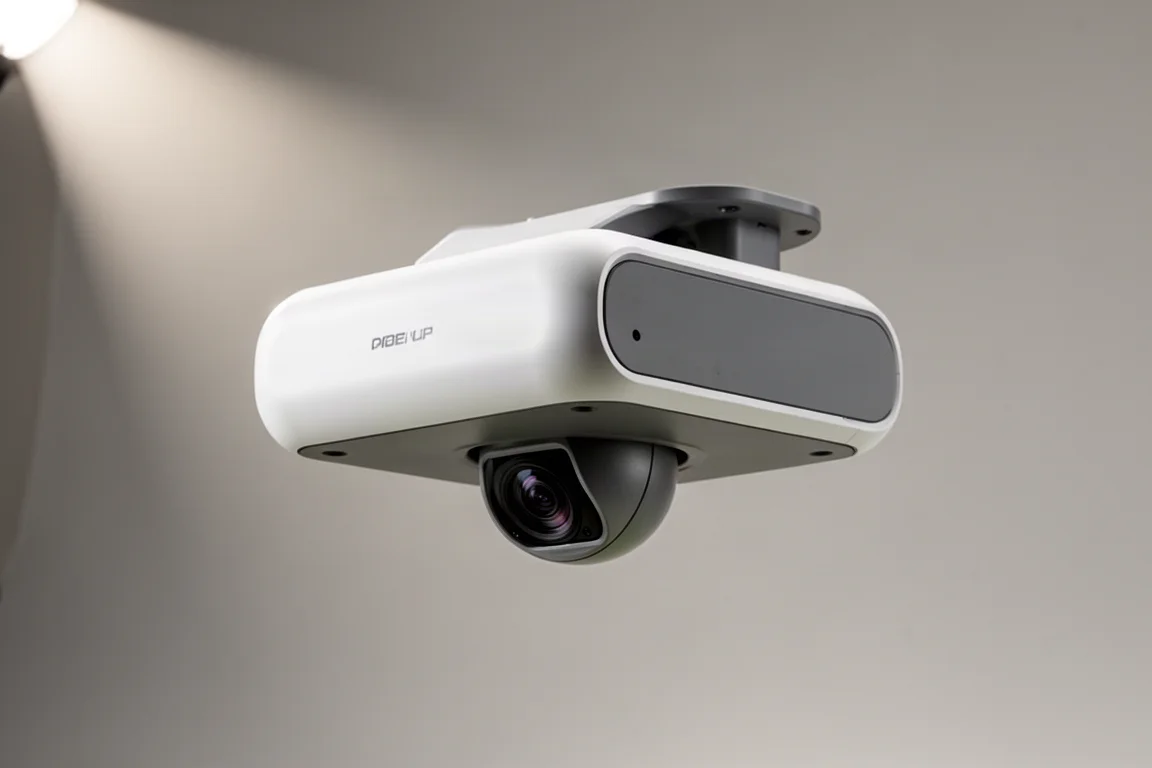
For golfers who want the convenience of sticker-free club data and are willing to pay for it, the Uneekor EXR remains a top-tier choice. Its accuracy is excellent, and the lack of stickers makes it easier to use day after day.

Conclusion
The Square Golf Omni proved that it can hang with a much more expensive launch monitor. Across 8 iron, 5 iron, and driver testing, the Omni delivered ball speed, spin, and carry numbers that were consistently close to the Uneekor EXR. The main differences appeared in club speed readings and occasional misreads at the top of the bag, likely caused by tee interference.
At $1,599, the Omni offers remarkable accuracy for the price. It is not a perfect replacement for a premium unit, but for most golfers, the data it provides will be more than sufficient for improving their game.
Further reading
Related Reviews

Golf Equipment
Astral Golf Putter Review: A Customizable Putting System Worth Your Attention
Astral Golf's adjustable hosel system and interchangeable faces let you build a putter that matches your stroke. Here's how it performs on the course.

Golf Equipment
Ben Hogan BHM03 Putter Review: A Striking Design That Performs
The Ben Hogan BHM03 combines multi-material construction, a refined look, and a reasonable price. Here is how it performed during a real round.

Golf Technology
BlueTees Rainmaker Launch Monitor Review: A Promising First Effort
A week of testing the BlueTees Rainmaker launch monitor reveals a beautiful interface, subscription-free pricing, and some accuracy concerns worth knowing about.