Power Tools
Spec 3 Review: A Driver, Tapping Tool and Handheld Drill Press in One
The Spec 3 combines three tools in one compact body, with an electronic depth system, USB-C batteries and a built-in tapping mode that genuinely works.
Introduction
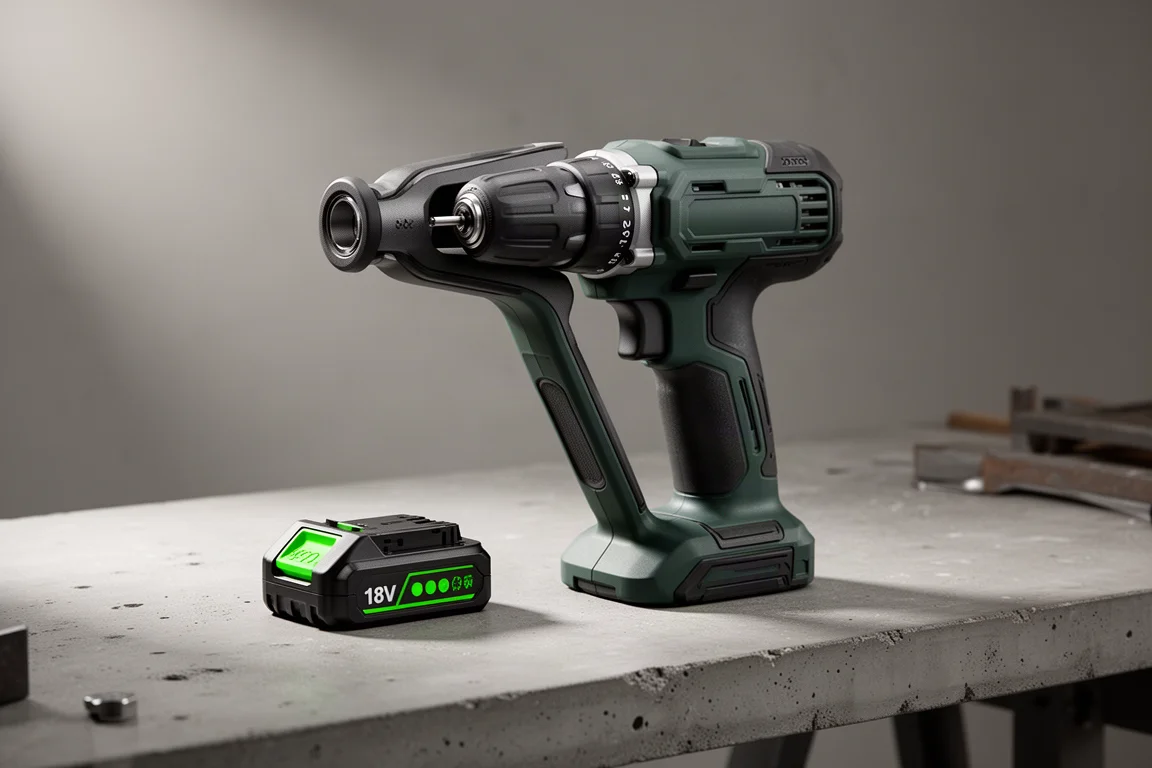
Some tools try to do everything and end up doing nothing well. The Spec 3 makes a better case for itself: it is a driver, a tapping tool and a handheld drill press all in one, and the way the three modes are implemented feels genuinely considered rather than gimmicky. Its front guide lets you pull the tool back for extended reach, the display offers a proper depth system, and the batteries charge over USB-C from practically anything with a port. For home workshops and DIY users, that combination is hard to ignore.
What’s in the Box
The kit arrives in a case with the drill itself, two 18V 2Ah batteries, a side handle, a USB-C lead and a charging adapter. Both batteries have a USB-C port for charging, so you can top them up on the go, even from a television or a phone charger in the workshop. Each pack has green LED charge indicators, though they are not very bright.
The bundle also includes a bit kit with driver bits, nut setters, a countersink bit, drill bits, tapping bits and bits for glass and ceramic. One caveat from hands-on use: the kit case arrived with a couple of bits snapped out and did not shut properly, so the case construction may not be the most robust part of the package.
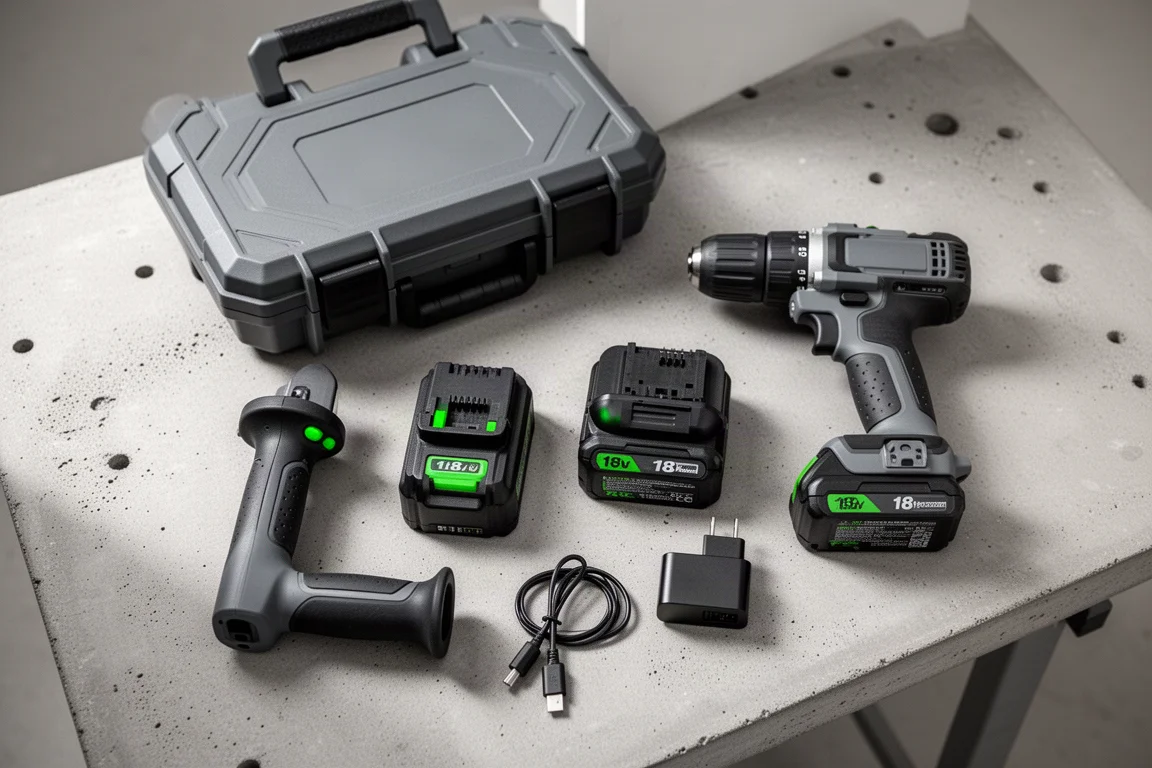
The drill press attachment is the most interesting accessory, and the drill itself looks distinctly space age, the kind of design that would not look out of place on the deck of a science fiction starship.
Drilling Steel: The First Real Test
To put the Spec 3 through a proper workout, the test was a 10mm (3/8 inch) piece of Japanese steel: drilling a 5mm hole, then using the 6mm tap with the tapping feature, all without oil.
A common frustration with guided drilling is the bit sticking out past the guide. Here it is not a problem: the front pulls back, and if that is not enough, an extended front section can be locked into place. Starting at maximum speed, the tool pushed through the steel cleanly and stopped once it went through, without burning out the drill bit. Holding it dead in place and simply pushing down on the handle made the job noticeably easier and quicker than a standard drill would allow.

Tapping Mode: The Standout Feature
Tapping usually means rocking a tool forward and back by hand. The Spec 3 automates it. Switch into tap mode, pick a speed (half worked well, around setting 10), and the tool ramps up and drives the tap on its own. It cut a complete thread through the steel without oil, and while the resulting tap ran slightly off-axis, using the guide would have kept it dead straight.
The real payoff came next: with a driver bit installed and the drill on its lowest setting, a bolt was driven straight into the freshly tapped hole. Drill, tap and drive, all with one tool, and all of it went better than expected. Anyone who has coveted a dedicated tapping drill may no longer need one.
Speed Settings and Modes
The display offers way more speed increments than most drills. Drive mode has 20 settings for screws, tap mode shows a slightly different screen with the same 20 speeds, and drill mode is similar. When the front guide is locked on, the screen gains a depth setting, which is where the tool gets clever.
Electronic Depth Control and the Drill Press Mode
With the front attached, you press the button at the bottom to zero the readout at your starting point, then drill until the screen hits your target depth and release the trigger. In testing, an 8mm brad point bit drilled an exact 10mm hole in timber with almost no setup at all.
Push past the mechanical limit and the tool cuts out with a beep at around 21.9mm of handle travel. With the front configured differently and a longer bit, the maximum reach measured about 41.6mm, effectively a 40mm depth limit. Remove the front and you are limited only by your drill bit, as with any normal drill. The chuck takes up to 10mm bits, which matches many small drills, but it will not accept anything larger.
Flip the lever and the front turns the Spec 3 into a plunge drill, used like a drill press. Because the mechanism has rubbery TPE over-molding, it grips the work surface nicely: no centre punch, no pre-marked holes, and no drill bit skating across metal. Line it up, push down, pull the trigger. Drilling perpendicular to a wall is just as simple, since you are always at 90 degrees. For pipes and tubes, custom 3D-printed front pieces with curved profiles are an intriguing possibility.
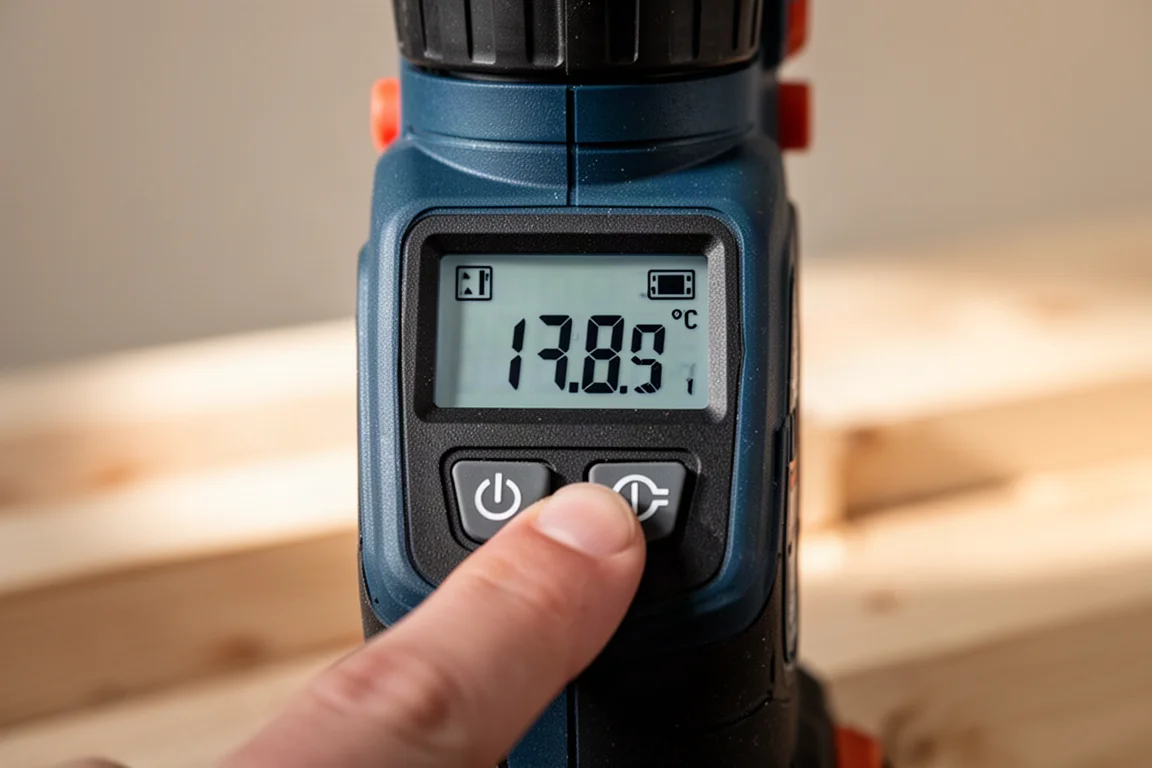
A couple of practical notes: the built-in work light points low rather than up at the bit, which is not ideal in the dark, though it is perfectly visible to the eye. The trigger is fully variable speed. The whole tool, with side handle and battery, weighs only 1.6kg, so it is easy to keep steady for long sessions.
Electronic Clutch in Practice
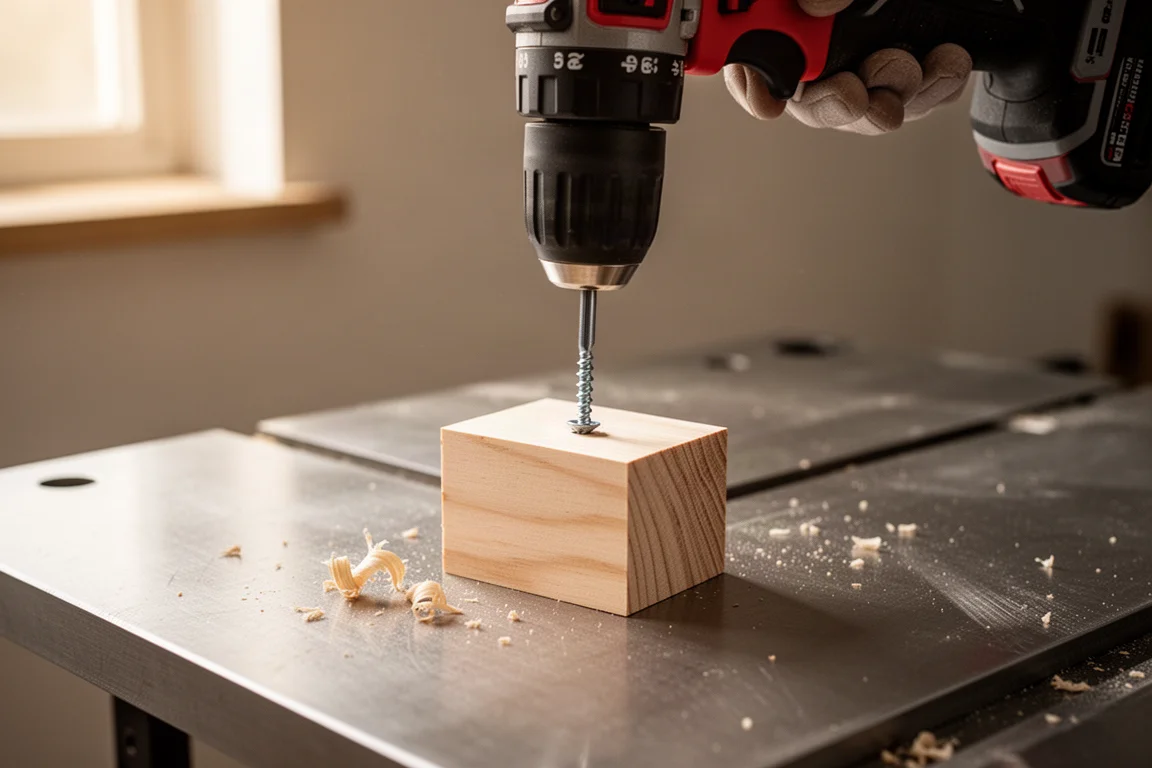
The clutch is fully electronic and works with any standard hex shank driver bit. The chuck is a standard three-jaw, one-handed design that tightens easily. At maximum drive setting, the tool had plenty of grunt to sink a screw clean through a piece of timber. Dialled down to setting 1, it stopped the screw short of flush, and setting 5 drove it perfectly just below the surface, repeatably. The full 20-step range earns its keep when you move on to bigger fasteners.
Durability and Who It’s For
This is not a job site tool. The body is ABS-style plastic rather than tool-grade nylon, and there are plenty of places for debris to get jammed in the front mechanism. It is best suited to home workshops and DIY users, especially those who look after their tools. Tossing it into a toolbox risks damaging the front piece or the mechanism.
Buying Advice
The Spec 3 is still new and was not yet widely available at the time of testing, so pricing and availability are still settling. If you regularly drill, tap and drive in a home workshop and value accurate depth control without a separate drill press, the combination here is genuinely unique. Check current availability and pricing through the product links before committing.
Conclusion
The Spec 3 earns its three-in-one label. The automatic tapping mode is the standout and could replace a dedicated tapping tool for many hobbyists, while the electronic depth system, grippy drill press front and USB-C batteries make it a versatile workshop companion. Just treat it gently: it rewards careful owners rather than rough job site handling.
Product link
View more details for Spec 3 Drill
This product is mentioned in the review. Check the specifications, options, and compatibility before buying.
View more details for Spec 3 DrillFurther reading
Related Reviews
Power Tools
Best 1-Inch Pistol Impact Wrenches: Three Heavy-Duty Options Compared
We compare three 1-inch pistol impact wrenches, from a budget-friendly Harbor Freight model to a premium Caterpillar unit, to help you choose the right one.
Power Tools
Best 3/4-Inch Impact Wrenches 2026: Five Contenders Compared
We compare five 3/4-inch impact wrenches across price and performance, from a budget Amazon option to Snap-on's most powerful model yet.
Power Tools
Best Budget Cordless Tools 2026: Walmart Finds That Punch Above Their Price
We tested five cordless tools from Walmart, including a high-torque impact wrench that trades blows with Milwaukee and a $35 duster that outperforms its price class.