Guitar Pedals
Spaceman Cadet Series Review: Six Pedals Worth Exploring
A hands-on look at the Spaceman Cadet series, covering fuzz, phaser, harmonic tremolo, and overdrive options for guitarists.

Introduction
Spaceman Effects sent over their entire Cadet series, and it is an impressive lineup. Six pedals arrived, each packed into a little foil bag, which sets a fun tone before you even plug anything in. The series covers fuzz, modulation, and overdrive, giving guitarists a broad toolkit to explore.
This review breaks the six pedals into two groups: the fuzz and modulation side with the Sputnik 3, Explorer, and Delta 2, and the overdrive side with the Saturn 6, Polaris, and Apollo 7B. Each pedal brings its own character and a surprising amount of control depth for the price point.
The Cadet Series at a Glance
The Cadet series represents Spaceman’s more traditionally affordable line of pedals. While the exact build details are not fully confirmed, the series appears to use surface mount construction, which helps keep costs down compared to the brand’s other offerings.
What stands out immediately is the control layout. These are not simple one-knob pedals. Each unit offers multiple knobs, toggle switches, and even expression inputs on several models. The manuals describe unique features like drift modes, formant filters, and resonant tone shaping, so there is plenty to dig into.
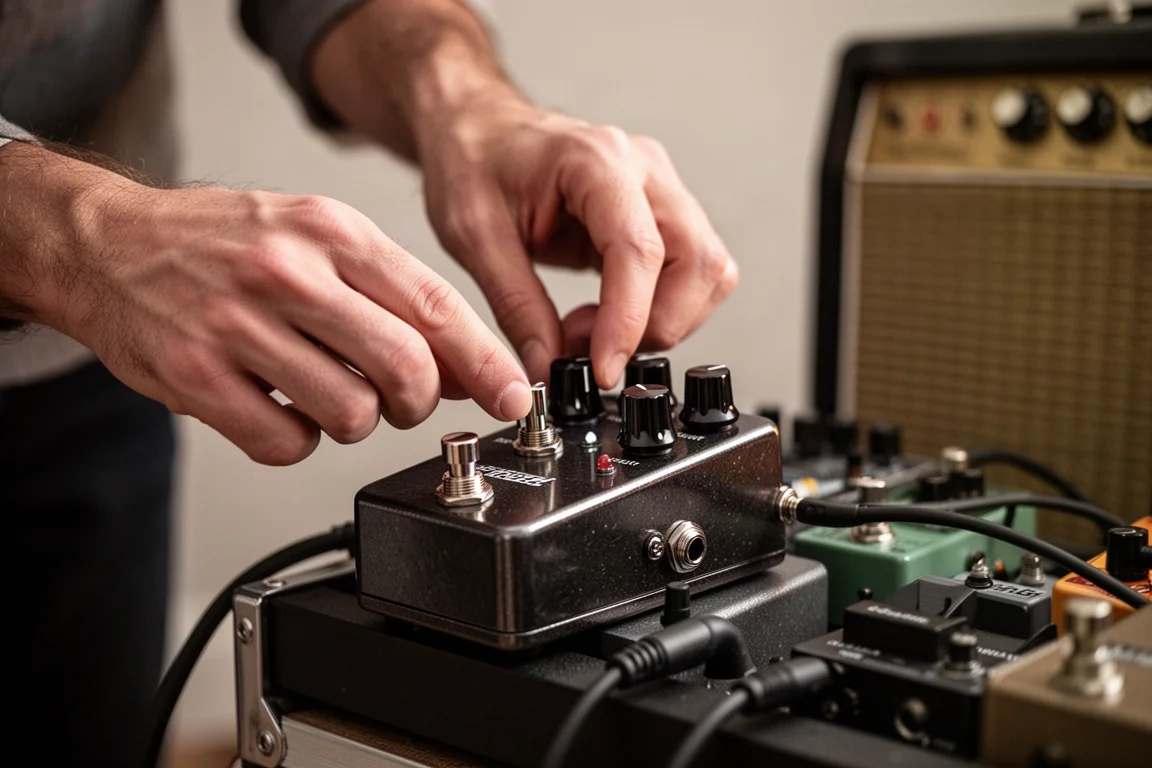
The packaging alone, with those foil bags, hints at the playful yet serious approach Spaceman takes with this series. These pedals are designed for players who enjoy experimenting and dialing in specific sounds rather than just stomping on a preset.
Spaceman Sputnik 3: Germanium Fuzz
The Sputnik 3 is a germanium fuzz with an unusual set of controls. Alongside the expected signal and range knobs, it features scan, calibrate, and a filter toggle. The manual explains that signal controls volume, range handles gain, and calibrate acts as a unique tone filter that also affects gain.
The filter switch offers two frequency curve options for the calibrate control. In practice, the calibrate knob produces dramatic shifts in tone, moving from bright and squishy to dark and back again as you sweep through its range. There is genuine circuit magic happening here.
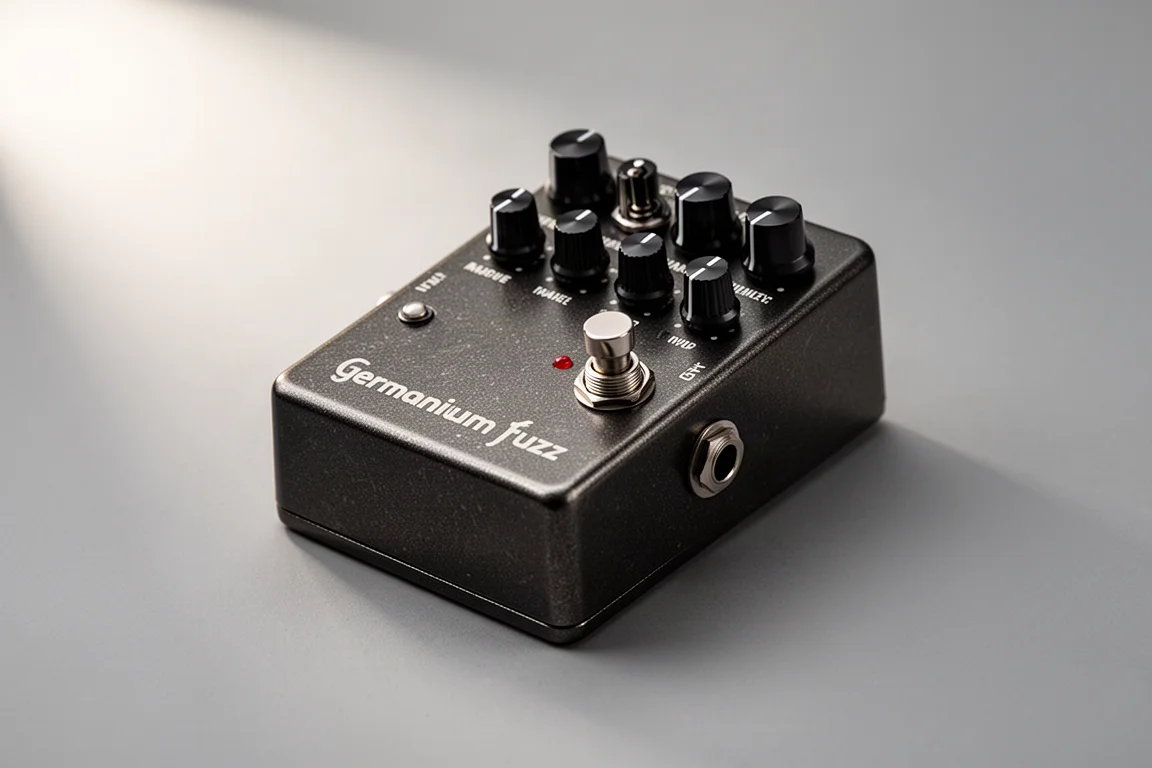
The drift switch is where things get wild. Engaging it introduces a level of corruption controlled by the scan knob, allowing you to dial in self-oscillation and broken octave sounds. It is the kind of feature that lets you go from a fairly standard fuzz to something completely unhinged with a flick of a switch.
Spaceman Explorer: Six-Stage Phaser
The Explorer is a six-stage phaser with a thoughtful control set: rate, range, volume, mix, rez, and a rotary knob for selecting wave shapes. Having a volume control on a phaser is a rare and welcome addition, and the mix knob lets you blend in dry signal for subtler textures.
The range control is particularly clever. It governs how much of the low frequency spectrum gets phased. At low settings, only higher frequencies are affected, which is useful for dialing in vibe and rotary speaker tones. Turning it up stretches the phasing into deeper lows for slow, immersive sweeps.
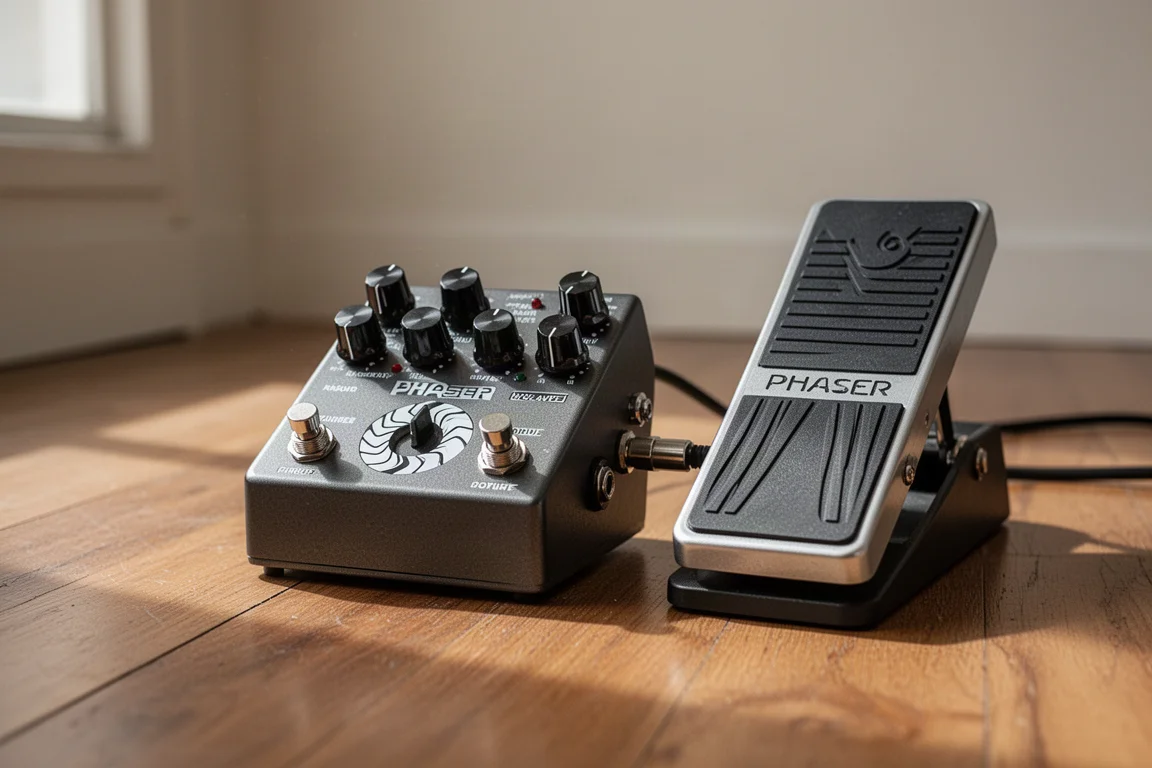
The rez knob introduces resonant feedback, and the wave shape selector offers sine, triangle, ramp up, ramp down, and square options. The expression input allows you to sweep through the phase range with a pedal, which opens up expressive possibilities. The ramp down setting even produces a hiccup-like effect reminiscent of a tape delay.
Spaceman Delta 2: Harmonic Tremolo
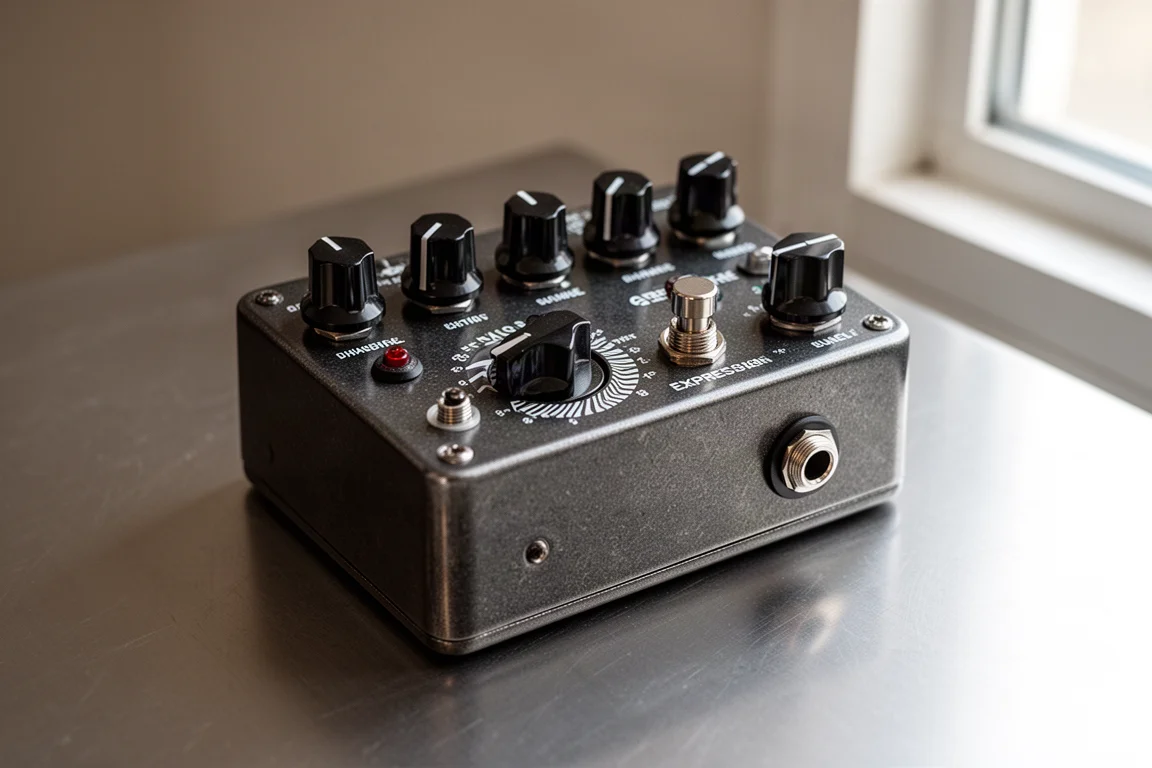
The Delta 2 is a feature-packed optical harmonic tremolo in a compact form factor. Instead of simply cutting volume in and out, harmonic tremolo shifts between high and low EQ, creating a warping effect that changes your tone rather than just ducking it.
The voice switch lets you choose whether the modulation affects only the highs, only the lows, or both. This is a distinctive feature that is not commonly found on harmonic tremolos. The lag control dials in 0 to 180 degrees of phase offset between the high and low LFOs, which shifts the sound from traditional tremolo territory into more complex, shifting textures.
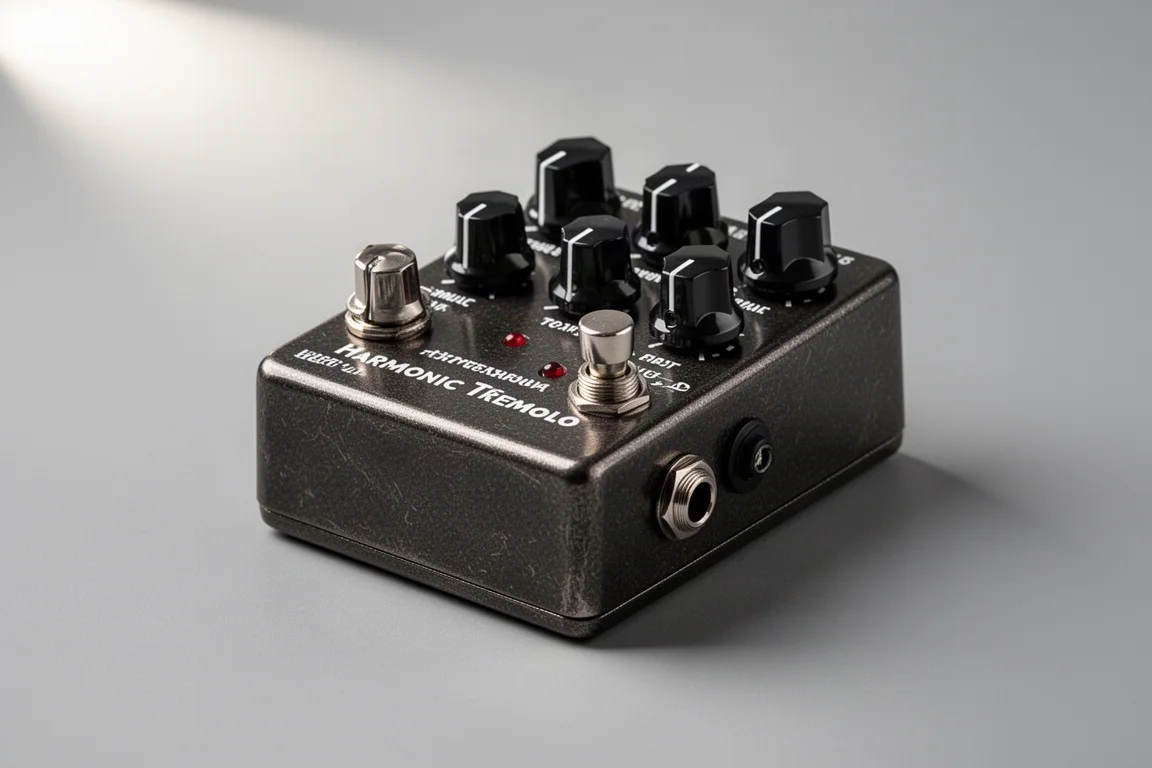
The rez knob introduces a formant vocal quality to the filter, adding another layer of character. An expression input lets you sweep the rate or depth, selectable via an internal dip switch. This pedal rewards patience and experimentation, offering a wide range of sounds from subtle movement to dramatic, moody shifts.
Spaceman Saturn 6: Harmonic Booster
The Saturn 6 combines a harmonically enhanced boost with a low gain overdrive. The boost control offers up to 18 dB of harmonically rich gain, and introducing the drive control can achieve up to 35 dB of total amplification while mixing in complex harmonic distortion.
This is a loud pedal. Pushing it into a tube amp produces significant volume and drives the amp into compression and distortion. It is the kind of pedal that makes you feel the sound in the room, and it is best appreciated when you can really open up the volume.
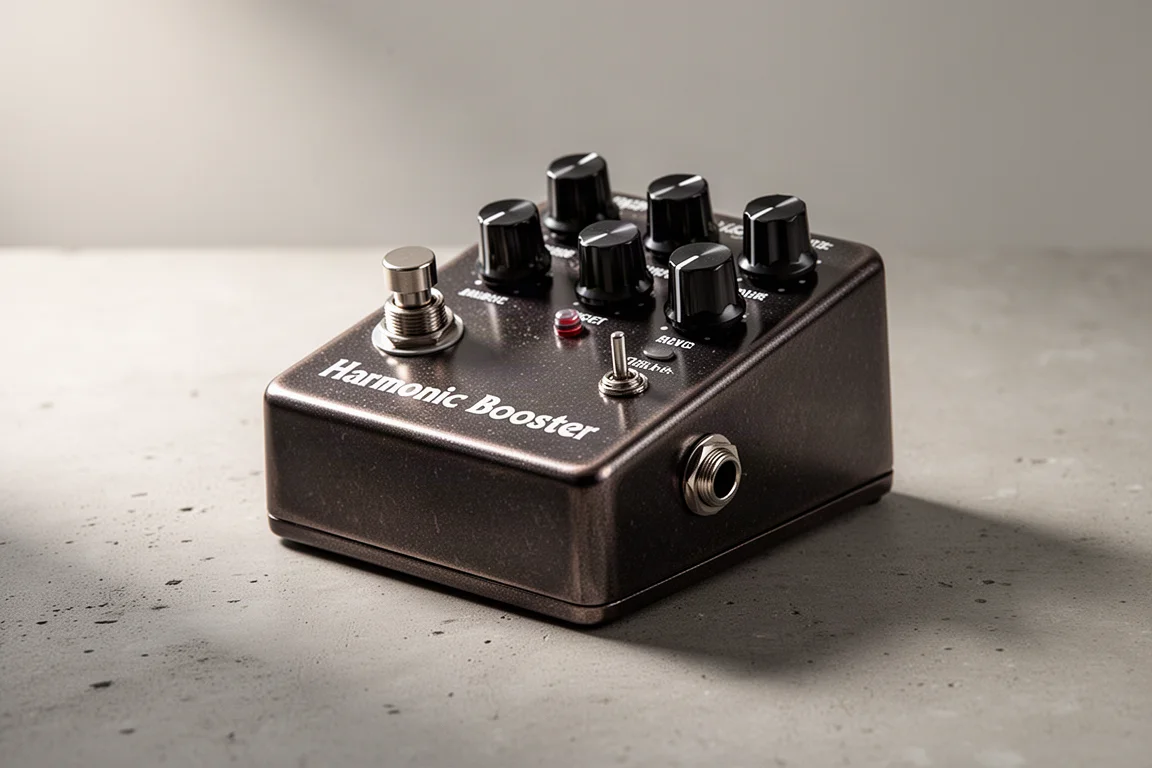
For players who want to push their amp harder without swapping out their entire rig, the Saturn 6 delivers a powerful, harmonically rich boost that adds depth and complexity to the tone.
Spaceman Apollo 7B: Overdrive
The Apollo 7B is the preamp and overdrive section from the Voyager tremolo series, packaged as a standalone pedal. It offers level, tone, and gain controls along with a three-way toggle for different soft clipping options.
The Voyager setting uses semi-symmetrical LED clipping with a blend of odd and even order harmonics, offering up to 26 dB of boost. The alt setting uses asymmetrical diode clipping with increased even order harmonics for smooth breakup, maxing out at 22 dB. The middle boost mode uses light fat clipping with a precision op amp, providing odd order harmonic sparkle and up to 32 dB of boost.
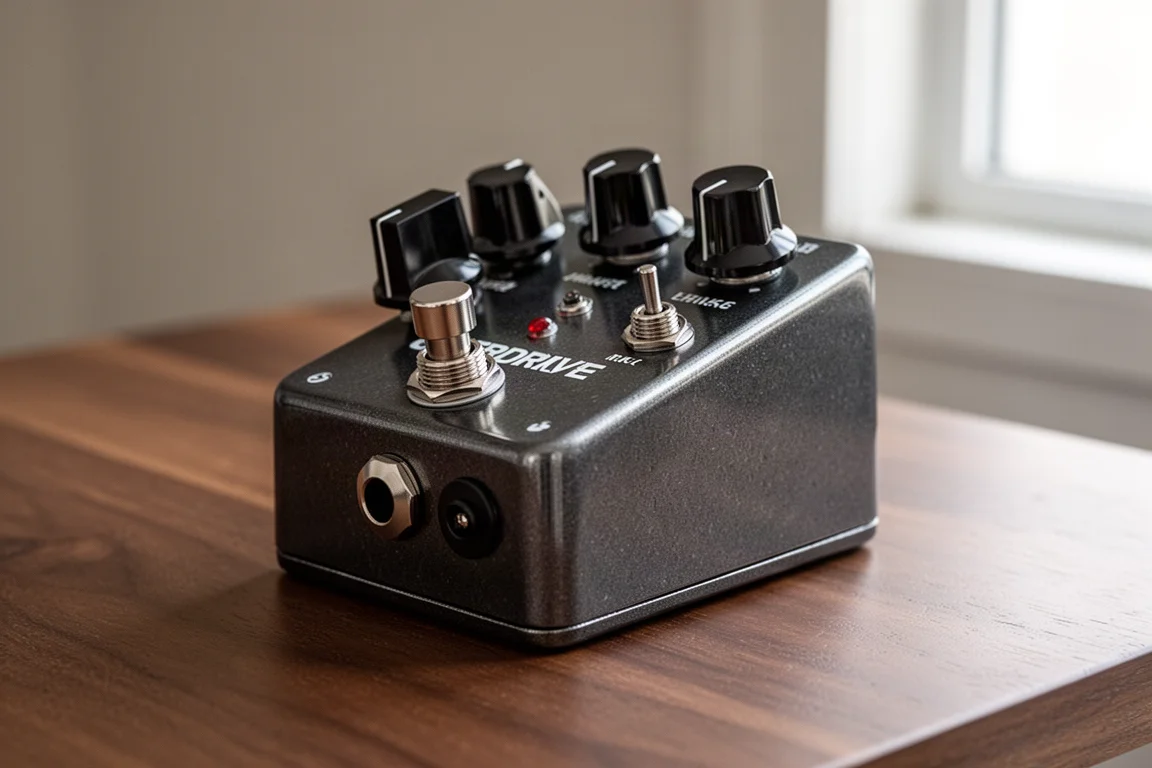
Each setting has its own character. The alt mode feels balanced and natural, like the way electric guitar is supposed to sound, while the Voyager setting offers a nice growl. The boost mode is louder and less compressed, making it useful for pushing an amp further.
Spaceman Polaris: Resonant Overdrive
The Polaris is a smooth medium gain overdrive with incredibly flexible tone sculpting capabilities. It features level, initial, filter, and drive controls, along with a three-way bass switch and a three-way depth switch.
The bass toggle offers a tasteful bass cut on the left, full pass in the center, and a gentle bass boost on the right. The depth switch selects between three filter options: a standard single pole low pass filter, a two-pole filter for deeper sculpting, and a two-pole resonant filter for the most extreme shaping.
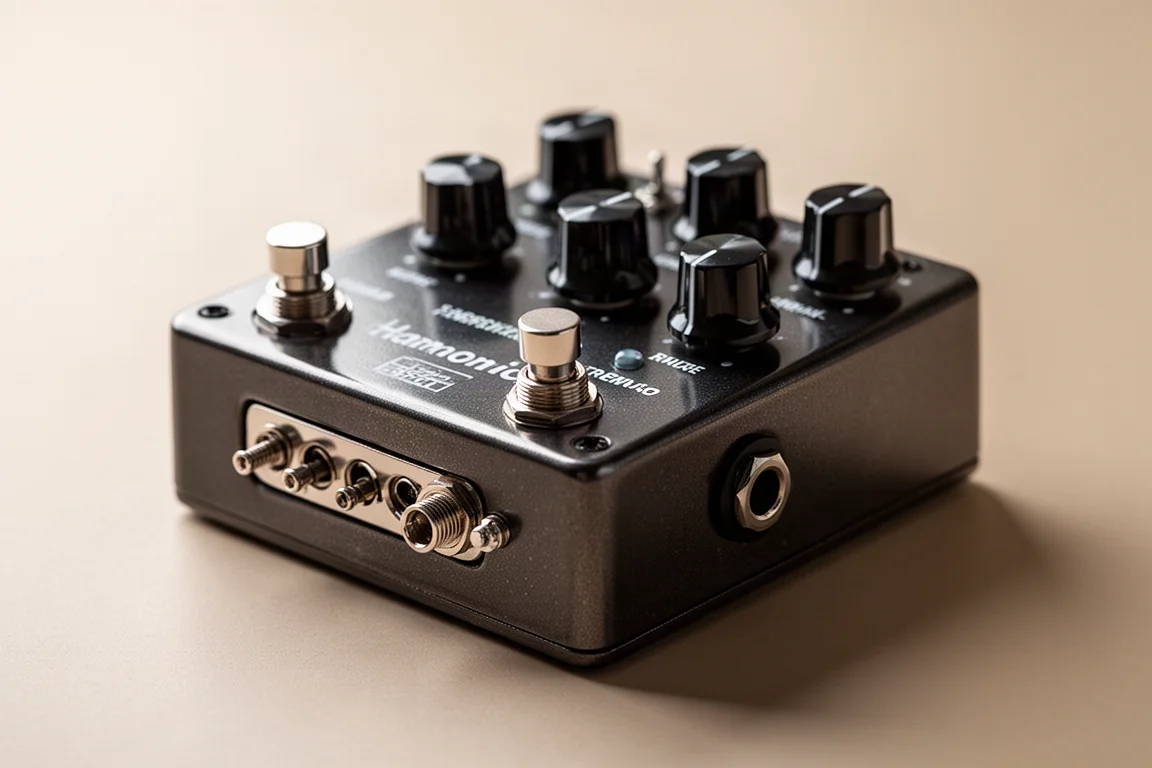
The initial control blends in your raw pre-filter overdrive tone, allowing you to reintroduce the dry signal to balance more extreme filter settings. This creates a unique approach to tone control on an overdrive, and the expression jack lets you sweep through the filter range with a pedal.
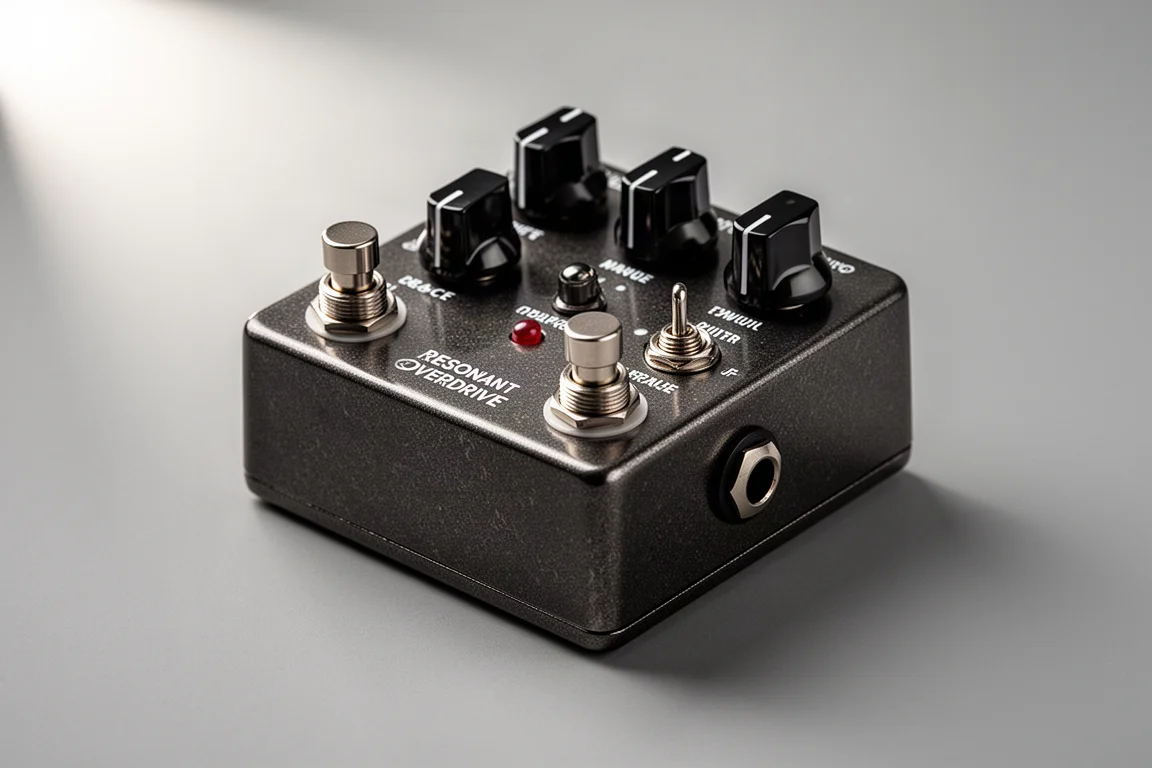
This pedal feels like a sound designer’s tool. You can dial in everything from a light, bluesy drive to a more aggressive, filtered tone. The filter control alone offers a huge range of variation, making it easy to spend hours finding exact sounds.
Overall Buying Advice
The Spaceman Cadet series offers a lot of value for guitarists who enjoy deep control and unique features. The Sputnik 3 fuzz stands out for its drift mode and oscillating sounds, while the Explorer phaser impresses with its range control and expression capabilities.
The Delta 2 harmonic tremolo is feature-packed and rewarding to explore, and the Saturn 6 provides serious boost power. The Apollo 7B offers versatile clipping options, and the Polaris is a standout overdrive with its resonant filter and expression control.
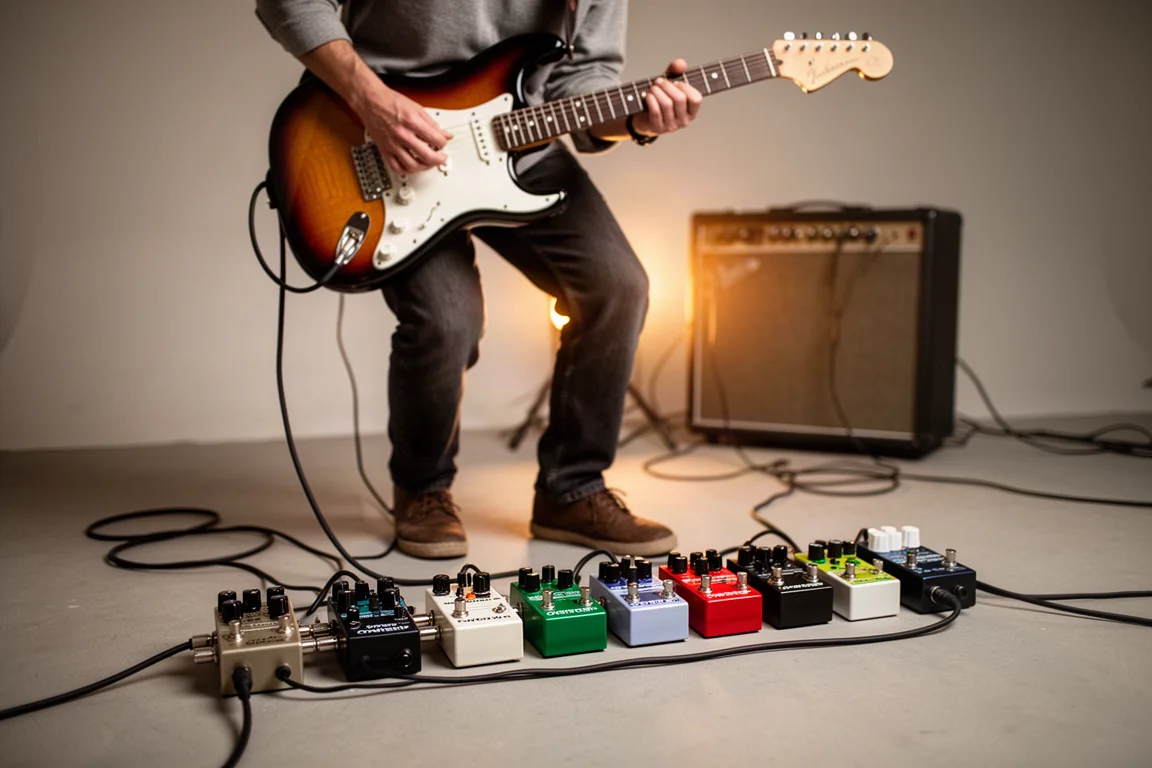
If you are looking for a single pedal to start with, the Polaris is a strong choice for its versatility. The Explorer is also excellent if you want expressive modulation. For fuzz enthusiasts, the Sputnik 3 offers sounds you will not find elsewhere.
Conclusion
The Spaceman Cadet series is a great lineup of pedals. Each one brings something unique to the table, and the level of control depth is impressive for the price point. Whether you are after fuzz, modulation, or overdrive, there is something here worth exploring.
These pedals reward time and experimentation. The manuals describe features that take a while to fully understand, but the journey is part of the fun. For guitarists who like to dig into their gear and find exact sounds, the Cadet series is well worth considering.
Further reading
Related Reviews

Guitar Pedals
Best Fuzz Builder Pedals 2026: Five Versatile Fuzz Pedals Worth Exploring
Five fuzz pedals that go beyond simple gain and tone controls, offering deep EQ, clipping modes, voltage control, and more for building your own sound.

Guitar Pedals
Bi-Tron C B Light Review: A Compact Chorus and Vibrato Pedal with Serious Depth
The Bi-Tron C B Light packs chorus, vibrato, modulation modes, filter modes, expression control, MIDI, and 16 preset banks into a compact pedal.

Guitar Pedals
Catalinbread Proto Club 6 Review: A Unique Chorus and Phaser Combo
The Catalinbread Proto Club 6 blends a low-frequency phaser with a high-frequency chorus, offering a distinctive modulation pedal with powerful EQ shaping.