Cooking Techniques
Sous Vide Speed Cooking: How to Cook Four Times Faster
Discover how to dramatically reduce sous vide cooking times using temperature spiking and precise thermometer monitoring, turning slow precision cooking into a practical weeknight option.
Introduction
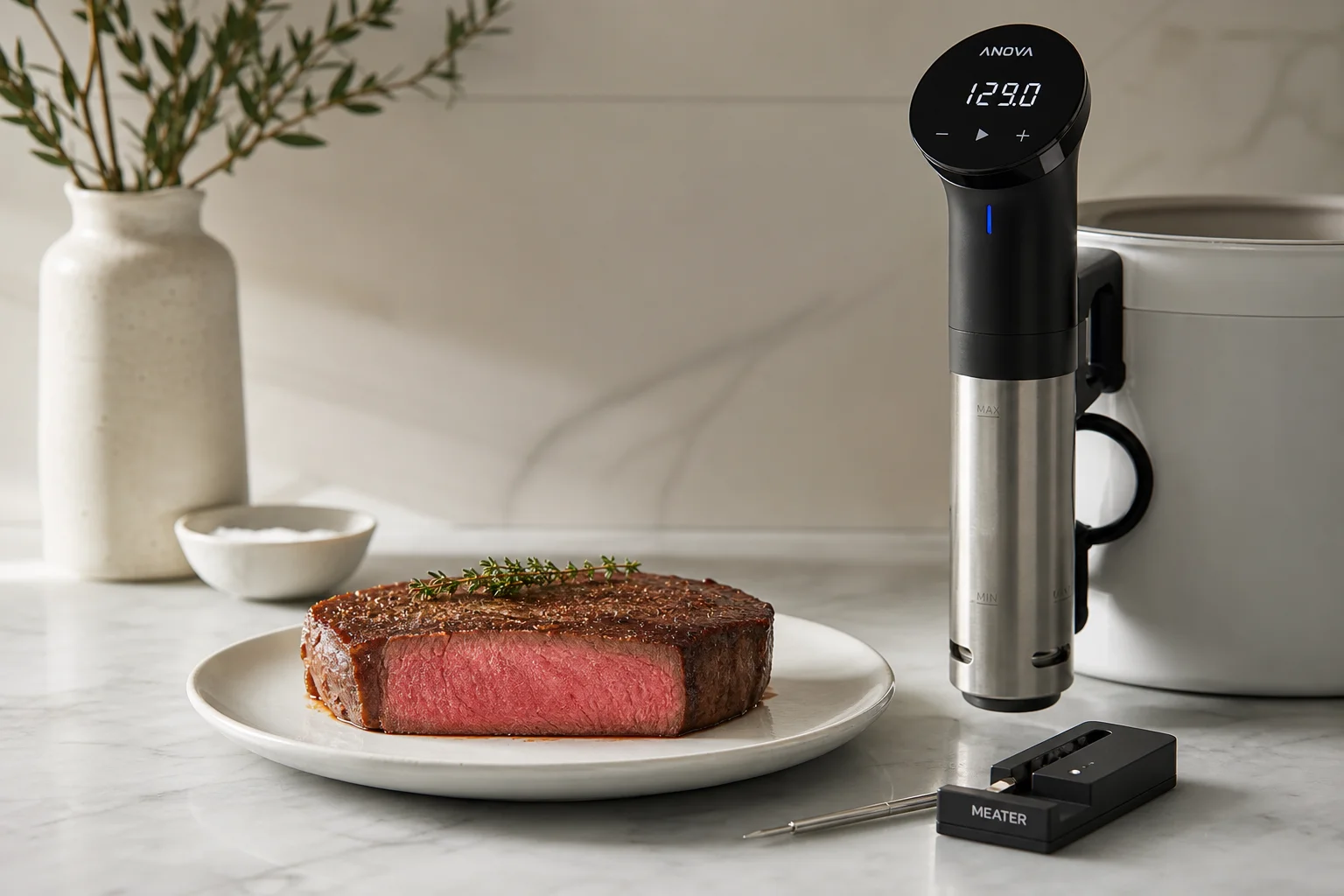
Sous vide has earned its reputation for precision and consistency, but the method carries a significant drawback: it is slow. A typical steak can take over two hours to reach the desired doneness. However, sous vide does not have to be slow. By understanding the physics of heat transfer and applying a simple technique, it is possible to cook tender cuts of meat and seafood up to four times faster while maintaining the precision that makes sous vide valuable.
Why Conventional Sous Vide Is Slow
Conventional sous vide works by setting the water bath to the exact temperature you want the food to reach, then waiting for the food to equilibrate to that temperature. Since the food cannot get hotter than the water, it cannot overcook in the traditional sense. This safety margin is the method’s greatest strength, but it comes at a cost.
Heat flows into food based on the temperature difference between the food and the water. As the food approaches the water temperature, this heat flow slows dramatically. For a 1.5-inch thick steak, the core can take more than two hours to reach the bath temperature. The final few degrees of heating account for up to 60 percent of the total cooking time.
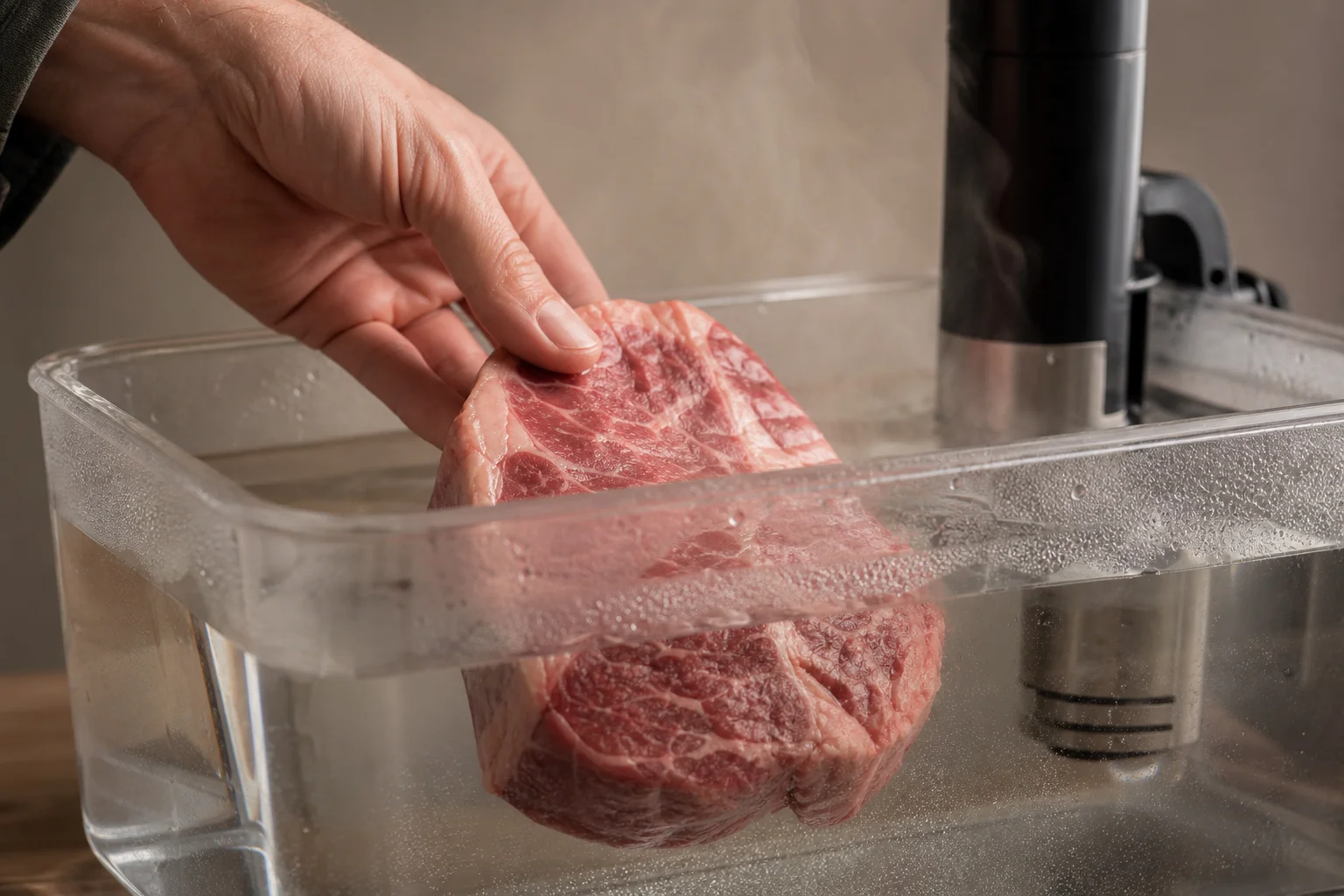
This is far slower than conventional cooking methods like pan roasting or grilling, where the temperature difference between the cooking surface and the food is much greater, allowing heat to flow in quickly. The trade-off is that conventional methods require precise timing and careful attention to avoid overcooking, whereas sous vide forgives timing errors.
The Temperature Spiking Principle
The key to faster sous vide cooking is understanding what happens at the surface of the food. When you raise the water bath temperature above your target doneness, the surface of the food does get hotter than the water initially. However, this does not cause overcooking because the cooler core of the food continuously draws heat away from the surface, keeping the surface temperature lower than the surrounding water.
This is similar to how your body cools a hot bath: as you enter, your cooler skin lowers the temperature of the water against it, keeping your skin from overheating immediately. Eventually, your skin warms up enough to stop cooling the water, and you begin to overheat. That is when it is time to get out.
In the restaurant context, the same principle applies. By raising the bath temperature a few degrees and then lowering it partway through cooking, you can dramatically shorten the heating time without overcooking the food, as long as you time the temperature reduction correctly.
The Joule Turbo Approach: Algorithmic Precision
The most sophisticated method uses advanced mathematics to automate the temperature spiking process. The Joule Turbo sous vide circulator uses a complex algorithm developed over nearly a decade to calculate the optimal temperature spike and the precise moment to reduce the bath temperature.
To use Joule Turbo, you provide the app with information about what you are cooking: the food type, its thickness, and its weight. As cooking begins, the circulator gathers additional data about the water temperature and power input, then runs hundreds of simulations to determine the fastest cooking path without overcooking.
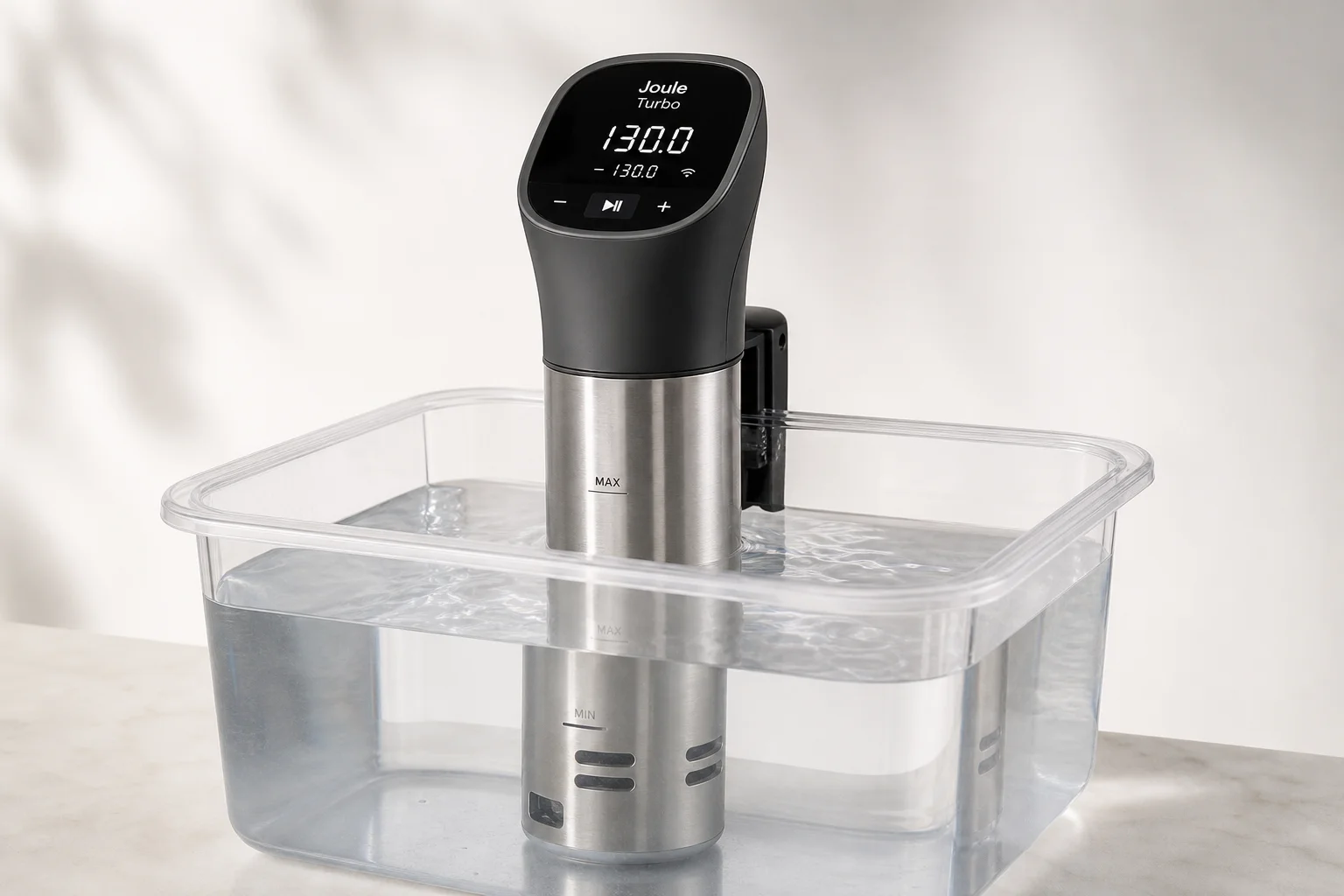
The results are dramatic. A 1.5-inch thick steak that would normally take nearly 120 minutes to reach medium-rare doneness can be ready in approximately 53 minutes using Joule Turbo. The trade-off is that you must measure and input your food dimensions, which some cooks may find fiddly when preparing a quick weeknight meal.
The Thermometer Approach: Universal and Faster
If you prefer a more hands-on method that works with any sous vide circulator, you can achieve even faster results by monitoring the food temperature directly with a wireless thermometer. This approach is simpler to understand and does not require inputting food dimensions.
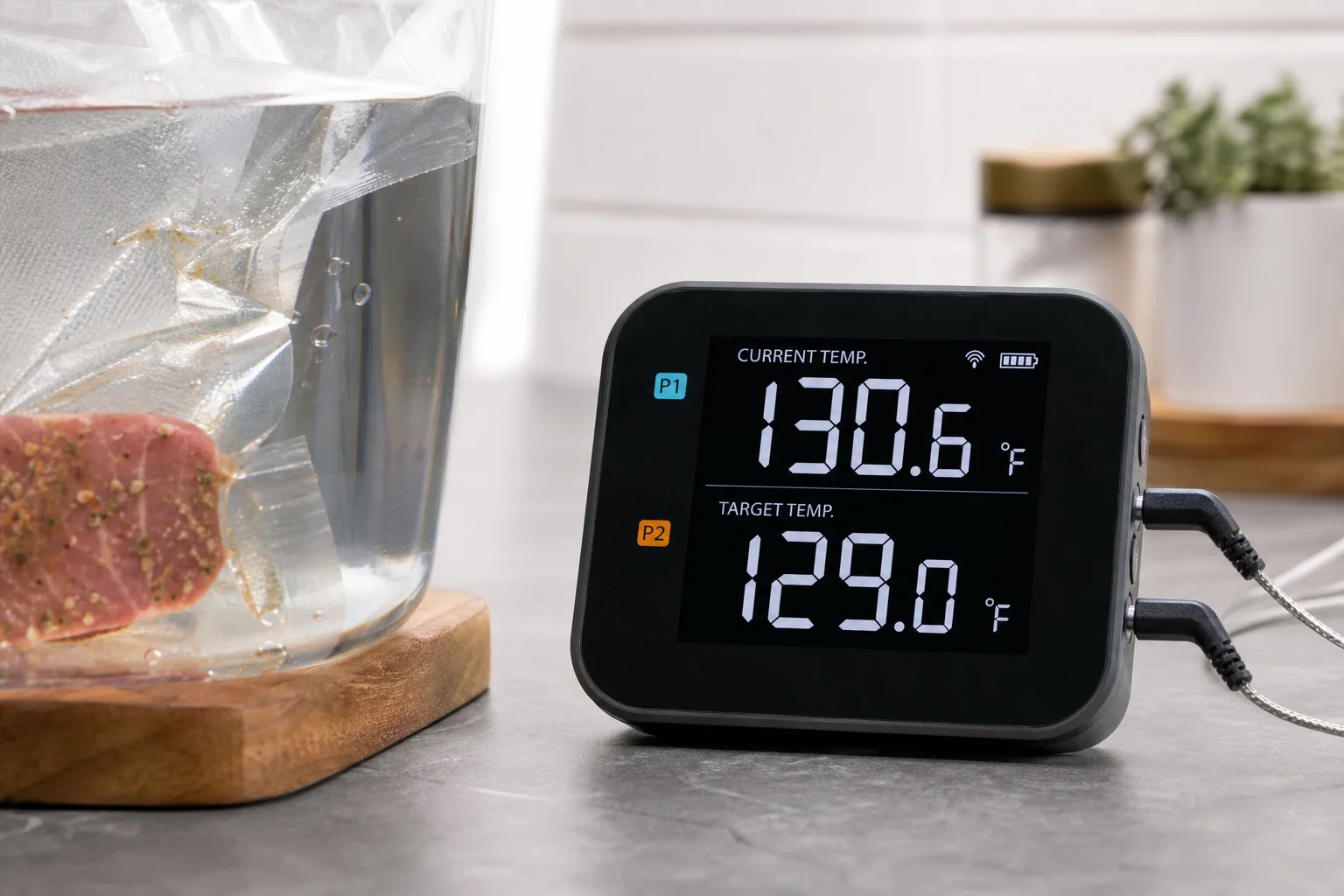
Start by setting your water bath 20 degrees Fahrenheit hotter than your target doneness. For a steak you want at 130 degrees, set the bath to 150 degrees and submerge the food. As the food cooks, periodically check the surface temperature with your thermometer. You want the surface to reach about 5 degrees above your target doneness.
This might seem counterintuitive, but measuring just a few millimeters below the surface reveals that the interior is still well below your target temperature. The surface can afford to be slightly hotter because it will be seared afterward anyway, and searing will bring the surface to much higher temperatures.
Measuring Surface and Core Temperature
The critical challenge with temperature spiking is knowing when to lower the bath temperature and when the core has finished cooking. A wireless thermometer with multiple sensors makes this straightforward.
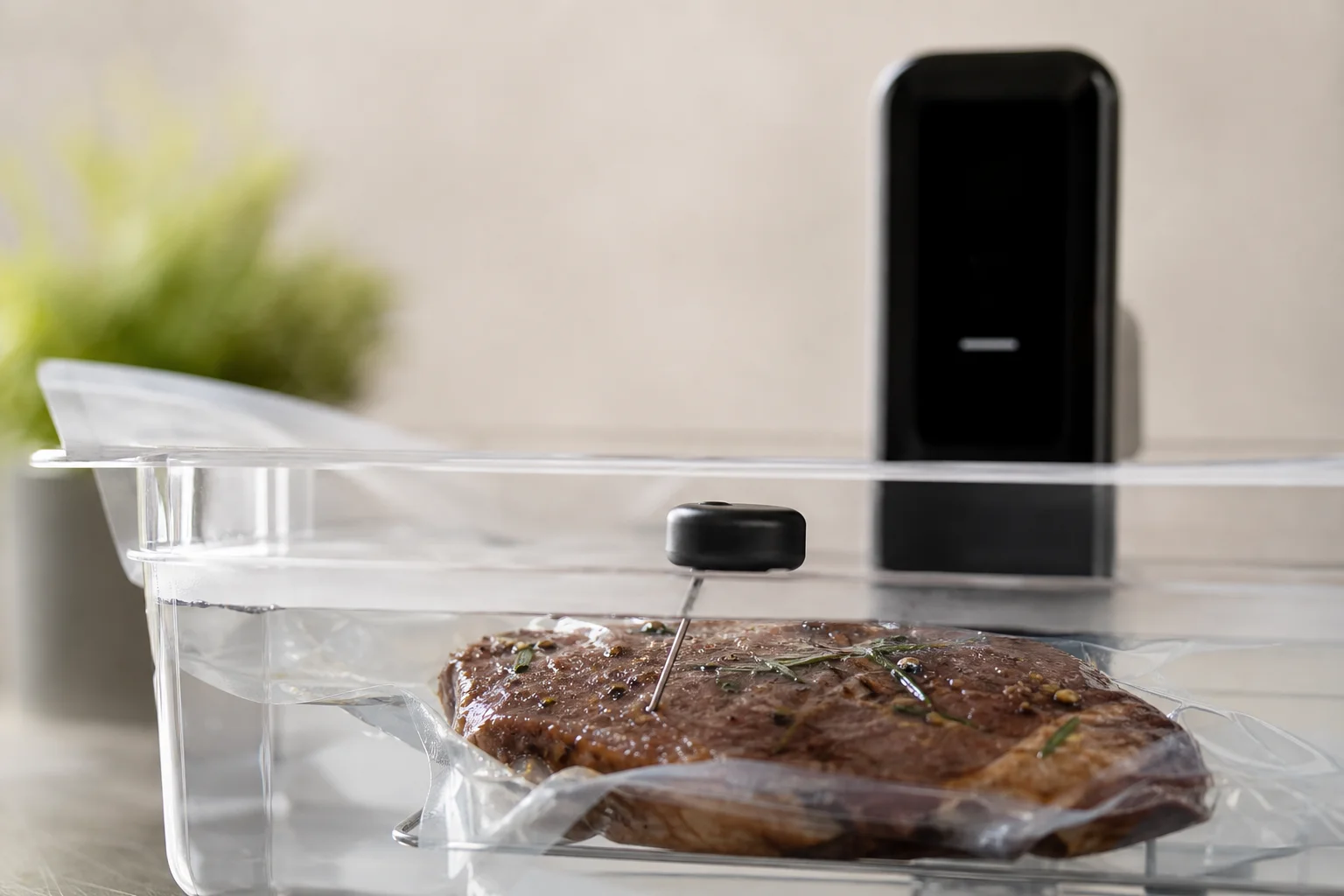
Once the surface reaches your target temperature plus 5 degrees, lower the bath temperature by a couple of degrees above your target doneness and add ice to prevent overshooting. Then monitor the core temperature periodically by probing the center of the food. With practice, you will develop a sense of timing, especially if you cook the same foods regularly.
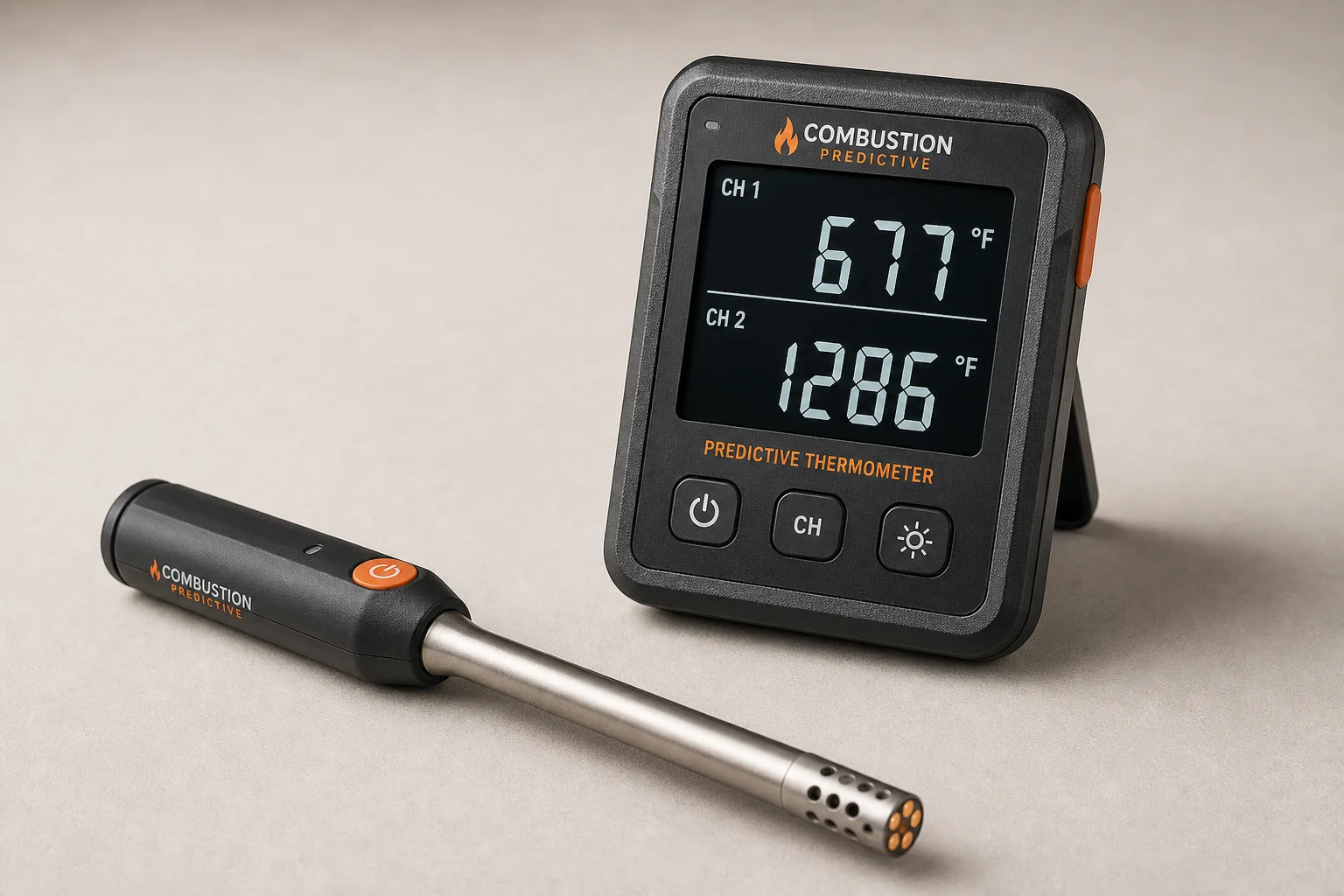
The Combustion Predictive Thermometer is particularly well-suited to this technique. Its eight temperature sensors automatically measure both the core and surface temperatures simultaneously, and its wireless connectivity allows you to monitor both readings from your phone or a display unit. The sealed design means you can leave the probe in the food throughout cooking without concern.
Results: Speed Without Compromise
Using the thermometer approach with temperature spiking, a 1.5-inch thick steak can be ready in less than 30 minutes, compared to 120 minutes with conventional sous vide. This is twice as fast as the algorithmic approach and four times faster than traditional sous vide cooking.
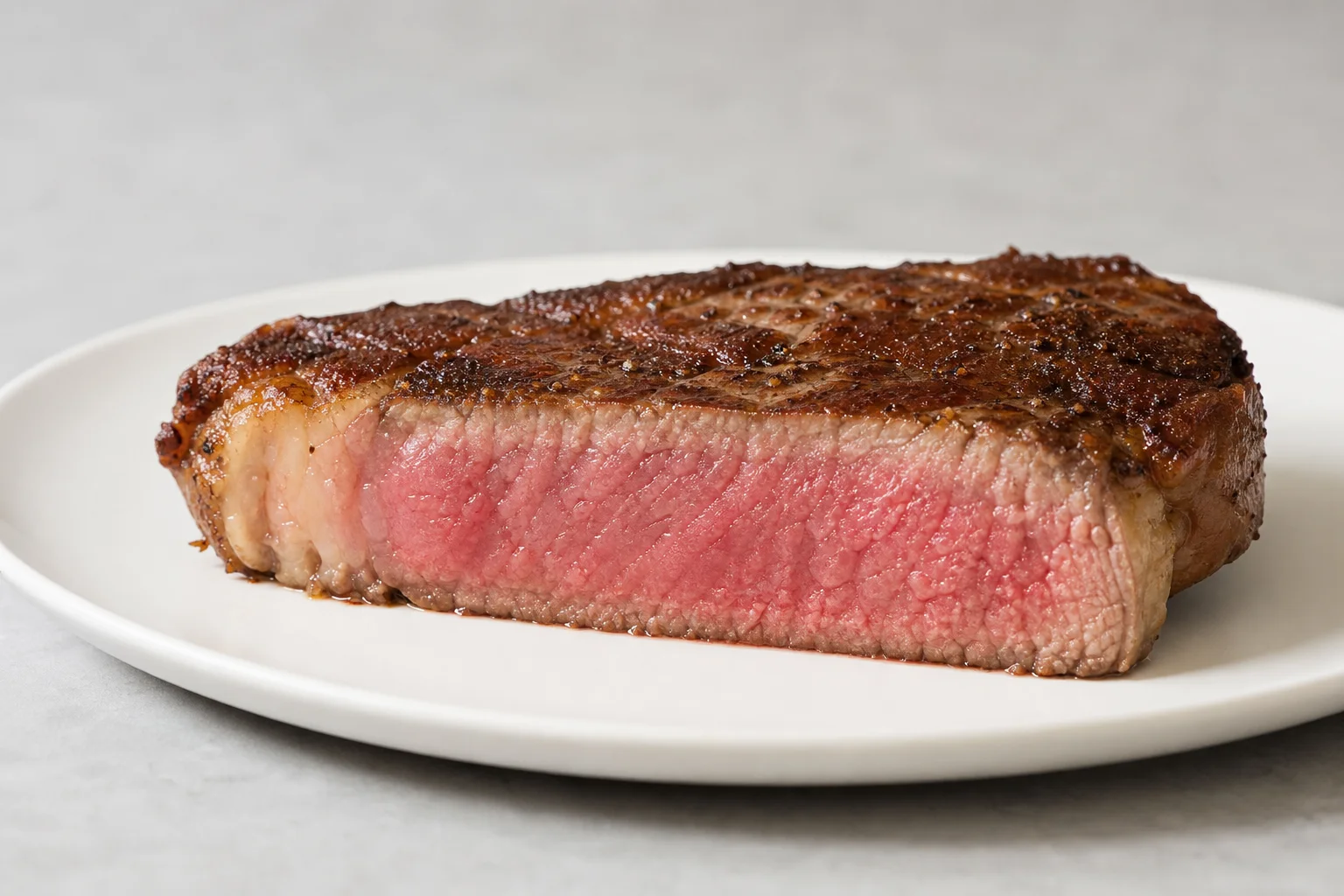
The finished steak looks and tastes excellent. The interior remains perfectly pink and tender, with minimal overcooking beneath the surface, roughly equivalent to what searing would cause anyway. The technique is less passive than conventional sous vide, requiring you to monitor temperatures and adjust the bath partway through cooking, but the speed gain makes sous vide practical for weeknight dinners rather than a weekend project.
Conclusion
Sous vide speed cooking transforms the method from a slow precision technique into a practical option for quick meals. Whether you choose the algorithmic precision of Joule Turbo or the hands-on thermometer approach, you can cut cooking times dramatically while maintaining the tender, evenly cooked results that make sous vide valuable. For tender cuts of meat and seafood, this technique delivers restaurant-quality results in a fraction of the conventional time.