Camping Stoves
Soto WindMaster vs MSR PocketRocket Deluxe: Two Regulated Canister Stoves Compared
A practical comparison of two regulated backpacking canister stoves, covering boil times, weight, pot support stability, igniter reliability, and how each one behaves as a fuel canister runs low.
Introduction
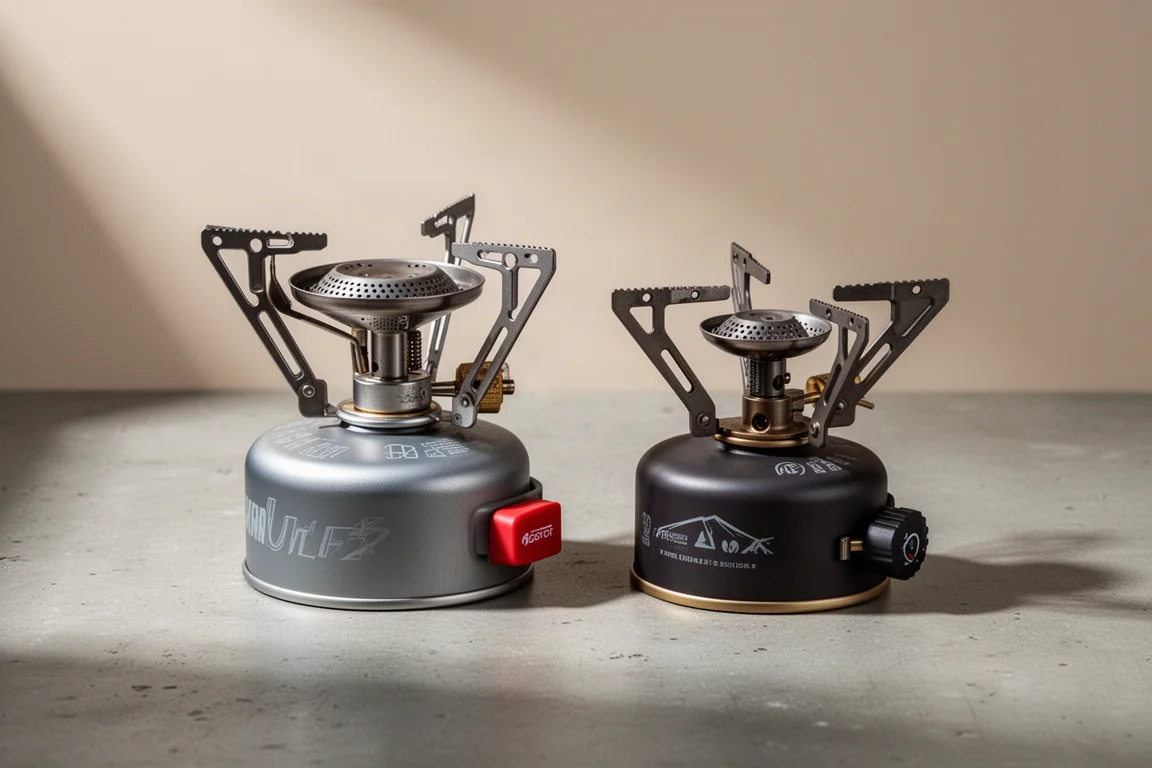
Two regulated canister stoves, both with built-in igniters, both with flame adjusters, both small enough to disappear into a pack. The Soto WindMaster and the MSR PocketRocket Deluxe look like siblings on a spec sheet, and in most ways they behave like siblings on the trail. The differences that matter are practical ones: how quickly each stove brings water to a rolling boil, how wide and stable the pot supports feel, how reliably the igniter fires, and how each burner behaves as a canister empties.
The headline numbers start close together. The WindMaster is rated at 11,000 BTU and the PocketRocket Deluxe at 10,400 BTU. Both are regulated, both fold down small, and both are light enough that the weight difference alone will not decide the purchase for most people.
What These Two Stoves Have in Common
Both stoves use the same general burner head design with an integrated windscreen, and both rely on a regulator rather than a simple on-off valve. In theory, that regulator keeps output consistent whether the canister is brand new or nearly empty, and whether conditions are hot or cool. That shared approach is the reason these two stoves get compared so often.
The hardware list is nearly identical as well. Each stove has a flame adjuster, a push-button igniter, and folding pot supports. Folded, both are small enough to travel inside a cook pot. Set up, they sit within a fraction of an inch of each other in height. The weights are 3.1 ounces for the WindMaster and 2.9 ounces for the PocketRocket Deluxe, a difference that is very hard to notice once everything is packed.
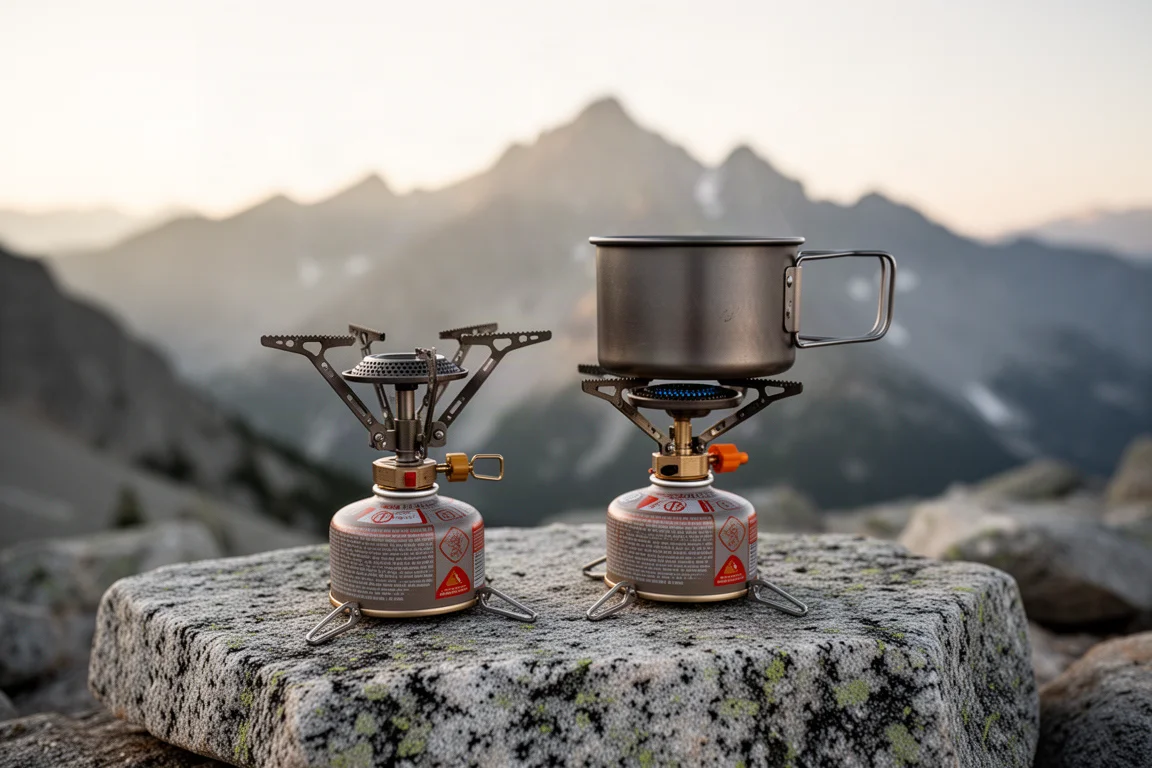
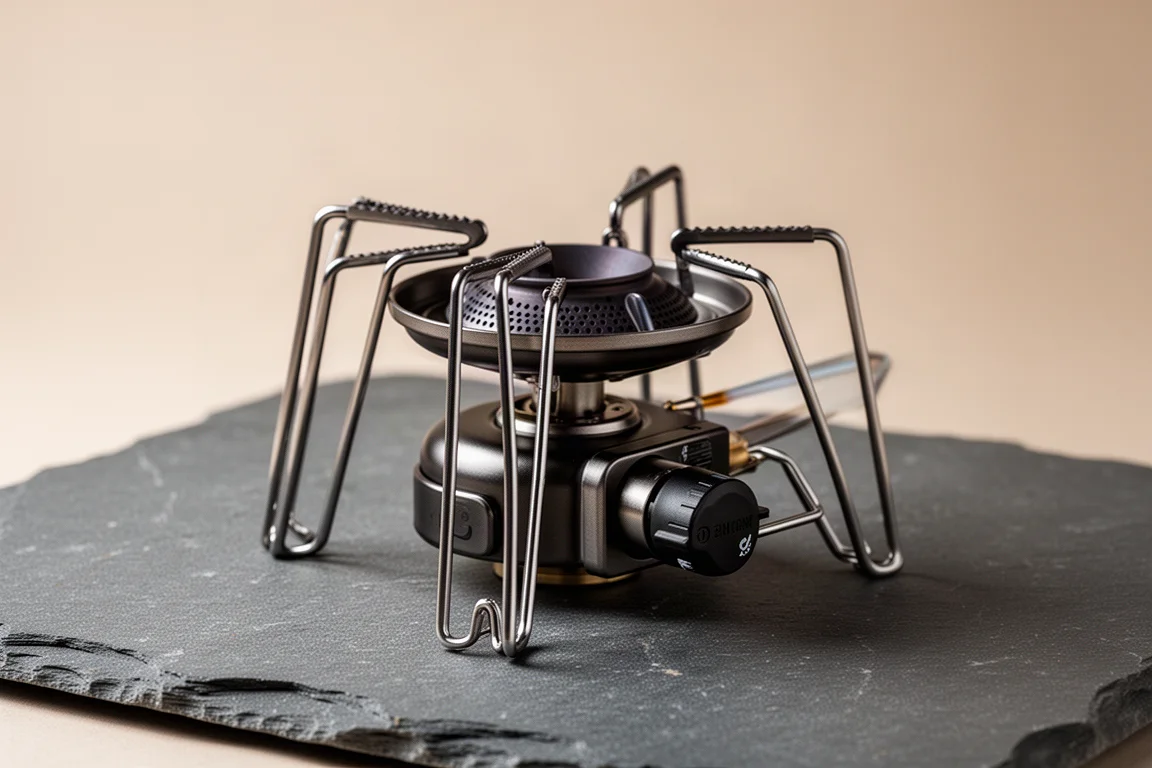
The more meaningful gap is in the pot support footprint. The WindMaster spreads to 5.7 inches across its supports, while the PocketRocket Deluxe reaches 3.75 inches. That affects how stable a wider pot or pan feels, and it becomes obvious the first time you cook something other than water.
Soto WindMaster: Faster, Cheaper, Wider Stance
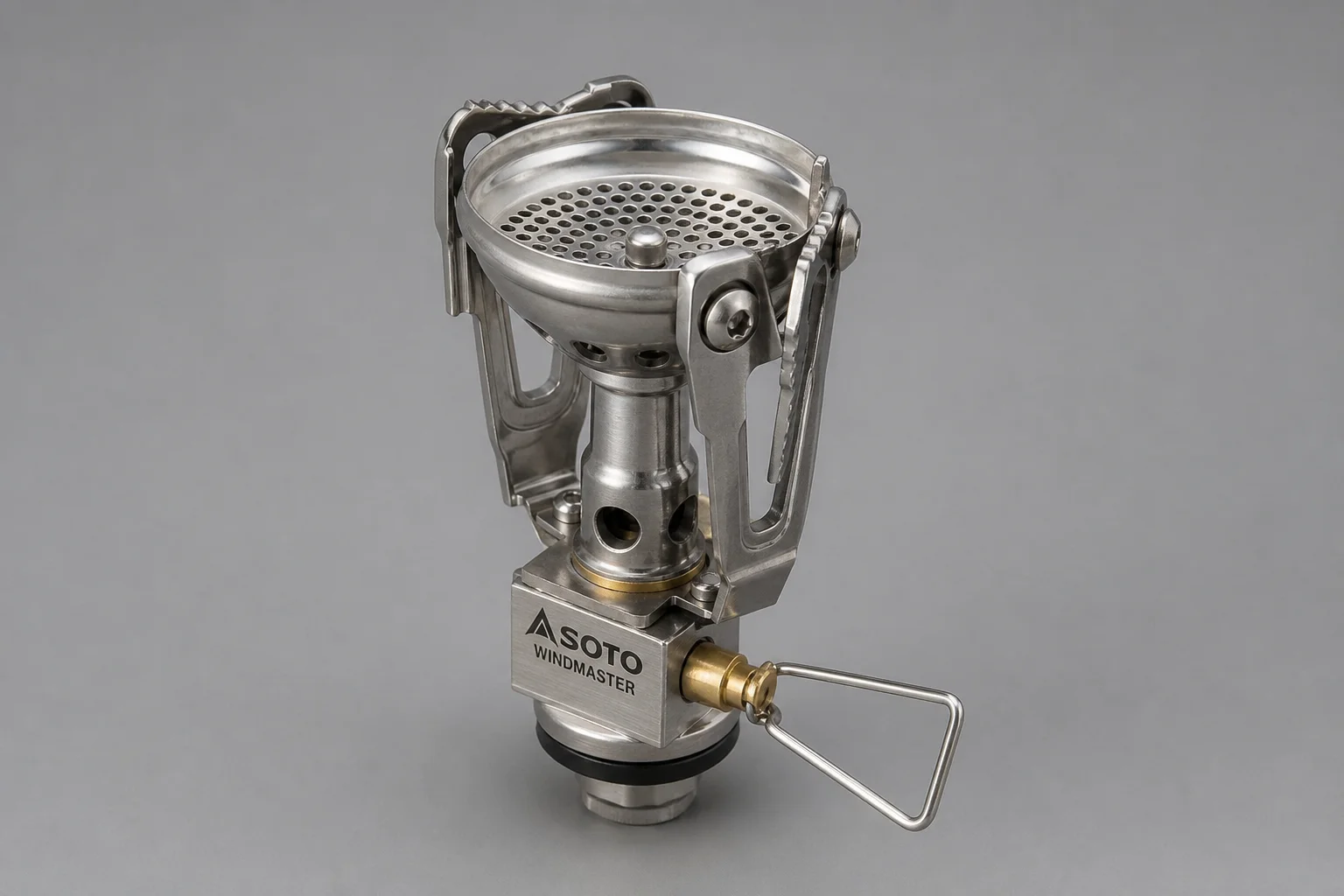
The WindMaster is 4 inches tall and rated at 11,000 BTU. It uses four pot supports, and those supports can be removed and swapped for a smaller three-pronged set that is sold separately in the United States, an option aimed at lightweight backpackers who want to trim the setup down further. A red button on the body serves as the igniter, and the flame adjuster has a slightly firmer feel than the MSR unit, which makes fine adjustments easier to control.
In a head-to-head water test, the WindMaster brought 16 ounces of water to a rolling boil in 2 minutes 40 seconds. It also held up better as the canister emptied, with output staying more consistent as fuel ran down. The igniter always fired, sometimes after a click or two, and it never required a backup flame.
MSR PocketRocket Deluxe: Slightly Lighter, Slightly Slower
The PocketRocket Deluxe is 2.9 ounces, 3.5 inches tall, 3.75 inches wide, and rated at 10,400 BTU. Its three legs are attached to the stove body, folding out and rotating up into position. It has a piezo igniter and a flame adjuster that feels a little looser in the hand than the Soto unit, which is a matter of preference rather than a functional fault.
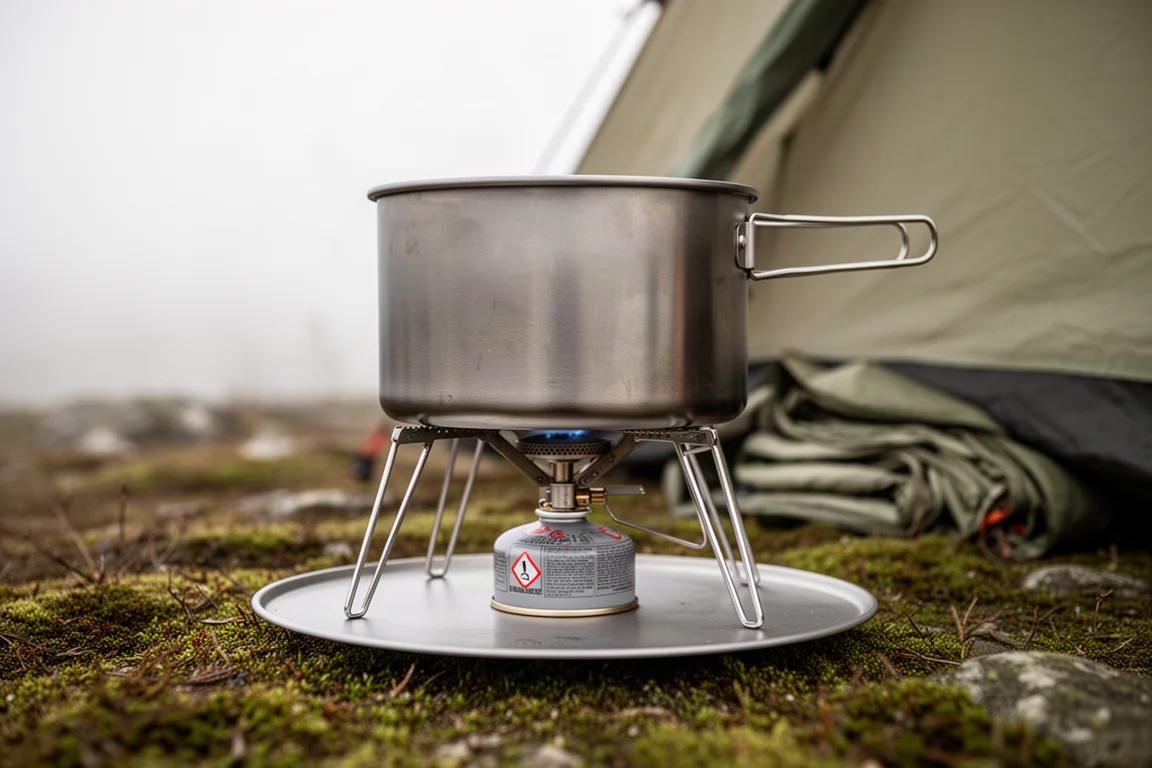
The narrower leg spread is the main practical difference. With three supports that do not extend as far, the platform is less stable under a larger pot or pan. The igniter is also the weaker of the two in practice. There have been situations where it simply would not light the burner and a lighter or match was needed instead. With a canister that is getting low on fuel, performance dropped off noticeably as well.
On price, the PocketRocket Deluxe lists at around $70 against roughly $65 for the WindMaster, so the lighter and slightly more compact stove is also the more expensive one. Folded, it is the tidier package, and for anyone who prefers folding legs over removable wire supports, that design is the reason to pick it.
Boil Test Results: 16 Ounces of Water
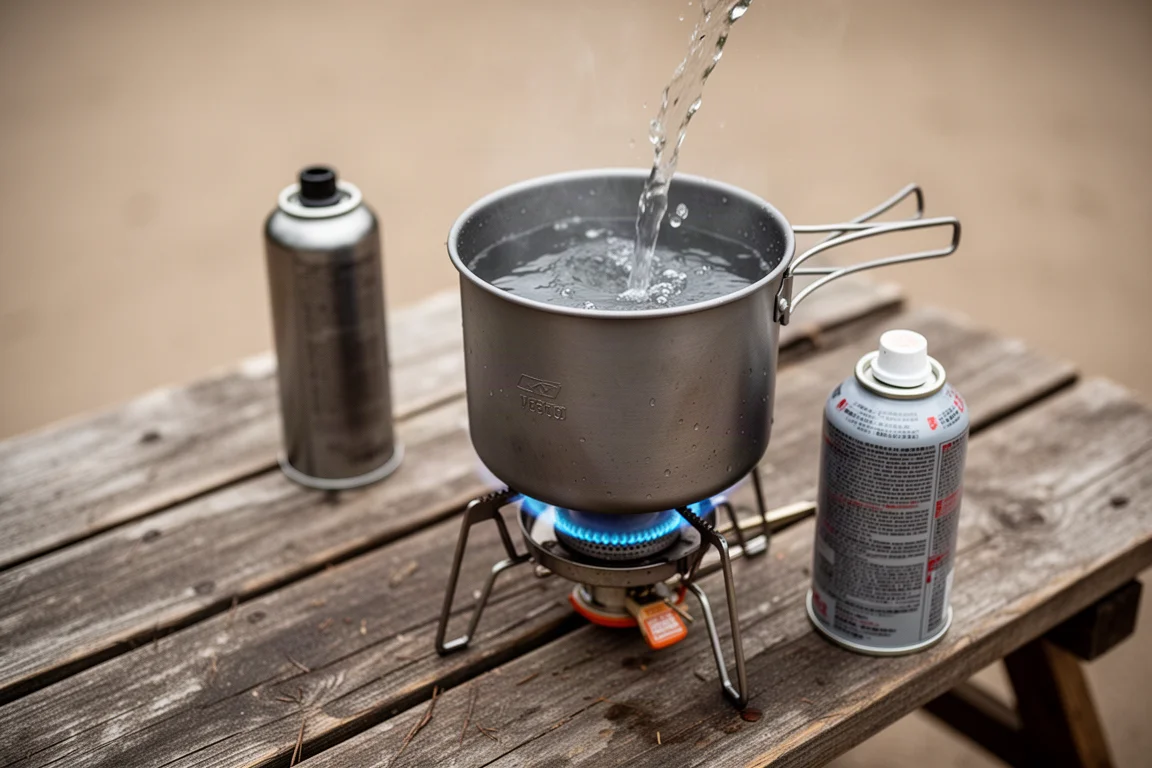
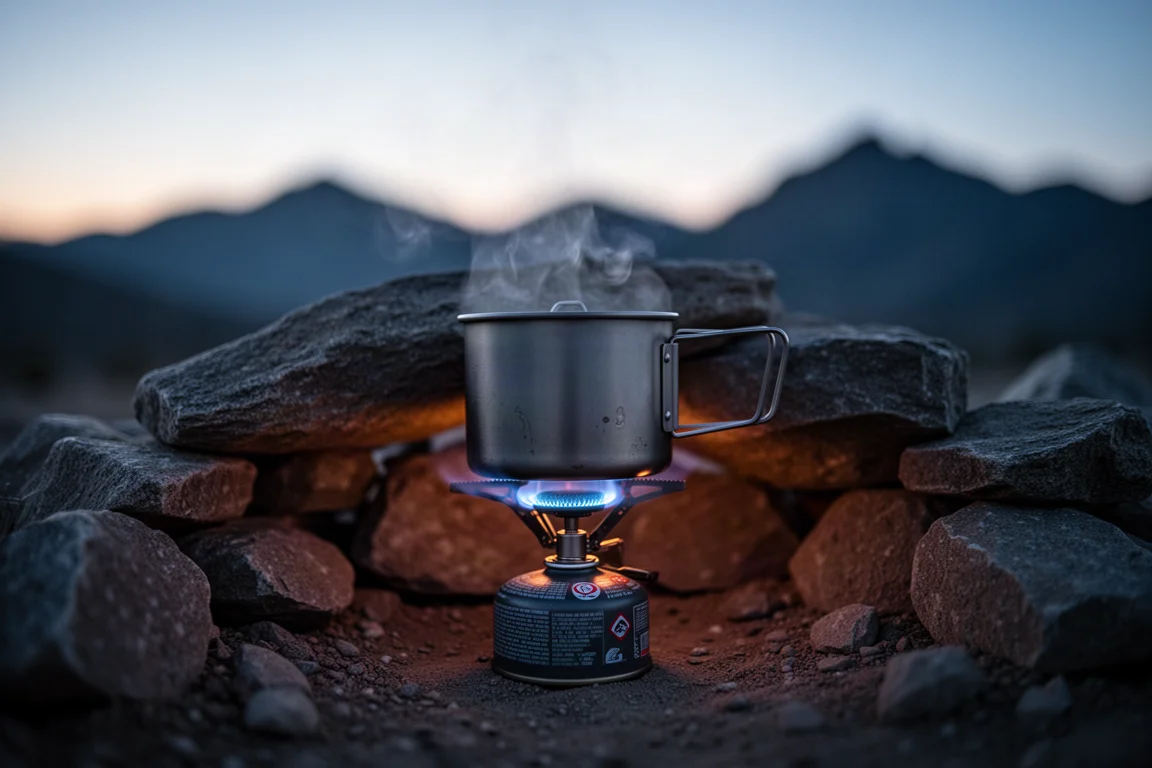
Both stoves were tested the same way: 16 ounces of water, the lid on, a full canister, and the burner opened to full output. The clock stopped at a rolling boil, once steam was pushing out from under the lid. The WindMaster finished in 2 minutes 40 seconds. The PocketRocket Deluxe finished in 2 minutes 58 seconds, roughly three minutes.
That is a gap of about 18 seconds. It is a real difference, and it is consistent with the higher BTU rating of the Soto stove, but it is not the kind of difference that changes how a trip feels. Outdoor testing like this is never perfectly scientific. Wind, air temperature, water temperature and the condition of the canister all influence the result, so treat these numbers as a useful indication rather than a laboratory figure.
Igniters, Regulators, and Low Fuel Canisters
Regulators are the feature both stoves are built around, and they are supposed to keep performance steady from a fresh canister through to one that is nearly spent, in hot weather and in cool weather alike. In practice, the two stoves did not behave identically. The WindMaster stayed more consistent as fuel level dropped. The PocketRocket Deluxe delivered noticeably poor performance on a canister that was running low.
Igniter reliability followed a similar pattern. Neither igniter is perfect, but the Soto unit is clearly the more dependable of the two. It may take a click or two, yet it has always lit the burner. The MSR piezo igniter has left users reaching for a lighter or a match, which is a small inconvenience at home and a genuine annoyance in bad weather with cold hands.
On flame adjustment, the two stoves are close to equal. Both turn smoothly from a full flame down to a low simmer, and the difference comes down to feel. The firmer resistance on the Soto adjuster is preferable for precise control, while the looser MSR adjuster is simply a different tactile experience.
Cooking, Simmering, and Wind Performance
For actual cooking, this is a tie. Both stoves handle a full rolling boil without drama, both turn down easily, and both can hold a simmer for a pot of rice or a reheated meal. Nothing about the burner behaviour of one stove makes it a better cooking tool than the other.
Wind protection is also a tie. Both burner heads incorporate an integrated windscreen, and both cope reasonably well in a light breeze. In genuinely windy conditions, neither stove is enough on its own and an additional windscreen or a sheltered spot is required. That applies equally to the WindMaster and the PocketRocket Deluxe.
Buying Advice: Which Stove Should You Pack?
The WindMaster is the stronger all-round choice for most buyers. It costs less, boils faster, offers a wider and more stable pot support platform, lights more reliably, and holds its output better as the canister empties. The optional smaller three-pronged support, sold separately in the United States, also gives lightweight backpackers a way to trim the stove down further for solo trips.
The PocketRocket Deluxe still makes sense for a specific buyer. It is marginally lighter at 2.9 ounces and folds into a slightly more compact shape, and its attached folding legs are a design some people simply prefer because there are no separate supports to keep track of. If you want the smallest folded package and you are willing to carry a backup lighter, it remains a capable stove.
For everyone else, the deciding factors are the ones that show up in use rather than on a spec sheet: boil speed, support stability, and igniter reliability. On those three points, the WindMaster comes out ahead.
Conclusion
These are both good stoves, and the honest summary is that they are far more similar than they are different. Size, weight, regulated output and cooking behaviour all land in roughly the same place. The WindMaster simply works a little better in the areas that matter day to day. It is cheaper, faster to boil, more stable under a wide pot, more consistent on a low canister, and its igniter is the one you can count on. If you want the closest thing to a no-regrets pick between the two, the Soto WindMaster is the stove to pack.
Further reading
Related Reviews
Camping Stoves
BCB Fire Dragon Mini Cooker Review: A Tiny Folding Stove With Real Trade-Offs
A palm-sized, fuel-flexible folding stove that heats water well enough, but brings flame control, stability, and fuel cost questions worth understanding first.
Camping Stoves
Boundless Voyage Titanium Alcohol and Wood Stove Review: Ultralight Cooking, Two Ways
A titanium alcohol and wood burning stove kit that weighs 4.5 oz complete, boils two cups of water in about 10 minutes, and costs $36.
Camping Stoves
BRS 32 Dual Burner Stove Review: A Folding Two-Burner That Packs Down Flat
A detailed look at the BRS 32, a slim folding dual burner camping stove that expands into a stable cooking platform for around $60.