Camping Stoves
Soto TriTrail ST-350 Review: A Titanium Ultralight Stove Plus the Trail Table Add-On
A close look at the titanium Soto TriTrail ST-350 canister stove, its boil performance, built-in regulator, and the optional Trail Table that steadies the setup.
Introduction
Soto is a Japanese company known for stoves and ultralight cookware, and the TriTrail ST-350, also sold as the ST-US350, is its titanium take on an already proven design. It is a compact canister-mounted stove built for backpackers who watch every gram but still want a fast boil and a flame they can control. This review covers how the stove performs in real use and what the optional Trail Table add-on brings to the setup.
What the Soto TriTrail ST-350 Offers
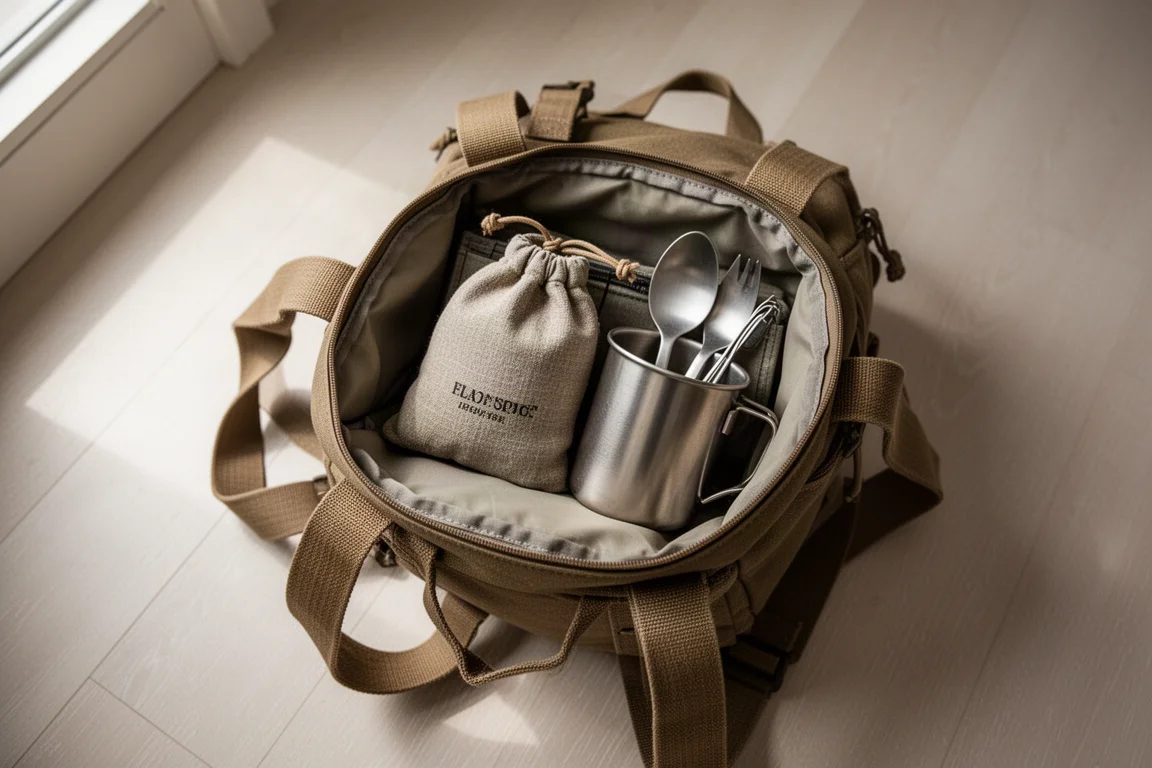
The ST-350 keeps the layout of the earlier ST-340 and changes the materials. Rather than stainless steel and aluminium, the stove is built primarily from titanium, which brings the weight down to 4.7 oz on its own and 5.1 oz with the included storage bag. That bag is made from Tyvek and closes with a drawcord at the top. It offers some protection in transit, though it is not a hard case or a padded pouch.
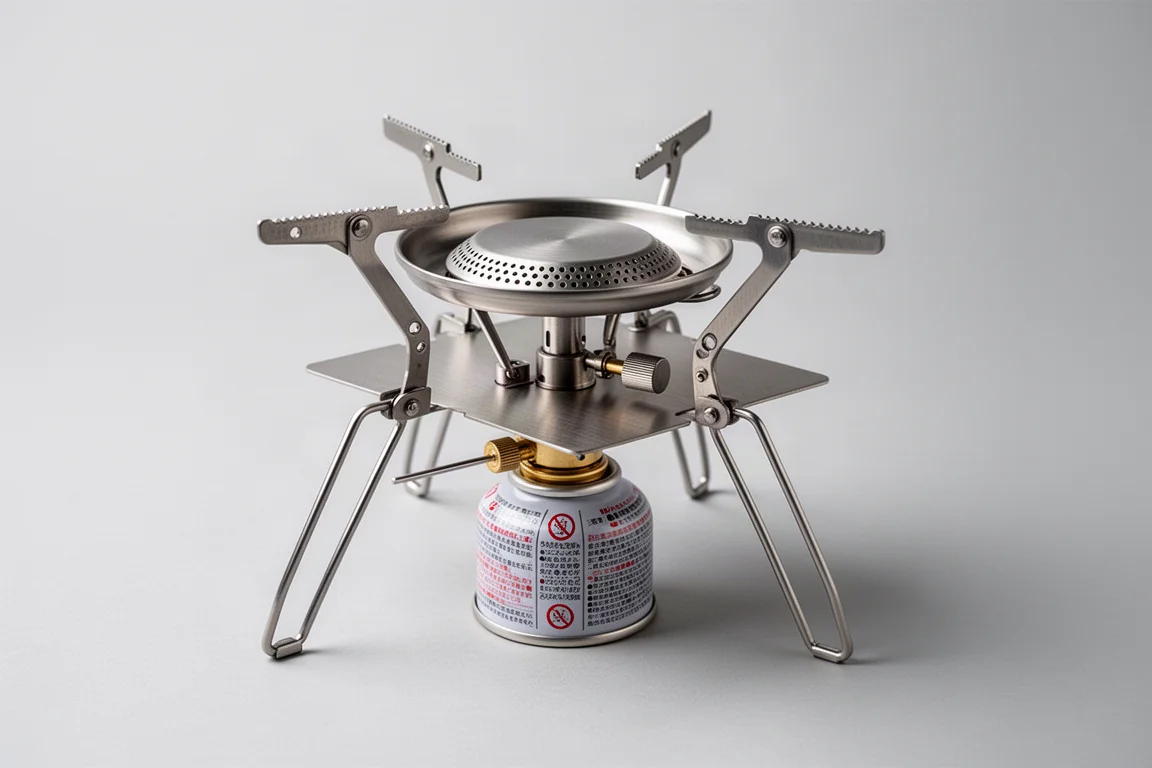
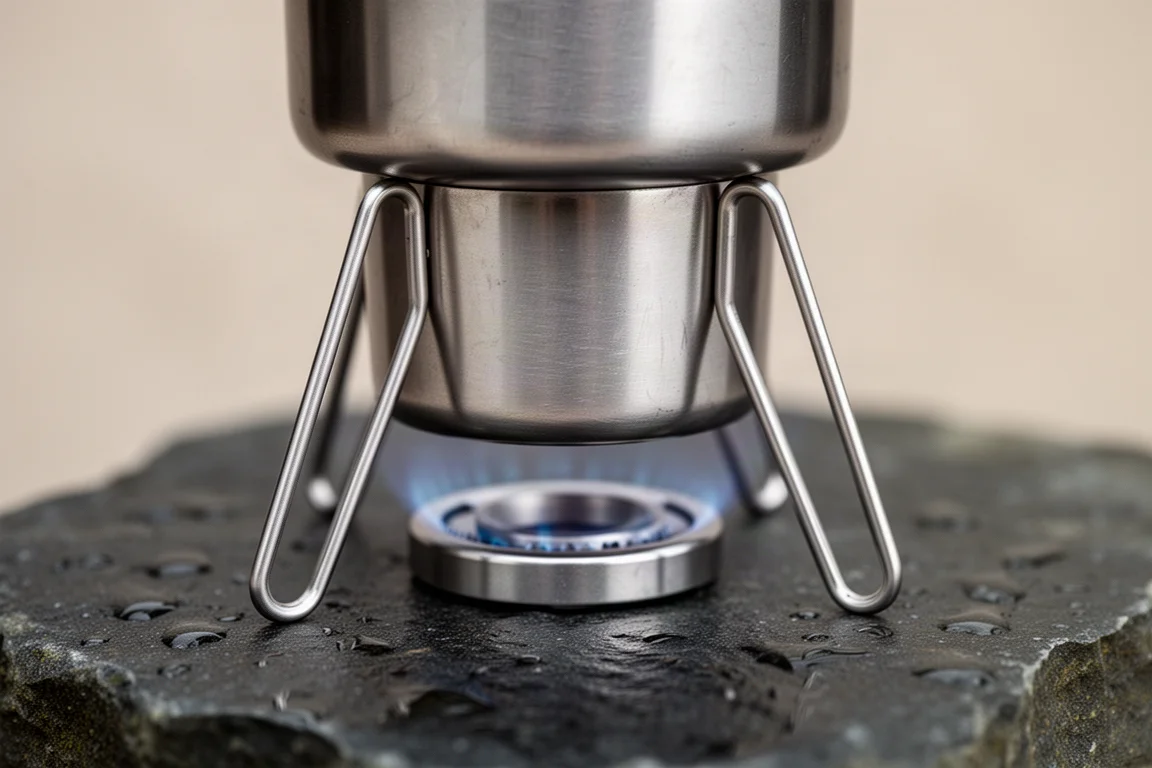
Setup is simple. The legs fold out and lock into position, the stove connects to the canister, and the assembled unit stands 5.4 in tall and 4.3 in wide. Folded, it measures 4.4 in by 4.4 in by 1.8 in, so it takes up very little room in a pack. The name comes from the three pot supports, which sit close enough together to hold a small cup yet extend far enough for a full-size kettle, pan or pot.
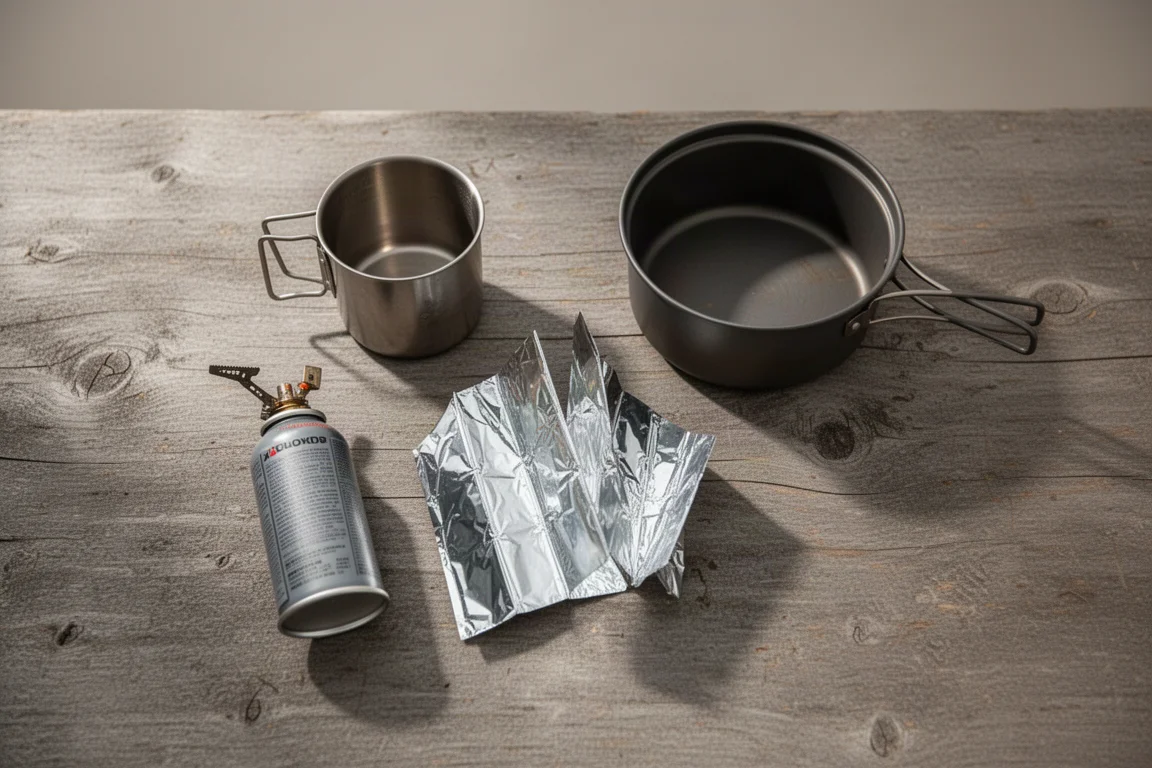
Around the burner there is a heat shield that deflects heat away from the canister, along with a folding adjuster, an igniter, the fuel port and a built-in regulator. Out of the box the stove runs on butane. Soto states that it will also run on isobutane and propane when the appropriate adapters are used.
Boil Test and Power Output
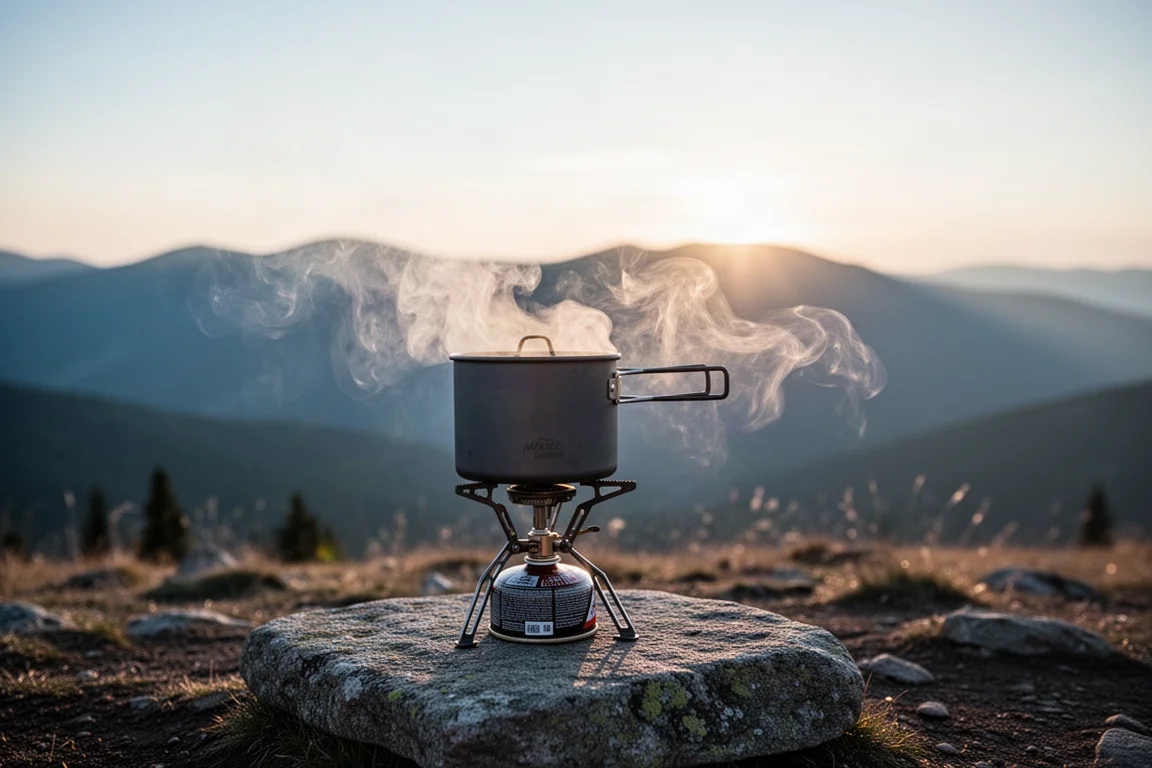
Two cups of water reached a rolling boil in 2 minutes 53 seconds on a breezy day with a windscreen in place. That is a quick result for a stove in this class, and it reflects the 10,918 BTU output. Raw boil times only tell part of the story, but they do show the stove has power in reserve when you want it. The same adjuster that delivers a full flame also lets you back off for a gentle simmer, so slower cooking is entirely workable.
Testing was carried out on butane at elevations up to roughly 6,000 ft, and the stove held up without fuss in that range.
Fuel Compatibility and the Built-In Regulator
The regulator is the detail that matters most for anyone cooking in cold weather. It helps the stove hold its output when the fuel itself is cold, and it keeps performance consistent as the canister empties instead of fading as pressure drops. Butane is inexpensive in the United States, where twelve-can packs are often available for around $20 and more typically around $27.
When you connect the canister, a brief hiss of escaping gas is normal. It comes from the fuel port locking into the stove, and it is not a sign of a fault.
Design and Build Quality
Fit and finish are excellent on both the stove and the table. There are no sharp edges and nothing feels loose or unfinished. The igniter fires on every attempt in testing, and the adjuster folds out of the way when not needed while moving smoothly without feeling slack. The built-in windscreen adds some resistance to moving air, but in genuinely breezy conditions a dedicated windscreen is still the better answer.
The Soto Trail Table Add-On
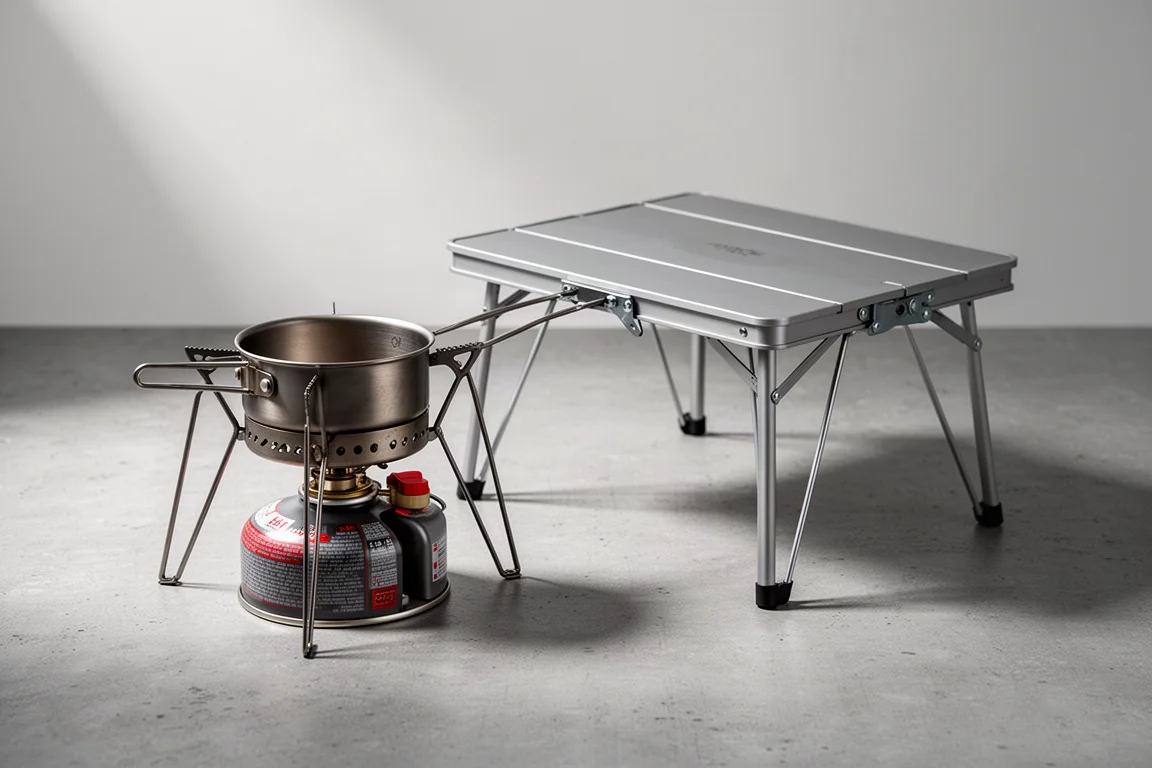
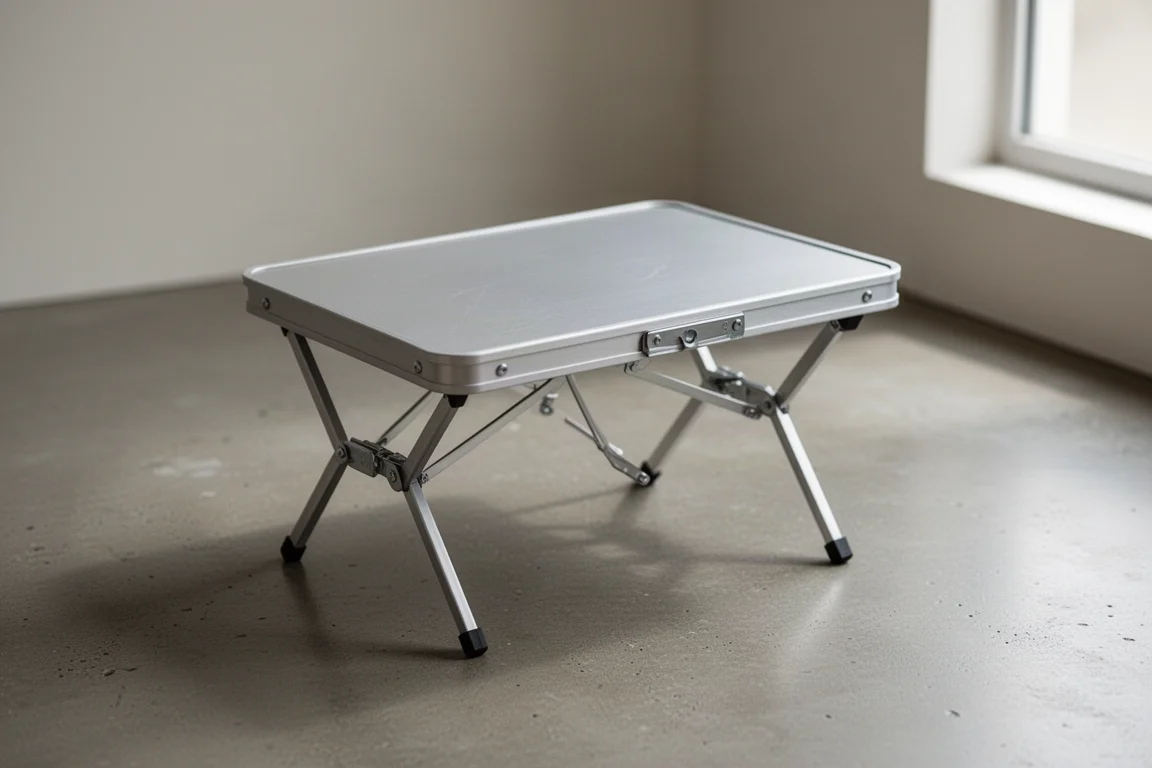
The Trail Table is a small folding platform made primarily from aluminium with some nylon resin, and it weighs 4.5 oz. Four legs unfold and lock, giving you a stable top surface. Stored, it measures 5 in by 3.25 in by 2 in. Set up, it measures 5 in long, 4.75 in wide and 3.25 in tall, and it is rated to carry up to 4.4 lb.
It can simply sit beside the stove, or it can be placed over the top of the stove, where it nestles into position and gives you a level spot for a mug. On a winter trip that kept a coffee warmer than setting it down on snow.
There is no getting around the fact that this is a luxury item rather than a necessity. On a long thru-hike it is weight and money you can leave behind. On a short overnight trip, though, it earns its place by solving two small problems at once: a place for your cup and a steadier stove.
Stability and Everyday Use
Without the table, stability is acceptable rather than exceptional. There is a small amount of wobble, noticeable but not enough to tip a pot or knock over what you are cooking. With the table attached, that rocking disappears completely. Between the wide pot supports and the compact folded size, the system is easy to live with on the trail, and it handles everything from a small cup to a large pan.
Buying Advice
The stove retails for $70. Some listings have shown it at $136, close to double, and there is no reason to pay that for it. At its retail price the value is straightforward: it is powerful, versatile, ultralight, fitted with a genuine regulator and a reliable igniter, and it packs down small. If you cook in cold conditions or want consistent output from a part-used canister, that combination is worth the money.
The table is a harder case at $38. It works well with the stove and it is genuinely well made, but the price sits above what the materials and size suggest. If you like the idea and want the extra stability, it is a reasonable add-on. If you are counting grams or pennies, the stove alone is the smarter purchase.
Conclusion
The TriTrail ST-350 carries forward what made the ST-340 a strong stove and trims the weight with a titanium build. It boils quickly, simmers cleanly, and behaves predictably as fuel runs low. Buy it at its $70 retail price and it makes a great deal of sense. The Trail Table is cool, useful in the right circumstances, and entirely optional.
Further reading
Related Reviews
Camping Stoves
BCB Fire Dragon Mini Cooker Review: A Tiny Folding Stove With Real Trade-Offs
A palm-sized, fuel-flexible folding stove that heats water well enough, but brings flame control, stability, and fuel cost questions worth understanding first.
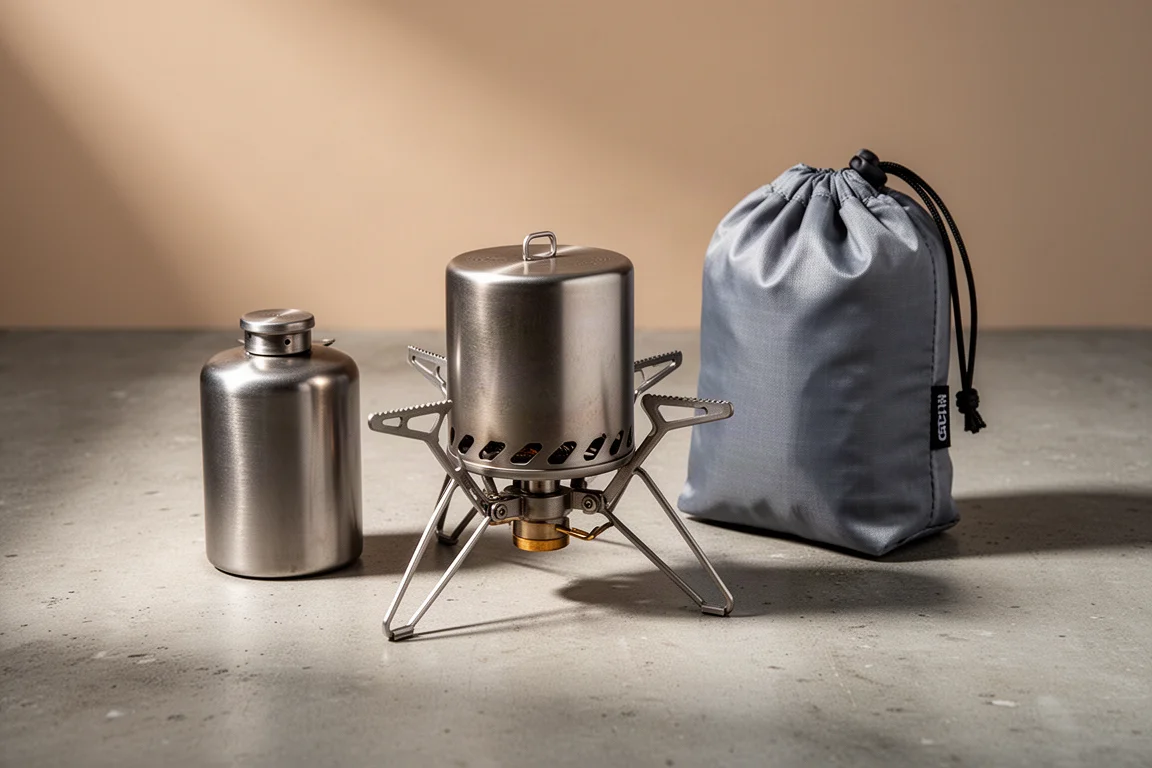
Camping Stoves
Boundless Voyage Titanium Alcohol and Wood Stove Review: Ultralight Cooking, Two Ways
A titanium alcohol and wood burning stove kit that weighs 4.5 oz complete, boils two cups of water in about 10 minutes, and costs $36.
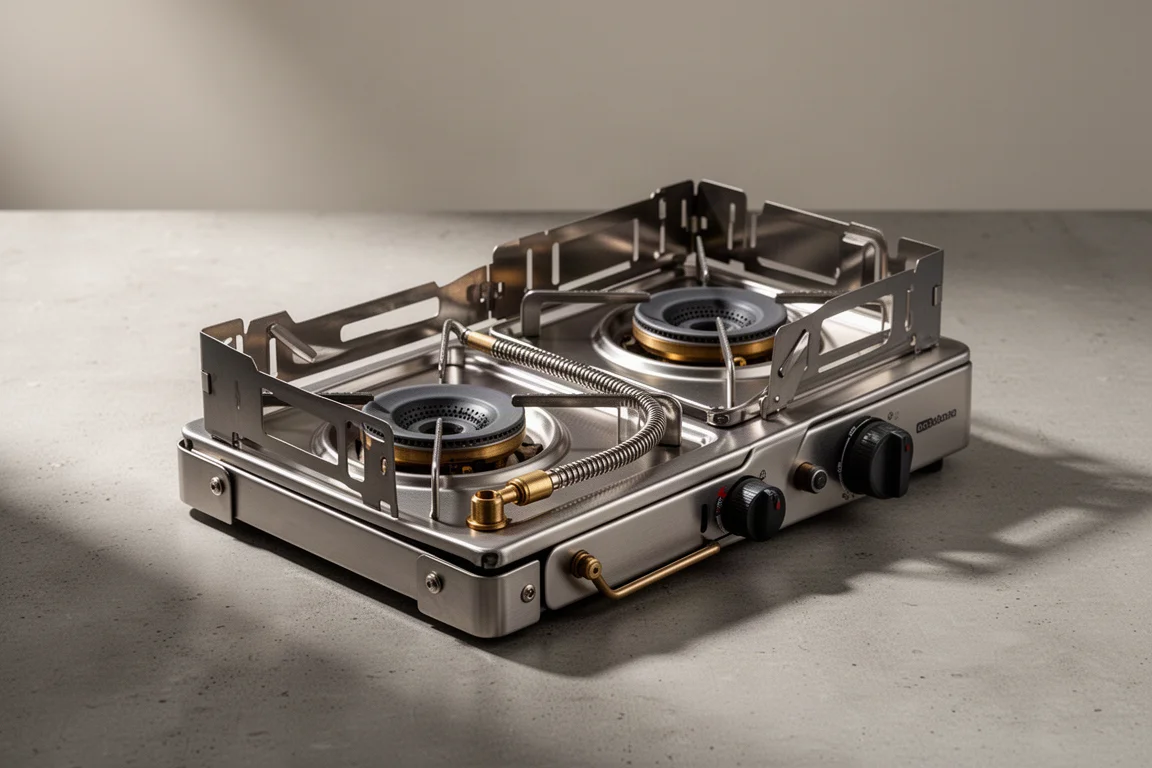
Camping Stoves
BRS 32 Dual Burner Stove Review: A Folding Two-Burner That Packs Down Flat
A detailed look at the BRS 32, a slim folding dual burner camping stove that expands into a stable cooking platform for around $60.