Hand Tools
Sonota PLC200 Ultra Thin Jaw Pliers: Straight and Bent Jaw Options for Tight Spaces
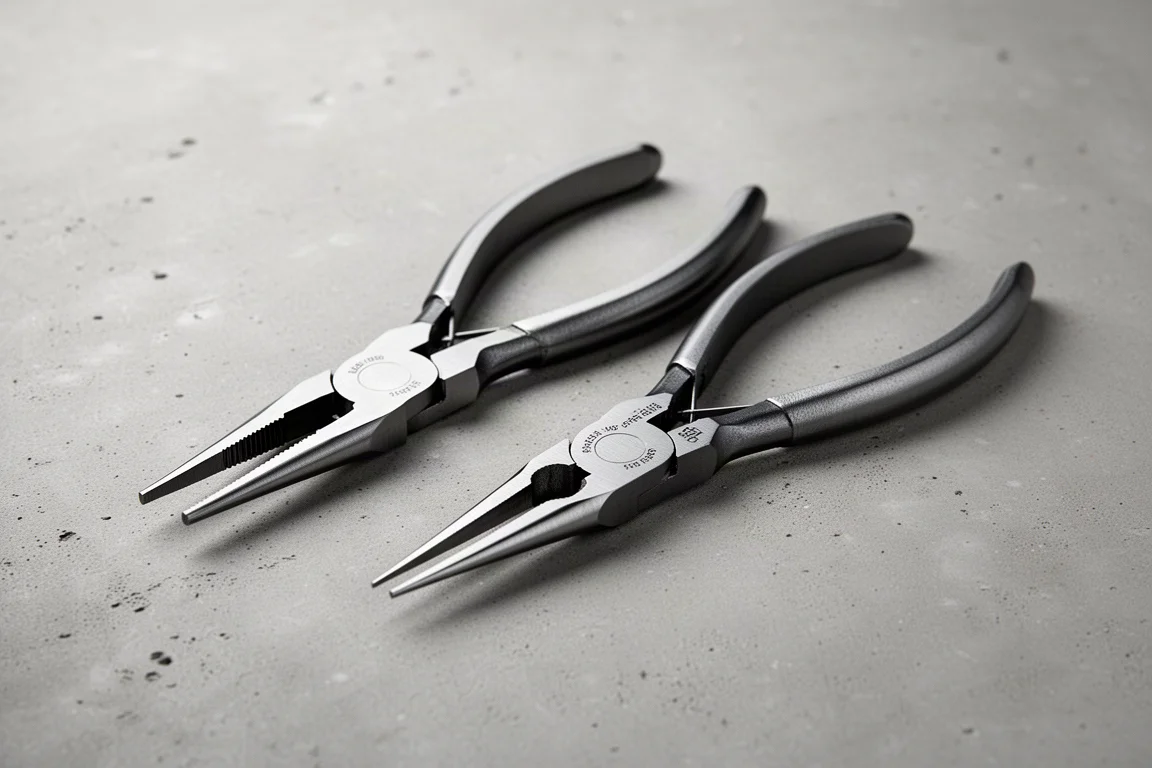
Two ultra thin jaw pliers that taper to about 2 mm, offer triple slip joint capacity up to 32 mm, and include a built-in wire cutter.
Introduction
Thin jaw pliers occupy a narrow niche, but when you need them, nothing else really does the job. The Sonota PLC200 series fills that niche with two variants: a straight jaw version (PLC200 GU) and a bent jaw version (PLC200 GUB). Both taper down to roughly 2 mm at the tips while staying plenty strong, and both use a triple slip joint design that gives them surprisingly large capacity for full-size pliers. If you work with fasteners held from the opposite side, threaded rods, or tight recesses, these deserve a close look.
Why Thin Jaw Pliers Matter
The classic use case comes from the bike industry, where thin jaw pliers and cone wrenches were used to set hub cone nuts. Two opposing fasteners are tightened against each other, one with a bearing race on the other side, so you can lock in exactly the right amount of friction within the bearing races. That skill is less common today, but the underlying mechanics show up elsewhere: set screws in electronics, nuts on threaded rods, and lighting fixtures where a nut is held in position by something on the other side, sometimes decorative, sometimes functional to keep things from vibrating loose.
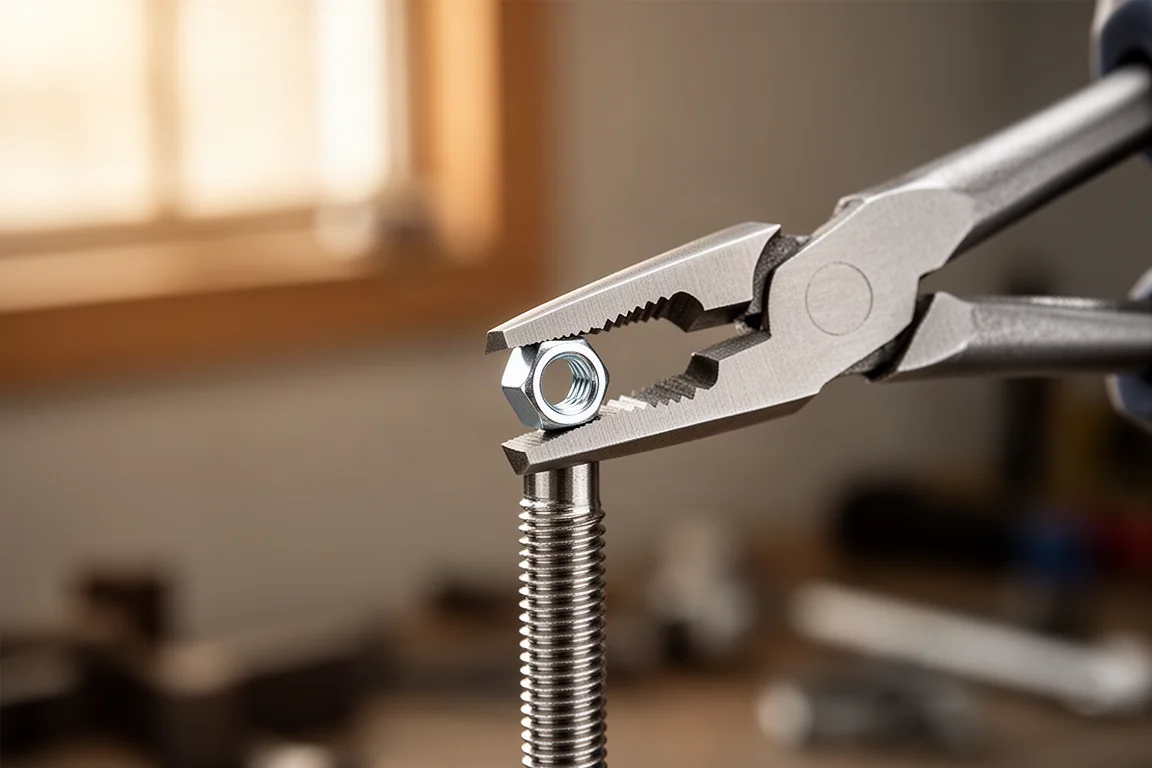
Threaded rods are another obvious fit. You do not want to grab the rod itself and damage the threads, so a thin jaw plier lets you hold a nut or washer in place while you work in a very tight space. The same applies when a washer has been screwed on and you want to reposition it, or when you need to run a nut against one and hold it steady while snugging things up.
Straight Jaw: Sonota PLC200 GU
The straight jaw version is the general-purpose pick of the pair. The full-size position gives you about 32 mm of capacity, the middle position around 25 mm, and the smallest position roughly 18 mm of reach. Despite the fine 2 mm tips, the jaws carry real aggression for gripping, and because these are full-size pliers, you get full leverage. You will want to be a little gentle given how thin the jaw steel is at the tips, tapering up to roughly 4 mm of substantial steel toward the body.
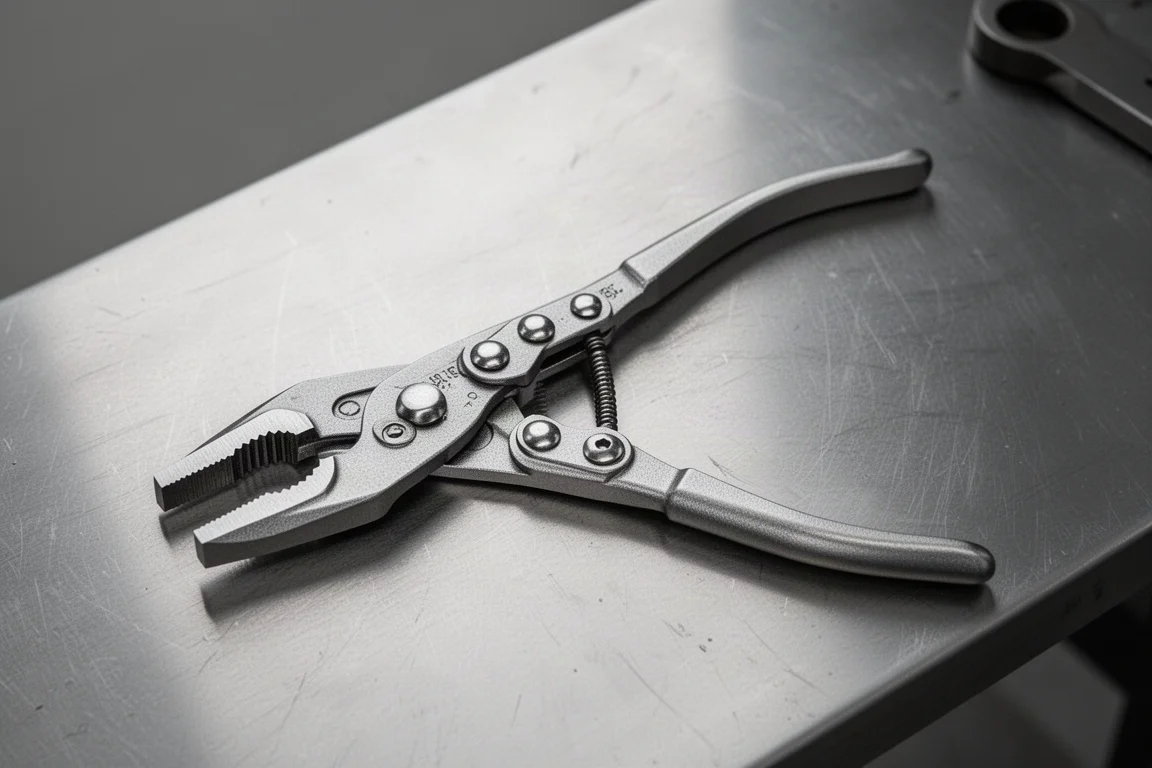
Compared with compact adjustable wrenches that have similar jaw widths but much shorter jaws and no grip aggression, the Sonota holds onto small parts far more reliably. Where needle nose pliers tend to slip off small items as the grip angle changes, the thin jaws here can get roughly parallel when they grab something, so the part does not snap out of the grip.
Bent Jaw: Sonota PLC200 GUB
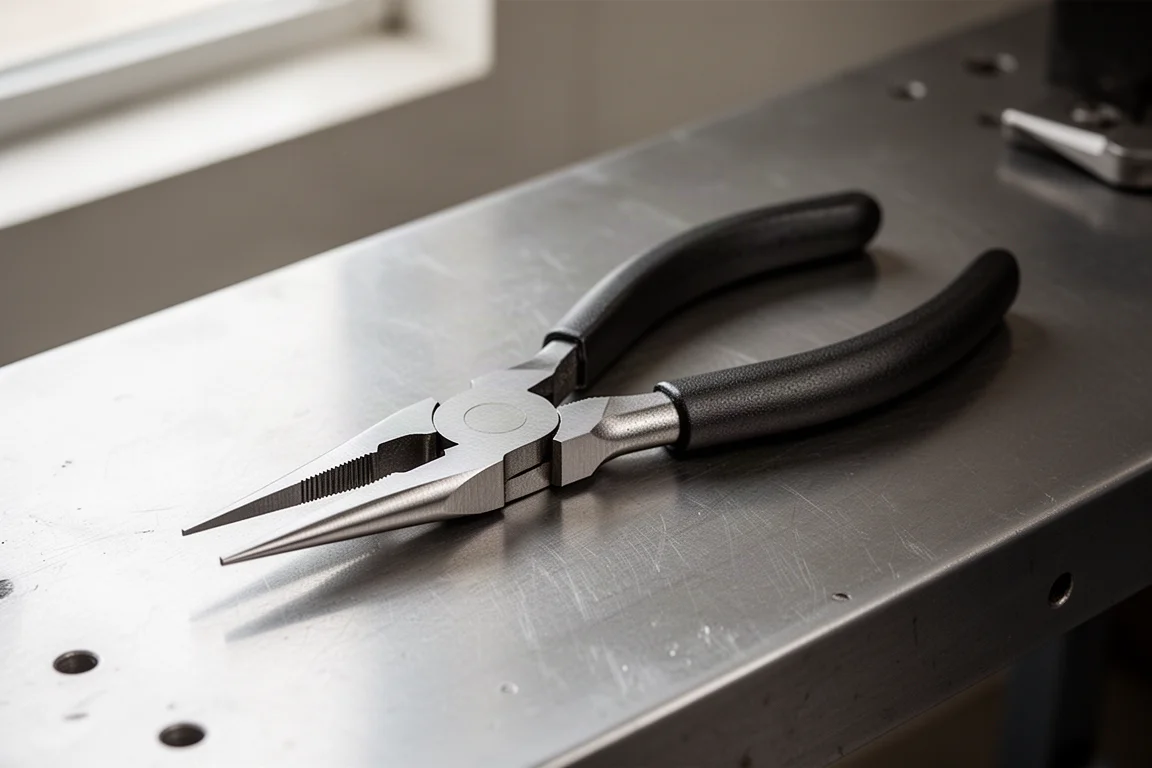
The bent jaw version adds a 20 degree bend to the jaws, and that is where its personality comes from. The bend is for access: sliding under things, working in from an angle, or getting flush up against the base of something where straight pliers would be awkward or impossible to operate. The jaw dimensions and triple slip joint capacity match the straight version, so you are choosing based on access, not capability.
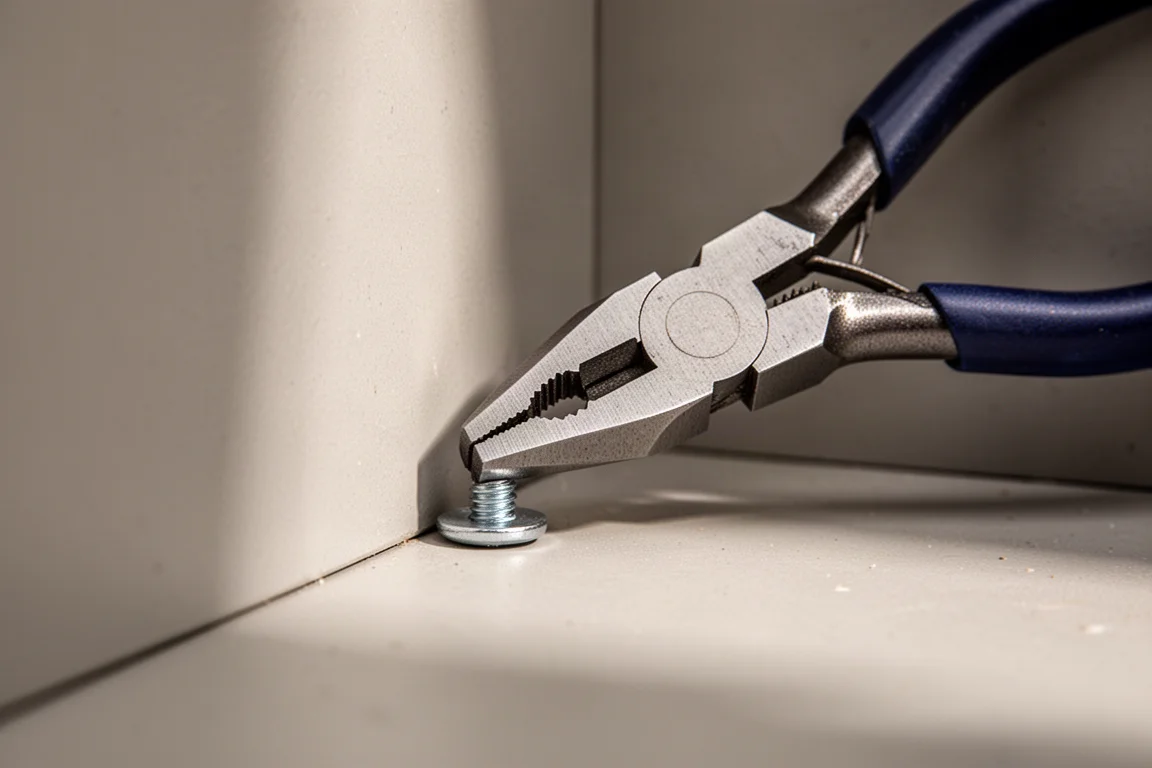
For anyone working on lighting fixtures, especially vintage lights in older houses, this is the variant that earns its spot in the bag. Reaching a recessed nut at an angle is exactly the scenario the bend was designed for.
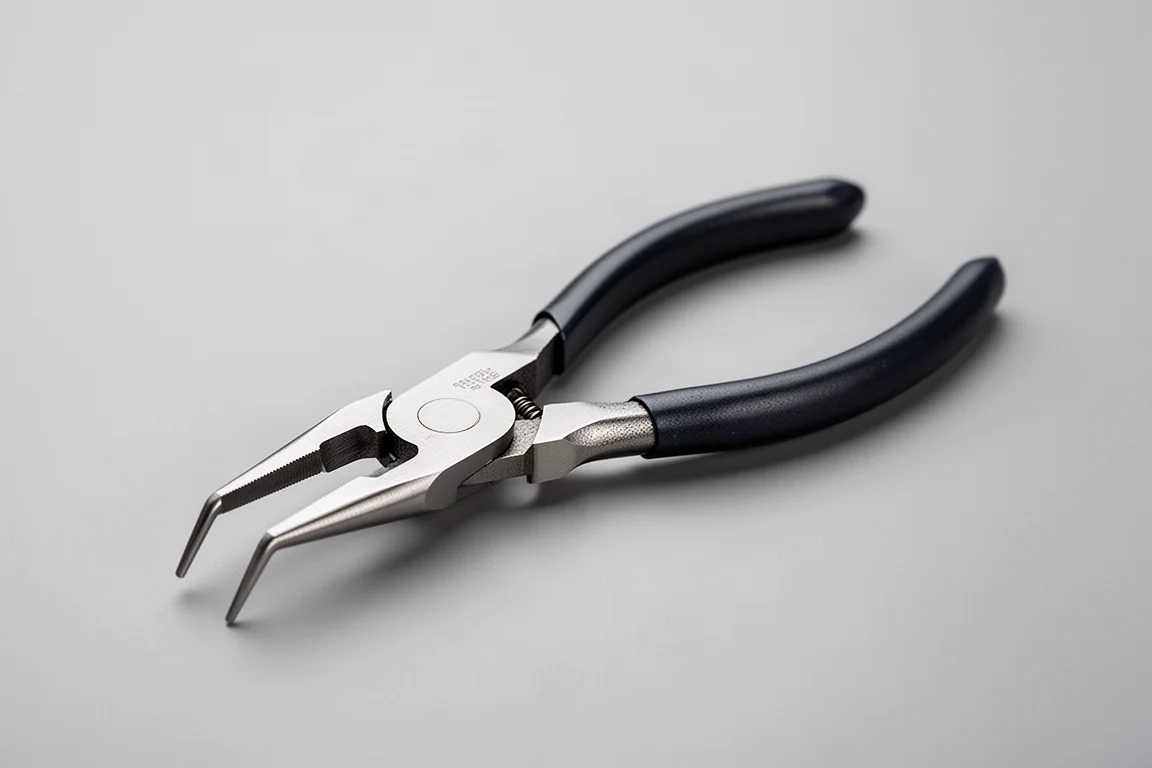
The Hidden Bonus: Built-In Wire Cutter
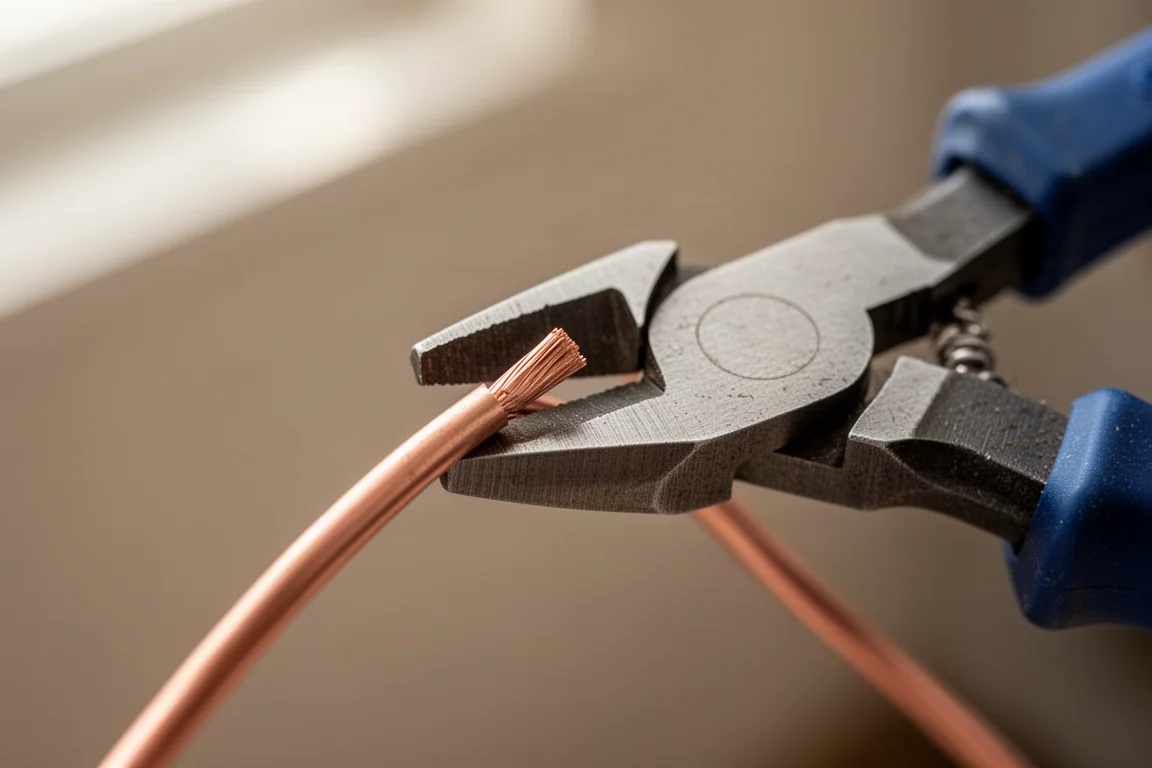
Both versions include a cutter down near the pivot, rated for 2.6 mm wire. In testing with 12 gauge solid core wire, roughly 2 mm, the cutter snipped it cleanly when the wire was placed in the lowest position. It is easy to forget the cutter is there, tucked way down at the bottom, but it works without any fuss.
What Else Stands Out
A few design details make these more pleasant to use than the spec sheet suggests. There is a pinch guard below the pivot to keep your skin from getting caught when the pliers close, a welcome touch for a tool you will often be using in awkward positions. Tether points are included too, which matters for anyone working at height or following professional tool-tethering practices.
The triple slip joint is worth calling out as well. It is a design common on premium professional pliers, and it is what lets these stay thin at the tips while still opening wide enough to exceed the capacity of many adjustable wrenches at full extension.
Buying Advice
If you mostly face straight-on access to recessed or opposing fasteners, the straight jaw GU covers you. If your work regularly involves reaching at an angle or flush against a surface, the bent jaw GUB is worth the split. Many tool users who do fixture, lighting, or mechanical repair work will eventually want both, since they solve overlapping but distinct access problems and share the same capacity, cutter, and build quality.
Conclusion
The Sonota PLC200 series delivers a rare combination: 2 mm thin jaws that are still strong, triple slip joint capacity up to 32 mm, a usable 2.6 mm wire cutter, pinch protection, and tether points. Whether you choose the straight GU or the bent GUB, you get a specialized tool that solves problems needle nose pliers and adjustable wrenches simply cannot.
Further reading
Related Reviews
Hand Tools
Best Diagonal Cutters 2026: 16 Pliers Tested for Cutting Power and Durability
We put 16 diagonal cutters through nail, screw, drill bit, and hex key tests to find the best value picks for your toolbox.
Hand Tools
Best Hex L Key Sets 2026: Nine Sets Tested for Real-World Torque
Nine hex L key sets from budget to premium, tested for torque, fit, and durability. See which sets deliver real performance and which ones to skip.
Hand Tools
Best Locking Pliers 2026: Top Picks Tested for Grip and Durability
We tested 18 brands of 10-inch locking pliers for grip strength, jaw bite, build quality, and ease of release to find the best options for tough jobs.