Smart Speakers
Sonos Era 300 Review: A Talented Smart Speaker With Real Trade-Offs
A close look at the Sonos Era 300, covering its six-driver design, stereo performance, app setup, surround limitations, and how it compares with rival speakers.
Introduction
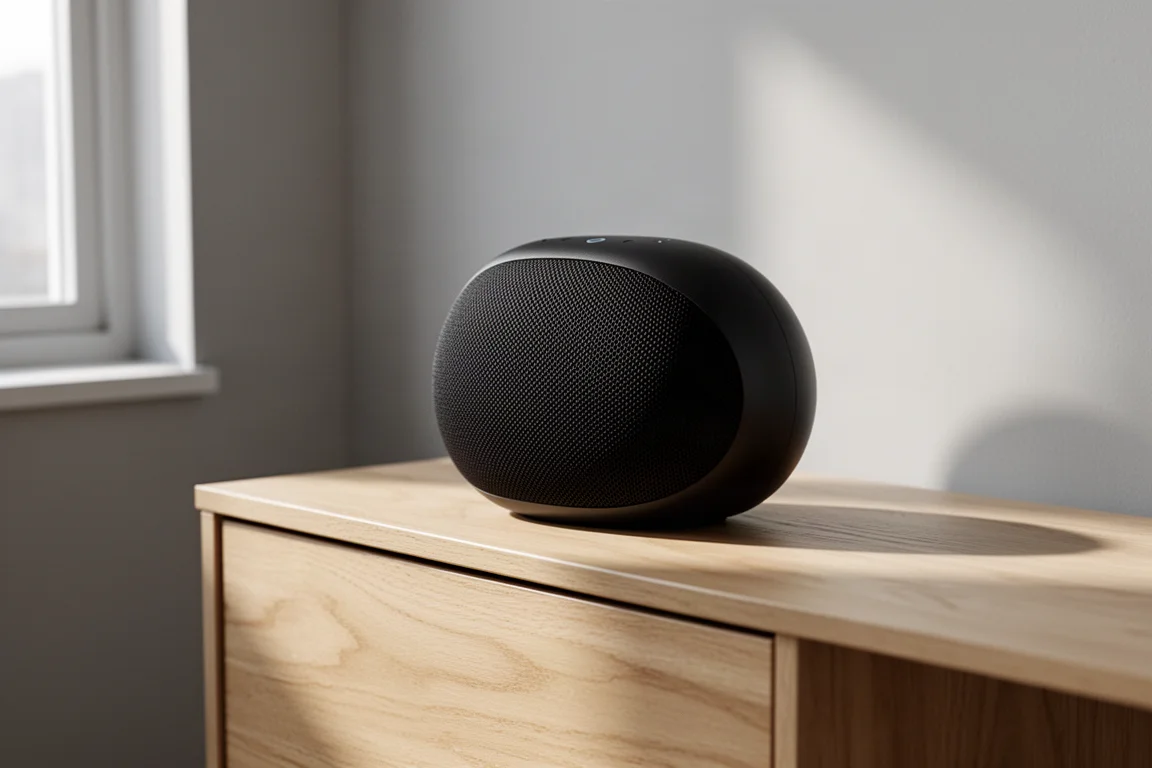
Sonos is one of the most successful home audio brands in the world, with annual revenue approaching two billion dollars, second only to Bose. The Era 300 is the company’s most ambitious standalone speaker so far, and it is aimed squarely at listeners who have moved on from traditional hi-fi separates, or who never owned them in the first place.
Inside the cabinet, six drivers are arranged to create a wider stereo image from a single box: four tweeters and two woofers, powered by six Class D amplifiers. The layout also produces a sense of height when playing back Dolby Atmos content.
That ambition comes with trade-offs. The Era 300 is a genuinely talented speaker in the right setup, but the details around setup, flexibility, and low-frequency behaviour matter a great deal before you commit.
Who the Sonos Era 300 Is For
The Era 300 makes the most sense for listeners who want a compact, wireless-first speaker that handles music streaming, AirPlay, Bluetooth, and voice control without a rack of electronics. It supports Bluetooth 5.0, Wi-Fi, AirPlay 2, and Alexa voice control, and it works with the Sonos app, which includes native support for popular streaming services such as Apple Music.
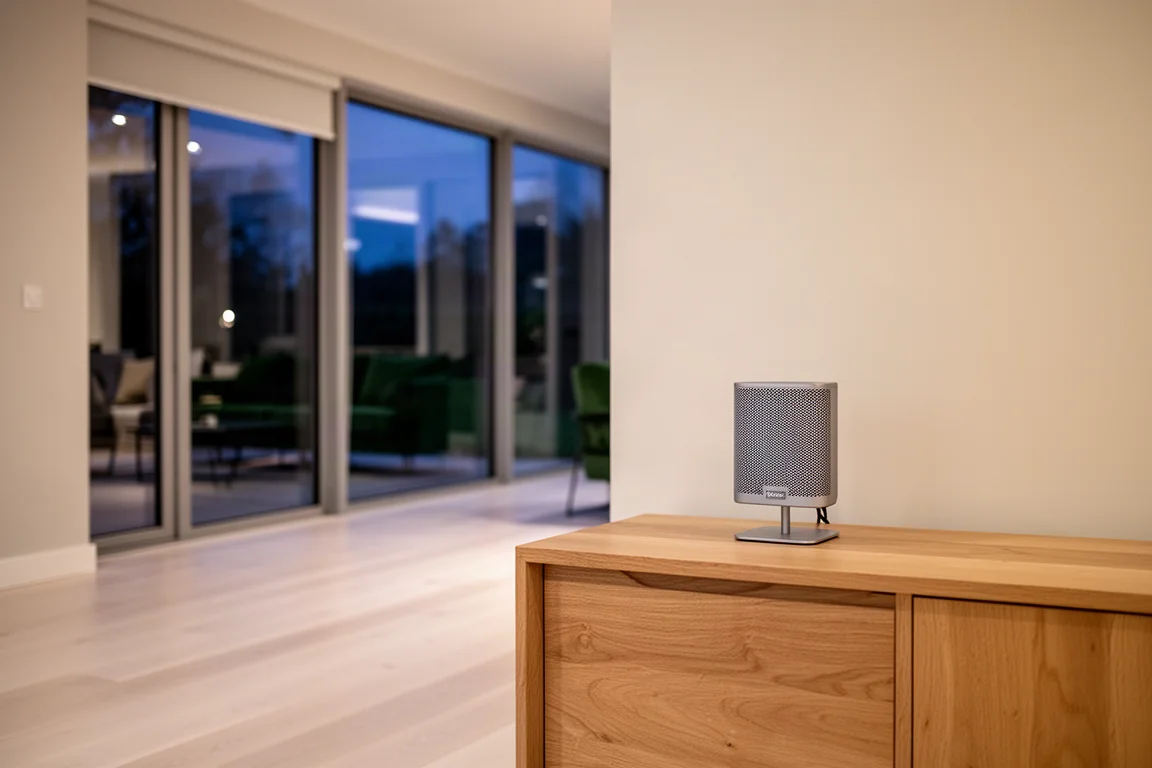
It is also a strong candidate for anyone building a whole-home Sonos system, where one Era 300 lives in one room and another lives somewhere else entirely. Used that way, it plays to its strengths and does not draw attention to its quirks.
It is a less obvious fit for listeners who want to replace a soundbar with a stereo pair, or who plan to add the speaker as surround channels to a Beam-based system. Those routes work, but they come with real compromises.
Design, Drivers, and Connections
Physically, the Era 300 is a good-looking speaker, though it remains unmistakably a Sonos product in look and feel. The six-driver array is the headline feature: four tweeters and two woofers, with six Class D amplifiers behind them.
Connections are deliberately minimal. There is a single USB-C port, and it does double duty as the speaker’s Ethernet connection and line input. To attach a source such as a CD player you need Sonos’s USB-C to analog adapter, which is sold separately. If you want to run both an analog source and a wired Ethernet connection at the same time, you need a second adapter, also sold separately.
Measured performance in-room reaches down to roughly 40 Hz and extends up to around 15 kHz. That is not full-range output, but it is respectable for a speaker of this size. Sonos does not publish detailed specifications such as frequency response, and most buyers are unlikely to miss them.
Sound Quality in Solo and Stereo Listening
On its own, the Era 300 is an impressive speaker. Frequency sweeps at the listening position showed a largely neutral response before room correction was applied, with a bass boost between roughly 45 Hz and 70 Hz, a mild roll-off around 2 kHz, and a fall-off near 15 kHz. Running TruePlay, the automatic room EQ, evens out the bass considerably, but it does not close a dip in the response around 200 Hz. That dip persisted when measured at three feet, so it is a characteristic of the speaker rather than a room artifact.

The practical consequence is a slight disconnect between the bass and the midrange and treble. If the low end feels boomy or detached from the rest of the sound, that gap is the reason. The bass and treble controls in the app can reduce how audible it is.
Vocals come through with good intelligibility thanks to a neutral midrange, and most genres sound good. Highs are detailed, but the roll-off is noticeable: cymbals and flutes lack some of the air that similarly priced smart speakers, or passive speakers, can deliver. Klipsch’s The Fives and The Sevens offer more top-end energy and extension. Bass is punchy and impressive for the cabinet size, though it can sound a little one-note on kick-drum-heavy material.
As a stereo pair the Era 300 comes into its own. The soundstage is wide and deep, with a surprising amount of height, and imaging is good rather than class-leading: the center image can bunch or float as you move off axis. Dynamically, a pair can fill a room of more than 400 square feet with distortion-free sound up into the mid-80 dB range before the built-in dynamic limiters begin to throttle output. Listeners in smaller rooms are unlikely to run into those limiters at all.
Setup, the Sonos App, and Daily Use
Every Sonos product starts with the free Sonos app, available on Android and iOS. You need to create a Sonos account, which requires an email address, before you can use the speaker.
Setup is functional rather than elegant. The app identified a pair of Era 300s but did not configure them as a stereo pair automatically; each speaker has to be set up individually first and then paired inside the app. In practice, one speaker took two connection attempts and the other took three before both were linked to the app and the home Wi-Fi.
Relocating a speaker means unlinking it from the pair first and setting it up again as an individual speaker, including assigning it to a new room. Moving from stereo to surround duty is similar: the pair bond has to be broken and the speakers reinstalled as surrounds. Once configured as surround speakers, the Era 300s cannot be used as Bluetooth or streaming speakers, which is a significant limitation given how flexible they look on paper.
Once everything is connected properly, day-to-day living with the Era 300 is largely trouble-free. Music over Bluetooth or AirPlay works well, and the speakers handle movies in 2.1 and Atmos configurations without fuss.
One recurring annoyance involves AirPlay volume control when an Apple TV is in the chain. Controlling the volume requires pressing and holding the screen icon on the Apple TV remote until the dashboard appears, opening the AirPlay menu, turning off the TV speakers, which are on by default, and then selecting the Sonos speaker or pair. The whole sequence has to be repeated every time the TV is switched on or off.
Movies, Surround Sound, and the Sub Mini
Used as surround channels, the Era 300s are exceptional performers, but they expose the limits of the hardware they are paired with. In a configuration using the Beam Gen 2 as the front soundbar, the Eras completely overshadowed the Beam and highlighted its lack of true upward-firing height channels. The surround presentation bends upward as effects move toward the rear of the room instead of staying overhead from front to back, which sounds unnatural. The added spaciousness at the back also makes the Beam seem smaller by comparison, compressing the front sound field into a narrow point beneath the screen.

There is a power ceiling as well. With the volume set to maximum in the app, movie playback peaked at around 79 dB. That is still loud, and it will feel louder in a small room, but it falls short of theater-like levels with the dynamic range of modern films. Listeners with an Arc at the front are likely to have a better experience than those using a Beam.
The Sub Mini is a mixed addition. It adds weight to both the Beam and the Era 300s and maintained a stable wireless connection throughout testing, but it is not especially articulate. Its crossover with the other Sonos speakers is set high enough that dialogue can be heard coming from the sub when it is turned up. If the only sensible place for the subwoofer is beside or behind the listening position, that becomes distracting. The app allows subwoofer volume adjustment but not crossover adjustment. Keeping the Sub Mini close to the speakers improves coherence top to bottom, though that may not be the best position for bass in the room.
How the Sonos Era 300 Compares
Against Bang & Olufsen’s Beosound A5, the two speakers are closer than the price gap suggests. The A5 is the better speaker overall: it works better within its own app, plays deeper, delivers a stronger sense of bass out of the box, and offers more EQ adjustment for a more neutral or tunable result. Its build quality also feels richer. The Era 300 wins on value without argument, since the A5 costs more than a pair of Era 300s.
Klipsch’s The Fives and The Sevens give up some wireless convenience and futuristic appeal, but in almost every other respect they are the more capable speakers. They include RCA and phono inputs, HDMI, a built-in DAC, a subwoofer output, Bluetooth, and a physical remote.
Sony’s HT-A9 offers a more flexible, more convincing two-channel and surround experience overall. Some owners report connectivity problems on congested Wi-Fi networks, such as in apartments, though that did not occur here. The Era 300s occasionally lost signal as well and reacquired it on their own, which is common behaviour for wireless speakers.
Placement matters enormously. Placed on a countertop or shelf close to a wall, which is where most people will put a single speaker, the Era 300 sounded boomy, small, and odd in a kitchen corner. On proper stands with room to breathe, the experience improves substantially.
Things to Consider Before Buying
Several factors deserve attention before you buy.
- The response dip around 200 Hz is a characteristic of the speaker, and room correction does not remove it.
- A stereo pair costs close to $900, and at that price a budget integrated amplifier with a pair of bookshelf speakers, such as the Cambridge Audio AXR85 with Klipsch RP-600M Mark II speakers, can be more flexible long term and still offers Bluetooth, though it may cost more depending on where and when you shop.
- Adding a pair of Era 300s as surrounds to a Beam-based system is difficult to recommend. Owners of an Arc are likely to get a better result.
- Once configured as surrounds, the speakers lose their Bluetooth and streaming capability.
- The single USB-C port means adapters are required for analog sources and for simultaneous wired Ethernet, and each adapter is sold separately.
- The Sub Mini’s fixed crossover can make dialogue audible from the subwoofer if it sits close to the listening position.
Buying Advice
The Era 300 is at its best as a standalone speaker or as part of a whole-home Sonos setup with one unit in each room. In that role it will not expose weaknesses in lesser Sonos products, and it will not draw attention to its own quirks. As a stereo pair for music, it is worth a look, and it sounds good, though critical listening reveals its flaws fairly quickly.
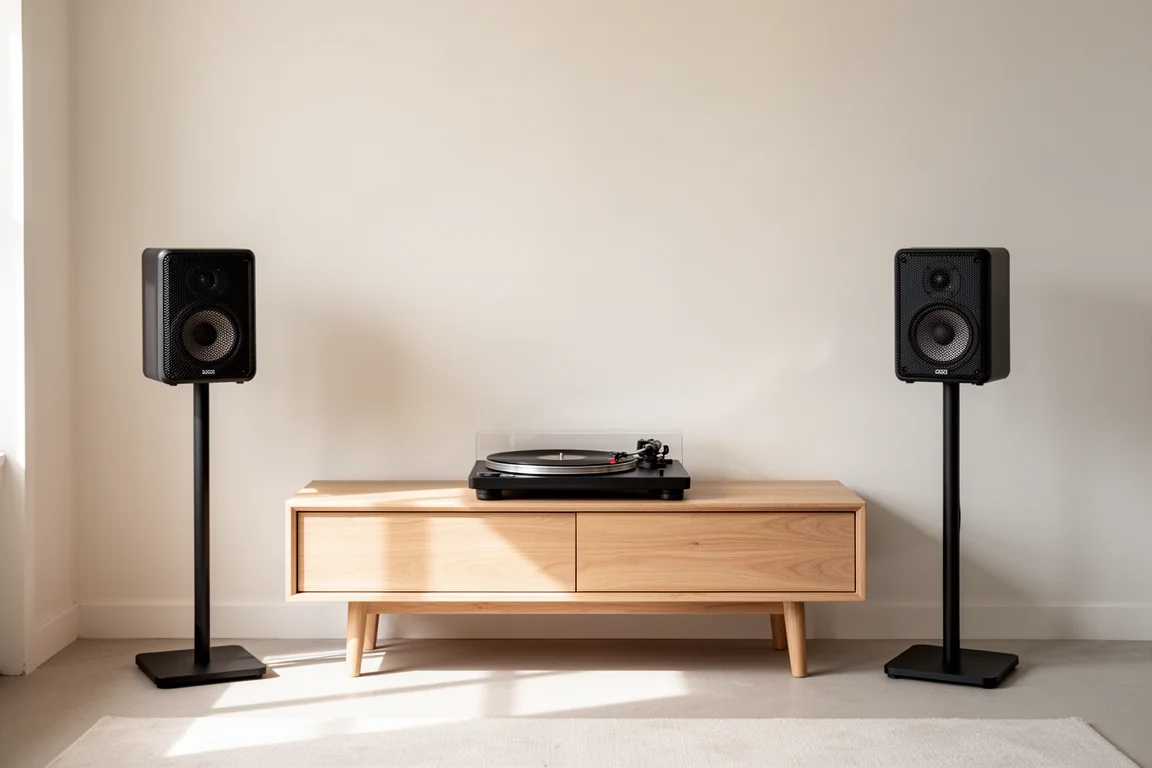
Give it space. Placing the speaker on a stand away from walls produces a markedly better result than tucking it into a corner or against a wall, and the difference is large enough to change how you feel about the purchase. If movies are the priority, an Arc-based system will serve you better than a Beam-based one.
Buyers who value top-end extension, physical inputs, and long-term flexibility should compare the Era 300 against Klipsch’s The Fives or The Sevens before deciding. Buyers who want the best-sounding single speaker in this comparison should look at the Beosound A5, provided the higher price is acceptable.
Conclusion
The Era 300 is the most compelling speaker Sonos has produced so far. It sounds great, it handles music and movies capably, and its wireless feature set covers Bluetooth, Wi-Fi, AirPlay 2, and voice control. The setup quirks and the fine print around flexibility are real, but they are manageable for most buyers.
What holds it back is not its sound or its usability. It represents a new direction for Sonos that is promising but not fully realized. It is a talented, intriguing speaker that still feels like it is on the outside looking in.
Product link
View more details for Sonos Era 300
This product is mentioned in the review. Check the specifications, options, and compatibility before buying.
View more details for Sonos Era 300Further reading
Related Reviews

Smart Speakers
Amazon Echo Max and Echo Studio: A Closer Look at the Design and Engineering
A hands-on look at the engineering behind the Amazon Echo Max and Echo Studio, including audio performance, smart home integration, and a wireless home theater setup.
Smart Speakers
Bang & Olufsen Beosound A9 Review: Is the Fifth-Generation Icon Worth It?
A disc-shaped all-in-one speaker with seven drivers, 1,150 watts, and deep app-based tuning. Here is what the Beosound A9 does well and what to weigh before buying.

Smart Speakers
Echo Dot Max Review: A Smaller Smart Speaker With Big Trade-Offs
The Echo Dot Max brings better sound and new AI features in a compact body, but removes the action button and introduces a few design choices worth knowing about.