Hand Tools
Smart Square Rafter Square: A Radically Better Take on the Speed Square
The Smart Square rethinks the century-old speed square with an adjustable fence, dual marking scales, a unique quarter-circle level vial, and a jig system for repeatable angle cuts.
Introduction
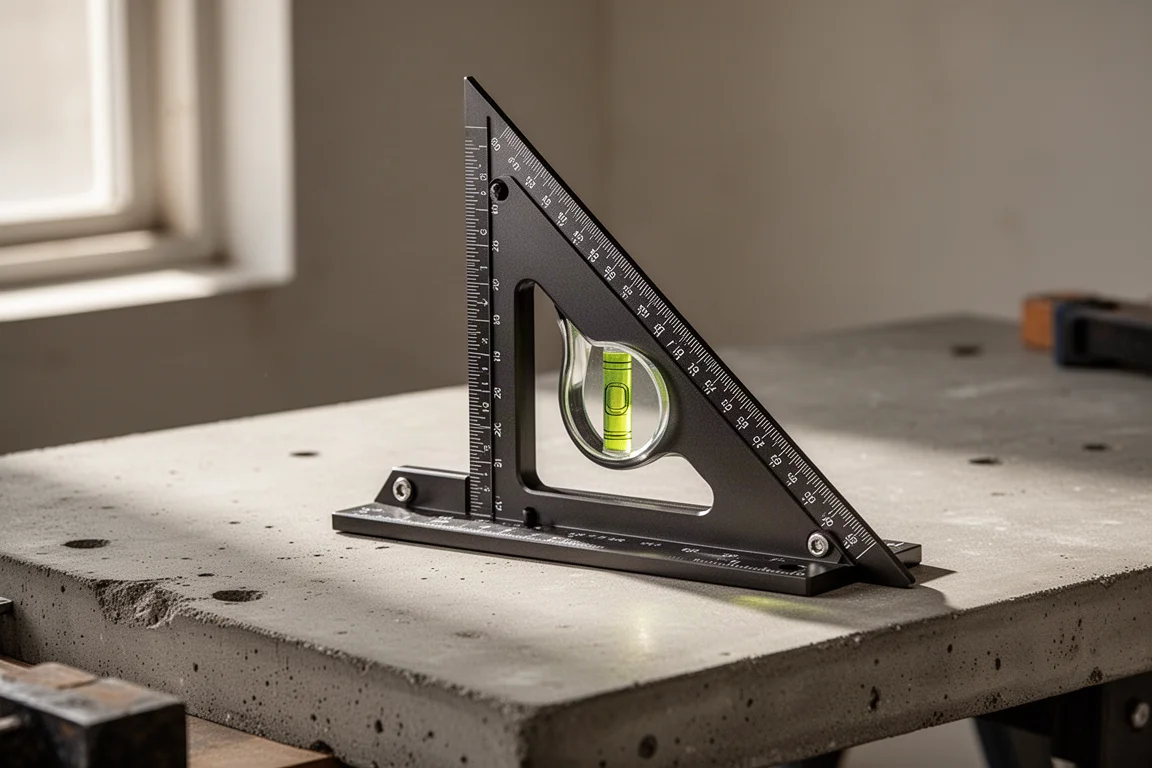
The speed square has been around for about a century, ever since Arthur Swanson brought it to market. It has earned its place in every carpenter’s pouch. But the Smart Square, developed and patented by Dan McGee of Smart Square Tools, takes the same core idea and improves it in ways that feel genuinely new rather than cosmetic.
The immediate impression is one of precision. These squares are thicker and heavier than a regular speed square, machined from hard anodized aluminum, and made in the United States. They feel like instruments rather than disposable job-site tools, the kind of thing you would climb down off a roof in a hurry to check on if you dropped it.
What Makes the Smart Square Different
A speed square has always had one fixed fence, which works fine when you are marking along the edge of your material. But move to the middle of a board and the fixed fence leaves a gap. With nearly 3/8 of an inch between the straight edge and your work surface, it is hard to keep your pencil plumb, and an off-plumb pencil means an inaccurate mark.
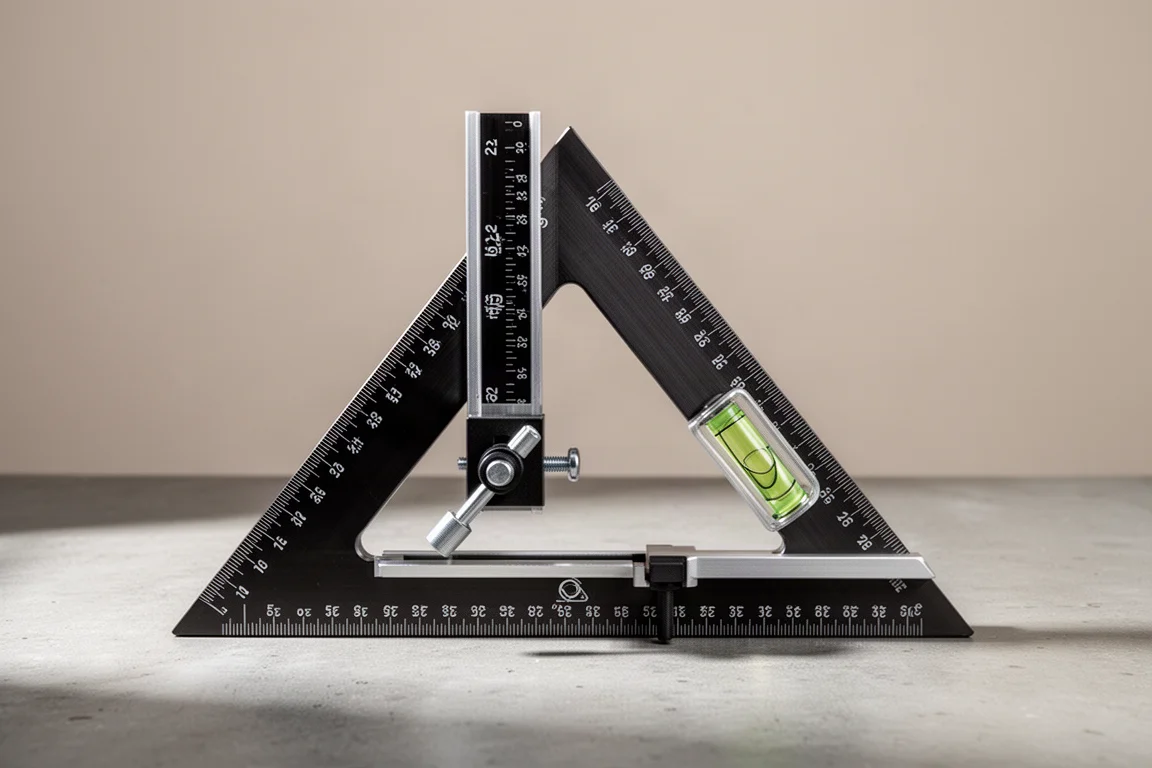
The Smart Square solves this with a fence that can be set on the left, on the right, or laid flat. Lay it flat and the fence adds one inch to the measurement, turning a 7-and-1/2-inch reading into 8-and-1/2. Dual marking scales run all the way down so you never lose track of that extra inch. That lets you work in the middle of your material with speed-square-equivalent framing square accuracy, and it works equally well whether you are right-handed or a southpaw.
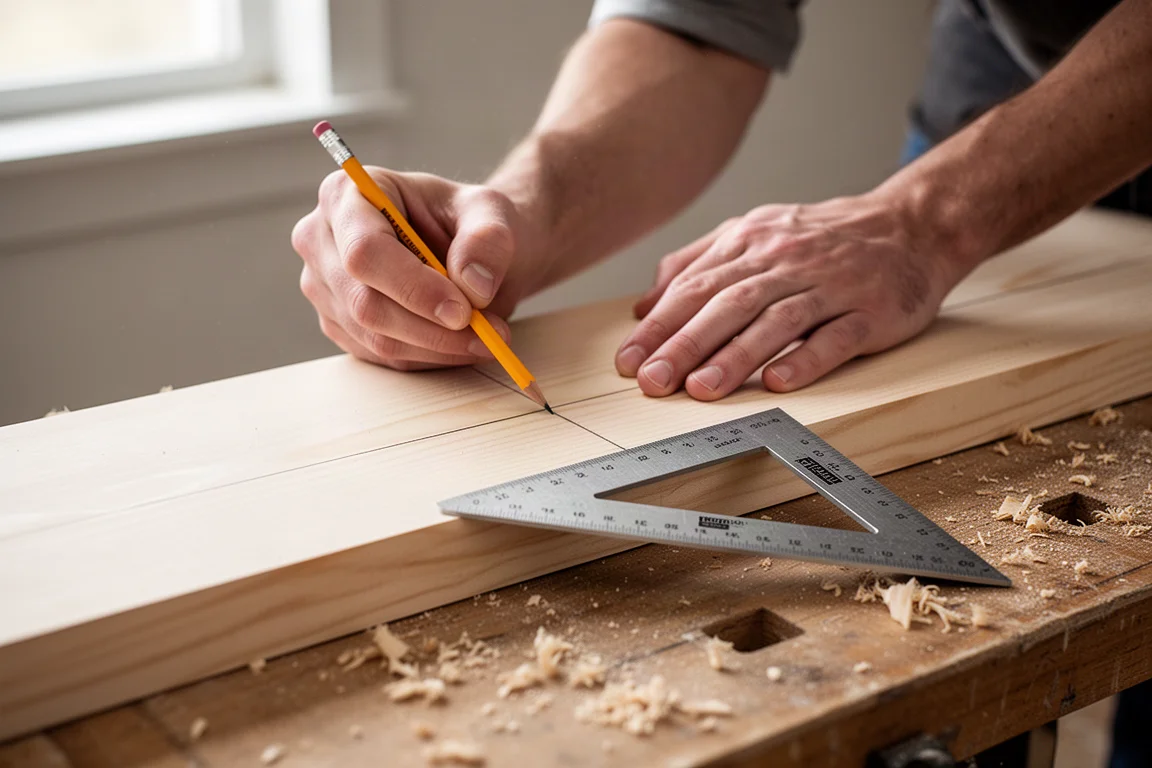
For steel fabricators there is a bonus: the fence drops down roughly 3/4 of an inch, enough to straddle the corner radius of square tubing such as 3/8-wall 4x4 and still get solid bearing for a clean mark.
The Quarter-Circle Level Vial
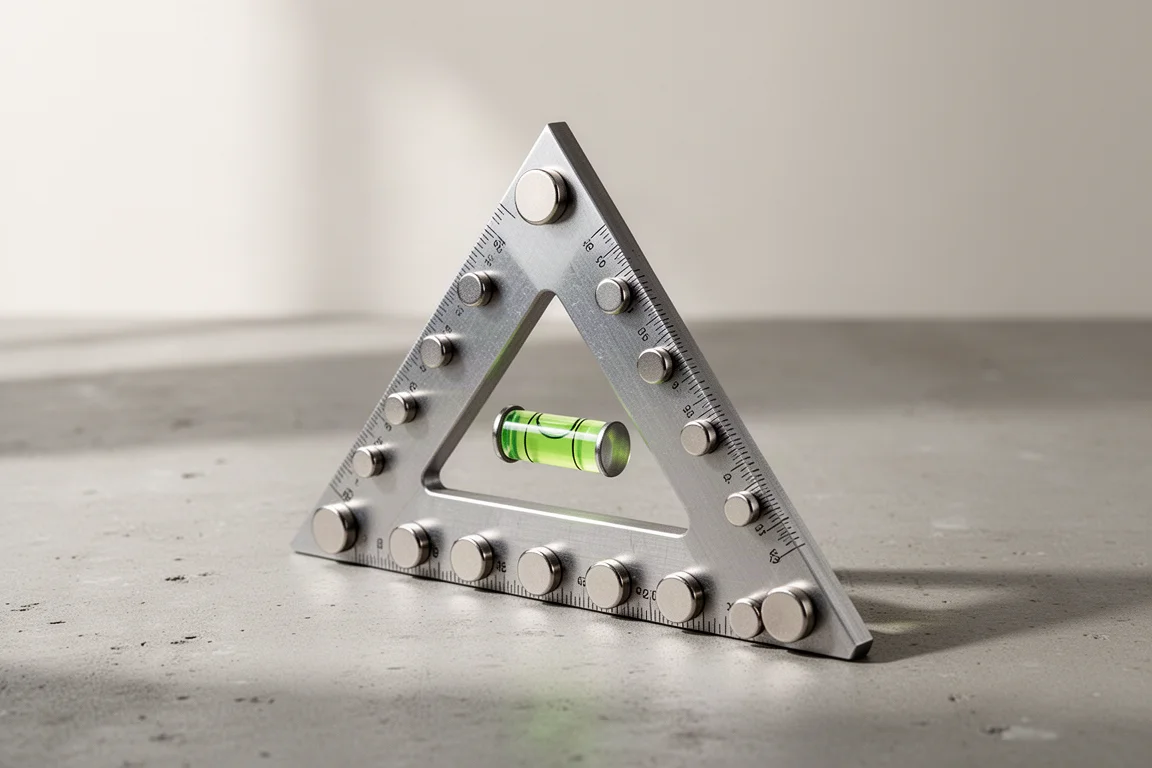
The most surprising feature of the Smart Square is its quarter-circumference bubble vial. Where the best combination squares have vials in both directions, this one has something new under the sun: a single curved vial that lets you read level in one direction, level in the other, plumb, and even verify whether your 45-degree layout is registering true.
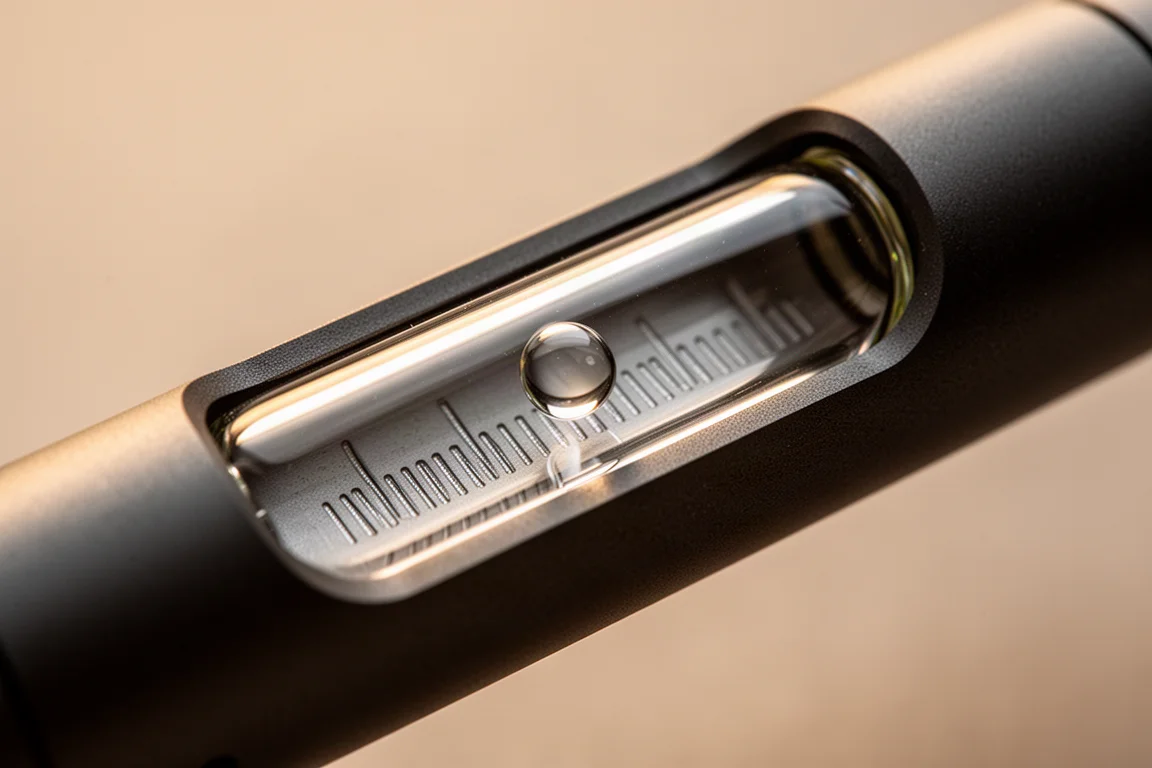
It takes a minute to wrap your head around what the vial is doing, but it is entirely worthwhile. The vials are hand-turned in Emporia, Kansas by W.A. Moyer, and each one is matched and set on a calibration table that is verified every morning with a machinist level, shimmed to tolerance with pieces of paper. They are epoxied in with a high-temperature 248-degree epoxy that cures hard in about six minutes, so the vial stays put even in serious Arizona heat.
Turning It Into a Repeating Jig
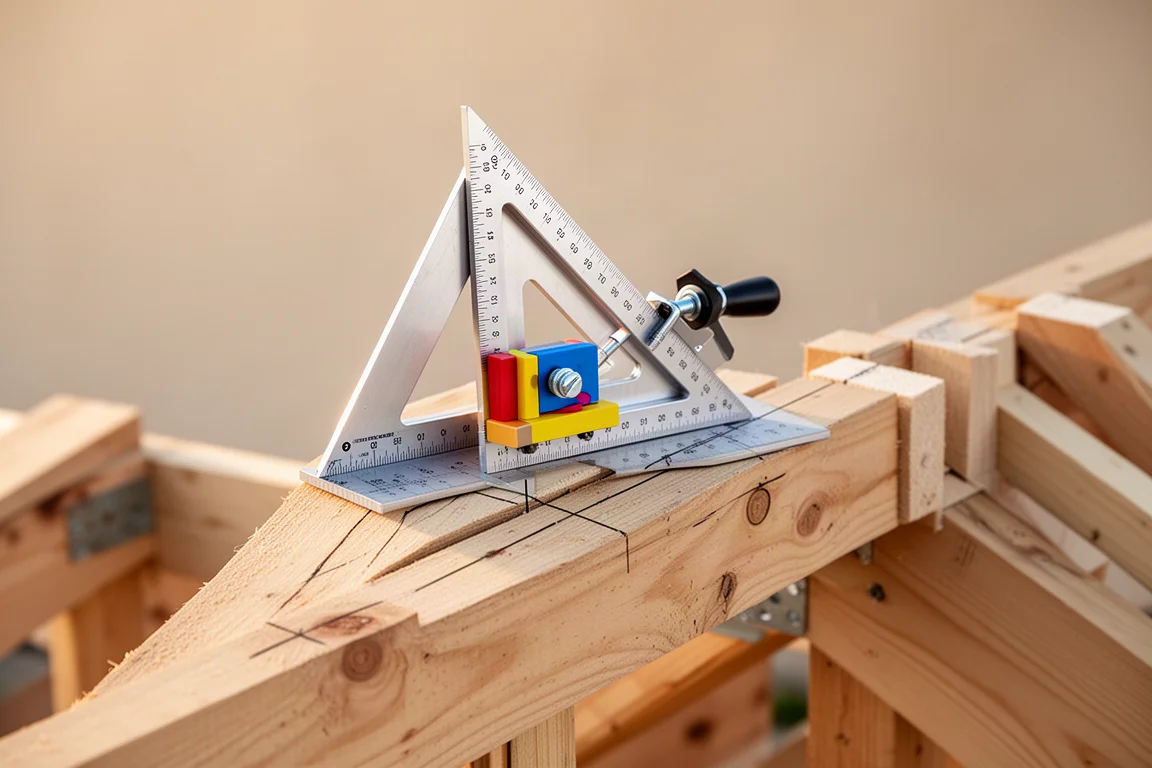
The Smart Square also doubles as a jig. With an included jig block and thumb screw, it attaches into one of two jig slots and can be locked at any angle you need to repeat. Set it once and it becomes a rafter tail cutting jig, or in the big model a stair cutting jig, carried right in your pouch.
That means you can make the same mark over and over without trudging back to the ground to cut and carry a homemade jig back up to the roof edge. It is a back saver, a time saver, and highly accurate. You can even set it to a specific bird’s mouth and repeat the cut across a full run of rafters from the middle of the layout.
Built Like a Precision Instrument
Perhaps the most remarkable detail is how the markings get onto the tool. Rather than printed or stamped scales, a CO2 laser burns highly accurate, indelible marks into the hard anodized surface. It is a slow, careful process done square by square, which speaks to the manufacturing approach behind the whole product.
The result is a tool that feels heavy, precise, and durable. Everything about it, from the calibrated vial installation to the laser-etched scales, suggests it is built to hold its accuracy for the long haul.

Buying Advice
If you frame roofs, cut rafter tails, mark in the middle of wide material, or fabricate steel, the Smart Square addresses real problems that the traditional speed square has always forced you to work around. The standard model covers most carpentry needs, while the 12-inch Pro adds capacity for bigger material and stair work. These are tools that cost more than a basic speed square, so they make the most sense for anyone who earns a living with a square in hand or who simply values precision.
Conclusion
Dan McGee looked at a tool that had gone unchanged for a hundred years and found a better way. The adjustable fence, the dual marking scales, the quarter-circle vial, and the built-in jig system together make the Smart Square a genuine leap forward rather than a novelty. If the speed square superseded the tools before it, the Smart Square makes a strong case for doing the same to the speed square.
Further reading
Related Reviews
Hand Tools
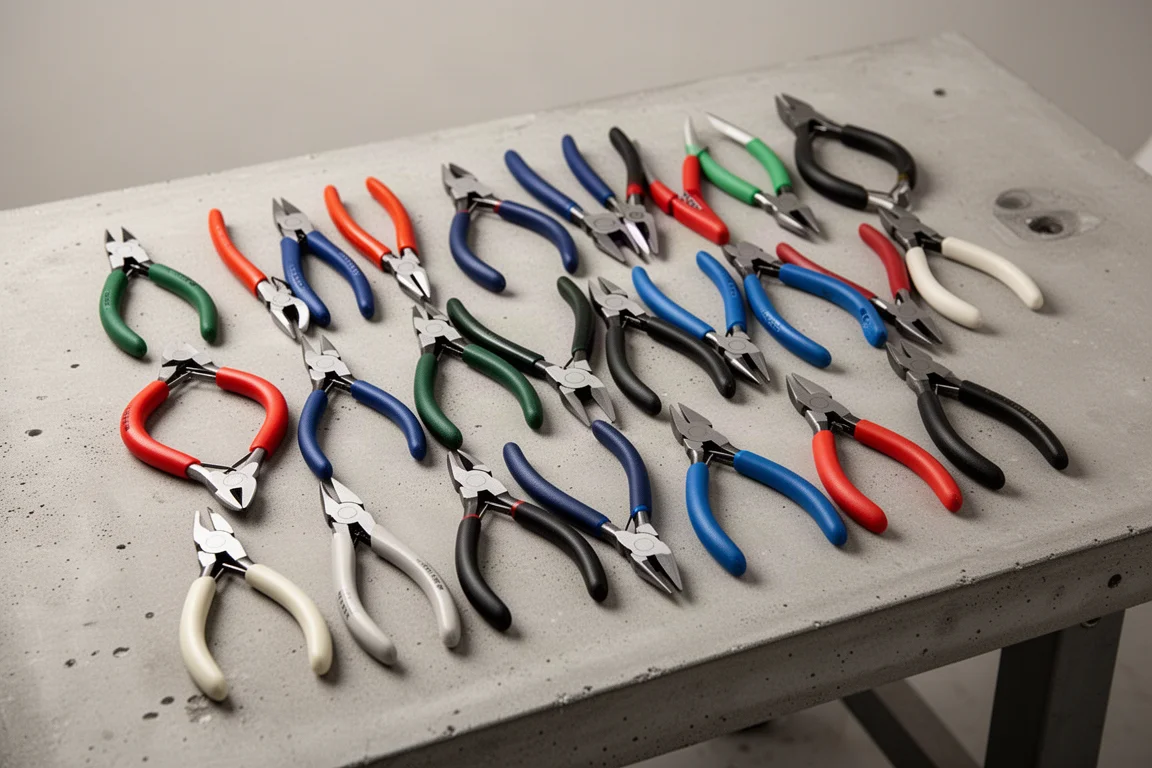
Best Diagonal Cutters 2026: 16 Pliers Tested for Cutting Power and Durability
We put 16 diagonal cutters through nail, screw, drill bit, and hex key tests to find the best value picks for your toolbox.
Hand Tools
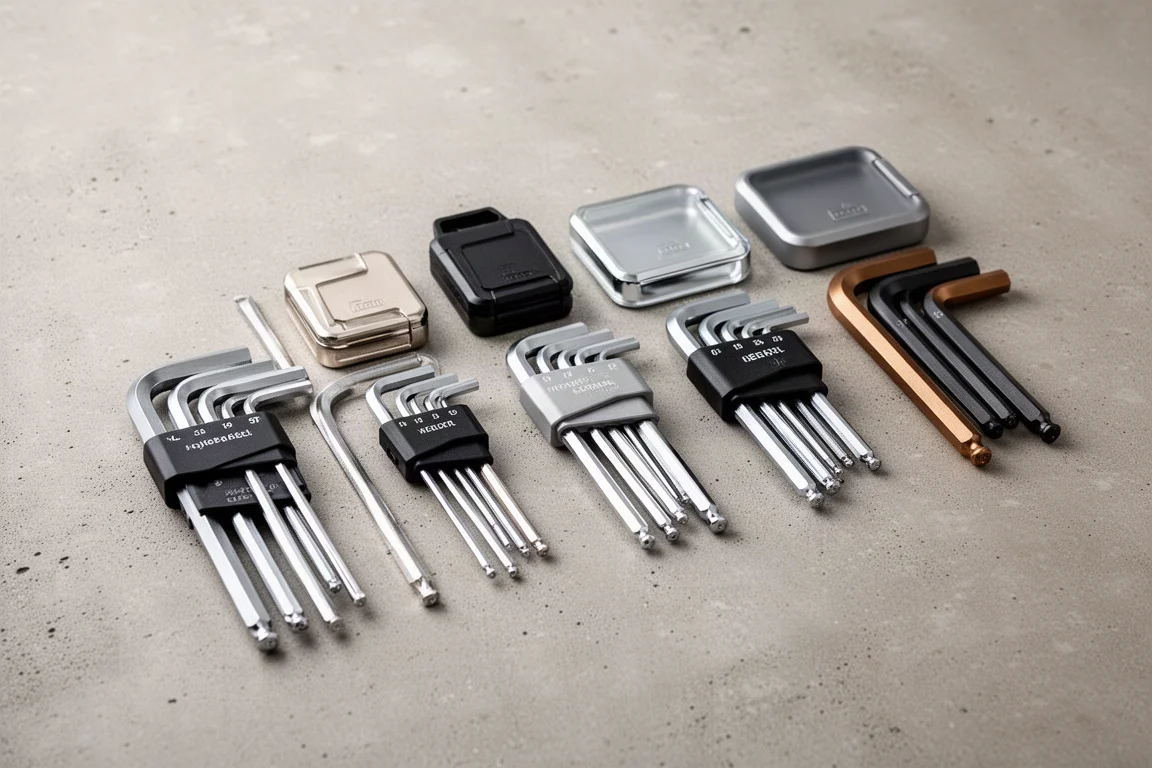
Best Hex L Key Sets 2026: Nine Sets Tested for Real-World Torque
Nine hex L key sets from budget to premium, tested for torque, fit, and durability. See which sets deliver real performance and which ones to skip.
Hand Tools
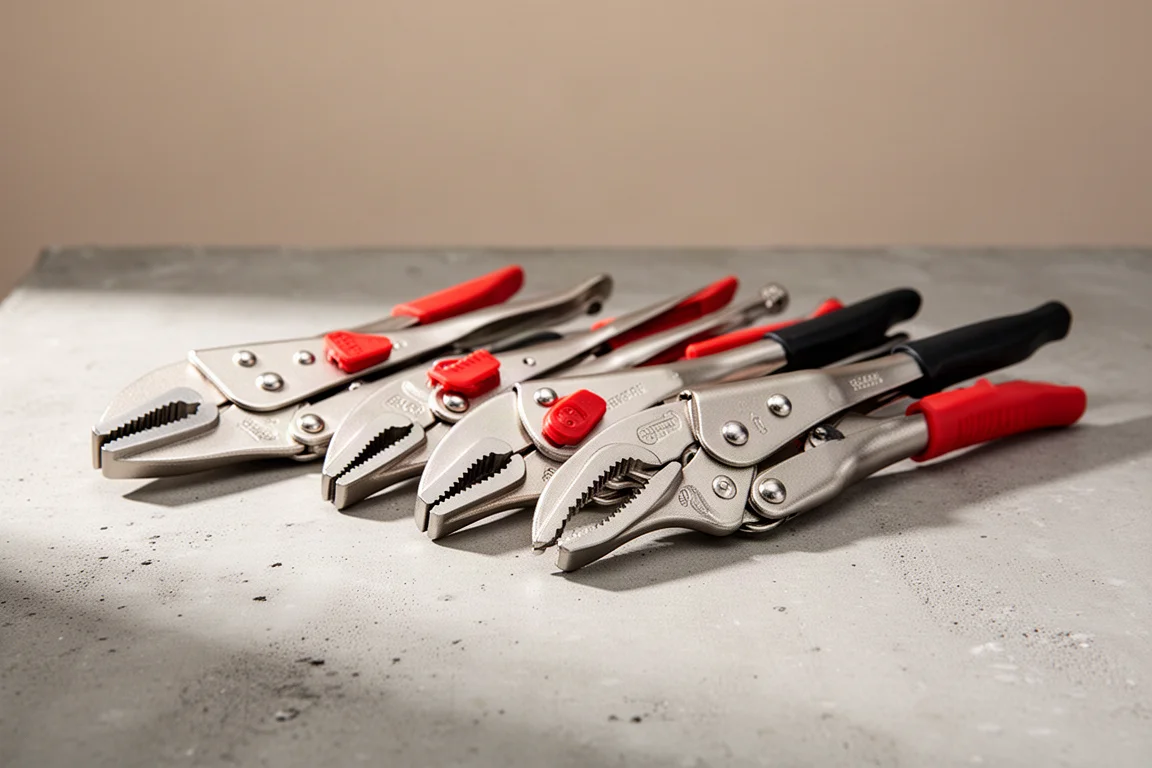
Best Locking Pliers 2026: Top Picks Tested for Grip and Durability
We tested 18 brands of 10-inch locking pliers for grip strength, jaw bite, build quality, and ease of release to find the best options for tough jobs.