Keyboards
Smack Ape Impact 80 and Pimo P75: Two Budget Keyboards Put to the Test
Two budget keyboards under $70 that promise creamy typing without the work. We test the Smack Ape Impact 80 and Pimo P75 to see if they deliver.
Introduction
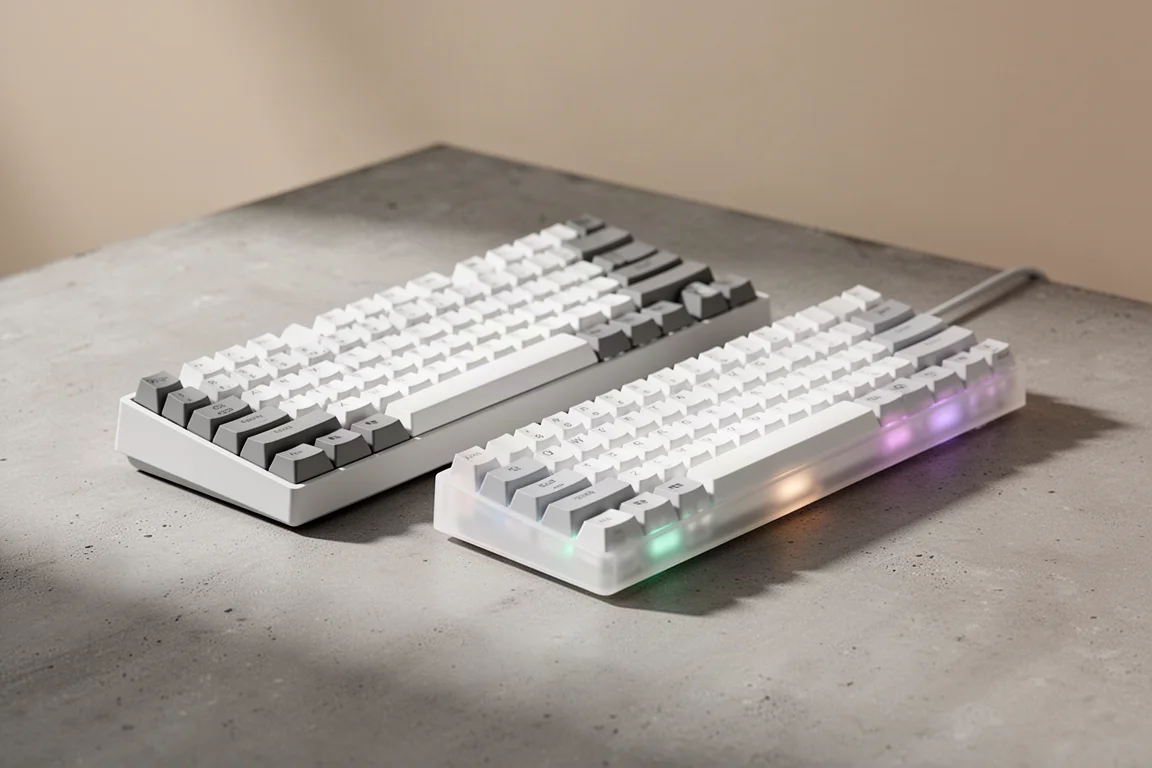
Budget keyboards have come a long way. For a long time, spending under $100 meant accepting a harsh typing feel, rattly stabilizers, and software that barely worked. That is no longer the case. Two new releases from the makers of the Rainy 75 aim to prove that creamy, satisfying typing can exist at $50 and $70. The Smack Ape Impact 80 and the Pimo P75 are both budget-focused keyboards with different layouts, different materials, and different personalities. This review puts both to the test to see which one deserves a place on your desk.
Evaluation Criteria
To judge these keyboards fairly, we looked at several factors that matter most to budget buyers. Build quality comes first, since a cheap keyboard that feels flimsy is hard to recommend. Typing feel and sound are next, because that is the main reason to buy a mechanical keyboard in the first place. Wireless performance, software support, and customization options also play a role. Finally, we considered the overall value, weighing what you get against what you pay.
Smack Ape Impact 80: A $50 Surprise
The Smack Ape Impact 80 is a tenkeyless keyboard, meaning it skips the number pad to give you more desk space. It sells for $49.99 in its standard Mist colorway, with a Pro Forest version, a Pro Sunset version, and an Ultra Black version that costs $10 more. The standard version is the one that impressed us most.
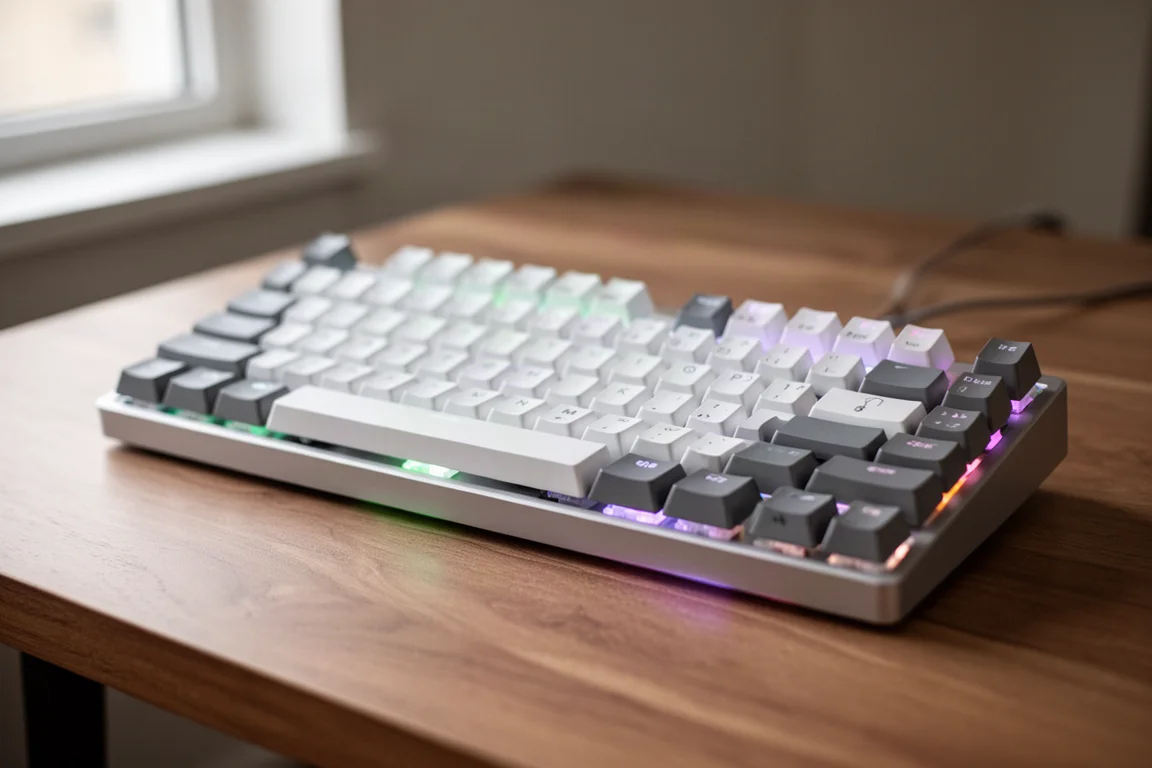
Out of the box, the Impact 80 feels surprisingly solid for the price. The plastic case has a nice texture that does not feel super cheap, and the keyboard has a reassuring heft thanks to the battery and internal foams. It also looks pretty decent on a desk. Most people would not guess this is a $50 keyboard. The Ultra Black version, however, leans into a gamer aesthetic with shine-through keycaps that look less refined.
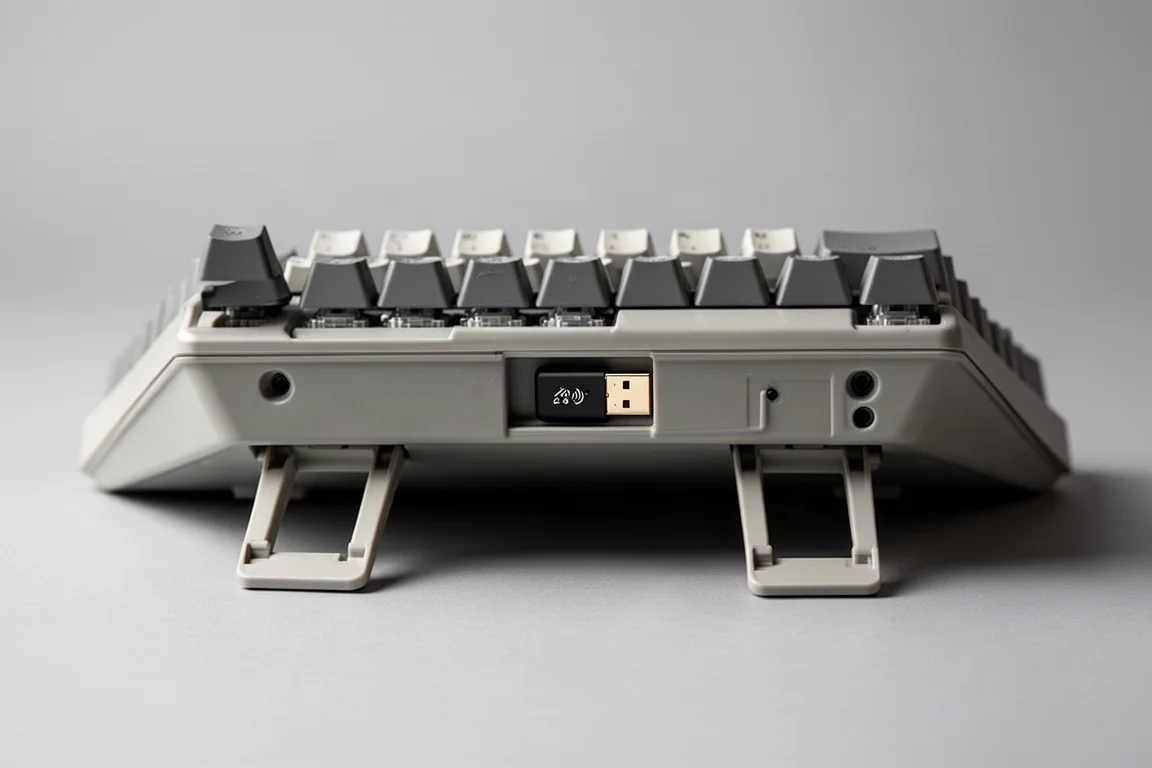
The keyboard offers three connection modes: Bluetooth, 2.4 GHz wireless, and wired USB. A switch on the back lets you toggle between them, and there is also a Mac and Windows switch, which is handy if you swap between work and personal computers. The 2.4 GHz dongle hides under one of the two-stage flip feet, a neat touch that keeps it from getting lost.
One of the more unusual aspects of the Impact 80 is that it comes with three different switch options depending on the colorway you choose. The game version gets Kailh frost blue switches, another version gets HMX cheese switches, and the standard version ships with BSON polers. All three are linear switches with a 45 g actuation force, but they feel different due to materials and spring design. The BSON switches in the standard version felt the smoothest and sounded deeper and thockier to us.
Typing on the Impact 80 is where it truly shines. The standard version sounds absolutely amazing, albeit a little loud. If you work in a shared office, this keyboard might be too loud for the people around you. But for home use, the typing experience is incredible for the price. The case is already well foamed, and the switches feel great out of the box. The keyboard is hot swappable, so you can replace switches easily if you ever want to, though most people will not need to.
The main downside is moddability. Like most cheap plastic keyboards, the Impact 80 is not easy to take apart. There are no screws or rapid clasp closures, so opening the case risks breaking something. If you prefer a no-foam setup, this is not the keyboard for you. The advertised 2.7 milliseconds of wireless latency is fine for gaming, though not the fastest on the market.
Pimo P75: A Familiar Formula at $69
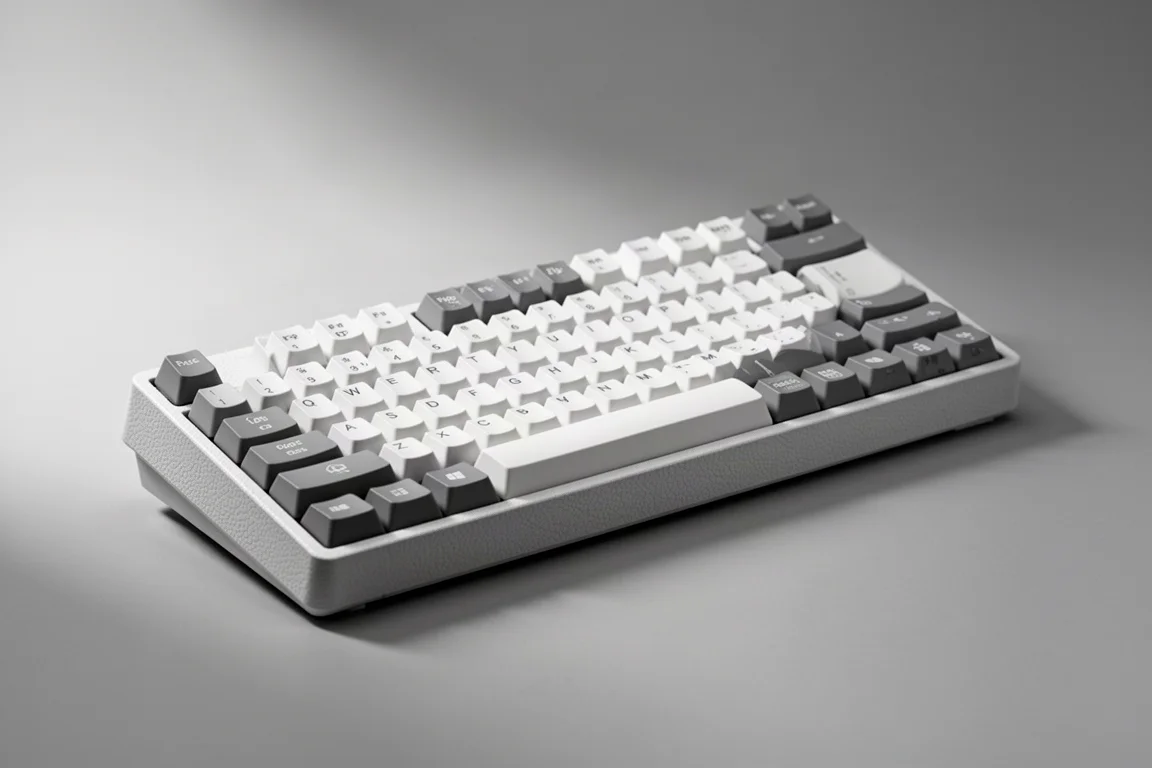
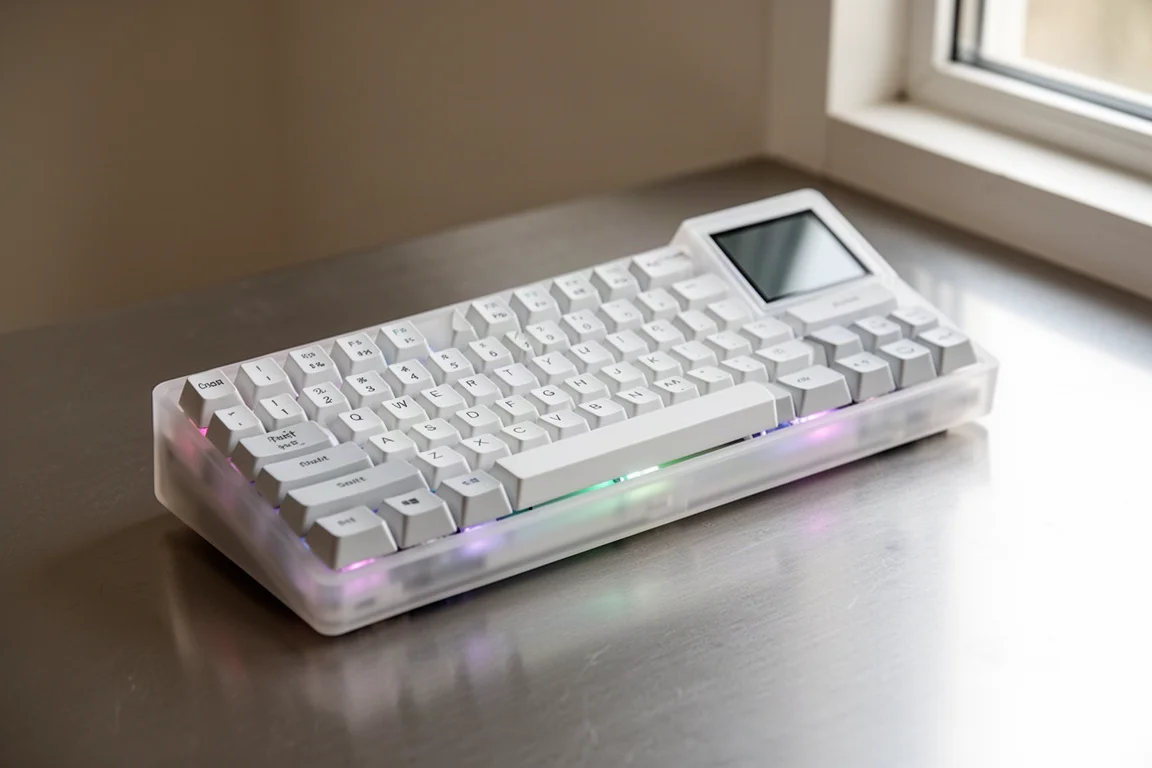
The Pimo P75 is the other release from the same maker, priced at $69.99. It is a plastic 75% keyboard, meaning it keeps the function row but drops the number pad for a more compact footprint. It shares a lot of DNA with the Rainy 75, but with a plastic case and a lower price.
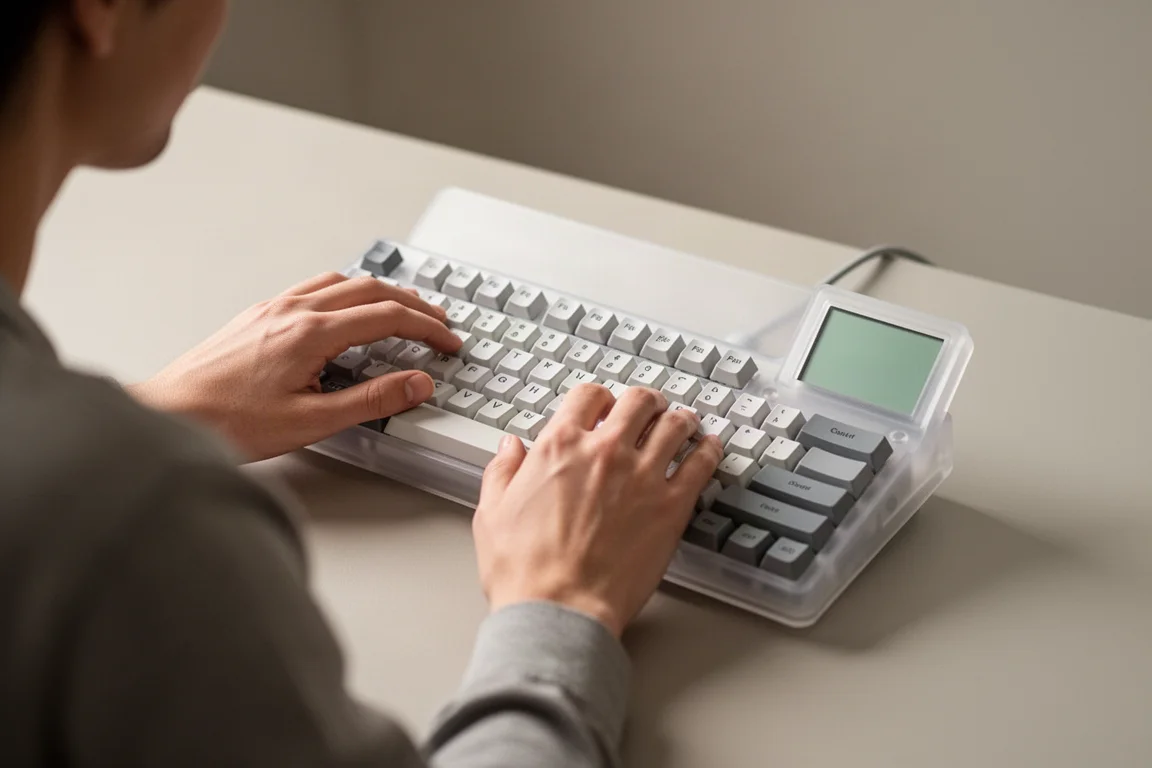
The P75 has some genuinely nice features. There is a small screen in the corner that serves no practical purpose other than looking cute, which we appreciate. It is customizable with VIA, so software support is solid. It offers tri-mode wireless, a big battery, and decently low latency, making it a reasonable choice for gaming. The keyboard also has five layers of foam inside and RGB front glow, which looks clean if you like RGB lighting.
However, the typing experience left us feeling mixed. The white and clear version we tested sounded really loud and clacky, almost approaching clicky switch levels of loudness. That makes it unsuitable for shared spaces. More importantly, the gasket mount felt inconsistent, with hot spots and squish across the keyboard. It was not bad, but it sat in an uncanny middle ground between a firm mount and a bouncy one.
The pink version, on the other hand, had soft-feel keycaps with cute cat designs and sounded much more pleasant to type on. It was a nicer experience overall, though the aesthetic would not suit every desk. The inconsistency between colorways is a bit frustrating, since you cannot easily predict which switch and keycap combination you will get.
At $69, the P75 faces stiff competition. It is about $30 more than the Kissant KN85, which offers a similar plastic 75% experience. A standard version is planned for $49, but it will use the less appealing front shine-through keycaps. Even at that price, it is about $5 more than the Owla F75, and it does not do enough to set itself apart from the crowd.
Which Budget Keyboard Should You Buy?
If you want the best value for your money, the Smack Ape Impact 80 is the clear winner. At $50, it delivers a typing experience that rivals keyboards costing twice as much. The standard version with BSON switches sounds deep and thocky, feels smooth, and looks clean on a desk. The main trade-offs are the lack of moddability and the loud typing sound, but for most people, those will not matter.
The Pimo P75 is a good keyboard, but it competes in a very tight space. It has nice features like VIA support, a cute screen, and solid wireless performance, but the inconsistent typing feel and the loud clacky sound of the white version hold it back. If you can find the pink version with the soft keycaps, it is a more pleasant experience, but the value proposition is weaker than the Impact 80.
Conclusion
The Smack Ape Impact 80 proves that a great typing experience does not have to cost a fortune. It is an incredibly cool keyboard that delivers creamy, satisfying sound and feel for just $50. The Pimo P75 is a decent budget option, but it does not do enough to stand out in a crowded market. If you are looking for a budget keyboard that sounds amazing right out of the box, the Impact 80 is the one to get.
Further reading
Related Reviews
Keyboards
Ajazz AK820 vs AK820 Pro: Two Budget Keyboards With Very Different Switches
A close look at the Ajazz AK820 and AK820 Pro, two budget keyboards that share a frame but differ sharply in typing feel and value.
Keyboards
Best Budget Keyboards on Amazon 2026: Six Solid Options Under $150
A practical roundup of six budget-friendly mechanical keyboards available on Amazon, each with real strengths and trade-offs worth considering before purchase.
Keyboards
Best Prime Day Keyboard Deals 2026: Top Picks for Every Budget
A curated roundup of the best keyboard deals this Prime Day, from budget-friendly options to premium aluminum builds, with honest trade-offs for each pick.