Drones
Skydio 2 vs DJI Mavic Air 2S: Which Drone Tracks You Better?
Two capable drones put through the same winding-road tracking test, with clear differences in obstacle handling, footage smoothness, and portability.
Introduction
Autonomous tracking is one of the most useful features a camera drone can have, especially if you ride solo and want hands-free footage. Two drones stand out in this space: the Skydio 2, widely regarded as the benchmark for self-flying tracking, and the DJI Mavic Air 2S running ActiveTrack 4.0. To see how they actually compare, both were flown on the same quiet, curving section of road packed with corners and rock walls, each set to track a cyclist from directly behind.
The Test: A Winding Road With Real Obstacles
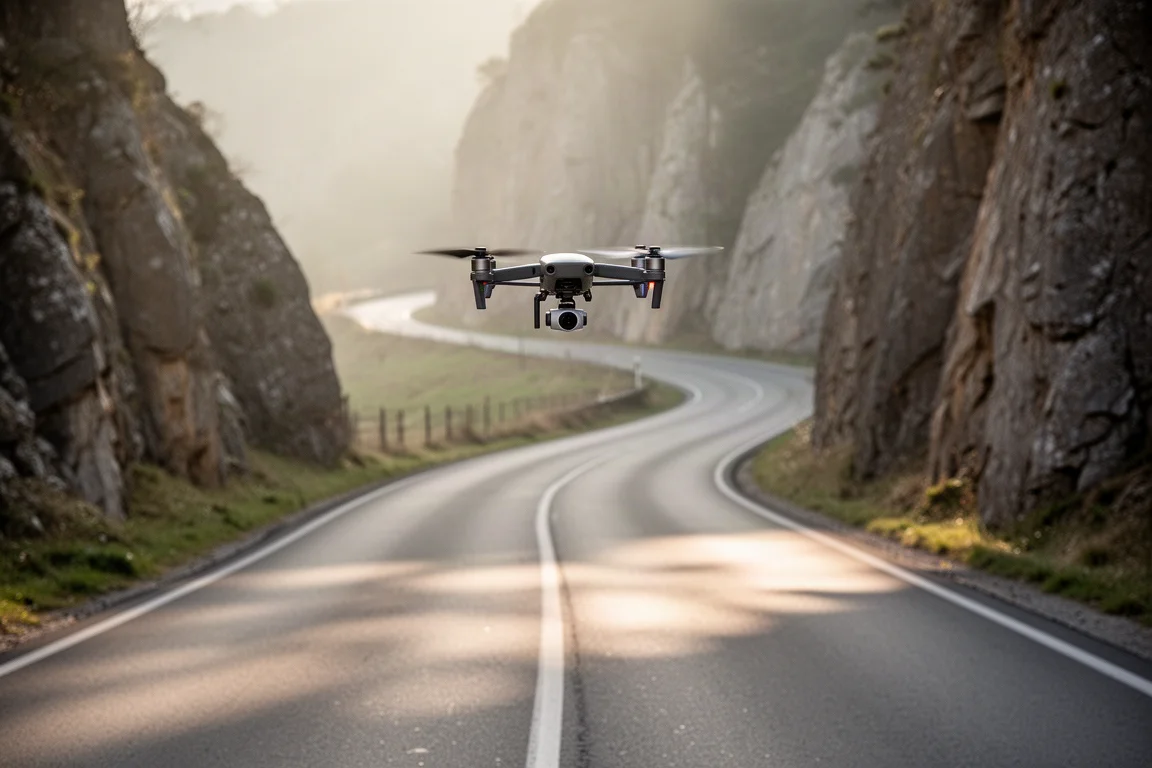
The test road was chosen deliberately: it was quiet at the time of day and full of tight curves and corners, with rock faces lining one side. A visual observer kept watch over the airspace, the drone, and traffic for safety throughout both runs.
Both drones were configured the same way, set to track the rider from directly behind. That detail matters later, because the Skydio 2 does not always stick to that position when obstacles appear.
DJI Mavic Air 2S: Confident Rear Tracking
The Mavic Air 2S proved to be the first DJI drone where the tracking can be genuinely trusted. On the test run it held the rear position consistently, even as the rider sped up on straights and flowed through an S-bend without drifting off target.
Its one recurring habit was getting close to the rock wall on the right-hand side, sometimes near corners with a wall of rock alongside. On the final corner it flew close to the rock face and nearly rose directly above the rider before settling back. Tracking stayed solid throughout, but the proximity to obstacles occasionally pushed past a comfortable margin.
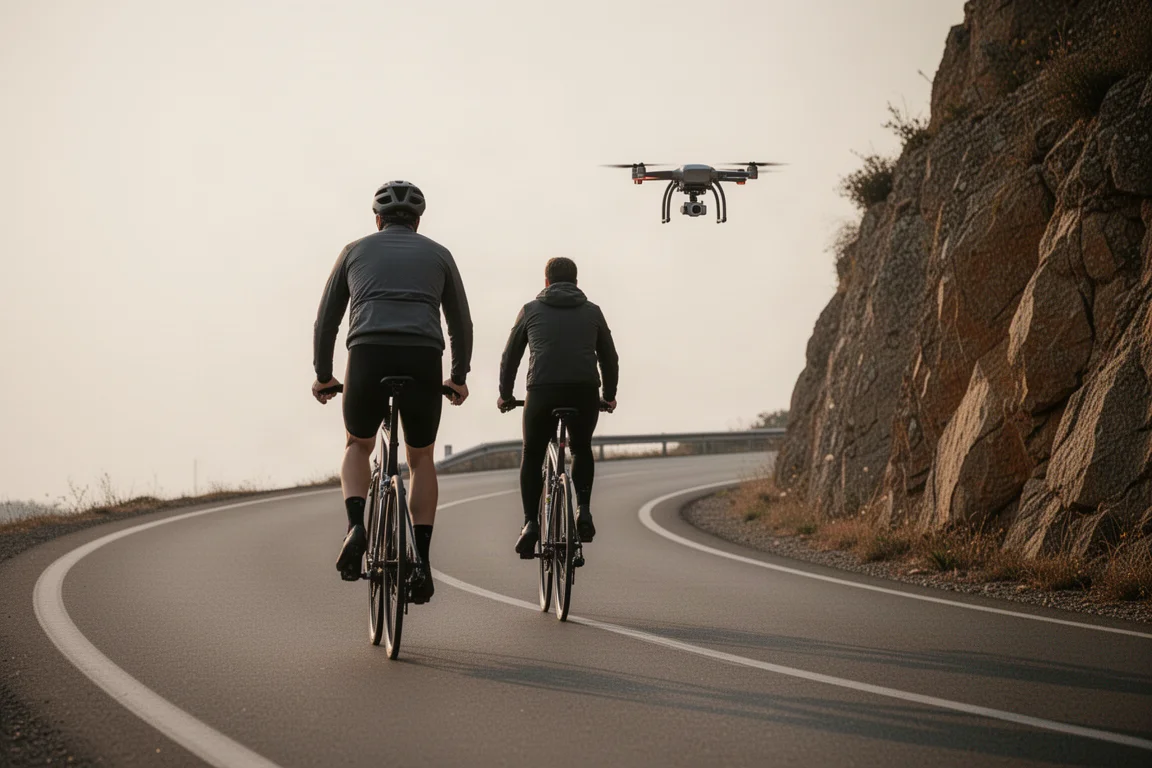
The overall picture is of a drone that tracks smoothly and holds its line well, with steady, watchable footage as a result.
Skydio 2: Precise, Reactive Obstacle Avoidance
The Skydio 2 also tracked from the rear, but it behaved very differently around the rock walls. Whenever it detected rock on the right-hand side, it repositioned itself to the left rear of the rider instead of staying directly behind, correcting quickly when it drifted close early on. When the road opened up with no rock face, it returned to a dead-rear position.
That intelligence comes with a trade-off. The tracking is extremely precise, but the drone makes quick, sensitive movements to stay safe. That is good for obstacle avoidance, but it makes the footage slightly more jerky. If you want more cinematic results, positioning it higher than you would the DJI appears to help.
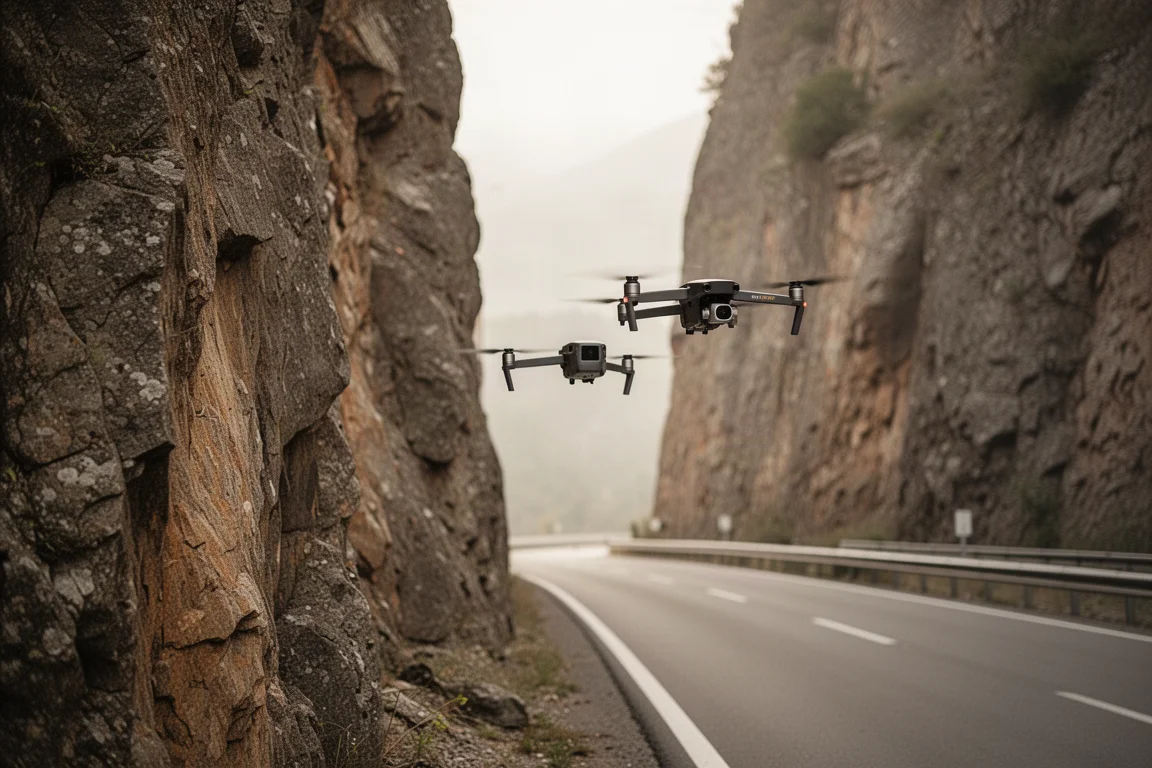
Notably, this run used visual tracking only, without the beacon. On the final corner, the Skydio 2 wanted nothing to do with the rocks on the right, climbed almost directly above the rider, briefly lost visual sight, then recovered and locked back on by anticipating the rider’s movement.
Which One Should You Choose?
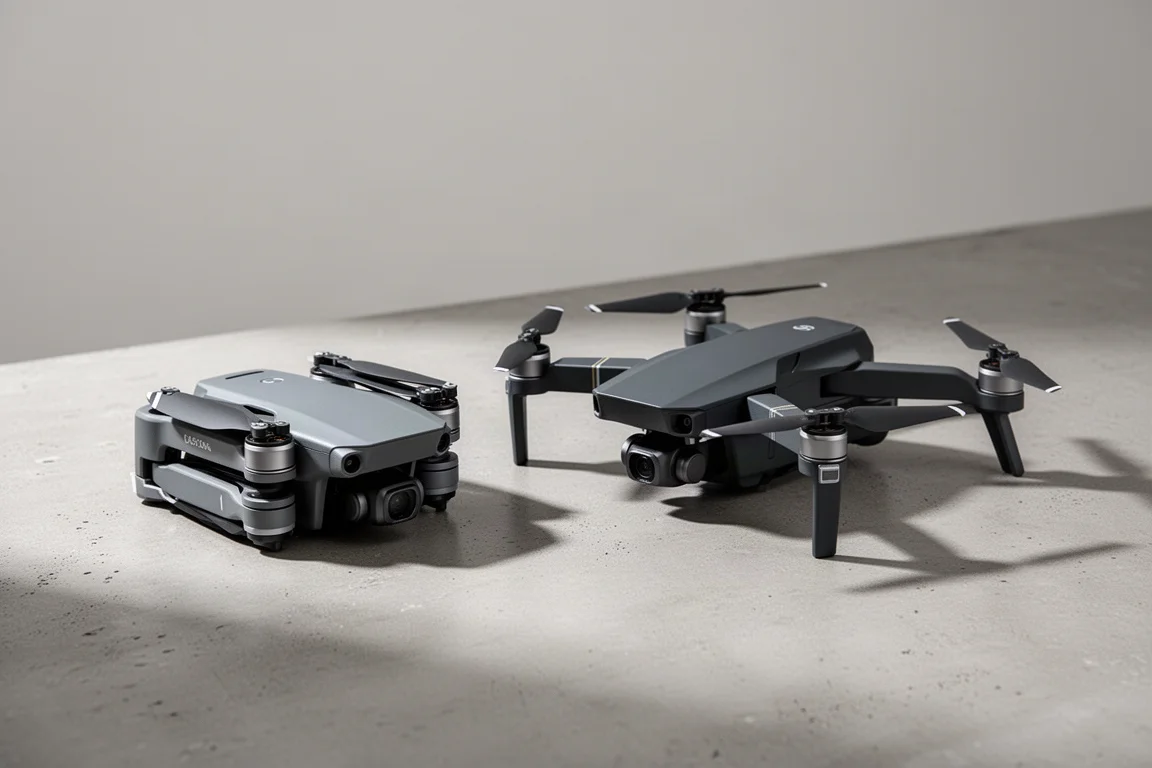
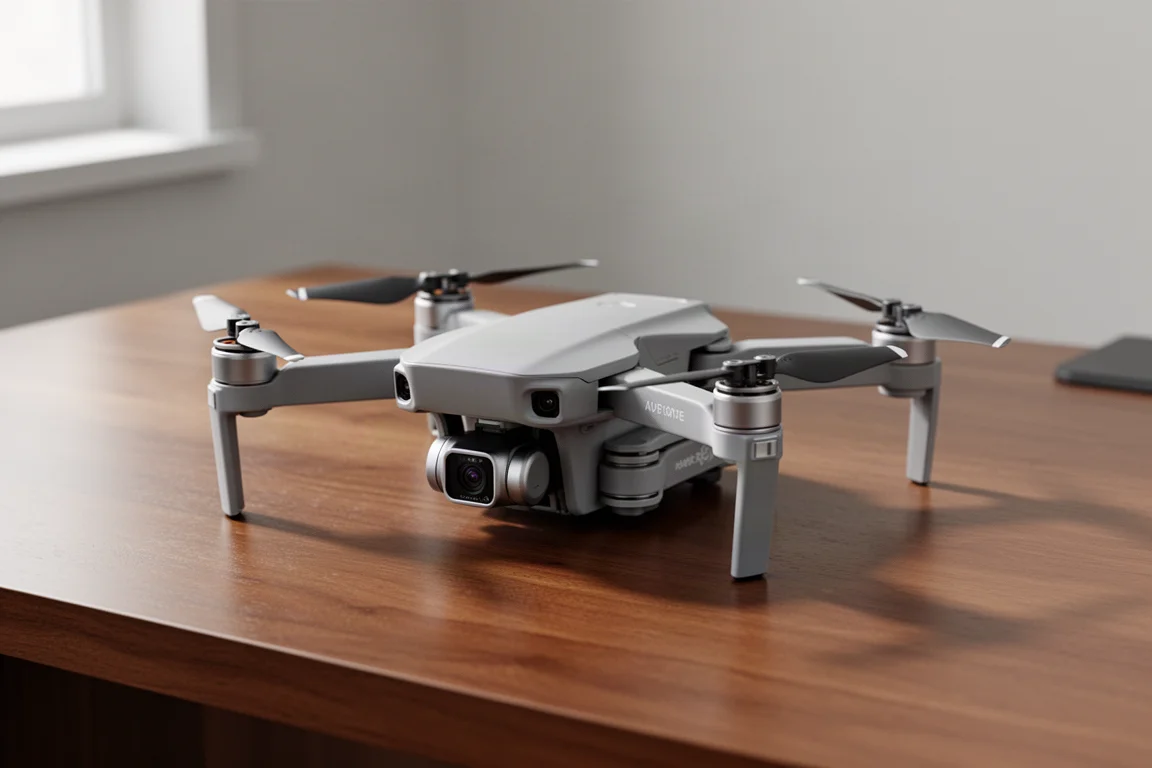
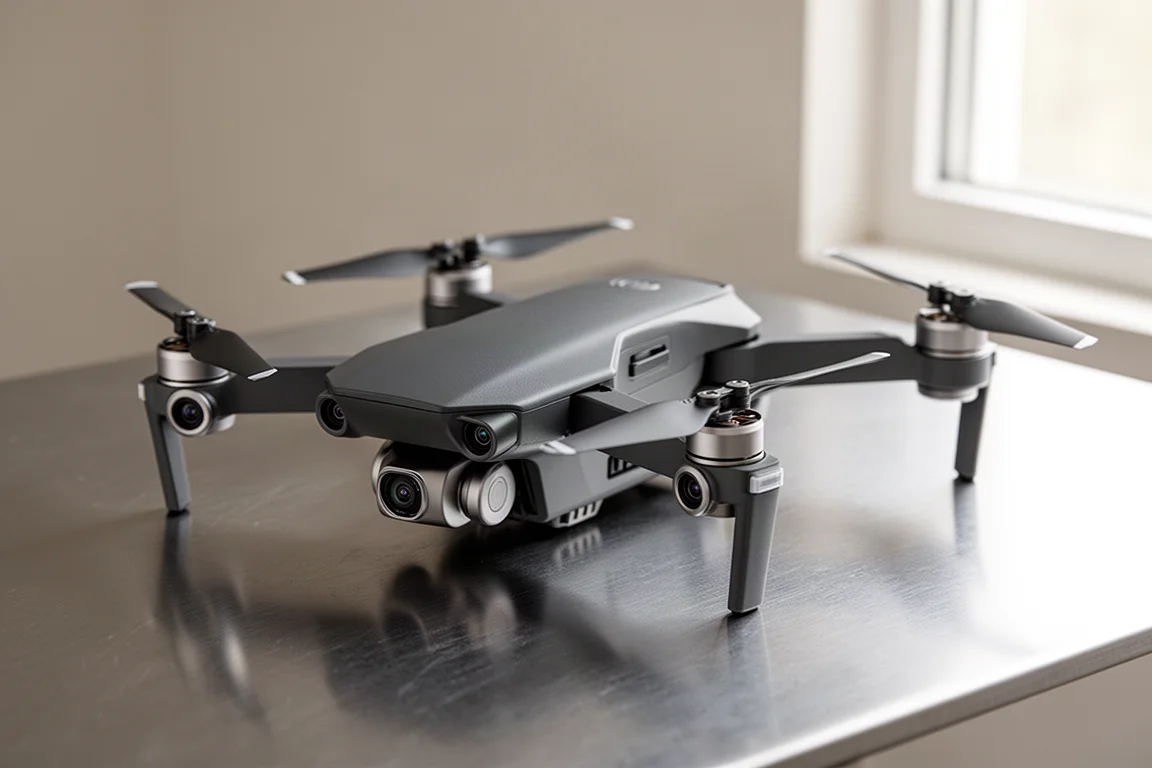
For this kind of scenario, either drone can be trusted. The choice largely comes down to how you carry them, and that cuts both ways. The Mavic Air 2S is a smaller drone that folds up, but you need its controller with you. The Skydio 2 does not require the larger controller since you can fly it with just your smartphone, but it cannot fold and travels in a rather large case.
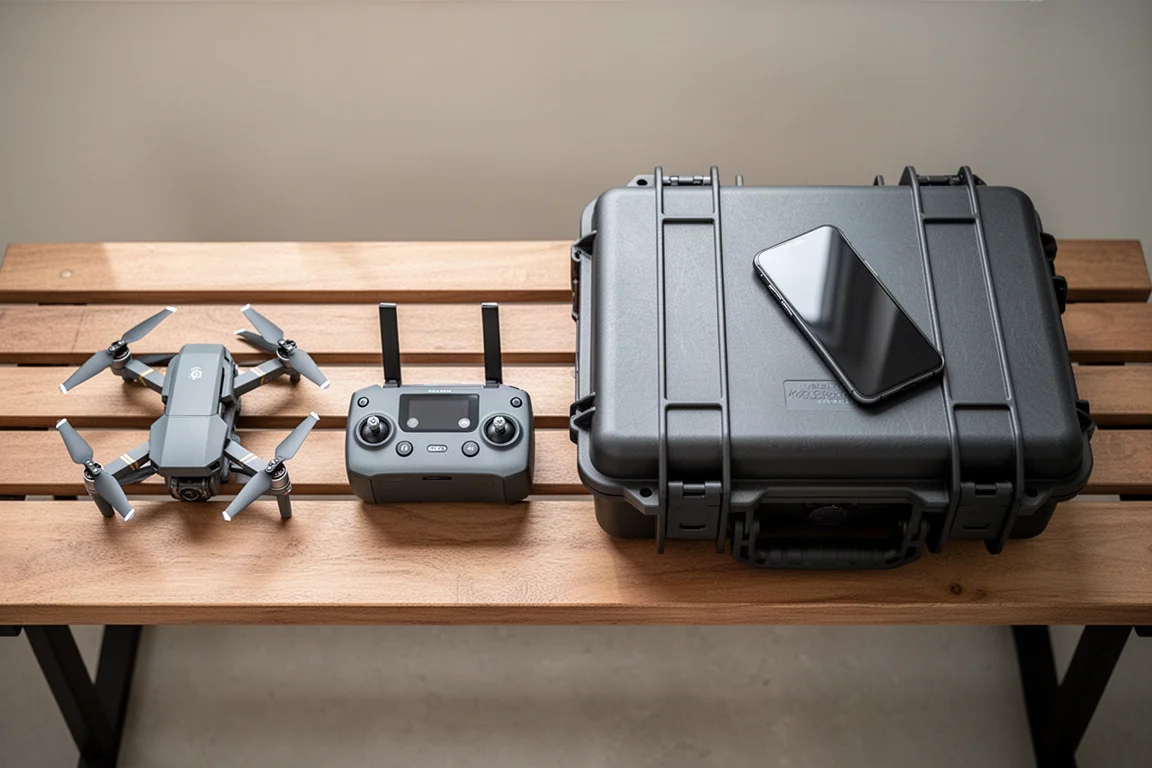
One extra factor for cyclists: with the DJI, getting full control of the drone means mounting the controller onto your handlebars. Either way, both drones earned trust on this terrain.
Conclusion
The Skydio 2 remains the standard for autonomous tracking, using its obstacle awareness to keep itself safe with quick, precise movements. The Mavic Air 2S with ActiveTrack 4.0 is the first DJI drone in this comparison that held its rear position confidently from start to finish. Choose based on whether smoother footage and foldability matter more to you, or whether smarter obstacle reactions and controller-free flying win out.
Further reading
Related Reviews
Drones
Best Budget Camera Drones Under 3000: Five Practical Options for Video and Photography
Five affordable camera drones with HD video capability and stable flight performance, each suited to different needs and budgets.
Drones
Best Budget Drones Under $200: Five Practical Options for 2026
Five budget-friendly drones with GPS, 4K cameras, and FPV capabilities. Real strengths and trade-offs to consider before buying.
Drones
Best Drone Cameras Under $500: Five Options for Different Needs
A practical guide to five drones under $500, covering portability, flight time, camera quality, and key features to help you choose.