Telescopes
Sky-Watcher Virtuoso GTI 130 vs 150: Go-To Tabletop Dobsonians for First-Time Stargazers
Two tabletop Dobsonian telescopes with smartphone go-to tracking, easy setup, and views of the planets that make a genuinely memorable first night out.
Introduction
Few first experiences stick with you like seeing Saturn’s rings, Jupiter’s cloud bands, or the craters on the Moon through a telescope for the first time. Those are the moments that turn casual curiosity into a lasting passion for astronomy, and the Sky-Watcher Virtuoso GTI 130 and 150 are built to deliver exactly that kind of night.
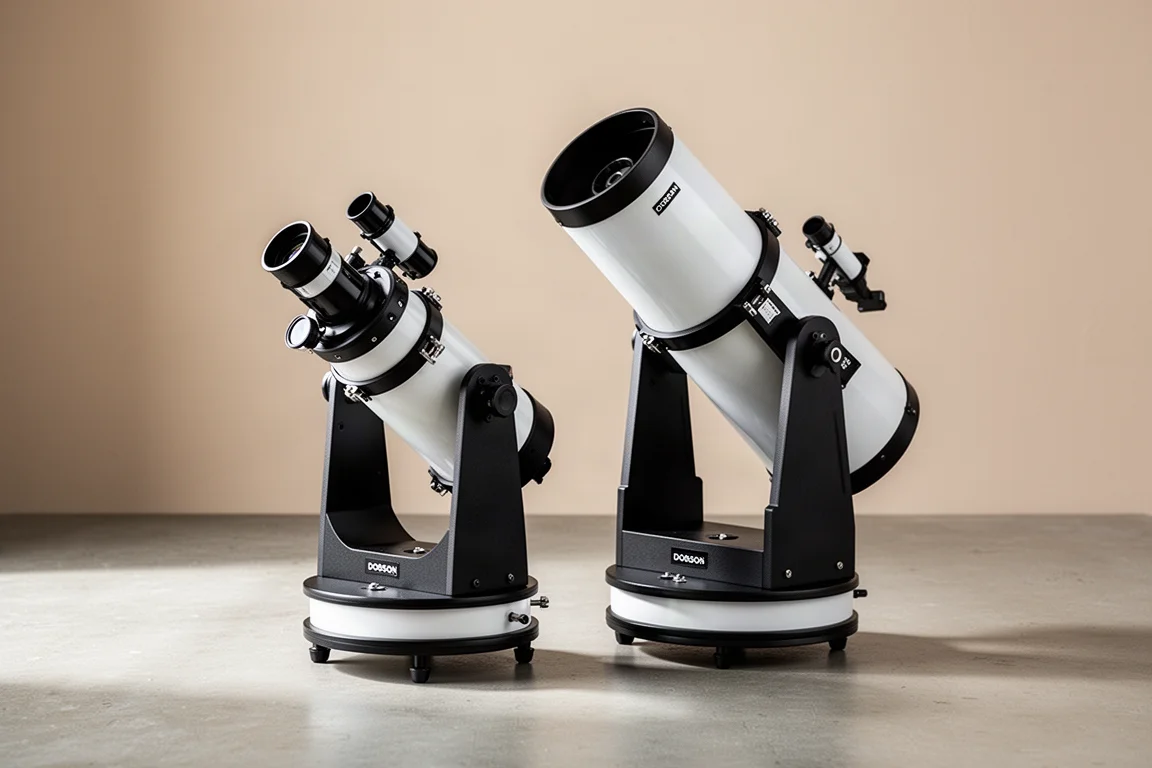
Both are go-to tabletop Dobsonians: compact Newtonian reflectors on motorized bases that pair with your smartphone to find and track objects in the night sky. This review covers what they share, where they differ, and which one makes more sense for you.
Why the Virtuoso GTI Line Works as a First Telescope
A first telescope should be user friendly. Nobody wants a setup routine that eats 30 to 45 minutes before the first eyepiece view, and both Virtuoso GTI models hit this mark. They come largely assembled out of the box, and getting them ready for a session takes only a few straightforward steps.
The aperture is the other big part of the story. A five-inch tabletop Dobsonian is big enough to show impressive detail on the planets and to reveal some of the brighter deep-sky objects. It is the kind of view that genuinely lands the first time you see it.
Sky-Watcher Virtuoso GTI 130
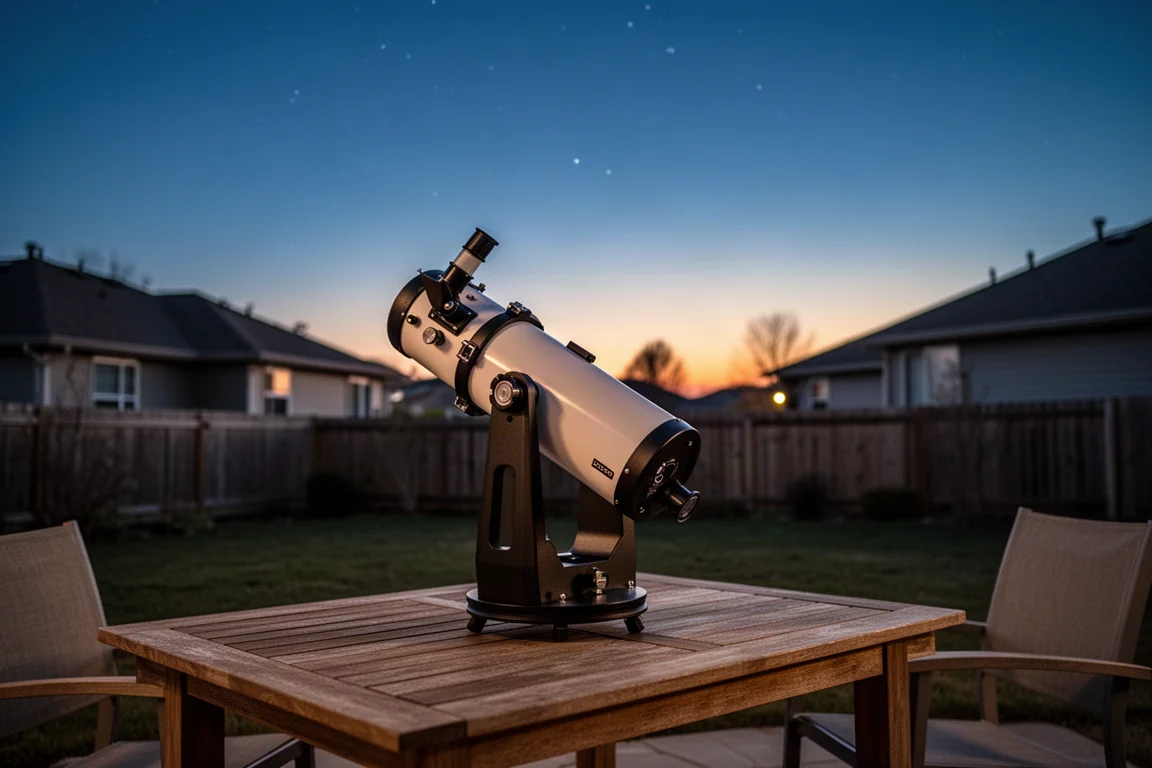
The 130 is the entry point of the pair, built around a five-inch mirror on a motorized go-to base. In use, it is the kind of scope you can carry to a campsite, set on a table in the backyard, or hop outside with on a whim. It runs on AA batteries, and a full night of observing on a single set is realistic, which makes it both extremely reliable and extremely portable.
Perhaps the most important thing to remember about any first telescope is that the best one is the one you will actually use the most. The 130 is so easy and fun to operate that it removes most of the excuses for leaving it in the closet.
Sky-Watcher Virtuoso GTI 150
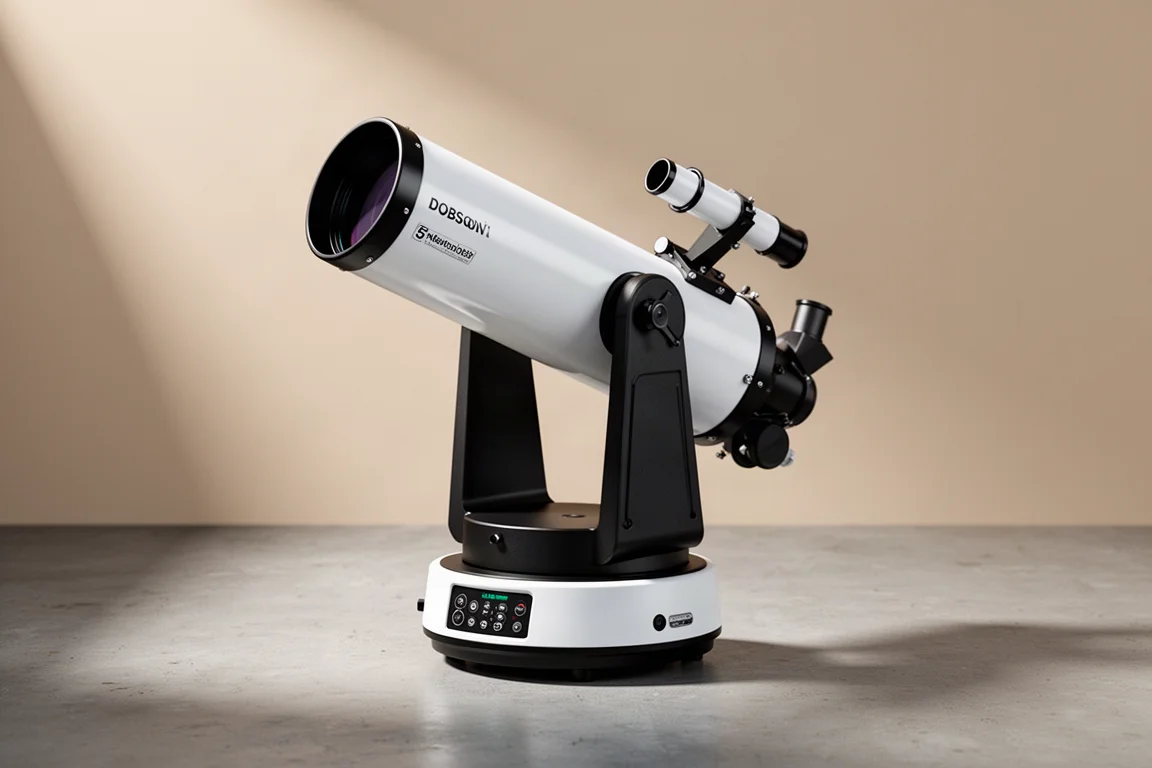
The 150 upgrades you to a six-inch mirror, and that step brings a meaningful increase in light gathering over the 130. Your views are brighter and more detailed, which matters most on fainter deep-sky targets and when you want the planets to show that extra bit of contrast.
Everything else carries over: the same go-to base, the same smartphone control, and the same simple tabletop form factor. If your budget stretches and you expect to chase fainter objects, the 150 is the version that grows with you.
What’s in the Box
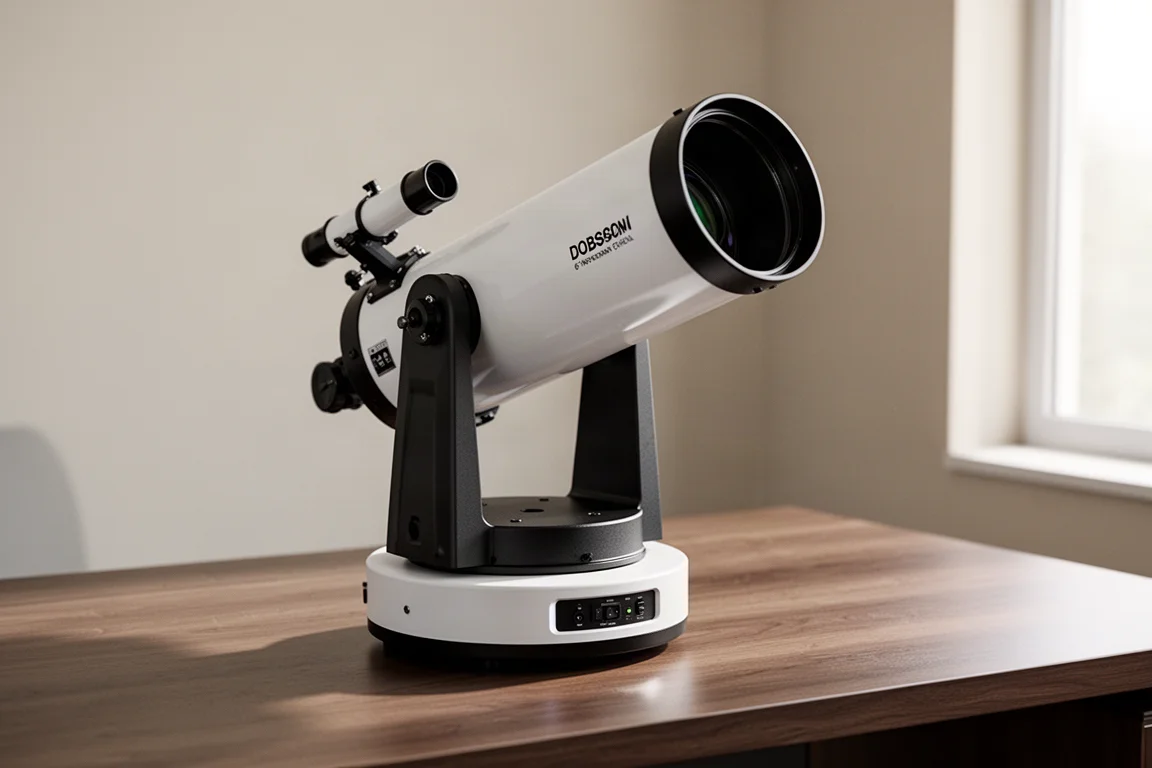
Unboxing is refreshingly simple, since the scope comes mostly assembled. Accessories include a red dot finder scope, a collimation cap, a 25mm eyepiece, a 10mm eyepiece, and printed instructions.
Physical setup takes a few minutes. You extend the tube until it locks and tighten the thumb screws, then balance the telescope by loosening the altitude clutch, pointing the scope horizontally, and sliding the optical tube back or forth until it balances left to right. Attaching the red dot finder with a Phillips screwdriver completes the hardware side.
Setup and Alignment Under the Stars
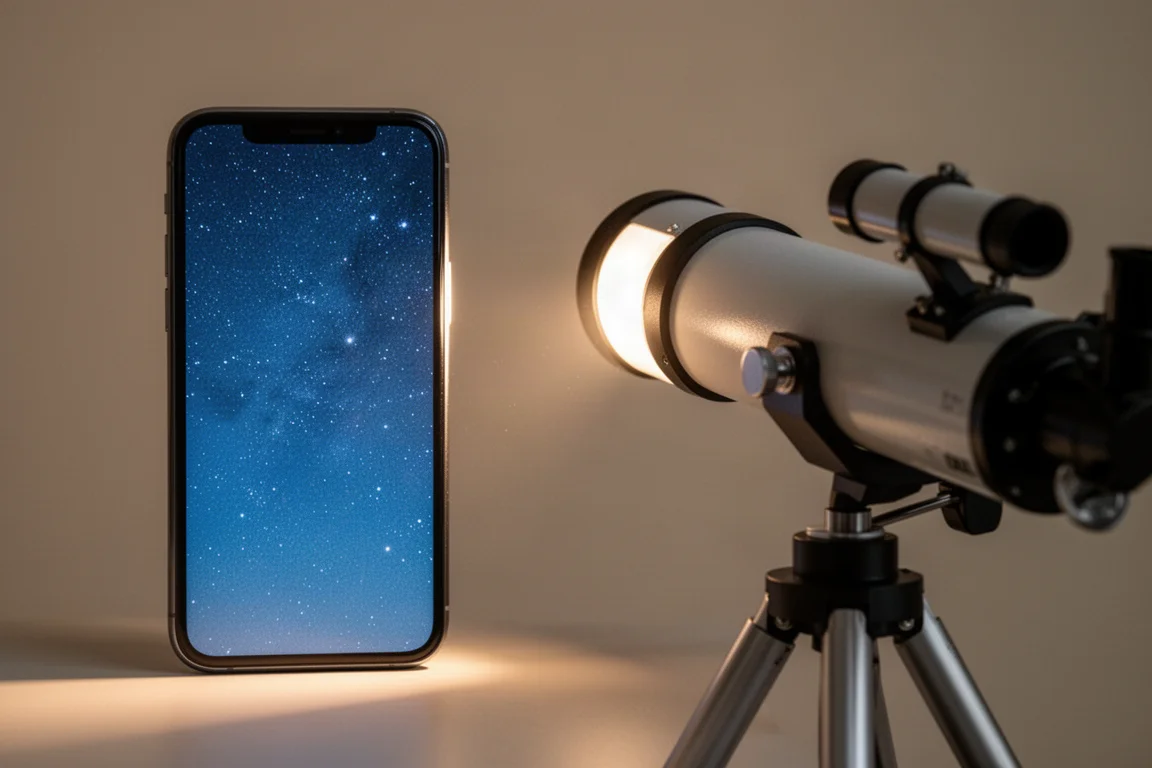
Calibrating the red dot finder is the first skill to learn. Insert the 25mm eyepiece, loosen both the altitude and azimuth clutches, and manually point at something low on the horizon such as a car or a telephone pole. Focus with the focuser, power on the finder, then use its adjustment knobs to center the red dot over the same object. That is the whole calibration.
For go-to alignment, power on the scope with the red switch, connect your phone to the Wi-Fi network the scope broadcasts, and open the SynScan app. Choose brightest star alignment, pick two bright targets (planets work well), center each one manually in the eyepiece using the red dot finder, and confirm each in the app. The scope then slews itself to the second target, and you fine-center it with the app’s arrow pad before locking in the alignment. From there you can search for any object in the night sky.
Using the SynScan App
The app offers several alignment options. A one-star alignment is quick and perfectly fine for easy targets like the planets. A three-star alignment takes a little longer but delivers the go-to precision you want when hunting deep-sky objects.
Browsing is where the app becomes genuinely enjoyable. The star icon lets you choose solar system objects, named stars, double stars, and even comets. The deep sky icon opens the Messier, Caldwell, NGC, and IC catalogs, and selecting an object such as Messier 31 brings up the Andromeda Galaxy with useful details: visual magnitude, its constellation, and its rise and set times. The Tonight’s Best feature under the utility menu generates a list of the best objects visible right now from your time and location, which is an excellent night-planning tool.
What You Can Actually See
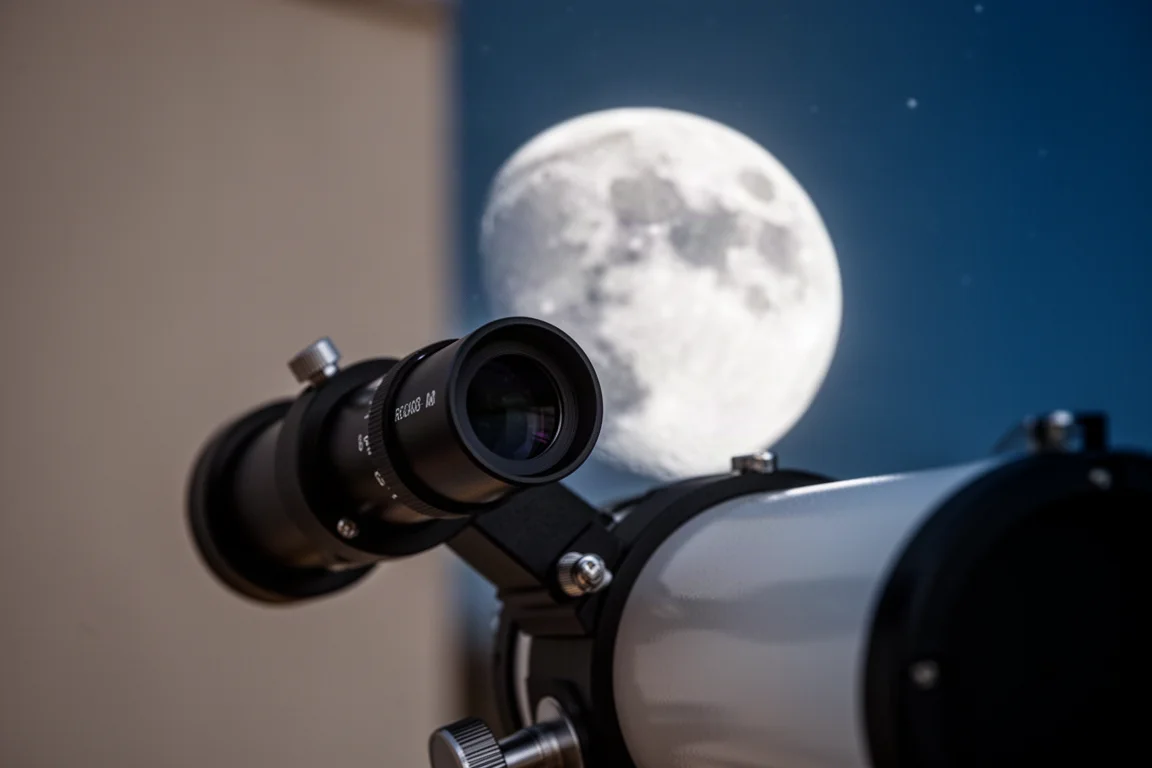
This is where these scopes earn their keep. Craters on the Moon show rich, obvious detail, and the view is genuinely striking even through the eyepiece for someone standing nearby.
Jupiter is a highlight. With the 10mm eyepiece under good seeing conditions, all four Galilean moons are blatantly obvious, and several color bands on the planet are visible. Watching a moon transit across the disk or spotting the Red Storm when it faces Earth is the kind of view that creates a core memory. On a steady night, the seeing is good enough that these details feel almost within reach of your fingertips.
Portability and Power
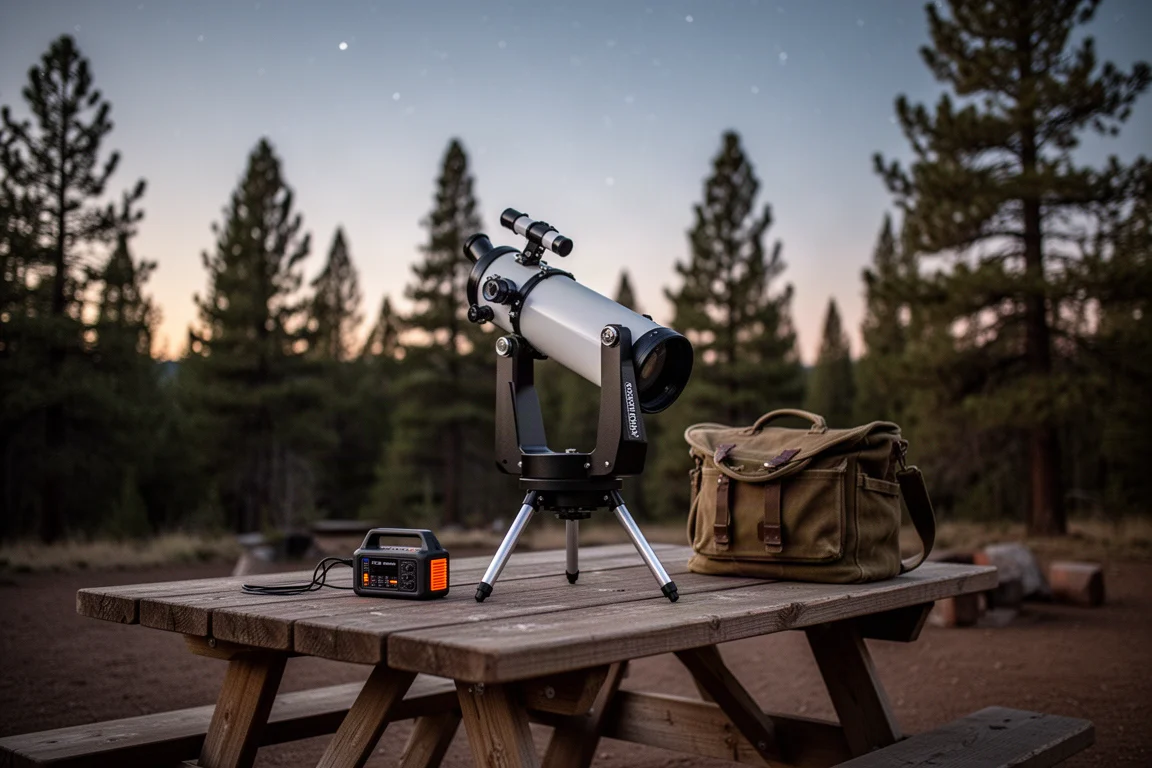
Both models are genuinely grab-and-go. Sit one on any sturdy table, load it with AA batteries, and you are observing within minutes. A full night of operation on AA batteries was trouble-free, so there is no need for external power on a typical session.
That combination of compact size, battery power, and motorized tracking makes these scopes equally at home on a backyard patio or at a dark-sky campsite. The scope you bring along is the scope you use, and portability is a real feature here, not a footnote.
Buying Advice
Choose the Virtuoso GTI 130 if you want the most accessible entry into go-to astronomy: it is lighter, simpler, and delivers all the core experience of a computerized tabletop Dobsonian. Choose the 150 if you can stretch further and want brighter, more detailed views, especially for deep-sky objects, thanks to the added light gathering of the six-inch mirror.
Either way, the formula that makes both work is the same: quick setup, reliable AA battery power, an intuitive smartphone app, and apertures large enough to make planets and bright deep-sky objects genuinely exciting from night one.
Conclusion
The Sky-Watcher Virtuoso GTI 130 and 150 make a strong case as first telescopes. They are easy to set up, simple to align with a smartphone, portable enough to travel, and optical they deliver the kind of views that turn a first look at Jupiter or the Moon into a lasting passion for the night sky. Pick the aperture that fits your budget and ambitions, and enjoy the clear skies.
Further reading
Related Reviews

Telescopes
Sightron SJ75 UF and Sky-Watcher HS125: Two Telescopes Worth Watching
A look at two notable telescopes from a recent camera and optics expo: a sharp new astrograph from Sightron Japan and a compact fast reflector from Sky-Watcher.

Telescopes
SV503 102ED Review: A Budget 102mm Refractor That Surprises
The SV503 102ED is an affordable 102mm doublet refractor that delivers surprisingly decent star shapes and a smooth focuser, despite some chromatic aberration and light falloff.

Telescopes
SVBony MK127 Review: A Compact Maksutov-Cassegrain That Surprises
The SVBony MK127 is a 127mm Maksutov-Cassegrain telescope with a unique 0.65x reducer, making it a versatile option for visual astronomy and even some deep-sky imaging.