Telescopes
Sky-Watcher StarTravel 102 AZ3 Review: A Refractor Worth Keeping
A short-focal-length 102mm refractor bundle that handles the Moon, planets, star clusters, and even daytime birding with a few smart tweaks.
Introduction
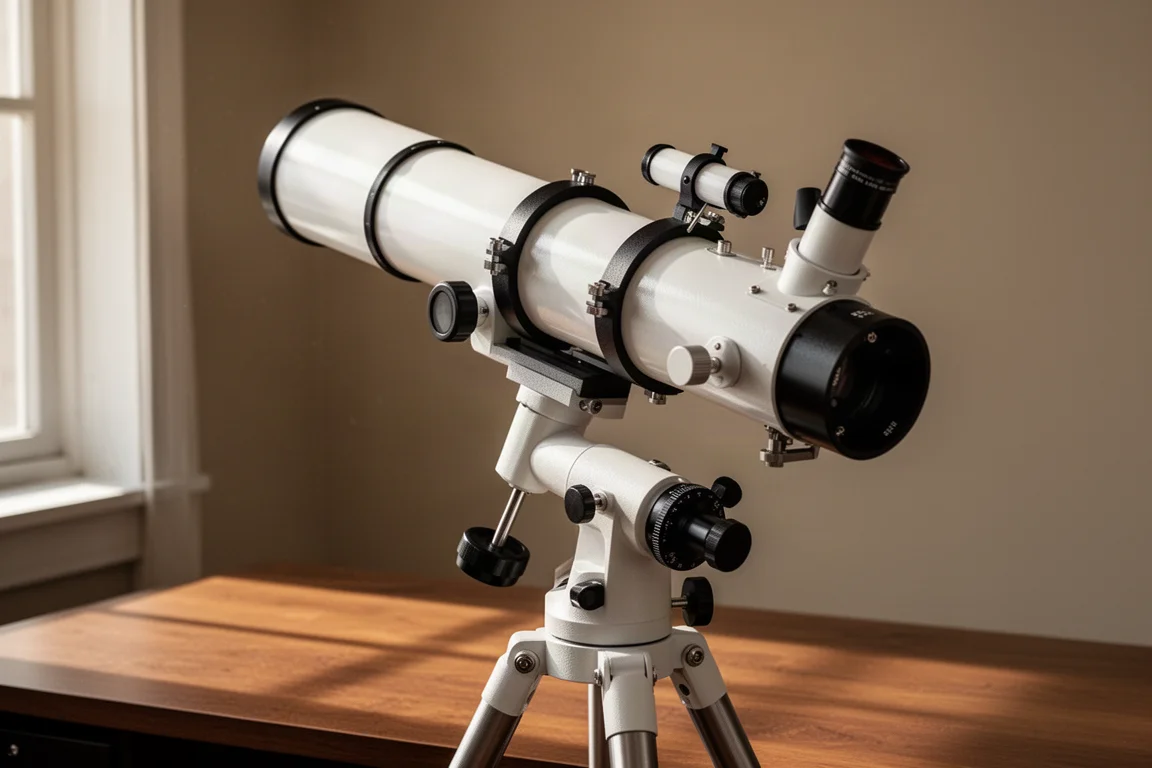
Some beginner telescopes feel like products you outgrow and resell within a season. The Sky-Watcher StarTravel 102 AZ3 gives a different impression: a precision-built short refractor that seems designed to stay in the family for decades. Bundled through All-Star Telescope, it arrives with a practical set of accessories and a mount that makes tracking targets far less stressful than most entry-level setups.
What Is in the Box
The bundle includes a 25mm eyepiece giving 20x magnification, a 10mm eyepiece giving 50x, and a six-element 5mm eyepiece from Celestron that pushes magnification to 100x, or 200x with a Barlow. You also get a 45-degree diagonal, a red dot finder, a set of filters, a lens cap with a removable center for reducing glare on bright objects like the Moon, and tools including a screwdriver and two wrenches for adjusting the mount.
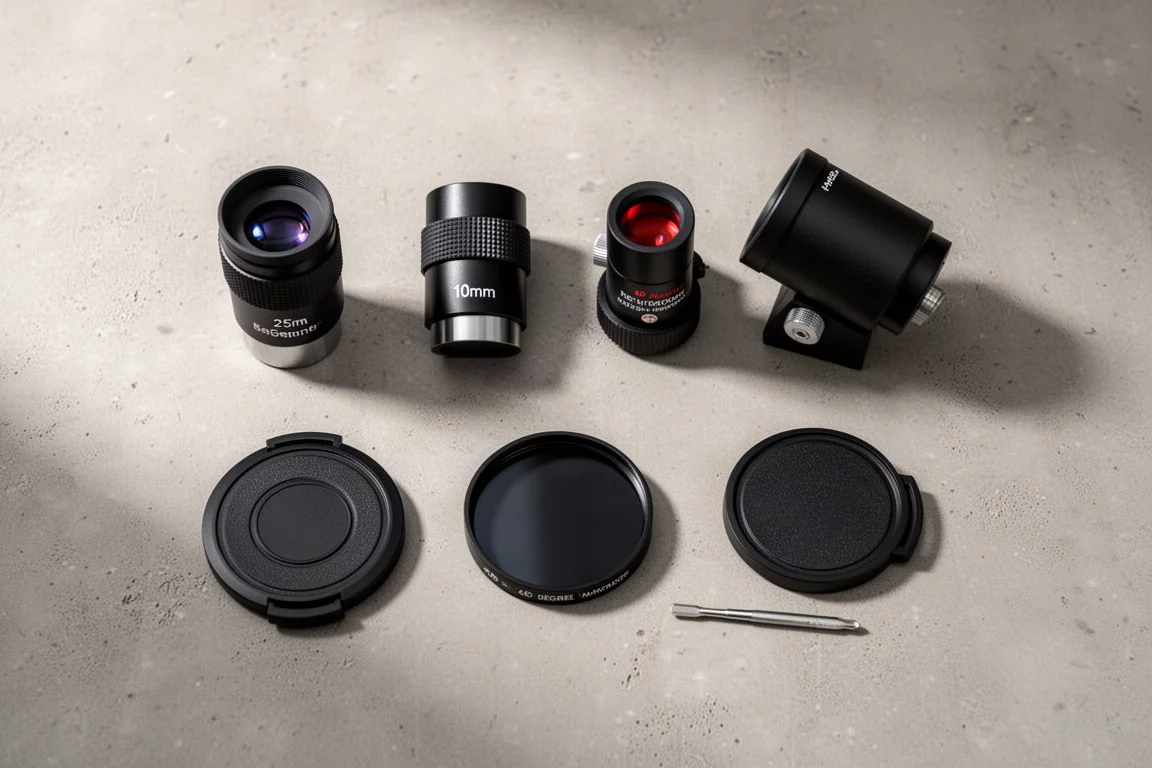
A few notes on the included accessories. The 45-degree diagonal suits terrestrial viewing, but it makes the telescope awkward to use when pointed high in the sky, so swapping to a 90-degree diagonal is worthwhile for astronomy. The red dot finder is actually the better choice for deep sky work compared with the finder scope this model usually ships with online, and an upgrade to a bullseye-style finder such as a StarPointer Pro or Rigel QuickFinder would make target acquisition even easier.
Key Specs and Optics
The StarTravel 102 has a 102mm aperture, about 4 inches, giving a theoretical resolving power of 1.13 arc seconds, roughly 2.1 kilometers on the surface of the Moon. The focal length is listed as 500mm in the specifications and 510mm in the product description, an odd inconsistency, but either way it is much shorter than most refractors of the same aperture. The highest useful magnification is rated at 204x.
That short focal ratio, around f/5, carries one trade-off: chromatic aberration, where colors in the light spectrum do not come into focus at the same time. Bright objects like the Moon and planets are where it may show itself, so it is worth knowing before you buy.
Design and Build Quality
The construction quality stands out immediately. This does not feel like a telescope you eventually sell; it feels like an instrument you keep and pass down. Two features deserve special mention. First, the two-inch focuser, which accepts a two-inch diagonal and large two-inch eyepiece for stunning wide-field views. Second, the tube mounting rings, which mean the optical tube is not fixed directly to the mount. If you later move it to an equatorial mount, you can rotate the tube so the focuser sits right side up.
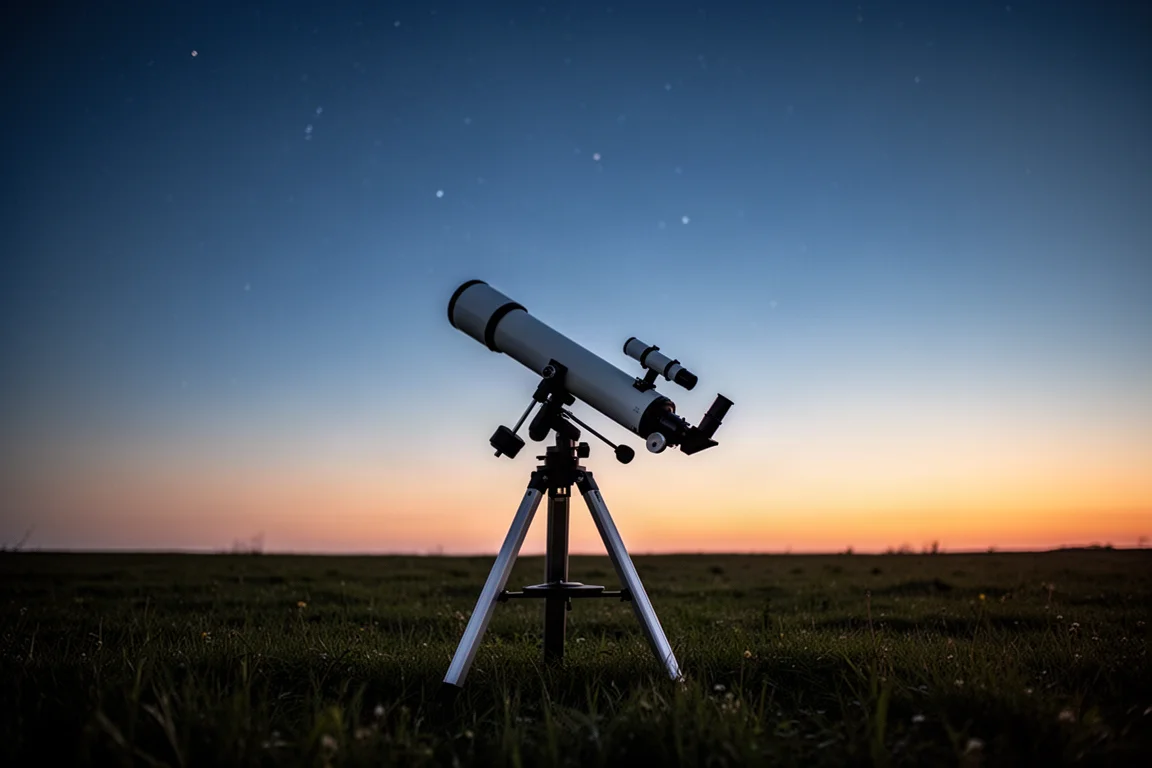
The slow motion controls on the AZ3 mount are arguably the best feature of all. They massively reduce the stress of keeping a target centered, which matters even more if you attach a smartphone adapter and want your subject to stay in the field of view. Note that these are fine-motion controls: for large movements you push the telescope manually, then use the slow motion controls to center and track.
Observing the Moon and Planets
On the Moon, the 25mm eyepiece delivers a great full-disc view, and the 10mm gives a really satisfying close-up. The 5mm Celestron at 100x zooms in dramatically. In all three eyepieces there is some chromatic aberration, showing as a blue halo around the Moon, but it is not especially annoying, and screwing the included moon filter into the bottom of the eyepiece reduces it to almost nothing.
Jupiter shows some color fringing at 20x, but the four Galilean moons are easy to see. At 50x the two main cloud belts are clearly visible, and at 100x the view is genuinely fantastic, with Jupiter and its moons filling the field of view. Adding the included blue filter brings out extra contrast in Jupiter’s clouds and reveals fine surface detail, at the cost of a slight blue tint, a worthwhile trade.
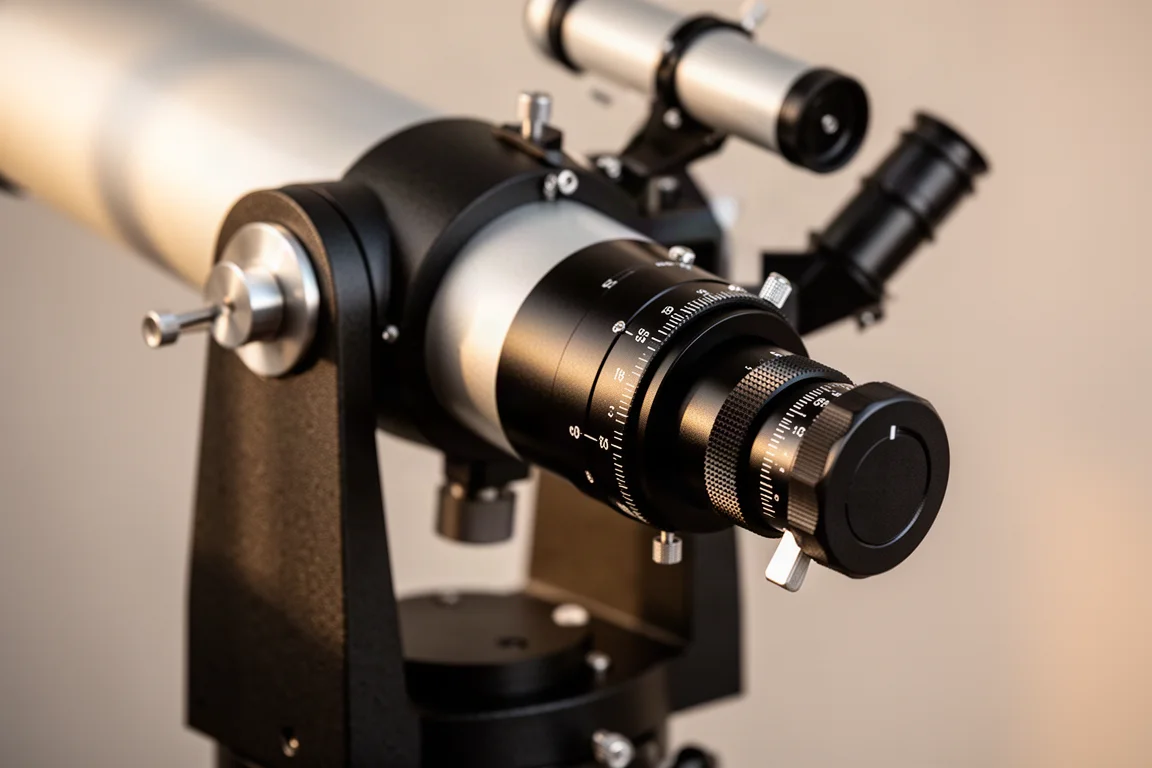
Saturn is tiny at 20x, barely showing its rings, but at 50x the rings are clearly visible along with its largest moon, Titan, and at 100x the view is impressive. The slow motion control runs through its full range of motion fairly quickly, so occasional repositioning is part of the routine.
Deep Sky Impressions
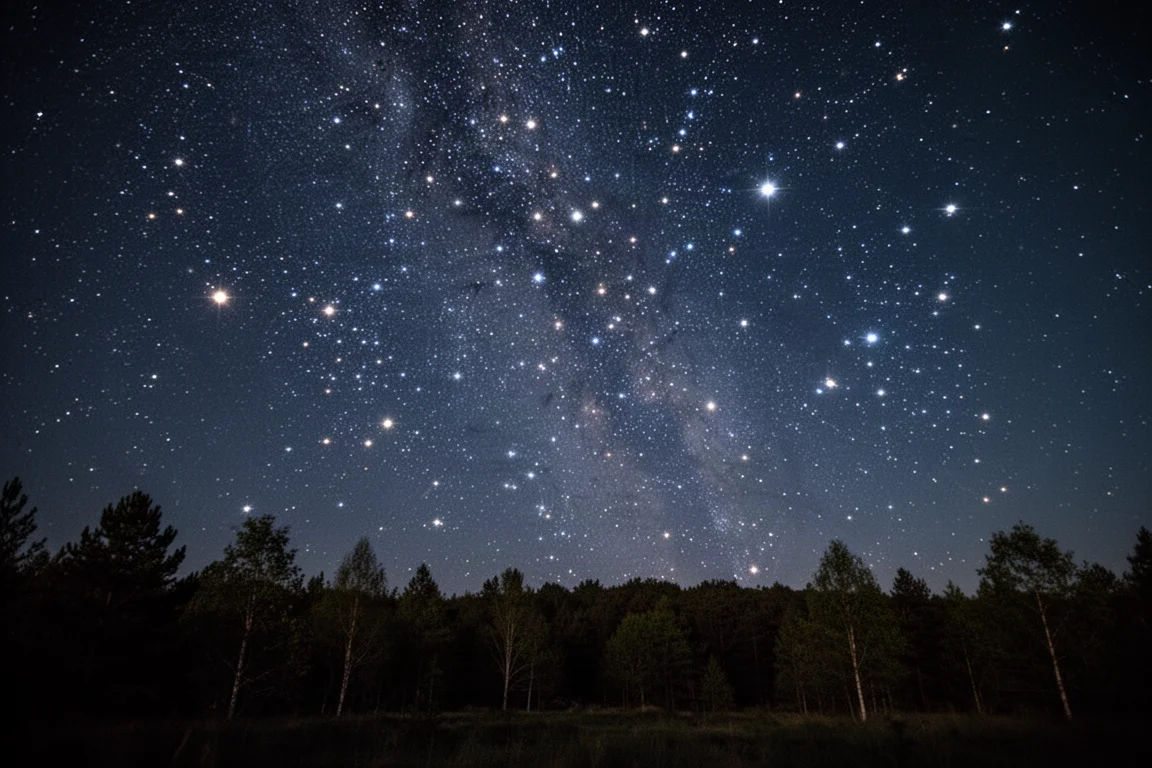
The Pleiades star cluster is where the short focal length pays off. With just the 25mm eyepiece at 20x, the cluster fills the entire field of view with stars. Even stepping up to 100x keeps the view rewarding, and with a two-inch diagonal and an ultra-wide-angle two-inch eyepiece, the view is absolutely stunning.
Astrophotography and Daytime Use
For DSLR photography, the telescope works at prime focus: remove the diagonal and the 2-inch to 1.25-inch adapter, screw a T-adapter specific to your camera onto the body, and slide the camera directly into the focuser tube. Lock it in place with the screws, aim at a distant target, switch to live view, and focus. The telescope was also used to photograph a lunar eclipse in the early morning hours, which speaks to its flexibility.
As a bonus, the 45-degree diagonal setup makes this a credible terrestrial instrument. Bird watching through it works comfortably, adding genuine daytime value to a night-sky telescope.
Things to Consider Before Buying
The main caveat is chromatic aberration on bright targets, inherent to the fast focal ratio. It is manageable with filters and barely distracting in practice, but purists should know it exists. The 45-degree diagonal is fine for land viewing but limiting for high sky targets, and the included red dot finder, while sensible for deep sky, could be upgraded to a bullseye finder for even easier aiming.
Buying Advice
If you want one refractor that covers the Moon, planets, star clusters, wide-field two-inch eyepiece views, simple lunar photography, and even birding, this bundle makes a strong case. The short tube, slow motion controls, and upgrade path via tube rings and a two-inch focuser give it room to grow with you. All-Star Telescope, based in Canada, ships to the USA and other countries, and carries the accessories mentioned here if you want to expand the kit.
Conclusion
The Sky-Watcher StarTravel 102 AZ3 is that rare beginner telescope you will not outgrow. Its wide-field views, easy tracking, and solid build make it a rewarding choice for anyone starting a serious stargazing hobby.
Product link
View more details for Sky-Watcher StarTravel 102 AZ3
This product is mentioned in the review. Check the specifications, options, and compatibility before buying.
View more details for Sky-Watcher StarTravel 102 AZ3Further reading
Related Reviews

Telescopes
Sightron SJ75 UF and Sky-Watcher HS125: Two Telescopes Worth Watching
A look at two notable telescopes from a recent camera and optics expo: a sharp new astrograph from Sightron Japan and a compact fast reflector from Sky-Watcher.

Telescopes
SV503 102ED Review: A Budget 102mm Refractor That Surprises
The SV503 102ED is an affordable 102mm doublet refractor that delivers surprisingly decent star shapes and a smooth focuser, despite some chromatic aberration and light falloff.

Telescopes
SVBony MK127 Review: A Compact Maksutov-Cassegrain That Surprises
The SVBony MK127 is a 127mm Maksutov-Cassegrain telescope with a unique 0.65x reducer, making it a versatile option for visual astronomy and even some deep-sky imaging.