Telescopes
Sky-Watcher HAC125DX Review: A Fast, Portable Mini Astrograph for Wide-Field Imaging
Sky-Watcher's second-generation Honders Advanced Catadioptric astrograph packs an F/2 optical system into an 8.4 lb package built for small mounts and quick imaging sessions.
Introduction
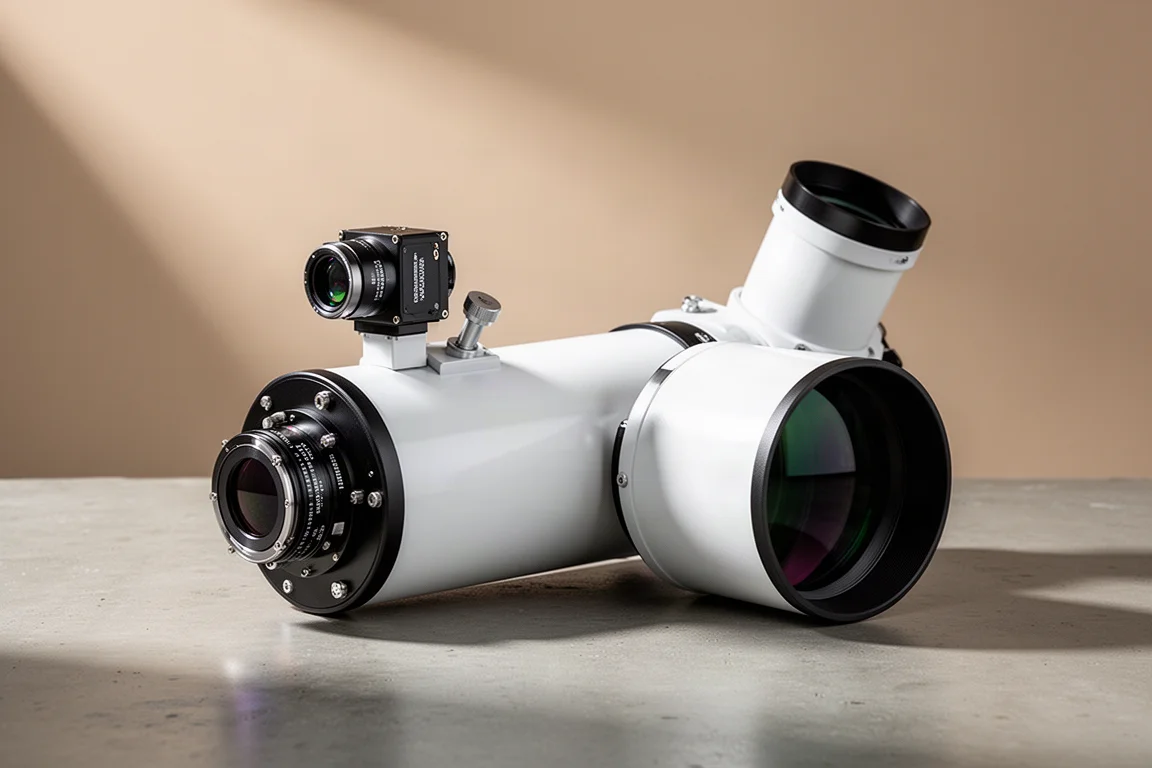
Fast optics and portability rarely show up in the same telescope, but Sky-Watcher’s HAC125DX makes a strong case for both. This second iteration of the Honders Advanced Catadioptric design weighs just 8.4 lbs and offers an extremely fast F/2 focal ratio, making it a compelling option for wide-field astrophotography on even the smallest equatorial mounts.
This review covers the design, specifications, what comes in the box, how to attach a camera, and what to expect when imaging at F/2, along with how the scope performed under real dark skies.
Design and Optical Layout
The HAC125DX is a Honders Advanced Catadioptric telescope, and its defining feature is where the camera lives: fixed to the front corrector plate rather than the rear cell or a side port as in more traditional designs. Light enters through the corrective lens, travels down to the primary mirror, bounces back up through a second set of corrective optics, and lands directly on your camera sensor.
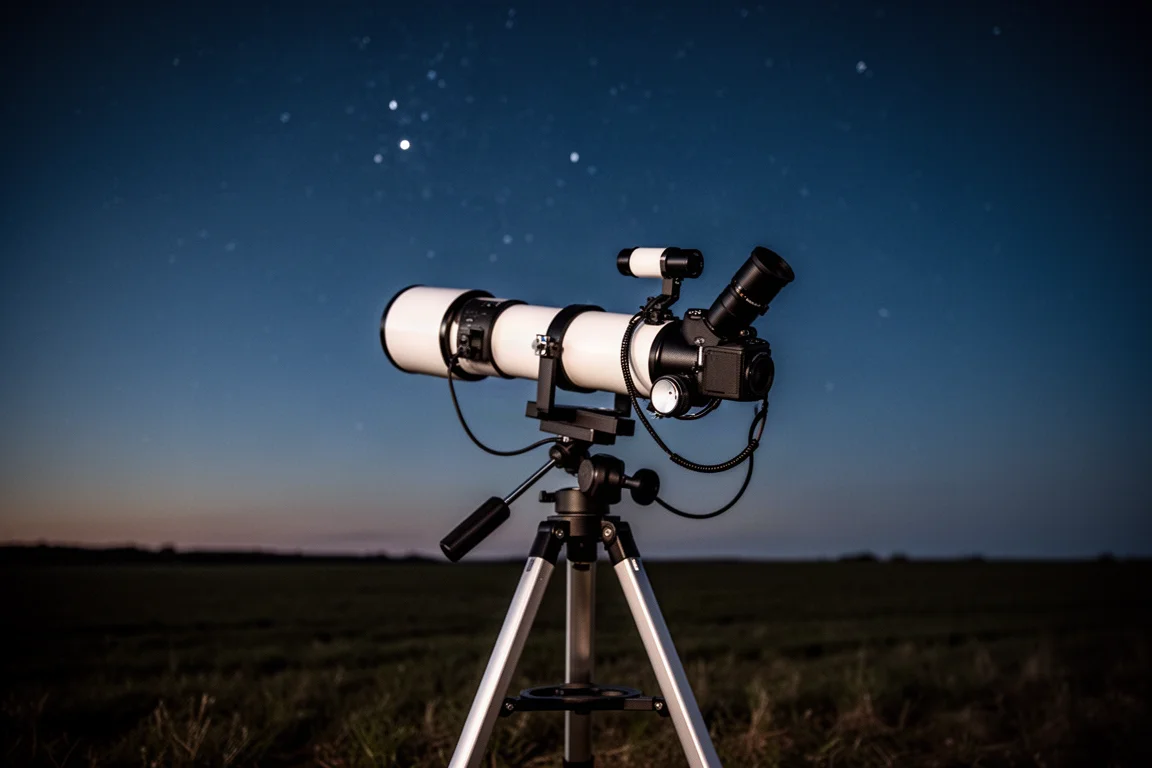
That front-mounted layout is what allows the scope to work at F/2 while staying short and light. At 8.4 lbs, it pairs naturally with compact equatorial mounts such as the Sky-Watcher AL55i, giving you a genuinely portable and fast imaging system in one package.
Key Specifications
The numbers tell a clear story. The primary objective measures 125mm with a 250mm focal length, producing that F/2 focal ratio that collects a large amount of data in a short amount of time. The corrected imaging circle spans 16mm, which suits smaller puck-style astronomy cameras as well as dedicated cooled cameras like the 585 and 533MC Pros. Even with those smaller sensors, large targets like the Andromeda Galaxy fit entirely in frame.
The large rear helical focuser allows precise manual adjustments for tack-sharp stars, and two threaded holes beside it are ready for a future third-party electronic autofocuser design.
What Comes in the Box
Sky-Watcher ships the HAC125DX with a sensible accessory set. Inside you’ll find the telescope body with two dovetail mounting shoes for accessories such as a guide scope and an ASIAIR Plus, plus mounting rings with a Vixen-style dovetail. A removable dew shield and lens cap are included, along with a full owner’s manual.
The standout inclusion is three camera adapters: one with male T-threads for puck-style cameras, one with female T-threads for cooled cameras, and a 1.25-inch adapter for mini cameras. All three carry 1.25-inch filter threads.
Attaching a Camera
Installation is straightforward. Start by removing the dew shield, which releases via three knobs along the side. Then thread the appropriate adapter directly onto your camera body with no other adapters in between, seat the camera and adapter into the front accepting flange, and tighten the thumb screw on the side.
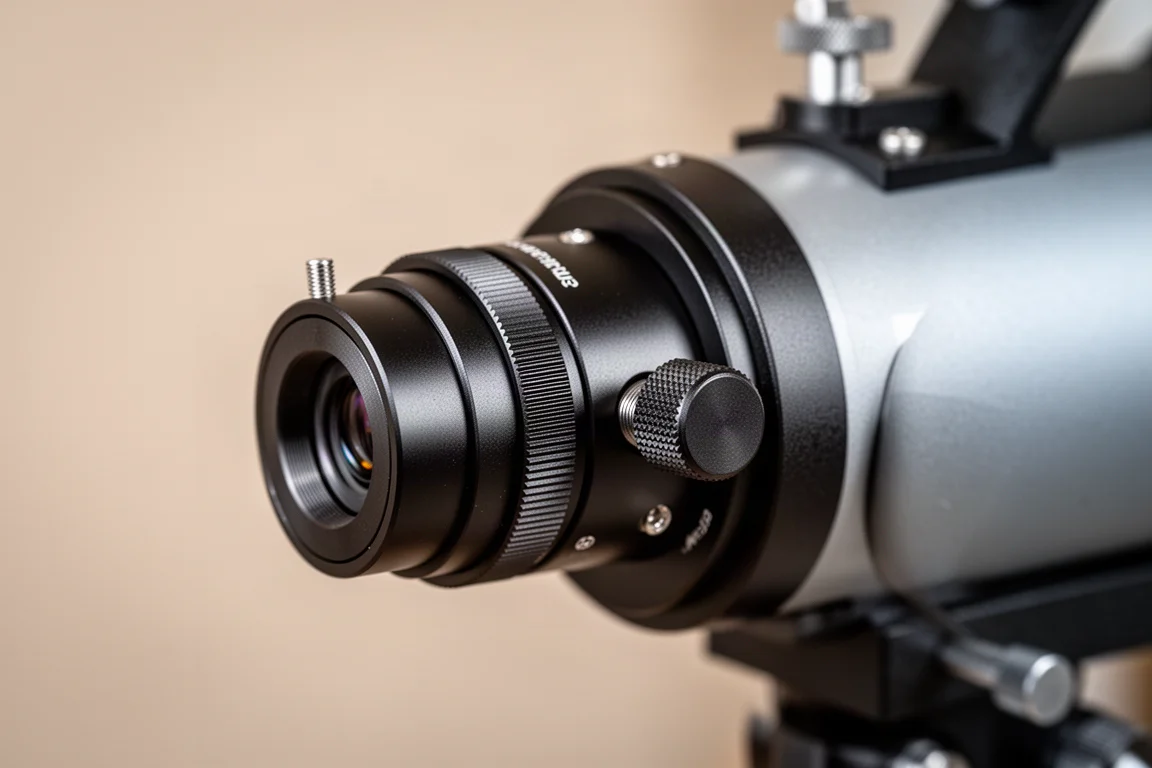
One practical note on cable management: the dew shield includes a slot for through-cabling, but realistically only about two cables fit at a time. Any additional cables need to be routed up and over the top of the assembly.
The Reality of Imaging at F/2
Imaging at F/2 comes with clear upsides and a few things to think about. The speed is the headline: you can gather a good data set in far less time than with slower telescopes. The trade-off is that collimation and sensor tilt matter much more here than on fast F/4 imaging Newtonians, and considerably more than on slower RCs and SCTs.
To help with that, the rear of the scope carries three sets of push-pull screws for fine collimation adjustments to improve star shape. Post-processing tools such as PixInsight deconvolution or BlurXterminator can take star shapes even further.
An Easy Way to Take Flat Frames
A consistent flat-frame routine matters at this focal ratio, and the t-shirt method works well here. Stretch a white t-shirt or pillowcase over the front of the telescope and camera, secure it around the dew shield with a few rubber bands, and pull the fabric tight to eliminate as many wrinkles as possible.
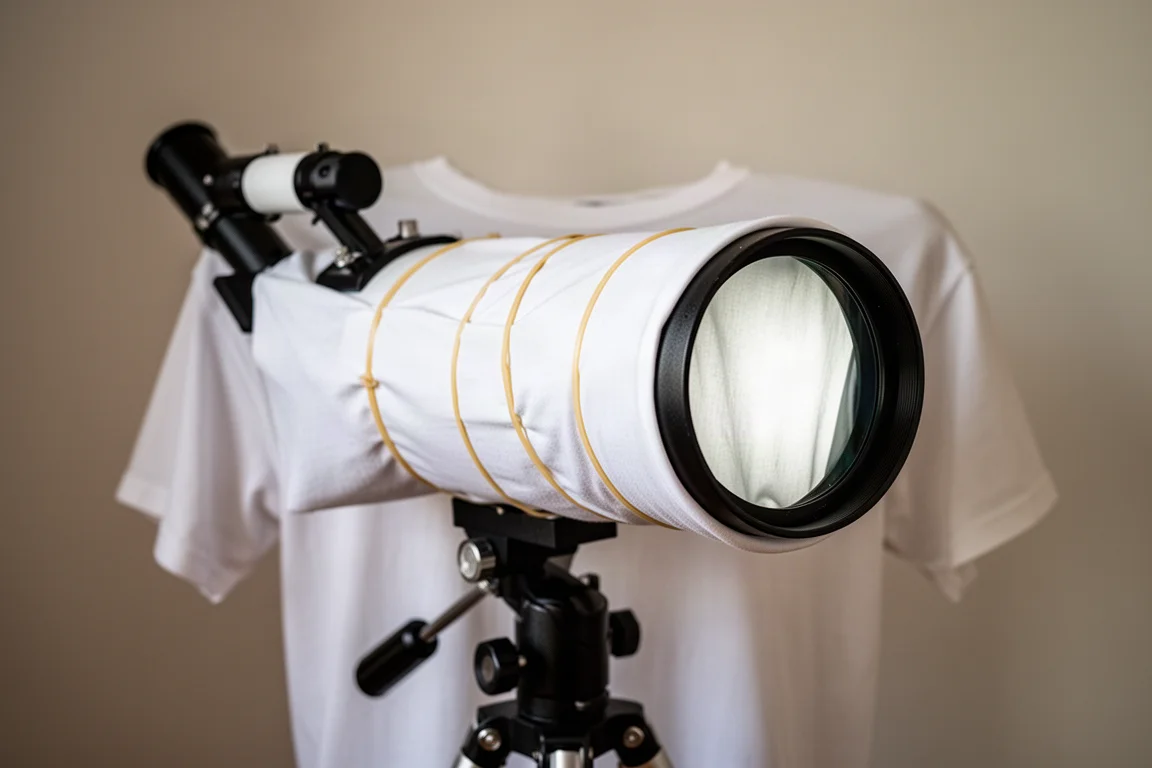
From there you can aim at a clear patch of sky, ideally at dusk or dawn when it is not too bright for an F/2 system, or simply take your flats indoors with a studio light. The flats came out perfectly and did a strong job correcting the final image.
Real-World Imaging Results
To push the scope beyond its intended use case, the test rig paired the HAC125DX with the heavier ASI585MC Pro cooled camera, an ASIAIR Plus, an Apertura guide scope with an ASI 220 Mini guide camera, all sitting on a ZWO AM5N. A few hours of data were collected on the Elephant Trunk Nebula under genuinely dark skies, with no filter used.
The focuser proved extremely smooth to use, and the overall experience of working at this focal ratio was enjoyable. The main caveats: subtle shifts in collimation and sag in the imaging train appeared during the night, largely due to the weight of the cooled camera, and the thumb screw holding the camera needs to be tightened down firmly to prevent any shift or tilt. With PixInsight deconvolution and BlurXterminator, the star shape issues were cleaned up and the final image came together well.
Swapping to the smaller and lighter 178 monochrome puck-style planetary camera brought an instant improvement in star shape. These cameras put less stress on the front optics and their smaller sensors sit comfortably within the 16mm corrected imaging circle. Collimation was easier too, which confirms that the scope is designed around these lighter cameras.
Who Should Buy It
The HAC125DX suits a specific kind of astrophotographer very well. If EAA and live stacking are your interests, the F/2 optics deliver impressive images in real time. Dedicated astrophotographers can also get strong results, with the understanding that occasional refocusing and collimation will be part of the routine.
Conclusion
The Sky-Watcher HAC125DX is an ultra-fast, ultra-portable astrograph that works happily with the smallest equatorial mounts available. It rewards careful setup with fast light gathering and a wide field of view, and it produced genuinely impressive data in a single night under dark skies. For anyone chasing wide-field images without a heavy imaging rig, it is an easy recommendation.
Product link
View more details for Sky-Watcher HAC125DX
This product is mentioned in the review. Check the specifications, options, and compatibility before buying.
View more details for Sky-Watcher HAC125DXFurther reading
Related Reviews

Telescopes
Sightron SJ75 UF and Sky-Watcher HS125: Two Telescopes Worth Watching
A look at two notable telescopes from a recent camera and optics expo: a sharp new astrograph from Sightron Japan and a compact fast reflector from Sky-Watcher.

Telescopes
SV503 102ED Review: A Budget 102mm Refractor That Surprises
The SV503 102ED is an affordable 102mm doublet refractor that delivers surprisingly decent star shapes and a smooth focuser, despite some chromatic aberration and light falloff.

Telescopes
SVBony MK127 Review: A Compact Maksutov-Cassegrain That Surprises
The SVBony MK127 is a 127mm Maksutov-Cassegrain telescope with a unique 0.65x reducer, making it a versatile option for visual astronomy and even some deep-sky imaging.