Telescopes
Sky-Watcher Flextube 350P 14-inch SynScan Dobsonian Review: Big Aperture, Big Commitment
A 14-inch computerized GoTo Dobsonian with collapsible truss tubes, Wi-Fi control, and over 40,000 objects in its database. Here is what it is like to set up, transport, and actually use.
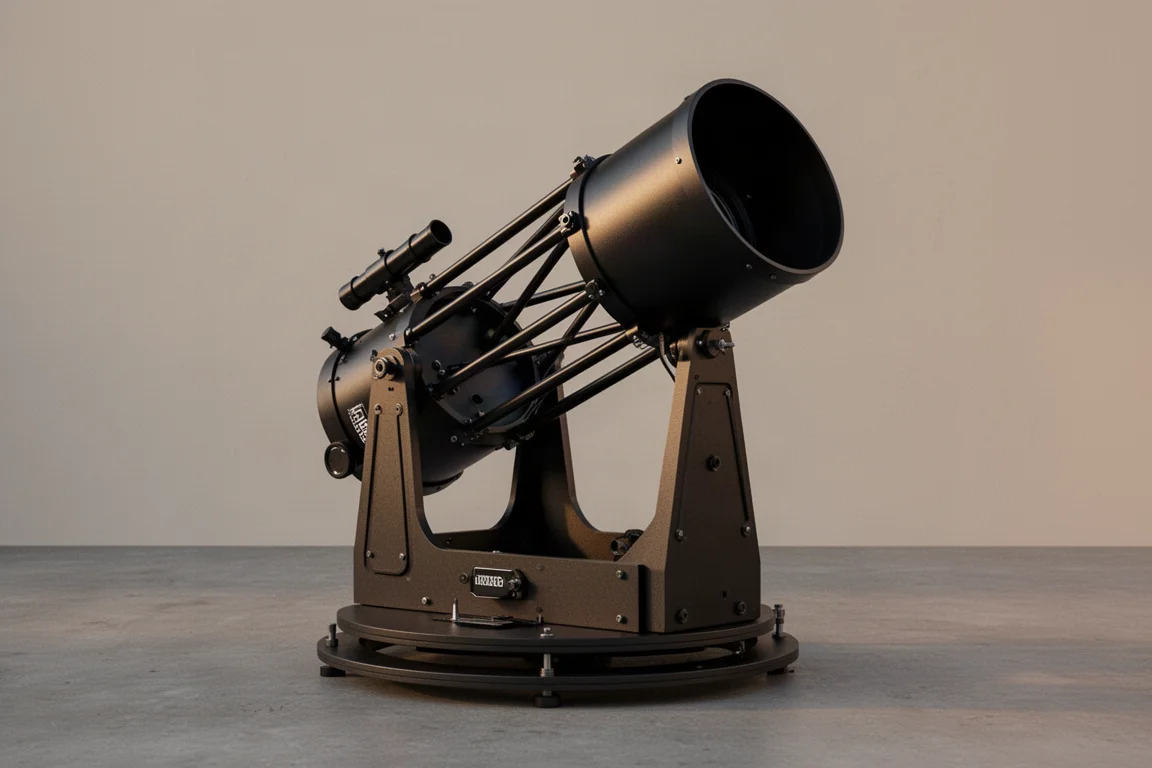
Introduction
Some telescopes are subtle. This is not one of them. The Sky-Watcher Flextube 350P is a 14-inch computerized GoTo Dobsonian, and it is the biggest telescope of its kind we have spent serious time with. It arrived on a skid in the driveway, and the size of the base on first unboxing is, frankly, intimidating.
Dobsonians remain the classic recommendation for anyone new to astronomy because they deliver the most aperture per dollar. The eight-inch model is usually the practical choice for first-timers, but this 14-inch sits well beyond that. It is a scope built for one purpose above all: seeing faint, deep-sky objects through the eyepiece under genuinely dark skies.
What the Flextube 350P 14-inch SynScan Actually Is
The core specs matter here. This is a visual reflector with a focal length of 1650 millimeters and a focal ratio of f/4.6. The optical tube is collapsible, which is what the Flextube name refers to, and the SynScan system makes it a computerized GoTo scope with a database of over 40,000 objects. You pick a star, galaxy, or nebula, and the telescope slews to it for you.
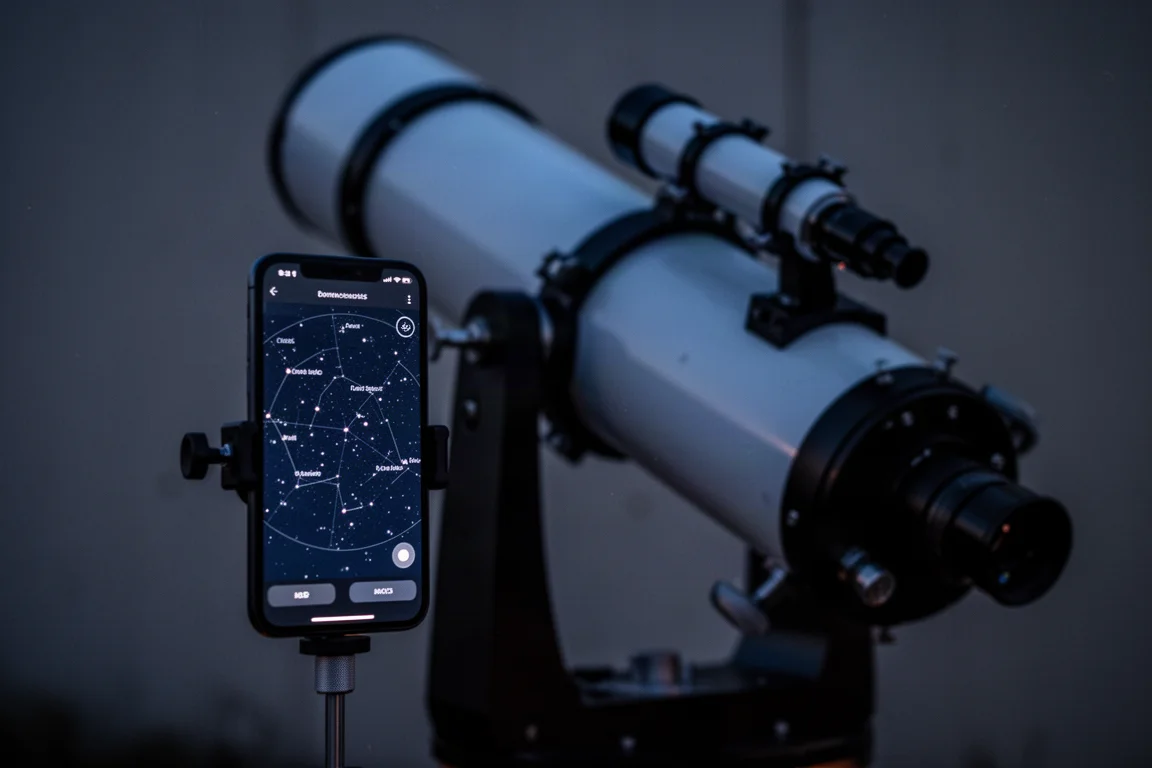
There is Wi-Fi control too, so the entire telescope can be operated from your phone using the same SynScan app familiar from other Sky-Watcher mounts. That combination of huge aperture plus automation is what sets this apart from purely manual Dobsonians at this size.
Setup and Transport: The Rocker Box Reality
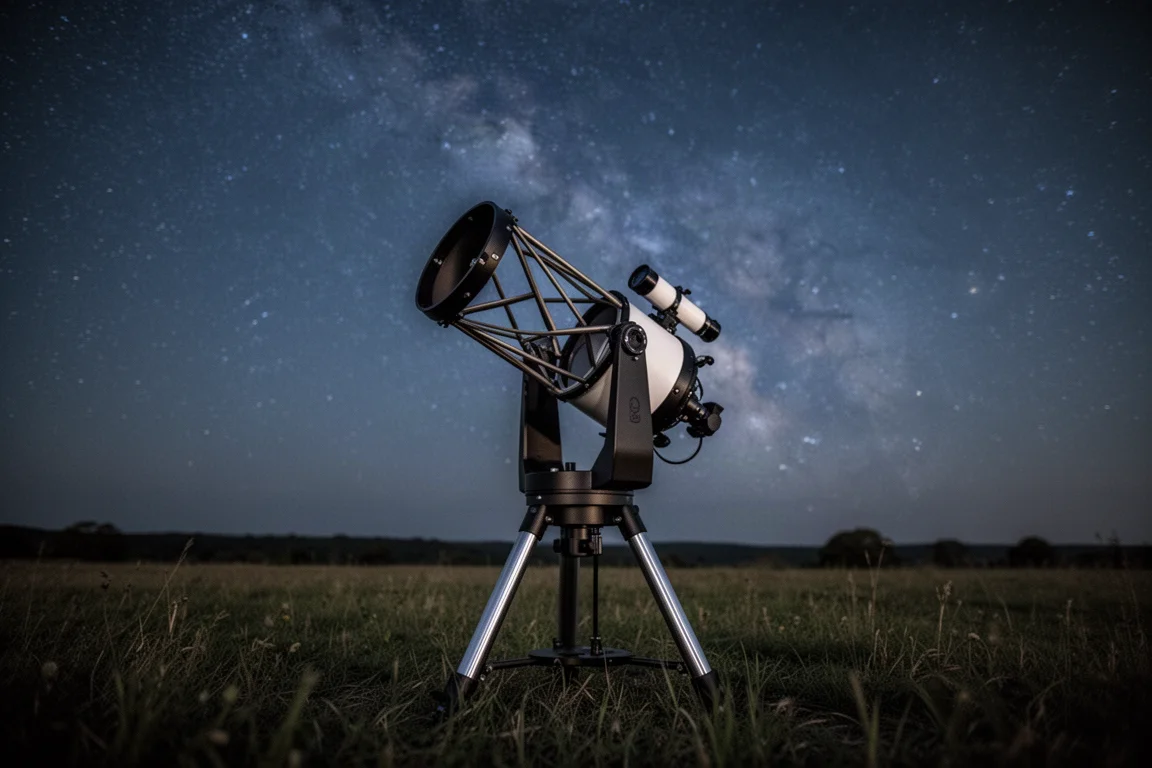
If you are considering anything over eight inches, the honest advice is this: the optical tube is long and cumbersome, but it is the rocker box base you really need to think about. Once assembled, moving the fully built scope is genuinely a two-person job.
The saving grace is that the 14-inch model’s base comes apart for transport, which is one reason this larger Flextube can actually be easier to move around than the 12-inch version. It still required a first-time setup session to work through the unboxing and assembly process, and it takes up serious space. Anyone under dark skies at a remote star party will accept that trade-off; anyone hauling it across a suburban backyard regularly should think carefully.
The SynScan GoTo System and Freedom Find
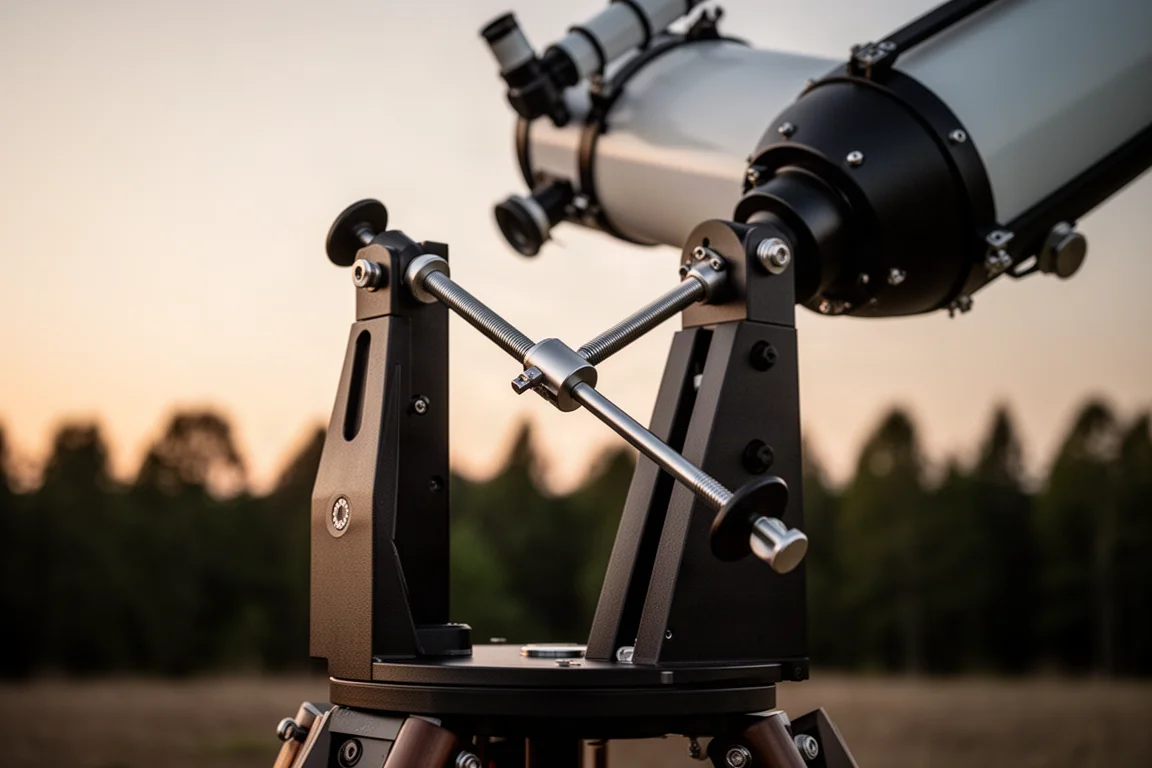
The GoTo system works. During a two-star alignment it slewed remarkably close to the first alignment star on the very first try. The Wi-Fi control from a phone adds real convenience, and the object database is deep enough that you can simply browse and pick targets for the whole night.
A feature worth knowing about is Freedom Find. The scope has dual encoders, so you can release the clutch and move the telescope around freely by hand without losing your GoTo alignment. It is a nice option for people who still want to nudge around the sky manually between targets.
There is a fair trade-off to acknowledge: computerized GoTo removes some of the exploration aspect of visual observing. If your enjoyment came from hunting down objects manually with a star chart, that half of the fun is partly outsourced to the computer. For anyone who wants to maximize the number of deep-sky objects seen in a single night, though, the automation earns its place.
Eyepieces and Power: Planning a Night Out
Because of the computerized GoTo SynScan system, this telescope needs power. It has a DC port, and a portable power station kept it running comfortably for a full night of observing. That is an extra piece of gear to remember that manual Dobsonians never demand.
The telescope tracks objects once aligned, which changes how you observe: targets stay centered while you take in the view or swap eyepieces. A wide-field eyepiece works well for locating and centering targets, with a higher-power eyepiece swapped in for planets and close-up views. Venus, Mars, and a morning Jupiter all make worthwhile targets through a mirror this size.
Beyond Visual Use: Tracking for Solar System Imaging
Although it is primarily a visual telescope, the tracking and GoTo open a secondary use case. Because the mount can follow a planet for about 60 seconds, it is possible to shoot short video clips through the scope with a planetary camera and stack thousands of frames for detailed lunar and planetary images. Others use this exact telescope for that purpose with impressive results, and the combination of the 14-inch mirror and f/4.6 focal ratio should reward the effort.
An interesting middle path is EAA-style observing, using a camera in video mode for live viewing. It is not what the scope is designed around, but the tracking makes it viable, which is more than can be said for a standard manual Dobsonian.
Buying Advice
For visual observers with dark-sky access and the space to store and transport it, the Flextube 350P 14-inch delivers the kind of views smaller scopes simply cannot reach. The collapsible tube and separable base make a very large scope somewhat more manageable, but make no mistake: this is a commitment in weight, bulk, and power requirements.
If you are newer to the hobby, the eight-inch class remains the most practical starting point. This 14-inch is best appreciated by someone who already knows they will use the aperture regularly.
Conclusion
The Sky-Watcher Flextube 350P 14-inch SynScan Dobsonian does what big Dobsonians promise: enormous light gathering, sharp views of deep-sky objects, and a GoTo system that genuinely works and tracks. The Freedom Find feature softens the automation trade-off, and the collapsible design helps, but the base’s bulk and the need for external power are real considerations. For serious visual observers, it is a telescope worth the effort.
Product link
View more details for Sky-Watcher Flextube 350P 14-inch SynScan Dobsonian
This product is mentioned in the review. Check the specifications, options, and compatibility before buying.
View more details for Sky-Watcher Flextube 350P 14-inch SynScan DobsonianFurther reading
Related Reviews

Telescopes
Sightron SJ75 UF and Sky-Watcher HS125: Two Telescopes Worth Watching
A look at two notable telescopes from a recent camera and optics expo: a sharp new astrograph from Sightron Japan and a compact fast reflector from Sky-Watcher.

Telescopes
SV503 102ED Review: A Budget 102mm Refractor That Surprises
The SV503 102ED is an affordable 102mm doublet refractor that delivers surprisingly decent star shapes and a smooth focuser, despite some chromatic aberration and light falloff.

Telescopes
SVBony MK127 Review: A Compact Maksutov-Cassegrain That Surprises
The SVBony MK127 is a 127mm Maksutov-Cassegrain telescope with a unique 0.65x reducer, making it a versatile option for visual astronomy and even some deep-sky imaging.