Kitchen Knives
Shun Classic Kitchen Knives Review: Razor-Sharp Blades With One Big Trade-Off
A close look at Shun Classic knives: Damascus-clad blades, a VG-MAX cutting core, and the chipping risk you should know about before buying.
Introduction
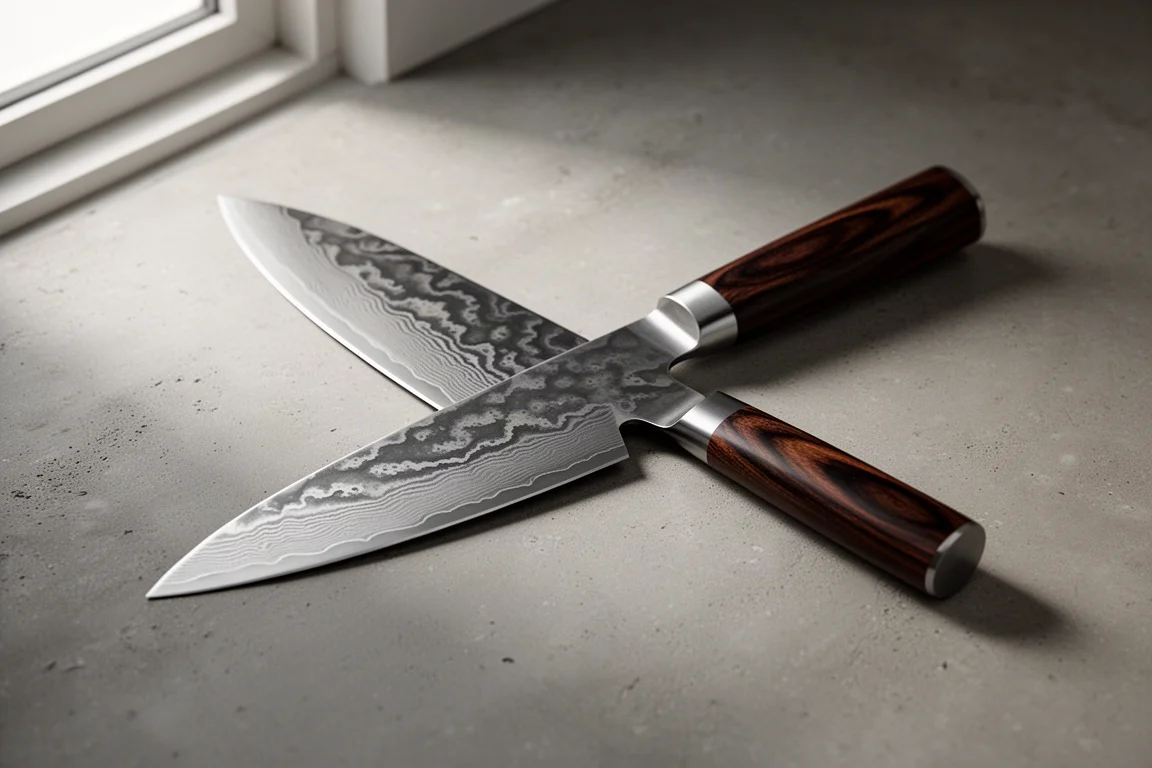
Shun Classic kitchen knives make a strong first impression: a rippled Damascus-clad blade, a dark polished handle, and an edge that cuts through delicate ingredients without effort. But there is one trade-off that comes up again and again in owner feedback, and it could be a dealbreaker depending on how you cook. This review covers what these knives do well, where they fall short, and who they actually suit.
Who This Product Is For
Shun Classic knives are aimed at right-handed cooks who want an aesthetically pleasing, ultra-sharp knife with an ergonomic handle for precision work. They are not a good fit for anyone who wants a workhorse blade that can take abuse, cut through bones, or power through frozen ingredients without consequence. If you cook carefully and value sharpness above toughness, you are the target user.
Main Strengths
Design: Damascus-Clad Blades and PakkaWood Handles
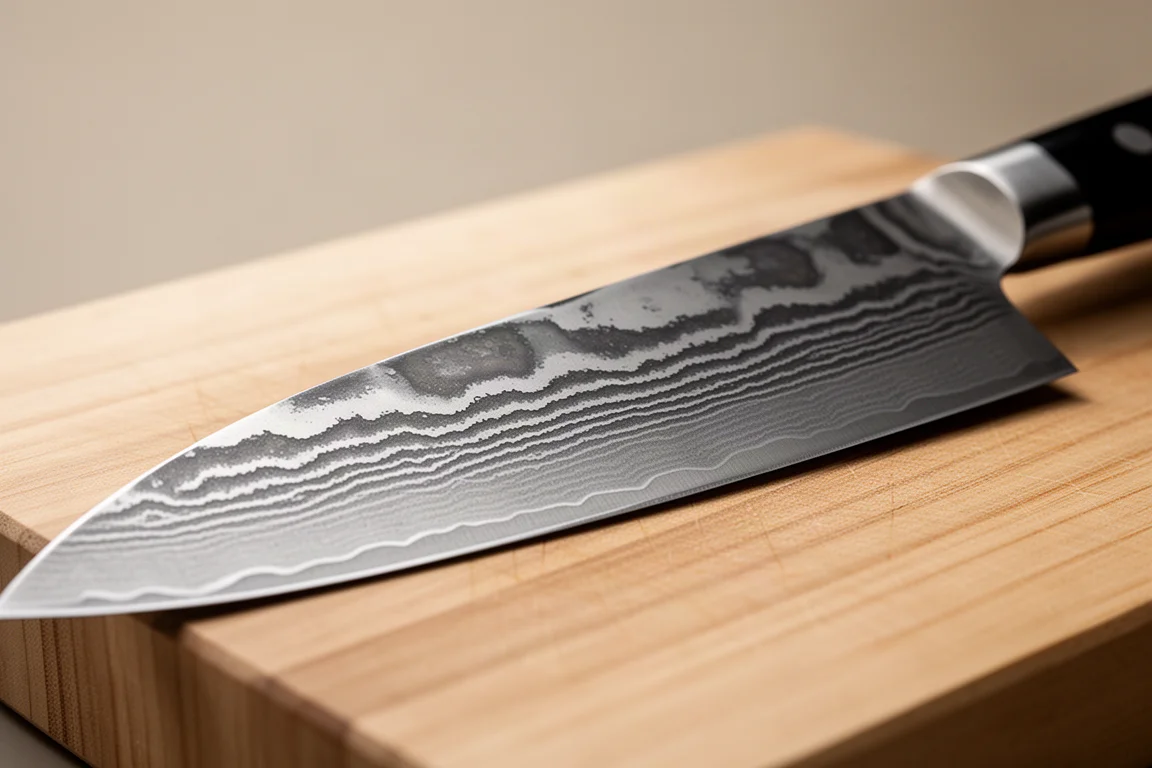
The first thing you notice is the distinct wavy pattern on the blade. It serves a practical purpose by reducing drag and minimizing sticking, and it adds elegance at the same time. Each blade is made with 69 layers of steel forged into a single piece. As the blade is ground from spine to edge, the layers become visible, and an acid etching solution reacts with the different metals: carbon-rich layers turn darker while nickel silver stays light, accentuating the rippled pattern.
The handle is made of PakkaWood, a wood and resin composite that is durable and resistant to heat and moisture. Subtle wood grains give it a natural look without the maintenance of real wood, and a polished finish with a steel cap on the butt end completes the design. You can choose between the dark PakkaWood or a lighter option Shun calls Classic Blonde. The handles are D-shaped rather than symmetrical, which provides a comfortable ergonomic grip, especially for right-handed cooks: your hand wraps around the curved right side while your fingers rest on the flatter left side.
Performance: Incredibly Sharp With Excellent Edge Retention
The edges are ground to a razor-sharp 16-degree angle on both sides, and they glide through delicate ingredients with ease. A Shun Classic blade slices through paper cleanly without the paper bending or ripping.
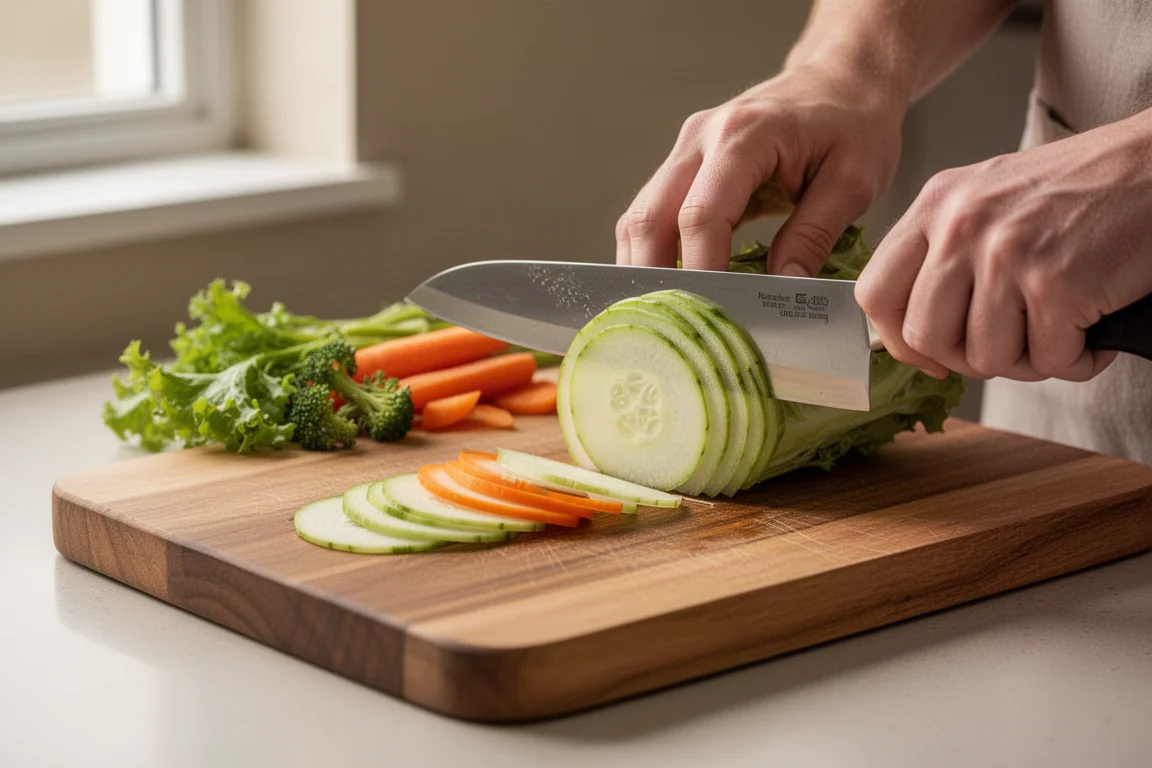
Edge retention is the real highlight. The cutting core is VG-MAX, one of Shun’s proprietary super steels. It is similar to VG10, a common steel in high-end Japanese knives, but with additional carbon, chromium, tungsten, molybdenum, and vanadium content for improved strength, durability, and corrosion resistance without sacrificing sharpness. Shun blades measure 61 on the Rockwell hardness scale, on the harder side of the typical 55 to 62 range for kitchen knives. Harder steel can be sharpened to a finer edge and holds that edge longer.
While most Japanese chef’s knives have a straight edge suited to up-and-down cutting, Shun Classic chef’s knives have a more rounded profile that supports a smoother rocking motion. If you are used to rocking cuts with western-style knives, the blade will feel familiar.
Weight and balance are also well judged. The 8-inch Zwilling Pro chef’s knife, a heavy German-style knife, weighs 9.4 ounces, and the traditional Oishya 8-inch chef’s knife weighs just 5.7 ounces. The Shun Classic 8-inch chef’s knife sits between them at 7 ounces. That leaves enough heft to push through dense ingredients without straining your wrist during long chopping sessions. The balance point sits right at the bolster where the handle and blade meet, unlike cheaper brands that tend to be blade-heavy and tip forward.
Fit and finish are excellent too. The metal is completely smooth with no sharp corners on the spine, and there are no gaps in the handle or end cap. The quality standards are clearly high.
Things to Consider Before Buying
The most common complaint, by far, is that the edge is prone to chipping. The same hard steel that keeps the edge sharp is more brittle and easier to chip. This issue is common enough that Shun addresses it multiple times in the FAQ on its website, explaining that microchipping is a downside of very hard steel and recommending that you avoid hard cutting boards and use a gliding slicing motion rather than a forceful up-and-down chop. Shun also notes that dropping the knife, twisting the tip sideways, or a preexisting chip or bend can cause the tip to break.
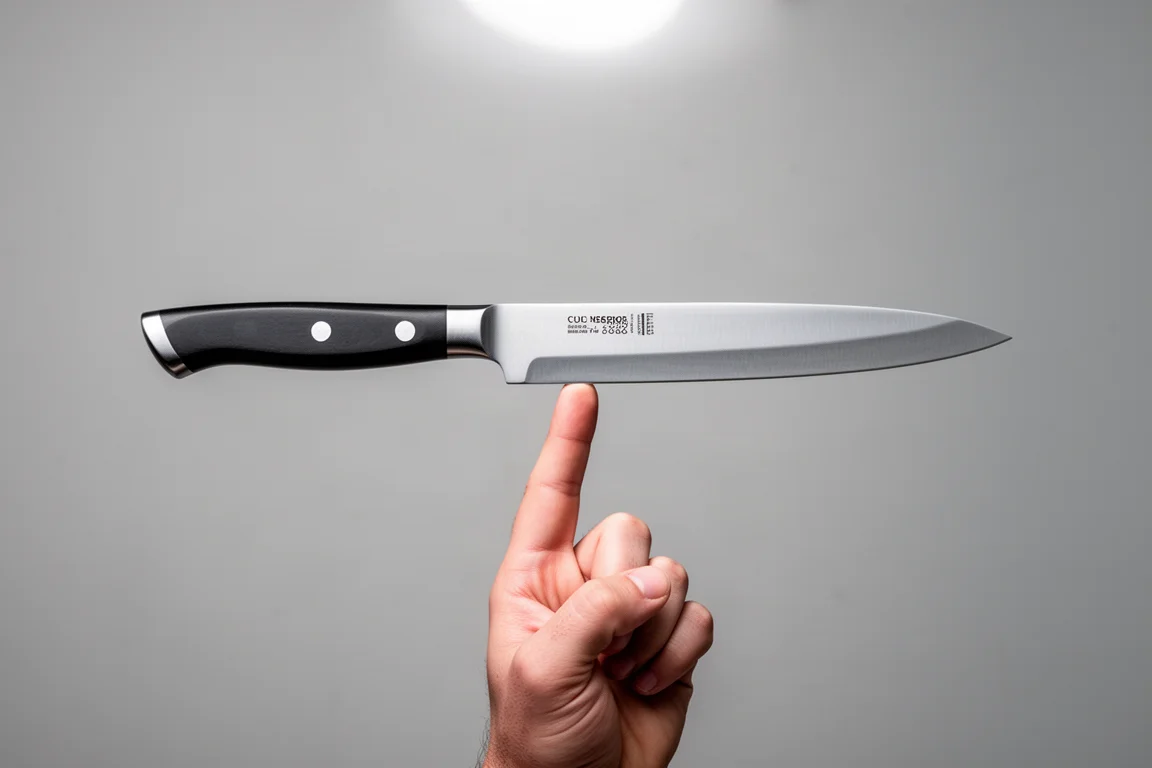
Follow the care instructions and the risk drops considerably: do not drop or slam the knife, do not throw it in the sink, and do not cut through bones, frozen meat, or other very hard ingredients. If you do notice microchips, they can be sharpened out.
A few more caveats. The D-shaped handle is designed for right-handed cooks; it can feel awkward for lefties, and Shun’s left-handed Classic knives have been discontinued. The polished PakkaWood handle also gets slippery when your hands are wet, so keep them dry and use caution. Finally, these knives are expensive, though the pricing is in line with other premium Japanese knife brands like Miyabi and MAC. If you like Shun but not the price, the Kanso and Sora series are much more affordable.
Buying Advice
Shun Classic is one of the best options if you are right-handed and want beautiful, ultra-sharp knives with ergonomic handles. The Damascus steel is attractive and the VG-MAX cutting core holds an edge as well as or better than nearly anything else available.
If you want a workhorse knife that can handle heavy abuse and cut through bones, squash, and other hard ingredients, a Zwilling or Wusthof is the better choice. A sensible setup is to pair one Shun Classic knife with a heftier, softer-bladed knife for the tough jobs, saving the Shun for tasks that demand sharpness and precision.
Conclusion
Shun Classic knives deliver exceptional sharpness, excellent edge retention, and beautiful design, with the main compromises being a chipping risk on hard steel, a right-handed-oriented handle, and a premium price. Treat them with care and they reward you; treat them like a beater knife and you will regret it.
Product link
View more details for Shun Classic Kitchen Knives
This product is mentioned in the review. Check the specifications, options, and compatibility before buying.
View more details for Shun Classic Kitchen KnivesFurther reading
Related Reviews

Kitchen Knives
Best Chef's Knives 2026: 27 Popular Options Tested and Ranked
A comprehensive review of 27 chef's knives ranging from $18 to $380, with honest assessments of handle comfort, blade balance, and real-world performance.

Kitchen Knives
Best Chef's Knives Under $75: Two Tested Recommendations
Two practical 8-inch chef's knives that balance sharpness, comfort, and durability without premium pricing.

Kitchen Knives
Best Chef's Knives 2026: 27 Options Tested and Ranked
A comprehensive review of 27 chef's knives ranging from $18 to $380, with honest assessments of handle design, balance, blade profile, and real-world performance.