Kitchen Knives
Shiro Kunimitsu Kitchen Knives: 200 Years of Sword Making in a Bunka and Petty
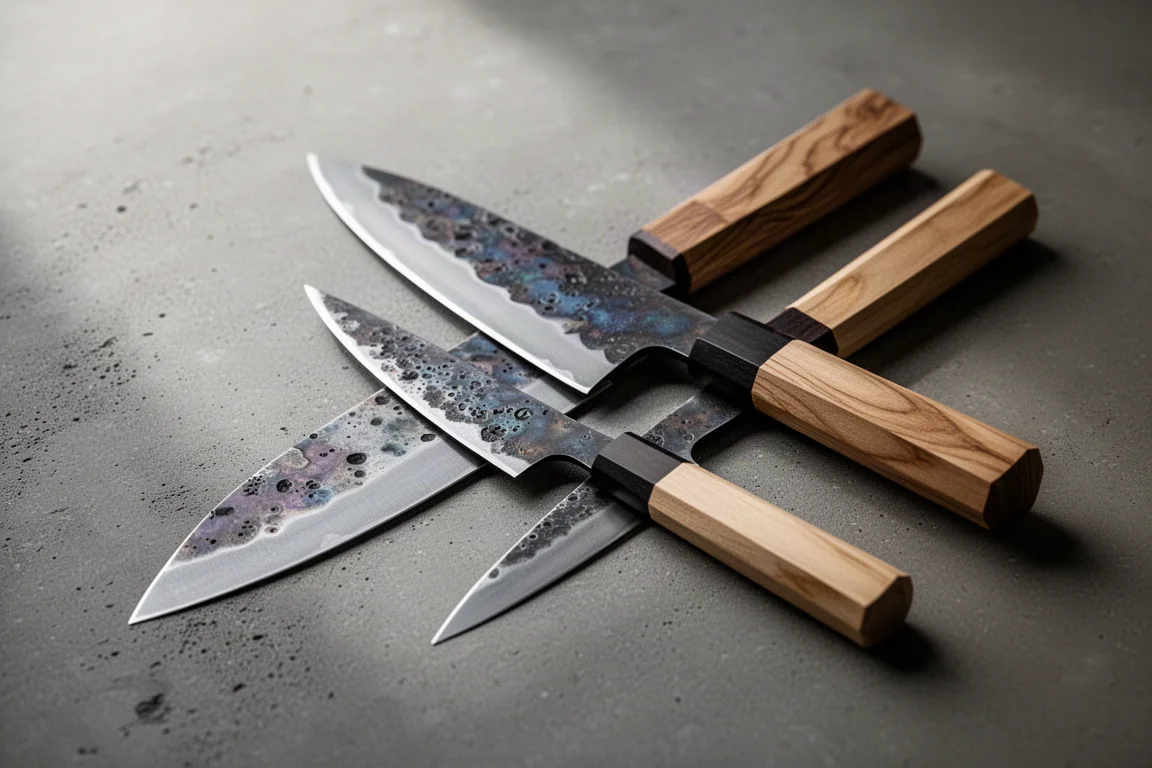
Two rustic, hand-forged knives from a Fukuoka sword-making lineage, built on traditional warikomi construction and Aogami #2 carbon steel.
Introduction
Some knives arrive with a story attached, and the ones from Shiro Kunimitsu carry one of the deeper stories we have come across. This forge in Omuta, Fukuoka traces its lineage back to 1786, and the family behind it spent generations perfecting the art of sword making before turning that same discipline toward kitchen knives. We got hands-on with two of them: a shorter bunka and a larger petty knife. Both are rustic, traditional, and unlike much of what you will find from modern knife makers.
A Legacy That Dates Back to 1786
The Shiro Kunimitsu name is a title passed down through generations, representing mastery and the continuation of a lineage rather than a single individual. A couple of generations ago, the line risked ending when a successor was needed. A few decades back, the current holder of the title was asked to take on the name and preserve it, and he has done so with real commitment, working alongside his sons to keep the craft alive.
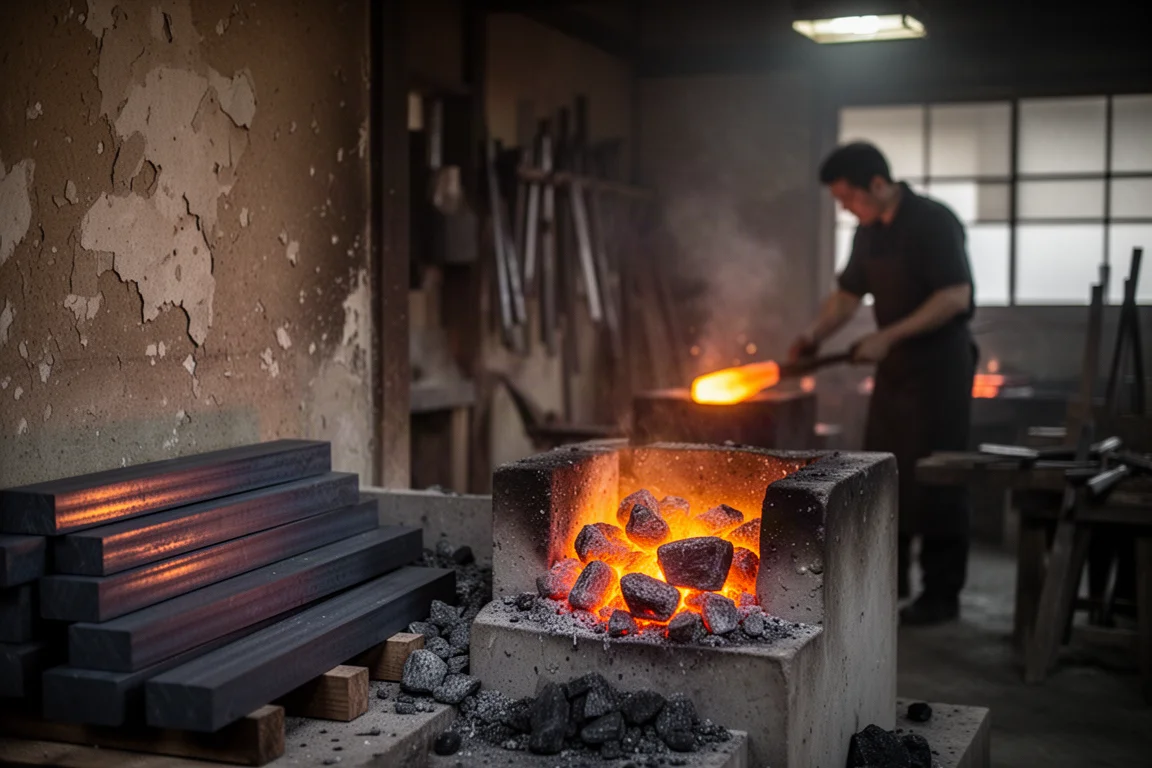
The forge has earned many awards for its sword making, and it treats knife making with the same seriousness. Visiting the workshop is an experience in itself: coal is still used for forging, piles of traditional tamahagane steel sit stacked around the space, and you can see the worn footprints where craftsmen have stood forging and sharpening for generations. It feels like layers of history built into one room.
Warikomi Construction, Done the Hard Way
Most knife makers today buy steel pre-laminated into three layers, with a hard core sandwiched between softer protective steel. Shiro Kunimitsu takes a step back in time with a technique called warikomi. They heat a piece of soft steel, split it open almost like a hot dog bun, insert a core of very hard steel, and forge weld the whole thing back together.
This is genuinely difficult work. The steel has to be extremely clean between layers, the temperature has to be right so carbon content is not lost, and the hammering force has to be exact. Too hard and the layers slide apart, too soft and they will not stick at all. Very few knife makers still use this method, which speaks to how demanding it is.
Aogami #2 Carbon Steel and a Rustic Finish
Both knives are made from Aogami #2 carbon steel, a material traditional makers favour for how it takes a very sharp edge and holds it well. It is also a steel that demands care. It can rust quickly, so you will need to wipe the blade after use, but the reward is a blade that develops colour and character as it ages.
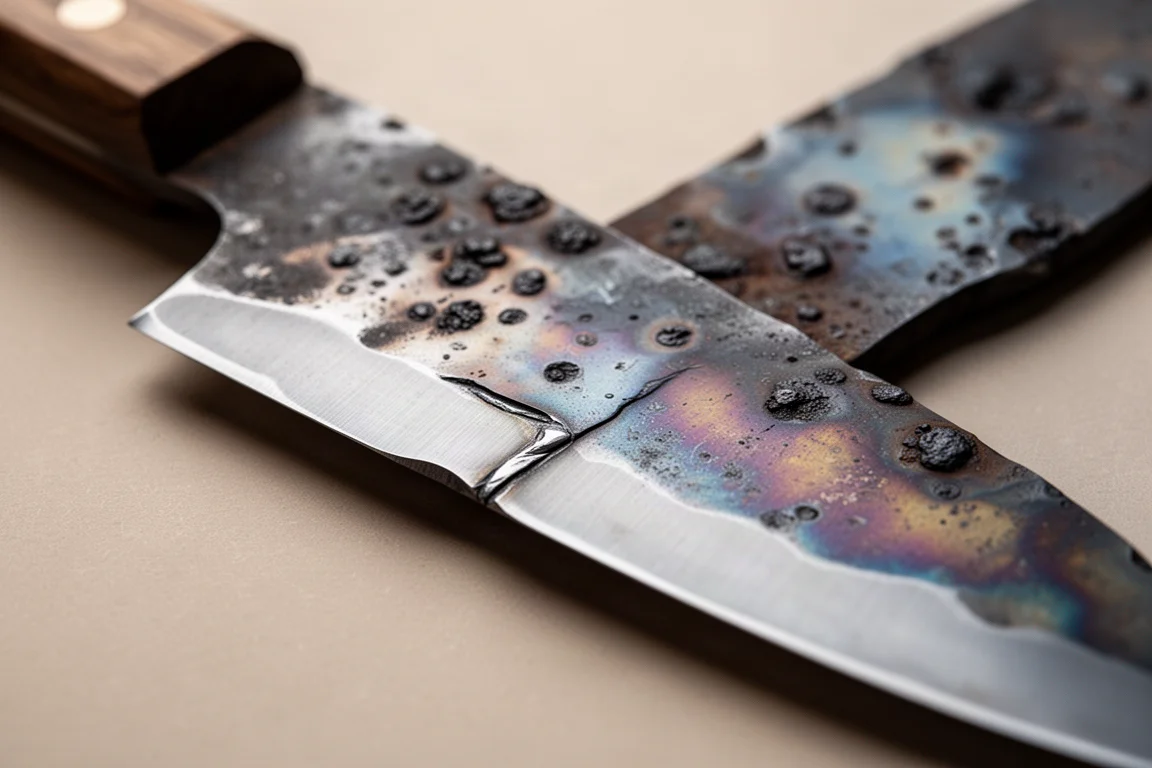
The finish is deliberately rustic. Look closely and you will see black specks and flakes of raw burned steel from the forging process, along with blues, reds, purples, browns, and greys from each step of the making. It is almost like the surface of a planet, and it is clearly meant to show the history and labour behind the blade. The knives are a little on the thicker side, which is common with warikomi construction, but the forge’s sharpening expertise leaves the edge fine and eager to bite.
How They Cut: Testing the Edge
In testing, the bunka handled a thick carrot smoothly, sliding through without drama. The edge has a deliberate toothiness to it, left slightly rough so it bites into food rather than gliding across it. That paid off on tomato skin, where a finer-polished edge might skip.
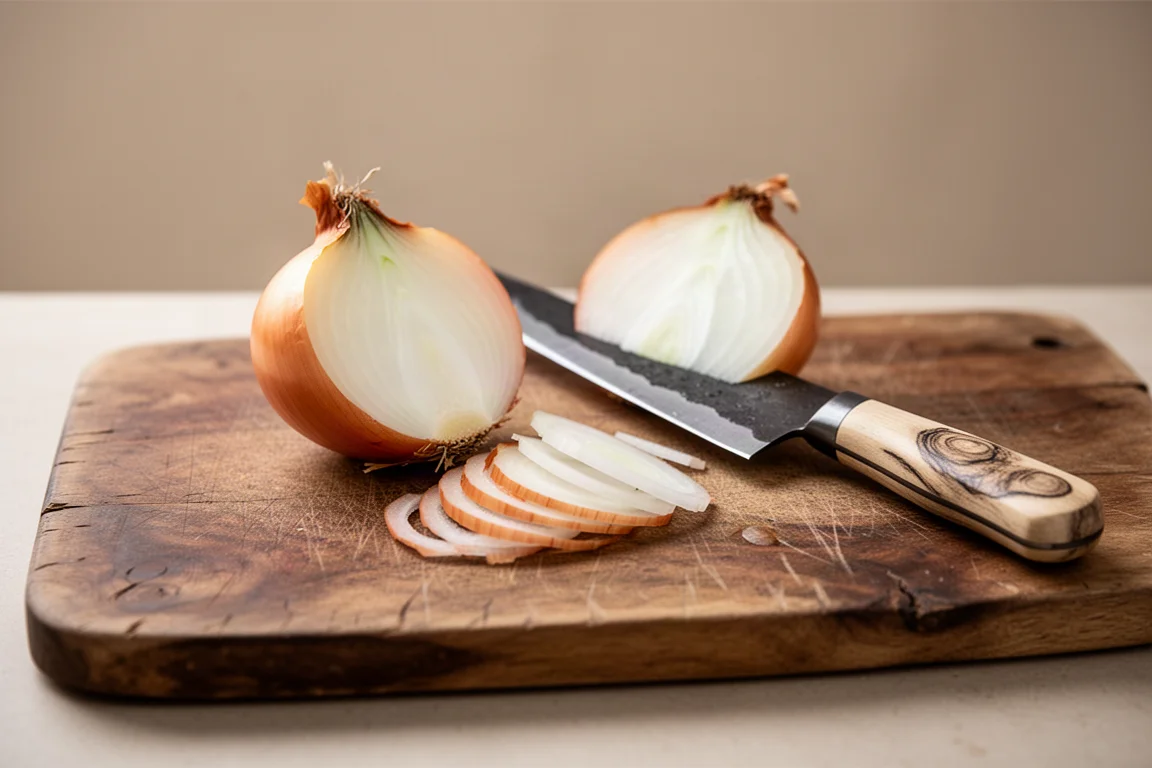
On a cucumber, release was clean, helped along by a more pronounced bump where the grinding stops and the face of the knife begins, which encourages food to knock off the blade. Halving an onion was the one moment that felt less impressive, and the same likely applies to dense jobs like splitting squash, beets, or sweet potatoes in half. This is not the first knife we would reach for on those tasks.
The overall feel suits a heavier-handed cook who moves fast and is not overly delicate. Both knives feel great in the hand, and the classic octagonal magnolia handle is simple, traditional, and comfortable.
Who These Knives Are For
These are not low-maintenance knives. The carbon steel will start changing colour within moments of use and will rust if neglected, so they ask for attention in return for their performance and character.
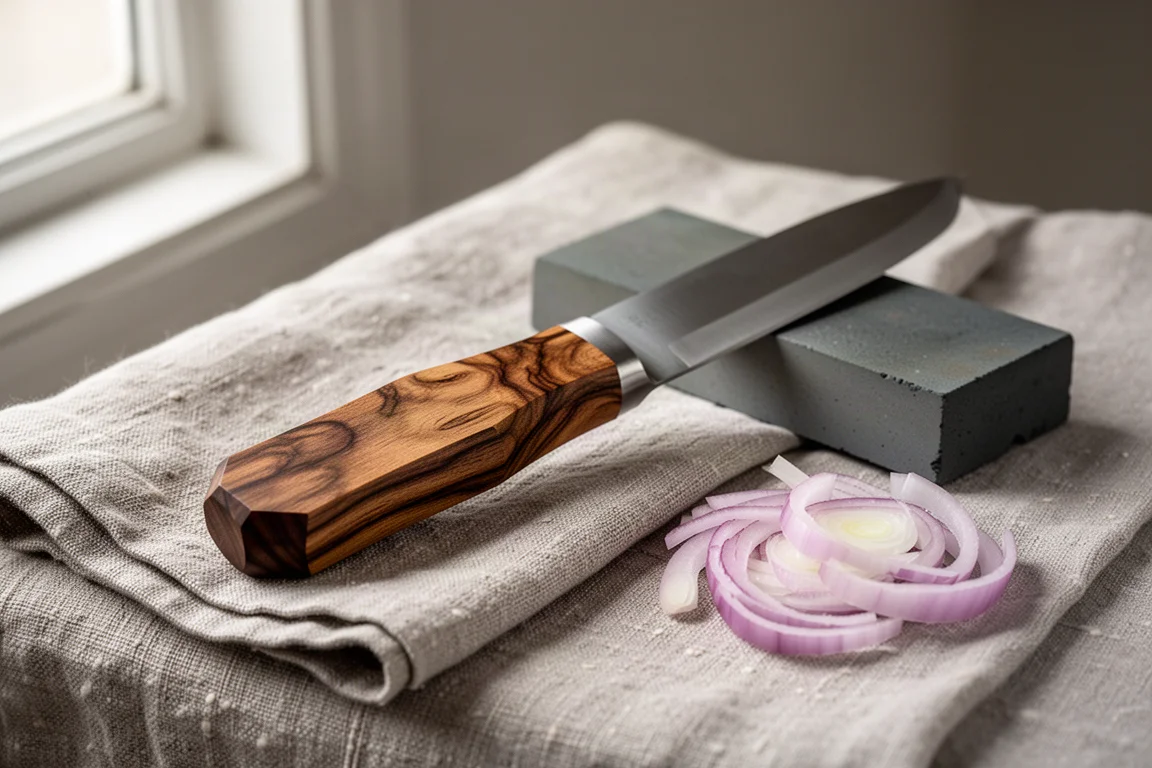
What you get in exchange is a genuine piece of Japanese history that doubles as a very capable prep knife. Even serious collectors with dozens of knives will find these shapes and finishes feel different from anything else in the drawer. The rustic finish, the warikomi construction, and the sword-making lineage make them stand apart.
Conclusion
The Shiro Kunimitsu bunka and petty knives reward care with character, a toothy and long-lasting edge, and a tangible connection to more than two centuries of craft. If you want a low-maintenance stainless blade, look elsewhere. If you want a working knife with real history behind it that makes you excited to cook, these are easy to recommend.
Product link
View more details for Shiro Kunimitsu Bunka
This product is mentioned in the review. Check the specifications, options, and compatibility before buying.
View more details for Shiro Kunimitsu BunkaFurther reading
Related Reviews

Kitchen Knives
Best Chef's Knives 2026: 27 Popular Options Tested and Ranked
A comprehensive review of 27 chef's knives ranging from $18 to $380, with honest assessments of handle comfort, blade balance, and real-world performance.

Kitchen Knives
Best Chef's Knives Under $75: Two Tested Recommendations
Two practical 8-inch chef's knives that balance sharpness, comfort, and durability without premium pricing.

Kitchen Knives
Best Chef's Knives 2026: 27 Options Tested and Ranked
A comprehensive review of 27 chef's knives ranging from $18 to $380, with honest assessments of handle design, balance, blade profile, and real-world performance.