Kitchen Knives
Shibata Koutetsu Chromax 240mm Sujihiki Review: The Most Underrated Knife Shape?
A long, lean Japanese slicer that turns out to be far more versatile than its reputation suggests, on produce as well as protein.
Introduction
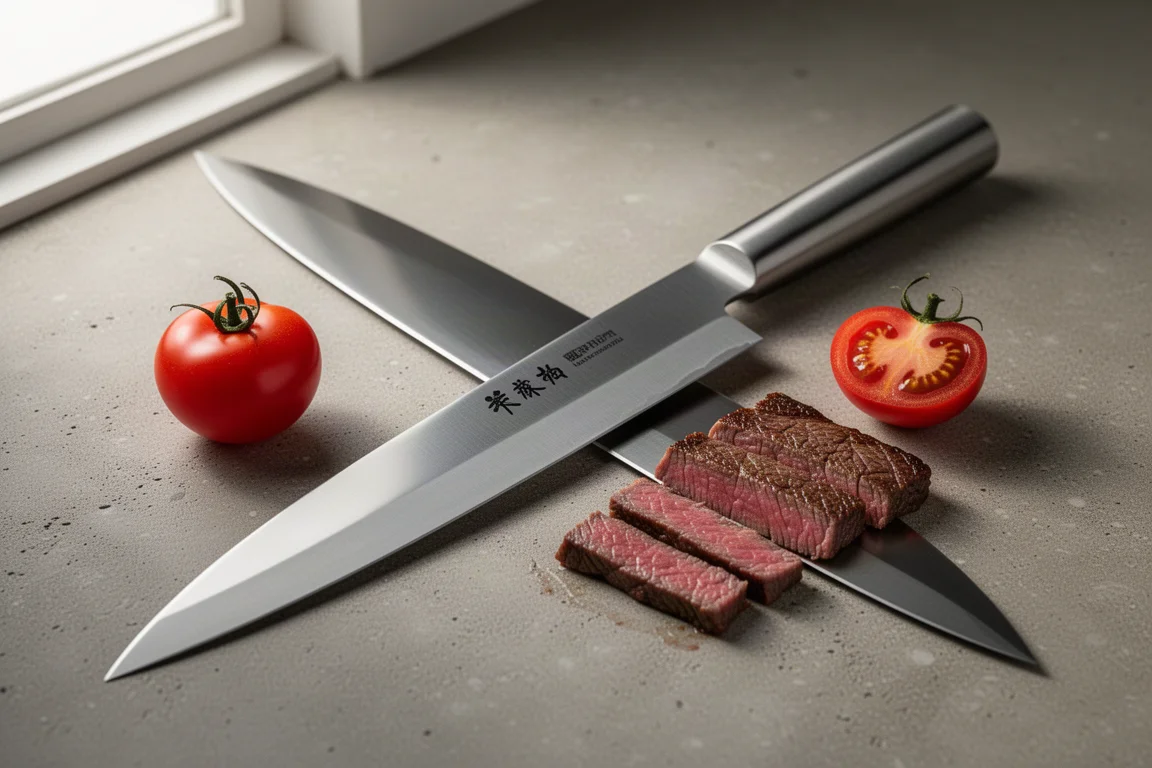
Meat, tomatoes, onions, potatoes, fruit, mushrooms. After putting the Shibata Koutetsu Chromax 240mm Sujihiki through all of them, one conclusion stands out: the sujihiki may be the most underrated knife shape in the kitchen.
Most people assume this long, lean slicer is only for cutting meat. That was the assumption going in, too. The reality turned out to be far more interesting, and it raises the question of whether this shape deserves a place in far more home kitchens.
What Is a Sujihiki?
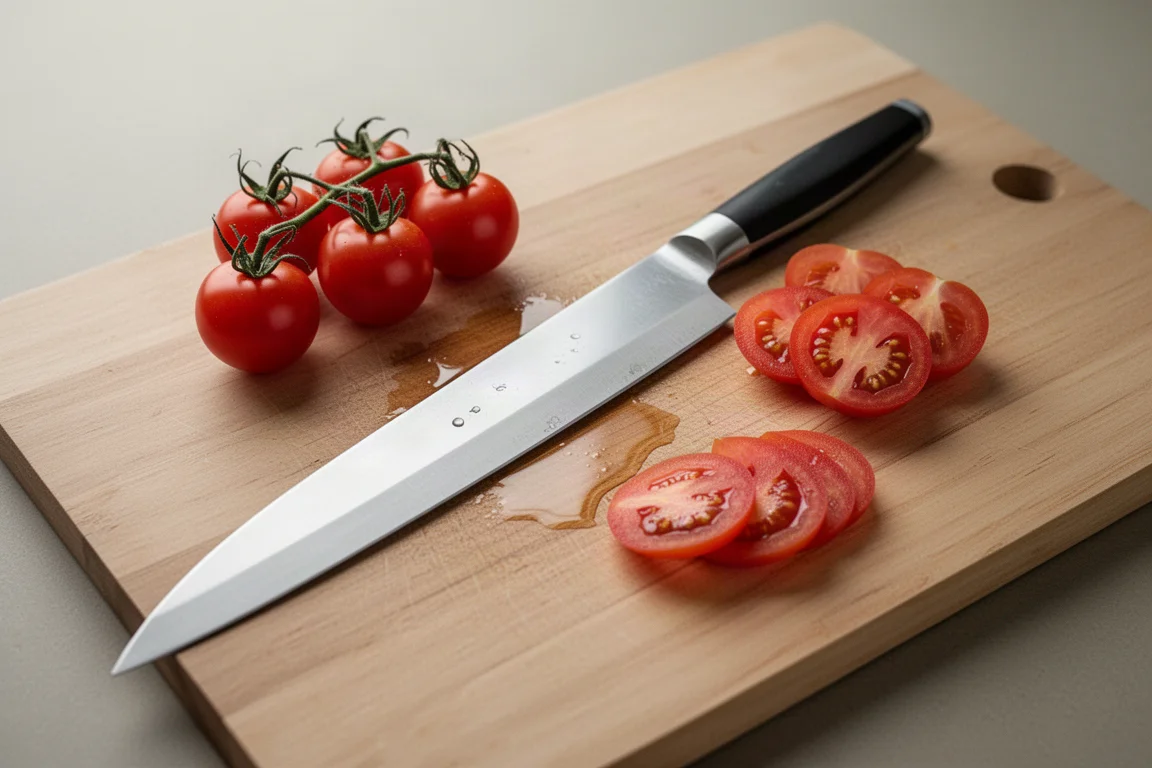
The Japanese sujihiki translates to “flesh slicer” and is designed primarily for proteins. The recipe is simple: a long blade, a narrow profile, less drag through food, and a typical length of 240 to 300 millimeters.
If that were all it could do, it would remain a specialist tool. In practice, the shape gets skipped far too often. Anyone getting into Japanese kitchen knives is usually pointed toward a gyuto first, then maybe a petty, santoku, or bunka. The sujihiki gets dismissed as too specialized, a one-trick pony that only belongs near the roast. After extended use, that reputation does not hold up nearly as well as people think.
Produce Performance Beyond Meat
Take a cherry tomato. You only need a few centimeters of blade to cut one, but with 240 millimeters of usable edge you can cut near the tip, in the middle, or at the heel. The excellent bite of the Chromax edge even makes horizontal tomato cuts effortless. The same applies to strawberries: with a tip this aggressive and precise, you can core a strawberry from the far end of a 240 millimeter blade, no paring knife required.
Mushrooms can be squeaky little troublemakers, but the thin geometry running through the entire blade makes both pull cuts and push cuts feel effortless, with that squeaky resistance reduced because there is simply less blade dragging through the food. Red potatoes, a wet, starchy ingredient that exposes food release issues and wedging almost immediately, are another highlight. The shallow blade height creates less drag, the migaki finish helps reduce sticking, and the whole experience feels almost like cutting air.
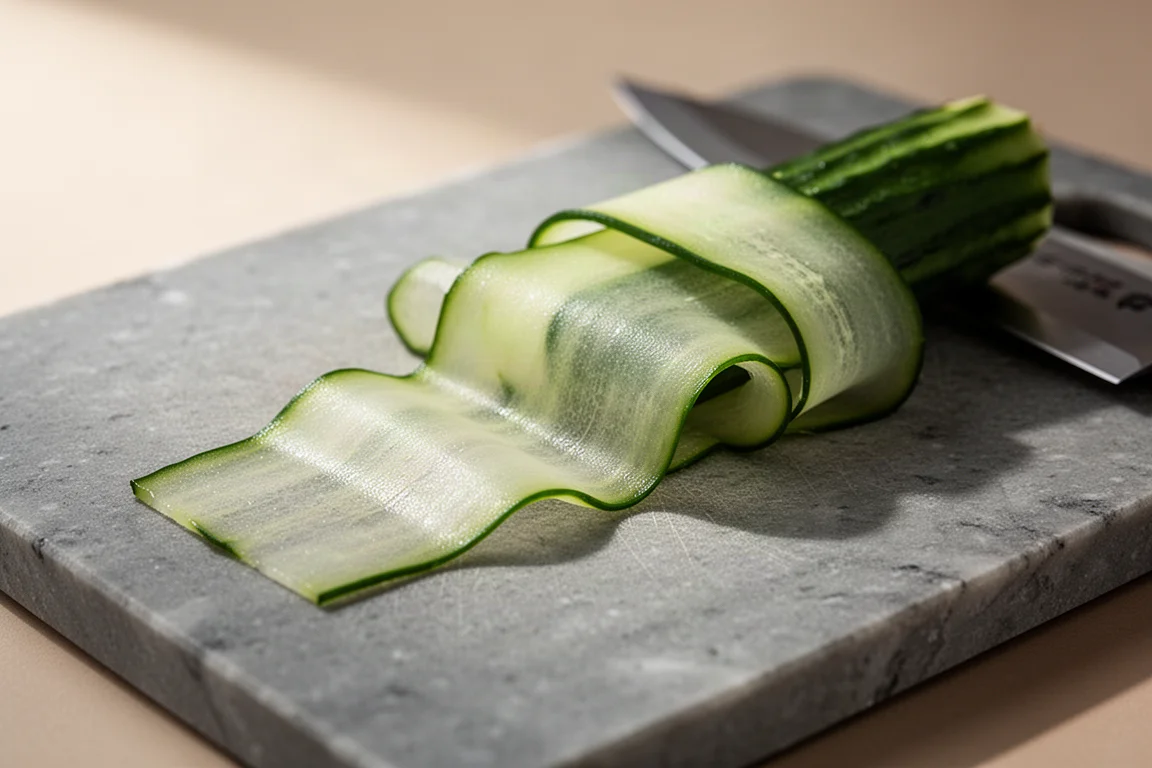
The tip design matters here too. Some sujihikis use a drop-point style tip, but this one features a more aggressive K-tip with the point positioned closer to the edge than the spine. That makes draw cuts through potato skins surprisingly easy. It even extends to tableside tasks: need to cut a lime? Just keep the sujihiki in hand. No stopping, no cleaning, no reaching for something smaller. Long, leafy greens like gai lan also benefit, since they require length more than blade height, and in some cases the extra reach feels more natural than a 240 millimeter gyuto.
Why Blade Height Matters: Understanding Drag
Drag is one of the most overlooked aspects of knife performance. Edge sharpness only affects the first few millimeters of a cut. After that, blade geometry, finish, thickness behind the edge, and blade height determine how the rest of the experience feels.
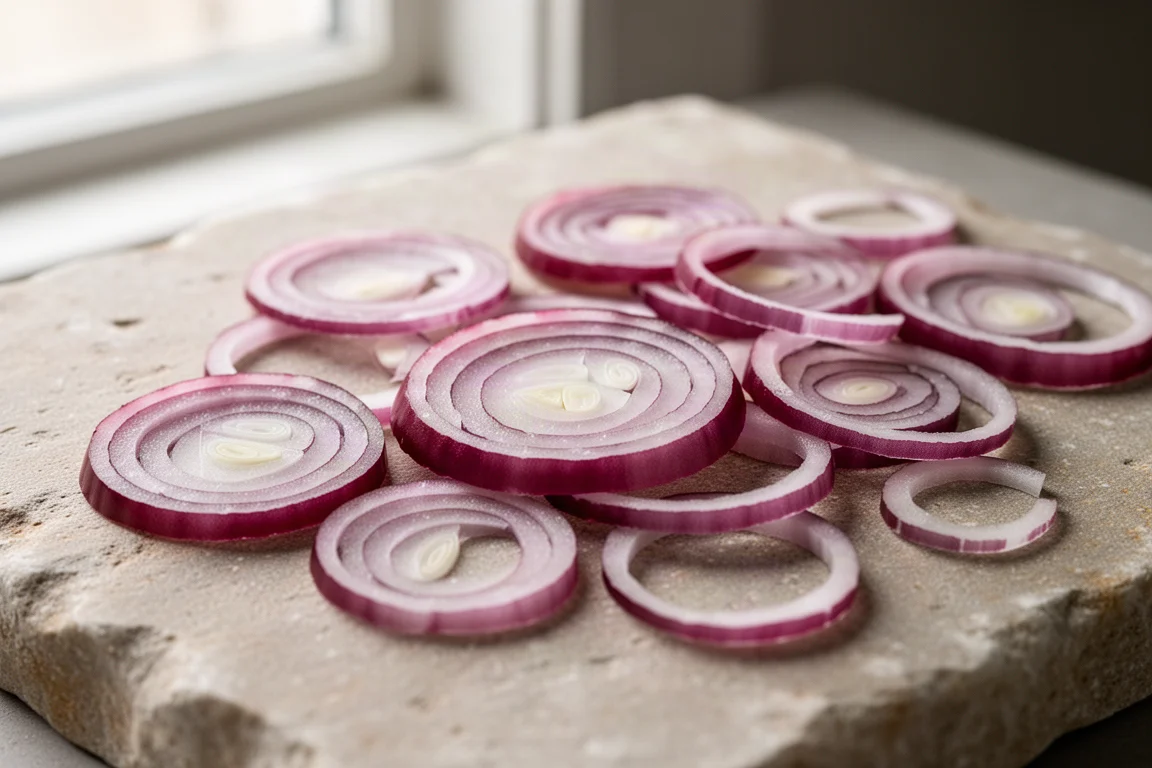
This is where the sujihiki shape quietly earns its keep. Even a sticky finish or less-than-ideal geometry can be partially mitigated by a shallow blade height. Imagine an extremely sharp edge paired with a sticky finish on a 55 millimeter tall blade while attempting a horizontal onion cut. Good luck. Put those same properties on a blade closer to 40 millimeters tall and the knife simply moves through the onion more freely. Less drag, less resistance, a smoother overall experience.
In some ways, this style of knife is more forgiving than people realize. The shape itself does a portion of the work that most knives leave to their edge and finish alone.
The Main Event: Slicing Meat
Of course, the protein work is where this knife was always expected to shine, and it does not disappoint. The blade is still long enough to cut in a single draw motion, still long enough to produce ultra-thin slices of flat iron steak, and the results are genuinely impressive.
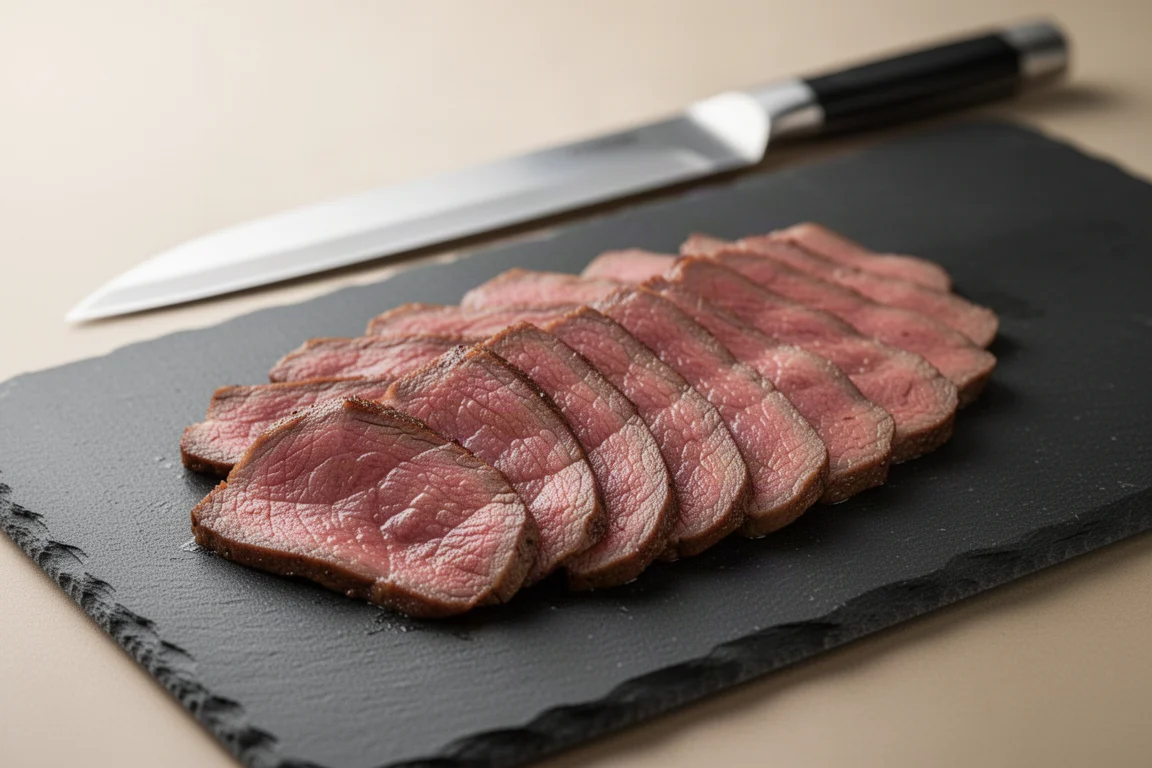
It is worth noting that not every sujihiki performs like this. Much of the experience comes down to how well Shibata executes the design: the migaki finish that reduces sticking, an incredibly thin grind at the edge and behind the edge, excellent geometry, and weight and balance that make a 240 millimeter knife feel surprisingly approachable. Importantly, this particular knife maintains a very shallow blade height throughout its profile, and not every sujihiki is built that way.
Things to Consider Before Buying
A sujihiki is not as versatile as a gyuto, and that trade-off is real. If you have larger hands, you may find the knuckle clearance limiting. There are still tasks where a gyuto is the more practical choice, and not everyone will feel comfortable using a long, narrow blade as an everyday knife. That is completely fair.
Buying Advice
If you are buying your first Japanese knife, a gyuto is still the right recommendation. But if you already own one and you are looking for something different, the sujihiki deserves far more attention than it gets. After extended time with this Shibata Koutetsu Chromax, it genuinely earns a claim as one of the most underrated knife shapes in the kitchen, and it stands as a favorite in the Chromax lineup.
Conclusion
The Shibata Koutetsu Chromax 240mm Sujihiki proves that a supposedly single-purpose slicer can handle tomatoes, potatoes, onions, mushrooms, leafy greens, and ultra-thin steak slices with equal confidence. Its shallow blade height, thin grind, and refined finish make cutting feel effortless across the board. For anyone past their first Japanese knife and curious about a different shape, this sujihiki is a compelling and underrated choice.
Product link
View more details for Shibata Koutetsu Chromax 240mm Sujihiki
This product is mentioned in the review. Check the specifications, options, and compatibility before buying.
View more details for Shibata Koutetsu Chromax 240mm SujihikiFurther reading
Related Reviews

Kitchen Knives
Best Chef's Knives 2026: 27 Popular Options Tested and Ranked
A comprehensive review of 27 chef's knives ranging from $18 to $380, with honest assessments of handle comfort, blade balance, and real-world performance.

Kitchen Knives
Best Chef's Knives Under $75: Two Tested Recommendations
Two practical 8-inch chef's knives that balance sharpness, comfort, and durability without premium pricing.

Kitchen Knives
Best Chef's Knives 2026: 27 Options Tested and Ranked
A comprehensive review of 27 chef's knives ranging from $18 to $380, with honest assessments of handle design, balance, blade profile, and real-world performance.