Kitchen Knives
The Sharpest Japanese Kitchen Knives: Six Picks With Tall Bevels and Razor Finishes
Six Japanese knives that come closest to the ideal of true sharpness: hard steel, tall thin bevels, and edges sharpened to bite and glide at the same time.
Introduction
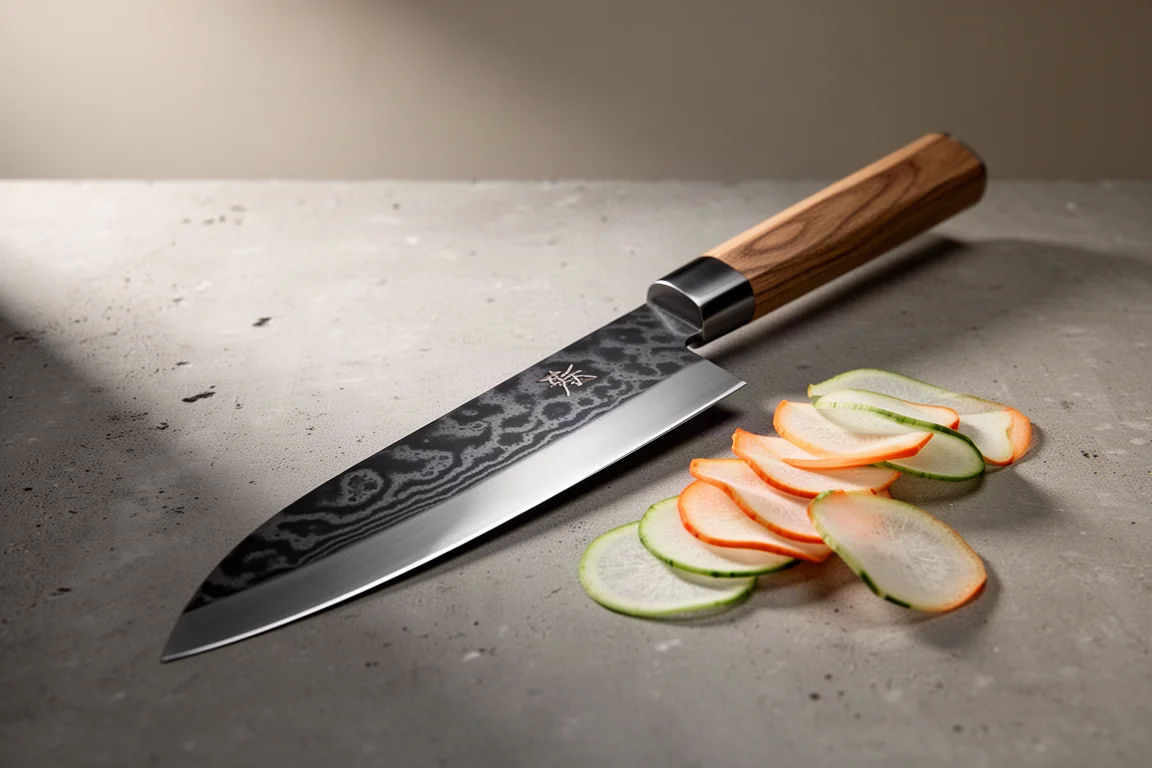
Ask a blacksmith what the sharpest knife in the world is and you will get an honest answer: theoretically, an impossibly hard, micron-thin blade, maybe made of diamond. It would also be completely useless in a kitchen. Sharpness is always relative to the job, so the interesting question is not “what is the sharpest knife” but “what makes a knife feel impossibly sharp for real food, every day”.
The answer comes down to three things working together: the steel the knife is made from, the polish of its bevels, and the geometry of its edge. We have pulled together six Japanese knives that, in practice, sit right at the top of that sharpness triangle.
What Actually Makes a Knife Sharp
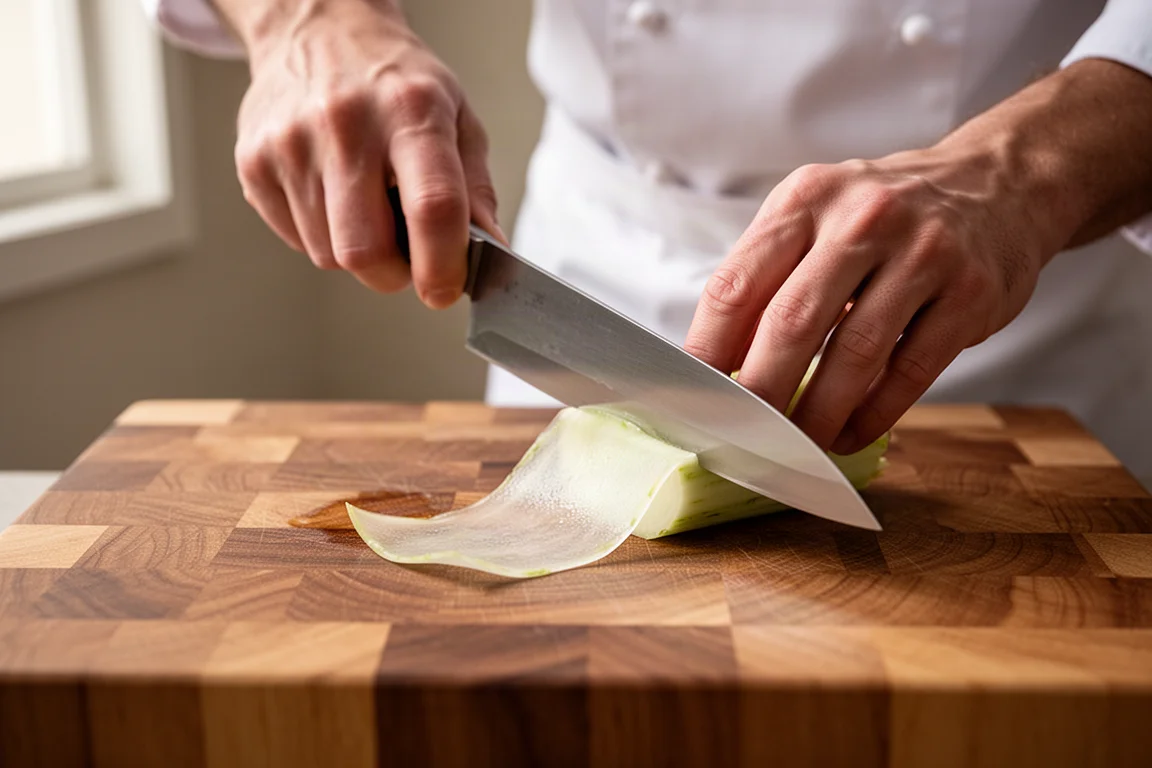
Hard steel is the foundation. Japanese steels get very hard, and harder steel holds a finer edge for longer, which also lets a maker grind the blade much thinner and polish it to a higher degree. The trade-off is brittleness: a hard edge should never be asked to cut through bones, frozen food, or a hard parmesan rind, and sideways torsion can chip it.
Most Japanese knives solve this with a construction called san mai, literally “three layers”: a hard core steel for the edge, clad in softer steel on the sides for strength. The theoretical sharpest candidates are steels like Aogami Super, Shirogami #1, R2, or similar powder steels, which hold that fine edge the longest.
Bevel Geometry and Edge Polish
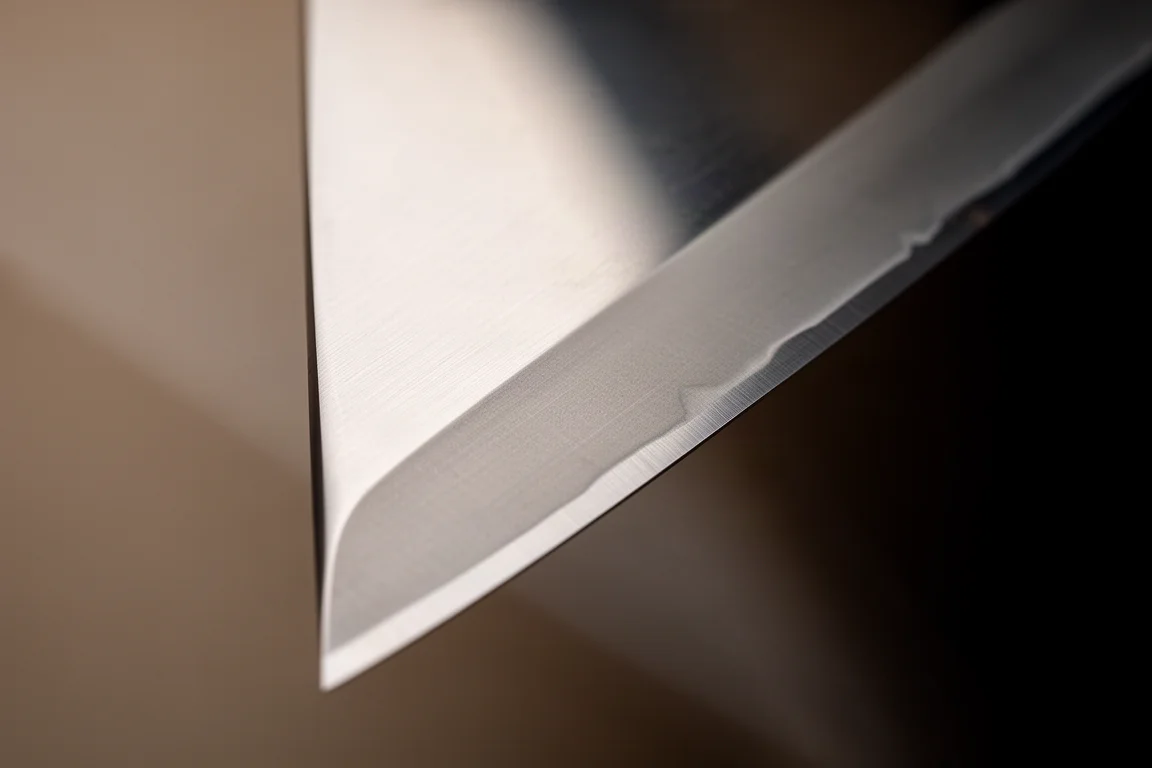
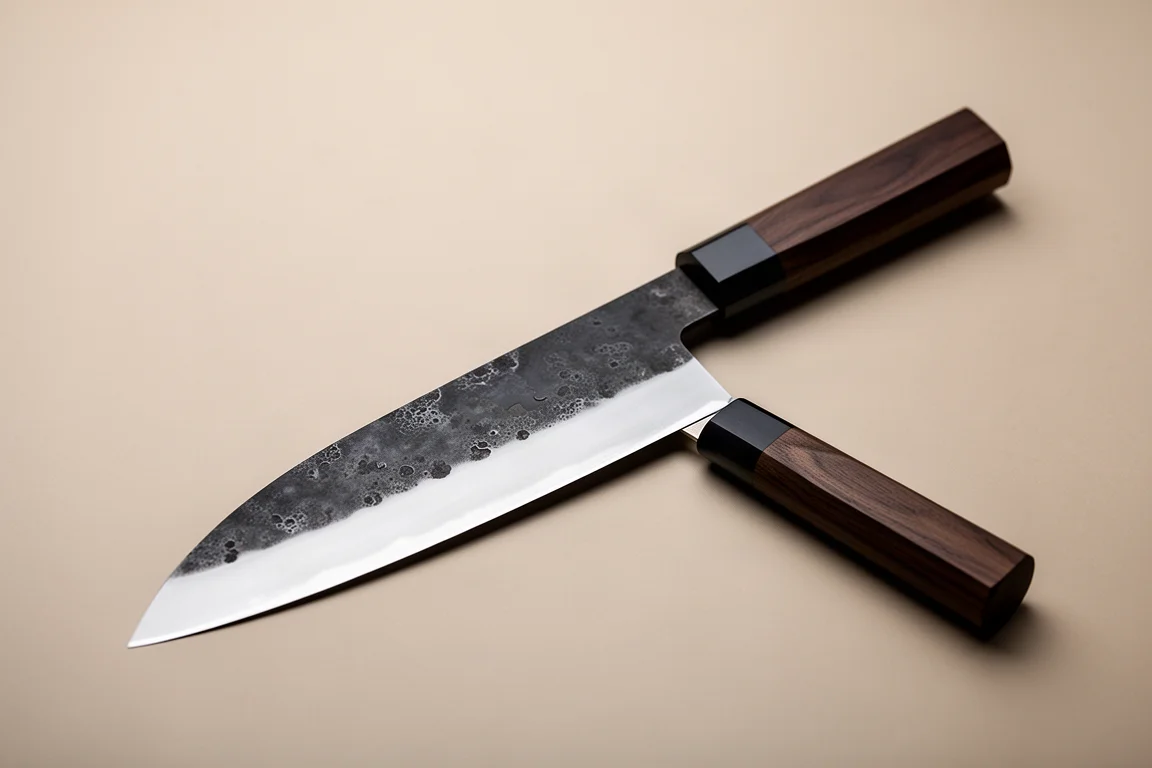
The second ingredient is the primary bevel, the taper ground into the blade down to the edge. The thinner the apex of that taper, the more force concentrates into the cutting point, which is why a genuinely sharp knife glides through food with no push at all. A tall bevel means a narrow sharpening angle; a short bevel means a more dramatic taper. The goal is a thin, tall bevel sharpened at a narrow angle, without exposing the core steel so much that daily use becomes risky.
The side polish matters too. A full mirror finish can create suction against food, while a rough finish grabs. The sweet spot is just below mirror polish: something like a slightly foggy kasumi finish, smooth enough to release food but with a little tooth left in the surface.
The Micro Bevel and Differential Grit Sharpening
Here is a common misconception worth clearing up: polishing the edge finer and finer does not automatically make it sharper. A coarser edge bites into tough skins like tomatoes and gives you grip, while a very fine edge glides beautifully through delicate things like fish skin, but can be so polished it simply slides off a tomato skin.
The best of both worlds is differential grit sharpening: one side of the edge finished at a coarse grit, around 400, and the other at a fine grit, around 8,000. The coarse side bites into food while the fine side glides, a bit like the serration pattern on a shark’s tooth. The result is an edge that handles tomato and bell pepper skins as well as smooth ingredients, and keeps performing for a long time.
Six of the Sharpest Knives We Know
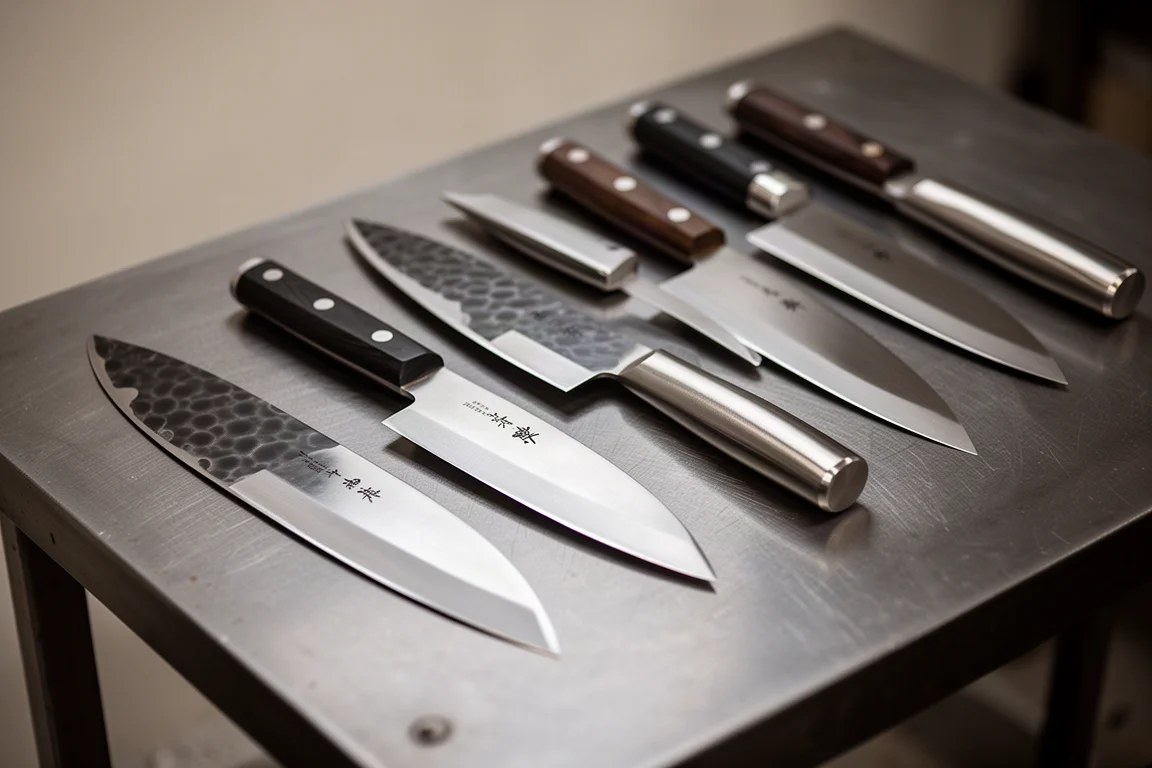
With the theory in place, here are six knives that consistently feel the sharpest in the hand. Any good Japanese knife will be very sharp; these stand out for their extra tall bevels and refined tapers.
Yoshimi Kato SG2 Black Damascus
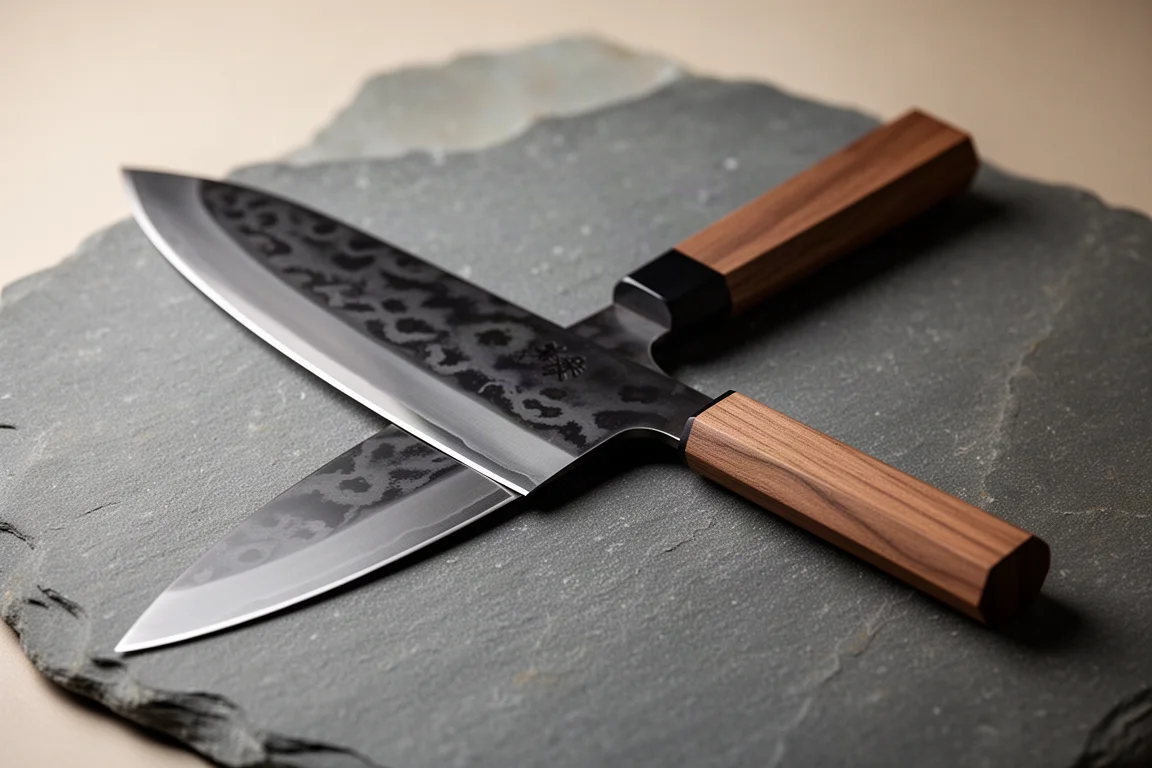
This one is super thin, very smooth in the cut, and has a tall bevel with a lovely taper even though there is no sharply defined bevel line. It is a great example of how thin geometry and a hard SG2 core combine into a knife that seems to fall through food.
Yu Kurosaki Senko
Also made from SG2 steel, the Senko is the perfect balance of polished bevel. Kurosaki needs little introduction among Japanese knife makers, and this blade shows why: everything about the grind and finish is dialed in just right.
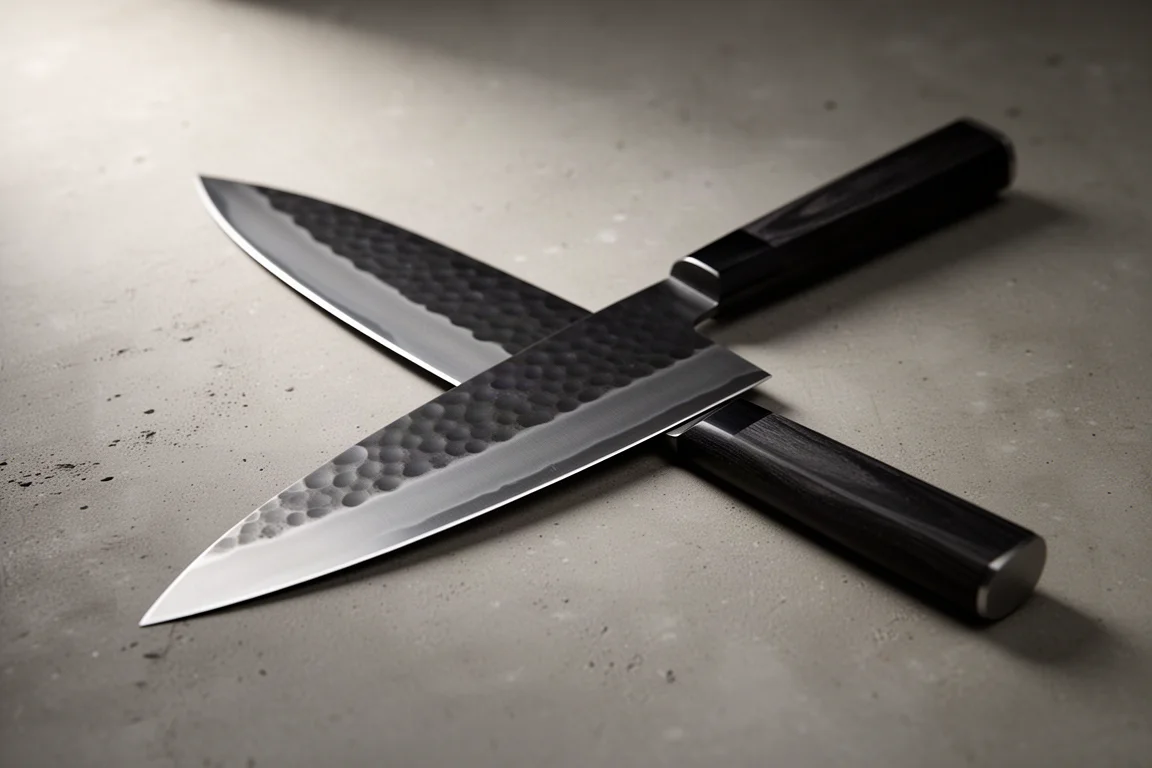
Kotetsu
The legendary Kotetsu, forged by Takayuki Shibata, is the knife many collectors call the sharpest in their entire collection. That was Shibata’s explicit goal when he started making them. It is made of R2 steel, ultra ultra thin, and performs like a laser.
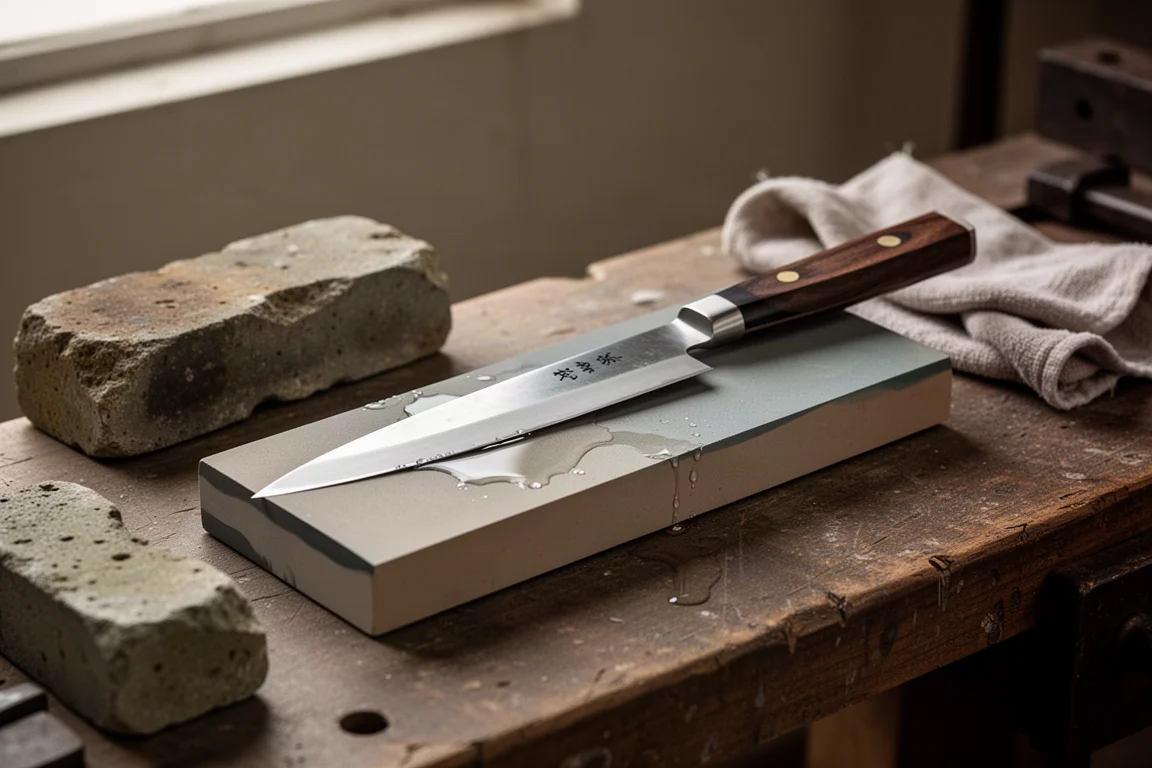
Hinokuni
The first of three slightly thicker knives, the Hinokuni has a great taper and extra weight at the spine that makes it feel like it falls right through food. If you want something a bit more durable that still has that ultra sharp feel, this is a great place to start. One standout detail is how clean the shinogi line is, the line at the top of the primary bevel; getting it that straight takes an incredible amount of skill from the sharpener.
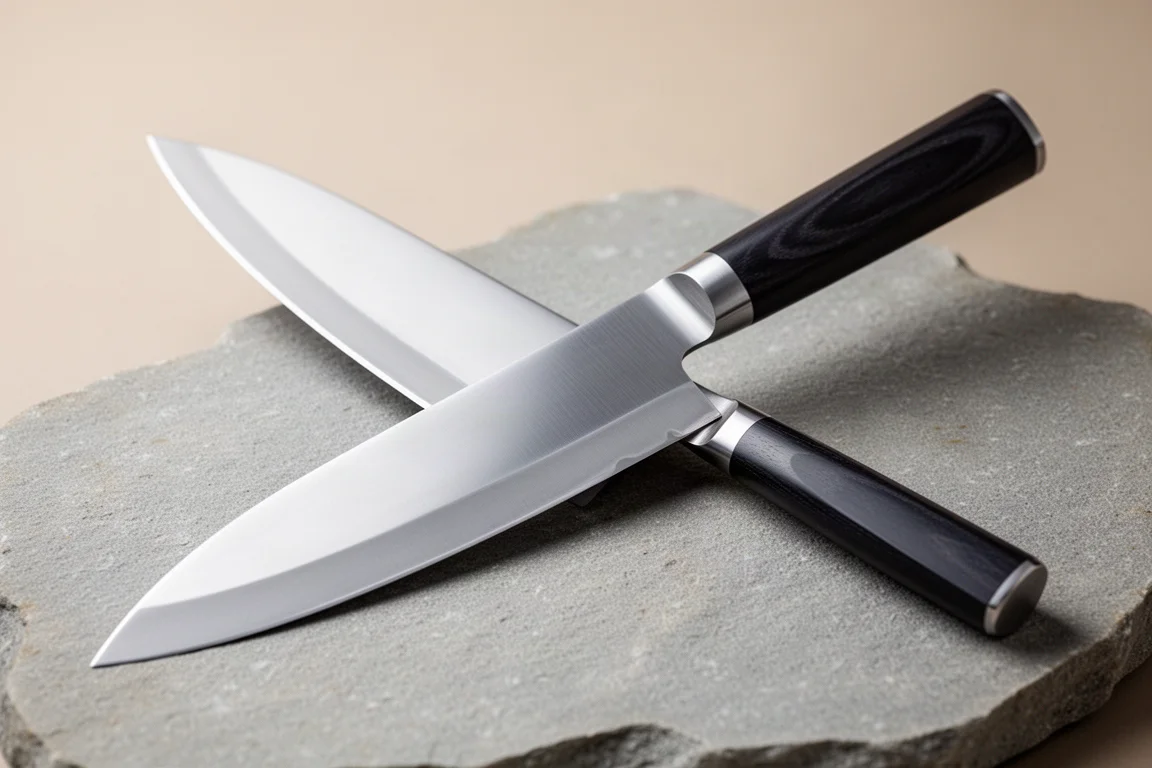
Hinokuni Sumi
Also from the Hinokuni line, the Sumi has a fun feature: its already tall bevel gets even taller near the tip of the knife. That taper toward the tip adds finesse where precision cutting happens most.
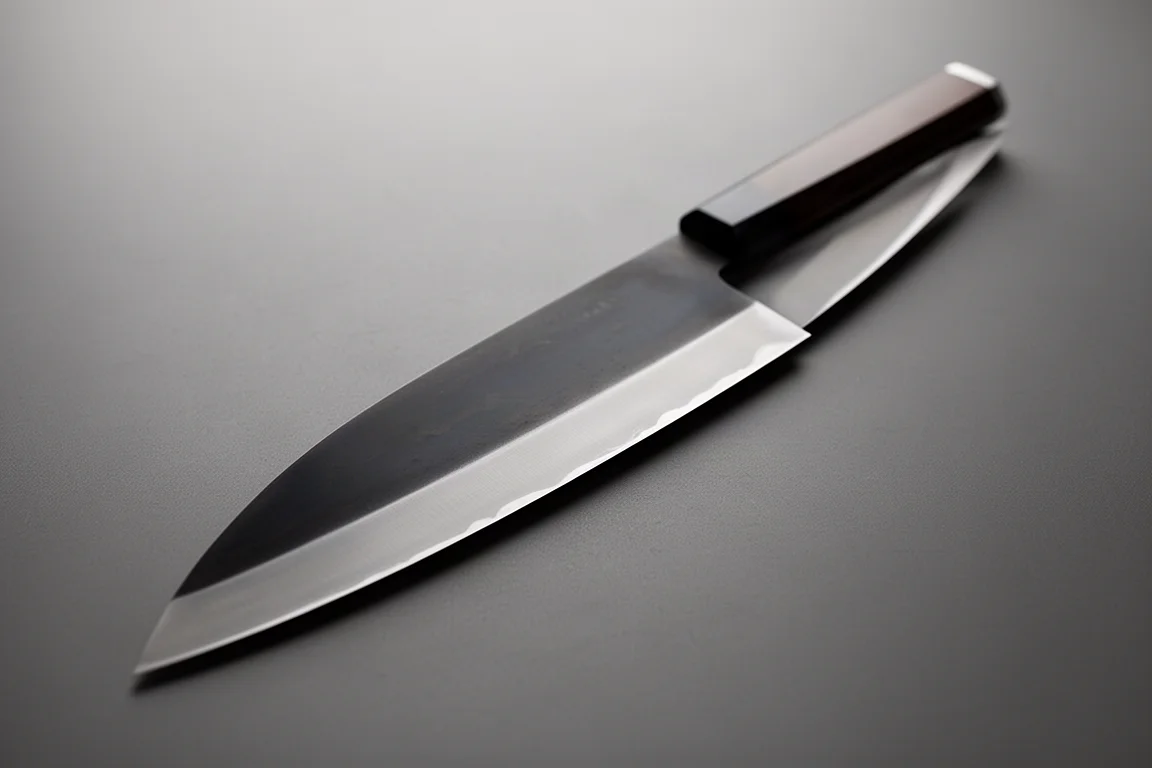
Masakage Kuishi
A staff and customer favorite, the Kuishi uses ultra hard Aogami core steel clad in stainless, so it is easy to take care of. The bevel is super tall, so you still get that razor feel, and it comes differentially sharpened on the edge right out of the box.
Overall Buying Advice
If you want the sharpest possible knife for everyday cooking and you have a reasonable knowledge of how to use one, look for a hardness around 65 to 66 on the Rockwell scale, a primary bevel polished somewhere between slightly coarse and mirror, and ideally an edge that is differentially sharpened. If those terms mean nothing to you, that is fine too: pretty much any well-made Japanese knife will be excellent.
Whatever you choose, treat a hard edge with respect. No bones, no frozen food, no twisting through hard rinds. Do that, and one of these tall-bevel knives will keep its remarkable edge for a very long time.
Conclusion
There is no single definitively sharpest knife, because sharpness depends on the job. But for real kitchen work, the recipe is clear: hard steel, a thin tall bevel, a side polish just below mirror, and a differentially sharpened edge. The six knives above embody that recipe in different ways, from the ultra-thin Kotetsu to the durable, easy-care Masakage Kuishi. Pick the one that matches how you cook, and enjoy what a properly sharpened blade can do.
Further reading
Related Reviews

Kitchen Knives
Best Chef's Knives 2026: 27 Popular Options Tested and Ranked
A comprehensive review of 27 chef's knives ranging from $18 to $380, with honest assessments of handle comfort, blade balance, and real-world performance.

Kitchen Knives
Best Chef's Knives Under $75: Two Tested Recommendations
Two practical 8-inch chef's knives that balance sharpness, comfort, and durability without premium pricing.

Kitchen Knives
Best Chef's Knives 2026: 27 Options Tested and Ranked
A comprehensive review of 27 chef's knives ranging from $18 to $380, with honest assessments of handle design, balance, blade profile, and real-world performance.