Power Tools
SDS Rotary Hammers vs Hammer Drills: Milwaukee 2912, Ryobi HPP223 and DeWalt DCD999 Compared
We put two 1-inch capacity cordless SDS Plus rotary hammers and a top-tier hammer drill driver head to head in concrete drilling, torque and hammering force to see where the extra money actually goes.
Introduction
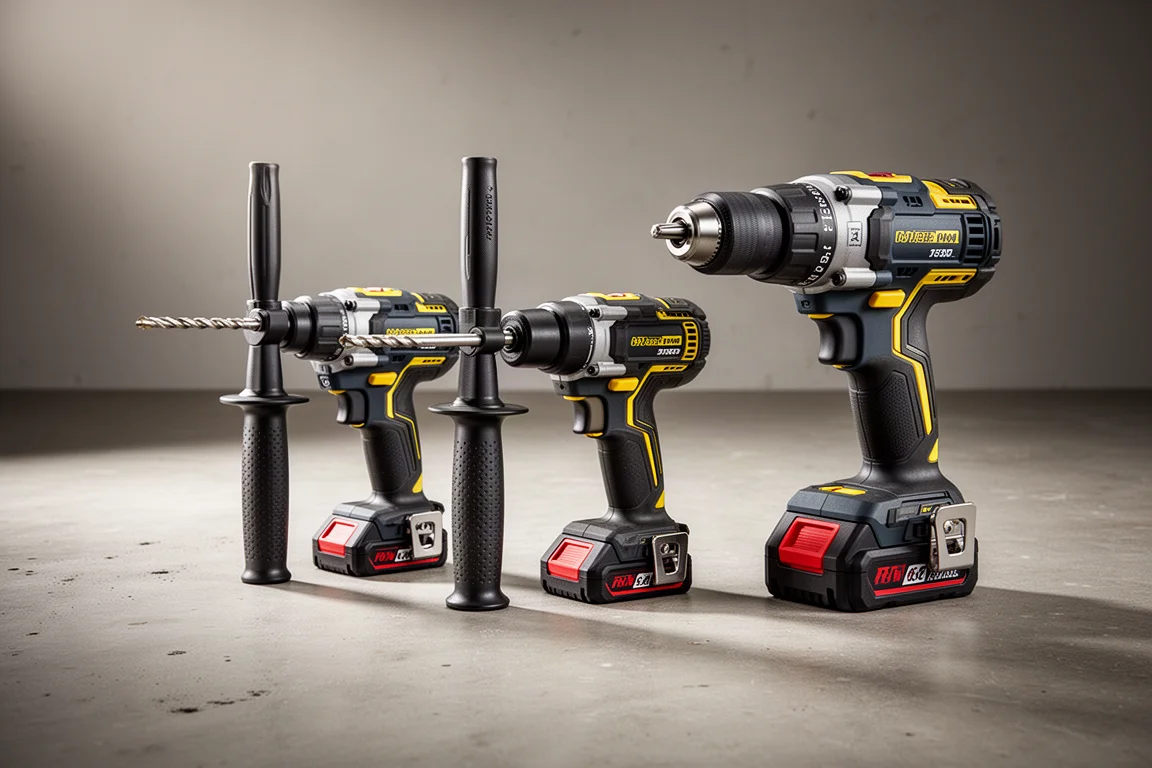
SDS rotary hammers occupy a strange middle ground in the cordless tool world. They look like oversized drill drivers, cost real money, and promise to punch clean holes into concrete, but how they actually do that job is far less obvious than it seems. To find out, two 1-inch capacity cordless SDS Plus rotary hammers were put head to head: the Milwaukee M18 2912 at around $350 and the Ryobi HPP223 at $189, roughly half the price. As a benchmark for a different approach entirely, DeWalt’s top hammer drill driver, the DCD999, was brought in to represent the hammer function most people already have on their existing cordless drill. The result is a clearer picture of what you are actually paying for, and when an SDS hammer is genuinely worth it.
The Contenders
The Milwaukee 2912 is a brushless, 1-inch capacity SDS Plus rotary hammer. Milwaukee rates it at 2 lb of impact energy and a top speed of 1,330 RPM. At roughly $350, it sits firmly in the premium bracket for this class.
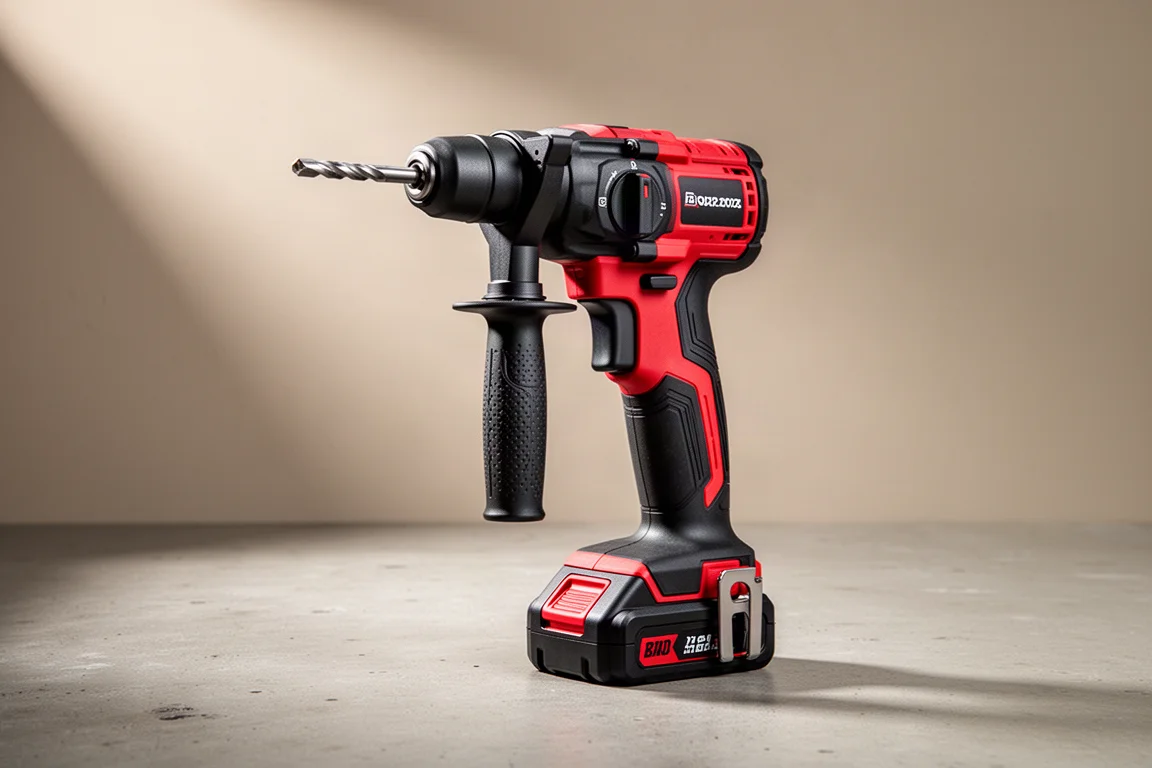
The Ryobi HPP223 is also a brushless, 1-inch capacity SDS Plus rotary hammer, made by the same parent company, TTI, as the Milwaukee. It runs up to 1,250 RPM and delivers 2.1 joules of impact energy, which converts to about 1.55 ft-lb against the Milwaukee’s 2 lb. At $189, it costs close to half as much.
What the Teardown Revealed
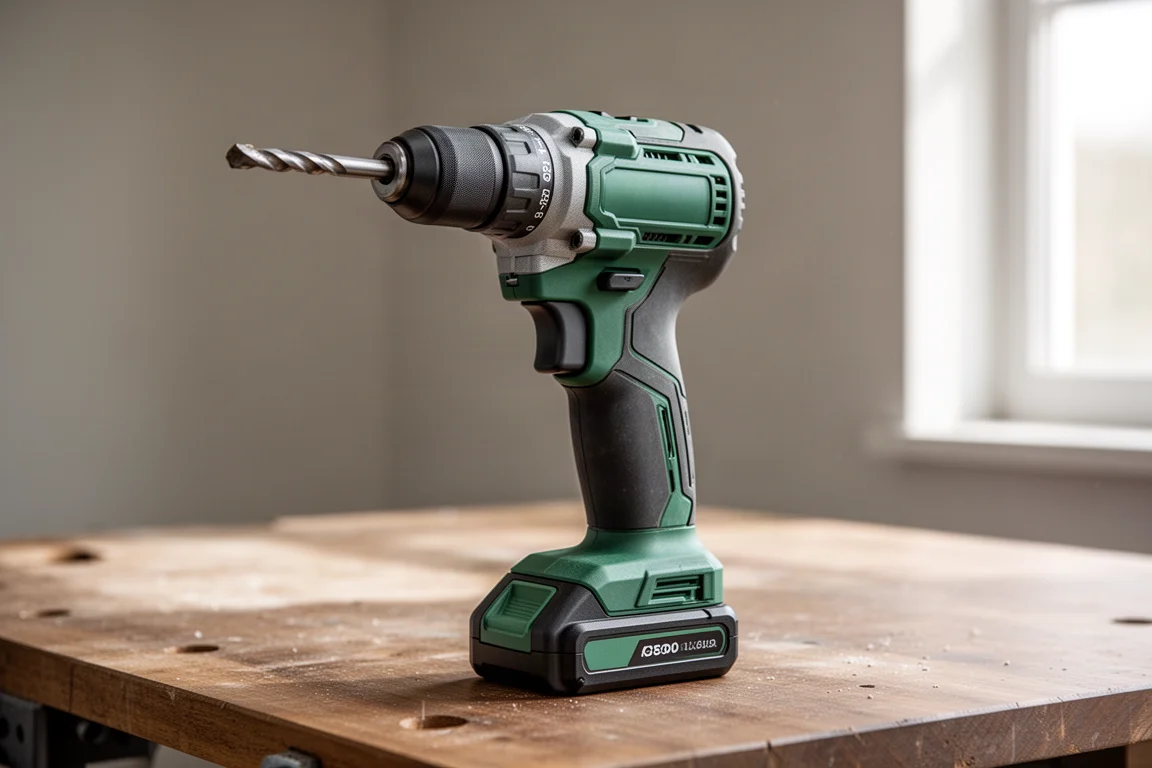
Both tools come apart much like traditional cordless drills, with an extra helping of mass and metal. The lower body houses a large brushless motor, while the action happens up top in a die-cast aluminum housing containing a piston and a transmission of sorts. A gear selector slots that transmission forward and backward to choose between drilling, hammer drilling and hammer-only modes.
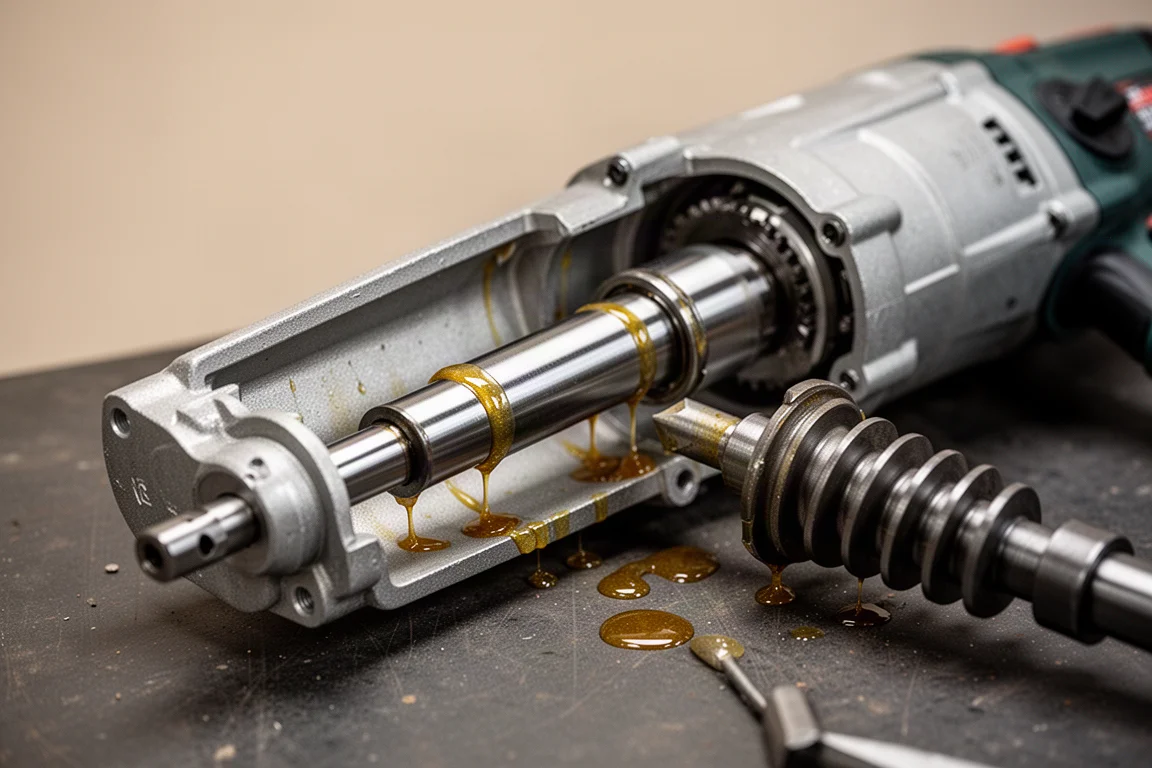
The mechanism is more interesting than most people assume. A wobble cam shaft rides in a slot and moves a hollow cylinder back and forth. That cylinder compresses air behind a floating striker piston, which is then thrown forward into the anvil, and the anvil is what actually strikes the SDS bit. This air-cushion disconnect, combined with a handle mount that allows the top to move independently, is what reduces felt vibration. Both tools use essentially the same design, with nearly identical parts diagrams, and both include the same anti-vibration approach despite the brands marketing it under different names.
One amusing detail from the teardown: the Milwaukee ships with roughly five times the grease packed inside compared to the Ryobi.
Concrete Drilling Speed Test
In a 5/8-inch hole, the Milwaukee finished in 7.1 seconds, then 7.6 seconds on a second hole, with very little drama and relatively low noise. The Ryobi took 9.5 seconds, and swapping to a new bit made no meaningful difference, with a second run at 9.7 seconds.
On the harder task, a 7/8-inch hole drilled all the way through a thick, 50-year-old garage slab, the gap widened. The Milwaukee took an early lead and kept it, finishing in 23.1 seconds against the Ryobi’s 28.2. That is not a lifetime difference, but 20% more performance is often significant, and this size range is where the difference between the two tools stands out most.
Torque: Not the Point
Here is the surprise: neither SDS tool is a torque animal. On a drill dyno brake, the Ryobi measured just 10.5 ft-lb of torque, while the Milwaukee came in at 11.2 ft-lb, essentially the same regardless of battery selection. For context, a conventional M18 hammer drill driver puts out 35-plus ft-lb, and even Ryobi’s own hammer drill driver manages 16.2 ft-lb, rising to 21.6 with a bigger battery.
The reason is gearing. Conventional drills and impacts use planetary gear sets to trade high motor RPM for low-end torque. An SDS tool only gets a gear transfer at the pinion plus some simple gear-on-gear reduction, nowhere near what a planetary set provides. The Ryobi in particular cut out during dyno runs because of this lack of significant gear reduction. Torque simply is not what makes these tools effective in concrete.
Why SDS Hammers Are Not Really Drills
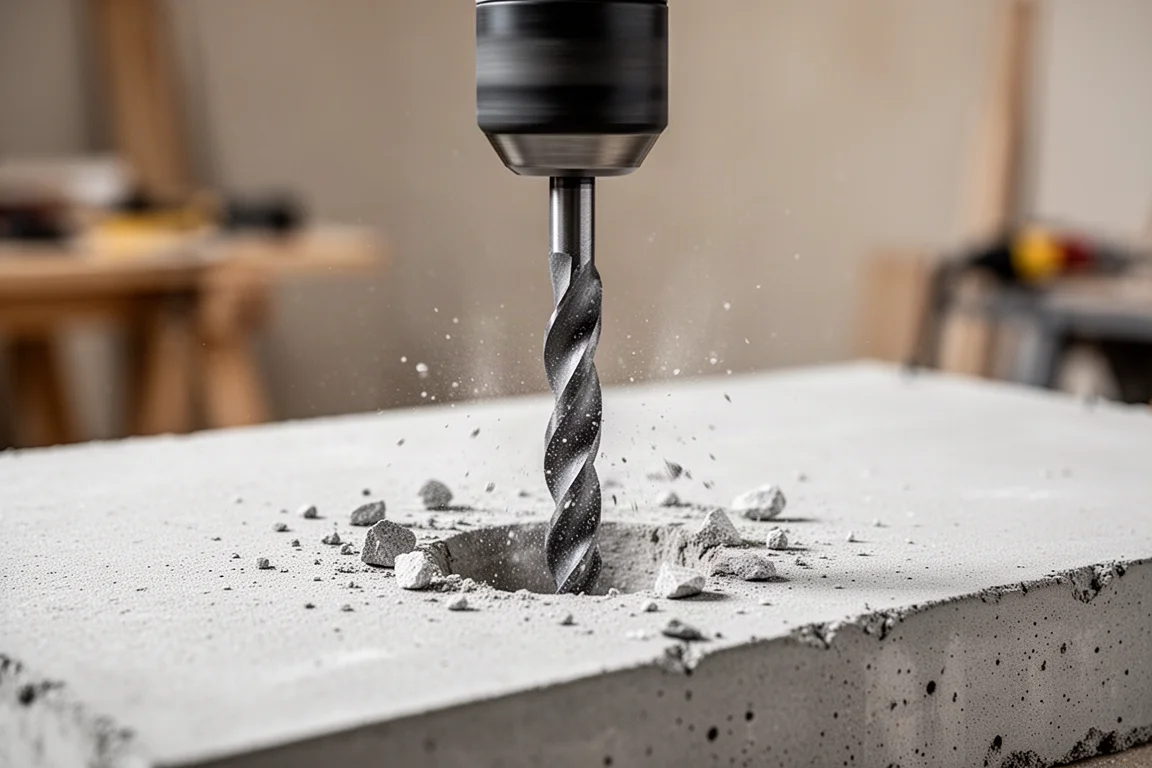
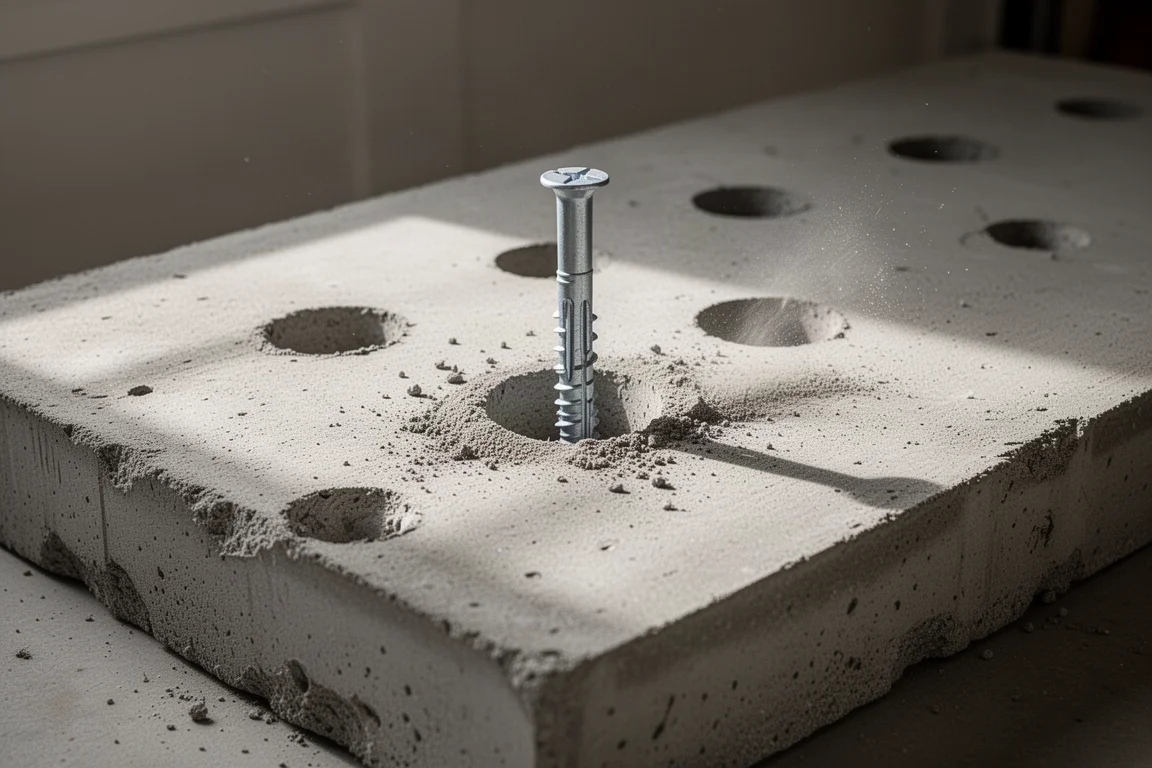
High-speed footage confirms something almost counterintuitive: an SDS hammer drill does not really drill. The bit tip is not a traditional twist-drill point. It is a centered carbide wedge brazed into a simple alloy steel flute. The hammering action chisels small divots into the surface, and the rotation serves two secondary jobs: repositioning the chisel angularly around the center axis so the hole stays where you want it, and acting as an auger to fling chips and dust up and out of the hole. The paddle-shaped tip on SDS concrete bits exists mostly for clearing debris.
In slow motion, progress before the first hammer blow is essentially zero. Once hammering starts, the tool works away at even a large stone, unfazed. It is less a drill and more a very fast, very precise stonemason with a hammer and chisel. This is the same principle behind the drill on the Mars Curiosity Rover, which its engineers describe as chiseling rather than cutting.
The DeWalt DCD999: A Different Approach
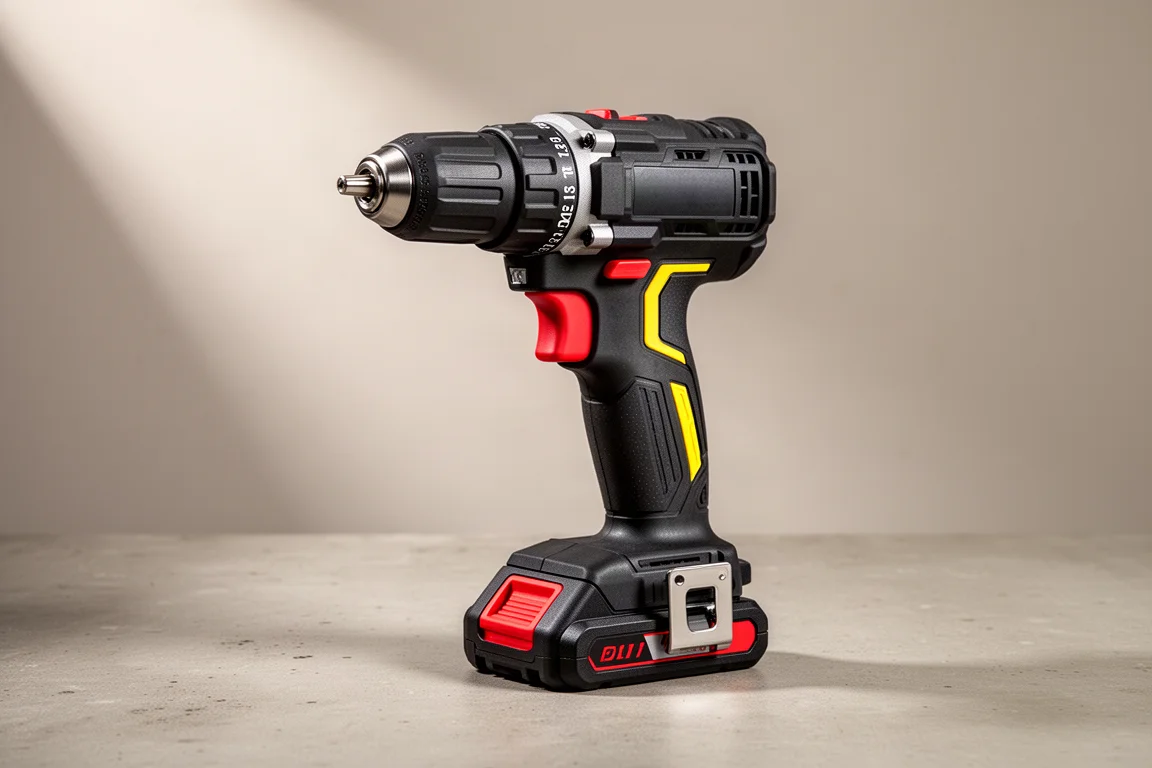
The DeWalt DCD999, DeWalt’s top hammer drill driver, took a full 16 seconds on the same 5/8-inch hole, around twice as long as the Milwaukee, and considerably louder. Its hammering mechanism works differently: rather than an air piston, it behaves like rotating over a bumpy road, delivering far more frequent blows, around 38,000 per minute, but each with much less force.
It gets the job done, and its higher RPM does a good job of flinging debris away, but it makes far less progress per hit. Interestingly, it can leave a cleaner, more polished hole wall. For a thinner slab or lighter duty work, reaching for the biggest tool in the drawer is not always the best call.
Hammering Power Compared
Measured on an air hammer dynamometer, the Ryobi reached about 1,300 PSI. The Milwaukee, tested with a Forge battery, hit 1,768 PSI, and the numbers were highly repeatable regardless of battery, with even an XC 5.0 pack delivering about the same hammering. That 1,768 PSI figure corresponds closely to the measurable drilling-speed gap seen in concrete.
For reference, that output is roughly what a cheap short-barrel air hammer produces, tools often used for similar chipping and tile-scraping tasks that an SDS can do in hammer-only mode. A much larger 1-9/16-inch capacity SDS Max Milwaukee, at about $550, reached 4,216 PSI, matching but not exceeding the long-barrel class of 401-shank air hammers. Hammering power correlates well with drilling speed, which makes sense given that these tools are chiseling and sweeping rather than cutting.
So Which One Should You Buy?
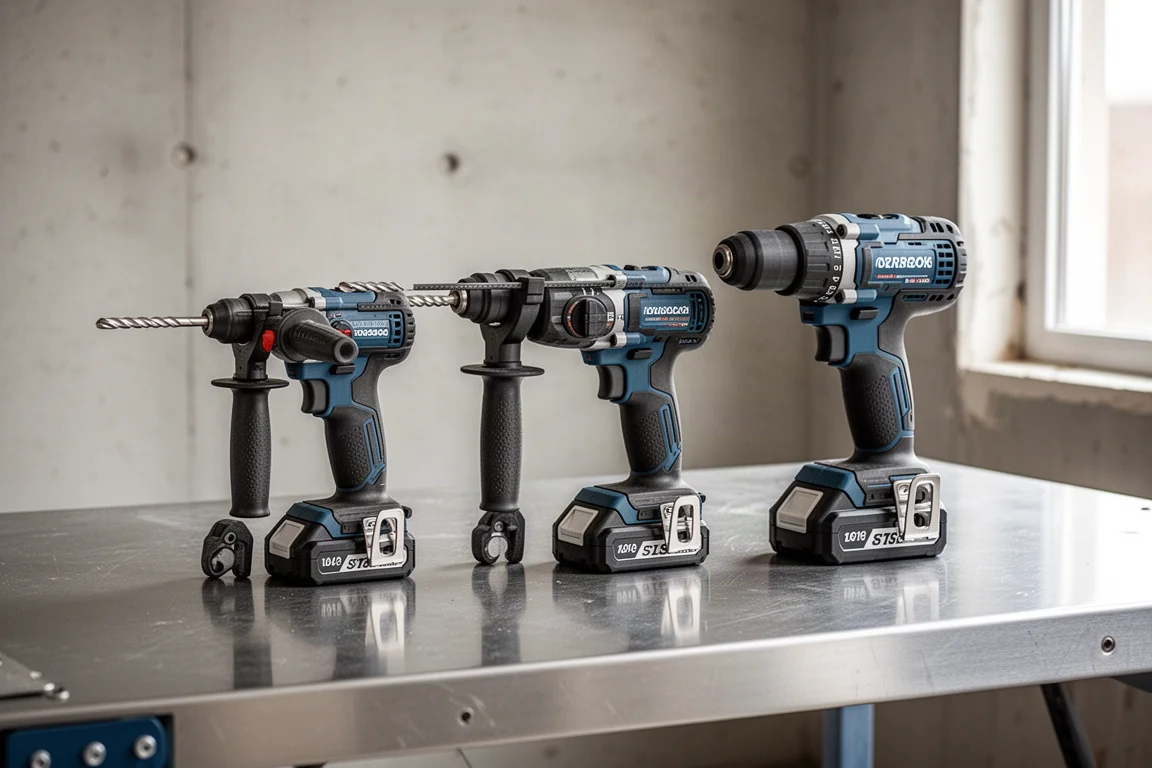
If you regularly set anchors or punch holes through thick slabs, an SDS Plus rotary hammer is dramatically better suited than the hammer mode on a drill driver. The Milwaukee 2912 is the faster of the two tested hammers, especially in larger hole sizes near its 1-inch capacity, and it justifies its price for anyone who does this work often or on demanding material.
The Ryobi HPP223 remains a genuinely capable tool with the same internal design and the same anti-vibration behavior. It is about 20% slower in the toughest tasks, which for occasional DIY anchor-setting may be an easy trade at close to half the price. And if you only occasionally need a 5/8-inch hole through a thinner slab, the hammer function on a strong hammer drill driver like the DeWalt DCD999 can get there, just slower and louder, with the bonus of a cleaner hole wall.
Conclusion
An SDS rotary hammer does not drill concrete at all; it chisels it, flings the debris out, and repositions itself thousands of times per minute. Between the two hammers tested, similar internals and torque hide a real 20% performance gap that shows up exactly where it matters: big holes in old concrete. Match the tool to the workload, and both the Milwaukee 2912 and Ryobi HPP223 make sense at their respective prices, while the DeWalt DCD999 remains a fine all-rounder for those who only occasionally touch masonry.
Further reading
Related Reviews
Power Tools
Best 1-Inch Pistol Impact Wrenches: Three Heavy-Duty Options Compared
We compare three 1-inch pistol impact wrenches, from a budget-friendly Harbor Freight model to a premium Caterpillar unit, to help you choose the right one.
Power Tools
Best 3/4-Inch Impact Wrenches 2026: Five Contenders Compared
We compare five 3/4-inch impact wrenches across price and performance, from a budget Amazon option to Snap-on's most powerful model yet.
Power Tools
Best Budget Cordless Tools 2026: Walmart Finds That Punch Above Their Price
We tested five cordless tools from Walmart, including a high-torque impact wrench that trades blows with Milwaukee and a $35 duster that outperforms its price class.