Kitchen Knives
Santoku vs Gyuto: Three Japanese Kitchen Knives Worth Considering First
A practical look at the Fujimoto Hammertone Santoku, Haruyuki Zampa Gyuto, and Tojiro DP Santoku, plus guidance on choosing your first Japanese knife shape.
Introduction
If you are buying your first Japanese kitchen knife, the choice almost always comes down to two shapes: the santoku and the gyuto. Both are made from hard steel that takes a very sharp edge and holds it longer than most Western knives, but they ask a little more care in return. The real difference is not steel quality, it is shape, size, and how each one matches the way you like to cut.
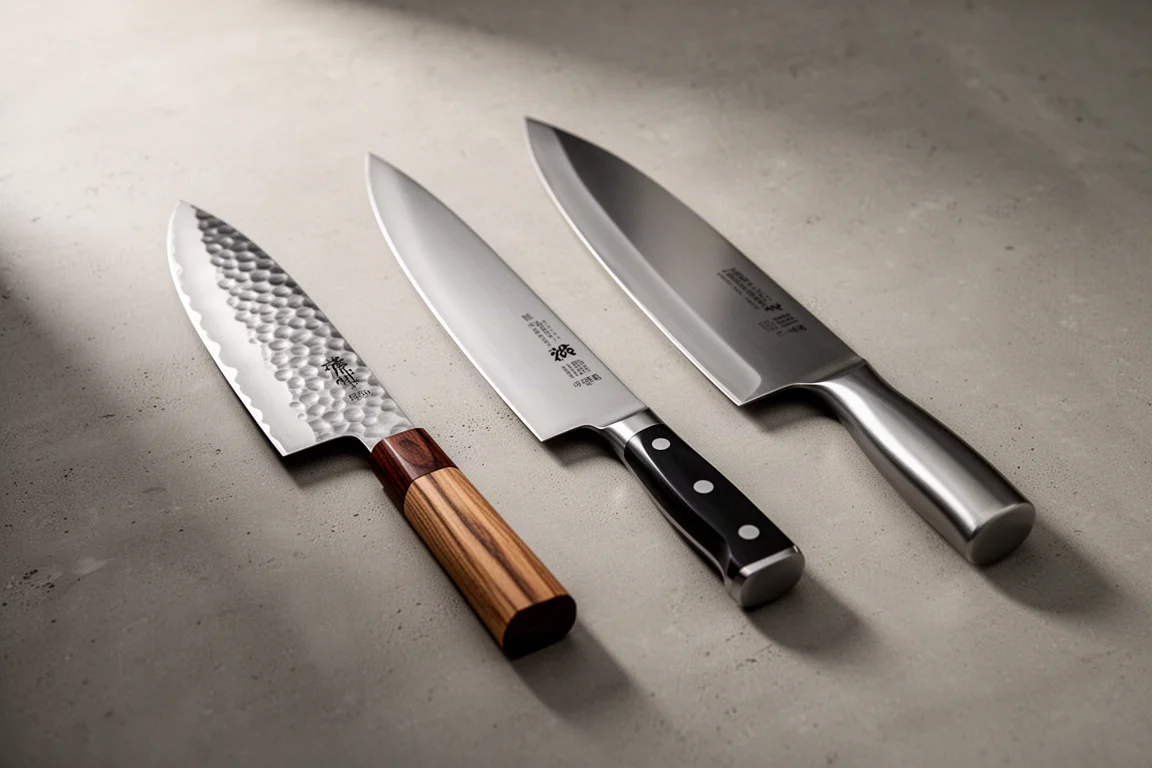
Here are three specific knives that cover the most useful starting points: the Fujimoto Hammertone Santoku, the Haruyuki Zampa Gyuto, and the Tojiro DP Santoku.
Santoku vs Gyuto: Shape, Size, and Cutting Style
The santoku translates from Japanese as “three virtues,” usually taken as slicing, dicing, and mincing, or meat, fish, and vegetables. It handles most daily kitchen jobs, just not bones or frozen food. The gyuto, literally “cow sword,” was inspired by the French chef’s knife and adapted to Japanese knife making, with a longer, meat-forward blade.
The size difference is the first thing to settle. Santoku knives generally come in around 165 millimeters, a comfortable middle-of-the-road size for home cooks. Gyuto knives usually start around 210 millimeters and go up to 240, closer to what professional chefs wield. Neither is wrong: one will simply feel more comfortable in your hands.
Shape matters just as much. The gyuto has a flatter edge, which suits long sliding cuts where the blade does the work for you. The santoku curves up more toward the tip, which favors a rocking motion, especially for herbs and garlic. Sliding cuts are generally easier on the edge; heavy downward chopping and sawing into the cutting board can dull the edge or even introduce micro chips, so whichever knife you pick, it is worth letting the blade glide rather than push.
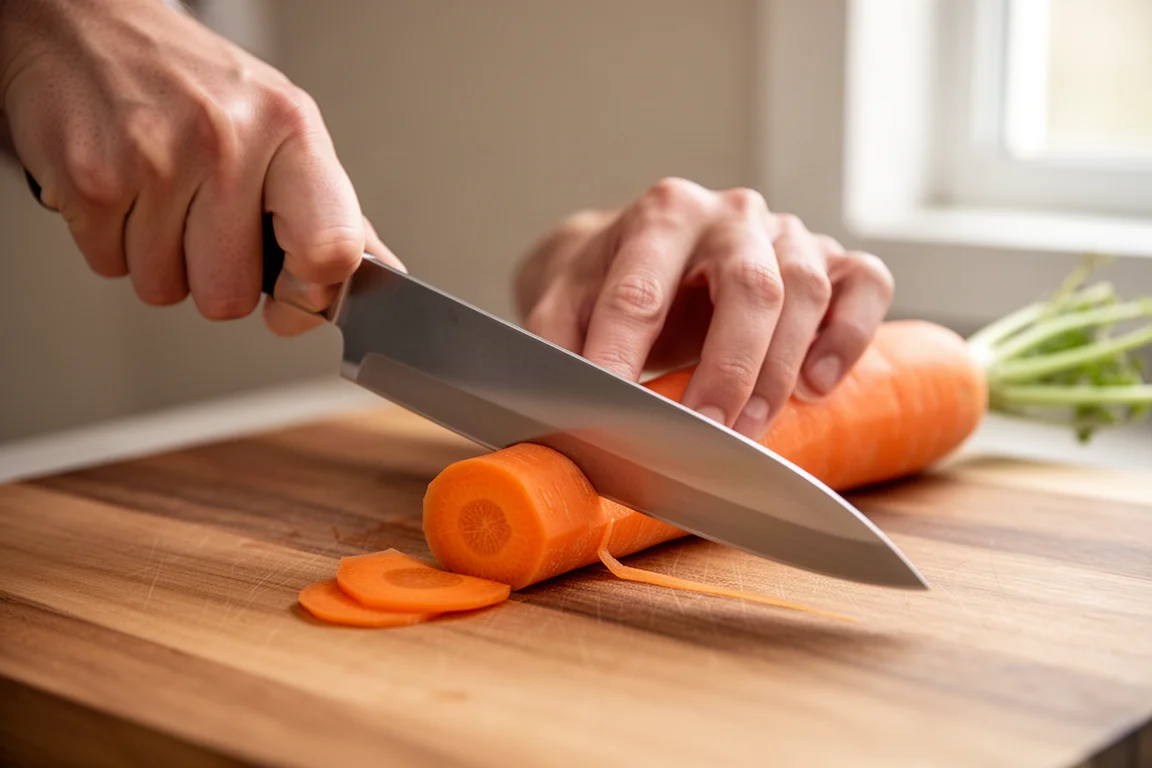
One practical note on weight: a smaller knife is not always lighter. Spine thickness varies a lot between models, so when comparing two knives, check the weight and spine thickness rather than assuming the shorter blade is the lighter one.
How They Handle Everyday Tasks
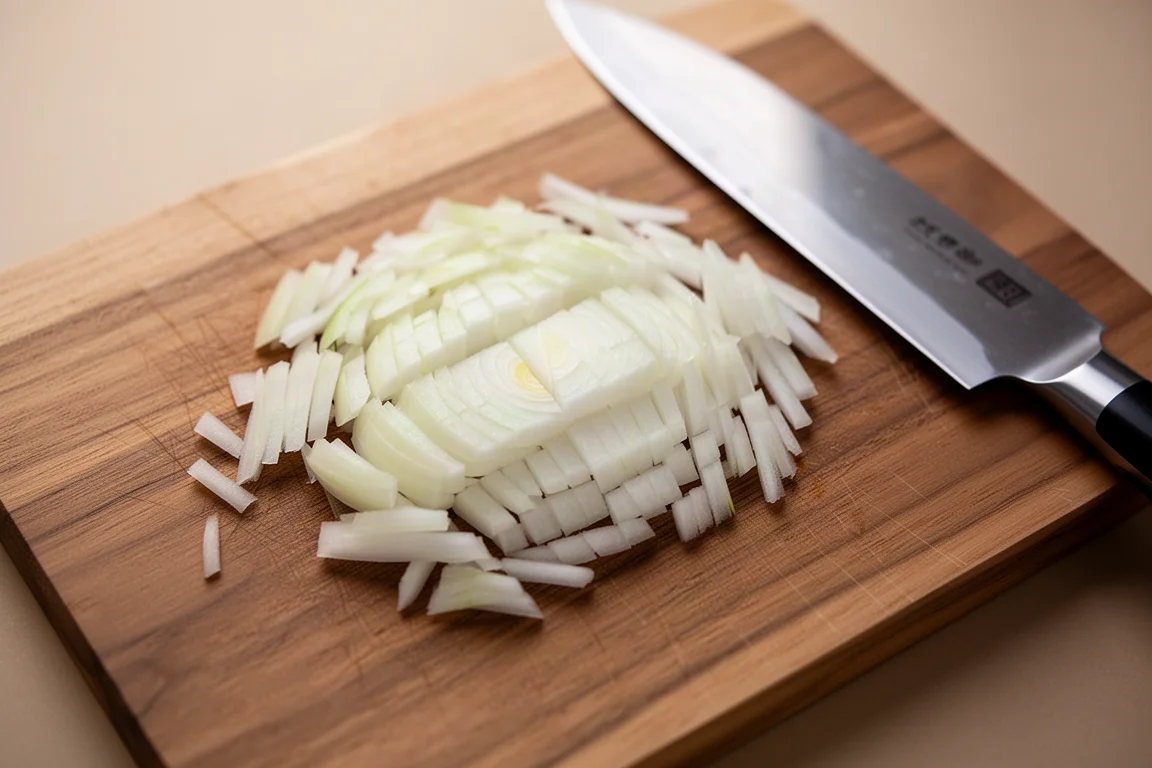
Dicing an onion shows both shapes at their best. A thin blade glides through dense vegetables like onions and potatoes particularly well, and both knives produced clean, even dice. The gyuto’s narrower tip slips into horizontal scoring with less surface contact, while the santoku’s taller blade keeps a pile of onion from building up over the spine.
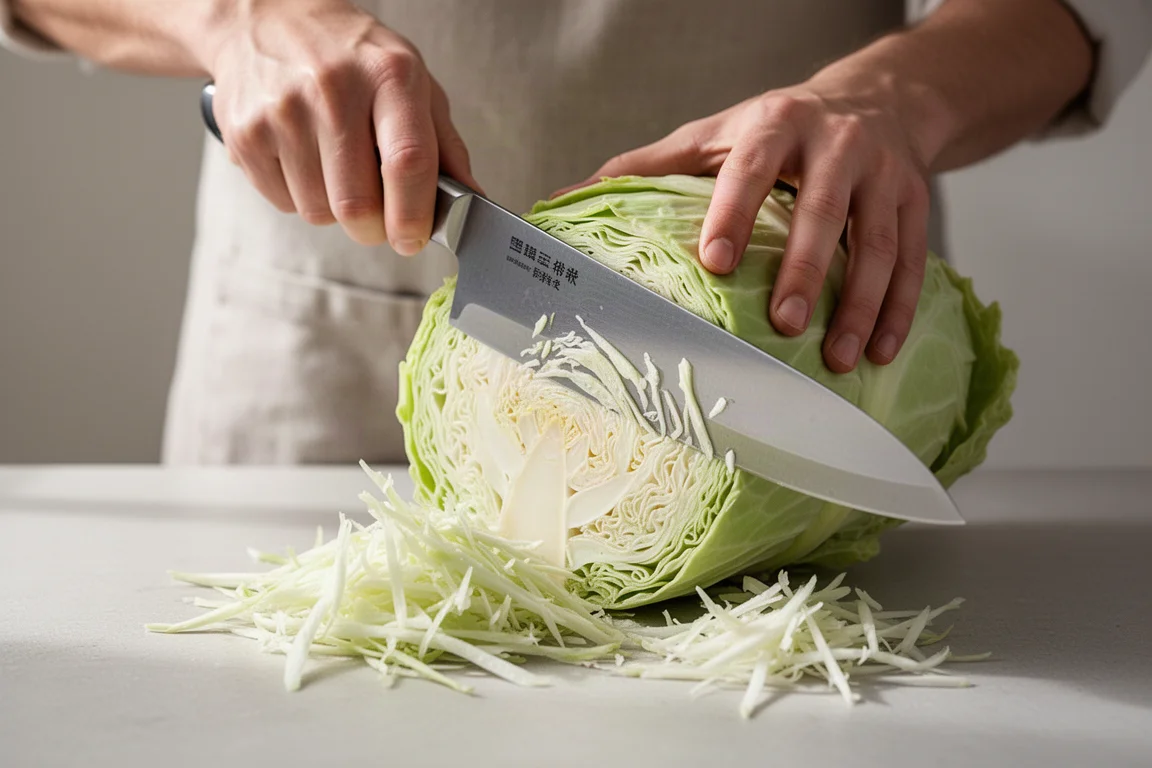
The length gap really shows with bigger foods. A small head of cabbage is nearly the same size as a santoku blade, so the knife starts to get lost in the food, and your hand can run into the vegetable at the end of the stroke. A longer gyuto simply slides through with the length doing the work. The same applies to portioning a salmon fillet or carving a roast, where a short blade forces more sawing and leaves the food shredded rather than sliced.
The santoku is not without advantages. Its taller blade and stronger curve make it friendlier for the rocking cuts many home cooks already know, and it is a size many people find genuinely comfortable every day. Whatever you choose, plan to adapt your technique slightly: Japanese knives reward sliding cuts, and adjusting your habits is part of what makes a first quality blade such a good teacher.
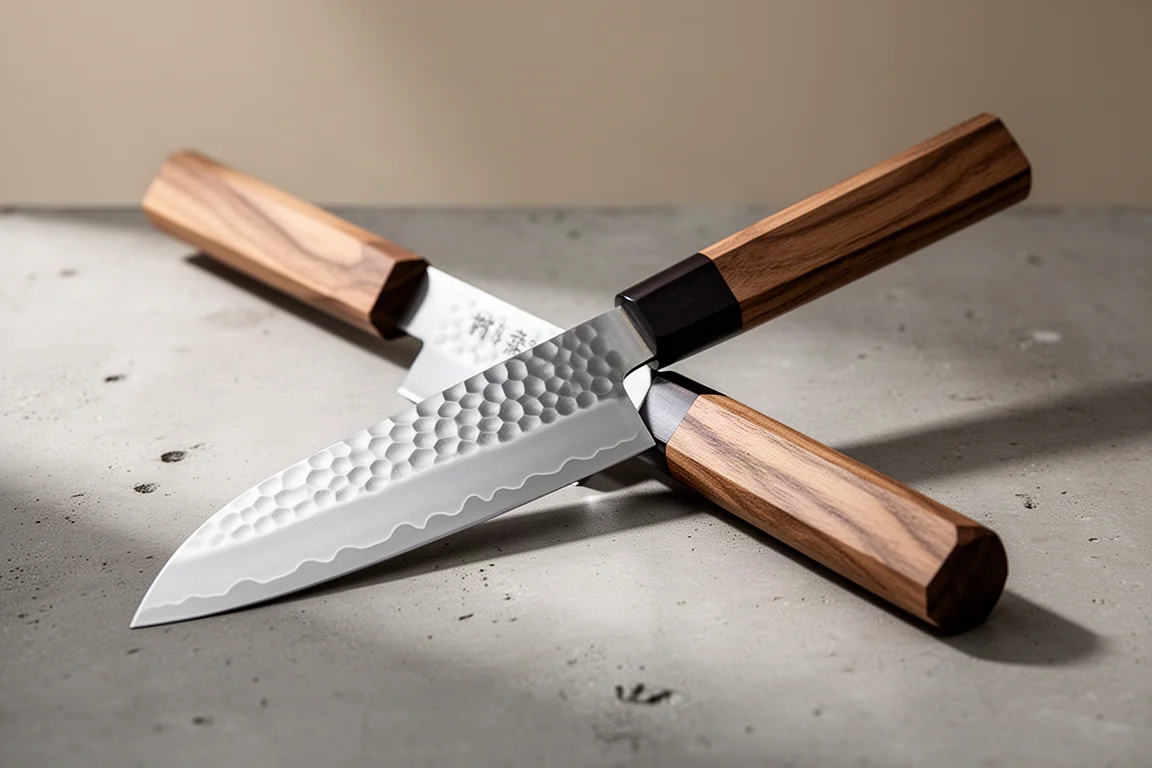
Fujimoto Hammertone Santoku
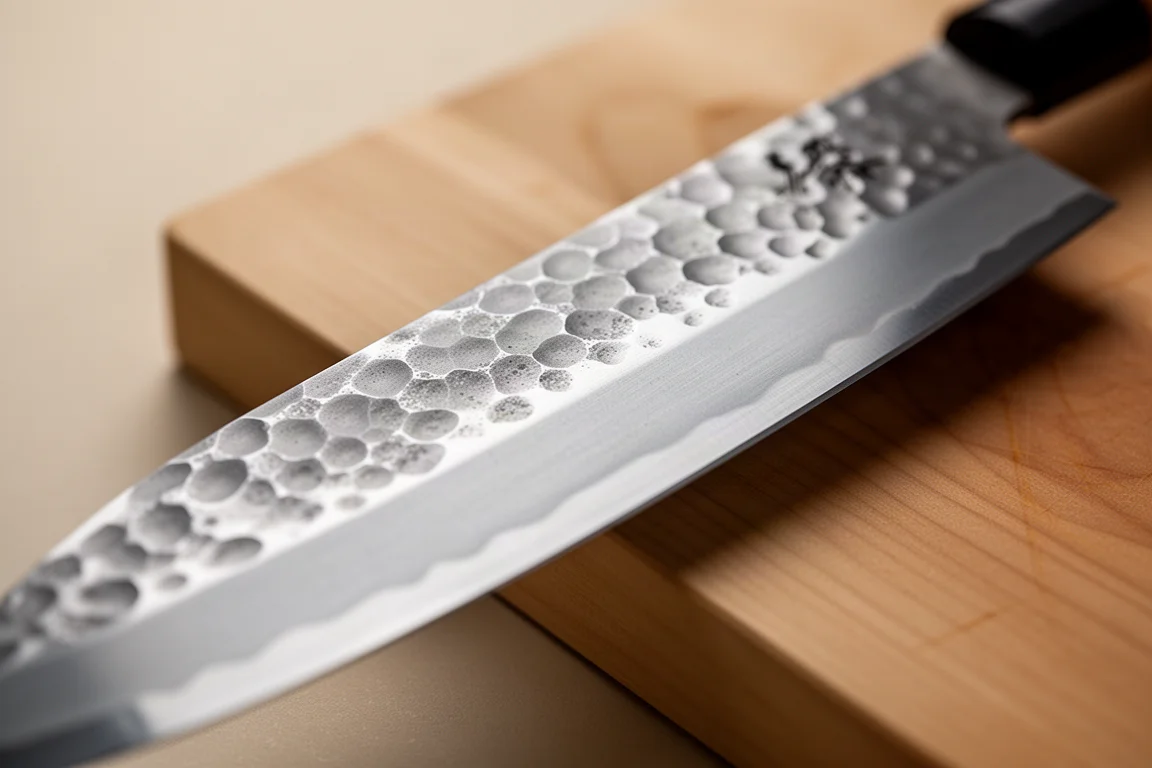
The Fujimoto Hammertone Santoku is a great first Japanese knife. The steel is relatively forgiving: it does not chip as easily as some other steels, and while it can rust slowly, it does not rust quickly the way some high-carbon steels do. The blade is a little thicker too, so it tolerates a learning phase better, though you should still keep it away from bones and frozen food.
It is also a genuinely striking knife, with a gorgeous hammered finish and a traditional Japanese handle. That handle puts more weight in the blade, giving a forward balance that helps the knife move through food on its own.
Haruyuki Zampa Gyuto
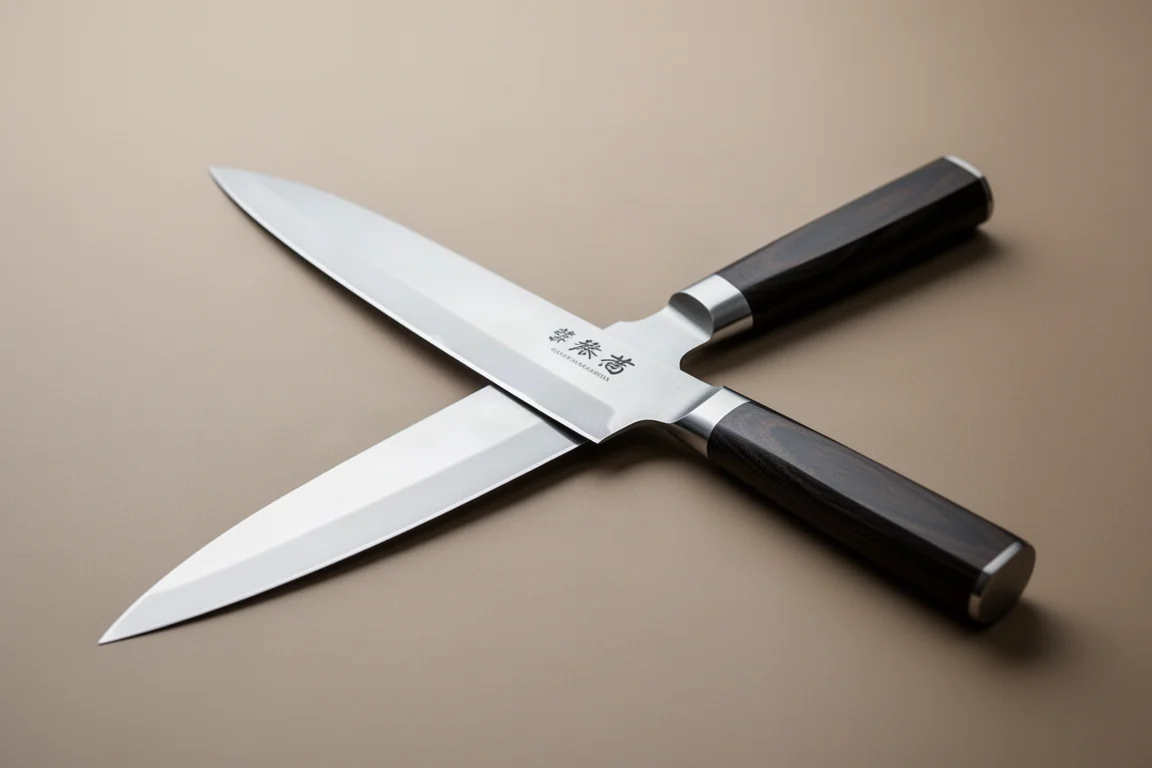
The Haruyuki Zampa reviewed here is the 180 millimeter version, which adds a little over half an inch over a santoku. If you like the santoku shape but find it slightly short, this is a really nice multipurpose size. It is very thin and light, so if you want a knife that feels like you are wearing nothing at all, this one delivers.
Western-style handle variants put more weight in the hand while keeping the blade light, and larger sizes exist if you want more heft. As a gyuto, its flatter edge makes it the natural pick for longer sliding cuts and bigger jobs.
Tojiro DP Santoku
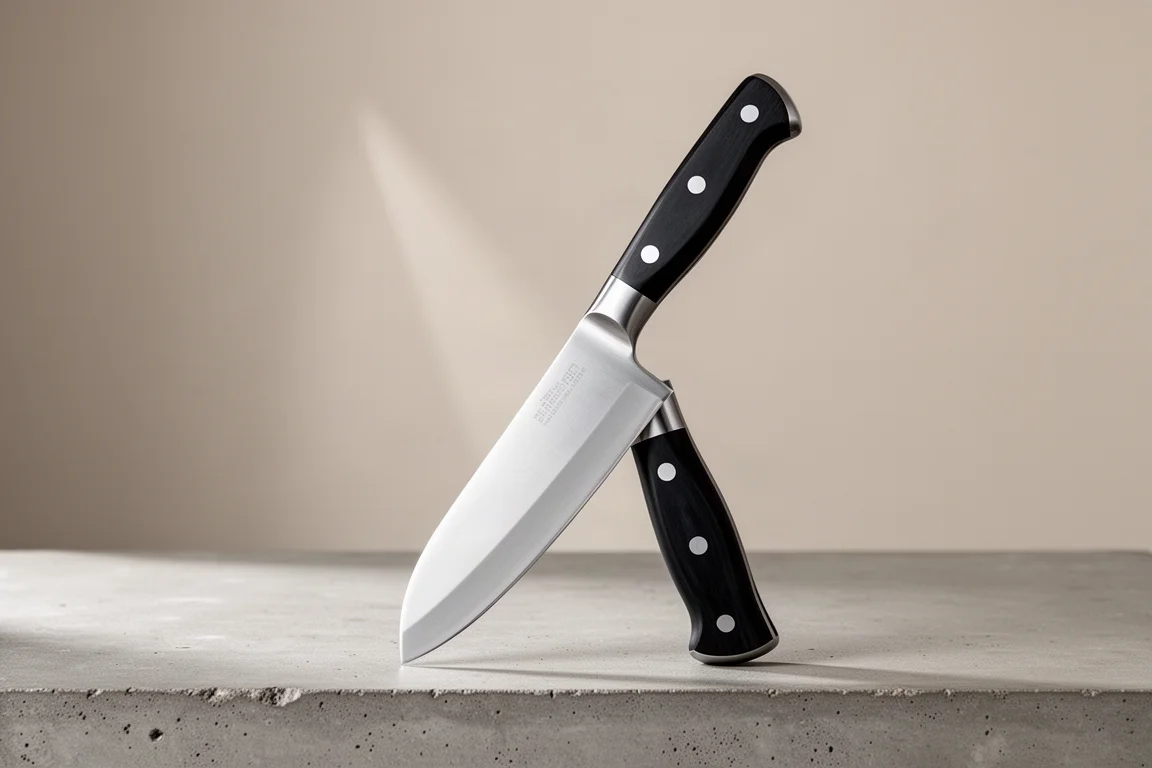
The Tojiro DP is the rugged, plain-Jane option, and that is not a criticism. It is a sensible choice for a first apartment or for anyone starting a job in a kitchen who wants a knife that blends in. It comes in at 165 millimeters, a great size, with more of the weight in the handle.
The handle is notably bulky compared to many Japanese knives, which is a real plus if you have larger hands and want something substantial to hold onto.
Buying Advice: Which One Should You Get First
If you have smaller hands or simply are not comfortable with a big knife, go smaller. Plenty of home cooks love their santoku and use it every day. If you want to push your comfort zone or you already cut with a sliding motion, a 210 millimeter gyuto is the most popular and versatile choice, and a 240 millimeter gyuto suits bigger hands and bigger jobs. The 240 is versatile enough that some cooks never need anything longer.
You do not need both at the same time, but over the years many cooks end up with both and use each daily: the santoku for quick morning and lunch prep, the gyuto for big dinners and guests. Starting with one of these plus a smaller petty knife will cover roughly ninety percent of home kitchen jobs. And remember the collector’s rule: the right number of knives is the number you have, plus one.
Conclusion
Santoku and gyuto cut in fundamentally similar ways thanks to their hard Japanese steel, so the decision comes down to size, blade shape, and which cutting motion feels natural to you. The Fujimoto Hammertone Santoku is an easy, forgiving first step, the Haruyuki Zampa Gyuto suits confident sliders who want length without weight, and the Tojiro DP Santoku is the rugged, big-handed workhorse. Pick the one that matches your hands and habits, and let it teach you the rest.
Further reading
Related Reviews

Kitchen Knives
Best Chef's Knives 2026: 27 Popular Options Tested and Ranked
A comprehensive review of 27 chef's knives ranging from $18 to $380, with honest assessments of handle comfort, blade balance, and real-world performance.

Kitchen Knives
Best Chef's Knives Under $75: Two Tested Recommendations
Two practical 8-inch chef's knives that balance sharpness, comfort, and durability without premium pricing.

Kitchen Knives
Best Chef's Knives 2026: 27 Options Tested and Ranked
A comprehensive review of 27 chef's knives ranging from $18 to $380, with honest assessments of handle design, balance, blade profile, and real-world performance.