Tool Reviews
Santae S8951DM Sewer Camera Review: A Serious Tool for Underground Work
A 100 ft sewer inspection camera with a 9-inch HD screen, sapphire-coated 1080p optics, and a rugged watertight case. Here is how it performs on a real property investigation.
Introduction
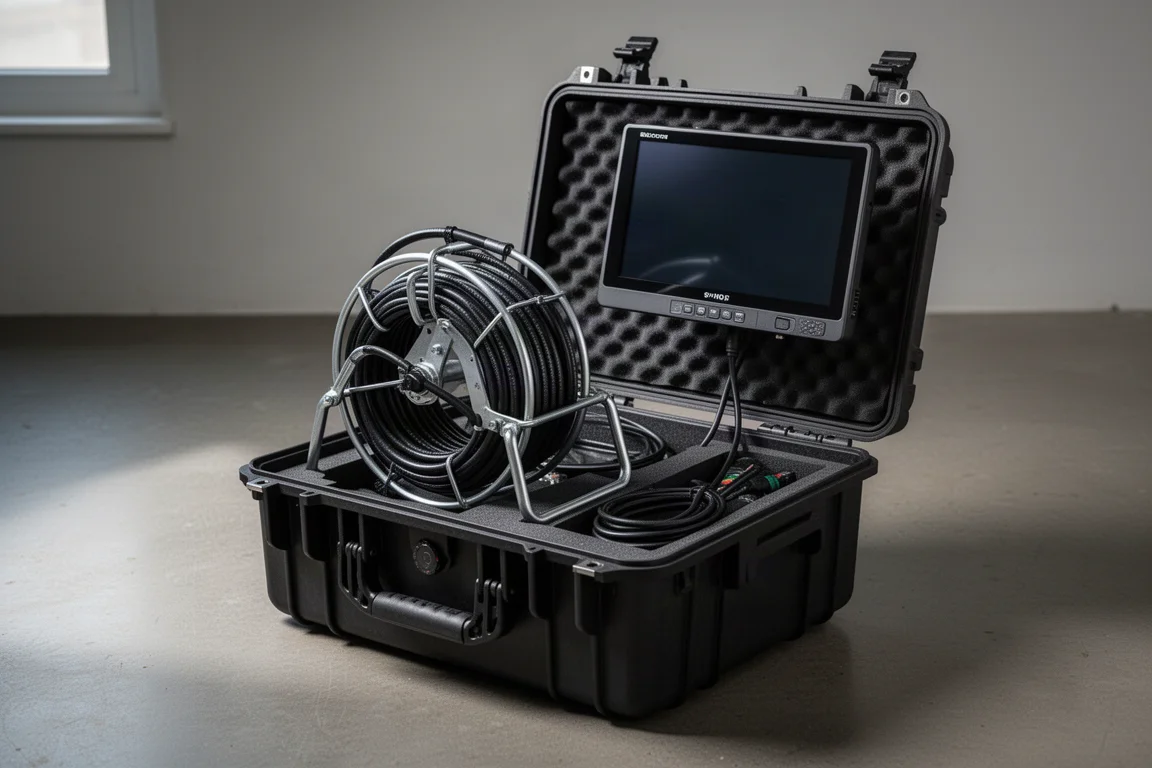
Inspection cameras live or die by three things: whether the picture is actually usable, whether the cable goes where you want it to, and whether the system holds up when the job turns messy. The Santae S8951DM is a sewer camera built around exactly those priorities, with a 100 ft (30 meter) cable, a 1080p sapphire-coated camera head, and an integrated 9-inch HD screen mounted to a watertight, foam-lined case.
This review draws on extended hands-on use investigating an old property with collapsed septic infrastructure, exposed vent pipes, and a lot of unknowns under the ground. That is the kind of job where an inspection camera earns its price, and it is also the kind that exposes weaknesses fast.
Who This Product Is For
The S8951DM is aimed at people who need to see inside buried or hidden pipe runs: plumbers, septic service work, property owners dealing with aging infrastructure, and contractors scoping out underground conditions before digging. It is explicitly a sewer camera rather than a light-duty drain snake camera, which matters when the run is long, the pipe is large, and conditions are rough.
There is also a less obvious use case worth knowing about: these cameras are used in rescue and search scenarios, such as threading a camera through collapsed structures or underground voids to check whether anyone is trapped. If your work touches confined-space inspection, that flexibility adds real value.
Key Features at a Glance
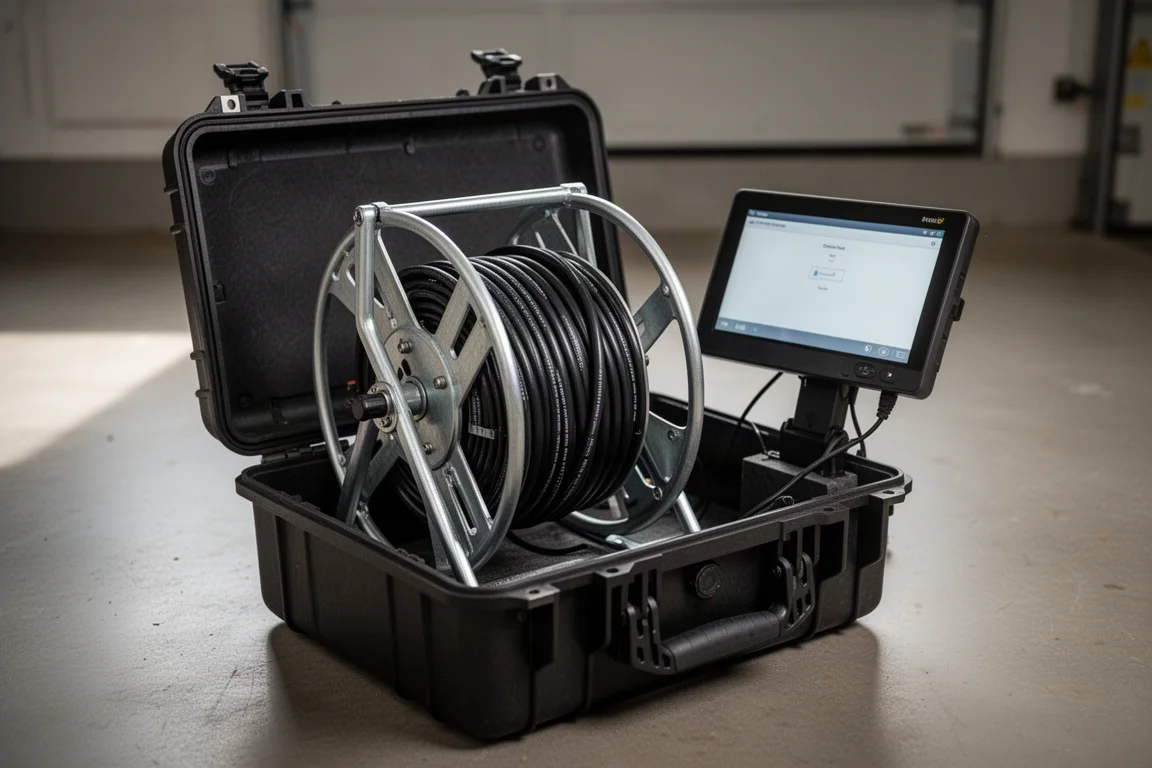
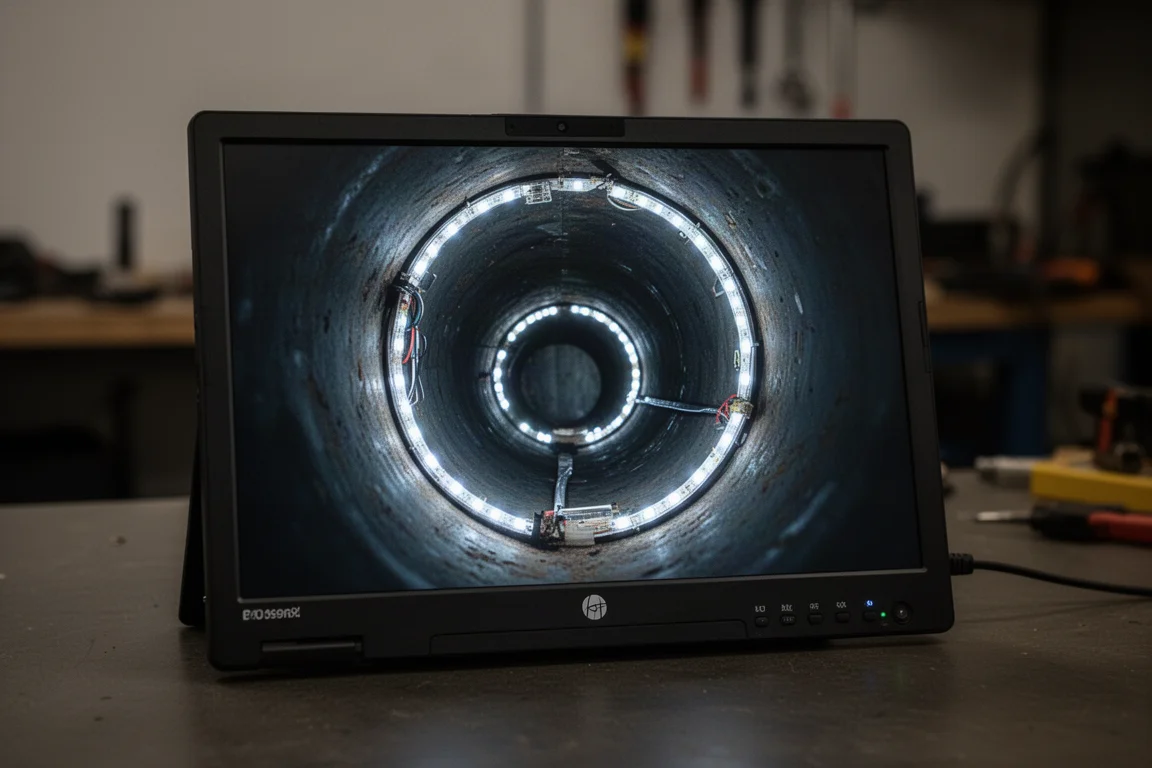
The headline specs are straightforward. You get a 100 ft cable, a 1080p camera with sapphire lens coating for scratch resistance, built-in LEDs with adjustable brightness, and a 9-inch HD display built into the case itself. The interface is deliberately simple: 5x zoom, video recording with audio, still image capture, and a menu system for adjustments. The default recording length is 3 minutes, adjustable up to 10 minutes.
Storage is handled by a micro SD card, and the included card is 32 GB, with support up to 128 GB. That is plenty of footage for long pipe runs and repeat visits. The system runs on 12 volts with a 4,500 battery, delivering roughly 6 to 8 hours of run time, which covers a full working day of intermittent inspection.
One small but genuinely useful detail: the unit shows a distance readout on a digital display as you feed the cable, so you always know how deep into the system the camera head has travelled.
Camera and Cable Performance
The optics are a highlight. Both camera heads in the system are razor sharp, and the sapphire covers give the lens a fighting chance against abrasion from grit and debris. The LEDs are bright enough to be adjusted upward for dark chambers, and the 9-inch HD screen makes detail genuinely readable on site rather than forcing you to review footage later.
The cable deserves its own praise. The stiffness is described as just right: it threads around general, larger pipe bends without trouble while still giving you enough control to steer and push deliberately. That balance matters enormously when you are trying to probe a void or follow an unknown route, because a cable that is too floppy wastes half your effort and one that is too rigid refuses to turn.
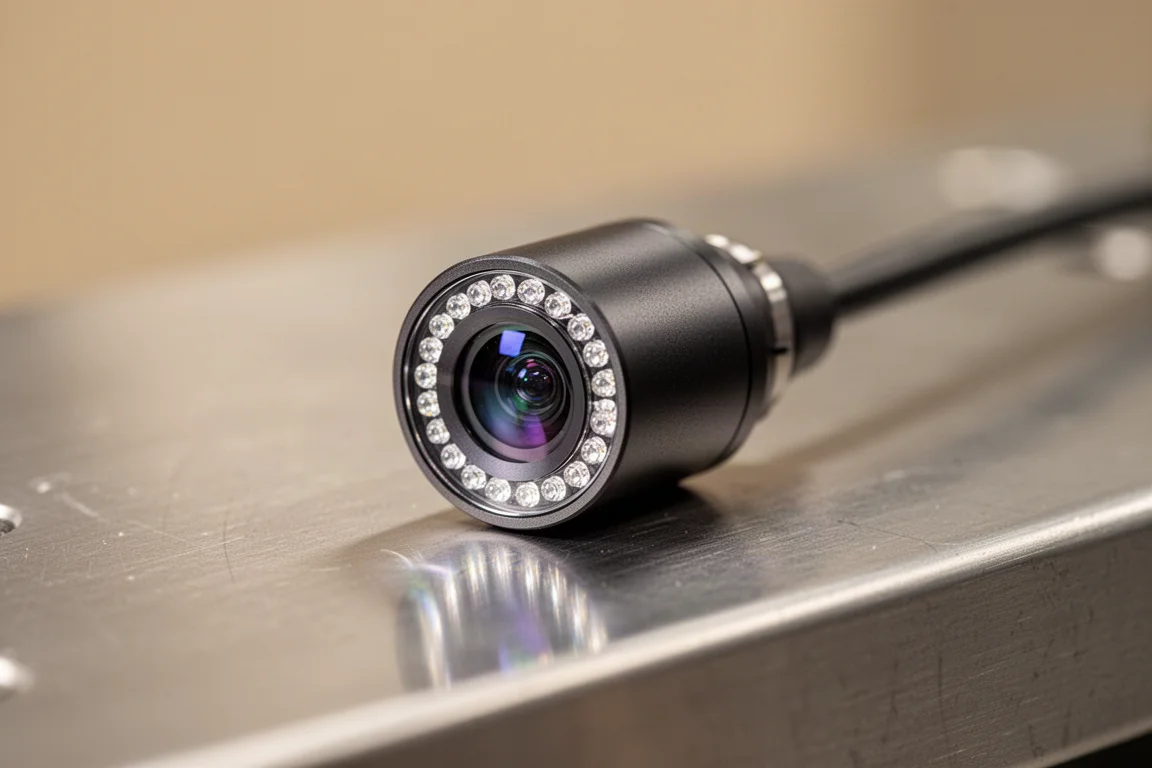
The kit includes accessories for manipulating the camera through pipe, including a larger collar that centers the head and keeps it from dragging along the bottom of the pipe. A small wheeled collar serves the same purpose and can help keep the head above shallow standing water in a half-filled pipe. The box closes fine with the cable connected, so you do not have to detach everything between uses, though there is a dedicated receptacle for storing the camera head if you prefer.
The Standout Option: Transmitter-Equipped Head
The system can be paired with a larger-head camera containing a 512 megahertz transmitter. With a compatible receiver, that lets you locate the camera head underground, which is a meaningful advantage when a pipe run has angles, twists, and turns and you are not sure where it ends up.
On long, straight, unknown runs, a picture alone tells you what the camera sees but not where it is. The transmitter option addresses that gap, and it is worth considering if your work involves tracing routes rather than just inspecting known lines.
Real-World Testing
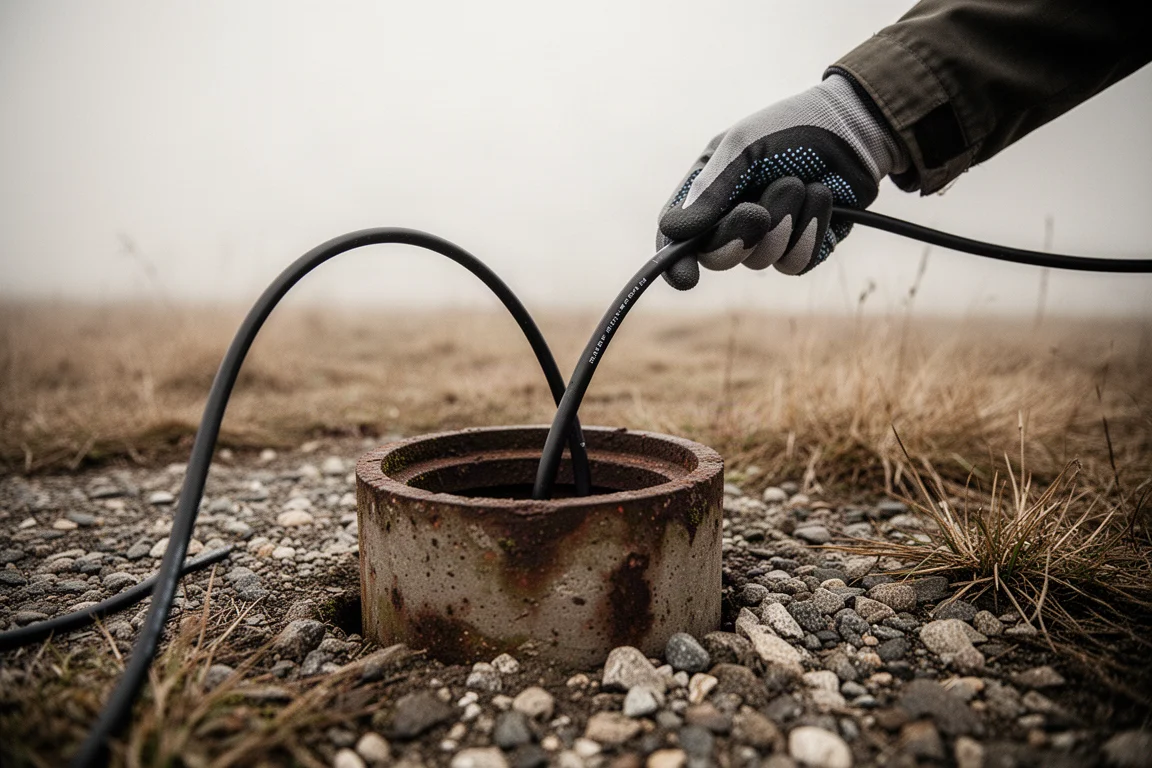
The test property presented a worst-case scenario: an apparently collapsed old septic system with overhanging cement, exposed vent pipes, and the possibility of an old underground propane system. Since pipes on old properties are not always plumbing, the camera was the only safe way to find out what was what.
Feeding the camera down one suspected vent pipe, the distance readout tracked progress: about 18 feet in, then water at roughly 22 to 22.5 feet, then back above the waterline. The run continued past 26 feet, past 44, past 46.7 feet of apparently straight pipe, with standing-water stain lines visible along the pipe walls, possibly evidence of a past backup. At 56 feet it was still going. At 64 feet, the camera dropped over an edge into a chamber, the flexible head angling downward toward a small orifice at the bottom.
Dropping in with the LEDs turned up confirmed it: an active septic tank, with the camera head quickly coated in the worst material the job had to offer. Spoiler alert, the cable is easy to clean and the spool system threads the cable back into the case without fuss. The distance readout showed almost 70 feet of cable out at the farthest point, well within the 100 ft rating.
Storage, Build Quality, and Practical Use
The case is one of the most practical parts of the package. It is watertight and foam-lined, with a solid build comparable in spirit to a Pelican case, and an integrated metal frame that holds the spool. The 9-inch HD screen is built in, so there is no separate tablet or phone to fumble with on site. The spool design is simple enough that feeding the cable back into the box is a one-handed job.
The overall philosophy is evident: you do not really have to do much, because the system is well put together. Playback, recording, and reviewing footage all happen on the same screen, and the recording files let you re-examine a run afterward to catch details you missed live, such as cracks or foreign objects off to the side of the pipe.
Buying Advice
The price of a tool like this disappears quickly when you get into a big project. If you are facing even one major unknown, such as a suspected collapsed septic component, a mysterious pipe route, or a drain line you need to scope before committing to excavation, the camera can pay for itself in a single job by telling you what you are actually dealing with before you dig.
If your work regularly involves long runs with turns, consider the transmitter-equipped larger head and a receiver so you can locate the camera underground. For shorter, straightforward inspections, the standard configuration covers the essentials well.
Conclusion
The Santae S8951DM combines a genuinely sharp 1080p sapphire-coated camera, a well-balanced 100 ft cable, a clear 9-inch HD screen, and a rugged watertight case into a package that feels purpose-built for real sewer and septic work. The simple interface, generous battery life, distance readout, and optional transmitter head round out a system that handles both routine inspections and difficult investigative jobs with confidence.
Product link
View more details for Santae S8951DM Sewer Camera
This product is mentioned in the review. Check the specifications, options, and compatibility before buying.
View more details for Santae S8951DM Sewer CameraFurther reading
Related Reviews

Tool Reviews
Best Mechanic Tool Sets 2026: Ten Sets Tested for Real Workshop Performance
Ten mechanic tool sets compared across wrench strength, ratchet efficiency, back drag, adapter durability, and overall value.

Tool Reviews
Best Tools of 2025: Top Performers Across Nine Categories
A roundup of the standout tools from a year of head-to-head testing, covering drills, saws, blowers, mowers, trimmers, and more.

Tool Reviews
Metmo Fractal Vise 32 and Dual M18 Battery Adapter: Two TikTok Finds Put to Work
We bought two tools that keep showing up in our feed: a fractal vise that clamps almost anything and a dual battery adapter that promises more power and runtime.