Skis
Salomon QST Echo 106 Review: A Lighter Freeride Ski for Hybrid Touring
The Salomon QST Echo 106 trims weight from the QST 106 platform for riders who split their season between the resort and the backcountry. Here is how it performs and who it suits.
Introduction
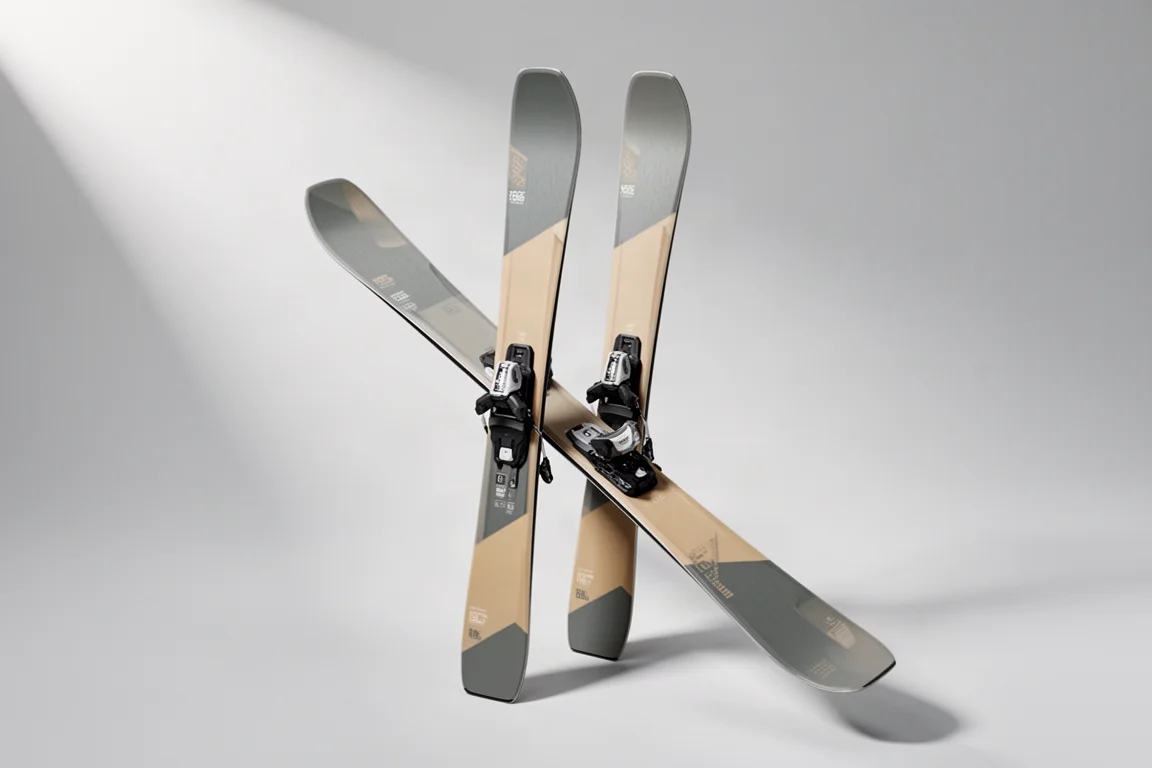
The Salomon QST Echo 106 is the brand’s move into hybrid touring territory. Rather than designing an entirely new shape, Salomon took the footprint of its popular QST 106, a freeride ski built for softer snow, and trimmed material out of it to make the same silhouette more practical for riders who spend most of their days inbounds but want the option to head out of bounds occasionally.
That approach will feel familiar if you have followed other freeride lines that have added lighter touring variants. The key point is that the change is a reduction in weight and a shift in material, not a redesign of the ski’s geometry. If you liked the shape of the QST 106, the Echo gives you that shape with a lighter build underneath you.

The intended setup is a hybrid binding paired with a hybrid boot, which is where the ski makes the most sense. That said, there is nothing stopping a skier from mounting a regular alpine binding on it and treating it as a lighter version of the standard QST 106. The ski does not dictate how you use it.
Who This Ski Is For
The Echo 106 is aimed at the moderate or mellow side of the freeride spectrum rather than the hardest-charging inbounds skier. If your priority is skiing 100 percent inbounds at speed and you want maximum energy and stability underfoot, the standard alpine versions of this class of ski make more sense.
Where the Echo shows up well is with riders who want the same freeride feel in a touring application, or who tour occasionally rather than committing to dedicated backcountry days. It sits comfortably in that middle ground: enough ski to enjoy a resort day, light enough that heading uphill does not feel like a punishment.
For dedicated tours, Salomon builds its Mountain Lab skis. The Echo is not trying to replace those. It is a hybrid, and it should be judged as one.
Main Strengths
The shape is the strongest argument here. The QST Echo 106 uses a very progressive rocker and taper profile with positive camber underfoot, and that combination gives the ski a good amount of energy while keeping it easy to turn. The rocker in the shovel is long, which makes the ski float well, and the taper begins earlier than the end of the rocker. The practical result is a ski that comes around very smoothly in any type of turn.
The tail is shaped with a more pointed taper, which gives it a rudder-like quality. In tighter terrain and trees, that tail lets you move your weight back and steer the ski into easy, manageable turns rather than fighting it. The tail rocker is also lower than on other skis in the QST line, which pushes the Echo toward a slightly more directional, fall-line-oriented feel without a lot of splay out back.
Spring conditions tell the story clearly. In deep corn and mush, the ski behaves much the way a ski of this shape would behave in pure powder, which is to say very well. The float and the smooth turn initiation carry over even when the snow is heavy and variable.

Weight, Core, and Construction
The standard QST 106 uses a full poplar wood core with carbon and flax stringers. The Echo 106 changes two things: the core is a blend of poplar and karuba, similar to the construction used in the Stance skis, and the reinforcement switches from carbon and flax to basalt fibers.
Basalt is lighter than the carbon and flax layup, and it is a little less energetic and poppy, but noticeably damper. On snow, that reads as a slightly quieter ride. You can still feel the karuba come through as a snappy pop out of the turn, so the ski is not dull, it is just calmer than its heavier sibling.
On the scale, the numbers are modest. In a 189cm length, the Echo 106 comes in at 1,946 grams, while the regular QST 106 in the same length measures 2,207 grams. That is a little over 200 grams of difference per ski. The Echo also carries a 20 meter turn radius at that length, which reinforces the more direct, fall-line character of this shape compared with the rest of the QST line.
Things to Consider Before Buying
The first question to answer honestly is whether a roughly 200 gram saving per ski is enough to justify a separate setup. The weight reduction here is real but not dramatic, and it is not the kind of change that transforms a resort ski into a dedicated touring ski. If you were hoping for a dramatic transformation, this is not that.
What you are getting instead is a ski that is better suited to a hybrid binding in the first place. The standard QST 106 sits on the heavy side for a binding like the Shift, even though that pairing is often how the ski gets marketed. The Echo closes that gap and makes the hybrid concept more coherent.
The second consideration is feel. The basalt layup is damper and less energetic than the carbon and flax build, so if you value a lively, poppy ski above all else, the heavier version will appeal more. The Echo trades a bit of that energy for a quieter ride and a lower weight.
It is worth saying plainly that in a vacuum, the Echo 106 is still a very good ski. If the standard 106 did not exist, this would stand on its own as a strong choice for soft snow and mixed conditions.
How It Fits Alongside the Standard QST 106
The two skis share the same footprint, which is the whole point of the exercise. The differences come down to a slightly longer turn radius on the Echo, a more direct shape, and the lighter, damper construction. Even with the lighter core, the Echo still allows for aggressive skiing, so the gap between the two is narrower than the weight figures alone might suggest.
The most useful way to think about it is by intent. If you want one ski for the resort and you charge hard, the standard QST 106 is the more natural pick. If you want the same shape with the option of going uphill, or if your style leans moderate, the Echo is the better fit.
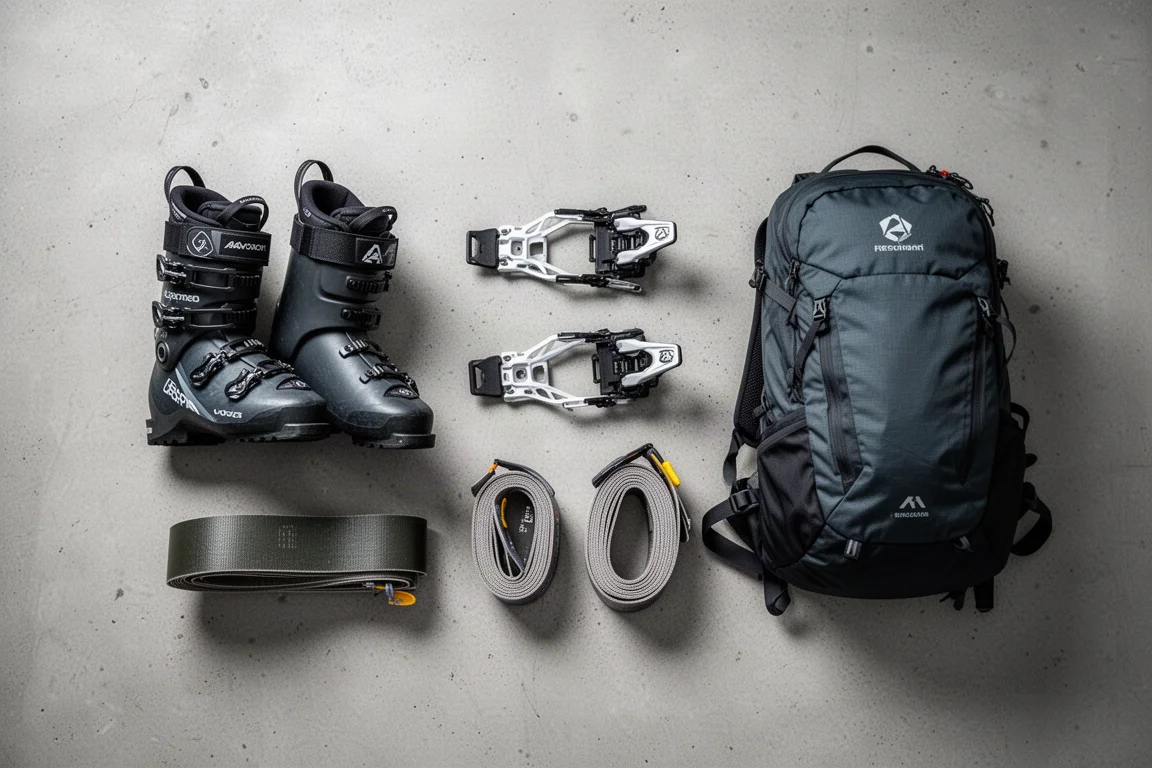
Your binding and boot choice matters as much as the ski here. A hybrid binding and hybrid boot are what unlock the intended use. Pairing the Echo with a hybrid setup gives you a ski that behaves well on the descent and remains manageable on the ascent, which is exactly the brief for this category.
Buying Advice
Decide first how you actually ski, not how you would like to ski. If the honest answer is that most of your days are lift-served and you want a freeride ski that can handle a handful of touring days a season, the Echo 106 is a sensible match. If your touring days are the priority and the resort is the occasional outing, a dedicated touring ski from the Mountain Lab line will serve you better.
Budget for the whole system, not just the ski. The ski only makes sense with the right binding and boot underneath it, and those choices determine how well the hybrid concept works for you. A regular alpine binding is a perfectly reasonable option if you plan to use the Echo primarily as a lighter resort ski.
If you already own a heavier freeride ski and you are considering the Echo as a second setup, be clear with yourself about what the lighter build buys you. The gain is a modest weight reduction and a damper, quieter ride, not a complete change of category.

Skiers who want one ski to cover both sides of the mountain without overcommitting to either will find the QST Echo 106 does that job without asking much of them in return. It is a straightforward, well-shaped ski that rewards a relaxed, confident style.
Conclusion
The Salomon QST Echo 106 takes a proven freeride shape and makes it easier to live with for riders who mix resort days with occasional touring. The poplar and karuba core with basalt fibers brings the weight down by a little over 200 grams in a 189cm length, and it does so at the cost of some energy rather than some stability.
The progressive rocker and taper, the positive camber underfoot, and the rudder-like tail all carry over, which means the ski still floats well in soft snow and turns easily in tight terrain. For a moderate skier or anyone who wants one ski that handles both directions of travel, it is a coherent and capable choice.
Product link
View more details for Salomon QST Echo 106
This product is mentioned in the review. Check the specifications, options, and compatibility before buying.
View more details for Salomon QST Echo 106Further reading
Related Reviews

Skis
Armada Anti Matter 82 W Review: A Light, Approachable All-Mountain Carver
Armada's Anti Matter 82 W pairs a lightweight Karuba and carbon build with an easygoing all-mountain shape, aimed at intermediates through lighter-footed advanced skiers.

Skis
Armada Anti Matter 88W Review: A Light, Playful 88mm All-Mountain Ski Plus Two Alternatives
The Armada Anti Matter 88W returns unchanged in spirit from its Reliance 88C days, and it remains one of the most versatile 88mm skis around. We also look at the Nordica Santa Ana 87 and Anti Matter 92 W as alternatives.

Skis
Armada ARV 100 vs Atomic Bent 100: Which 100mm Freestyle Ski Should You Buy?
Two of the best all-mountain freestyle skis of the season compared: one leans playful and park-ready, the other holds up better everywhere else.