Ski Reviews
Salomon QST 100 (2026) Review: Easy Turns, Shallow Rewards
The redesigned Salomon QST 100 makes turning easier than ever, but reduced edge grip, tip flap in bad snow, and questionable durability hold it back.
Introduction
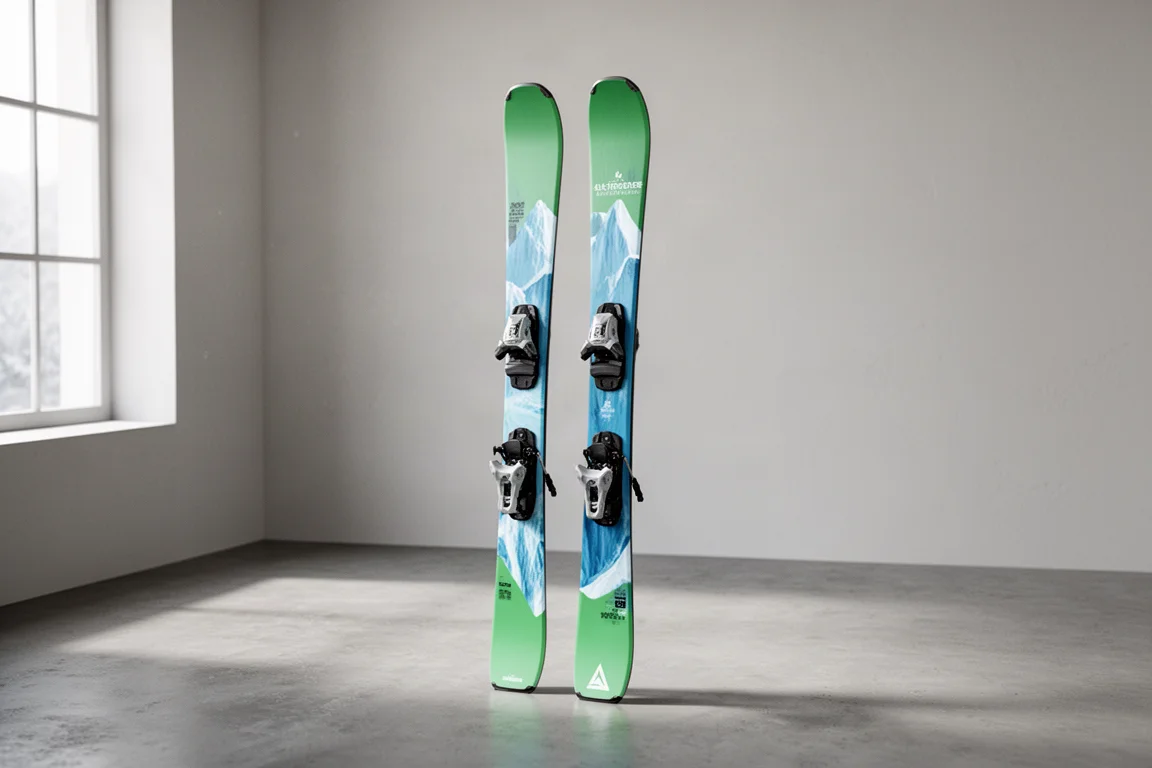
The Salomon QST 100 enters the 2026 model year as a full redesign of the QST 98 lineage, and it comes with genuinely mixed results. Skied in the 180 cm length, it carries a 17.5 m turn radius and a claimed weight of 1,880 g per ski, built around a core blend of poplar wood, basalt, fiberglass, and carbon, with a partial twin tip and Salomon’s familiar cork dampening in the tip and tail. It retails for $699.95, though sales can bring it closer to $490 depending on timing. This review is based on a full demo day on snow, paid for out of pocket, in the interest of a genuinely independent assessment.
First Impressions
The honest first impression is that the QST 100 is very good at tricking you into thinking you are making a better turn than you actually are. It initiates turns easily, locks you into an arc, and carries you through to completion without demanding much input. On good snow, it holds you firmly and securely through the turn without redirecting or getting flaky.
There are real positives worth acknowledging. The tail tracks truer than the previous-generation QST 98, so you can sit on the tail and trust it to hold a direction. The ski also feels lighter and more center-mounted, which makes quicker turns easier for freeride- and freestyle-oriented skiers, and moguls skiers may appreciate that liveliness underfoot. For beginner and intermediate skiers who want the ski to do the work, there is genuine value here.
The Drawbacks
The most serious issue is bad-snow performance. The QST 100 gets bounced around more aggressively than any recent QST. Even with the binding moved one click back, the tip in particular flaps and bounces off choppy or refrozen snow, which is exactly where the old cork dampening used to earn its keep on the QST 98.
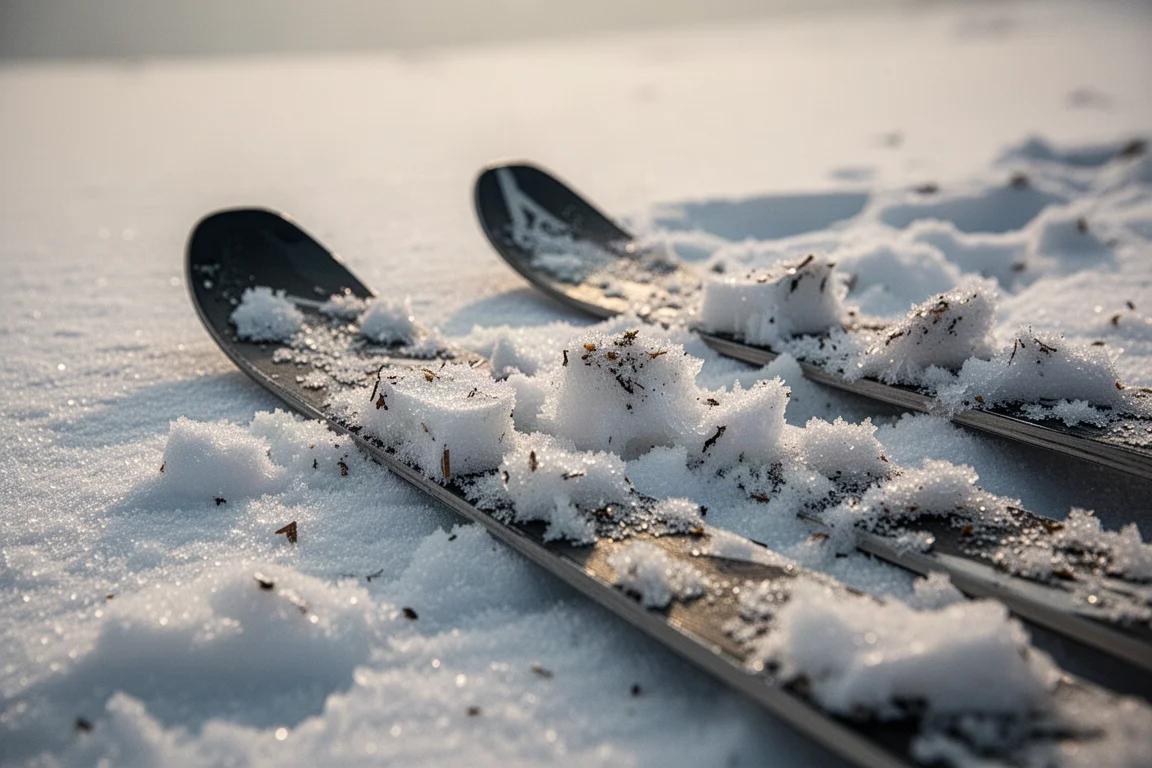
In wetter snow, the tips also have a tendency to glide together and cross, a trait that has appeared across the QST line and that other testers have noticed on previous-generation QST 106s as well.
On firm snow and firm corduroy, the ski simply does not hold as true a trajectory as previous generations. The deeper problem, though, is the nature of the turn itself. Just because a ski is easier to turn does not mean the turn you get is a better one. The QST 100 locks you into an auto-turn you cannot massage, adjust, or wash out early. There is no nuance, no ability to shape the entry or exit. Once you have experienced that turn a few times, you keep experiencing the same turn over and over. Edge angle access is also noticeably limited compared with skis like the Volkl Mantra 88 or Nordica Unleashed 98 CA. It is easier to set up a max edge angle, but there is simply less there.
If you care about turn shape, carving mastery, or building skill over time, the experience is shallow. If you ski about five days a year and want a ski that delivers a pleasant turn with minimal effort, that audience exists and will be satisfied. But for regular skiers, this ski is easy to outgrow within a season, and there are stronger alternatives such as the Head Kore 94, Rossignol Sender Soul 102, or Volkl Revolt 101 that reward a bit more work with far better turns.
Who Should Actually Buy This Ski
Be realistic with yourself about how often you ski and what you want from the sport. If you are on the mountain a handful of days a year and want something approachable with a fun, predictable turn, the QST 100 is a reasonable fit and often goes on sale in the off-season.
If you ski regularly and want to develop your technique, buying a ski that makes a great first impression but offers little depth is a trap. You will likely outgrow it, sell it, and buy the ski you should have purchased in the first place. Buy once, cry once.
Durability and Build Quality
This is where the review turns from subjective feel into visible fact. The demo pair arrived with visible wear after minimal use, and the most memorable detail of the entire test was the fiberglass splinters picked up from handling it. The top sheet where it meets the base at the tip flaked off within a single day of skiing, a pattern also observed on the QST 106 and QST X. New-in-wrapper skis from the same brand family have arrived with rusted edges.
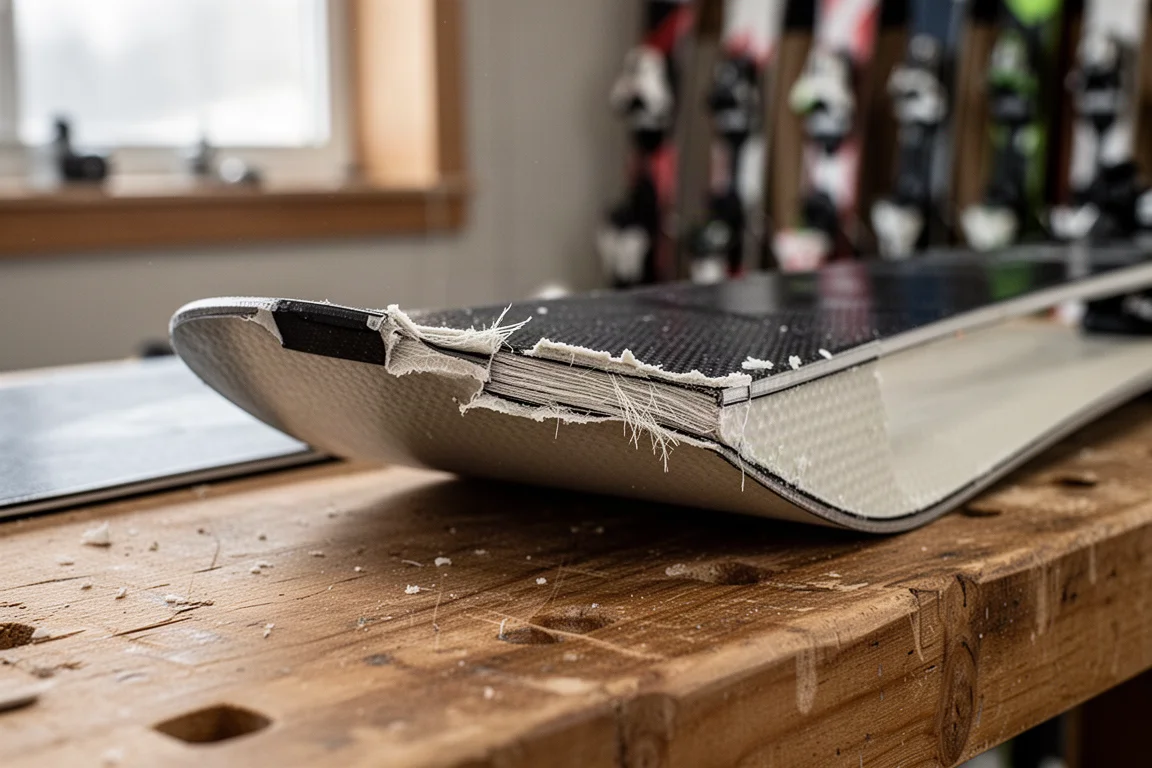
Build quality across Salomon, Atomic, and Armada under the Amer Sports umbrella for 2026 is among the weakest currently available. To be fair, the ski was consistent: each flex produced the same turn, and there were no inconsistencies there. But given how quickly the tips deteriorate and how frequently fiberglass comes loose, the durability picture drags the overall package down meaningfully.
Conclusion
In a vacuum, the QST 100 is a roughly 7.3 out of 10 experience: easy, pleasant, and predictable. In the real world, factoring in the firm-snow precision loss, the tip flap in bad snow, the shallow turn ceiling, and the poor build quality, it lands closer to a 6.7 out of 10. There is an audience for this ski, and some of those skiers will be happy. But if you want a ski that grows with you, look elsewhere before committing your money.
Product link
View more details for Salomon QST 100
This product is mentioned in the review. Check the specifications, options, and compatibility before buying.
View more details for Salomon QST 100Further reading
Related Reviews
Ski Reviews
Armada Antimatter 108 Review: A Freeride Ski Built for Speed and Deeper Snow
The Armada Antimatter 108 carries over the beloved Declivity X 108 shape with new construction that adds compliance in soft snow and composure in crud, aimed squarely at strong, aggressive skiers.
Ski Reviews
Armada Antimatter 92 vs Invictus 92: Two All-Mountain Skis Compared
A closer look at two Armada all-mountain skis, one playful and nimble, the other composed and smooth, to help you pick the right one for your skiing.
Ski Reviews
Armada Antimatter 92W Review: A Smoother Take on a Proven All-Mountain Footprint
The Antimatter 92W keeps the trusted Reliance 92Ti footprint but softens the ride with a new metal construction, making it more versatile in softer snow without losing on-trail grip.