Ski Reviews
Salomon QST 1.0 Review: Fun Experiment or Gimmick?
A freeride-freestyle hybrid with a distinctive pointy tip shape that trades straight-line stability and build confidence for maneuverability and personality.
Introduction
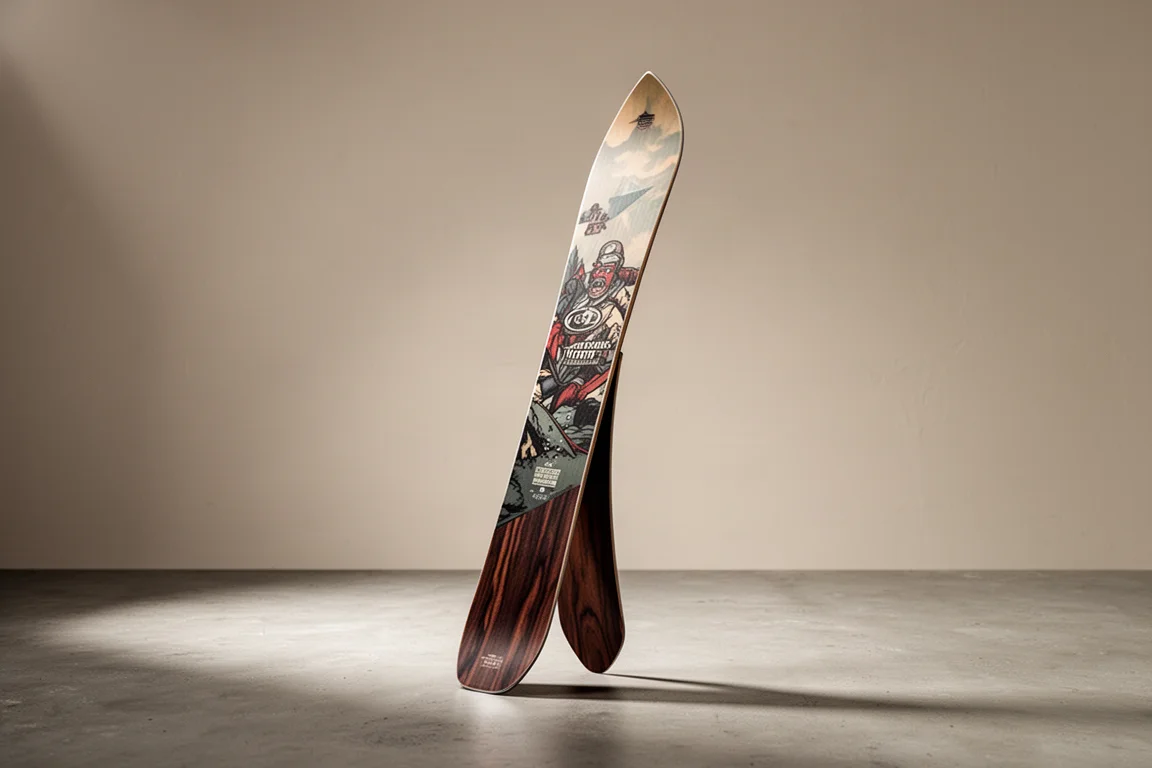
The Salomon QST 1.0 is the 2026 entry in Salomon’s freeride-freestyle hybrid line, and it arrives with one of the more distinctive silhouettes in recent memory: a full twin-tip design with a vintage-style pointed tip, bold Salomon graphics, and a noticeably center-mounted stance. It retails for $699.99 at Evo, and it invites one immediate question: is this shape a gimmick, or is it genuinely a high-performing ski?
The honest answer is that it rides right on that line. Depending on who you are and what you enjoy out of a ski, it can tip either way. This review comes from the perspective of a skier who enjoys carving and light off-trail freeride, not freestyle, which is worth keeping in mind as a possible blind spot. Tested in a 180 cm length, the ski carries a 15 m turn radius and a listed weight of 1,740 g.
The Tip Shape Question
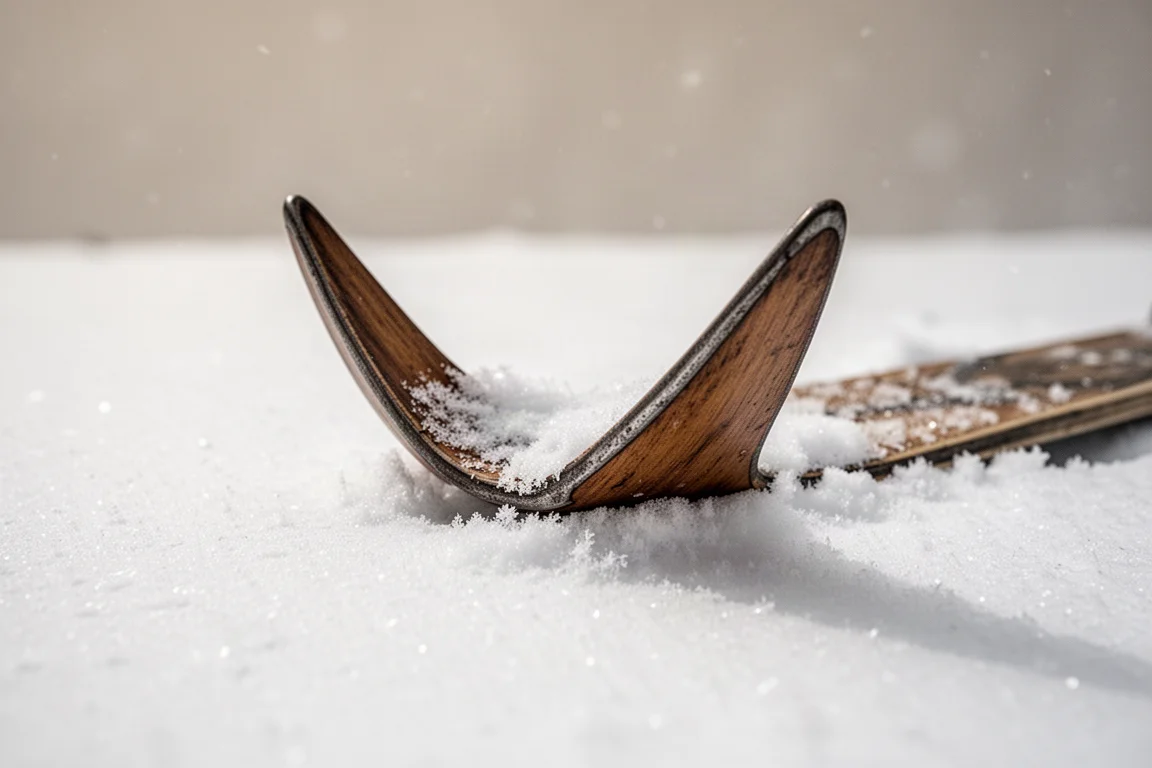
Salomon deserves some credit for doing something distinct here. This is not the same ski shape we have seen a hundred times, and that novelty matters in a market full of clones. The early splay in the tip is what gives the ski its forgiving character in soft snow.
That said, the pointed tip construction is reminiscent of the old Dynastar Legend shape, a profile once considered an old man’s ski. There is nothing wrong with that heritage, and the tips genuinely work: they cut through snow well and break the plane of powder smoothly. But it is amusing to see that silhouette repositioned and resold to the freeride-freestyle crowd, dressed up in flashier graphics.
Where It Performs Best
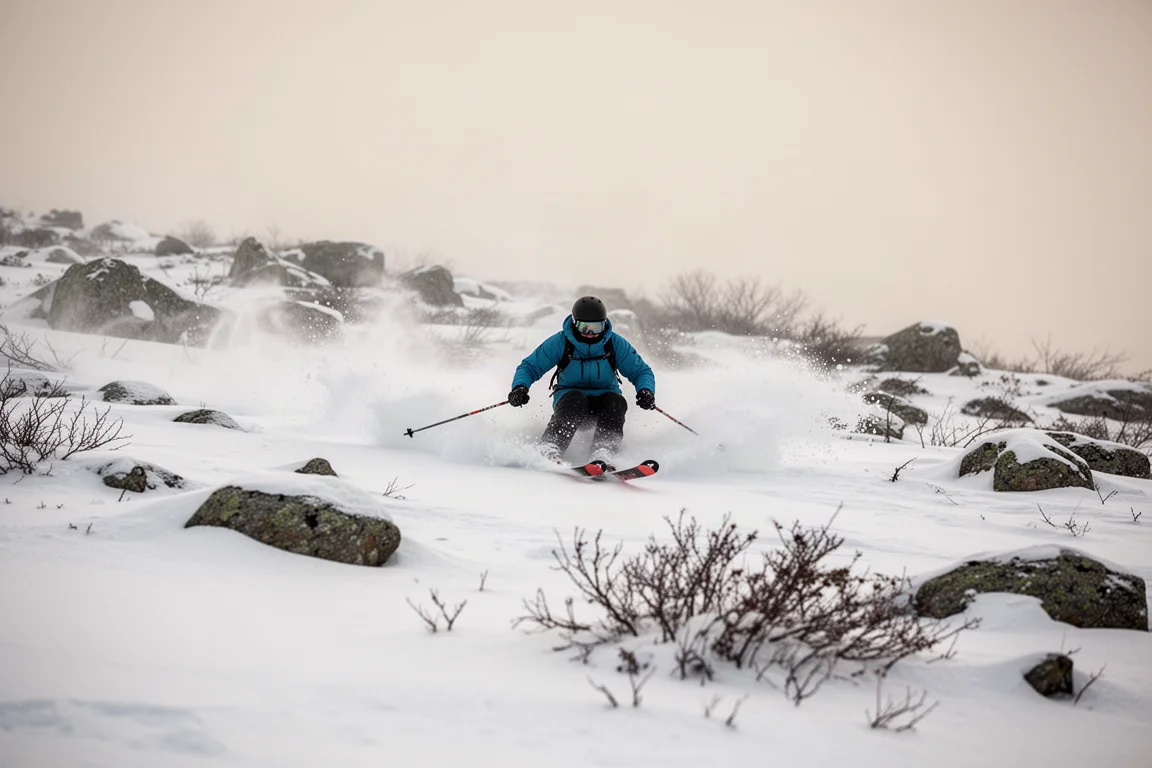
Off-trail is where this ski feels strongest. It changes directions easily, and the tip shape lets it cut through snow and float on top of powder in a way that breaks the plane very smoothly. It genuinely gets more out of its width than you might expect, and it handles a wider range of terrain than the shape suggests.
It is also easy to turn through bramble, which matters a lot in low-snowfall years, and it feels easy and forgiving in moguls. The turn shape is approachable even for skiers who are not confident mogul specialists. Low-tide skiing in general is a sweet spot, as long as you do not pick up speed or get into too much snow, where the ski quickly becomes out of its depth.
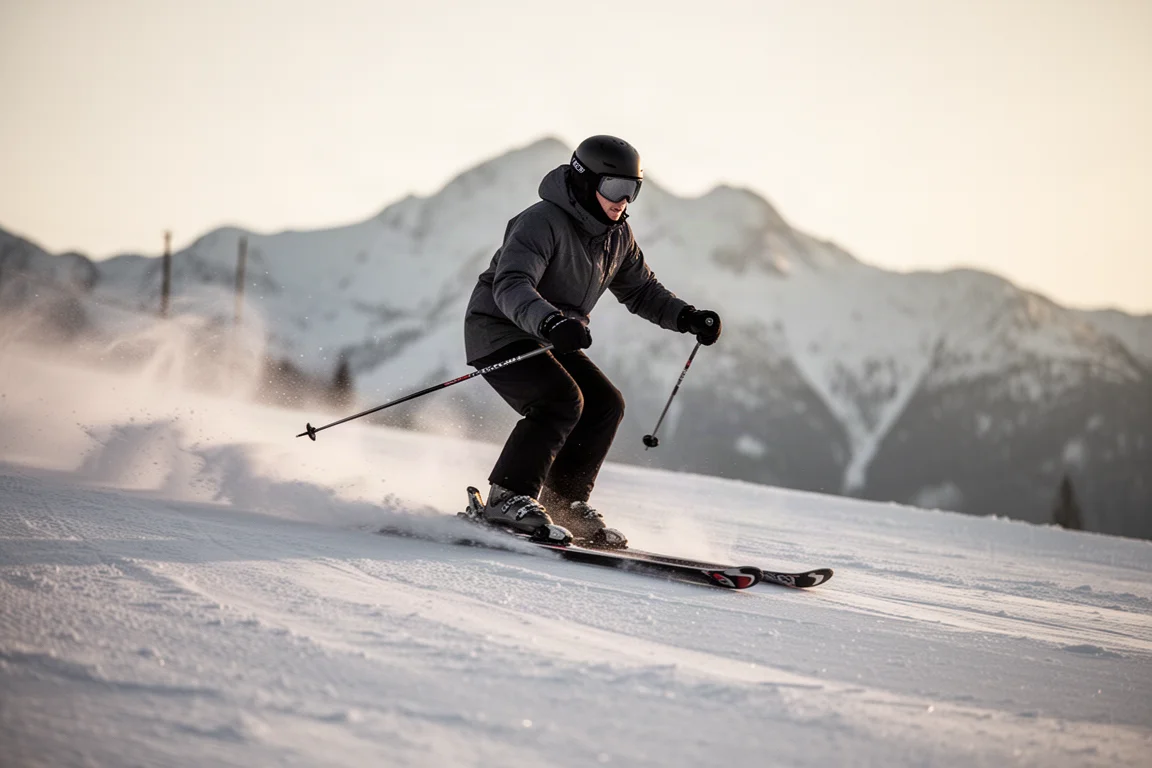
It can carve too, but you are essentially skiing on one ski. The inside ski drifts off under even light pressure, so you have to accept a one-footed style. If you keep pressure light on the downhill foot, you can piece together a decently solid carve turn. It is not what this ski is for, but it is better at it than you might fear.
Construction and Mounting Notes
The core is a poplar and karuba wood blend. Online listings describe it as a wood core, but there appears to be titanal just under the mounting point, and that matters if you are mounting bindings yourself: you will need a titanal-rated drill bit rather than a wood-core bit. Mounting started with a 3.7 wood bit and had to move up to a 4.1, so save yourself the headache and go straight for the titanal bit. Salomon does not note this anywhere on the top sheet.
What Could Be Better
The most immediate drawback is speed wobble. The tips get unstable very early when you straight-line, which is probably a natural consequence of the center mounting and the construction, but it is the first flaw you will notice. The skis also chatter significantly on firm snow and get knocked around a lot.
Powder performance with the center mounting does not feel particularly rewarding or satisfying in big open terrain. This is not a big open powder ski in the mold of a Maverick 115 or Head Kore 118. It shines in maneuverable, hard-to-reach places instead. Moving the binding half a centimeter back from the recommended line, or one click back from center on demo bindings, improved the experience noticeably.
There is also the build quality question. Anecdotally, recent Salomon and Atomic products have shown early fraying and edge or tip degradation, and after only a few days of skiing these already showed visible tip markups. A warranty claim on another Salomon model was declined, and given the freestyle-freeride intent here, warranty approval seems uncertain if the skis are taken off trail. That reputation is worth factoring in before spending $700.
Buying Advice
For a freestyle skier who wants a light, playful powder-capable ski, this could genuinely fit. If you are someone who washes out your turns, wants something fun in moguls and bramble, and enjoys a freestyle feel, there is a real audience that will have a great time on this ski.
If your priorities are big open powder turns, confident carving at this width, and stability on hard snow, there are other skis that do those things better. For a few people this will be an awesome option, and if you can demo it, it is unique enough to be worth ticking off the list.
Conclusion
The QST 1.0 is not a total gimmick. It is fun, novel, and genuinely enjoyable in specific parts of the mountain, but the range of where it excels is narrow enough to keep the recommendation soft, especially at $700 with build quality concerns in the mix. Call it a 7.1 in a vacuum and a 6.8 with those concerns factored in. Somewhere around a 6.9 overall: not hated, not loved, a little gimmicky, but hard to deny it was a good time.
Product link
View more details for Salomon QST 1.0
This product is mentioned in the review. Check the specifications, options, and compatibility before buying.
View more details for Salomon QST 1.0Further reading
Related Reviews
Ski Reviews
Armada Antimatter 108 Review: A Freeride Ski Built for Speed and Deeper Snow
The Armada Antimatter 108 carries over the beloved Declivity X 108 shape with new construction that adds compliance in soft snow and composure in crud, aimed squarely at strong, aggressive skiers.
Ski Reviews
Armada Antimatter 92 vs Invictus 92: Two All-Mountain Skis Compared
A closer look at two Armada all-mountain skis, one playful and nimble, the other composed and smooth, to help you pick the right one for your skiing.
Ski Reviews
Armada Antimatter 92W Review: A Smoother Take on a Proven All-Mountain Footprint
The Antimatter 92W keeps the trusted Reliance 92Ti footprint but softens the ride with a new metal construction, making it more versatile in softer snow without losing on-trail grip.