Power Tool Accessories
Ryobi Whisper Series 18V Fan vs Ridgid 18V Fan: Which One Cools Better?
Two new 18V cordless fans go head to head on airflow, noise, mounting options, and value to see which one deserves a spot on your jobsite.
Introduction
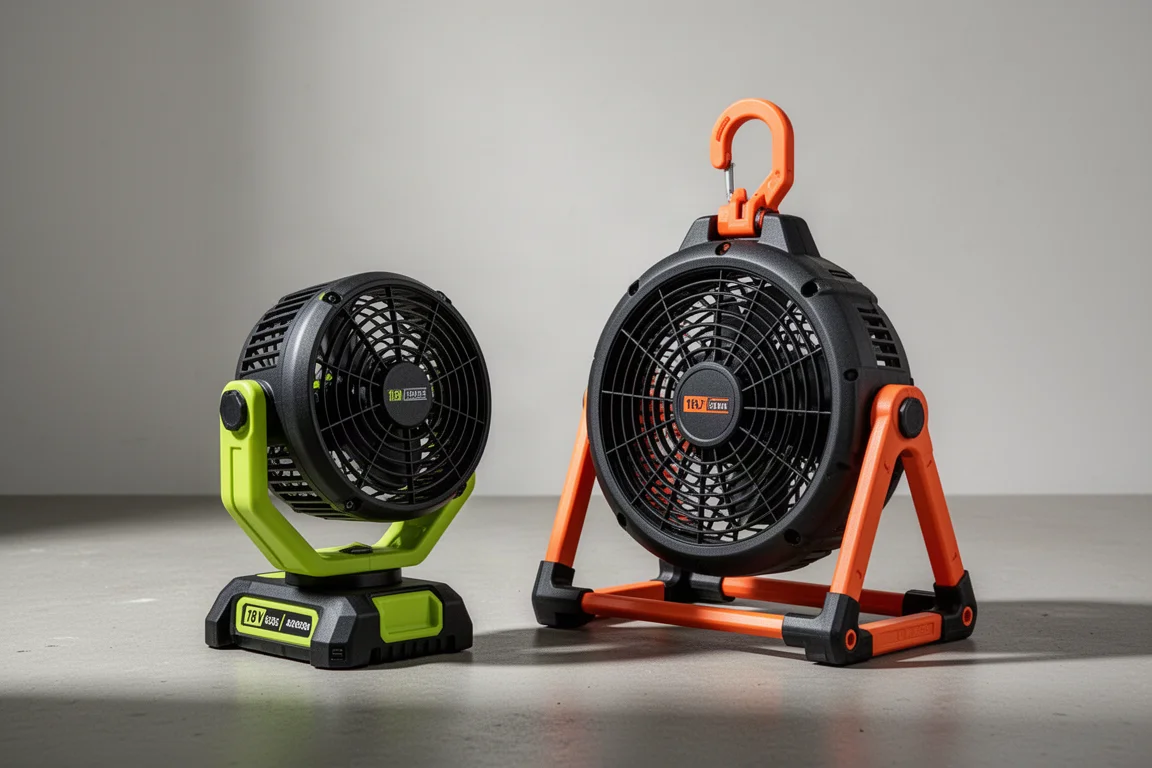
When the heat finally shows up, a decent cordless fan becomes one of those tools you did not know you needed until you are sweating through a job with no power outlet in sight. Two new 18V cordless fans are getting attention right now: the Ryobi 18V Whisper Series fan and the Ridgid 18V fan. Both run off their brand’s 18V battery platforms, both can also run plugged into an extension cord, and both feel solid in the hand. The differences are in the details, and those details matter more than the small price gap might suggest.
Evaluation Criteria
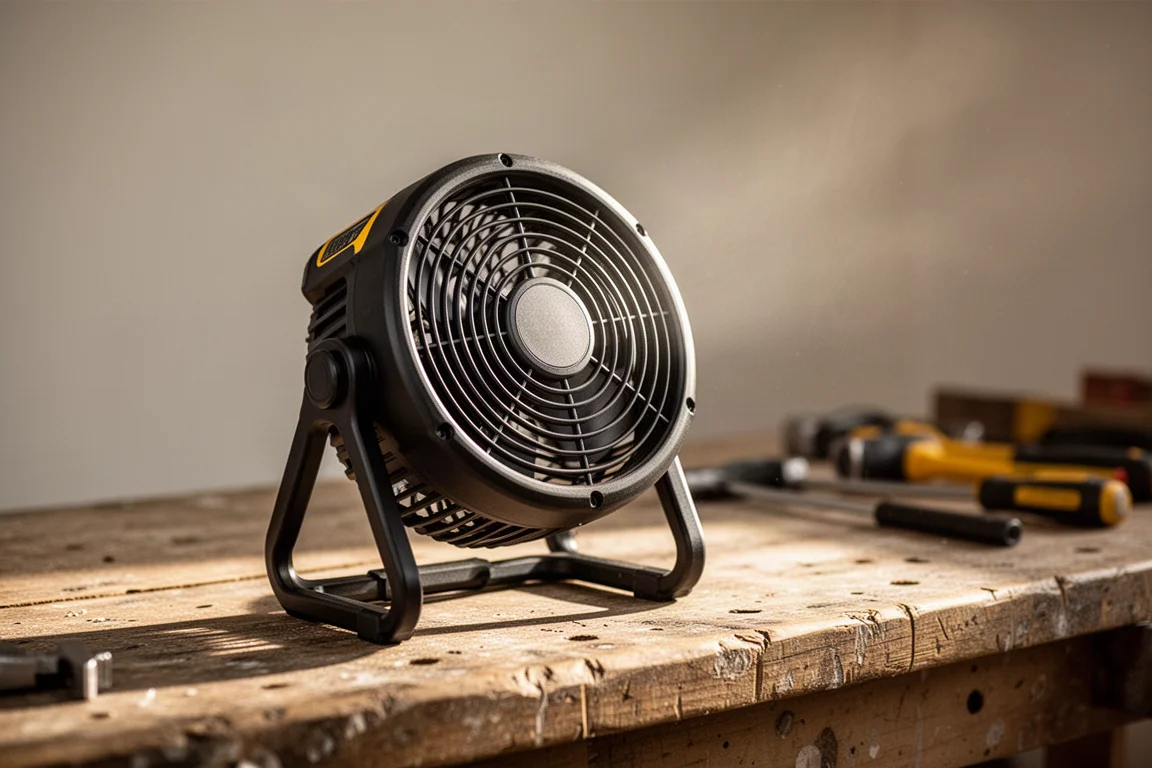
We compared both fans on the things that actually matter in daily use: airflow and cooling power, noise level, speed settings, mounting flexibility, build quality, and value. Both fans work well as coolers, producing enough airflow that you genuinely feel it on a hot day. Neither one is a dud, so the decision comes down to which feature set matches how you plan to use it.
Ryobi 18V Whisper Series Fan
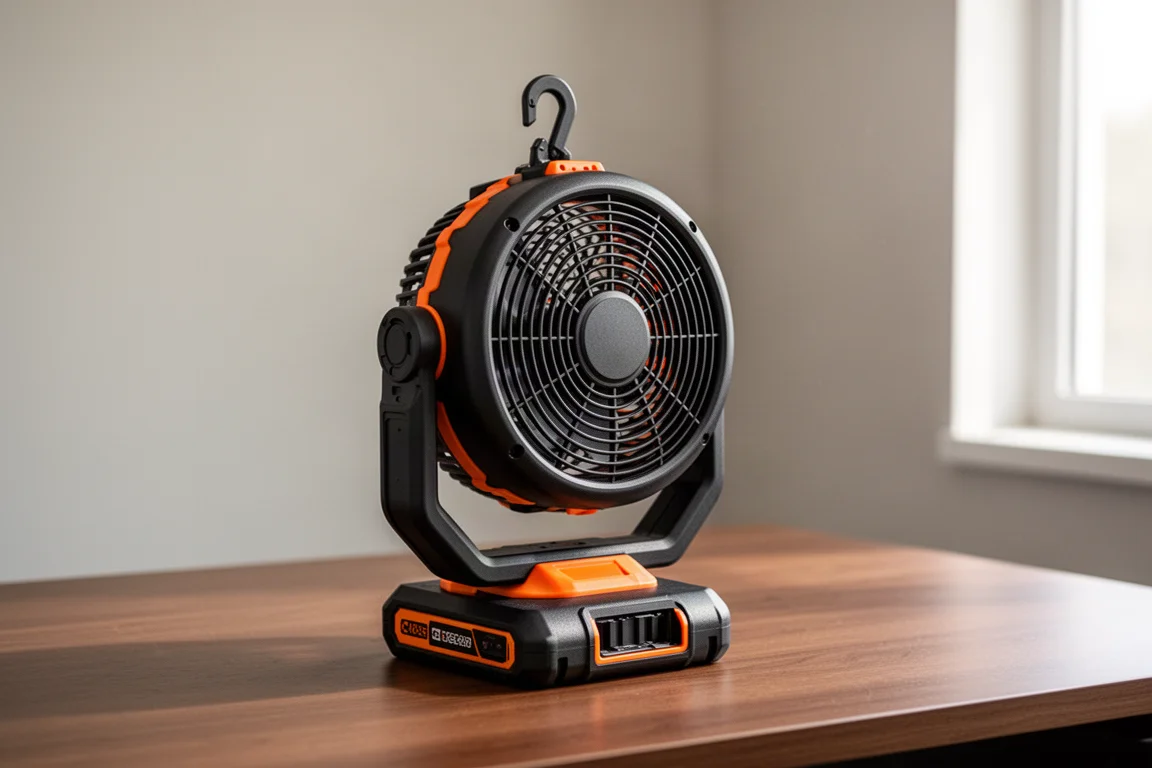
The Ryobi Whisper Series fan is brand new and already off to a strong start, with a five-star average from a growing set of reviews on the Home Depot site. The headline claims are 24 percent greater air velocity and a Whisper Series design that runs 44 percent more quietly than the previous version. That quiet operation is the real selling point here; the Ryobi is the noticeably quieter of the two fans in this comparison.
Spec highlights:
- Whisper Series design, rated 44% more quiet with 24% greater air velocity
- Three speed settings: high, medium, and low
- 160° pivoting head
- Dual power: runs on any 18V Ryobi battery or plugs into an extension cord for continuous runtime
- 7.5-inch fan size
- 3-year manufacturer warranty
- $59 fan only, battery not included
How the Ryobi Fan Performs Day to Day
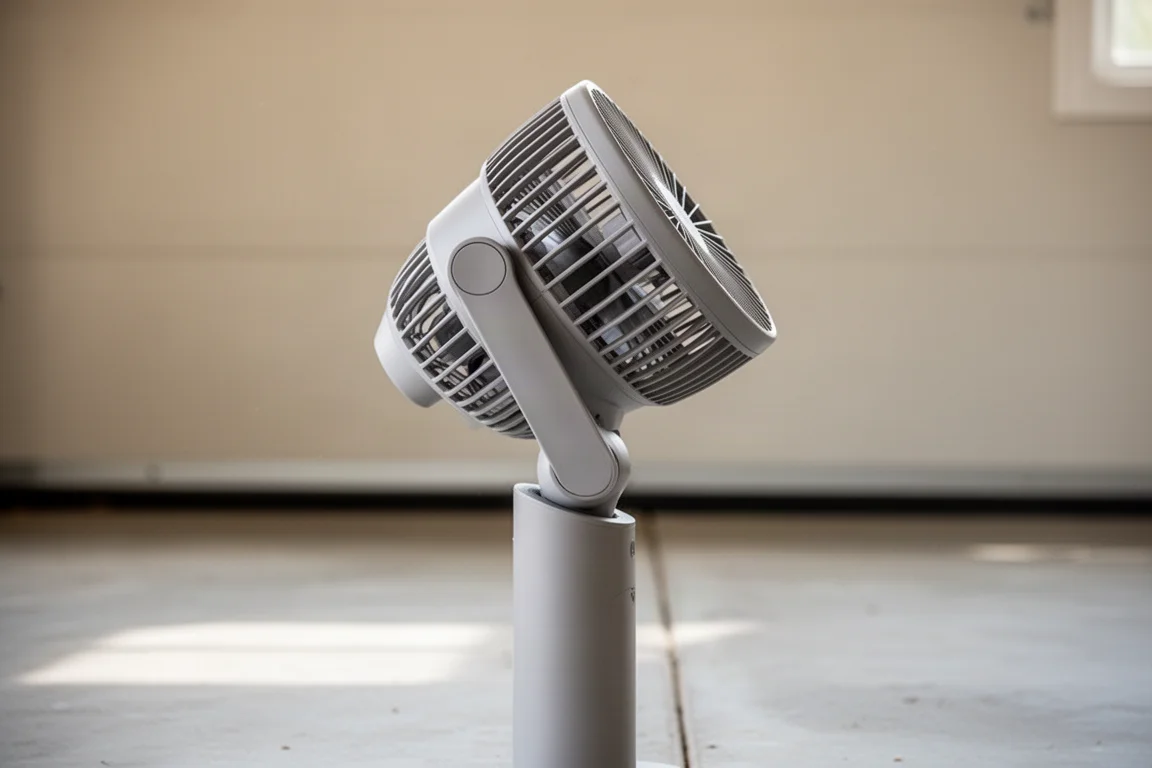
The pivoting head lets you angle airflow up, down, or anywhere in between, and there is a wall-hanging option on the back: drill a couple of screws and hang it up. Beyond that, though, the mounting story is limited. You are essentially setting it down on a table and adjusting the head. It has three speeds, which covers the basics, and the quiet Whisper Series tuning makes it easy to live with in a workspace where noise matters.
If you value quiet operation above everything else and just want a simple set-it-down fan, the Ryobi is an easy recommendation.
Ridgid 18V Fan
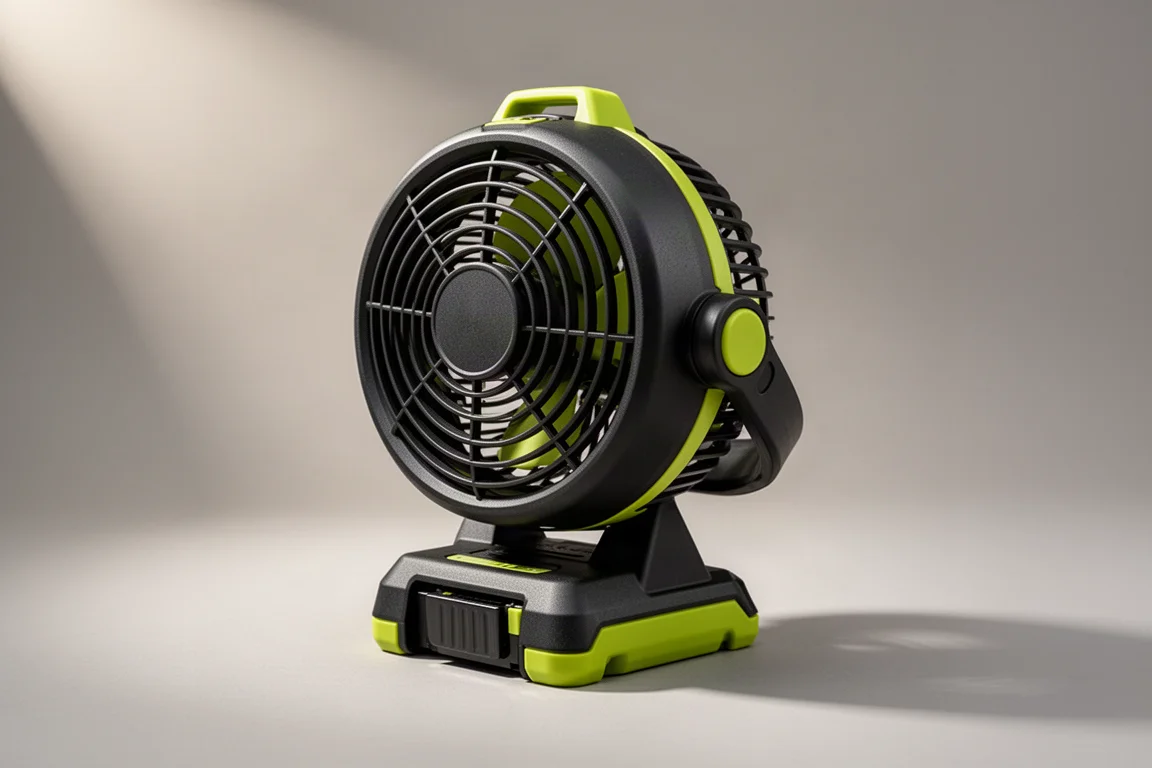
The Ridgid 18V fan looks remarkably similar to the Ryobi, and the build quality feels just about identical. It runs on any 18V Ridgid battery and, like the Ryobi, has a removable battery adapter that reveals an AC plug for continuous corded use. It is a little heavier than the Ryobi thanks to its extra mounting hardware, but the difference is minimal.
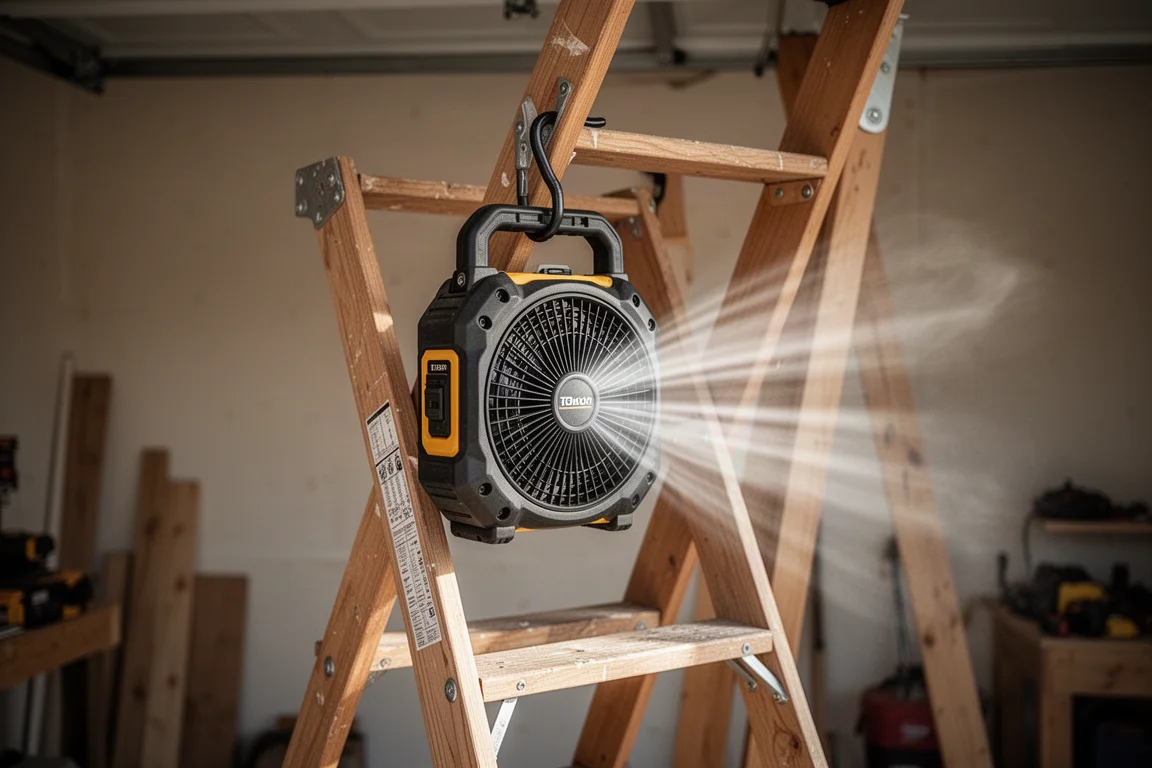
The bigger differences show up in the controls and the mounting options. The Ridgid has six speed settings compared to the Ryobi’s three, and it powers on at the lowest setting, stepping up through medium to max, which feels more intuitive than designs that start on the highest speed. The fold-out hook system is the standout feature: the Ridgid offers 10 different mounting configurations, letting you swing the hook up or down, hang it from a ladder, set it on a table, or position it in several other ways. That kind of flexibility makes it far more adaptable around a job site.
Which Fan Should You Buy?
Both fans move plenty of air and both feel well built, so this mostly comes down to features versus quiet. The Ryobi costs less at $59 fan-only, is clearly quieter, and is rated with a strong early review record. The Ridgid doubles the speed settings, multiplies your mounting options tenfold, and is the better pick if you are already on the Ridgid 18V platform.
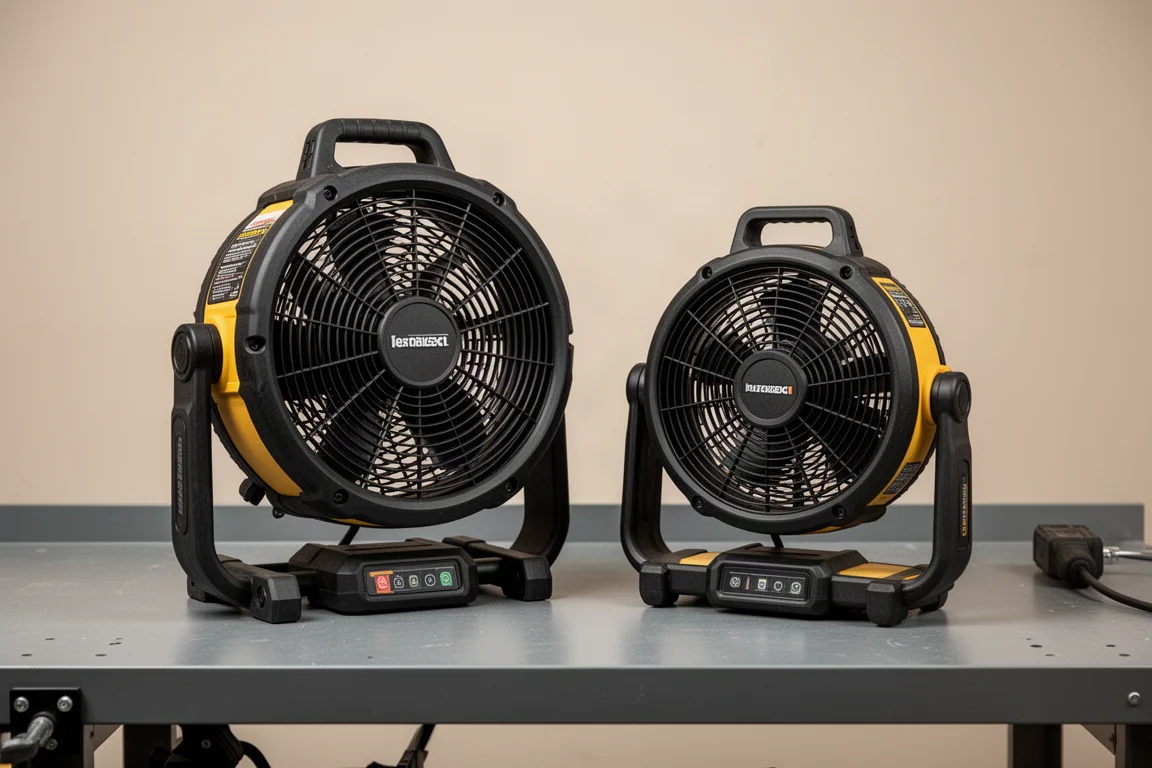
If the extra couple of dollars is not an issue and you want maximum versatility, the Ridgid is the more capable fan. If quiet is your priority, the Ryobi Whisper Series earns its name.
Conclusion
These two 18V fans are closer than you might expect, and both do the core job well. Choose the Ryobi Whisper Series if quiet operation and a lower price are what you need, and choose the Ridgid if you want more speed steps and far more ways to mount it on site. Either way, you are getting a solid cordless cooling option for the warmer months.
Further reading
Related Reviews

Power Tool Accessories
Best Drill Attachments 2026: Three DeWalt Tools Worth Buying
A practical look at three DeWalt drill attachments that deliver real value, plus the sketchy options you should skip.

Power Tool Accessories
Best Drill Bits 2026: 14 Sets Tested on Mild Steel, Spring Steel, and AR500 Armor
We tested 14 drill bit sets across mild steel, spring steel, and AR500 armor plating to find the best value, speed, and durability.

Power Tool Accessories
Best Right Angle Impact Adapters 2026: Five Options Tested for Speed, Torque, and Durability
We tested five right angle impact adapters from DeWalt, Milwaukee, Warrior, Titan, and Milescraft to see which ones deliver real performance without failing early.